
Review · CYCLING TOURS
19th Century Amsterdam Guided Private Bike Tour
Amsterdam makes more sense on two wheels. This private four-hour ride links nineteenth-century landmarks with the canals, markets, monuments, and museums that shaped modern Dutch life. I like the broad route, which covers far more ground than a walking tour, and I like the private format, which gives your group room to ask questions and set the pace. The main drawback is cost: at $266.48 per person, plus a €16 bicycle rental, this is a serious splurge.
I also like that the tour tackles more than pretty canals. It looks at religious change, monarchy, colonial history, industry, trade, art, and nationalism. You should be ready for city cycling, changing weather, and a tour that uses outside landmarks rather than museum admissions. The strongest fit is a family or friend group that wants one guide and a brisk introduction to central Amsterdam.
In This Review
- Key points to know before you pedal away
- Why nineteenth-century Amsterdam makes a good bike tour
- Centraal Station and the arrival of modern Amsterdam
- Saint Nicholas Basilica and the religious divide
- Dam Square, Damstraat, Napoleon, and the birth of monarchy
- Rembrandtplein and Amsterdam’s colonial past
- The canal ring and Monet’s bridge
- Waterlooplein Market and the city’s everyday commerce
- Heineken’s nineteenth-century brewery and the rise of industry
- The International Theatre and the final approach to Rijksmuseum
- Price, bicycles, and the value of a private group
- Who should book this Amsterdam bike tour?
- Should you book it?
- FAQ
- Where does the bike tour begin?
- Where does the tour end?
- How long does the tour last?
- Is the tour private?
- Is bicycle rental included?
- Are food and drinks included?
- What happens if the weather is poor?
Key points to know before you pedal away
- The route begins and ends at Amsterdam Centraal, making it easy to connect with trains and public transport.
- You cover much of the city center in about four hours, including Dam Square, Waterlooplein, the canal ring, Heineken’s former brewery, and the Rijksmuseum area.
- The focus is nineteenth-century change, from outdated technology and social divisions to industry, nationalism, and modern urban life.
- The tour is private, so only your own group participates.
- A bicycle costs an extra €16 per person, though you may bring your own.
- A family group with two 13-year-olds enjoyed the format, a useful sign that the subject matter can work for older children and teens.
Why nineteenth-century Amsterdam makes a good bike tour
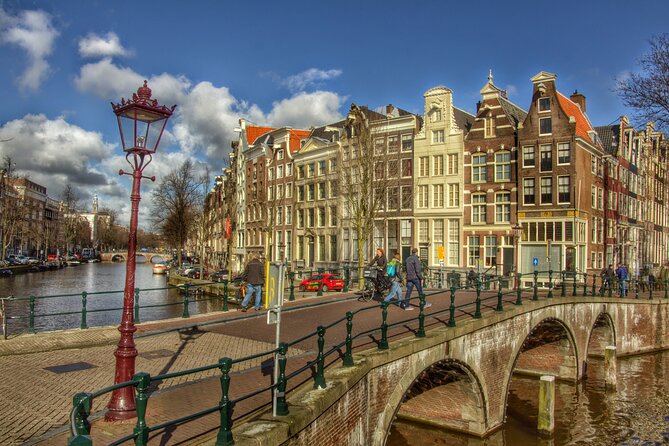
Amsterdam often gets reduced to canals, narrow houses, and postcard bridges. Those sights are worth seeing, but this tour asks a better question: how did the city move from a long period of stagnation into a new age of industry, commerce, culture, and national confidence?
The nineteenth century was a sharp turning point for the Netherlands. The country had endured a long period of economic and technological lag, deep poverty, old-fashioned systems, and strong social divisions. Then progress arrived with force. New transport, manufacturing, trade, public buildings, and national institutions changed daily life.
A bicycle is a sensible way to follow that change. The distances between the stops are too wide for a comfortable walking tour if you want to see all of them in four hours. You can move from the railway station to the old center, then across the canal district and toward the museum quarter without spending the whole outing on foot.
The pace also helps you see Amsterdam as a working city rather than a collection of isolated monuments. You pass through places where religion, government, art, business, and public life meet. The guide can connect those pieces while you are physically moving through them.
There is a tradeoff. Cycling leaves less time to stop and study every façade. You will not get the same close, quiet look at a single neighborhood that you might get on a walking tour. The reward is scale: a much wider picture of central Amsterdam in one half-day.
More Bike Tours in Amsterdam
- Amsterdam: Guided Bike Tour City Centre in EN/DE/FR/ES
★ 4.7 · 4,187 reviews - Countryside Bike Tour from Amsterdam: Cheese, Clogs & a Windmill
★ 5.0 · 1,485 reviews - Amsterdam: Hidden Gems & Highlights Guided Bike Tour
★ 4.8 · 1,404 reviews
Centraal Station and the arrival of modern Amsterdam
The tour begins at Amsterdam Centraal railway station, Stationsplein, 1012 AB Amsterdam. This is a practical meeting place, especially if you arrive by train or use public transport to reach the center.
The station itself sets the tone. It was a controversial building at the end of the nineteenth century, and the first discussion centers on why. That question matters because railways were not just a transport improvement. They changed how people entered the city, how goods moved, and how Amsterdam presented itself to the outside world.
You can expect about 30 minutes here. That is enough time for the guide to frame the period and explain why a major new station could cause debate. It also gives your group time to get organized before the cycling portion fully gets under way.
Because this is a central transport hub, the area can feel crowded and hectic. Keep your attention on the guide and your bicycle as the group sets off. The convenient location is a major plus, but it is not the calmest place to begin a tour.
Saint Nicholas Basilica and the religious divide
The next stop is the Basilica of Saint Nicholas, close to the station. You spend roughly 30 minutes discussing religious attitudes during the period.
This stop adds needed balance to the tour. Amsterdam’s nineteenth-century story was not only about factories, railways, trade, and art. Religion shaped public identity and social life, and the basilica provides a strong setting for that conversation.
You visit the cathedral from the outside context of the route, with admission listed as free. The available details do not promise an interior visit or a formal church admission, so you should treat this as a guided historical stop rather than a separate basilica tour.
The short cycle from Centraal Station makes this an easy early stop. It also gives you a change of mood after the noisy station area. If your group has children or teens, the building itself can help make an abstract discussion about religious attitudes more concrete.
Dam Square, Damstraat, Napoleon, and the birth of monarchy
Dam Square brings the story into the heart of old Amsterdam. The guide uses the square and Damstraat to discuss Napoleon and the beginning of monarchy in the Netherlands.
This is one of the tour’s best examples of using a familiar place to explain political change. You may already know Dam Square as a central gathering point, but the discussion shifts your attention toward power, government, and the changing shape of the Dutch state.
The stop lasts around 30 minutes. That is a useful amount of time for a focused explanation without turning the square into a long lecture. Since the group is private, you can ask for clarification if the political history moves quickly.
Dam Square is also one of the busiest parts of central Amsterdam. You may find it harder to hear every word when people, bikes, and street activity press around the group. Stay close to the guide and do not expect a silent classroom. The setting is part of the lesson: this is a public center where national events and everyday city life meet.
A different kind of day out entirely:
- Amsterdam: Van Gogh Museum Ticket
★ 4.7 · 52,054 reviews - Amsterdam Classic Saloon Boat Cruise with Drinks and Cheese
★ 5.0 · 31,825 reviews - Amsterdam Luxury Canal Cruise + Unlimited Drinks & Bites option
★ 5.0 · 30,518 reviews - Amsterdam: Heineken Experience Ticket
★ 4.6 · 30,055 reviews
Rembrandtplein and Amsterdam’s colonial past
At Rembrandtplein, the tour turns toward monuments, writers, colonial history, and the birth of nationalism. The stop includes discussion connected with Rembrandt, Multatuli, and Vondel.
This section looks more closely at how the Netherlands remembered its cultural figures and defined its national identity. It also makes room for a less comfortable subject, the country’s colonial past. That is important. A useful history tour should not present nineteenth-century progress as a clean parade of inventions and achievements.
The stated stop time is about 30 minutes. You will likely spend part of that time looking at monuments and part listening to the guide connect literature, art, empire, and national feeling. This is the kind of material that benefits from questions, especially if your group wants to understand how public monuments shape memory.
The square is another place where cycling conditions may be lively. The tour is not designed as a quiet heritage walk, so listen carefully during the explanation and save longer questions for when the bicycles are stopped.
The canal ring and Monet’s bridge
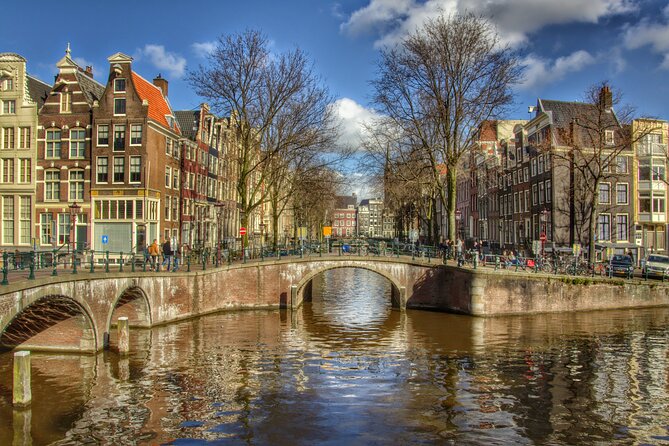
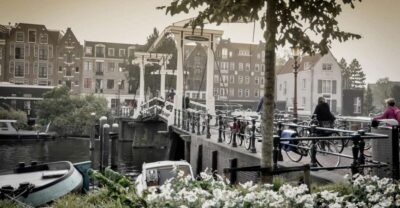
The ride then crosses the canal ring, including a bridge that inspired Claude Monet to paint his masterpieces. This is a short but memorable link between Amsterdam’s built environment and the wider history of art.
The canal ring is likely to be one of the most visually pleasing parts of the ride. You see the city from the moving viewpoint of a bicycle, with water, bridges, and streets passing in quick succession. The Monet connection gives the scenery a clear purpose. You are not only stopping for a photograph. You are considering how Amsterdam’s light and architecture affected an artist whose work helped change painting.
The tour description allows about 30 minutes for this section. That should give you time to pause, hear the story, and take in the bridge before continuing.
Remember that the canal ring is a cycling route, not a private viewing platform. You may need to share space and keep moving when conditions require it. The bicycle lets you reach more of the district, but it also asks you to remain alert.
Waterlooplein Market and the city’s everyday commerce
Waterlooplein offers a change from grand political and artistic subjects. Here, you visit a market with goods of many kinds and discuss the city through trade and daily life.
Markets are useful on a historical tour because they bring big economic ideas down to street level. Instead of discussing commerce only in terms of industries and national wealth, you see a place where buying and selling still happen in a public setting.
The stop lasts about 30 minutes. You should have time to look around while the guide explains the market’s place in the city. The supplied details do not guarantee free time for shopping or specify what will be available on the day, so think of this primarily as a guided visit rather than a shopping excursion.
Waterlooplein also breaks up the architectural sightseeing. After several monuments and historic squares, a market gives the tour a more ordinary, human rhythm. It is a good stop for a mixed-age group because there is something to look at while the adults follow the historical discussion.
Heineken’s nineteenth-century brewery and the rise of industry
Later, the route reaches Heineken’s brewery from the nineteenth century. The focus here is industry and trade.
This stop helps explain how the Netherlands moved from old systems into a more modern economy. A brewery is a useful example because it connects production, commerce, urban employment, and the growth of recognizable brands. The tour does not include a brewery tasting or an admission to a brewery attraction, so you should expect an exterior historical discussion rather than a brewery visit with exhibits.
The location also gives the story a practical edge. You have already considered railways, politics, religion, art, and markets. Now you look at production and business. Taken together, the stops show how several forces worked at once to reshape Amsterdam.
If your main goal is a beer experience, this will not replace a dedicated brewery tour. If you want to understand the economic changes behind modern Amsterdam, it is a useful addition.
The International Theatre and the final approach to Rijksmuseum
Toward the end, the tour visits the International Theatre of Amsterdam and then continues to the Rijksmuseum, home to the country’s leading art collection.
The theatre adds another cultural layer to the route. Its inclusion suggests that the tour is interested in public entertainment and the arts as part of city life, not only in government buildings and commercial sites. The supplied details do not explain the exact theatre program or promise admission, so expect the guide to use the site as a point of historical interest.
The Rijksmuseum provides a fitting final destination. It represents the national cultural confidence that grew out of the period discussed throughout the ride. You will see the museum building and hear about its collection, but entrance is not listed among the inclusions. Plan a separate visit if you want to see the artworks inside.
Ending near the Rijksmuseum gives the tour a strong sense of direction. The route begins with a railway station, a symbol of new movement and modern connection, then finishes at a major cultural institution. In between, you follow the political, religious, commercial, and artistic changes that helped shape the city.
Price, bicycles, and the value of a private group
The listed price is $266.48 per person. Bicycle rental is extra at €16 per person, bringing the basic cost higher if nobody in your group has a bike. Coffee, tea, and snacks are not included.
That price is difficult to justify for a solo visitor or a couple who simply wants a casual ride. It makes more sense for a private group that values a dedicated guide and a custom conversation. A family with older children, a group of friends, or a party with a strong interest in history can spread the cost across the people who are sharing the experience.
The private format is the central value. You are not joining a large public group, and only your party participates. That can make a difference when you want to pause at a monument, ask about colonial history, or adjust the level of explanation for teenagers.
The tour lasts about four hours, so it is also a substantial time commitment. You receive a broad city orientation rather than a short introductory ride. The extra bicycle charge is easy to overlook, so include it when comparing this tour with other Amsterdam activities.
Who should book this Amsterdam bike tour?
I would recommend it most strongly to people who want history with movement. You should be comfortable cycling in a city and interested in how Amsterdam changed during the nineteenth century. The route has enough visual variety for a family group, while the political and colonial subjects give adults plenty to discuss.
The one published account describes a group of friends and family with two 13-year-olds, and both children enjoyed the ride as much as the adults. That makes the tour particularly promising for families with teens who may find a long museum visit tiring.
You may want a different experience if you prefer a slow walk, a food-focused outing, or extensive interior visits. You will spend much of the four hours moving between sites, and the included experience is the guide rather than admissions, meals, or refreshments.
Weather matters. The activity requires good conditions, and poor weather can lead to a new date or a full refund. You can cancel for a full refund up to 24 hours before the start time, but late cancellations and late changes are not accepted.
Should you book it?
Book this tour if you want a private, wide-ranging introduction to Amsterdam and you are happy to pay for a guide-led experience rather than a simple bicycle rental. The route gives you more ground than a walking tour and links familiar sights to the difficult, exciting changes of the nineteenth century.
I would skip it if your budget is tight, you want museum entry included, or you are not comfortable cycling in city conditions. For the right group, especially families with teens or friends sharing the cost, it offers a useful mix of movement, major sights, and serious historical questions.
FAQ
Where does the bike tour begin?
It begins at Amsterdam Centraal railway station, at Stationsplein, 1012 AB Amsterdam, Netherlands.
Where does the tour end?
The activity ends back at the meeting point at Amsterdam Centraal.
How long does the tour last?
The tour lasts approximately four hours.
Is the tour private?
Yes. Only your group participates in the activity.
Is bicycle rental included?
No. Bicycle rental costs €16 per person. You can rent a bicycle together with the group or bring your own.
Are food and drinks included?
No. Coffee, tea, and snacks are not included.
What happens if the weather is poor?
The experience requires good weather. If it is canceled because of poor weather, you will be offered a different date or a full refund. You can also cancel at least 24 hours before the start time for a full refund.
Just added in Amsterdam
- Private Tour Zaanse Schans Windmills and Volendam in Jaguar★ 5.0 · 10 reviews
- Half-Day Private Guided Sightseeing Tour of Zaanse Schans★ 5.0 · 14 reviews
- Zaanse Schans and Giethoorn Unique Day Trip with Boat Cruise★ 4.5 · 17 reviews
- Windmills-Volendam-Giethoorn Private Tour in Jaguar★ 5.0 · 2 reviews
- Best of Netherlands: Zaanse Schans Mills, The Hague & Rotterdam★ 4.5 · 10 reviews
- Zaanse Schans Private Tour Windmills★ 5.0 · 18 reviews
- Zaanse Schans Windmills Edam Volendam and Marken from Amsterdam★ 5.0 · 1 review
- Zaanse Schans Edam Volendam Private Day Tour from Amsterdam★ 5.0 · 3 reviews
Cycling Tours, compared.
Countryside Bike Tour from Amsterdam: Cheese, Clogs & a Windmill
Read our review →
Windmill, Cheese, and Countryside E-Bike Tour
Read our review →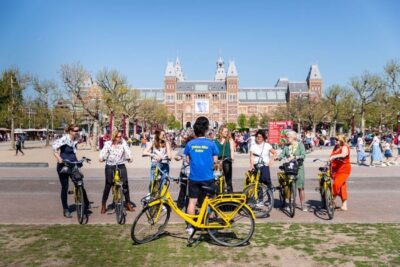
Browse the lists this tour appears in