Review · AMSTERDAM TOURS
Amsterdam: Cultural Highlights in English/German/Italian
Amsterdam’s story is written on its streets. This two-hour walk links royal squares, Golden Age trade, Jewish history, LGBTQ+ landmarks, and local neighborhoods in a compact route through the old center. At $33.88 per person, it is a reasonably priced way to get your bearings without paying admission fees.
I like the small-group format, limited to 15 people, and the way the route mixes famous places with less obvious stories, such as the colonial history connected to Multatuli and the hidden church near Begijnhof. I also like the practical advice built into the walk, especially tips for food, shopping, and places to visit after the tour.
The main consideration is that this is a brisk 3 to 4 kilometer walk, not a visit inside Amsterdam’s major museums or historic buildings. The Anne Frank stop is at the statue, not a tour of the Anne Frank House, and the red-light district and coffee shops are deliberately left out.
In This Review
- Key points to know before booking
- Starting at the National Monument on Dam Square
- Beurs van Berlage and Amsterdam’s Golden Era
- Multatuli and the less comfortable side of the city
- Magna Plaza and the road toward Jordaan
- Anne Frank, Jewish Amsterdam, and what this tour does not include
- The Gay Monument and Amsterdam’s LGBTQ+ past
- Negen Straatjes for shopping and food advice
- Begijnhof, the hidden church, and the final stop at Spui
- How the $33.88 price holds up
- Guide quality and language choice
- Who should book this walking tour?
- Should you book it?
- FAQ
- How long is the Amsterdam Cultural Highlights tour?
- What languages are available?
- Where does the tour start and finish?
- Does the price include admission tickets?
- Does the tour visit the Anne Frank House, the red-light district, or a coffee shop?
- How much walking is involved?
Key points to know before booking
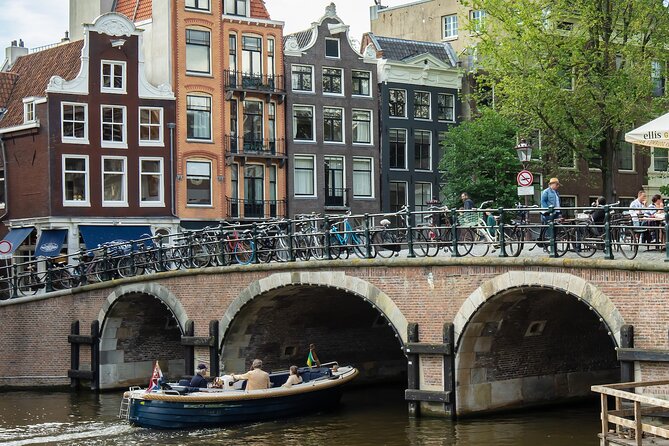
- A compact old-center route: You walk from the National Monument through Dam Square, the old trading quarter, Jordaan, Negen Straatjes, and Spui.
- Several language options are advertised: The experience is described as available in English, German, or Italian, although the additional information specifically says the tour is in German. Confirm your chosen language when booking.
- No admission fees: The tour uses public streets and free-access sights, so your payment mainly covers the guide, organization, and small-group experience.
- History goes beyond postcard sights: Expect discussion of Amsterdam’s Golden Era, colonial links, Jewish life, the Reformation, and LGBTQ+ history.
- Useful end-of-tour advice: The guide gives suggestions for the Nine Streets, food, and lesser-known places to see later.
- Easy to join, but wear good shoes: The start is near public transportation, and the route covers several kilometers on foot.
Starting at the National Monument on Dam Square
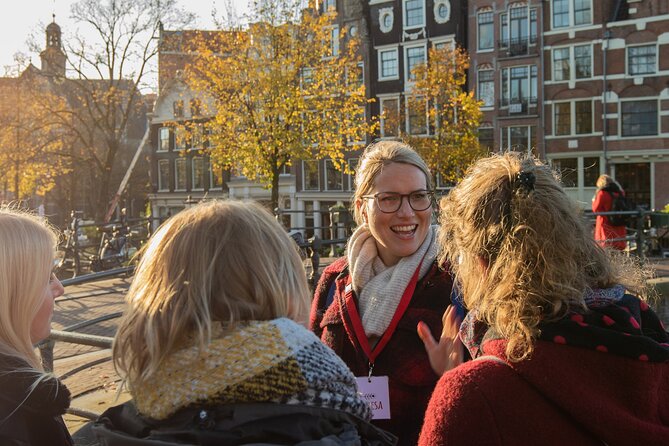
The tour begins at the National Monument, on Dam Square in central Amsterdam. This is a practical meeting point because it is easy to recognize and close to public transportation. You return to the same general meeting point at the end, so you do not have to work out a complicated transfer after the walk.
The opening stop lasts about five minutes. It gives the guide a chance to introduce the route and set the historical scene before the group moves across the square.
Dam Square receives about 15 minutes and provides the tour’s basic framework. You learn how Amsterdam began, how the settlement developed, and how the old town hall later became the Royal Palace. This is useful context because the square is now busy and urban, while its political importance can be easy to miss among trams, pedestrians, and traffic.
I would pay attention here to the contrast between Amsterdam’s commercial beginnings and its later royal image. The guide’s role is important at this early stage. A bare list of buildings would not tell you much, but a clear explanation can help you understand why this particular square became the city’s center.
A few more options to weigh up in Amsterdam
- Amsterdam: Van Gogh Museum Ticket
★ 4.7 · 52,054 reviews - Amsterdam Classic Saloon Boat Cruise with Drinks and Cheese
★ 5.0 · 31,825 reviews - Amsterdam Luxury Canal Cruise + Unlimited Drinks & Bites option
★ 5.0 · 30,518 reviews
Beurs van Berlage and Amsterdam’s Golden Era
The walk continues to the Beurs van Berlage, where about 15 minutes are devoted to Amsterdam’s rise during the Golden Era. This is one of the stronger stops for anyone who wants more than a sightseeing checklist.
The building represents Amsterdam’s long connection with trade and finance. The guide explains how the city became one of the wealthiest places in the world, giving you a framework for understanding the canals, grand merchant houses, and commercial power that appear throughout the center.
This stop also helps balance the tour. Amsterdam is often presented as a city of picturesque canals and relaxed cafés. The Beurs van Berlage points to the hard economic engine behind that picture. You begin to see the old center not just as attractive architecture, but as a place shaped by money, shipping, business, and international connections.
The Nieuwe Kerk follows, with about five minutes on its role in Amsterdam’s development. This is a short exterior-focused pause rather than a full church visit. That keeps the walk moving, though anyone hoping to see the interior should plan a separate visit.
Multatuli and the less comfortable side of the city
The statue of Multatuli receives about ten minutes. This is a particularly worthwhile stop because it brings Amsterdam’s colonial past into the route and connects it with one of the Netherlands’ most important books.
The subject adds moral and political weight to the tour. Amsterdam’s wealth did not come from local trade alone, and a good city walk should not treat the Golden Era as a simple success story. The guide explains the link between Multatuli’s writing and colonial rule, helping you see how literature, public debate, and Dutch overseas power intersected.
This is also the sort of stop that can reward questions. One of the strengths of the tour is its flexible format. Guides such as Josh and Justin have been praised for answering questions and adding extra details when the group showed interest. The route has a plan, but it is not presented as a rigid march from one photo stop to the next.
Magna Plaza and the road toward Jordaan
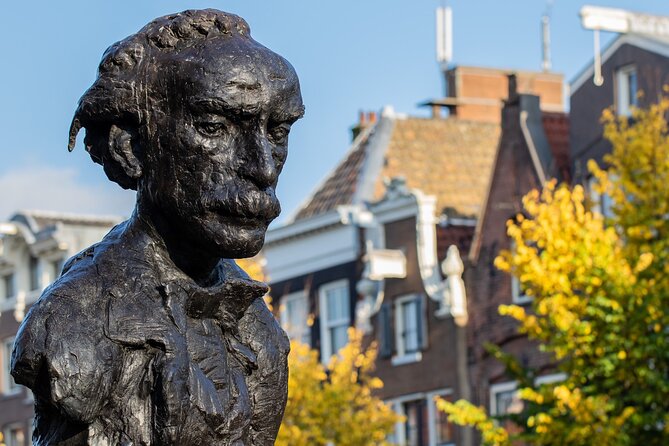
At Magna Plaza, the guide spends about five minutes discussing the former post office and its importance. The building is now associated with shopping, but its earlier civic role gives it another layer.
This is a short stop, yet it helps you notice how Amsterdam reuses historic buildings. A former post office can become a retail destination without losing its place in the city’s story. If you enjoy architecture, this is a good moment to look at the building itself rather than treating it as a quick passage on the way to something more famous.
The route then reaches Westerkerk, Amsterdam’s largest church, for about ten minutes. The guide connects the church with the Jordaan area, one of the city’s best-known neighborhoods. This gives you a sense of how religious buildings, local districts, and urban growth fit together.
Do not expect an extended church visit as part of the two-hour schedule. The value here is the explanation and the view of the surrounding area. The tour uses Westerkerk as a bridge between central Amsterdam and the Jordaan, rather than stopping for a long interior inspection.
A different kind of day out entirely:
- Amsterdam: Heineken Experience Ticket
★ 4.6 · 30,055 reviews - Amsterdam: Rijksmuseum Entry Ticket
★ 4.7 · 25,535 reviews - Amsterdam: Classic Boat Cruise with Optional Cheese & Wine
★ 4.6 · 22,925 reviews - Amsterdam: Evening Cruise with Optional Wine and Snacks
★ 4.4 · 19,696 reviews
Anne Frank, Jewish Amsterdam, and what this tour does not include
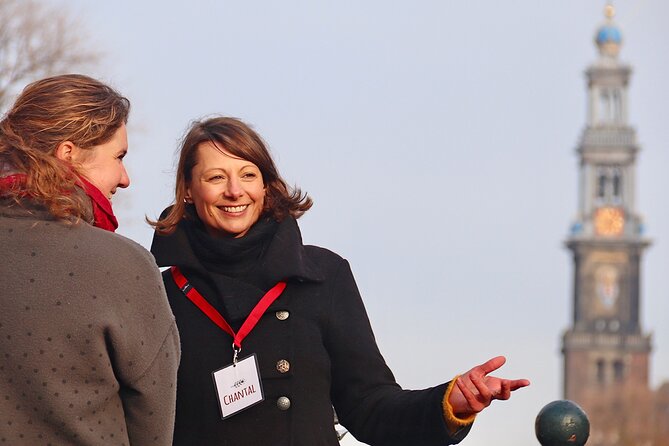
The statue of Anne Frank is the next major stop, with about ten minutes devoted to Jewish life in Amsterdam and the experience of Anne Frank and her family.
This part may be emotionally serious, and the guide’s tone matters. It is not simply a famous-name stop. The purpose is to place Anne Frank within Amsterdam’s Jewish history and the city’s wartime experience.
You should be clear about the limits. This tour does not include entry to the Anne Frank House. One booking experience was affected when an expected Anne Frank House visit did not happen, but the advertised route itself identifies the statue as the stop. If entering the Anne Frank House matters to you, arrange that separately and do not treat this walking tour as a substitute.
The route also does not enter the red-light district. It passes along its southern side, which means you receive some geographic context without making that district the focus. Coffee shops are not visited either. That makes the walk a better fit for someone seeking cultural orientation rather than Amsterdam’s nightlife attractions.
The Gay Monument and Amsterdam’s LGBTQ+ past
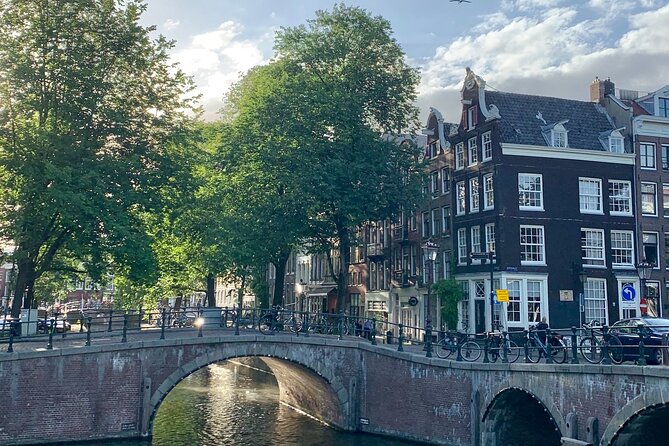
The Gay Monument receives about ten minutes. This stop covers the history of Amsterdam’s LGBTQ+ scene and broadens the tour beyond the standard royal, trading, and wartime subjects.
I value this inclusion because it shows how public space can tell social history. The monument is not just another point on a map. It opens a discussion about identity, rights, memory, and the way Amsterdam has been associated with LGBTQ+ life.
The tour’s subject range is one of its clearest strengths. In a short distance, you move from monarchy and commerce to colonialism, religion, Jewish history, and LGBTQ+ life. The result is not a complete history of Amsterdam, but it is a useful introduction to the forces that shaped the city.
Negen Straatjes for shopping and food advice
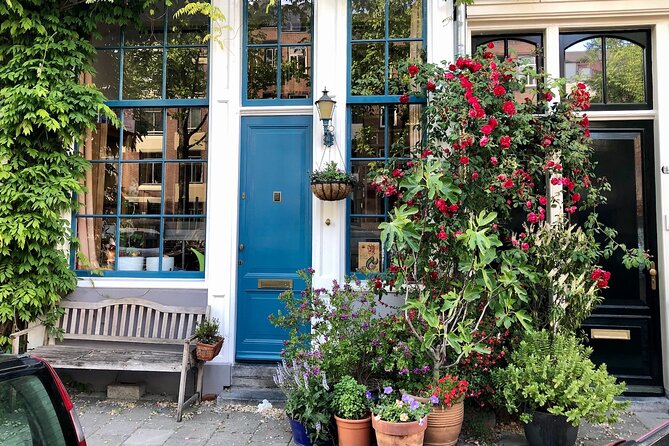
The route reaches the Nine Streets, or Negen Straatjes, for about five minutes. This is a short stop, but the guide uses it to offer shopping advice for after the tour.
That practical finish is helpful. You may not want to shop during a guided walk, and five minutes is not long enough for serious browsing. Instead, you get orientation and can return later at your own pace.
The guide also offers food suggestions. Marina, Noeme, and Stephanie received especially warm praise for making the walk interesting and giving useful advice, including culinary tips. Such recommendations can be more valuable at the start of a visit than another few minutes of formal narration, because you can act on them during the rest of your stay.
Keep your expectations sensible. A guide can point you toward areas and ideas, but the experience does not promise a meal, tastings, discounts, or a dedicated food tour.
Begijnhof, the hidden church, and the final stop at Spui
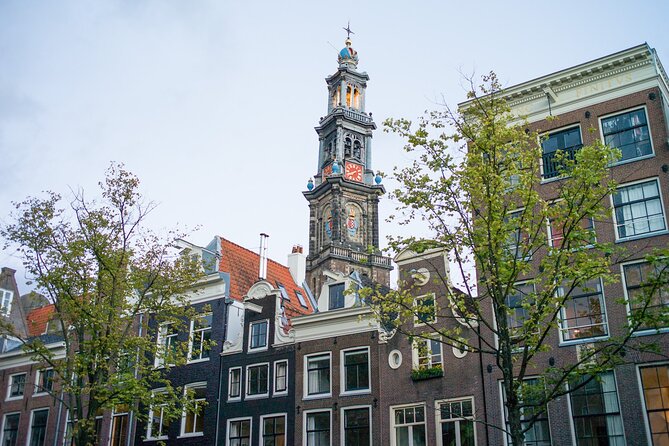
The final section leads to Spui, with about 15 minutes focused on the historic Begijnhof and the Reformation in Amsterdam. You may also be shown how to spot the hidden church inside the courtyard.
This is a fitting end because Begijnhof rewards careful looking. From the street, Amsterdam can seem open and exposed, but courtyards and concealed religious spaces reveal a quieter side of the old city. The guide’s tips can help you recognize similar places after the walk.
The stop also gives the tour a strong religious and social conclusion. Earlier, Nieuwe Kerk and Westerkerk introduced major churches. At Begijnhof, the subject shifts toward religious change and the way faith was practiced during the Reformation.
The route ends back at the meeting point rather than dropping you at Spui. That is convenient if you need to collect belongings or continue from the central area, though it means the walk may not finish exactly where your last sightseeing interest lies.
How the $33.88 price holds up
At $33.88 per person, this tour is priced fairly for a two-hour guided walk in a group capped at 15 people. Since none of the stops require an admission ticket during the tour, you are paying for the guide’s time, planning, language service, and the chance to ask questions.
The value is strongest if you are new to Amsterdam. A guide can connect places that might otherwise seem unrelated, such as the Beurs van Berlage, Multatuli’s statue, the Gay Monument, and Begijnhof. You also receive suggestions for the Nine Streets, food, and later sightseeing.
The value is weaker if you already know central Amsterdam well or prefer to visit interiors. This is not a museum pass, canal cruise, or specialist architecture tour. The itinerary moves through public spaces, and the two-hour limit means most stops are short.
A small group makes the price easier to justify. With no more than 15 people, it should be easier to hear the guide and ask a question than on a large coach-style walk. The pace is described as gentle and set by the slowest person, which is reassuring, though 3 to 4 kilometers still requires steady walking.
Guide quality and language choice
The strongest praise centers on the guides’ delivery. Deborah was described as friendly and careful in her explanations. Justin was praised for taking his time and walking at a comfortable group pace. Josh was singled out for sharing memorable historical details and following up on questions with extra stops.
German-language guiding also appears to be a strong part of the experience. Marina was praised for making the history lively and approachable, while Justus received praise for clear and detailed historical explanations. Noeme was appreciated for covering Amsterdam’s history and economy while drawing attention to small city details.
Stephanie was praised for practical background on local customs and for useful advice. One booking also noted that bringing a dog was not a problem. Since guide assignments can change, you should treat these names as examples of the available guiding style, not a promise that one particular person will lead your departure.
There is one point to check before paying: the main description refers to English, German, and Italian, while the additional details specifically say the tour is in German. If language is important to your plans, confirm the departure language and do not assume every time slot offers all three.
Who should book this walking tour?
I would recommend it to first-time visitors who want a clear introduction before tackling Amsterdam on their own. It also suits families, since children can participate, and the route avoids admission fees and long museum queues.
It works well for anyone interested in social history, not only canals and architecture. The subjects include colonialism, Jewish Amsterdam, the Reformation, LGBTQ+ life, commerce, and royal power. That range gives you more to think about than a simple old-town orientation.
It may also suit returning visitors who want a fresh route and practical suggestions. The guides sometimes follow questions into extra details or less familiar places, which can make the experience feel less fixed.
I would choose something else if you want a museum interior, the Anne Frank House, the red-light district, coffee shops, or a long stop at each landmark. This is a street-level overview, and its strength is connection rather than depth at any single site.
Book only if you are ready for the weather. The experience requires good weather and may be canceled with a choice of another date or a full refund. Bring water and a hat on hot days, and wear comfortable shoes. Free cancellation is available up to 24 hours before the start time, but changes or cancellations inside that window are not refunded.
Should you book it?
Book this tour if you want an affordable, well-paced introduction to Amsterdam’s old center with a small group and a guide who can answer questions. The best reason to choose it is the subject mix: Golden Age wealth, colonial history, Jewish life, LGBTQ+ Amsterdam, religious change, and useful local advice all appear in one walk.
Skip it if you mainly want paid attractions or a focused visit inside the Anne Frank House. For most first visits, though, this is a practical opening activity. It gives you a map in your head, a list of places to revisit, and enough historical context to make the rest of your Amsterdam stay more meaningful.
FAQ
How long is the Amsterdam Cultural Highlights tour?
The walking tour lasts approximately two hours.
What languages are available?
The experience is described as available in English, German, or Italian. The additional tour information specifically states that the tour is in German, so confirm the language for your chosen departure when booking.
Where does the tour start and finish?
It starts at the National Monument on Dam Square, Amsterdam, 1012 JS. The activity ends back at the meeting point.
Does the price include admission tickets?
No admission fees are needed during the tour. The listed sights can be visited for free as part of the walking route.
Does the tour visit the Anne Frank House, the red-light district, or a coffee shop?
The route stops at the Anne Frank statue, not inside the Anne Frank House. It does not visit the red-light district, although it passes along its southern side, and it does not visit a coffee shop.
How much walking is involved?
The route covers about 3 to 4 kilometers on foot. Comfortable shoes are recommended, and you should bring water and a hat in hot weather.
Just added in Amsterdam
- Private Tour Zaanse Schans Windmills and Volendam in Jaguar★ 5.0 · 10 reviews
- Zaanse Schans and Giethoorn Unique Day Trip with Boat Cruise★ 4.5 · 17 reviews
- Windmills-Volendam-Giethoorn Private Tour in Jaguar★ 5.0 · 2 reviews
- Half-Day Private Guided Sightseeing Tour of Zaanse Schans★ 5.0 · 14 reviews
- Best of Netherlands: Zaanse Schans Mills, The Hague & Rotterdam★ 4.5 · 10 reviews
- Zaanse Schans Private Tour Windmills★ 5.0 · 18 reviews
- Zaanse Schans Windmills Edam Volendam and Marken from Amsterdam★ 5.0 · 1 review
- Bike tour in Amsterdam with an Italian guide★ 5.0 · 15 reviews
Amsterdam Tours, compared.

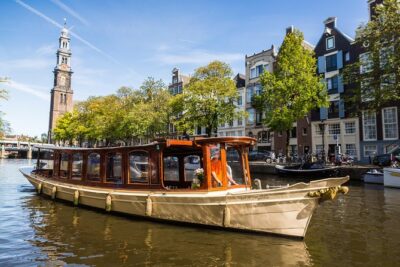
Amsterdam Classic Saloon Boat Cruise with Drinks and Cheese
Read our review →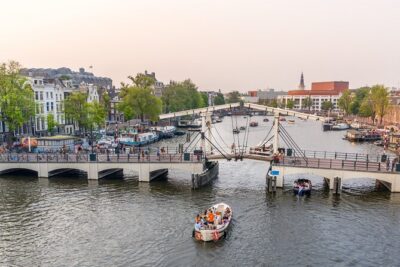
Amsterdam Luxury Canal Cruise + Unlimited Drinks & Bites option
Read our review →
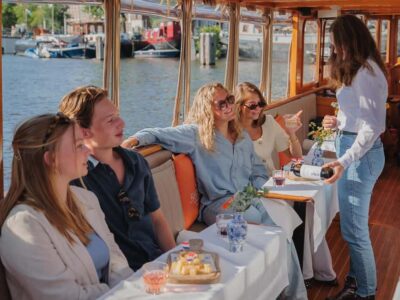
Classic Boat Cruise with Optional Cheese & Wine
Read our review →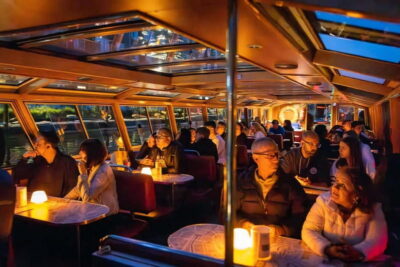
Evening Cruise with Optional Wine and Snacks
Read our review →