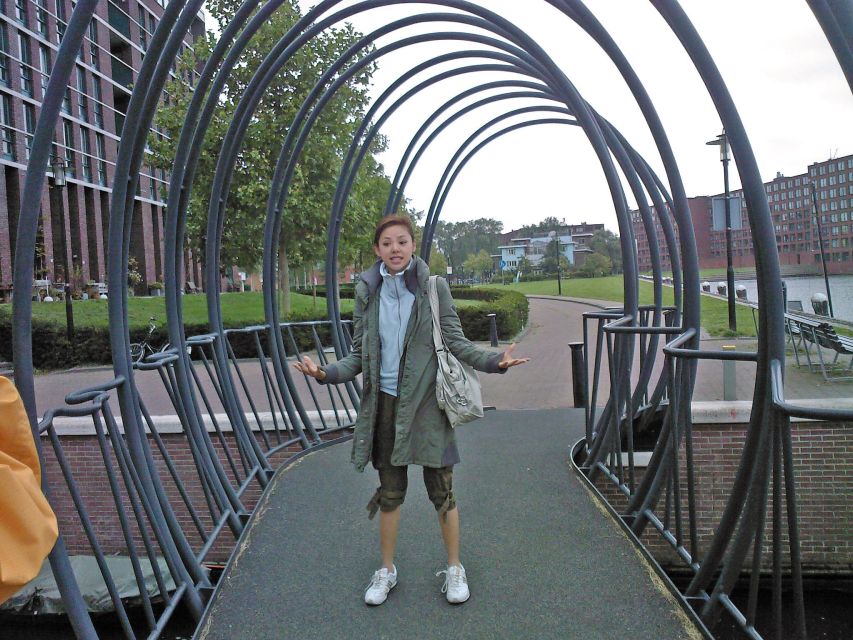
Review · PRIVATE
Amsterdam, Eastern Docklands Architecture: Private Tour
The harbor became a housing laboratory. This private walk shows how Amsterdam turned old working docks into a striking residential district, using five carefully chosen areas to explain the change. I like the contrast between historic industrial traces and bold modern design, and I appreciate that the guide adapts the walk to your interests. The main consideration is that two hours goes quickly, especially if you want long explanations or plenty of photographs.
I also like the small-group format. Your party can ask questions without competing with a crowd, and the guides bring academic training in architecture, sociology, art history, or related fields. The meeting point beside Pakhuis De Zwijger is convenient, but you should arrive ready for a serious walking tour rather than a quick photo stop.
In This Review
- Key points at a glance
- Why Amsterdam’s Eastern Docklands Matter
- Starting Beside Pakhuis De Zwijger
- Java Island: A New Neighborhood With Old References
- KNSM Island: The Other Half of the Comparison
- Borneo and Sporenburg: Family Homes at High Density
- Riet Landen: Park, Housing, and Traffic Together
- The Guides Bring More Than Building Names
- How Much Time Should You Allow?
- Is $235 Good Value for a Private Group?
- Who Will Enjoy This Walk Most?
- Practical Tips for a Better Experience
- Should You Book Amsterdam’s Eastern Docklands Architecture Tour?
- FAQ
- Where does the tour meet?
- How long does the tour last?
- Which districts does the tour cover?
- What languages are available?
- Is this a private tour?
- How much does the tour cost?
- Is the walk wheelchair accessible?
- Are food, drinks, or transfers included?
- Can I bring luggage or a large bag?
- Who leads the tour?
Key points at a glance
- Five distinct dockland districts: Compare Java, KNSM, Borneo, Sporenburg, and Riet Landen rather than seeing the area as one uniform redevelopment project.
- Java and KNSM offer a useful comparison: Both draw on Amsterdam’s past, yet their finished forms look strikingly different.
- Borneo and Sporenburg solve a density problem: The districts fit low-rise family homes into a building density usually linked with apartment blocks.
- Riet Landen combines infrastructure and open space: A traffic junction sits at the heart of a plan that also includes a notable park and housing.
- Academically trained guides add depth: The guides have backgrounds in architecture, sociology, art history, and journalism.
- Private pricing can work well for a group: The cost is $235 for up to 10 people, so the per-person price drops sharply as your group grows.
Why Amsterdam’s Eastern Docklands Matter
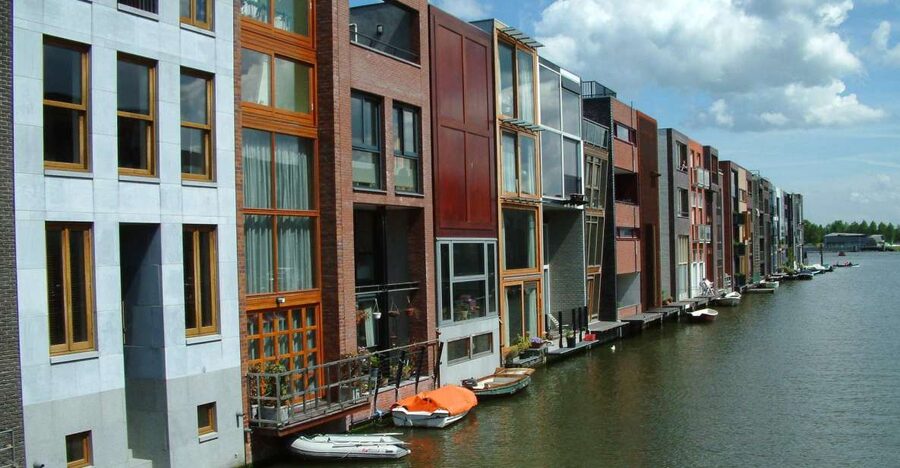
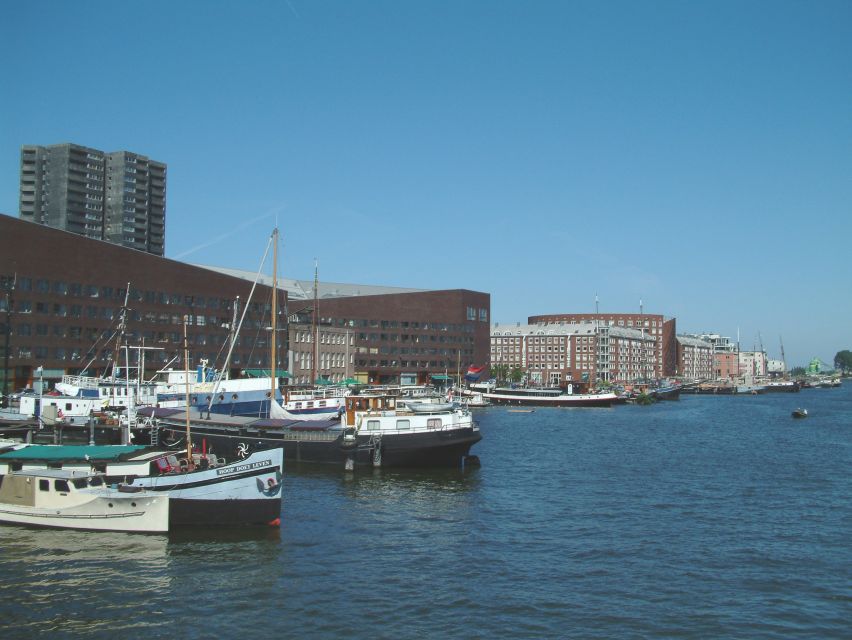
Amsterdam’s Eastern Docklands were once working harbor areas. From the 1970s onward, the district changed into a major residential development zone, with much of the key urban work taking shape in the 1980s and 1990s before continuing into the new millennium.
That timeline gives you a useful way to read the architecture. This is not a collection of isolated buildings placed beside old water. It is a long experiment in how a city can reuse industrial waterfront land for homes, streets, parks, and transport routes.
I find the area especially rewarding because it does not hide its past. The new housing and public spaces are tied to the docks and islands that came before them. You can look at the district as both a design project and a record of Amsterdam’s changing needs.
Your guide focuses on those decisions. Instead of simply pointing out unusual façades, the tour explains how planners dealt with density, waterfront identity, family housing, public space, and connections between separate islands.
A few more options to weigh up in Amsterdam
- Amsterdam: Van Gogh Museum Ticket
★ 4.7 · 52,054 reviews - Amsterdam Classic Saloon Boat Cruise with Drinks and Cheese
★ 5.0 · 31,825 reviews - Amsterdam Luxury Canal Cruise + Unlimited Drinks & Bites option
★ 5.0 · 30,518 reviews
Starting Beside Pakhuis De Zwijger
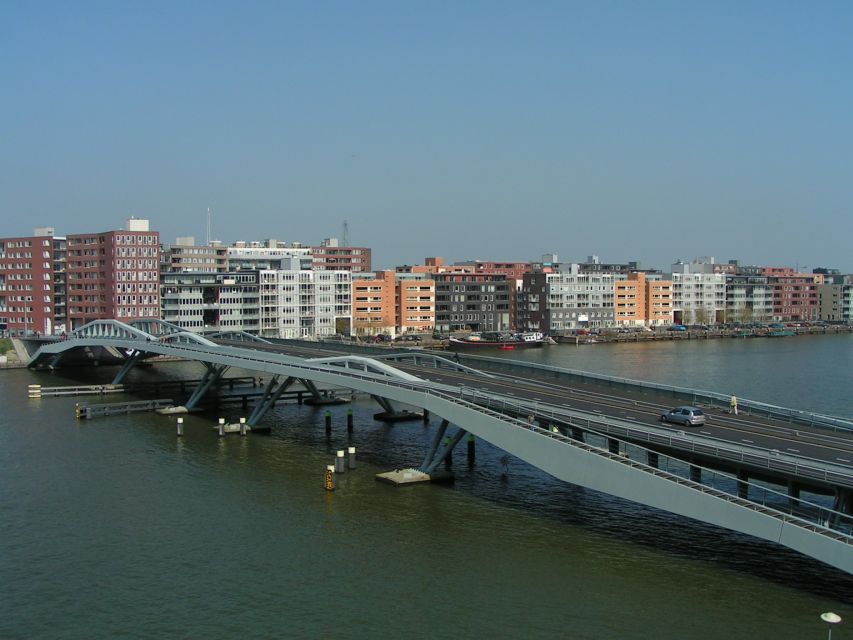
The walk begins in front of Pakhuis De Zwijger, next to Jan Schaeferbrug. This is a sensible meeting point for an architecture tour because it places you at the edge of the former harbor redevelopment area and gives the guide a natural starting point for the district’s story.
You should arrive without luggage or a large bag. The activity specifically does not allow them, and a smaller day bag will make the walk easier.
The tour lasts two hours as scheduled, though the experience can be adapted into a two or three-hour walk to suit your needs. Check the available starting times when booking, since the exact departure time is not fixed in the information provided.
Because this is a private group, your guide can respond to your questions and interests. If you care most about housing design, urban planning, historic preservation, or public space, say so early. The guides are prepared to discuss all of those angles.
Java Island: A New Neighborhood With Old References
Java is one of the first major stops and works as half of an important comparison. Java and KNSM are twin islands in the Eastern Docklands, linked by a broad planning idea inspired by Amsterdam’s past.
That shared starting point makes the difference between them more revealing. You are not comparing two unrelated developments. You are looking at two responses to a similar concept, then seeing how each one produced a different urban character.
Your guide can use Java to explain how historic references were carried into new waterfront housing. The value here is not only in identifying buildings. You learn to ask why a designer might borrow familiar Amsterdam ideas, how those ideas are adjusted for a new setting, and what happens when traditional references meet modern construction.
Java is also a good place to pay attention to the relationship between housing and water. The docklands are not treated as scenery alone. Their position shapes the way the district is organized and helps explain why this former harbor became attractive for residential use.
KNSM Island: The Other Half of the Comparison
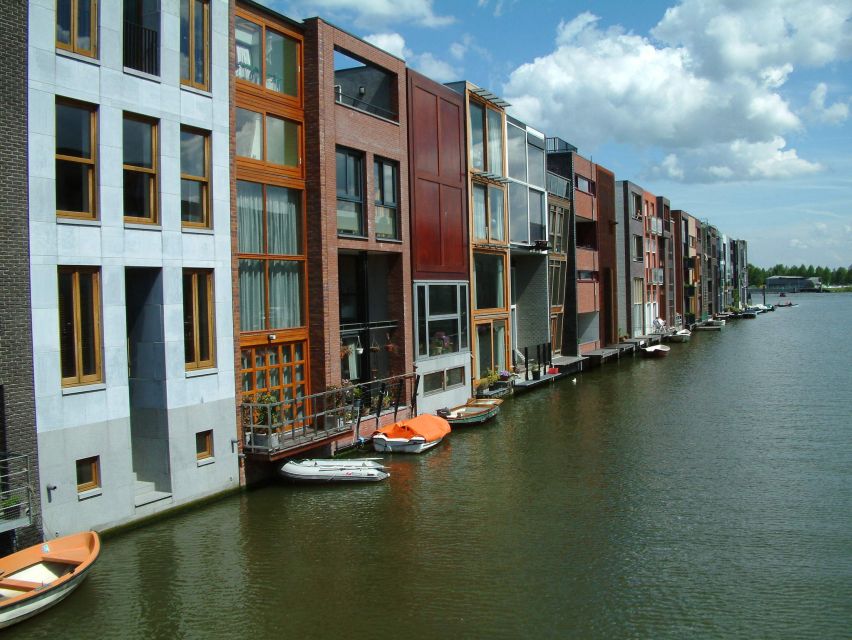
KNSM gives you the second half of the twin-island study. It shares the same broad historical inspiration as Java, but the result is noticeably different.
This is where the private format earns its keep. A guide can pause over the differences rather than rushing through both islands with a list of building names. You can ask why two areas connected by one concept feel so unlike one another, and the guide can relate those differences to design choices and urban goals.
I would pay attention to scale and overall arrangement. The tour is designed to show how each island handles the waterfront and residential development, not merely to collect examples of modern architecture.
KNSM also helps prevent a common misunderstanding about Amsterdam’s docklands. The district was not rebuilt in one single style. Its planners and architects tested different approaches, creating a varied collection of solutions within one larger redevelopment story.
A different kind of day out entirely:
- Amsterdam: Heineken Experience Ticket
★ 4.6 · 30,055 reviews - Amsterdam: Rijksmuseum Entry Ticket
★ 4.7 · 25,535 reviews - Amsterdam: Classic Boat Cruise with Optional Cheese & Wine
★ 4.6 · 22,925 reviews - Amsterdam: Evening Cruise with Optional Wine and Snacks
★ 4.4 · 19,696 reviews
Borneo and Sporenburg: Family Homes at High Density
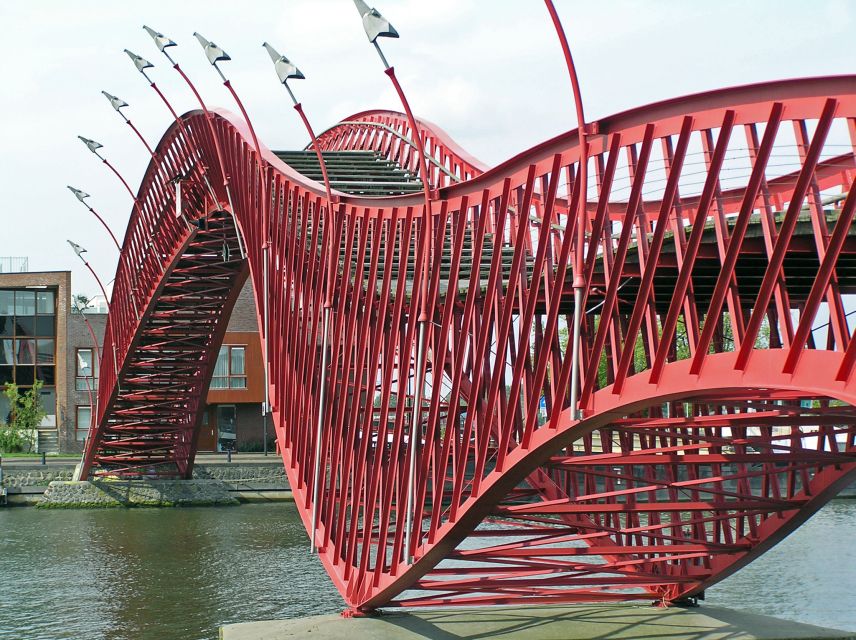
Borneo and Sporenburg tackle one of the most interesting problems on the route. The aim was to provide low-rise, single-family houses while maintaining a density of 100 apartments per acre.
That is a useful number because it explains what you are looking at. Low-rise does not automatically mean low-density. These districts show how a neighborhood can provide family-sized homes without spreading buildings thinly across a large area.
For me, this is one of the tour’s strongest lessons. You can see how urban planners worked against the easy assumption that dense housing must mean tall apartment blocks. The design challenge was to keep homes close together while preserving the feel and practical advantages of individual houses.
Your guide will help connect the form of the streets and buildings to that goal. Look for the way repeated low-rise units create a dense whole. The point is not that every visitor will love each design choice. The point is that Borneo and Sporenburg make the tradeoff visible.
This part of the walk should appeal most to you if you are interested in housing policy or city planning. It also has a direct human scale. Compared with a tour focused only on landmark architecture, this section asks how ordinary residents might live in the new district.
Riet Landen: Park, Housing, and Traffic Together
Riet Landen brings another planning problem into view. The area combines a park, residential development, and a traffic junction in one scheme.
That combination is what makes the stop memorable. Roads and junctions can easily divide a neighborhood, while parks can become leftover spaces rather than central ones. Here, the traffic junction is tied to the plan’s core, and the park envelops it in a way that makes infrastructure part of the overall design discussion.
You will not simply be shown a pleasant green space. You will be asked to consider how movement, housing, and open space can coexist. That is a practical question for any growing city, and it gives the walk relevance beyond Amsterdam.
Riet Landen also provides a useful change of pace after the island districts. Java, KNSM, Borneo, and Sporenburg focus strongly on waterfront housing and density. Riet Landen shifts attention to the spaces between buildings and the pressure created by traffic.
The Guides Bring More Than Building Names
The guides have academic backgrounds in architecture, sociology, and art history. Some also work as architecture and heritage journalists, and two have recently published a book about the Eastern Docklands’ urban development.
That background matters because architecture tours can go in two directions. One version gives you a parade of façades and dates. The better version explains how buildings connect to social needs, political choices, transport, and the way a city uses land. This tour is set up for the second approach.
The strongest qualities to expect are detailed explanations, competent answers, and a lively pace. The available feedback describes the tour as thoroughly explained, responsive to questions and requests, varied, and entertaining. Those are important points for a two-hour walk, since a dense architecture talk can become dry if the guide does not adjust to the group.
No individual guide names are provided, so I cannot tell you who will lead your walk. You can choose among English, Dutch, and German, and the academic approach applies across the guide team.
How Much Time Should You Allow?
The stated duration is two hours, with the walk adaptable to two or three hours. I would treat two hours as the standard visit and the longer version as useful if your group wants more discussion.
Five districts in a short period means the tour will necessarily keep moving. You should expect a broad, connected explanation rather than a long stop at every building. If you are taking many photographs or asking extended questions, the additional time becomes valuable.
The walk is wheelchair accessible. Still, the supplied information does not specify the exact paving, slopes, or restroom arrangements along the route, so you may want to confirm those details in advance if they matter to your party.
Food and drinks are not included, and no transfer is provided. Plan to reach Pakhuis De Zwijger independently and handle refreshments separately.
Is $235 Good Value for a Private Group?
The price is $235 per group of up to 10 people. For one or two people, that is a significant expense for a two-hour walk. For a family, group of friends, university class, or professional design group, the calculation looks much better.
At the full group size, the price works out to $23.50 per person. You are paying for a private guide with academic training, a tailored route, and the chance to ask questions without being part of a large public group.
The value depends on your interest. If you only want to see Amsterdam’s famous canal houses, this is not the right use of your budget. If you want to understand how a former harbor became housing through several competing design ideas, the tour offers a focused way to do it.
I would especially consider it for a group already sharing an interest in architecture, urban planning, housing, or modern Amsterdam. The private setup also helps if your group has mixed knowledge levels. Beginners can ask basic questions, while specialists can push the discussion further.
Who Will Enjoy This Walk Most?
You should book this tour if you like seeing the decisions behind a city rather than only its postcard views. The route rewards curiosity about housing, planning, architecture, and the reuse of industrial land.
It is also a good choice for repeat visitors who have already seen Amsterdam’s historic center. The Eastern Docklands give you a different side of the city, one shaped by redevelopment from the late twentieth century into the new millennium.
Families can benefit from the focus on single-family housing and public space, though the material is still academic enough to appeal to adults. Students and design professionals may find the comparison between Java and KNSM, plus the density question in Borneo and Sporenburg, particularly useful.
You may want to skip it if you dislike walking tours centered on urban theory or if you have only a short time in Amsterdam and want the major historic sights. This experience is specialized by design.
Practical Tips for a Better Experience
Wear comfortable walking shoes and bring only what you need. Large bags and luggage are not allowed, and a lighter load will make it easier to concentrate on buildings, streets, and public spaces.
Ask your guide to compare Java and KNSM directly. That contrast is one of the tour’s central ideas, and it will help you understand why similar starting concepts can create different results.
Also ask about the density figure in Borneo and Sporenburg. It is the detail that turns a pleasant residential walk into a lesson about how cities fit more homes into limited land.
If Riet Landen interests you, request extra attention there during the booking conversation or at the start of the walk. The mix of park, housing, and traffic junction is unusual, and your private guide can adjust the emphasis to your group.
You can cancel up to 24 hours in advance for a full refund, and you can reserve now while paying later. Those policies are useful if your Amsterdam schedule is still shifting.
Should You Book Amsterdam’s Eastern Docklands Architecture Tour?
Book it if you want a serious but approachable look at modern urban development, especially with a group of several people. The tour’s best features are the five-part route, the sharp comparison between Java and KNSM, the high-density family housing in Borneo and Sporenburg, and the unusual planning solution at Riet Landen.
I also like the emphasis on questions and adaptable timing. The available feedback praises the explanations as detailed, competent, varied, and entertaining, which is exactly what you need from a specialist walk.
Skip it if your priority is Amsterdam’s older monuments or if $235 feels too high for your party size. But for up to 10 people who want to understand how a harbor became a modern residential district, this is a focused and worthwhile use of two hours.
FAQ
Where does the tour meet?
The meeting point is in front of Pakhuis De Zwijger, next to Jan Schaeferbrug.
How long does the tour last?
The standard duration is two hours. The walk can be adapted to two or three hours to suit your needs.
Which districts does the tour cover?
The route examines Java, KNSM, Borneo, Sporenburg, and Riet Landen.
What languages are available?
The live guides offer the tour in English, Dutch, or German.
Is this a private tour?
Yes. The booking is for a private group of up to 10 people.
How much does the tour cost?
The price is $235 per group of up to 10 people.
Is the walk wheelchair accessible?
Yes, the activity is listed as wheelchair accessible.
Are food, drinks, or transfers included?
No. Food, drinks, and transfers are not included.
Can I bring luggage or a large bag?
No. Luggage and large bags are not allowed.
Who leads the tour?
The guides have academic backgrounds in fields including architecture, sociology, and art history. Some also work as architecture and heritage journalists.
Just added in Amsterdam
- Private Tour Zaanse Schans Windmills and Volendam in Jaguar★ 5.0 · 10 reviews
- Zaanse Schans and Giethoorn Unique Day Trip with Boat Cruise★ 4.5 · 17 reviews
- Windmills-Volendam-Giethoorn Private Tour in Jaguar★ 5.0 · 2 reviews
- Half-Day Private Guided Sightseeing Tour of Zaanse Schans★ 5.0 · 14 reviews
- Best of Netherlands: Zaanse Schans Mills, The Hague & Rotterdam★ 4.5 · 10 reviews
- Zaanse Schans Private Tour Windmills★ 5.0 · 18 reviews
- Zaanse Schans Windmills Edam Volendam and Marken from Amsterdam★ 5.0 · 1 review
- Zaanse Schans Edam Volendam Private Day Tour from Amsterdam★ 5.0 · 3 reviews
Private, compared.
Rijksmuseum Amsterdam Small-Group Tour with Private Upgrade
Read our review →
Van Gogh Museum Tour Reserved Entry Semi Private
Read our review →
Private Amsterdam Red Light District and Coffee Shop Tour
Read our review →
Anne Frank and Jewish Quarter Amsterdam Private Walking Tour
Read our review →
Amsterdam Airport & Non-Airport Private Transfer to City Center
Read our review →
Private Excursion to Zaanse Schans, Edam, Volendam and Marken
Read our review →
Van Gogh & Rijksmuseum w/ Reserved Entry Semi-Private 8ppl Max
Read our review →