Review · GUIDED
Amsterdam: Jordaan District Tour with a German guide
Jordaan rewards slow walking. This 90-minute German-language tour brings you through 17th-century canals, bridges, and courtyards, with a clear look at how a former working-class district became one of Amsterdam’s most desirable areas. I especially like the visit to a private-feeling courtyard and the chance to pass Anne Frank’s hiding place with some historical context.
I also like the small-group feel and the guide’s practical role. Guides such as Lili have answered many questions with warmth and confidence, while Justin received similar praise for giving personal, informative replies. The main consideration is time: $27 buys a good introduction, not an exhaustive tour, and German is the only listed tour language.
In This Review
- Key points to know before you book
- Why the Jordaan makes a good walking tour
- Meeting beside Westerkerk and the Anne Frank Monument
- Westerkerk and the story above the canals
- The canal belt and Jordaan’s changing identity
- The hofjes: quiet courtyards behind the streets
- Tulip mania in a green courtyard
- Noorderkerk and the northern stretch of the route
- Het Papeneiland and the character of old Amsterdam
- What the guides add to the experience
- Is $27 a good value for 90 minutes?
- Practical details that affect your choice
- Who should book this Jordaan walk?
- Should you book it?
- FAQ
- How long is the Jordaan District Tour?
- What language is the tour conducted in?
- Where does the tour meet?
- Does the tour enter the Anne Frank House?
- Is the walking tour wheelchair accessible?
- Can I book a private tour?
Key points to know before you book
- Secret courtyards are the tour’s special treat: Sint Andrieshofje, Claes Claeszhofje, Karthuizerhofje, and Van Brienenhofje offer quiet spaces most people would miss.
- Anne Frank’s story is included, but the tour does not enter the Anne Frank House: You pass the famous hiding place and receive a short historical introduction.
- The route covers major Jordaan sights in 90 minutes: The Anne Frank Monument, Westerkerk, canal belt, Noorderkerk, Het Papeneiland, and several hofjes all fit into one compact walk.
- The tour is conducted in German: It uses a live native-German guide, with private groups available.
- Meeting at the Anne Frank Monument is simple: Look on the southern side of Westerkerk for the guide wearing a red name tag.
- The price is fair for a focused introduction: At $27 per person, you pay for a small, story-led walk rather than a long city tour.
Why the Jordaan makes a good walking tour

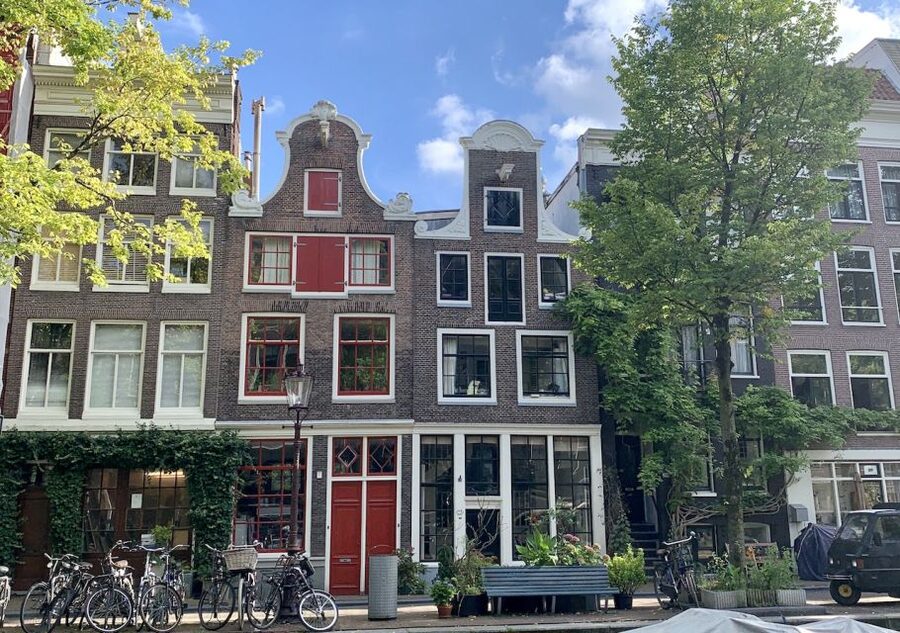
Amsterdam’s Jordaan is best understood on foot. Its appeal is not one grand sight. It is the steady rhythm of narrow streets, old bridges, canals, brick houses, and sudden green courtyards. You can walk here for an hour and keep finding small changes in the view.
The district began as a working-class neighborhood. In recent decades, it has become one of the city’s most sought-after areas. That change gives the tour a useful theme: you are not just looking at pretty streets, you are seeing how Amsterdam changed over time.
I like that the walk connects ordinary places with larger stories. A canal explains city planning. A courtyard shows how people once lived together. A church points to religious divisions. A quiet corner can lead into Amsterdam’s trade history and the frenzy of 17th-century tulip mania.
The route also gives you a manageable first look at the Jordaan. Ninety minutes is long enough to get your bearings without taking over half your day. You can then return to the places that caught your eye, perhaps for a slower walk or a closer look.
A few more options to weigh up in Amsterdam
- Amsterdam: Van Gogh Museum Ticket
★ 4.7 · 52,054 reviews - Amsterdam Classic Saloon Boat Cruise with Drinks and Cheese
★ 5.0 · 31,825 reviews - Amsterdam Luxury Canal Cruise + Unlimited Drinks & Bites option
★ 5.0 · 30,518 reviews
Meeting beside Westerkerk and the Anne Frank Monument
The tour begins in front of the Anne Frank statue on the southern side of Westerkerk. This is a practical starting point because Westerkerk is a major landmark, and the monument gives you a clear visual marker.
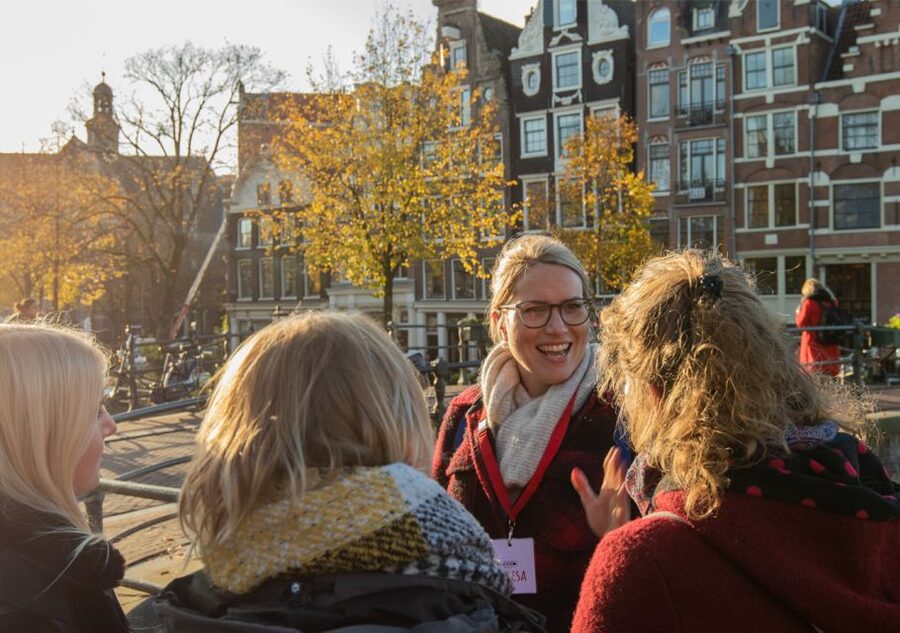
Look for the guide wearing a red name tag around her neck. That detail matters in a busy central area, where several walking groups may gather near the church and canal.
The opening stop lasts about 15 minutes. Your guide explains the Anne Frank story as you stand near her monument and then pass the building associated with her hiding place. This is a brief introduction, not a visit to the Anne Frank House, so you should book the separate museum if entering the house is important to you.
Still, the location gives the subject weight. You are hearing about Anne Frank in the same district where her family’s wartime story remains part of Amsterdam’s public memory. The guide can also answer questions, which helps keep this sensitive subject from becoming a rushed list of dates.
Westerkerk and the story above the canals
The next stop is Westerkerk, with around 10 minutes of guided explanation. The church helps you read the neighborhood around it. Its position beside the canal belt makes it a useful reference point as the route moves into the Jordaan.
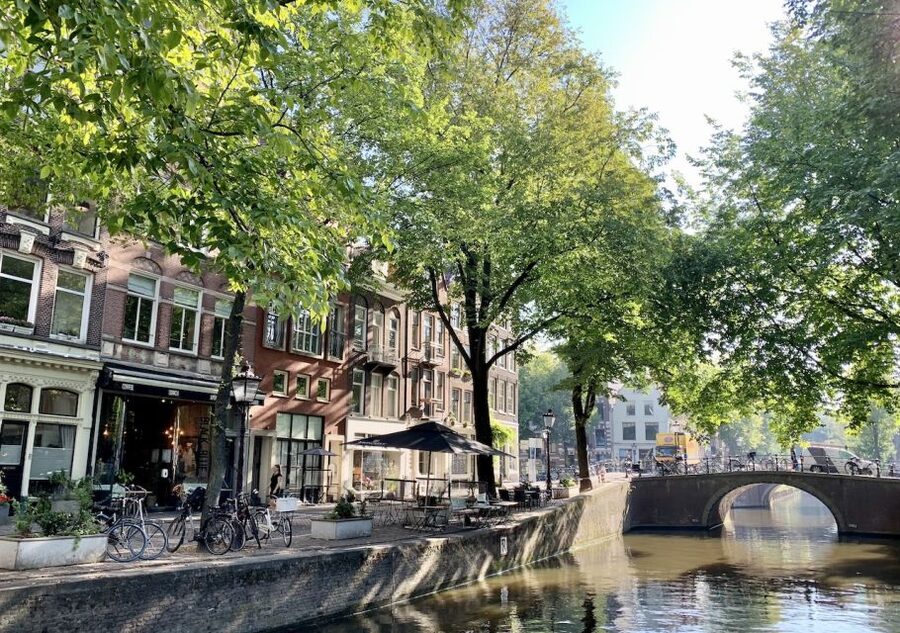
From here, you begin to see how Amsterdam’s canals shape daily life and city design. The guide discusses the 400-year-old canal system, which received UNESCO World Heritage status in 2010.
That context is valuable because the canals are easy to treat as scenery alone. A guide gives you a reason to notice the pattern of waterways, bridges, and streets. You begin to understand that the views are the result of careful planning, not just picturesque chance.
The stop is short, so do not expect a full architectural lecture. Think of it as a foundation for the rest of the walk. As you continue, the canals become a visual thread connecting the district’s homes, churches, courtyards, and old businesses.
The canal belt and Jordaan’s changing identity
The Grachtengordel, or canal belt, receives another 10-minute stop for photographs and commentary. This is where the tour makes the district’s transformation easier to understand.
Amsterdam’s old canals are famous, but the Jordaan has its own character. The route takes you away from a single postcard view and into backstreets where the scale feels more personal. Bridges and house fronts invite frequent stops, so keep your camera ready.
I appreciate the historical balance here. The Jordaan is now highly desirable, but the tour does not present it as timeless luxury. You learn about its earlier working-class character and the changes that made it a fashionable part of Amsterdam.
That contrast may be the most useful idea on the walk. It gives you a way to look past polished façades and ask who lived here before the neighborhood became so prized. The guide’s stories and answers are central to making that contrast clear.
A different kind of day out entirely:
- Amsterdam: Heineken Experience Ticket
★ 4.6 · 30,055 reviews - Amsterdam: Rijksmuseum Entry Ticket
★ 4.7 · 25,535 reviews - Amsterdam: Classic Boat Cruise with Optional Cheese & Wine
★ 4.6 · 22,925 reviews - Amsterdam: Evening Cruise with Optional Wine and Snacks
★ 4.4 · 19,696 reviews
The hofjes: quiet courtyards behind the streets
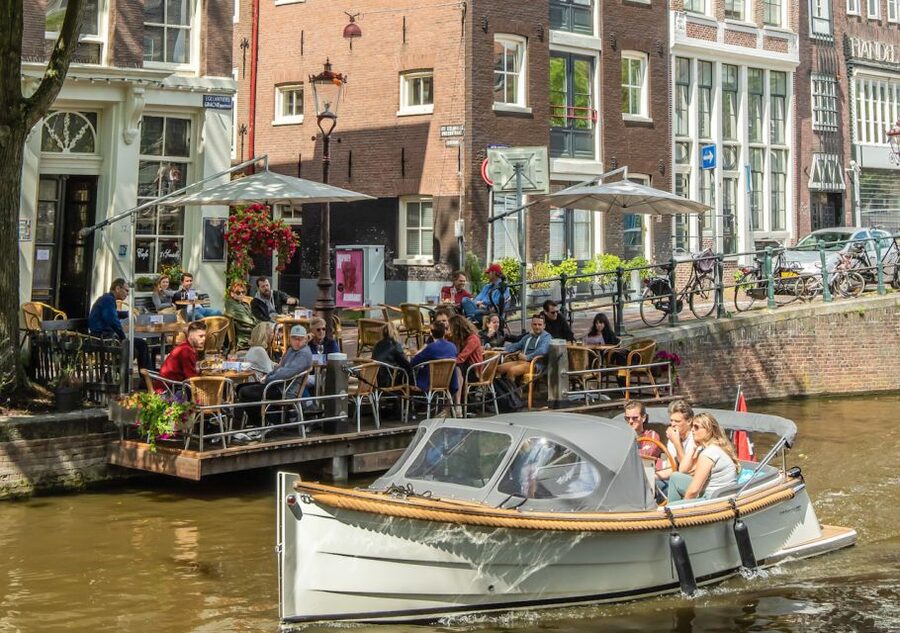
The strongest part of the tour is the series of hofjes, or enclosed courtyards. These spaces are easy to miss if you simply follow the main canal streets. The tour includes visits or photo stops at Sint Andrieshofje, Claes Claeszhofje, Karthuizerhofje, and Van Brienenhofje.
Each courtyard receives about 10 minutes, although the exact time may vary with the group and access. You enter a calmer setting, often with greenery and a much softer atmosphere than the surrounding streets. The contrast is striking: Amsterdam can feel busy just outside, while a hofje can seem almost private.
The courtyards are not just pleasant places for photographs. They help explain how residents shared space and how community life developed in the old district. Your guide can connect the physical layout with the people who lived there and the neighborhood’s social past.
The stop at Sint Andrieshofje is especially useful as an early introduction to this side of the Jordaan. If you have never noticed Amsterdam’s courtyard entrances before, you will start looking for them after this tour.
Claes Claeszhofje and Karthuizerhofje continue the pattern. The value comes from comparison. Instead of seeing one courtyard and moving on, you visit several and get a better sense of how these enclosed spaces fit into the district.
Van Brienenhofje comes later in the route, giving you one more chance to appreciate this quieter form of Amsterdam architecture. Access to courtyards can depend on the site, so treat the visit as a privilege rather than a guaranteed private viewing experience. The supplied tour information presents these as part of the route, but courtyard spaces may still require respectful behavior and a low voice.
Several people who took the tour with Lili specifically praised the chance to enter courtyards they would never have found alone. That is exactly where the $27 begins to make sense. You are paying for access in the broadest sense, meaning someone leads you to places you might otherwise walk past.
Tulip mania in a green courtyard
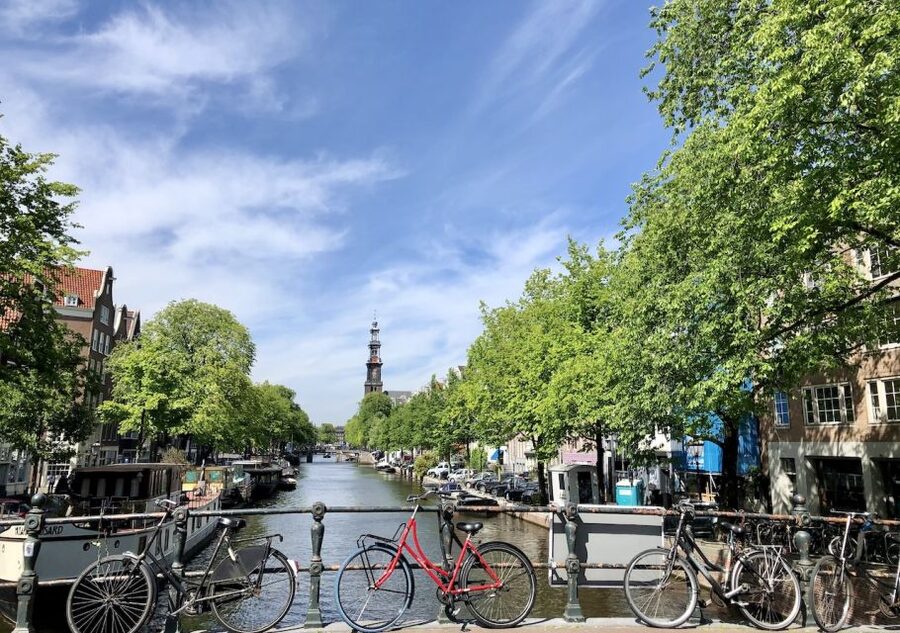
One of the courtyards becomes the setting for a short explanation of tulip mania in the 17th century. This is a smart choice of subject because it connects a quiet present-day space with one of the most famous episodes in Dutch economic history.
You learn how tulips became objects of intense interest and speculation. The garden gives the story a physical setting rather than leaving it as an abstract tale about prices and trade.
Expect a brief overview, not a university course in Dutch finance. The point is to add another layer to Amsterdam’s past and show how trade, taste, and money shaped the city.
I like this part because it breaks up the architectural material. After churches, canals, and houses, the tulip story gives the walk a different kind of energy. It also leaves you with a memorable example of how quickly fashion can influence an economy.
Noorderkerk and the northern stretch of the route
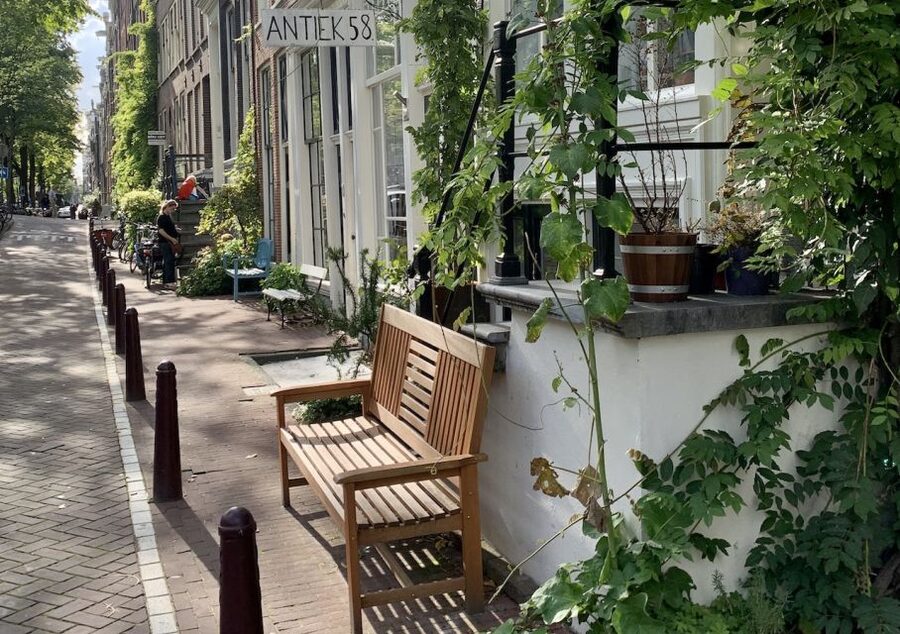
The walk continues to Noorderkerk for about 10 minutes. The church is another marker of the Jordaan’s religious and civic history, and it gives the route a sense of movement through the district rather than a simple loop around the Anne Frank area.
By this point, you have seen several kinds of space: the major church beside Westerkerk, the planned canal belt, quiet courtyards, and the narrower streets of the neighborhood. Noorderkerk helps bring those pieces together.
The stop includes time for photographs and a guided explanation. You will want comfortable shoes because the tour involves steady walking over Amsterdam’s streets and bridges. The route is listed as wheelchair accessible, but if you need specific access details for a particular courtyard, it is sensible to ask when booking.
Het Papeneiland and the character of old Amsterdam

Het Papeneiland receives a shorter five-minute stop. This is a compact pause for a photograph and a little local context.
The name and setting offer another glimpse into Amsterdam’s religious past. The stop is brief, so it will not carry the same weight as the courtyards or Anne Frank Monument. Still, it adds variety and keeps the tour from focusing only on the district’s most famous addresses.
Short stops can be useful on a 90-minute walk. They give you a clear point of interest without slowing the group for too long. If you prefer a leisurely pace with long conversations at each site, the schedule may feel brisk.
What the guides add to the experience
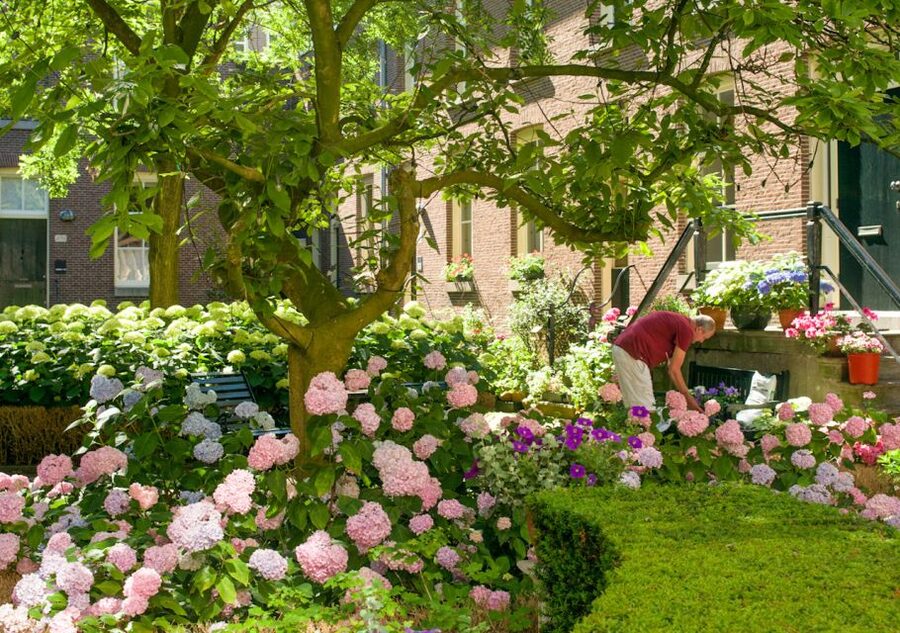
The tour is in German and led by a native-German guide. That matters if you want to ask questions freely or prefer historical explanations in your first language.
Lili has guided small groups through the Jordaan and received especially warm praise for being punctual, friendly, and able to handle many questions. One group of eight found the courtyard visits particularly worthwhile, and another group described a pleasant walk with her.
Justin has also been praised for giving informative, individual answers. These details suggest that the guide’s personality is an important part of the experience. This is not an audio guide with a fixed script. You have a live person who can respond to your interests.
The group size can vary, and private tours are available. A small group is likely the better value for most people at $27. A private option makes more sense if you want to control the pace, ask many questions, or have a particular interest in Anne Frank, canal planning, or Dutch social history.
Is $27 a good value for 90 minutes?
At $27 per person, this tour sits in a reasonable range for a focused city walk. You receive a live German guide, a carefully arranged route, historical explanation, and access to several courtyards that are easy to overlook.
The included €1.50 city tax is a small practical benefit. More important is what the tour saves you in time and missed opportunities. You could wander the Jordaan alone for free, but you might pass the hofjes without noticing the entrances or understanding why they matter.
The price is less attractive if you only want photographs or already know the Jordaan well. It is better suited to someone visiting Amsterdam for the first time, someone who wants German commentary, or someone who prefers local history to a broad sightseeing circuit.
A five-star rating from 62 submitted ratings supports the idea that the basic format works well, particularly for people who value the guide’s answers and the courtyard visits. I would still keep expectations in proportion: this is a short neighborhood orientation, not a full study of Amsterdam.
Practical details that affect your choice
The total duration is 1.5 hours, with the itinerary adding up to a series of stops lasting five to 15 minutes. The route returns to the Anne Frank Monument, making it easy to continue elsewhere in central Amsterdam afterward.
The tour is listed as wheelchair accessible. Since several courtyards are included, you may want to confirm the access arrangements for your specific date if mobility needs are a major concern.
German is the only listed language. A live guide is included, and private groups can be arranged. The tour also permits cancellation up to 24 hours in advance for a full refund, and you can reserve now and pay later, which helps if your Amsterdam schedule is still changing.
Bring comfortable shoes and allow a few minutes to find the Anne Frank statue. The red name tag is the key meeting clue. Keep your camera ready, but remember that the courtyards are real residential or historic spaces, not staged photo sets.
Who should book this Jordaan walk?
I would choose this tour if you want a short, focused introduction to the Jordaan in German. It suits first-time visitors, couples, families, and small groups who want stories attached to the streets rather than a long list of monuments.
It is also a good fit if you are curious about Amsterdam beyond the main canals. The courtyards are the chief reason to go. They offer a side of the district that is difficult to find by accident.
You may want something else if you need a full Anne Frank experience, since the tour only passes the hiding place and gives a brief introduction. It may also feel too short if you want extended time inside each church or courtyard.
Should you book it?
Book this Jordaan tour if you want a well-priced German walk with a clear route, several quiet courtyards, and a guide who can answer personal questions. Lili and Justin are names worth noting if you see them available, since their friendly, responsive style has been a major strength.
Skip it if you already know the Jordaan well or prefer exploring without a schedule. For most German-speaking visitors, though, $27 is a sensible price for 90 minutes of local context, especially when the hofjes and tulip story give the walk more substance than a simple canal stroll.
FAQ
How long is the Jordaan District Tour?
The tour lasts 1.5 hours, or 90 minutes.
What language is the tour conducted in?
The live tour is conducted in German by a native-German guide.
Where does the tour meet?
Meet in front of the Anne Frank statue on the southern side of Westerkerk. The guide will wear a red name tag around her neck.
Does the tour enter the Anne Frank House?
No. The route passes Anne Frank’s famous hiding place and includes a brief introduction to her story. The tour information does not include entry to the Anne Frank House.
Is the walking tour wheelchair accessible?
Yes, the activity is listed as wheelchair accessible.
Can I book a private tour?
Yes. A private group option is available, in addition to the standard group format.
Just added in Amsterdam
- Private Tour Zaanse Schans Windmills and Volendam in Jaguar★ 5.0 · 10 reviews
- Half-Day Private Guided Sightseeing Tour of Zaanse Schans★ 5.0 · 14 reviews
- Zaanse Schans and Giethoorn Unique Day Trip with Boat Cruise★ 4.5 · 17 reviews
- Windmills-Volendam-Giethoorn Private Tour in Jaguar★ 5.0 · 2 reviews
- Best of Netherlands: Zaanse Schans Mills, The Hague & Rotterdam★ 4.5 · 10 reviews
- Zaanse Schans Private Tour Windmills★ 5.0 · 18 reviews
- Zaanse Schans Windmills Edam Volendam and Marken from Amsterdam★ 5.0 · 1 review
- Zaanse Schans Edam Volendam Private Day Tour from Amsterdam★ 5.0 · 3 reviews
Guided, compared.
75 Minute City Canal Cruise with Audio Guide
Read our review →
Anne Frank’s Story – Guided Walking Tour through Amsterdam
Read our review →

Guided Zaanse Schans, Windmills & Cheese Tour
Read our review →

Amsterdam Evening Canal Cruise with Live Guide and Onboard Bar
Read our review →