
Review · FOOD & DRINK
Amsterdam Jordaan Food & Drinks Tour with Eating Europe
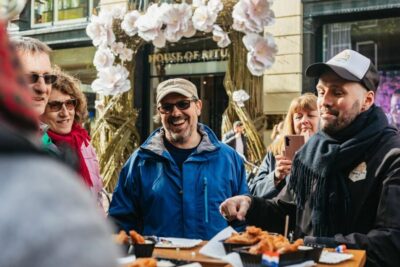
Come hungry, leave with a new view of Amsterdam. This three-hour Eating Europe tour pairs classic Dutch food with a gentle walk through the Jordaan, one of Amsterdam’s most appealing neighborhoods. I like the thoughtful mix of apple pie, aged Gouda, herring, fried fish, poffertjes, bitterballen, and jenever. I also like the small-group limit of 12, which helps the tour feel social rather than mechanical. The main consideration is that the tastings can feel like a full meal for some people, but a little light for others.
The route gives you more than Dutch snack food. Your guide explains how Indonesian and Surinamese cooking shaped Amsterdam’s food culture, while the streets reveal how the Jordaan changed from a working-class quarter into a fashionable dining district. Guides such as Gerard, Stephanie, Danielle, Elena, Paul, and Micky have earned especially warm praise for their humor, personal stories, and care with dietary requests.
The price is $110.05 per person, which is not cheap for three hours. Still, it includes several food tastings, drinks, local history, and a guided walk through places you could easily miss on your own. Stop offerings vary by day and season, so you should book this for the overall food-and-neighborhood experience, not for a fixed menu.
In This Review
- Key things to know before booking
- Why the Jordaan makes such a good food-tour setting
- Papeneiland and Amsterdam’s famous apple pie
- Herring, kibbeling, and the courage to try Dutch fish
- Gouda at Café De Poort
- Surinamese rotirol and Amsterdam’s wider food culture
- Poffertjes on Oude Leliestraat
- Anne Frank’s House and the canals between bites
- Bitterballen and jenever at Café Dialoog
- How much food do you really get?
- The guide can shape the whole afternoon
- Is $110.05 good value?
- Practical details for a smooth visit
- Who should book this Jordaan food tour?
- Should you book the Amsterdam Jordaan Food and Drinks Tour?
- FAQ
- How long does the Amsterdam Jordaan food tour last?
- Where does the tour begin?
- Where does the tour end?
- What foods are included?
- Are drinks included?
- How large is the group?
- Can dietary requirements be accommodated?
Key things to know before booking
- A 400-year-old brown café starts the tour with apple pie, coffee, cappuccino, or tea.
- The tasting menu crosses cultures, with Dutch staples alongside Surinamese and Indonesian influences.
- Drinks are part of the experience, including local beer, wine, and traditional jenever.
- The group is capped at 12 people, a useful size for conversation and personal attention.
- The walking is moderate and broken up by food stops, but rain can make the cobbled streets and canals less pleasant.
- The menu changes, and serious food allergies may make this tour unsuitable.
Why the Jordaan makes such a good food-tour setting
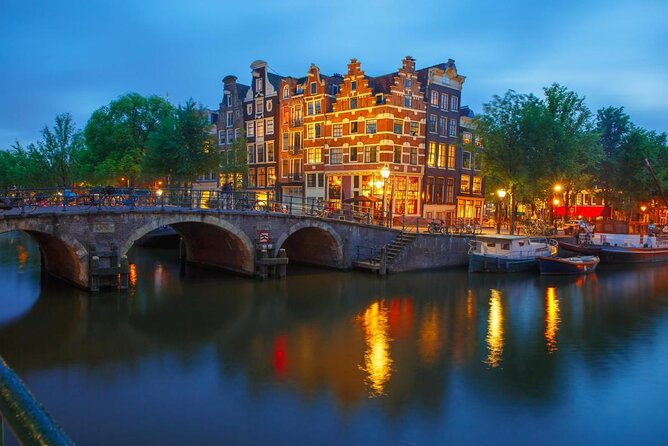
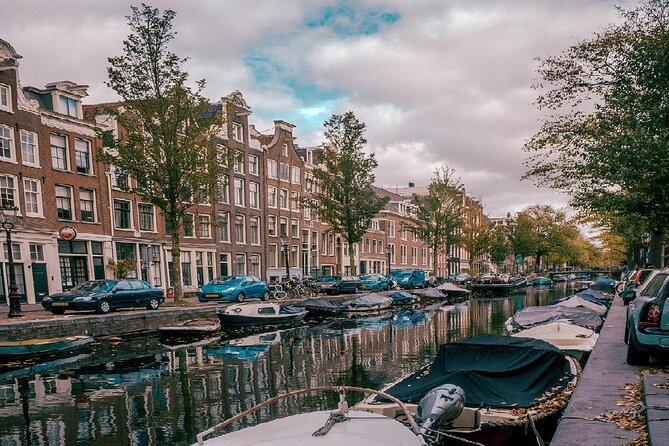
The Jordaan gives the tour a strong sense of place. Its narrow streets and canals once served workers, artists, and migrants. Today, the same area is known for cafés, restaurants, specialty shops, and attractive 17th-century buildings.
I like that the food is tied to the neighborhood rather than presented as a string of unrelated samples. As you walk from one stop to the next, your guide connects everyday dishes with Amsterdam’s past, including the cramped alleys known as De Gangen Willemstraat. These passageways once housed some of the city’s poorest residents, with overcrowding, hunger, and disease shaping daily life.
The route also passes the exterior of Anne Frank’s House. You do not go inside, and this is not a museum tour, but the guide provides context about Amsterdam during the Second World War and its effect on the city’s culture and food traditions.
This is a useful way to see the Jordaan if you want more than postcard canals. You get architecture, social history, and food in one outing, with enough walking between tastings to keep the afternoon moving.
More Food Tours in Amsterdam
- 10 Tastes of Amsterdam: Food Tour by UNESCO Canals and Jordaan
★ 5.0 · 3,020 reviews - Amsterdam Food and Cultural Tour with Tastings
★ 5.0 · 2,442 reviews - Amsterdam: Premium Henri Willig Cheese Tasting Experience
★ 4.7 · 1,106 reviews
Papeneiland and Amsterdam’s famous apple pie
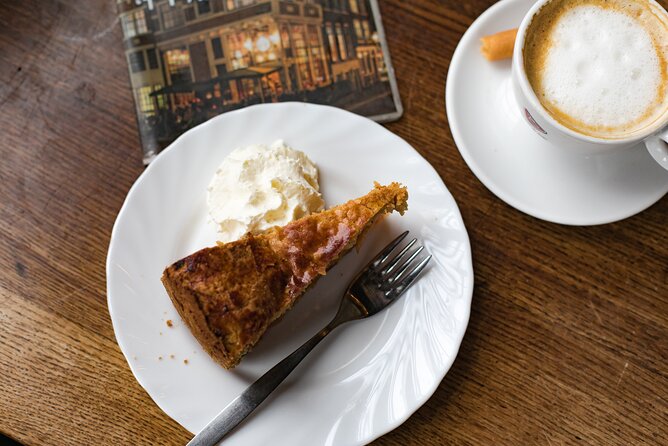
The tour begins at Noordermarkt 48 and heads to The Papeneiland, a brown café with about 400 years of history. The first stop is a smart choice because it eases you into the experience with something familiar: apple pie served with coffee, cappuccino, or tea.
The café’s family recipe has attracted generations of customers, including former US president Bill Clinton. The pie is often described as one of the city’s best, but the bigger pleasure is the setting. A brown café is a traditional Amsterdam pub with a cozy, timeworn feel, and The Papeneiland gives you a taste of that local institution before the more unusual foods arrive.
You spend about 30 minutes here, so this is not a quick bite grabbed while standing. It gives your guide time to introduce the culinary traditions of the Jordaan and explain how café culture fits into city life.
If you have a sweet tooth, this may be your favorite stop. If you prefer savory food, do not worry. The apple pie is only the opening act.
Herring, kibbeling, and the courage to try Dutch fish
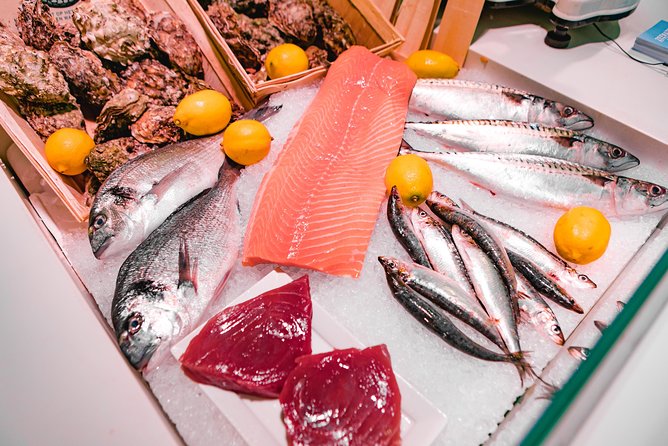
At Vishandel Centrum, the food turns more traditionally Dutch. You taste fresh herring and crispy kibbeling, a fried fish dish served in many Dutch fish shops.
The herring is prepared in the open back area, giving you a look at the work behind the counter rather than a polished restaurant presentation. It may be served with raw onions and pickles. The combination can sound daunting if you have never eaten herring this way, but the tasting portion makes it easy to try without committing to a full plate.
Several people arrive expecting to dislike the herring and end up enjoying it. That is one reason a guided food tour is useful: your guide can explain how to eat it and place the dish in Dutch food culture, rather than leaving you to guess.
The crispy fish provides a safer follow-up for cautious eaters. It is familiar in texture and flavor, while still giving you an everyday Dutch specialty. The stop lasts about 15 minutes, so expect a focused tasting rather than a long meal.
Gouda at Café De Poort
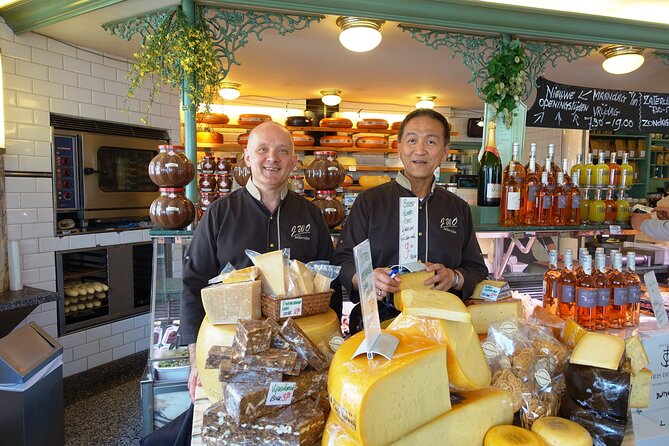
Café De Poort provides a different side of Dutch food. Here you taste organic Gouda cheeses at different stages of aging, with the changing texture and flavor explained along the way.
Young and aged Gouda can feel like two different foods. The younger cheese is generally milder and softer, while the older varieties offer firmer texture and stronger flavor. The tasting may be paired with coffee, wine, or beer, depending on the day’s arrangements.
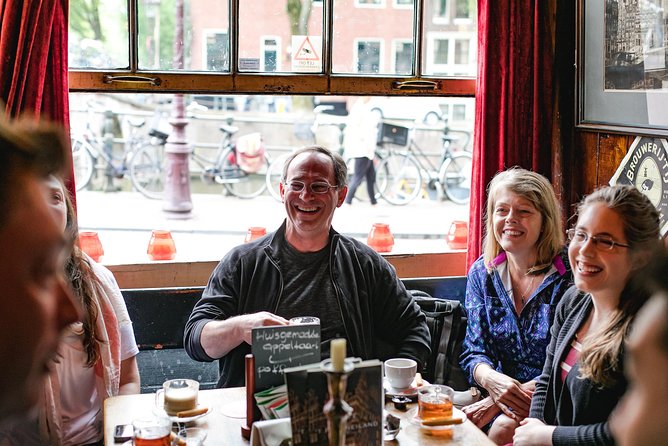
The café setting matters. You are not sampling cheese in a sterile shop. You are sitting in a traditional brown café that locals use as a social space. The stop takes about 30 minutes, making it one of the more relaxed parts of the route.
I especially like this stop for visitors who think Dutch cuisine begins and ends with cheese. You get to understand how one familiar product changes with age and pairing. It also gives you a useful idea of what to buy later at a market or specialty shop.
A different kind of day out entirely:
- Amsterdam: Van Gogh Museum Ticket
★ 4.7 · 52,054 reviews - Amsterdam Classic Saloon Boat Cruise with Drinks and Cheese
★ 5.0 · 31,825 reviews - Amsterdam Luxury Canal Cruise + Unlimited Drinks & Bites option
★ 5.0 · 30,518 reviews - Amsterdam: Heineken Experience Ticket
★ 4.6 · 30,055 reviews
Surinamese rotirol and Amsterdam’s wider food culture
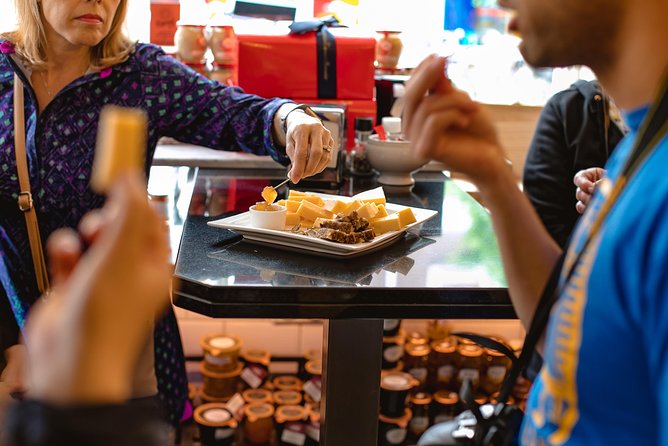
At Mama’s Koelkast, the tour moves beyond strictly Dutch dishes. Mama Jane serves a homemade Surinamese rotirol, reflecting one of the many communities that have shaped Amsterdam’s food scene.
This is an important part of the experience. Amsterdam food is not only pancakes, cheese, and fried snacks. Indonesian and Surinamese influences are woven into daily eating, and this stop helps show that the city’s cuisine developed through migration and exchange.
The food comes from a catering shop where women share their culinary heritage. That makes the tasting feel more personal than a standard restaurant visit. You get a dish with a family and community connection, while your guide explains how these influences became part of Amsterdam’s identity.
The portion is a short tasting, around 15 minutes. It is not meant to be a full restaurant meal, but it gives you a reason to seek out more Surinamese or Indonesian food during your stay.
Poffertjes on Oude Leliestraat
At Pat’s Poffertjes, you get one of the Netherlands’ most charming sweet snacks. Poffertjes are small, fluffy pancakes cooked fresh on a griddle and served warm with butter and powdered sugar.
The cooking is part of the fun. You can watch the little pancakes being made instead of receiving something that has been sitting around. After the fish, cheese, and rotirol, the poffertjes bring the route back to a simple, comforting Dutch treat.
This stop is brief, but it helps keep the pacing varied. You are not sitting in the same kind of café all afternoon. The tour shifts between shops, pubs, and quick food counters, with the streets of the Jordaan linking everything together.
Anne Frank’s House and the canals between bites
The route passes Anne Frank’s House and follows some of Amsterdam’s most attractive canals. Your guide discusses the exterior site and offers background on the Second World War.
You should be clear about what this means: admission to Anne Frank’s House is not included, and the tour does not replace a visit inside. It is a short historical reference within a food-and-walking route.
The canal walk gives you time to digest and look around. Your guide may point out 17th-century architecture and explain how the city’s Golden Age affected food, trade, and daily life. The walk is not simply transportation between restaurants.
Several people describe the amount of walking as comfortable, with stops spaced through the three-hour route. Still, Amsterdam weather can change quickly. Rain made the walk less enjoyable for one group, though the food and guide kept the experience worthwhile. Wear shoes suited to uneven streets and bring weather protection.
Bitterballen and jenever at Café Dialoog
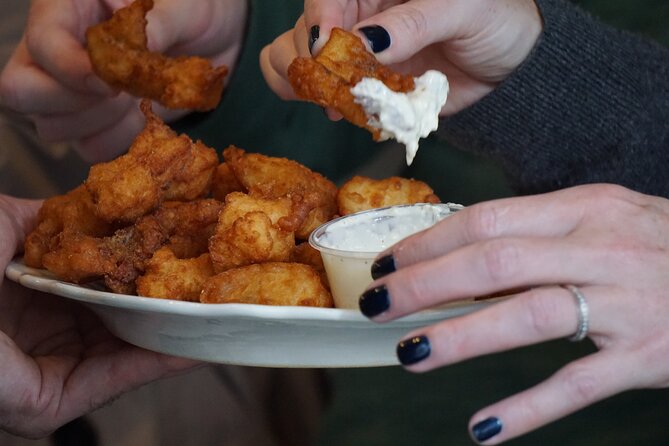
The tour ends at Café Dialoog at Prinsengracht 261a, near Anne Frank’s House. Here you have crispy bitterballen with jenever, a classic Dutch pairing.
Bitterballen are deep-fried savory snacks with a soft filling inside. They are a common café and bar food, especially when paired with a drink. Jenever is a juniper-based Dutch spirit related to gin, but its flavor and character are its own. It is smoother than many first-time drinkers expect.
This final stop brings together the social side of Dutch food. You are in a cozy brown café, sharing a traditional bar snack and a local drink. It is a fitting finish after a route that has moved through sweet foods, seafood, cheese, and international influences.
Included drinks may also include local beer and wine at other points on the route. Extra drinks are not included, so budget for those if you want to continue drinking after the included tastings.
How much food do you really get?
The tour is designed as a tasting crawl, not a sit-down lunch. The stops can add up to a substantial amount of food, especially with apple pie, fish, cheese, rotirol, poffertjes, and bitterballen included.
Some people find the portions satisfyingly generous. One useful caution is that a diner expecting several full courses may want more substantial food. I would eat a light breakfast or early lunch beforehand, but I would not arrive starving.
The variety is the main value. You are not paying for one large dish. You are paying to try foods you might otherwise overlook, learn what they are, and receive enough context to recognize them later.
The exact menu can change by season or day. The advertised examples are a guide to the kind of food you may encounter, not a guaranteed fixed list. Vegetarian and gluten-free requests can often be accommodated if you contact the company or add a note when booking, but severe or life-threatening allergies are not suitable for this experience.
The guide can shape the whole afternoon
Food tours depend heavily on the person leading them. The strongest feedback centers on the guides, and the names that come up repeatedly include Gerard, Stephanie, Danielle, Elena, Paul, Micky, and Jacopo.
Gerard is praised for lifelong knowledge of Amsterdam, personal stories, and a warm sense of humor. Stephanie is especially good at checking food allergies and arranging a substitute where possible. Danielle is described as friendly and attentive, with a talent for connecting food to Dutch culture.
Elena receives praise for setting a relaxed tone, waiting patiently when people have trouble finding the meeting point, and making a small group feel comfortable. Paul brings humor and historical stories, while Micky is noted for making the varied food easy to enjoy.
You cannot always choose your guide, but these accounts suggest a strong standard across the team. The maximum of 12 people also matters. Solo visitors can join a small existing group, and couples or families are less likely to feel lost in a crowd.
Is $110.05 good value?
At $110.05, this is a mid-to-high-priced food walk. The cost makes more sense when you count what is included: around three hours, several food tastings, local drinks, a small group, a guide, and neighborhood history.
You are also paying for access and organization. A visitor could find apple pie, herring, cheese, and bitterballen independently, but it would take time to locate the right shops and understand what to order. The tour links them into a single route and adds Surinamese and Indonesian context.
It is good value if you want your first Amsterdam food experience to include stories and local orientation. It is less compelling if you want a long, formal meal or if you prefer to choose every dish yourself.
Group discounts may be available. Children under four can join without a ticket, but their food is not included. Children aged four and older need paid tickets with food included.
Practical details for a smooth visit
The meeting point is Noordermarkt 48, 1015 NA Amsterdam. The tour ends at Prinsengracht 261a, 1016 GV Amsterdam, so you do not finish where you started.
The activity is offered in English and uses a mobile ticket. It requires at least two participants. If that minimum is not met, Eating Europe will contact you about rescheduling or receiving a refund.
Most people can participate, and service animals are allowed. The tour is near public transportation, but hotel pickup and drop-off are not included.
You can cancel for a full refund up to 24 hours before the start time. Cancellations or changes inside that 24-hour window are not refunded or accepted. Since the route is outdoors between stops, check the forecast and wear comfortable shoes.
Who should book this Jordaan food tour?
I would recommend it to first-time visitors who want a useful introduction to Amsterdam beyond the main squares. It is also a good fit for solo visitors, couples, and small groups who enjoy trying unfamiliar foods without ordering full portions.
You should book it early if your dates are fixed. It is often reserved well in advance, with an average booking time of about 48 days. Early booking also gives you a better chance of finding a convenient time.
This tour suits curious eaters more than strict planners. The menu changes, the stops can vary, and the experience depends partly on the day’s guide and local businesses. If you need a guaranteed menu because of serious allergies, choose another activity.
Should you book the Amsterdam Jordaan Food and Drinks Tour?
Yes, if you want food, neighborhood character, and local stories in one compact outing. The best features are the small group, the range of tastings, the included drinks, and the chance to understand Amsterdam’s Surinamese and Indonesian influences alongside familiar Dutch classics.
I would not book it as a replacement for a full lunch or dinner. Think of it as a well-paced introduction to the Jordaan, with enough samples to guide your future eating. For many visitors, that makes the $110.05 price worthwhile, especially at the start of an Amsterdam stay.
FAQ
How long does the Amsterdam Jordaan food tour last?
The tour lasts approximately three hours.
Where does the tour begin?
It begins at Noordermarkt 48, 1015 NA Amsterdam, Netherlands.
Where does the tour end?
The tour ends at Prinsengracht 261a, 1016 GV Amsterdam, Netherlands.
What foods are included?
Possible tastings include apple pie, herring, kibbeling, Gouda cheese, Surinamese rotirol, poffertjes, and bitterballen. The exact offerings may vary by day or season.
Are drinks included?
Yes. Included drinks may include local beer, wine, jenever, coffee, cappuccino, or tea, depending on the stop. Extra drinks are not included.
How large is the group?
The tour has a maximum of 12 participants.
Can dietary requirements be accommodated?
Vegetarian, gluten-free, and other dietary requests may be accommodated if you email the company or add a note at booking. The experience is not suitable for severe or life-threatening allergies to ingredients found on the tour.
Just added in Amsterdam
- Private Tour Zaanse Schans Windmills and Volendam in Jaguar★ 5.0 · 10 reviews
- Half-Day Private Guided Sightseeing Tour of Zaanse Schans★ 5.0 · 14 reviews
- Zaanse Schans and Giethoorn Unique Day Trip with Boat Cruise★ 4.5 · 17 reviews
- Windmills-Volendam-Giethoorn Private Tour in Jaguar★ 5.0 · 2 reviews
- Best of Netherlands: Zaanse Schans Mills, The Hague & Rotterdam★ 4.5 · 10 reviews
- Zaanse Schans Private Tour Windmills★ 5.0 · 18 reviews
- Zaanse Schans Windmills Edam Volendam and Marken from Amsterdam★ 5.0 · 1 review
- Zaanse Schans Edam Volendam Private Day Tour from Amsterdam★ 5.0 · 3 reviews
Food & Drink, compared.
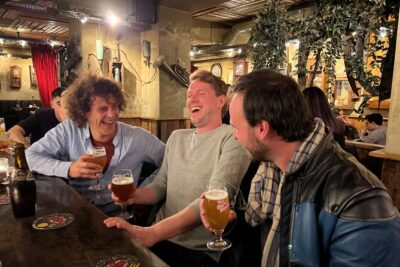
10 Tastes of Amsterdam: Food Tour by UNESCO Canals and Jordaan
Read our review →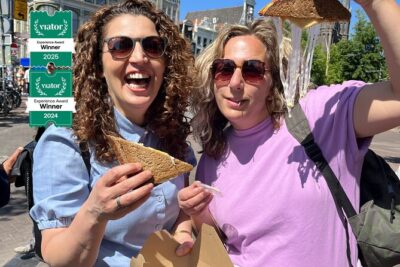
Amsterdam Food and Cultural Tour with Tastings
Read our review →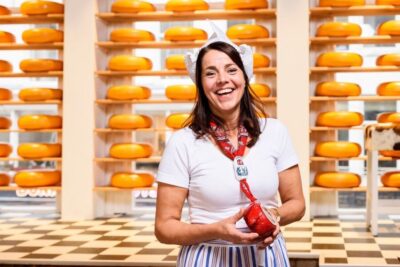
Premium Henri Willig Cheese Tasting Experience
Read our review →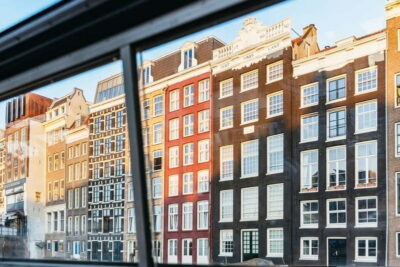
Zaanse Schans and Cheese Tasting Guided Tour from Amsterdam
Read our review →
Browse the lists this tour appears in