
Review · RED LIGHT DISTRICT TOURS
Amsterdam: Private Red Light District Tour in Spanish
Red lights, old churches, and narrow lanes. This private Spanish-language tour gives you a clear introduction to Amsterdam’s Red Light District while also covering the Old Town, Chinatown, and Dam Square. I like the personal format, since your group can ask questions without competing with a large crowd. I also like the route’s mix of major sights and less obvious corners, including Zeedijk Street, the Waag, and the city’s narrowest street.
The main point to consider is the two-hour limit. That is enough for an informative walk and a useful first look, but not enough for a slow, detailed study of every street or sight. The tour focuses on explanation and atmosphere from outside, rather than museum visits or long stops indoors.
In This Review
- Key points to know before booking
- Starting near Amsterdam Central Station
- Zeedijk Street and Amsterdam’s Chinatown
- The Old Church and Amsterdam’s oldest streets
- Prostitution, coffeeshops, and the city’s liberal image
- The Condomerie and the final walk to Dam Square
- What the private format adds
- Is $94 per person a fair price?
- Who will get the most from this walk?
- Practical advice for making the two hours count
- My verdict on the Spanish Red Light District tour
- FAQ
- How long does the tour last?
- Is the tour private?
- What language is the tour conducted in?
- Where does the tour begin?
- Where does the tour finish?
- What areas does the route cover?
- What sights can you see during the walk?
- Does the tour explain prostitution and coffeeshop culture?
- Can you cancel the booking?
Key points to know before booking
- Private Spanish-speaking guide: Your group receives a live tour in Spanish, with space to ask direct questions about Amsterdam’s unusual laws and customs.
- A route with several faces: The walk links the former sailor’s district of Zeedijk, Amsterdam’s Chinatown, the Red Light District, the Old Church, and Dam Square.
- Important local context: You learn why prostitution is legal in the Netherlands and how Amsterdam’s coffeeshop term developed.
- Short but concentrated itinerary: Two hours gives you a brisk introduction, so wear comfortable shoes and expect steady walking.
- Easy central finish: The tour begins near Amsterdam Central Station and ends at Dam Square, close to major Old Town sights.
- Strong guide feedback: Maurizio is praised for being well prepared and friendly, a useful sign for anyone booking this experience in Spanish.
Starting near Amsterdam Central Station
Your meeting point is in front of the entrance to the Barbizon Palace Hotel NH Collection at Prins Hendrikkade 59, directly by the central station area. This is a practical place to begin, especially if you have just arrived by train or are using the station as your base for exploring the city.
The tour then moves on foot into Amsterdam’s Old Town. There is no need to arrange transportation between stops, and the route keeps you close to the historic center. You should still allow a few minutes to find the hotel entrance, since the station area can feel busy and spread out.
I like this start because it puts the tour in context right away. Amsterdam Central Station sits beside the oldest part of the city, so you move quickly from a modern transport hub into streets shaped by the city’s port and trading past.
Since the activity lasts only two hours, arriving ready to walk matters. The route includes narrow streets and several clusters of sights. You may not spend long at each one, but the guide’s running commentary helps connect them.
More Red Light District walks:
- Amsterdam: Red Light District Tour in German/English/Italian
★ 4.9 · 5,623 reviews - Amsterdam Red Light District & Coffee Shop Tour
★ 4.6 · 4,134 reviews - Amsterdam: Red Light District Pub Crawl with Unlimited Shots
★ 4.1 · 2,130 reviews
Zeedijk Street and Amsterdam’s Chinatown
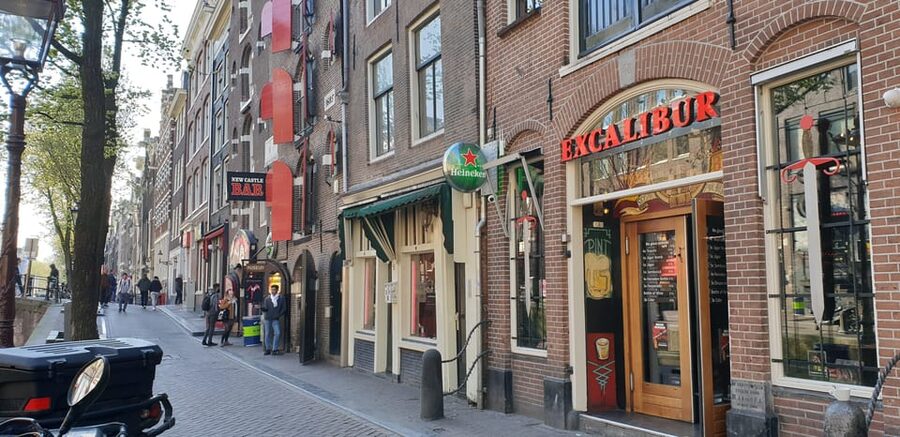
The first section follows Zeedijk Street, an old sailor’s neighborhood that once had a poor reputation. Today, it is described as a safe and friendly part of the city, giving you a chance to see how Amsterdam has changed without leaving the historic center.
This is one of the more useful parts of the walk because it avoids treating the Red Light District as a single subject. Zeedijk shows you a neighborhood shaped by sailors, food, nightlife, and migration. The nearby Chinatown adds another layer to the area’s identity.
You will see Amsterdam’s Buddhist Temple here, along with a famous pub called the Ape. You will also reach the Waag, one of the area’s major historic landmarks. These stops give your guide physical reference points while explaining how the district developed.
I like the way this section broadens the subject. If you come expecting only red-lit windows and coffeeshops, Zeedijk gives you a more useful picture of the surrounding community. The district is not just a row of nightlife businesses. It is also an old part of town with religious, social, and architectural landmarks.
The limitation is time. The description identifies these sights as things you will see, but it does not promise interior visits. Expect an outdoor walking tour, not a temple tour or a pub stop.
The Old Church and Amsterdam’s oldest streets
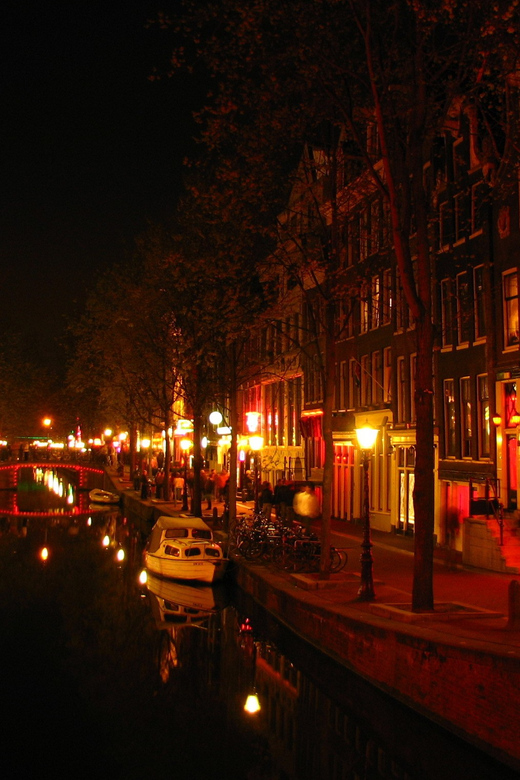
From Zeedijk, the route continues toward the Old Church, the oldest building in Amsterdam. This change in focus is important. The Old Church area places the Red Light District beside one of the city’s most significant historic buildings, creating a sharp contrast between religious heritage and modern adult entertainment.
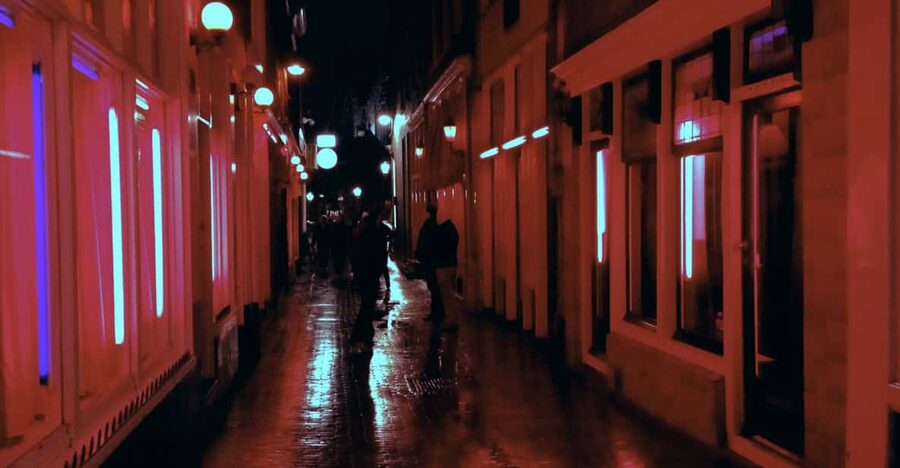
You will also pass through some of Amsterdam’s narrowest streets. These lanes are a strong reason to choose a walking tour rather than simply viewing the district from a taxi or canal boat. Their tight scale makes the area feel intimate, though it can also mean that you need to stay close to your guide.
I would pay attention here to the relationship between the streets and the buildings. The tour is not only about unusual businesses. It is also about how several centuries of Amsterdam life occupy the same compact space.
Because the route is private, you can ask the guide to explain a point again in Spanish or connect it to something you have already seen. That personal exchange is a real benefit at $94 per person, especially if the booking is shared by a small group. The value becomes weaker if you prefer to walk at your own pace or spend a long time photographing every building.
Prostitution, coffeeshops, and the city’s liberal image
The central subject arrives in the streets around the Old Church. Here, the guide explains the history and current situation of the Red Light District, including why prostitution is legal in the Netherlands and how the term coffeeshop came into use.
That explanation is more useful than a quick pass through the area. Amsterdam’s reputation can make the district seem like a collection of jokes and stereotypes. A Spanish-speaking local guide can give you a clearer account of the social and legal ideas behind the businesses you see.
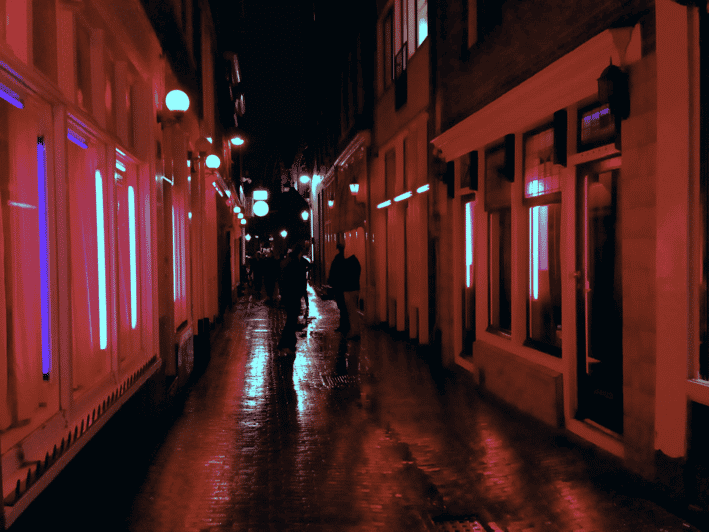
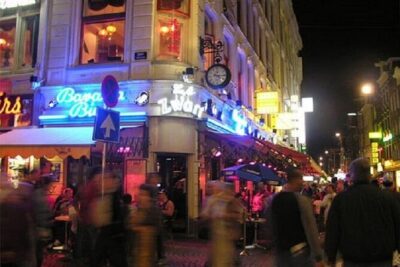
The route includes the famous prostitute streets, an indoor prostitute street, the city’s first coffeeshop, and several smart shops. These locations help explain the different parts of Amsterdam’s adult-oriented culture. You should expect to view them as part of the walking route, with the guide discussing their role and background.
I especially like that the tour addresses both prostitution and drugs. Those subjects are often treated as if Amsterdam has no rules at all. The experience instead focuses on the city’s liberal attitudes and the reasons behind them, which can help you separate legal policy from tourist myth.
At the same time, this is not described as a visit inside a coffeeshop or an opportunity to buy anything. The included service is a guided walk. If you want a longer conversation about Dutch drug policy, ask your guide questions during the route, since the two-hour schedule is shared with many sights.
The Red Light District can also feel sensitive and personal. You should approach it with ordinary respect and avoid treating people or workplaces as entertainment. The tour’s value comes from context, not from gawking.
A few more options to weigh up in Amsterdam
- Amsterdam: Van Gogh Museum Ticket
★ 4.7 · 52,054 reviews - Amsterdam Classic Saloon Boat Cruise with Drinks and Cheese
★ 5.0 · 31,825 reviews - Amsterdam Luxury Canal Cruise + Unlimited Drinks & Bites option
★ 5.0 · 30,518 reviews - Amsterdam: Heineken Experience Ticket
★ 4.6 · 30,055 reviews
The Condomerie and the final walk to Dam Square
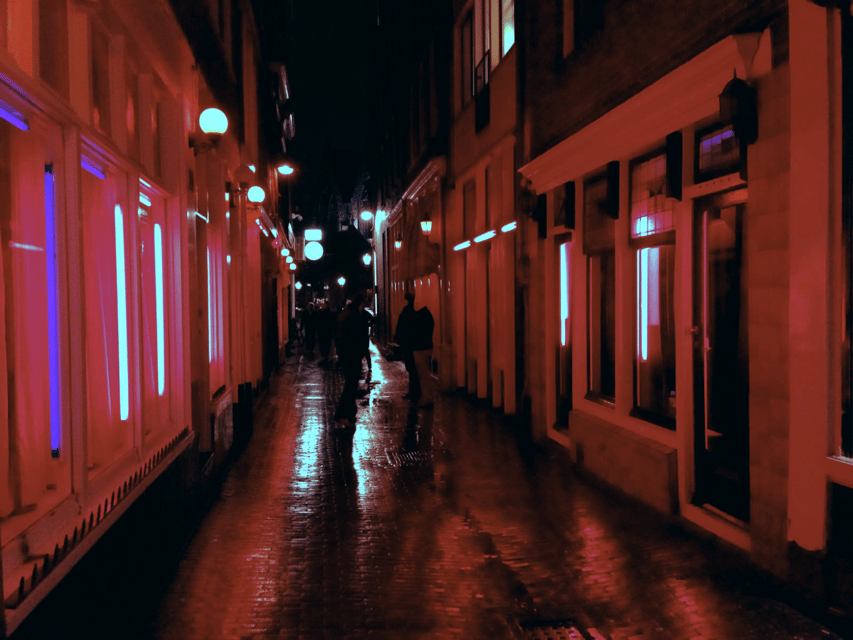
As the route heads toward Dam Square, you will see the Condomerie and the Royal Palace. These final stops keep the subject of public attitudes toward sex connected to the wider city rather than ending in the district itself.
The Condomerie is a particularly fitting sight for this tour because it reflects Amsterdam’s open approach to sexual health and public discussion. The Royal Palace then shifts the mood again, bringing you back to national history, civic life, and the formal center of the city.
The tour ends at Dam Square. This makes the experience easy to combine with more sightseeing afterward. From there, you can continue through the Old Town, arrange another activity, or simply use the square as a clear landmark for finding your way around.
I like a tour that finishes somewhere useful instead of returning you to the starting point. It saves time, especially during a short stay. The tradeoff is that you do not get a final ride back to Central Station, though the ending remains in the central sightseeing area.
What the private format adds
The private group setup is the main feature that separates this experience from a standard walking tour. You are not sharing the guide’s time with an unspecified large crowd, and the live commentary is provided in Spanish.
For Spanish-speaking visitors, that can matter more than it first appears. The topics include law, social customs, prostitution, drug policy, and the history of an old neighborhood. A guide who can explain those subjects comfortably in your language may make the difference between merely seeing the district and understanding it.
I would use the private format actively. Ask why prostitution is legal, how the term coffeeshop developed, and how the area changed from a place locals avoided to a more welcoming part of the city. The supplied feedback gives Maurizio special credit for being well prepared and friendly, qualities that fit this kind of question-based tour.
The format also suits families of adults, couples, friends, or a small Spanish-speaking group with different interests. You can ask for clarification without feeling that you are holding up a large party.
Still, private does not mean flexible in every way. The itinerary is set around the main sights, and the duration remains two hours. You should not book it expecting a custom full-day exploration.
Is $94 per person a fair price?
At $94 per person, this is not the cheapest way to walk through the Red Light District. You are paying for a private guide, Spanish-language service, and a focused route through several areas rather than for admission to a major attraction.
The value depends heavily on group size. For one person or a couple, the price may feel high for two hours of walking. For a larger private group, the cost can make more sense because you are buying a dedicated guide rather than several individual places on a group tour.
I see the best value in the explanation. The streets themselves are free to enter, but the legal and cultural background is harder to piece together on your own. If you want a respectful introduction in Spanish, the guide’s time may justify the cost.
The price is less convincing for someone who already knows the district well or wants interior access to museums and attractions. Nothing included here promises entry tickets, food, drinks, or a visit inside a coffeeshop. You are paying for the guide and the walking experience.
The tour also offers reserve now and pay later booking, plus free cancellation up to 24 hours before the start time. Those terms are useful if your Amsterdam schedule is still shifting, but the key value question remains the same: do you want a private Spanish explanation, or are you happy to explore the streets independently?
Who will get the most from this walk?
I would recommend it first to Spanish-speaking visitors who want an introduction to Amsterdam’s most talked-about district without relying on quick internet summaries. The route gives you a basic map of the area and explains the subjects that make it different.
It also works well early in your Amsterdam stay. Since it begins near Central Station and ends at Dam Square, you can use it to get oriented before returning to the Old Town on your own. You will know where Zeedijk, the Old Church, the Red Light District, and the main square fit together.
The tour suits adults who are comfortable discussing prostitution, drug policy, and sexual culture in a direct but respectful way. It may not suit anyone seeking a quiet architecture walk, a museum visit, or a long food experience.
You should also consider your walking pace. The route covers several areas in two hours, so you will likely keep moving. The activity is listed as wheelchair accessible, which is helpful, though the historic district includes narrow streets and the details of every surface are not specified. If that matters for your group, ask for route guidance before the start.
Practical advice for making the two hours count
Meet at the stated hotel entrance rather than simply waiting somewhere inside the station. The address is Prins Hendrikkade 59, 1012 AD Amsterdam, and the tour begins in front of the Barbizon Palace Hotel NH Collection.
Wear comfortable shoes. The route is entirely focused on walking through the central districts, and its narrow lanes are part of the appeal. Since the schedule is compact, stopping for long breaks could reduce the time available for the Old Church, coffeeshop history, and the final sights.
I would also decide what you most want to understand before meeting the guide. You may care most about the legal status of prostitution, the city’s coffeeshop culture, the district’s changing reputation, or the history of Zeedijk and Chinatown. A private tour gives you a good chance to steer the conversation with questions.
Keep your expectations clear. You will see important locations and hear local explanations, but the experience does not include listed admissions or a long stop at each sight. Think of it as a guided orientation with cultural context, not a complete study of Amsterdam’s adult industry.
My verdict on the Spanish Red Light District tour
I would book this tour if I wanted a private, Spanish-language introduction to the Red Light District and Old Town, especially at the start of a first visit. The route covers more than the famous windows, and the mix of Zeedijk, Chinatown, the Old Church, coffeeshops, smart shops, the Condomerie, and Dam Square gives you a better sense of the district’s place in Amsterdam.
The strongest reasons to choose it are the private format, the direct Spanish commentary, and the chance to ask thoughtful questions. Maurizio’s praise for preparation and kindness is an encouraging detail, though guide quality can still vary by date.
I would skip it if you want interiors, nightlife, food, or a slow architectural tour. For everyone else, the $94 price is easiest to justify when several people share the private booking and want clear cultural context rather than a simple walk through the red-lit streets.
FAQ
How long does the tour last?
The walking tour lasts two hours.
Is the tour private?
Yes. It is offered for a private group rather than as a shared group experience.
What language is the tour conducted in?
The live tour guide speaks Spanish, and the activity is listed as a Spanish-language experience.
Where does the tour begin?
The meeting point is in front of the entrance to the Barbizon Palace Hotel NH Collection at Prins Hendrikkade 59, 1012 AD Amsterdam.
Where does the tour finish?
The tour concludes at Dam Square.
What areas does the route cover?
The route includes Zeedijk Street, Amsterdam’s Chinatown, the Old Church area, the Red Light District, and Dam Square.
What sights can you see during the walk?
The route includes Amsterdam’s Buddhist Temple, the Ape pub, the Waag, the Old Church, the city’s narrowest street, the first coffeeshop, an indoor prostitute street, smart shops, the Condomerie, and the Royal Palace.
Does the tour explain prostitution and coffeeshop culture?
Yes. The guide discusses Amsterdam’s attitudes toward prostitution, drugs, and sex, including why prostitution is legal and how the term coffeeshop was created.
Can you cancel the booking?
You can cancel up to 24 hours in advance for a full refund. The activity also allows you to reserve now and pay later.
Just added in Amsterdam
- Private Tour Zaanse Schans Windmills and Volendam in Jaguar★ 5.0 · 10 reviews
- Zaanse Schans and Giethoorn Unique Day Trip with Boat Cruise★ 4.5 · 17 reviews
- Windmills-Volendam-Giethoorn Private Tour in Jaguar★ 5.0 · 2 reviews
- Half-Day Private Guided Sightseeing Tour of Zaanse Schans★ 5.0 · 14 reviews
- Best of Netherlands: Zaanse Schans Mills, The Hague & Rotterdam★ 4.5 · 10 reviews
- Zaanse Schans Private Tour Windmills★ 5.0 · 18 reviews
- Zaanse Schans Windmills Edam Volendam and Marken from Amsterdam★ 5.0 · 1 review
- Half Day Keukenhof Tulip Paradise Trip from Amsterdam★ 5.0 · 1 review
Red Light District Tours, compared.
Red Light District Tour in German/English/Italian
Read our review →
Amsterdam Red Light District & Coffee Shop Tour
Read our review →
Red Light District Pub Crawl with Unlimited Shots
Read our review →
Private Amsterdam Red Light District and Coffee Shop Tour
Read our review →
Browse the lists this tour appears in