
Review · CITY TOURS
Delft – Step/scootertour in and around the city
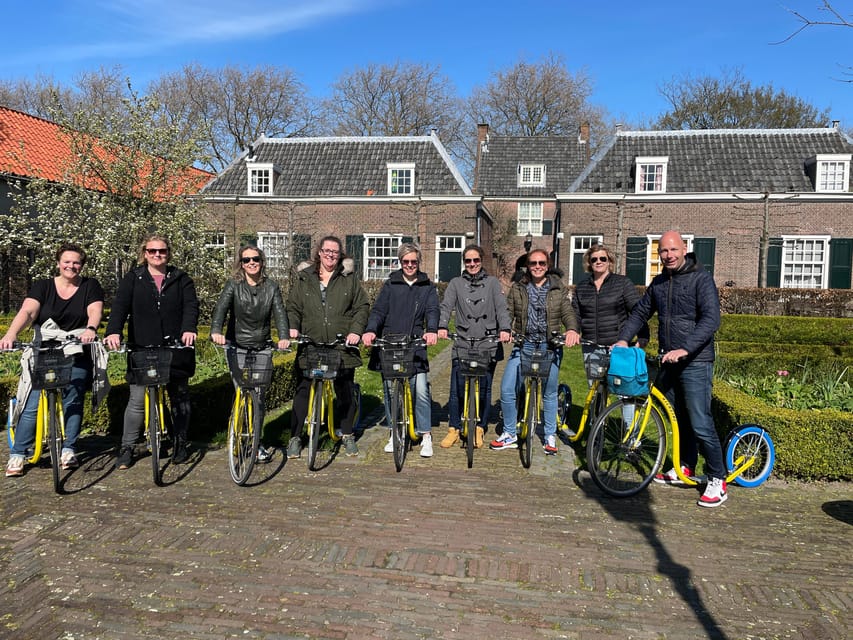
Delft rewards a slower, stranger kind of tour. This 90-minute ride uses a Dutch step, or non-electric scooter, to connect Delft’s modern quarter with old lanes, quiet courtyards, working heritage, and famous churches. I like the way it reaches beyond the usual center, and I like the small group size, capped at 10 people. The main catch is simple: you need to be comfortable riding a bike, and a non-electric scooter takes more effort than it first appears.
I also like the mix of stops. Agnetapark gives you a look at an early planned garden village, while Hofje van Pauw offers a quiet courtyard that many visitors could easily miss. Guides Frans and Kevin have earned praise for their stories and friendly manner, though you should expect short riding stretches rather than a fast, continuous cruise.
In This Review
- Key things to know before you book
- Why explore Delft on a scooter?
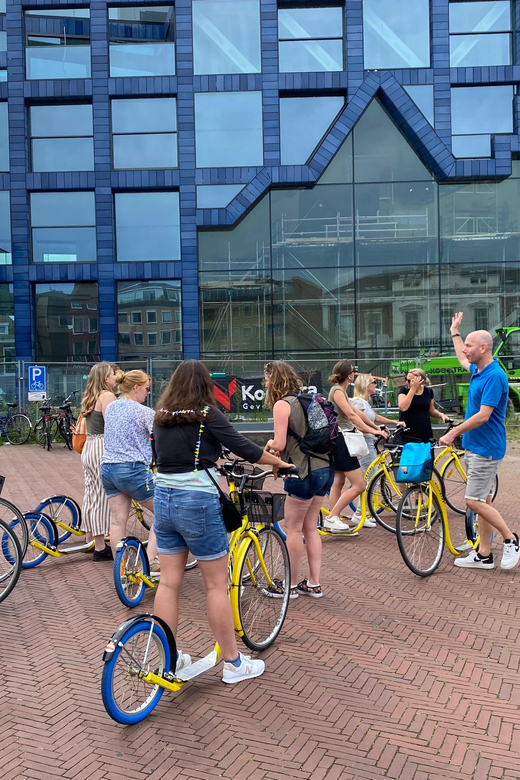
- Starting at Oude Delft 113 and seeing modern Delft
- Mill de Roos, a working piece of Delft
- Agnetapark and the Marken couple’s social ideal
- Hofje van Pauw, a quiet courtyard from 1707
- Eastern Gate and Delft’s older edges
- Markt, New Church, and the town hall
- The Old Church and its famous lean
- What the 90-minute schedule feels like
- Is $32 a fair price for Delft?
- Who will enjoy this route most?
- Should you book the Delft scooter tour?
- FAQ
- Where does the Delft scooter tour start?
- How long does the tour last?
- How much does the tour cost?
- Are the scooters electric?
- What languages are available?
- How large is the group?
- Which places are included on the route?
- Who cannot take part?
Key things to know before you book
- Non-electric scooters: You propel the scooter yourself, so this is active sightseeing, not a motorized ride.
- Agnetapark’s social experiment: Hear about Jacques van Marken and his wife, who created an unusually forward-looking community.
- Hofje van Pauw: Visit a peaceful Delft courtyard founded in 1707, away from the city’s busiest sights.
- A broader view of Delft: The route includes modern architecture, Mill de Roos, Eastern Gate, Markt, and the Old Church.
- Small-group guiding: Groups are limited to 10, with tours offered in English or Dutch.
- Good value at $32: You get a scooter rental and a live guide for 1.5 hours, with a route that adds places beyond the standard city center.
Why explore Delft on a scooter?
Delft is compact enough to walk, but that does not mean every interesting corner sits within the main tourist streets. This tour gives you a practical way to cover more ground while still moving slowly enough to notice the city.
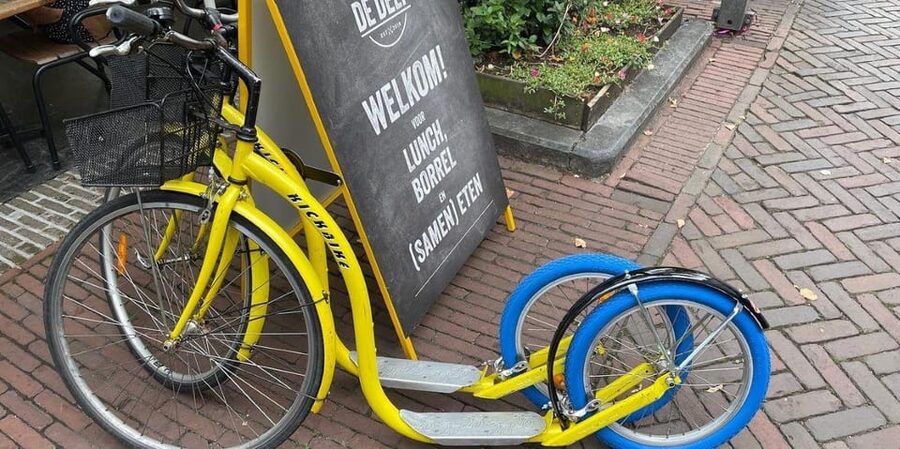
The scooter is a traditional, non-electric Dutch step. You push along with one foot and steer with the other. It is closer to an old-fashioned kick scooter than to the powered vehicles now common in many European cities. That distinction matters. You will not be sitting back while a motor does the work.
The active part is also part of the fun. You get a changing view of Delft instead of standing in one place for a full lecture. The tour breaks the ride into short sections, with roughly 15 minutes set aside at each listed stop. That rhythm helps if you want history in manageable pieces, though anyone expecting a long, leisurely ride may find the frequent stops less flowing.
This is best for someone who can ride a bike and enjoys a bit of movement. It is not suitable for children under 16, wheelchair users, or people with visual impairments. Those limits are important, since balance, steering, and awareness of your surroundings are central to the activity.
More Delft trips:
- From Amsterdam: Rotterdam, Delft & The Hague Guided Day Tour
★ 4.2 · 1,765 reviews - Delft: Canal Cruise with Guided Commentary
★ 4.4 · 990 reviews - Rotterdam, Delft, the Hague, Madurodam from Amsterdam
★ 4.0 · 793 reviews
Starting at Oude Delft 113 and seeing modern Delft
The meeting point is at restaurant De Delf, at Oude Delft 113. From there, the route first heads toward the newer part of the city.
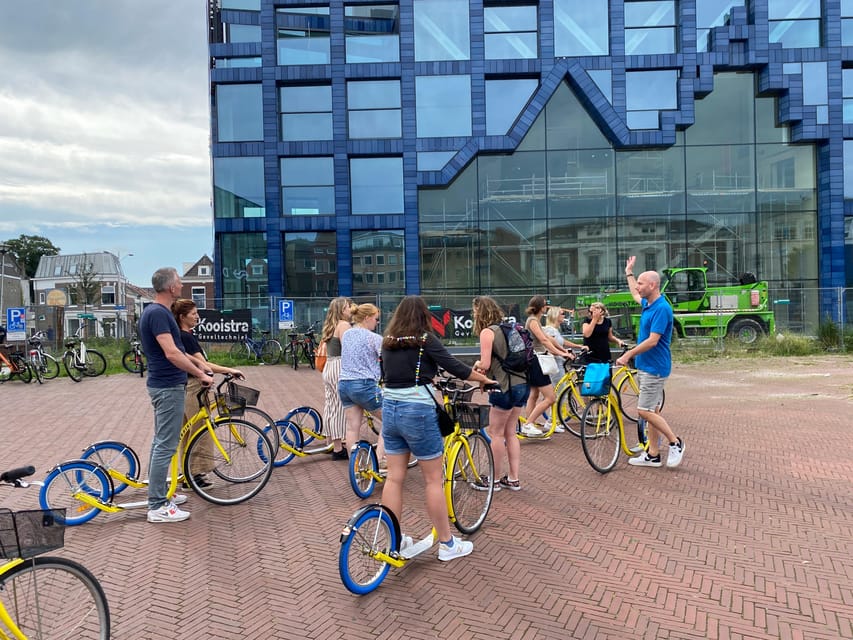
That opening is a smart choice. Many city tours rush straight toward the famous canals and historic squares. Here, you first see how Delft has made room for new construction after the railway was moved below the city. The result is a contrast between old brick streets and modern buildings designed for a changed city.
I find this useful because it gives Delft more depth than a postcard view. You are not seeing a town frozen in the past. You are seeing a place that has had to solve present-day problems while protecting its older character. The modern architecture is described as innovative and attractive, and the route lets you judge that for yourself.
The drawback is that this first portion may feel less instantly scenic than the old center. If you want canals and historic facades from the first minute, you may need patience. The payoff is a better sense of how the city fits together.
Mill de Roos, a working piece of Delft
The next important stop is Mill de Roos, Delft’s town mill. It is still in use, which gives the visit more life than a mill preserved only as a shell.
Working buildings help you understand how a city functioned. A windmill was not simply a decorative landmark. It was part of the practical economy, and seeing Mill de Roos as an active place connects Delft’s present with its older working traditions.
The stop also adds variety to the route. You move from modern urban planning to a traditional structure, then continue toward a residential area. That change of setting keeps the outing from becoming a string of similar church facades.
The supplied information does not promise an interior visit or a demonstration, so you should think of Mill de Roos as a guided viewing stop rather than a full mill tour. Your guide can provide the context, but the main value comes from seeing the mill in its surroundings.
Agnetapark and the Marken couple’s social ideal
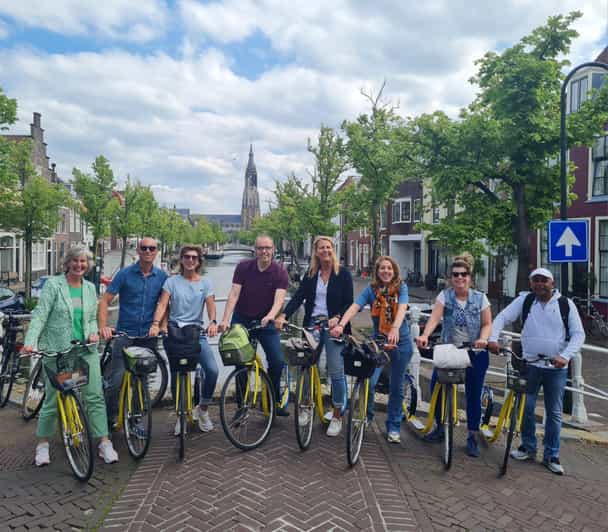
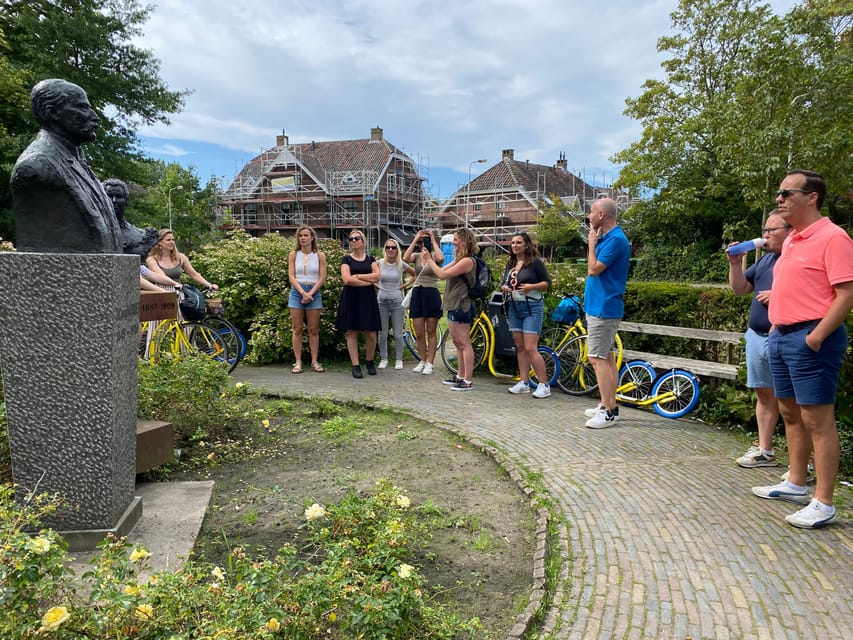
Agnetapark is one of the most distinctive parts of the tour. This quiet garden village was linked to Jacques van Marken and his wife, who were far ahead of their time in thinking about community life and social welfare.
The phrase social paradise captures the idea behind the neighborhood. Agnetapark was planned as more than a place for workers to sleep. Its gardens, calm streets, and community-minded design reflect an attempt to create better living conditions and a stronger sense of belonging.
I especially like this stop because it shifts the focus from famous individuals and grand monuments to ordinary daily life. You learn how people imagined a good neighborhood, not just how they built a church or city hall. The peaceful setting also gives you a break from traffic and crowds.
Your guide is a key part of the experience here. Frans has been praised for telling many stories in an enjoyable way, while Kevin is also noted for keeping the tour full of anecdotes. The information supplied does not list a fixed script, so the exact emphasis may depend on your guide and the questions you ask.
Plan to listen closely. Agnetapark may look like a simple residential area at first glance, but the story behind its design is what makes it memorable.
A few more options to weigh up in Delft
- Delft: City Center Walking Tour
★ 4.7 · 88 reviews - Visit the Girl with the Pearl Earring, The Hague & Delft City
★ 5.0 · 63 reviews - Walking Tour of Delft – The City of Orange and Blue
★ 5.0 · 50 reviews - Discover Delft with a self-guided Outside Escape city game tour!
★ 5.0 · 32 reviews
Hofje van Pauw, a quiet courtyard from 1707
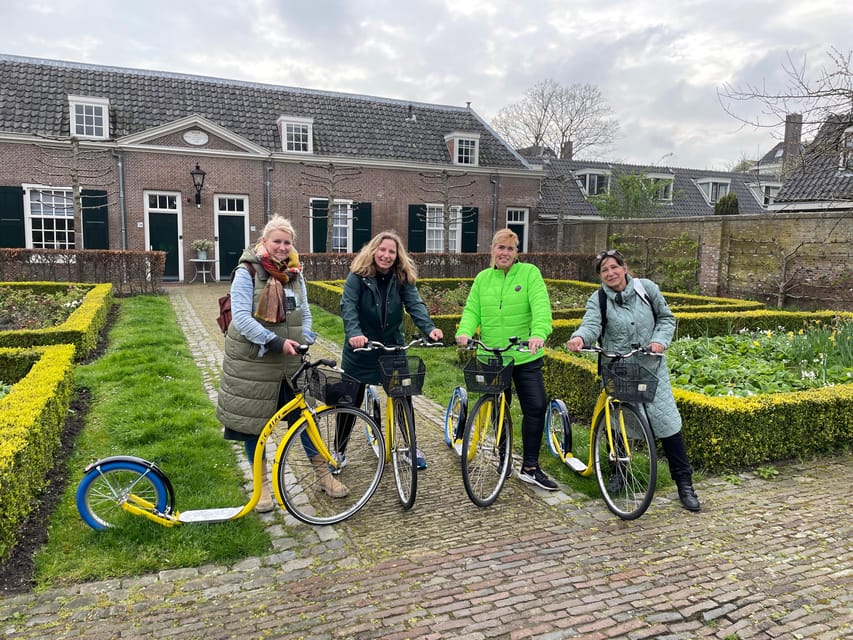
After more scooter riding, the group reaches Hofje van Pauw. This courtyard was founded in 1707, and its intimate scale makes it a sharp contrast to Markt, Delft’s large public square.
A hofje is a charitable courtyard built around homes, often with a central garden or open space. Hofje van Pauw rewards a slower look. You can expect a peaceful setting where the guide explains the woman who founded it and why the courtyard mattered.
This is the kind of place that can disappear from a first visit to Delft. You may walk past grand churches and canals all day without realizing that small courtyards hold another part of the city’s story. I like that the tour makes room for this quieter form of heritage.
The stop is listed as a photo stop and guided visit lasting about 15 minutes. That is enough for an introduction, but not a long architectural study. If the courtyard is what interests you most, you may want to return on your own later, if access allows. The activity information does not promise extended independent time or a separate interior visit.
Eastern Gate and Delft’s older edges
The route continues to the Eastern Gate, another chance to see Delft away from the most familiar streets. A gate connects the city to its former defenses and helps you picture the limits of old Delft.
This stop works best as part of the larger route. On its own, it may not take long to appreciate. In sequence with the modern quarter, mill, garden village, and courtyard, it helps show how the city changed over time.
You are also likely to appreciate the practical advantage of arriving by scooter. The group can move between districts without spending the whole morning on foot. That makes it possible to include smaller or more widely spaced sights during a compact 90-minute outing.
The ride itself remains part of the experience. Reviews describe the route as varied, with small stretches of scooting between information stops. One useful warning is that the non-electric scooter can take some getting used to. Do not treat the first few minutes as a race. Find your balance, leave room around you, and settle into the pace.
Markt, New Church, and the town hall
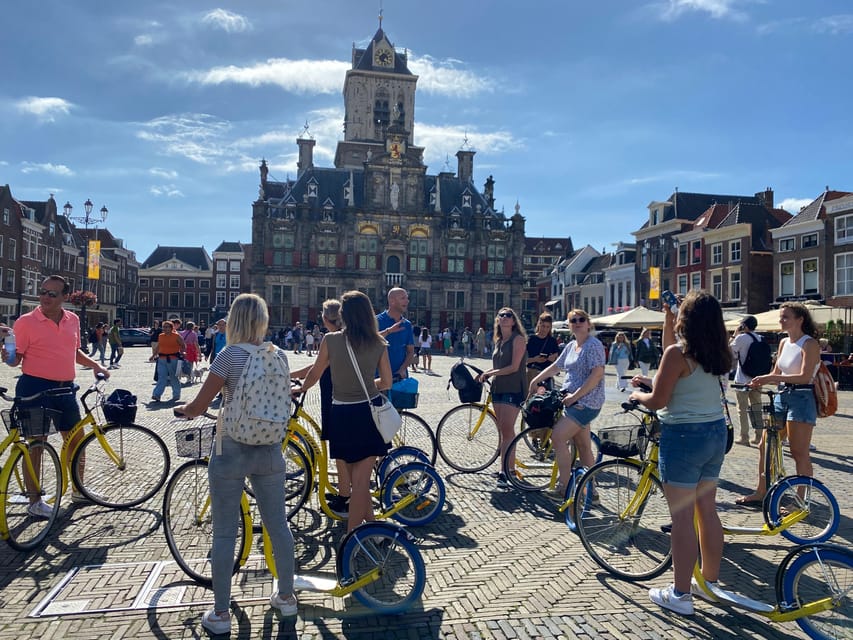
The return route reaches Markt, Delft’s grand central square. Here you see two of the city’s essential landmarks: the New Church and the town hall.
This is the visual high point for many people. The square gathers Delft’s civic and religious identity in one place. The New Church gives the scene its vertical focus, while the town hall adds a formal civic counterpoint. Even if you have already walked through Markt, approaching it as part of a wider circuit can make the square feel different.
The tour does not appear to include an interior visit to either building. Instead, the guide provides an outdoor introduction and helps you read the square. That format suits a short activity, but you should book a separate church or town hall visit if you want to go inside.
The timing also matters. About 15 minutes is enough to take photographs and hear the main story. It is not enough for a detailed architectural tour. I see this as a useful overview, especially if you are using the scooter tour as your first look at Delft.
The Old Church and its famous lean
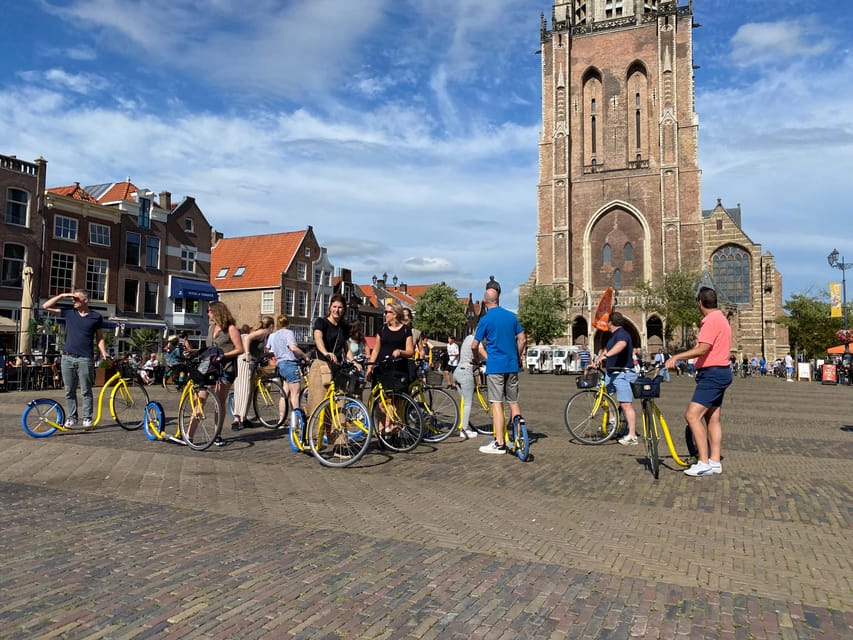
The Old Church is another major stop, and its leaning tower is hard to miss. Delft’s old tower tilts noticeably, giving the church a memorable profile and an easy visual joke for your guide.
The leaning tower is not just a quirky photograph. It reflects the challenges of building on soft Dutch ground and gives you a way into the city’s older development. Your guide can explain the tower’s place in Delft, while you take in the contrast between its aged form and the surrounding streets.
Like the New Church, the Old Church is presented as an outdoor stop. You get around 15 minutes for a guided look and photographs. If you want a full interior visit, this tour alone will not provide it.
I like ending near the Old Church before returning to Oude Delft 113 because it leaves you with one of Delft’s clearest symbols. The route has moved through new construction, industry, social planning, charity, civic space, and medieval architecture. That is a lot of ground for a short activity.
What the 90-minute schedule feels like
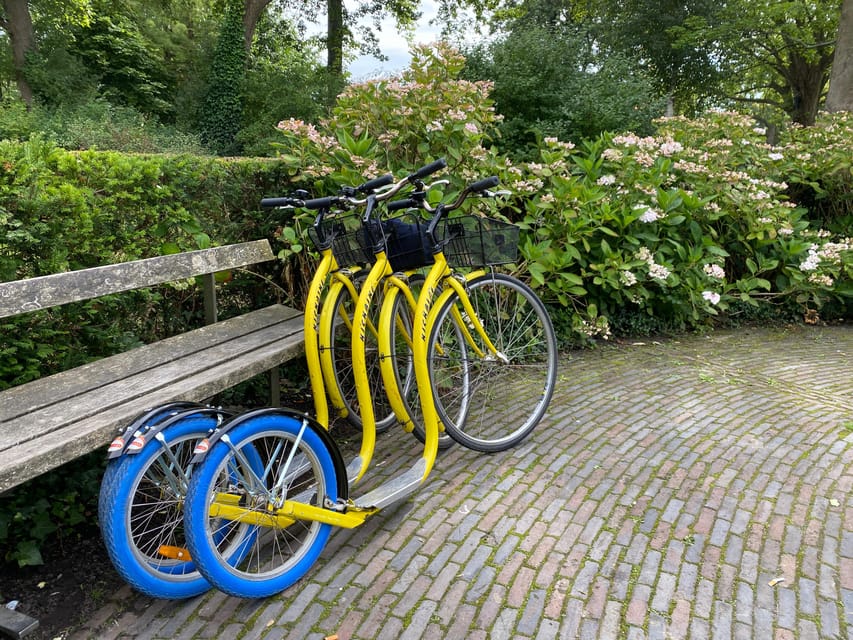
The full experience lasts 1.5 hours. The itinerary lists six sightseeing stops, each with about 15 minutes of guided time, plus the riding between them. That tells you something important about the pace: this is a sampler of Delft, not a slow historical seminar.
You will spend enough time at each location to hear a focused story and take pictures. You will not have long stretches to wander, shop, or explore inside buildings. I would choose this tour early in a Delft visit, then return to the places that catch your interest.
The small group limit of 10 is another advantage. A guide can usually answer questions more easily in a group this size, and the ride should feel less unwieldy than a large cycling procession. The actual experience may still vary by group speed and guide, so do not count on every minute being identical.
English and Dutch are available. The guides named in the supplied feedback, Frans and Kevin, are praised for enthusiasm, storytelling, and flexibility. One account also notes that the guide adjusted the return route to point out good places to eat that evening. That kind of local help can be valuable, though it should be viewed as a pleasant possibility rather than a guaranteed part of the route.
One review also mentions a drink included at the end. Since that detail is not stated in the formal inclusions, I would confirm it when booking rather than assume it is always provided.
Is $32 a fair price for Delft?
At $32 per person, this is a reasonable price if you want both transport and interpretation. The fee includes the non-electric scooter rental and a live guide, so you are paying for more than a simple walk through the center.
The value comes from the route. A basic visit to Markt and the churches costs nothing from the outside, but reaching Agnetapark, Mill de Roos, Hofje van Pauw, and the Eastern Gate in one compact outing gives you a broader picture of Delft. The guide also saves you from having to research the social story behind Agnetapark or the origins of Hofje van Pauw yourself.
I would not choose it purely as a bargain transportation option. The tour lasts only 90 minutes, and the scooter requires your effort. If you dislike active sightseeing or want long visits inside monuments, the price may feel less attractive.
For people who enjoy unusual city tours, $32 buys a clear route, a small group, and stories that are difficult to gather from a casual walk. The strong rating of 4.8 from nine ratings also fits the pattern of praise for the guides, varied route, and fresh way of seeing Delft, while the lower scores point to the real issues: heat and the adjustment required by a non-electric scooter.
Who will enjoy this route most?
I would recommend it to adults and older teens who can ride a bike, have reasonable balance, and want more than the standard Delft center.
It suits you especially well if:
- You want to see residential and modern areas as well as famous sights.
- You enjoy hearing stories about social history and city planning.
- You prefer small groups to large walking tours.
- You want a first orientation before exploring Delft on foot.
- You like active sightseeing but do not want a full cycling excursion.
I would be cautious if you tire easily, dislike physical activity, or expect an electric ride. A review specifically notes that the scooter takes some adjustment, and another points out that the outing can feel warm. Wear suitable clothing and choose a comfortable pace from the start.
The age and access limits are firm. Children under 16 cannot join, and the activity is not suitable for wheelchair users or people with visual impairments. People who cannot ride a bike should also choose another way to see Delft.
Should you book the Delft scooter tour?
Book it if you want Delft explained through contrasts: modern buildings beside an old mill, a planned garden village beside a charitable courtyard, and grand Markt beside the leaning Old Church.
I like this tour most as a first or second activity in the city. It gives you orientation, introduces places outside the standard center, and leaves you with a short list of sights to revisit. The guides, especially Frans and Kevin, appear to be a major part of its appeal.
Skip it if you want a completely relaxed ride, a full interior tour of Delft’s churches, or a motorized scooter. For everyone else who can manage a non-electric step, $32 is a fair price for a lively, compact look at the city’s less obvious sides.
FAQ
Where does the Delft scooter tour start?
It starts at restaurant De Delf, at Oude Delft 113.
How long does the tour last?
The tour lasts 1.5 hours.
How much does the tour cost?
The listed price is $32 per person.
Are the scooters electric?
No. The Dutch word for scooter is step, and the tour uses non-electric scooters that you propel yourself.
What languages are available?
The live guide is available in English and Dutch.
How large is the group?
The group is limited to 10 participants.
Which places are included on the route?
The route includes Delft’s modern area, Mill de Roos, Agnetapark, Hofje van Pauw, Eastern Gate, Markt, the New Church area, and the Old Church with its leaning tower.
Who cannot take part?
The tour is not suitable for children under 16, people who cannot ride a bike, wheelchair users, or people with visual impairments.
Just added in Delft
- Historical Private Tour of Delft and Leiden including Transfer★ 5.0 · 4 reviews
- Gouda Cheese and Delft Blue: Full-Day Private Tour★ 5.0 · 4 reviews
- Workshop ‘Paint your own Delft Blue Tile!’★ 5.0 · 54 reviews
- Amsterdam: Rotterdam, Delft and The Hague Private Tour★ 4.0 · 23 reviews
- Private transfer from Schiphol airport to The Hague or Delft★ 5.0 · 1 review
- Private tour to Kinderdijk windmills and Delft from Amsterdam★ 5.0 · 6 reviews
- Visit the Girl with the Pearl Earring, The Hague & Delft City★ 5.0 · 63 reviews
- Rotterdam, The Hague, Delft Private Tour from Amsterdam★ 5.0 · 44 reviews
City Tours, compared.
75 Minute City Canal Cruise with Audio Guide
Read our review →

City Canal Cruise and Heineken Experience Ticket
Read our review →
Browse the lists this tour appears in