
Review · SCAVENGER HUNTS & CITY GAMES
e-Scavenger hunt Venlo: Explore the city at your own pace
Venlo turns sightseeing into a small adventure. This phone-based city hunt gives you a playful route through Venlo’s churches, museums, civic buildings, food spots, and trading history, while letting you choose your own pace. I like the private format for groups of up to six and the fact that you can spread the activity across two to four hours instead of following a fixed guide.
I also like the low group price of $37.21, especially for families or friends sharing the cost. The main drawback is practical rather than cultural: you need your own smartphone and mobile data, and the login process may take more effort than expected. One participant found the questions pleasantly manageable but the sign-in procedure somewhat awkward.
In This Review
- Key points before you book
- Starting at Stationsplein in Venlo
- How the phone-based city hunt works
- Venlo’s trading past and changing rulers
- The Limburgs Museum and Venlo’s family appeal
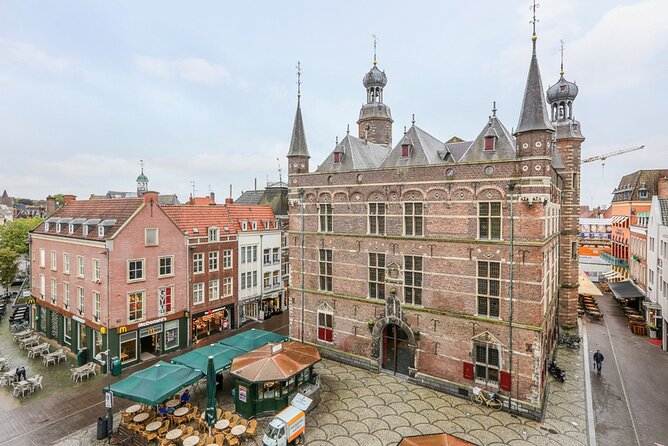
- The House of the City and old civic Venlo
- Sint Martinuskerk and Venlo’s Gothic center
- Oriental decoration at Holland Casino
- Beej Benders and a taste of local produce
- The Cradle to Cradle municipal office
- Image and sound at a dedicated museum
- Two medieval churches, Sint-Jacobskerk and Joriskerk
- Why the two to four hour duration works
- Is $37.21 good value for six people?
- Who should choose this Venlo activity?
- My booking advice
- FAQ
- Where does the e-Scavenger hunt Venlo start?
- Where does the activity finish?
- How long does the city hunt take?
- How many people can join one group?
- What is included in the price?
- Do I need to bring a smartphone?
- Is the activity available in English?
- Can I cancel for a full refund?
Key points before you book
- Ten stops cover old and modern Venlo, from the medieval city center to a Cradle to Cradle municipal office.
- You control the timing, so you can pause for food, photographs, museum visits, or a rest.
- The questions are not designed to be intimidating, making the hunt suitable for families and mixed-age groups.
- The route begins and ends at Stationsplein, near public transportation in central Venlo.
- The $37.21 price covers the whole team, with a maximum of six people rather than one charge per participant.
- Your phone is the only required equipment, but you must supply the smartphone and data connection.
Starting at Stationsplein in Venlo
The hunt begins at Stationsplein, postal code 5913 AA, a practical starting point because it is near public transportation. You can arrive, gather your group, and begin when it suits you during the published opening period, which runs every day from midnight to midnight.
That broad schedule is one of the activity’s strongest features. You are not tied to a morning departure or a guide’s timetable. A family can begin after breakfast, a group of friends can use it as an afternoon plan, and visitors with other commitments can fit it around the rest of their day.
Still, the midnight-to-midnight schedule should not be taken to mean that every attraction along the route is open at all hours. The hunt itself is designed for flexible outdoor exploration, but museums, churches, food businesses, and other places may follow their own schedules. If you want to enter the Limburgs Museum or stop at Beej Benders, check those opening times separately.
The activity ends back at the meeting point. That makes planning easier, especially if you arrive by train or public transport. You are not left trying to find a second pickup location across town.
More Scavenger Hunts in Netherlands:
- e-Scavenger hunt Deventer: Explore the city at your own pace
★ 4.0 · 34 reviews - Discover Amerfoort’s city center in this Outside Escape game tour
★ 4.5 · 32 reviews - e-Scavenger hunt Zierikzee: Explore the city at your own pace
★ 4.5 · 24 reviews
How the phone-based city hunt works
The format combines navigation, questions, and short historical information. You move through Venlo with your group and use your phone to follow the activity and answer prompts. No special equipment is provided or required beyond a smartphone and mobile data.
This is not a traditional walking tour with a guide explaining every building as you go. Instead, the phone gives you a reason to look closely and keep moving. That works well for people who enjoy a little competition or prefer discovering a city through small challenges.
The questions are described as approachable rather than highly technical. That matters if you are visiting with children or with people who do not usually choose history tours. You do not need specialist knowledge to take part, and the point is as much noticing your surroundings as getting every answer right.
The weak spot is the login process. Allow a little time at the start to get the activity working before your group sets off. The supplied feedback specifically points to signing in as the least polished part of the experience. If your phone has a weak connection or limited data, that could become a nuisance, so check your battery and mobile service before leaving.
Venlo’s trading past and changing rulers
One of the first themes you meet is Venlo’s role as a medieval trading city. Its position made it important to commerce, but that importance also made it attractive to competing powers. Over time, Venlo was Spanish, State, and French.
That short political story gives the rest of the route useful context. You are not simply walking past old façades. You are seeing a city shaped by trade, military pressure, and changing authority. The hunt’s questions turn that background into something active, asking you to connect the place in front of you with the events that shaped it.
I find this kind of introduction helpful because it keeps the history light. You get a sense of why Venlo mattered without sitting through a long lecture. If you want detailed military or political history, you will need another source, but the activity provides a good first layer.
The Limburgs Museum and Venlo’s family appeal
The Limburgs Museum is included as one of the city’s major stops. The museum is known for making regional culture and history accessible, and it is described as especially suitable for families. It also hosts major temporary exhibitions.
The important point for your planning is that the museum can serve two roles. You can treat it as an exterior stop in the hunt, or use the location as a reason to pause and visit properly if the museum is open and you have enough time. The city hunt itself lasts about two to four hours, so a full museum visit could make the outing longer.
For families, this is a useful change of pace. Outdoor questions keep children moving, while a museum offers a more focused indoor stop. You should not assume museum admission is included, since the package includes the city trail only. If the museum is a priority, plan extra time and check its own admission and opening details.
A few more options to weigh up in Netherlands
- e-Scavenger hunt Zwolle: Explore the city at your own pace
★ 4.5 · 23 reviews - Discover Deventer with an Outside Escape city game tour!
★ 4.5 · 23 reviews - e-Scavenger hunt Bergen op Zoom: Explore the city
★ 4.5 · 21 reviews - e-Scavenger hunt Amersfoort: Explore the city at your own pace
★ 4.0 · 18 reviews
The House of the City and old civic Venlo
The House of the City of Venlo dates from around 1600 and has been altered over the centuries to meet new needs. This makes it a good example of how an old building can remain useful while its function and appearance change.
The stop is valuable because it shifts your attention from grand events to everyday civic life. Buildings like this tell you how a town organized itself, conducted business, and adapted as society changed. The hunt encourages you to look at the building as a historical object rather than treating it as background scenery.
Do not expect a long architectural lecture at each stop. The phone format gives you concise information and a question to solve. That is enough for a lively overview, but people who want detailed construction dates or restoration history may find the explanations brief.
Sint Martinuskerk and Venlo’s Gothic center
The Sint Martinuskerk is a Gothic church built over a long period, from 1410 to 1610. It contains valuable works of art, making it one of the most significant cultural stops on the route.
The two-century construction period is worth noticing. It reminds you that medieval and early modern churches were rarely completed in one quick campaign. Styles, materials, funding, and local priorities could change over generations.
The church also adds a quieter moment to the city hunt. After solving questions outdoors, you may appreciate a place where you can slow down and look upward, though the exact access conditions are not specified. Treat the church as a possible interior visit, not a guaranteed open attraction at every hour.
The route’s inclusion of valuable art is a strong point for culture-minded visitors. At the same time, you should be respectful of worship and local rules if you enter. The activity is meant to support your visit, not turn the church into a noisy game zone.
Oriental decoration at Holland Casino
The Holland Casino location in Venlo is included for its distinctive decoration. Its oriental-style interior and exterior design make it different from the churches and civic buildings elsewhere on the route.
This stop broadens the idea of what counts as a city landmark. Venlo is presented not only through medieval buildings and museums, but also through a commercial venue with a very particular visual identity. You may notice how quickly the mood changes from Gothic stonework to theatrical casino design.
The stop does not mean you need to gamble. The information provided focuses on the decoration, not casino play, so you can treat it as an architectural and visual waypoint. Access details are not specified, and casino entry rules may apply. If you are traveling with children, view this as an exterior stop unless you have confirmed that the venue is appropriate for your group.
Beej Benders and a taste of local produce
Beej Benders is presented as a broad food and drink destination, with an emphasis on products from Venlo and the surrounding area. This is one of the route’s most practical stops because it gives you a natural place to pause and eat.
A city hunt can become tiring when every stop asks you to read, search, or answer. A food break helps keep the group in good spirits, especially if children are involved. You can also use this stop to connect the city’s modern food culture with its surrounding agricultural area.
The price of the hunt does not include food or drinks, so budget separately. That is not a flaw, but it is easy to forget when you see a food venue included in the route. If your group has dietary needs, the available information does not provide enough detail to promise specific options, so check directly with the business.
The Cradle to Cradle municipal office
The municipal office of Venlo offers a sharp contrast to the older buildings. It was designed and built according to the Cradle to Cradle principle, an approach focused on reducing waste and treating materials as part of a continuing cycle.
This stop gives the hunt a modern environmental angle. You move from a city shaped by medieval trade and foreign occupation to a public building designed around a newer idea of responsible construction. That contrast helps you see Venlo as a living city rather than a collection of preserved monuments.
For many visitors, this may be the most unexpected location on the route. It shows that sustainability can be part of civic architecture, not only a topic discussed in museums or nature centers. The experience does not promise a technical explanation of the building, so think of it as an introduction rather than a specialist architectural tour.
Image and sound at a dedicated museum
Another stop focuses on a museum where the history of image and sound is made visible and audible. The description does not provide the museum’s name, but the subject gives the route another change of pace.
This location should appeal to anyone interested in how people record, share, and experience media. It also helps balance the older church and civic stops with a more modern cultural theme. If you are visiting with a mixed group, media history may be easier to connect with than a long discussion of political boundaries.
As with the Limburgs Museum, you should confirm opening hours and admission if you want to go inside. The hunt includes the city trail, not museum tickets. If the museum is closed, the stop can still function as part of the route, but your visit will be more limited.
Two medieval churches, Sint-Jacobskerk and Joriskerk
The Sint-Jacobskerk is a single-aisled church in Venlo’s medieval center, located at the corner of Maasschriksel and Helschriksel. Its compact form and central location make it a useful reminder that medieval worship spaces were woven into the city’s streets rather than separated from daily life.
The Joriskerk provides another religious landmark. It is a Protestant church, partly located on the site where the Sint Jorisgasthuis once stood. That detail connects religious change with social care, since a gasthuis served charitable and community functions.
Having several churches on one route may sound repetitive, but each offers a different angle. The Sint Martinuskerk is Gothic and contains valuable art. The Sint-Jacobskerk is a single-aisled medieval church. The Joriskerk brings Protestant history and the former hospital site into the picture.
You may not receive enough time or information to study every church in depth. That is the trade-off for covering ten stops in a flexible city game. Still, the group format encourages you to compare them, and the questions give you a reason to pay attention to location, design, and historical use.
Why the two to four hour duration works
The estimated duration is two to four hours, a wide range that reflects the self-guided format. A fast group focused on the questions may finish closer to two hours. A family stopping for food, photographs, a museum, or church visits can easily use four hours or more.
I see the flexibility as better than a rigid schedule for Venlo. You can pause when something catches your eye, and you do not hold up another group because the activity is private. Only your own team takes part, with a maximum of six people.
The group limit also affects the social side. Six is large enough for a family or a few friends, but small enough for everyone to discuss answers. If you have more than six people, you will need to split into separate teams, and the provided details do not explain how multiple bookings coordinate.
Is $37.21 good value for six people?
At $37.21 per group, the price is reasonable when six people share it. That works out to about $6.20 per person for a full team, before any food, museum admission, or other spending. Even a smaller group of three pays about $12.40 each, while two people pay about $18.61 each.
The value comes from combining entertainment with a city introduction. You are not paying for a personal guide, entrance tickets, or equipment. You are paying for a private route, questions, and a structured way to notice Venlo’s key places.
I would book it for a group that wants an activity rather than a formal lecture. For one or two people seeking detailed expert commentary, the value is less clear because the per-person cost rises and the phone format remains fairly light. For families and groups of friends, the shared price makes much more sense.
The listed score is 4.5 out of 5 from 19 ratings, and the recommendation rate is 100 percent. That is encouraging, though the sample is small. The clearest practical lesson is that the city and question difficulty work well, while the login deserves patience.
Who should choose this Venlo activity?
I would recommend the hunt to families, groups of friends, and larger parties that want to stay together. It is especially suitable if you dislike fixed departures, prefer to stop for food, or want an activity that mixes sightseeing with a little problem-solving.
It also works for people who have already seen some of Venlo and want a fresh reason to walk through the center. The stops cover enough ground and themes to make familiar streets feel more purposeful.
I would be more cautious if you want a guide who can answer detailed questions on the spot. You should also think twice if no one in your group has a suitable phone or mobile data. The activity is designed around that technology, and the package does not supply either one.
The experience is user-friendly for people with hearing impairment, service animals are allowed, and most people can participate. Those points make it accessible to a broad range of groups, although the supplied information does not give detailed route notes for every mobility need.
Cancellation is free if you cancel at least 24 hours before the local start time. Changes or cancellations made later are not accepted for a refund.
My booking advice
Book the e-Scavenger hunt Venlo if you want a flexible, affordable group walk with history, architecture, food, and a few surprises. The route does a good job of moving beyond the obvious old buildings by including the Cradle to Cradle municipal office, the media museum, and the decorated Holland Casino location.
Before you start, make sure your phone is charged, mobile data is working, and the login is complete. Allow extra time if you plan to enter the Limburgs Museum, visit a church, or stop at Beej Benders.
Skip it if you want a fully guided historical tour or if your group prefers unstructured wandering. For everyone else, this is a useful way to get your bearings in Venlo while keeping the day relaxed and social.
FAQ
Where does the e-Scavenger hunt Venlo start?
It starts at Stationsplein, 5913 AA Venlo, Netherlands.
Where does the activity finish?
The activity ends back at the meeting point at Stationsplein.
How long does the city hunt take?
The estimated duration is about two to four hours.
How many people can join one group?
One team can include a maximum of six people.
What is included in the price?
The price includes a city trail for one team of up to six people.
Do I need to bring a smartphone?
Yes. You must provide your own smartphone and mobile data.
Is the activity available in English?
Yes. It is offered in English and uses a mobile ticket.
Can I cancel for a full refund?
Yes, if you cancel at least 24 hours before the experience start time. Cancellations or changes made less than 24 hours before the start are not accepted for a refund.
Just added in Netherlands
- 1 Hour of Whisky Distillery Experience★ 4.5 · 33 reviews
- Hattem’s Windmills, Bakeries and Ghosts: A Self-Guided Audio Tour★ 3.5 · 3 reviews
- e-Scavenger hunt Zwolle: Explore the city at your own pace★ 4.5 · 23 reviews
- e-Scavenger hunt Roosendaal: Explore the city at your own pace★ 3.5 · 5 reviews
- e-Scavenger hunt Amersfoort: Explore the city at your own pace★ 4.0 · 18 reviews
- Harderwijk Self Guided Sherlock Holmes Murder Mystery Game★ 4.5 · 2 reviews
- 3 hour boarding ticket Summer sailing from Wemeldinge (Zeeland)★ 5.0 · 17 reviews
- e-Scavenger hunt Deventer: Explore the city at your own pace★ 4.0 · 34 reviews
Scavenger Hunts & City Games, compared.

e-Scavenger hunt Maastricht: Explore the city at your own pace
Read our review →
e-Scavenger hunt Middelburg: Explore the city at your own pace
Read our review →
e-Scavenger hunt Den Bosch: Explore the city at your own pace
Read our review →
e-Scavenger hunt Deventer: Explore the city at your own pace
Read our review →
Discover Amerfoort’s city center in this Outside Escape game tour
Read our review →
Discover Delft with a self-guided Outside Escape city game tour!
Read our review →
Discover Maastricht with a self-guided Outside Escape city game
Read our review →
e-Scavenger hunt Eindhoven: Explore the city at your own pace
Read our review →Browse the lists this tour appears in