Review · TOURS
Groningen: Battle Field Tour
History still marks Groningen. This two-hour walking tour follows the Canadian advance through the city in April 1945, using wartime photographs, printed maps, and surviving damage to show you how the liberation unfolded. I especially like the clear route-based storytelling and the chance to see Groningen through its wartime streets rather than only through museum displays. Guide Joël Stoppels also brings an impressive level of subject knowledge and welcomes questions, which gives the tour room to breathe.
The strongest points are the authentic photographs and objects from 1945, plus the personal scale of a private group tour. You should know, however, that this is a serious history walk, not a general sightseeing tour, and the published accessibility details are mixed: it is marked wheelchair accessible, yet the additional information says it is not suitable for people with mobility impairments.
In This Review
- Key points at a glance
- Why Groningen’s April 1945 battle matters
- Starting beside the Martinitoren and Grote Markt
- Following the Canadian advance to the Zuiderdiep
- The Grote Markt after four days of fighting
- Ending at Sint Jansstraat and the former State Archives
- The maps and wartime objects make the difference
- Price, timing, and practical planning
- Who will get the most from this tour
- Should you book the Groningen Battle Field Tour?
- FAQ
- Where does the Groningen Battle Field Tour start?
- Where does the tour finish?
- How long does the tour last?
- Which languages are available?
- What is included in the tour?
- Are drinks, transport, or museum tickets included?
- Can I cancel the booking?
Key points at a glance
- Start at the Martinitoren: The tour begins at the Grote Markt, beside Groningen’s most recognizable church tower.
- Follow the Canadian advance: You walk from the city center toward the Zuiderdiep and back through the route used during the liberation.
- See wartime Groningen in place: More than 270 buildings were destroyed in the fighting, and some damage can still be seen along the route.
- Use maps, photos, and objects: Printed maps help you track the Canadian movements, while original-era images and objects add visual detail.
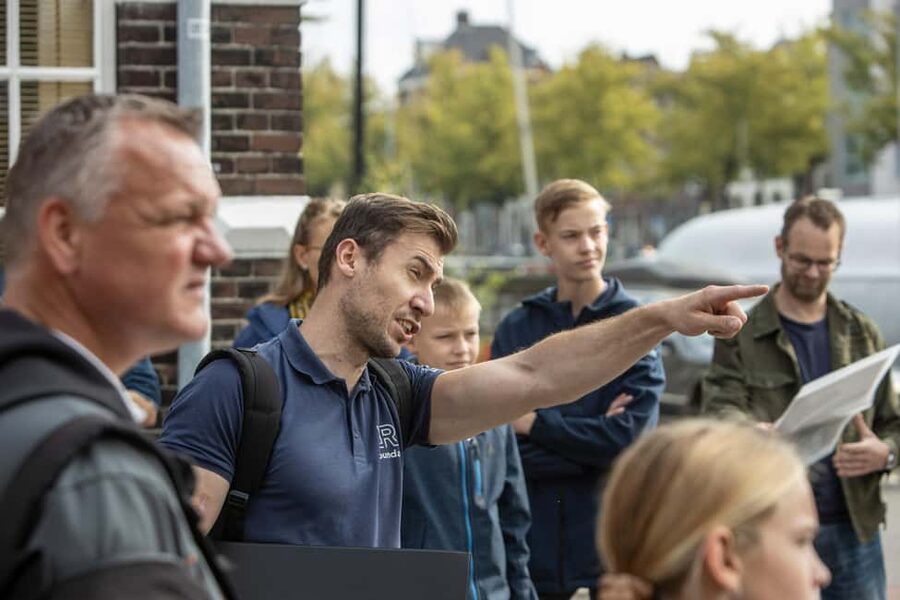
- Learn from Joël Stoppels: He is an International Guild of Battlefield Guides member with badge number 70 and leads tours in Dutch or English.
- Private group value: The listed price is $165 for a group of up to 25, making the cost more attractive when shared by a school, club, family, or company.
Why Groningen’s April 1945 battle matters
Groningen’s liberation was not a quick handover. It lasted four days, from April 13 to April 16, 1945, as Canadian soldiers of the 2nd Canadian Infantry Division fought German troops defending the city.
The German position formed part of the defensive system referred to as Festung Holland, under the command of Johannes Blaskowitz. In the city itself, the fighting became close and difficult. Streets had to be cleared one by one, and individual buildings could serve as strongpoints.
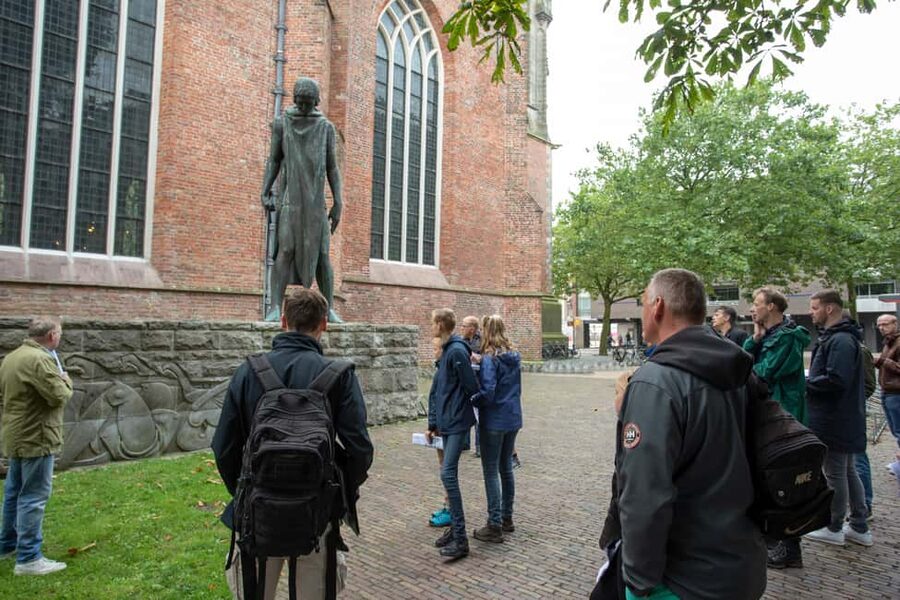
That detail changes how you see the city center. The Grote Markt is now an open urban square surrounded by cafés, shops, and public buildings. In April 1945, much of it lay in ruins. More than 270 buildings across Groningen were destroyed during the battle.
The human cost was heavy. Forty-three Canadian soldiers and 110 civilians died during the liberation. The tour keeps those losses in view, so you are not simply following military arrows on a map. You are also learning what the battle meant for the people living in the city.
On April 16, the German commander surrendered. This tour follows the Canadian advance toward that final stage, ending at the former State Archives in Sint Jansstraat, where German troops were surrounded.
Other trips worth a look in Netherlands:
- e-Scavenger hunt Deventer: Explore the city at your own pace
★ 4.0 · 34 reviews - 1 Hour of Whisky Distillery Experience
★ 4.5 · 33 reviews - Discover Amerfoort’s city center in this Outside Escape game tour
★ 4.5 · 32 reviews
Starting beside the Martinitoren and Grote Markt
Your meeting point is De Martinitoren, the tall church tower beside the Grote Markt. It is an easy place to identify, though the square itself has many possible approaches, so give yourself enough time to find the tower before the start.
Beginning here works well. The Grote Markt was the heart of Groningen before the war, and it became one of the most heavily damaged parts of the city during the fighting. Your guide can connect the square you see today with photographs showing the destruction of 1945.
This is also where the tour sets its tone. You are not starting with a long lecture in a classroom. You begin at the exact urban setting where the battle had a major impact, then move through the streets as the story develops.
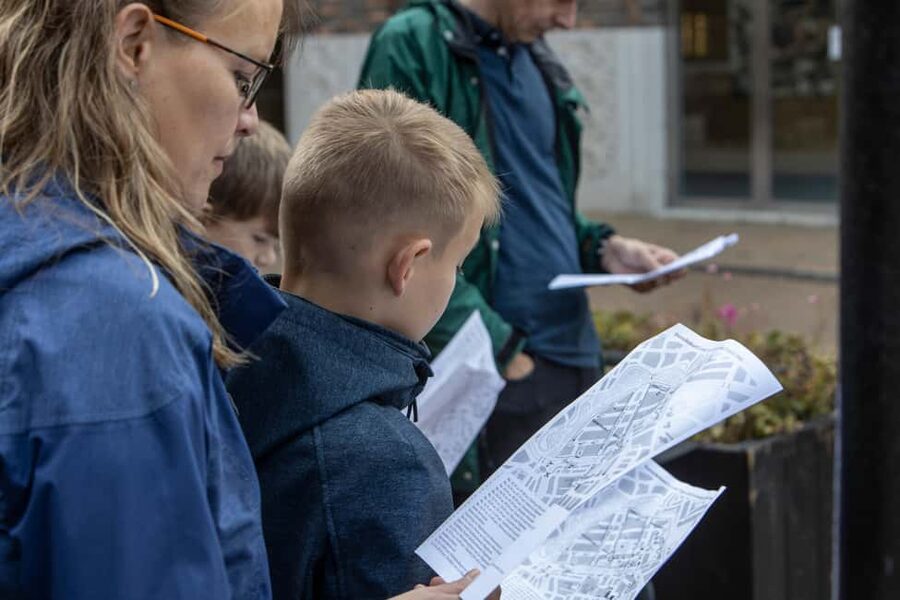
I like that approach because it gives you a physical sense of distance and direction. Printed maps are supplied during the walk, allowing you to follow the exact route of the Canadian advance instead of relying on a general explanation of the battle.
The limitation is that the opening section may feel slow if you want a quick introduction to Groningen’s wider history. The focus is firmly on the Second World War and the liberation of the city.
Following the Canadian advance to the Zuiderdiep
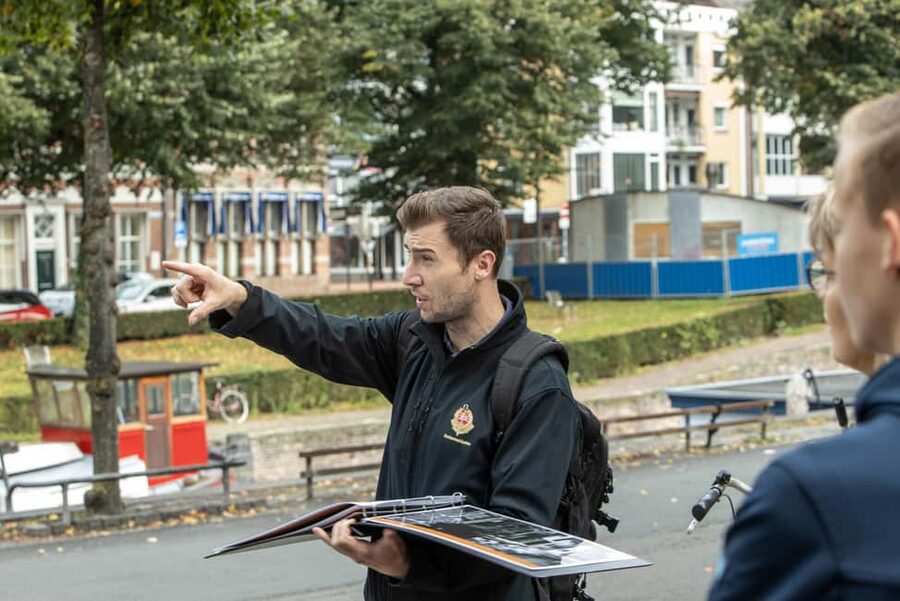
The central part of the experience is a guided walk through Groningen Province, with the route returning to the city center. The stated duration is two hours, so you have enough time for a detailed account without committing to a full-day program.
You follow the advance toward the Zuiderdiep, one of the key points on the route. Here, the map becomes especially useful. It helps you understand where Canadian forces moved and how the shape of the city affected the fighting.
A battle in a city is difficult to picture from a list of dates. Narrow streets, corners, houses, and public buildings all matter. The route lets Joël explain how the Canadian soldiers faced resistance as they moved through built-up areas, where every block could slow the advance.
The guide uses photographs and objects from 1945 during the tour. These materials are valuable because they bring the story down to street level. A wartime image can show the same square, building line, or damaged street that you are looking at now.
Joël’s role is important here. He is an expert guide with the International Guild of Battlefield Guides, badge number 70. That affiliation signals focused training and serious interest in battlefield interpretation, but the more useful quality for you is his openness to questions.
The available feedback describes him as friendly and willing to follow a question into another subject from Groningen’s past. That flexibility can make the afternoon feel less rigid. If you want to ask about a particular building or connect the battle to the wider city story, there is room for that conversation.
Still, a flexible guide can also mean the pace varies by group. If everyone asks questions, you may cover fewer side details than expected. That is usually a fair trade on a private tour, but it is worth knowing if you want a tightly timed presentation.
The Grote Markt after four days of fighting
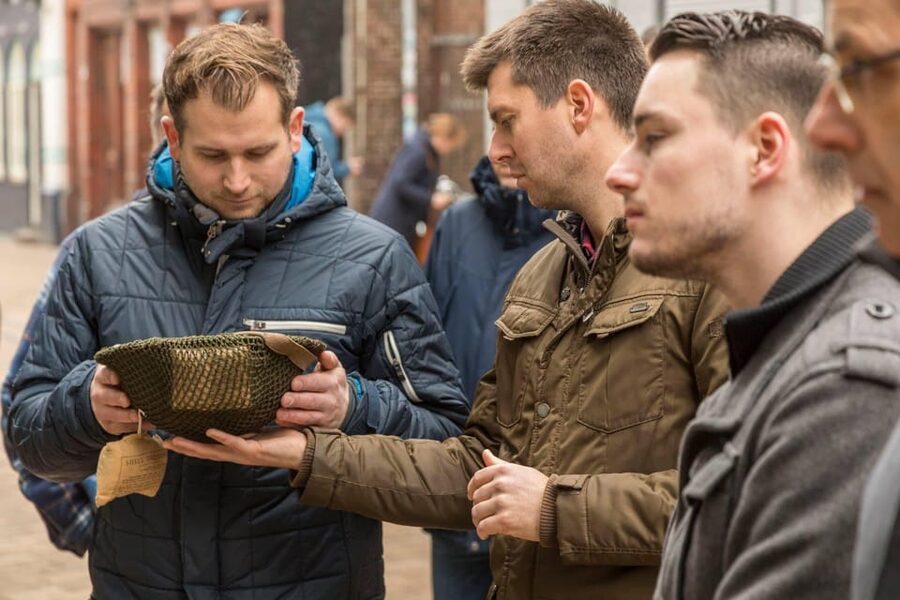
The route returns to the Grote Markt, giving the square a second meaning by the end of the tour. You have first seen it as the starting point, then learned why it became a major symbol of the battle’s destruction.
The fighting left the square in ruins, with more than 270 buildings destroyed across the city. The tour points out wartime damage that remains visible along the way, so you can connect old photographs with physical traces in the present-day streets.
You should not expect a preserved battlefield with trenches or large memorial structures at every turn. Groningen is a functioning city, and much of it has been rebuilt or repaired. The value comes from learning to read ordinary streets through maps, photographs, and explanation.
That makes this a good choice if you enjoy history that is tied to place. You are not only hearing what happened. You are asking where troops moved, which buildings mattered, and how the city’s residents experienced the fighting.
It also makes the tour more demanding than a casual city walk. The subject includes destruction, civilian deaths, and combat at close range. Families and school groups can find it useful, but the tone is best suited to people prepared for a sober account of war.
A different kind of day out entirely:
- e-Scavenger hunt Zierikzee: Explore the city at your own pace
★ 4.5 · 24 reviews - e-Scavenger hunt Zwolle: Explore the city at your own pace
★ 4.5 · 23 reviews - Discover Deventer with an Outside Escape city game tour!
★ 4.5 · 23 reviews - e-Scavenger hunt Bergen op Zoom: Explore the city
★ 4.5 · 21 reviews
Ending at Sint Jansstraat and the former State Archives
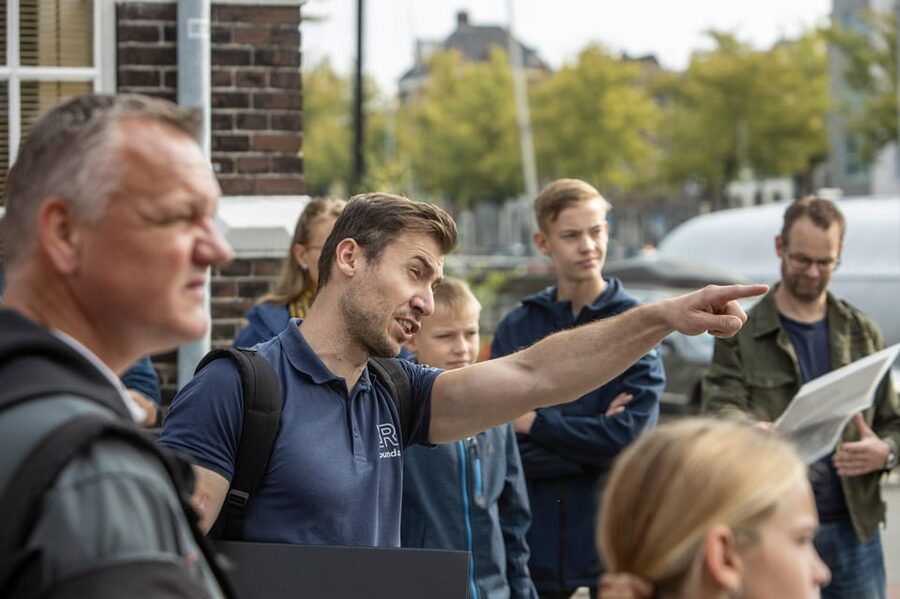
The final point is the former State Archives in Sint Jansstraat. This is where the German troops were surrounded, bringing the route to the final stage of the city’s liberation.
Ending here gives the tour a clear narrative shape. You begin at the Grote Markt, follow the Canadian advance, and finish at a site linked to the German surrender. The walk therefore has a beginning, middle, and end rather than a collection of unrelated wartime anecdotes.
After reaching Sint Jansstraat, the activity ends back at the meeting point near the Grote Markt. Make sure you understand that the route is a walking circuit, not a one-way transfer to another part of Groningen.
The supplied details do not promise entry into the former State Archives or any other museum. Museum entrance fees are not included, and no museum visit is listed as part of the two-hour route. You should treat the buildings and streets as the setting for the explanation, not assume an indoor exhibition at the finish.
The maps and wartime objects make the difference
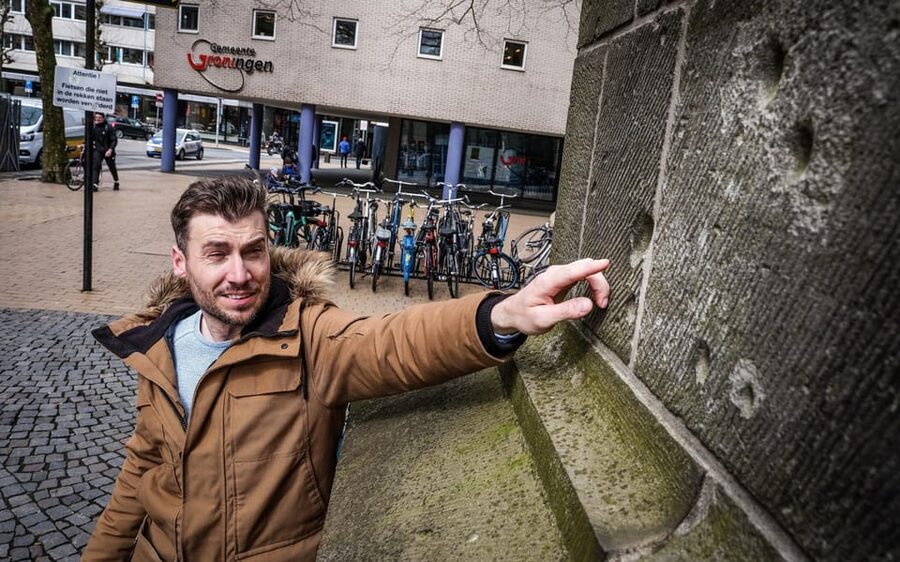
Maps can be dry in the wrong hands. Here, printed maps are brought along so you can track the Canadians’ exact advance. That simple tool adds real value because urban battles are hard to follow when the explanation stays only verbal.
The photographs and objects from 1945 serve a different purpose. Maps show movement. Images and objects show conditions. Together, they help you picture a city under attack and compare wartime Groningen with the streets you see now.
I like this mix of material and place-based explanation more than a walk that depends only on the guide’s memory. It gives you something to examine while the story unfolds, and it helps different kinds of learners follow along.
The tour is still guide-led, so your experience will depend partly on your questions and interests. That is a positive point for a private group, especially if you are booking for a school, sports club, company, or defense organization. The provider says it can tailor tours for such groups and arrange private or standard formats.
The public details list a private group of up to 25 at $165. That works out to $6.60 per person if the group is full, before any currency or booking differences. For a smaller party, the per-person cost rises, but you are paying for a dedicated guide rather than a seat on a large general walk.
There is also additional information about custom group sizes from 30 to 45 people, with tours that can be shorter, longer, and scheduled at different times of year. Because that differs from the listed group limit and two-hour format, larger groups should confirm the exact arrangement before booking.
Price, timing, and practical planning
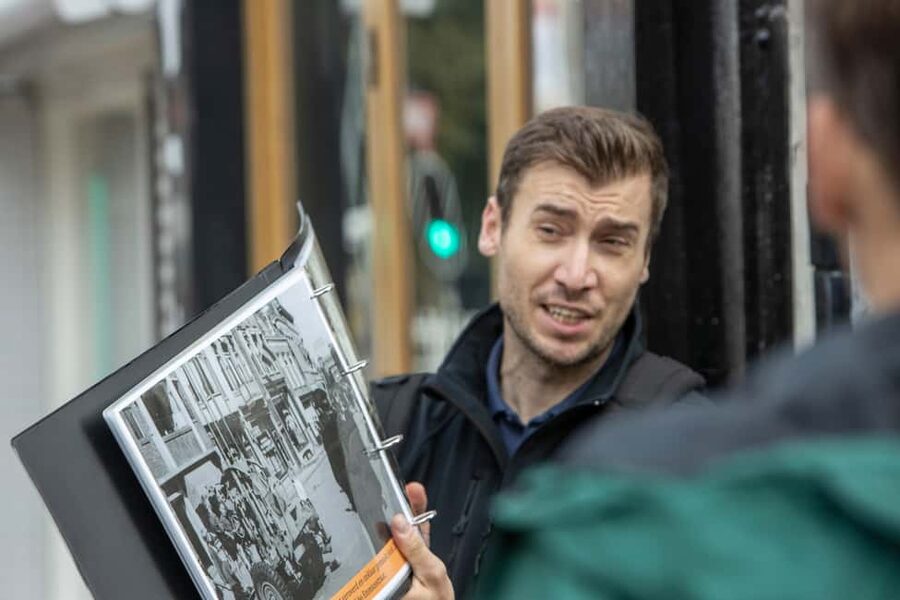
At $165 per group of up to 25, this tour offers solid value for an organized group. A school class, workplace, club, or extended family can divide the cost among many people and receive a focused historical walk in Dutch or English.
For two or three people, the price is less of a bargain than a standard city stroll. I would choose it for the subject and the guide rather than for low cost. If Groningen’s liberation is a major interest, the maps, photographs, objects, and specialist interpretation justify paying more than you would for a general orientation walk.
The tour lasts two hours, with starting times shown according to availability. Coffee, tea, transportation, and museum entrance fees are not included. Plan to handle refreshments before or after the walk, and do not count on transport between the meeting point and the route.
The experience is listed as wheelchair accessible, but the additional information also says it is not suitable for people with mobility impairments. That is a conflict you should take seriously. Ask the provider for the exact surface conditions, route length, and any difficult sections before booking if you use a wheelchair, walker, or have trouble walking.
Alcohol, drugs, and audio recording are not allowed. You can ask questions during the tour, but you should not make an audio recording of the guide.
Cancellation is flexible enough for normal trip planning: you can cancel up to 24 hours in advance for a full refund, and the reserve-now, pay-later option means you do not have to pay at the time of booking.
Who will get the most from this tour
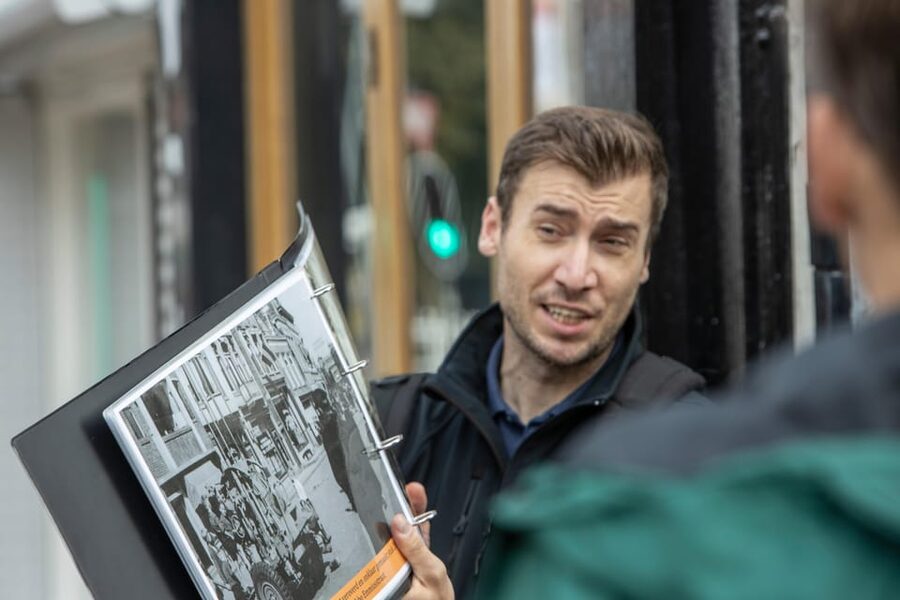
I would recommend the walk to anyone with a serious interest in the Second World War, Canadian military history, or Groningen’s liberation. It also suits visitors who prefer to understand a city through its difficult moments, not only its prettiest streets.
School groups can use the route to connect maps, primary visual material, and local places. Sports clubs, companies, defense groups, and family groups can also benefit from a private format where the guide can adjust the discussion to the group.
It is less suitable if you want a broad introduction to Groningen, a relaxed café-to-landmark walk, or a museum visit with plenty of time indoors. The subject is focused, the tone is often solemn, and the value depends on your interest in the events of April 1945.
The walk may also be a weaker choice for anyone with mobility limits unless the provider confirms that the route works for them. The two-hour length is manageable for many people, but the published notes do not give enough detail to assume an easy route.
Should you book the Groningen Battle Field Tour?
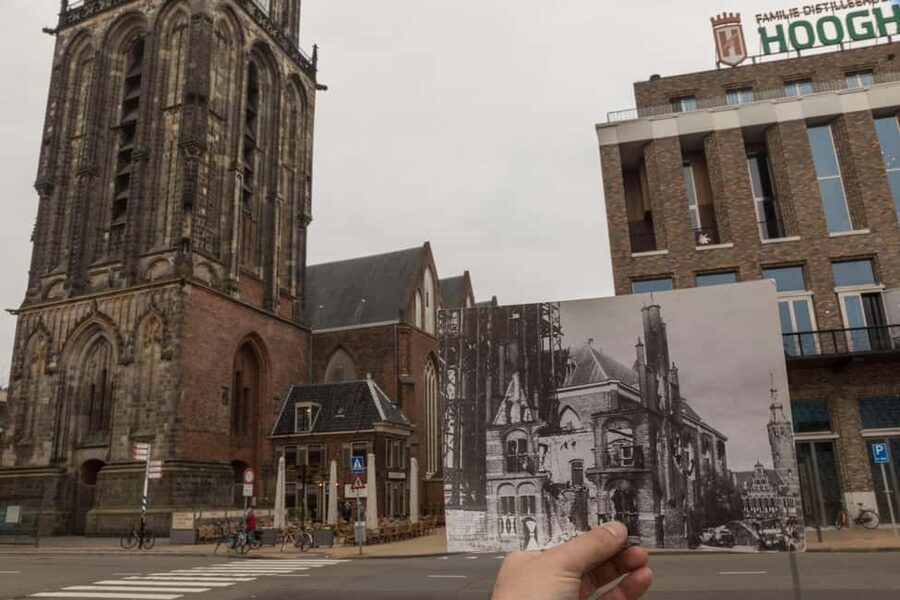
Book it if you want to follow the actual route of Groningen’s liberation and prefer a guide who can answer questions rather than recite dates. Joël Stoppels, the wartime images, printed maps, and visible damage give the tour a clear purpose and a strong local connection.
For a full group, the $165 price is appealing. For a tiny party, decide how much this subject matters to you before paying the private-tour rate. I would also confirm accessibility and the correct group format if your party is larger than 25.
If the 1945 battle is only a passing interest, choose a broader Groningen walking tour instead. If you want to understand why April 13 to April 16 changed the city, this focused route is a thoughtful and useful way to do it.
FAQ
Where does the Groningen Battle Field Tour start?
The tour starts at De Martinitoren, beside the Grote Markt in Groningen.
Where does the tour finish?
The activity ends back at the meeting point near the Grote Markt.
How long does the tour last?
The standard tour lasts two hours. Starting times depend on availability.
Which languages are available?
The live tour guide can lead the experience in Dutch or English.
What is included in the tour?
The guide brings printed maps so you can follow the exact route of the Canadian advance. Wartime photographs and objects are also presented during the tour.
Are drinks, transport, or museum tickets included?
No. Coffee and tea, transportation, and entrance fees to museums are not included.
Can I cancel the booking?
Yes. You can cancel up to 24 hours in advance for a full refund. A reserve-now, pay-later option is also available.
Just added in Netherlands
- 1 Hour of Whisky Distillery Experience★ 4.5 · 33 reviews
- Hattem’s Windmills, Bakeries and Ghosts: A Self-Guided Audio Tour★ 3.5 · 3 reviews
- e-Scavenger hunt Zwolle: Explore the city at your own pace★ 4.5 · 23 reviews
- e-Scavenger hunt Roosendaal: Explore the city at your own pace★ 3.5 · 5 reviews
- e-Scavenger hunt Amersfoort: Explore the city at your own pace★ 4.0 · 18 reviews
- Harderwijk Self Guided Sherlock Holmes Murder Mystery Game★ 4.5 · 2 reviews
- 3 hour boarding ticket Summer sailing from Wemeldinge (Zeeland)★ 5.0 · 17 reviews
- e-Scavenger hunt Deventer: Explore the city at your own pace★ 4.0 · 34 reviews
Tours, compared.
Zaanse Schans, Edam, Volendam & Marken Bus Tour
Read our review →
Anne Frank’s Story – Guided Walking Tour through Amsterdam
Read our review →
Life of Anne Frank and World War II Walking Tour
Read our review →

Red Light District Tour in German/English/Italian
Read our review →
Guided Zaanse Schans, Windmills & Cheese Tour
Read our review →
Windmill Tour from Amsterdam, Including Volendam & Marken
Read our review →