
Review · RED LIGHT DISTRICT TOURS
MUST DO: Amsterdam’s Red Light District tour with a local
Amsterdam tells some of its best stories after dark. I like this walk for its old-city history and its clear look at the Red Light District as a working neighborhood, not just a row of windows. I also like that the guide adds local context to places you could easily pass without noticing. The main drawback is that the tour depends on careful walking and punctuality, and one missed meeting time can mean missing the group.
This is a two-hour evening walking tour led in English by Trigger Tours. It costs $31.32 per person, which is fair if you want explanation and context rather than simply wandering through the area alone. The route begins at Geldersekade 2 and ends back at the same meeting point.
Guide quality can shape the whole experience. Ben, Robin, Sander, and Max have each received especially warm praise for clear storytelling, humor, local tips, and strong command of Amsterdam’s past. At the same time, one person found the guide difficult to hear, and another reported inappropriate conduct. Those complaints are not details to brush aside, so I would stay alert to how the group is handled and report any serious concern promptly.
In This Review
- Key points to know before booking
- Why this walk is more than a peek at red windows
- Starting at Geldersekade 2 in the old center
- Dam Square and Amsterdam’s wooden foundations
- Int Aepjen, one of Amsterdam’s last wooden buildings
- The Waag and Amsterdam’s former city defenses
- The narrowest house and the power of limited space
- The condom shop and the modern district
- What the guides do best
- Group size, walking demands, and evening comfort
- Is $31.32 a fair price?
- Who should book this Amsterdam walk?
- Should you book it?
- FAQ
- How long does the Red Light District tour last?
- What is the price of the tour?
- Where does the tour begin?
- Where does the tour end?
- Is the tour offered in English?
- What is included in the tour?
- Are food and drinks included?
- Can I cancel for a full refund?
Key points to know before booking
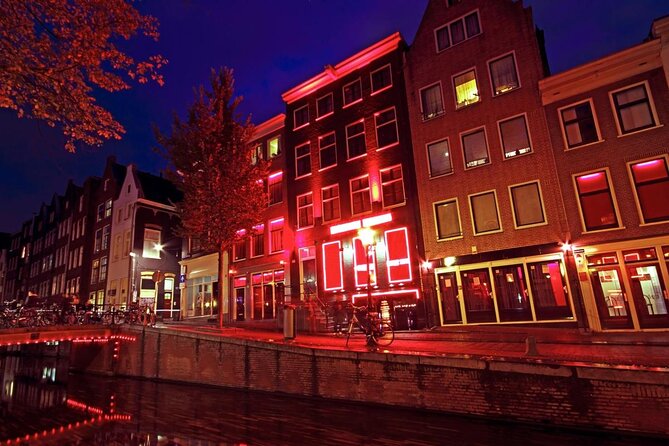
- The Red Light District is only part of the story: Expect plenty of Amsterdam history, architecture, local customs, and old trade connections alongside the sex industry.
- The route includes major old-town sights: You’ll see the Waag, Dam Square, Int Aepjen, the narrowest house, and the city’s first condom shop.
- It is an evening walk: The area takes on a different mood after dark, but icy streets, crowds, and poor weather can make the route harder.
- Strong guides make the difference: Ben, Robin, Sander, and Max have been praised for humor, clear explanations, and useful local suggestions.
- The tour lasts about two hours: Food and drinks are not included, and you return to the starting point.
- Punctuality matters: The guide may leave close to the scheduled start, so arrive early at Geldersekade 2.
Why this walk is more than a peek at red windows
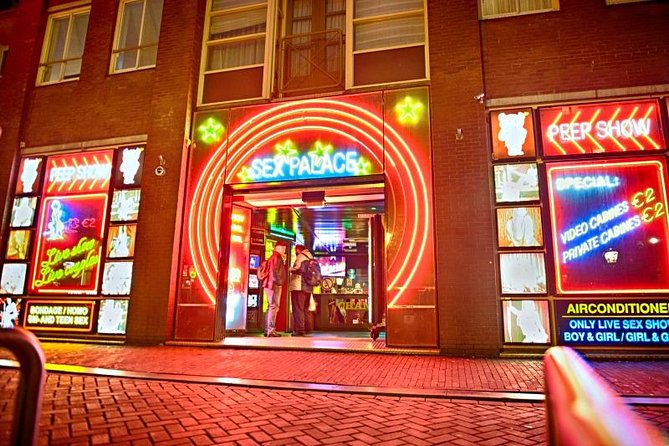
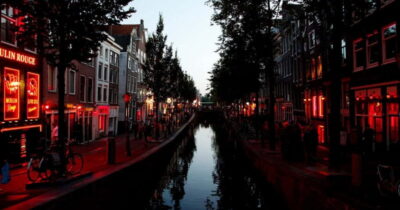
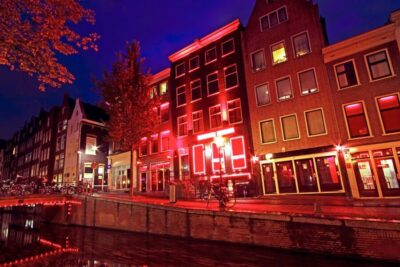
Amsterdam’s Red Light District is easy to misunderstand. Many people arrive expecting a quick look at the famous windows, but the area is also part of the Old Town, the oldest section of the city. Its streets hold centuries of trade, religion, building, policing, nightlife, and social change.
That wider setting is what gives this tour value. You are not simply being led from one adult venue to another. You are learning why the district developed here, how Amsterdam handled its sex industry, and how the area fits into the city today.
The strongest part of the experience seems to be the guide’s ability to connect ordinary-looking places with larger stories. A narrow lane, an old timber building, or a small shop can become a useful clue to how Amsterdam grew.
One person estimated that only about 15 percent of the tour focused directly on the Red Light District. I see that as a benefit for many people, especially if you want a serious introduction to Amsterdam rather than a sensational evening outing. If you want every minute devoted to prostitution and nightlife, this may feel too broad.
More Red Light District walks:
- Amsterdam: Red Light District Tour in German/English/Italian
★ 4.9 · 5,623 reviews - Amsterdam Red Light District & Coffee Shop Tour
★ 4.6 · 4,134 reviews - Amsterdam: Red Light District Pub Crawl with Unlimited Shots
★ 4.1 · 2,130 reviews
Starting at Geldersekade 2 in the old center
The meeting point at Geldersekade 2, 1012 BH Amsterdam, puts you near the historic center and close to the water. The route is on foot, so wear shoes that can handle uneven streets and take care with bicycles, which are a constant part of Amsterdam’s city traffic.
The tour lasts approximately two hours and returns to the same place. That makes planning simple. You do not need to arrange a ride back from an unfamiliar neighborhood, and you can continue your evening near the center once the walk ends.
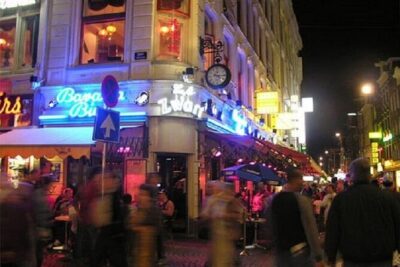
The evening timing matters. After dark, the district has a different feel from the daytime city. Lights, narrow streets, open businesses, and the changing mix of people make the area more atmospheric, but they can also make it harder to hear a guide.
I would arrive early, not merely on time. One unhappy booking involved arriving two minutes after the scheduled start on an icy evening and finding the group gone. The operator stated that the guide waited until 18:10 and attempted to call and text, then issued a full refund. The practical lesson is simple: arrive at least 10 to 15 minutes early, especially in winter or bad weather.
Dam Square and Amsterdam’s wooden foundations
One stop focuses on the Dam, one of the city’s central historic spaces. The useful detail here is not only the square itself, but the unusual ground beneath Amsterdam.
The city was built on thick layers of fen and clay. In older construction, wooden piles were driven through the soft ground until they reached a firmer sandy layer roughly 11 meters below the surface. In other words, some of Amsterdam’s buildings stand on timber foundations hidden below the streets.
This is the sort of fact that changes how you look at the city. The leaning façades and old canal houses are not just picturesque. They reflect a long struggle to build on wet, unstable ground.
A guide can also explain why the oldest part of Amsterdam contains such a mixture of uses. Trade, housing, drinking places, religious buildings, and adult businesses developed close together because this was the working heart of the city.
Int Aepjen, one of Amsterdam’s last wooden buildings
Pub Int Aepjen, also called The Ape, dates to around 1540. It is one of only two remaining wooden buildings in Amsterdam, which makes it an unusual survivor in a city now strongly associated with brick façades.
The reason wooden buildings became rare is tied to a major fire in 1452. After that disaster, the city government required brick façades, reducing the risk of another widespread blaze. Int Aepjen gives you a visible reminder of the city before that change.
This stop works well because it combines architecture with an everyday place. You are not looking at an isolated monument behind a fence. You are seeing a historic building that has long been connected with drinking and city life.
It also helps explain why this area can feel visually confusing. Modern signs and businesses sit beside buildings several hundred years old. Without guidance, it is easy to focus only on the nightlife and miss the age of the streets around you.
A few more options to weigh up in Amsterdam
- Amsterdam: Van Gogh Museum Ticket
★ 4.7 · 52,054 reviews - Amsterdam Classic Saloon Boat Cruise with Drinks and Cheese
★ 5.0 · 31,825 reviews - Amsterdam Luxury Canal Cruise + Unlimited Drinks & Bites option
★ 5.0 · 30,518 reviews - Amsterdam: Heineken Experience Ticket
★ 4.6 · 30,055 reviews
The Waag and Amsterdam’s former city defenses
The Waag is one of the most important stops on the walk. Built around the 1400s, it once formed part of Amsterdam’s defensive wall and served as one of the city gates. It is also described as the second-oldest building in Amsterdam.
Later, the Waag became a guild building. Guilds were organizations for craftspeople, and their members established themselves in and around the square. This gives the site a direct connection to the rules, trades, and working life of old Amsterdam.
I like this stop because it adds structure to the tour. The Red Light District can seem like a collection of unrelated lanes and venues. The Waag helps you place the neighborhood within the city’s older civic and commercial system.
The building also shows why a local guide can be useful here. You can look at the walls and get a photograph, but the change from city gate to guild center explains how Amsterdam’s needs shifted over time.
The narrowest house and the power of limited space
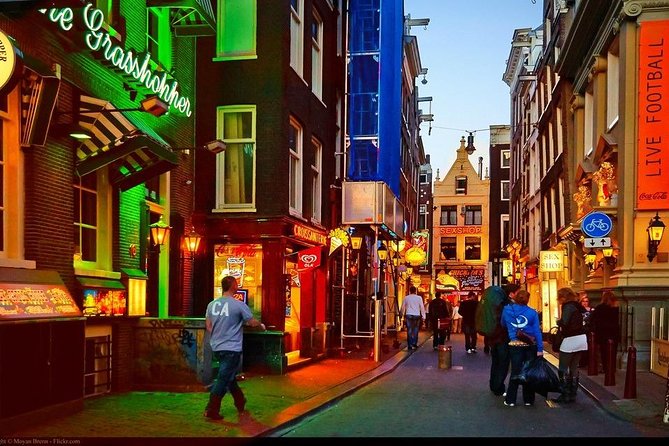
The smallest house of Amsterdam dates to around the 1700s. It was first used as storage for the Dutch East India Company, known as the VOC, and later became a home.
This small building is a neat way to understand Amsterdam’s long relationship with restricted space. Land in the old center was valuable, and buildings were shaped by narrow plots, commercial needs, and the practical demands of canal-side construction.
The stop is brief, but it adds variety to the walk. After hearing about city gates and foundations, you get a more intimate example of how people used every available bit of urban space.
Do not expect a long interior visit based on the information provided. The value is in seeing the structure and hearing how its purpose changed from storage to housing.
The condom shop and the modern district
The route includes what is described as the world’s first shop devoted specifically to condoms. It has been located here since 1987 and sells different types, including size-customized condoms and novelty options.
This may sound like a lighthearted stop, and it is. But it also gives the guide a chance to discuss the sex industry in practical terms rather than treating it as a joke or spectacle.
The tour can include information about Amsterdam’s sex industry, local customs, and present-day conditions in the district. One person also reported visiting a cannabis shop during the walk. Since exact stops can vary, I would treat that as possible rather than guaranteed.
This part of the tour is best approached with maturity. The area is a place where people work, shop, live, and visit. Keep your voice down, follow the guide’s instructions, and do not photograph people in the windows. Even when a street is famous, it is not a stage set.
What the guides do best
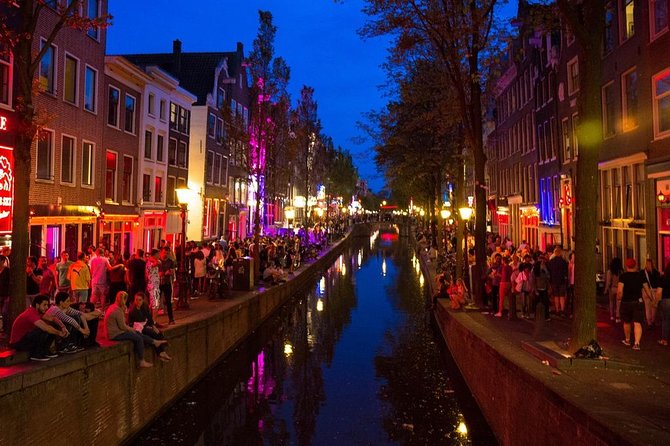
The most praised part of this experience is the guiding. Ben is described as lively and effective at making Amsterdam’s past easy to follow. Robin is praised for local suggestions and an engaging style. Sander receives credit for presenting the city’s history clearly, while Max is described as humorous and very well informed.
That range matters because a walking tour is only as good as the person leading it. Facts alone are not enough. You need a guide who can keep the group together, speak clearly, answer questions, and explain sensitive topics without turning them into cheap entertainment.
The strongest descriptions point to a good mix of history and current events. That balance is useful in the Red Light District, where old buildings and modern debates sit side by side.
There are some clear cautions. One person found the guide hard to hear because he walked ahead while speaking. Another described rude and inappropriate comments and said the complaint did not receive a response. I cannot tell from the available information whether those incidents reflect unusual guide assignments or broader problems, but they are serious enough to consider.
If you book, pay attention at the start. If the guide cannot be heard, move closer and say so. If conduct becomes disrespectful, contact the operator as soon as possible.
Group size, walking demands, and evening comfort
The maximum group size is 20 people. That is not a private stroll for two, despite the description of a private guide, but it is still small enough to feel more manageable than a large city tour.
The route takes place in narrow streets, which can create two practical problems. First, a large group may need to stop at the side to hear the guide. Second, the walking surface can be uncomfortable in bad weather. The tour is not recommended for people with limited mobility.
Service animals are allowed, and the meeting point is near public transportation. Most people can participate, but you should be prepared to walk for roughly two hours without a dedicated seated portion.
I would bring a warm layer and weatherproof footwear in colder months. Amsterdam weather can change quickly, and icy streets have already caused one serious meeting problem. The tour is more enjoyable when you are watching the buildings instead of worrying about cold feet.
Is $31.32 a fair price?
At $31.32 per person, this is reasonably priced for a two-hour guided walk in central Amsterdam. You are paying for a local explanation of places that cost nothing to see, not for admission to a museum or a special attraction.
That distinction helps you judge the value. If you are comfortable researching the Waag, Dam, Int Aepjen, Amsterdam’s foundations, and the district’s current situation yourself, you can walk the route for free. If you want these pieces connected by a guide with stories and local tips, the price is modest.
The value is strongest for a first visit. The tour can help you understand what you are seeing and make the neighborhood feel less like a curiosity stop. It also leaves you with more confidence to explore the center independently afterward.
Food and drinks are not included. That is not a major issue, since the tour ends back at the meeting point and you can plan your own meal or drink before or after the walk.
The experience is often booked well ahead, with an average booking time of 47 days. If your dates are fixed, reserve early. You can cancel for a full refund up to 24 hours before the start time, but cancellations or changes made inside that window are not refunded or accepted.
Who should book this Amsterdam walk?
I would recommend it to first-time visitors who want to understand the Red Light District without reducing it to nightlife. It suits adults who are comfortable discussing sex work, cannabis, city policy, and the area’s social history in a direct but respectful way.
It can also suit families with older teenagers if you choose an earlier, more family-friendly departure. One family found an 18:00 tour appropriate for a 17-year-old, while a later tour was considered better for adults only. I would take that distinction seriously and ask about timing before booking for anyone under 18.
This is less suitable if you have limited mobility, dislike walking on narrow streets, or need a tour that waits several minutes for late arrivals. It may also disappoint you if your only goal is to see the windows and spend the full two hours on adult venues.
The best reason to book is the combination of Amsterdam’s old center and the modern Red Light District. You get a city lesson, a neighborhood walk, and a frank look at an area that is often treated too simply.
Should you book it?
Yes, if you want context, local stories, and a respectful introduction to Amsterdam’s oldest center. The strongest guides make the walk lively, useful, and much more rewarding than exploring the district without explanation.
Book with realistic expectations. This is not a nonstop adult-themed attraction, and the quality depends heavily on the guide assigned. Arrive early at Geldersekade 2, wear sturdy shoes, stay close enough to hear, and choose an earlier departure for a more family-friendly outing.
At $31.32, I consider it good value for a first visit, especially when Ben, Robin, Sander, or Max is leading. If you prefer complete independence, you can see the sights for free, but you will miss the connections that make this complicated neighborhood easier to understand.
FAQ
How long does the Red Light District tour last?
The walking tour lasts approximately two hours.
What is the price of the tour?
The listed price is $31.32 per person.
Where does the tour begin?
The meeting point is Geldersekade 2, 1012 BH Amsterdam, Netherlands.
Where does the tour end?
The tour ends back at the meeting point.
Is the tour offered in English?
Yes. The experience is offered in English.
What is included in the tour?
A two-hour walking tour is included.
Are food and drinks included?
No. Food and drinks are not included.
Can I cancel for a full refund?
Yes, if you cancel at least 24 hours before the experience start time. Cancellations or changes made less than 24 hours before the start time are not refunded or accepted.
Just added in Amsterdam
- Private Tour Zaanse Schans Windmills and Volendam in Jaguar★ 5.0 · 10 reviews
- Zaanse Schans and Giethoorn Unique Day Trip with Boat Cruise★ 4.5 · 17 reviews
- Windmills-Volendam-Giethoorn Private Tour in Jaguar★ 5.0 · 2 reviews
- Half-Day Private Guided Sightseeing Tour of Zaanse Schans★ 5.0 · 14 reviews
- Best of Netherlands: Zaanse Schans Mills, The Hague & Rotterdam★ 4.5 · 10 reviews
- Zaanse Schans Private Tour Windmills★ 5.0 · 18 reviews
- Zaanse Schans Windmills Edam Volendam and Marken from Amsterdam★ 5.0 · 1 review
- Zaanse Schans Edam Volendam Private Day Tour from Amsterdam★ 5.0 · 3 reviews
Red Light District Tours, compared.
Red Light District Tour in German/English/Italian
Read our review →
Amsterdam Red Light District & Coffee Shop Tour
Read our review →
Red Light District Pub Crawl with Unlimited Shots
Read our review →
Private Amsterdam Red Light District and Coffee Shop Tour
Read our review →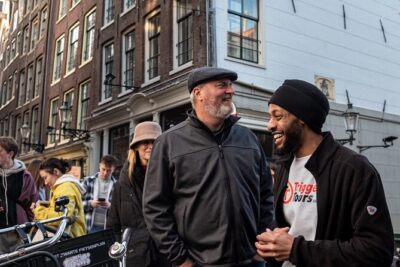
Browse the lists this tour appears in