Review · TOURS
Small Group Hidden Gems Tour in Amsterdam
Amsterdam rewards curious walkers. This two-hour tour looks past canals and postcard views to tell the stories of people who changed the city. I like its focus on overlooked voices, and I like the small maximum of 12 people, which should make it easier to hear and ask questions. The main consideration is that this is an outdoor walking experience, so poor weather can affect the schedule.
I also like how the route connects serious subjects with memorable places, from the world’s first gay marriage to Indonesian resistance, Jewish history, workers’ rights, and the rise of a famous artist. Guides such as Elyzabeth, Elizabeth, Tanja, and Astrid have been praised for clear storytelling and personal warmth, though your guide will depend on the date. At $48.16 per person, the price is fair if you want ideas and context rather than museum admission.
In This Review
- Key points to know before you book
- Why this Amsterdam walk feels different
- At Megadlé Jethomiem, Amsterdam’s introduction starts with equality
- Spinoza Monument and the cost of independent thought
- Mozes en Aaronkerk and Black life in the seventeenth century
- Portuguese Synagogue and the woman behind an underground escape route
- Hortus Botanicus and two Indonesian revolutionaries
- De Burcht and the workers who changed Amsterdam
- ARTIS and stories beside the flamingos
- University of Amsterdam and two voices for change
- H’ART Museum and the family link behind an artistic legend
- What $48.16 buys you in practical terms
- Who will get the most from this experience
- Should you book the Amsterdam Hidden Gems Tour?
- FAQ
- How long does the tour last?
- How much does the tour cost?
- Where does the tour start?
- Where does the tour end?
- What language is the tour offered in?
- What happens if the weather is poor?
Key points to know before you book
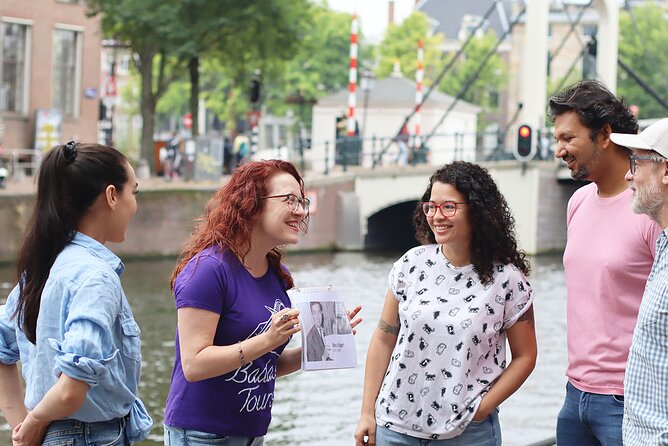
- Small group of no more than 12: You get a more personal walk than you would on a large city tour.
- Nine stops in about two hours: The route moves at a steady pace and covers a wide range of Amsterdam stories.
- History beyond the usual canals: Expect stories about LGBTQ rights, Black Amsterdam, Jewish life, labor, colonial ties, suffrage, resistance, and art.
- No admission tickets are included or needed at the listed stops: The value comes from the guide’s interpretation of places you see from outside or pass along the way.
- Starts at Megadlé Jethomiem and ends at H’ART Museum: The route begins at Amstel 23 and finishes at Amstel 51.
- A strong fit for solo visitors and history-minded people: The company has been responsive to solo bookings and has offered a thoughtful, inclusive approach.
Why this Amsterdam walk feels different
Many first-time tours in Amsterdam concentrate on the canal ring, grand merchants’ houses, the Jordaan, and the city’s famous art museums. This walk takes another route through the eastern central area, using ordinary streets and recognizable buildings as the setting for stories that are easy to miss.
The appeal is not the number of sights. You will not spend two hours entering major attractions or ticking off famous monuments. Instead, you pause at places connected to people whose lives shaped modern Amsterdam, often without getting much attention in a standard city introduction.
That approach gives the walk a clear purpose. You are not simply looking at a synagogue, a church, a university, or a zoo. You are hearing why that place matters and how it connects to broader issues such as religious freedom, civil rights, equality, migration, labor, empire, and memory.
The tone can be serious. The route includes the Spanish and Portuguese Inquisitions, World War II, discrimination, resistance, and the suffering of Jewish communities. It also includes lighter moments and surprising turns, including Amsterdam’s links to diamonds, philosophy, art, and the world’s first legally recognized same-sex marriage.
The guide is central to the experience. Elyzabeth is praised for being an engaging storyteller, while Elizabeth is noted for making people feel comfortable and for adapting to a wheelchair user with hearing limitations. Astrid is associated with the Jewish-history side of the company and has been praised for treating difficult subjects with care. Tanja has also been praised for answering questions clearly.
Guide assignments can change, so you should not book expecting one particular person unless the company confirms it. Still, the pattern is clear: this is a story-led tour, and the quality depends more on the guide’s delivery than on formal access to attractions.
A few more options to weigh up in Amsterdam
- Amsterdam: Van Gogh Museum Ticket
★ 4.7 · 52,054 reviews - Amsterdam Classic Saloon Boat Cruise with Drinks and Cheese
★ 5.0 · 31,825 reviews - Amsterdam Luxury Canal Cruise + Unlimited Drinks & Bites option
★ 5.0 · 30,518 reviews
At Megadlé Jethomiem, Amsterdam’s introduction starts with equality
The meeting point is Monument Megadlé Jethomiem at Amstel 23, 1011 PT Amsterdam. The first stop is the Dutch National Opera & Ballet, about 10 minutes into the experience.
The opening story concerns the world’s first gay marriage and the otherwise unassuming building where it took place. That is an effective way to get oriented. Instead of beginning with a date-packed lecture, the guide starts with a landmark in modern social history and uses it to frame Amsterdam as a city shaped by changing ideas about citizenship and personal freedom.
You should expect an introduction to the city rather than a full tour of the opera building. The stop is free, and the supplied details do not indicate an interior visit. That is important if you are hoping to see a performance venue from inside. The value here comes from the story and the setting.
This first pause also sets the route’s pattern: a familiar place, a less familiar person or event, and a short explanation of why it matters.
Spinoza Monument and the cost of independent thought
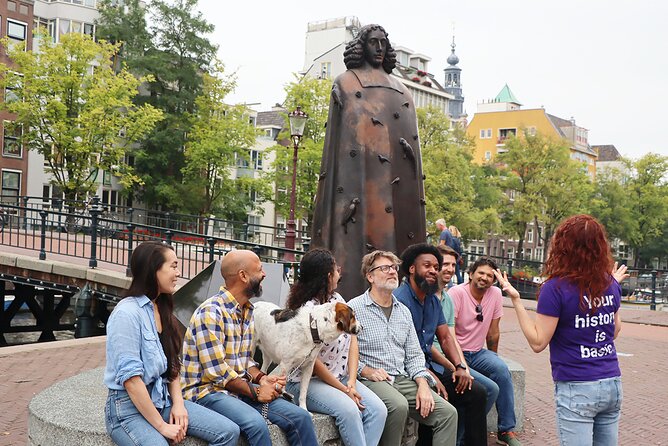
The Spinoza Monument receives about five minutes. Baruch Spinoza is one of modern philosophy’s major figures, yet the tour focuses not only on his ideas but also on his rejection by his own community.
That human angle makes the stop useful even if philosophy is not your favorite subject. You hear about a person who challenged accepted beliefs and paid a personal price for doing so. The story fits the wider purpose of the walk, which is to show Amsterdam as a place shaped by debate, conflict, and people who did not fit neatly into the social order around them.
Five minutes is brief, so do not expect a seminar on Spinoza’s work. Think of this as a sharp introduction, with the monument acting as a prompt for a bigger question: how much freedom did Amsterdam really offer, and who was allowed to claim it?
Mozes en Aaronkerk and Black life in the seventeenth century
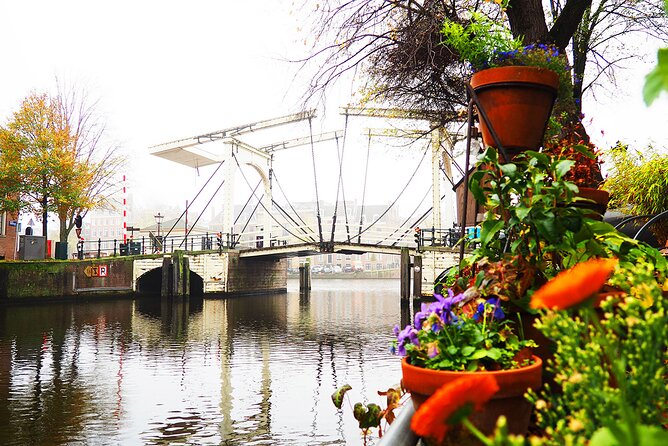
At Mozes en Aaronkerk, the guide spends about five minutes discussing a couple from Amsterdam’s free Black community in the seventeenth century.
This is one of the route’s most valuable choices. Amsterdam’s connection to global trade is well known, but standard sightseeing often reduces that past to wealthy merchants, grand canal houses, and commercial success. A story about Black residents and their lives adds people and personal experience to a period that can otherwise feel distant.
The church itself gives the conversation a physical anchor. You are not hearing an abstract account of migration or society. You are standing near a place associated with Amsterdam’s religious and civic life while learning about people who occupied a less visible place in the city’s traditional story.
The stop is short, and the description does not promise entry into the church. If you want detailed architectural commentary or an extended discussion of Black Dutch history, this tour may only give you a starting point. That can be a strength if you want a broad introduction with many subjects, but a limitation if you prefer one theme explored at length.
A different kind of day out entirely:
- Amsterdam: Heineken Experience Ticket
★ 4.6 · 30,055 reviews - Amsterdam: Rijksmuseum Entry Ticket
★ 4.7 · 25,535 reviews - Amsterdam: Classic Boat Cruise with Optional Cheese & Wine
★ 4.6 · 22,925 reviews - Amsterdam: Evening Cruise with Optional Wine and Snacks
★ 4.4 · 19,696 reviews
Portuguese Synagogue and the woman behind an underground escape route
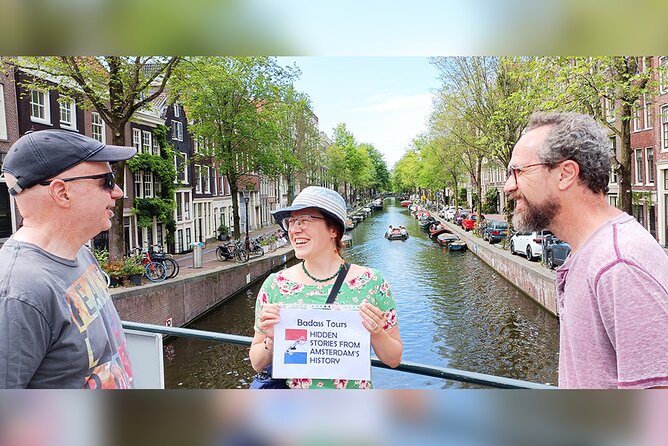
The Portuguese Synagogue receives around 10 minutes. Here the guide places you between Amsterdam’s historic synagogues and tells the story of an heiress who created an underground railroad during the Spanish and Portuguese Inquisitions.
The story links money, danger, family, and religious persecution. It also gives you a better sense of why Amsterdam attracted Jewish communities from the Iberian Peninsula. The stop is not just about a building. It is about how one person used her position and resources to help others escape a system built on fear.
The phrase underground railroad can suggest North American history, so the guide’s explanation is especially useful here. You will want to listen for the specific route, people, and risks involved rather than expecting a simple comparison.
Again, this is an exterior-focused stop according to the supplied route. No admission ticket is listed, and the tour does not promise a synagogue visit. If you want to explore the Portuguese Synagogue’s interior, you would need to arrange that separately.
Hortus Botanicus and two Indonesian revolutionaries
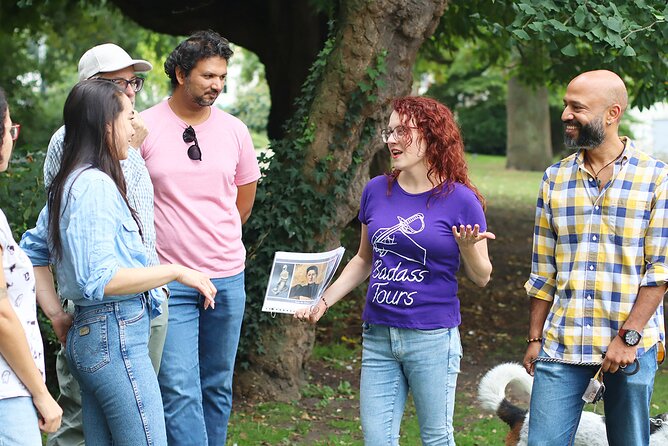
The walk continues toward Hortus Botanicus, where about 10 minutes are devoted to two Indonesian rebels and revolutionaries who lived very different lives.
This is a particularly meaningful subject in Amsterdam, a city whose wealth and institutions cannot be separated from colonial connections. The tour does not flatten the story into one simple account. Instead, it contrasts two people who responded to oppression in different ways.
That contrast is useful. History is rarely a list of heroes on one side and villains on the other. Personal choices, political conditions, and the limits placed on people all matter. A skilled guide can make this stop feel connected to the streets around you rather than like a separate lecture.
The stop may be emotionally demanding, especially because it asks you to think about Indonesia through the lives of individuals rather than through broad political labels. The 10-minute slot means you get an introduction, not every detail.
De Burcht and the workers who changed Amsterdam
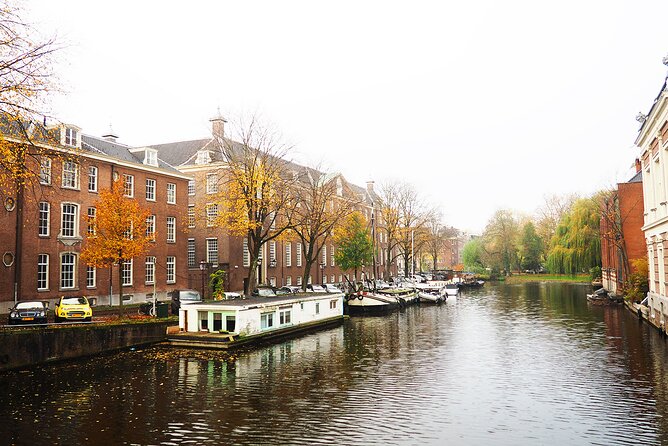
At De Burcht, the focus shifts to diamonds and labor. Amsterdam has a long connection with the diamond trade, but this stop concentrates on the workers’ union that built the distinctive building and helped secure rights that people still depend on today.
I like this part of the route because it moves away from the usual story of wealthy commerce. Diamonds often bring to mind glamour and high prices. Here, the guide turns attention toward the people who cut, polished, and worked within that industry, and toward the organized labor that demanded better treatment.
The building becomes evidence of collective action. You see a structure connected to a union and learn how worker movements influenced rights beyond one trade. That gives the stop a practical edge: labor history is not merely about the past. It helps explain protections many people now take for granted.
The tour does not list an interior visit, so you should expect to view De Burcht from the outside. Ten minutes is enough for the main story and some questions, but anyone fascinated by Amsterdam’s diamond industry may want more time elsewhere.
ARTIS and stories beside the flamingos
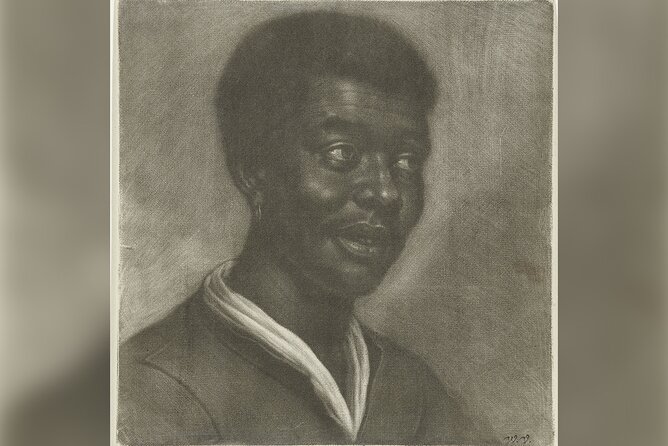
The longest stop is at ARTIS Amsterdam Royal Zoo, where the tour spends about 30 minutes. You pass the flamingos while hearing about several influential Amsterdammers, including major artists and heroes of the World War II resistance.
This is a smart setting for a broad group of stories. The zoo gives you a lively visual change after stops centered on monuments, churches, and historic buildings. At the same time, the material can turn serious quickly, especially when the subject shifts to resistance during the war.
The stop also shows how the tour handles the word influential. It does not limit importance to famous painters or political leaders. The stories include people whose work, courage, or choices affected others, even if their names are not as familiar.
Thirty minutes is a substantial portion of a two-hour tour. You should be prepared to spend less time on some earlier stops because ARTIS is where several people and themes are brought together. The route information says admission is free, but it does not promise entry to the zoo. You are passing by the grounds, not booking a zoo visit.
If you already plan to visit ARTIS, this can give you useful context before a separate visit. If you are not interested in zoos, the setting still matters because the main attraction here is the storytelling.
University of Amsterdam and two voices for change
The route crosses through the University of Amsterdam campus for about 15 minutes. The guide discusses an influential suffragist and a world-changing diplomat.
This stop adds two forms of public action to the tour. The suffragist represents the long fight for women’s political rights, while the diplomat points to international influence and the ability of one person to shape events beyond the Netherlands.
The university setting works well because it brings ideas, education, and public life together. You are moving through an active campus rather than visiting a static monument, so the walk feels connected to Amsterdam today.
The stop is long enough for some background, but not for full biographies. If one of these figures particularly interests you, write down the name and use the tour as a prompt for later reading. The guide’s strength here is likely to be selection and connection: choosing a revealing episode and showing how it fits the city’s story.
H’ART Museum and the family link behind an artistic legend
The tour ends at H’ART Museum, formerly the Hermitage Amsterdam, at Amstel 51. The final 15-minute story concerns one of the art world’s giants and the relative who barely knew him but helped ensure that he would be remembered.
This is a fitting ending because it turns the spotlight toward memory and reputation. Famous artists can seem destined for greatness, but careers often depend on family decisions, chance, money, timing, and persistence. The story gives you a more human view of how a household name came to be known.
Finishing at H’ART Museum is practical. You can continue with the museum if its current exhibition interests you, or use the nearby area as a natural point to plan your next stop. The tour itself ends outside, and museum admission is not included.
The final stop also leaves you with a good question: who gets remembered, and who helps decide? That question runs through the entire walk, from Spinoza and Black Amsterdam to Jewish rescue, labor rights, resistance, and art.
What $48.16 buys you in practical terms
At $48.16 per person, this is not the cheapest way to spend two hours in Amsterdam. You can walk around the city for free, and many of the places on the route do not require admission.
The price makes more sense if you value interpretation. You are paying for a guide who selects stories, explains connections, answers questions, and helps you notice meaning in places you might otherwise pass without a second thought. The group limit of 12 also matters. A small group usually gives you a better chance to hear, ask questions, and keep pace with the guide.
The tour includes a passionate guide, but not food, drinks, museum entry, or attraction tickets. Treat it as a guided history walk, not a package of admissions.
The tour lasts about two hours and is offered in English. It is near public transportation, and service animals are allowed. Most people can participate, though you should mention mobility or hearing needs when booking. Elizabeth made an effort to accommodate a mother using a wheelchair and dealing with hearing limitations, which suggests a considerate attitude, but the route’s exact accessibility should still be confirmed in advance.
The meeting point is Monument Megadlé Jethomiem, Amstel 23. The ending is at H’ART Museum, Amstel 51. That point-to-point format is useful because you do not finish where you began. You can continue sightseeing from the museum instead of retracing the entire route.
The company receives bookings an average of 16 days ahead, so planning early is sensible if your schedule is fixed. Confirmation is normally issued at booking. If you book within two days of the date, confirmation can take up to 48 hours and depends on availability.
Because the experience requires good weather, you should avoid placing it on the one day when rain would ruin your Amsterdam plans. Cancellation is free up to 24 hours before the start time. Poor-weather cancellations offer a different date or a full refund.
Who will get the most from this experience
I would choose this walk if you want Amsterdam explained through people and events rather than only through buildings. It suits history-minded visitors, solo visitors, couples, and families with older children who can manage a two-hour walk and serious subject matter.
It is especially useful early in your stay. The route can give you names, themes, and questions to carry into later museum visits. You may also find it valuable if you have already seen the central sights and want a different angle on the city.
The tour may not suit you if you want to enter major attractions, spend long periods at one site, or focus mainly on architecture. It is also not ideal for anyone seeking a light, purely entertaining stroll. The war, persecution, colonial history, and discrimination are treated as meaningful subjects.
The strongest praise has centered on storytelling, personal attention, and the sense of learning something that ordinary sightseeing would not provide. One person described returning to the tour’s lessons throughout the rest of an Amsterdam visit. That is a useful standard: the best city walks keep working after they end.
Should you book the Amsterdam Hidden Gems Tour?
Book it if you want a compact, serious, people-centered introduction to Amsterdam and you are happy to learn mostly outdoors. The small group, English-language guide, and broad mix of subjects give you solid value at $48.16, especially if you enjoy asking questions and connecting separate parts of a city’s past.
Skip it if you need extensive interior visits, a narrowly focused Jewish or art tour, or a guaranteed guide by name. For everyone else, this is a thoughtful way to see Amsterdam through lives that deserve more space in the city’s story.
FAQ
How long does the tour last?
The experience lasts approximately two hours.
How much does the tour cost?
The listed price is $48.16 per person.
Where does the tour start?
It starts at Monument Megadlé Jethomiem, Amstel 23, 1011 PT Amsterdam, Netherlands.
Where does the tour end?
It ends in front of H’ART Museum, formerly Hermitage Amsterdam, at Amstel 51, 1018 EJ Amsterdam.
What language is the tour offered in?
The tour is offered in English.
What happens if the weather is poor?
The experience requires good weather. If it is canceled because of poor weather, you will be offered another date or a full refund.
Just added in Amsterdam
- Private Tour Zaanse Schans Windmills and Volendam in Jaguar★ 5.0 · 10 reviews
- Zaanse Schans and Giethoorn Unique Day Trip with Boat Cruise★ 4.5 · 17 reviews
- Windmills-Volendam-Giethoorn Private Tour in Jaguar★ 5.0 · 2 reviews
- Half-Day Private Guided Sightseeing Tour of Zaanse Schans★ 5.0 · 14 reviews
- Best of Netherlands: Zaanse Schans Mills, The Hague & Rotterdam★ 4.5 · 10 reviews
- Zaanse Schans Private Tour Windmills★ 5.0 · 18 reviews
- Zaanse Schans Windmills Edam Volendam and Marken from Amsterdam★ 5.0 · 1 review
- Zaanse Schans Edam Volendam Private Day Tour from Amsterdam★ 5.0 · 3 reviews
Tours, compared.
Zaanse Schans, Edam, Volendam & Marken Bus Tour
Read our review →
Anne Frank’s Story – Guided Walking Tour through Amsterdam
Read our review →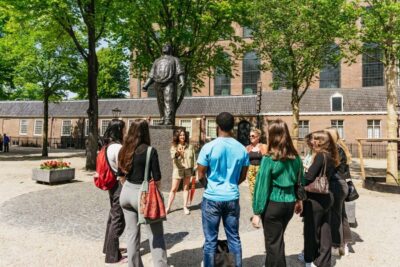
Life of Anne Frank and World War II Walking Tour
Read our review →

Red Light District Tour in German/English/Italian
Read our review →
Guided Zaanse Schans, Windmills & Cheese Tour
Read our review →
Windmill Tour from Amsterdam, Including Volendam & Marken
Read our review →