
Review · UTRECHT TOURS
Utrecht: Rietveld Schröderhuis UNESCO Entry Ticket
A house that changes shape as you move. Utrecht’s Rietveld Schröder House offers a close look at one of Europe’s most important modern homes, designed by Gerrit Rietveld for Truus Schröder in 1924. In about 40 minutes, you explore the rooms with an audio guide and see how sliding walls and movable furniture created a new way to live.
I like the clear audio tour, available in eight languages, and I like the chance to see Rietveld’s design ideas at work rather than only viewing them in photographs. The small museum shop is another welcome touch, with distinctive products and souvenirs tied to the house.
The main consideration is access. The house is not suitable for wheelchair users or people with mobility impairments, and the visit is brief. At $22 per person, it offers strong value for architecture fans, but anyone expecting a large museum or a long tour may find the experience compact.
In This Review
- Key points to know before you go
- Why this small Utrecht house matters
- Checking in beside the house
- The downstairs rooms and the idea of a new home
- Upstairs, the walls begin to move
- De Stijl without the museum lecture
- How much time should you allow?
- The audio guide and your choice of equipment
- Access and practical limits
- A small shop with architectural souvenirs
- Who will enjoy the Rietveld Schröder House?
- Should you book this Utrecht UNESCO experience?
- FAQ
- How long does the Rietveld Schröder House visit take?
- What is included in the ticket?
- How much does the experience cost?
- What languages are available for the audio guide?
- Do I need to bring headphones?
- Where do I check in?
- Is the house accessible for wheelchair users?
- Can I cancel my booking?
- Can I reserve now and pay later?
Key points to know before you go
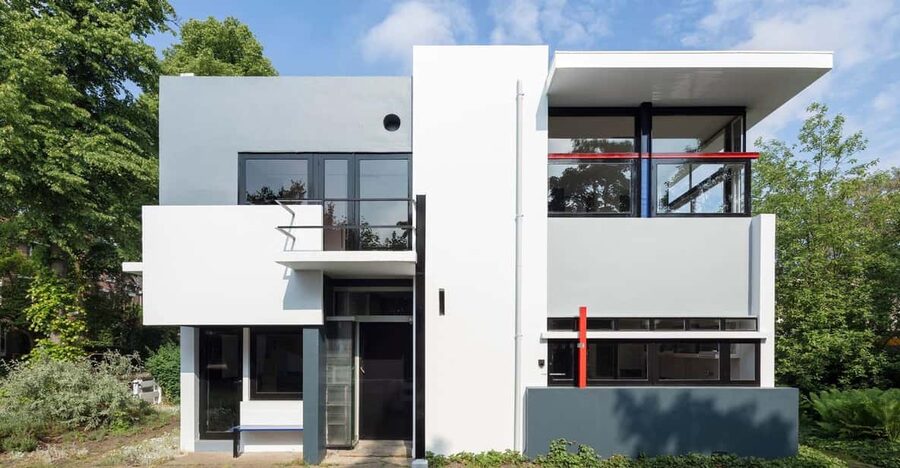
- A 1924 home built around change: Gerrit Rietveld designed the house for Truus Schröder as an experiment in flexible living.
- A UNESCO World Heritage site since 2000: This is one of the Netherlands’ recognized architectural landmarks.
- The upstairs rooms do the heavy lifting: Sliding walls and movable furniture show how the house can shift with the needs of its inhabitants.
- A self-guided visit takes 30 to 40 minutes: You can move at your own pace while listening to the supplied audio guide.
- Eight audio languages are available: Choose Dutch, English, German, French, Italian, Spanish, Japanese, or Chinese.
- Bring headphones if you prefer them: The media player has a built-in speaker, or you can connect your own mini-jack headset.
Why this small Utrecht house matters
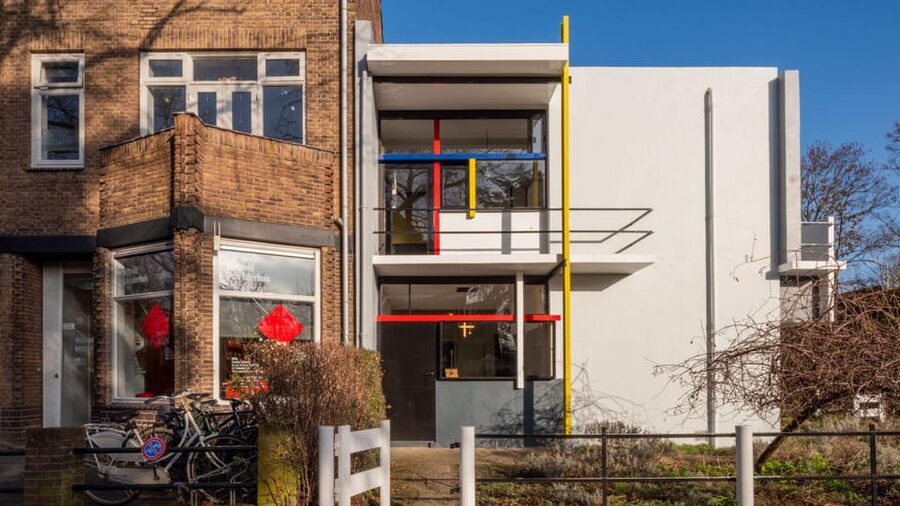
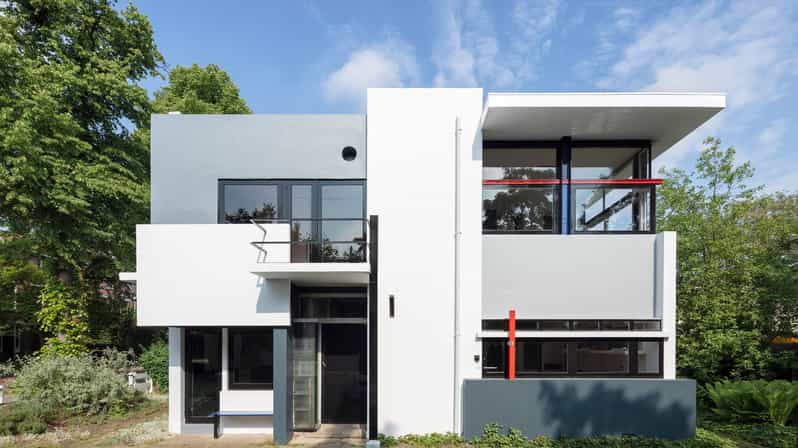
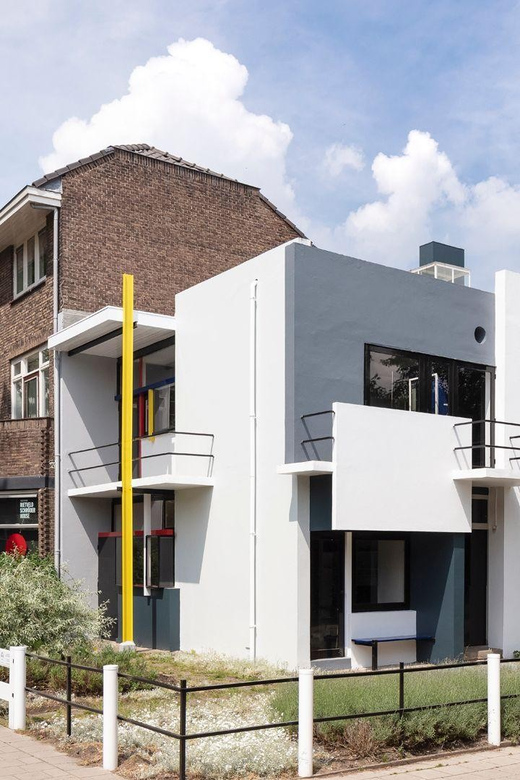
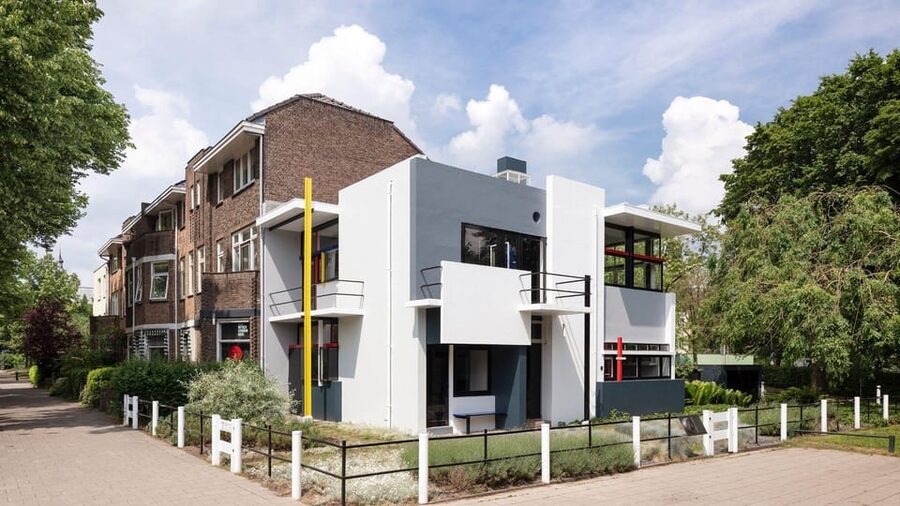
From the outside, the Rietveld Schröder House may look like a compact white, gray, and primary-colored composition. Its importance is not about size. It is about the way the building challenged ordinary ideas of what a home should be.
Gerrit Rietveld designed the house in 1924 for Truus Schröder. It was his first residence designed as an architect and helped launch his architectural career. Schröder was not simply a client waiting for a finished building. The house grew from the shared vision of two people who wanted to push beyond traditional rooms, fixed functions, and heavy decoration.
That partnership is central to the experience. You are not only looking at a famous architect’s work. You are seeing a home shaped by the needs and ideas of the person who lived there. The result became an important expression of De Stijl, the Dutch modern movement known for clean lines, strong geometry, and carefully controlled color.
The house was added to the UNESCO World Heritage list in 2000. That designation gives the visit extra weight, but you do not need to be an architecture specialist to appreciate it. The basic idea is easy to grasp: rooms do not have to remain locked into one purpose, and a house can adapt as daily life changes.
The visit also marked the house’s 100-year anniversary in 2024. That milestone helps explain why the building remains more than an old design experiment. Its questions about flexible space and practical living still feel current.
A few more options to weigh up in Utrecht
- Utrecht: City Canal Cruise
★ 4.3 · 2,895 reviews - Utrecht: De Haar Castle & Park Entry Ticket
★ 4.7 · 1,350 reviews - Utrecht: DOMunder Entry Ticket with Guide
★ 4.4 · 706 reviews
Checking in beside the house
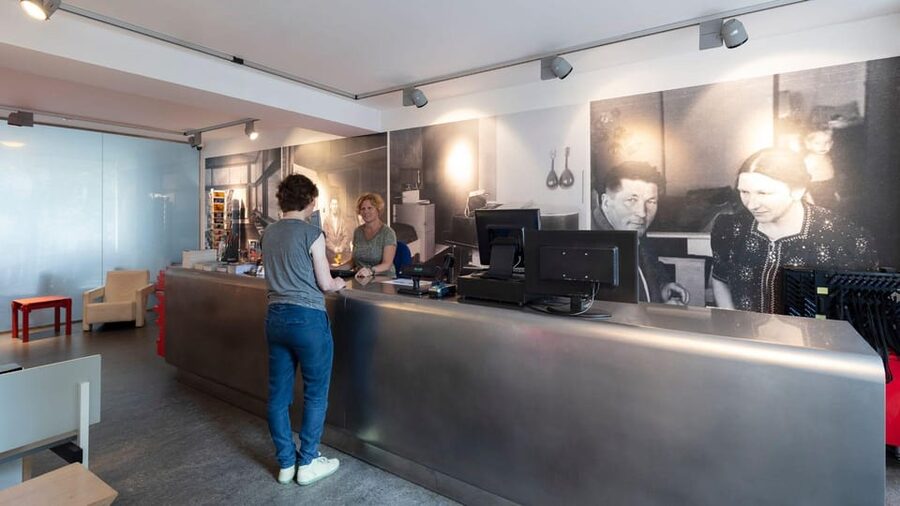
Your visit begins at the ticket office to the left of the Rietveld Schröder House. Check in there before entering the building. You receive a media player that serves as your personal guide through the rooms.
This arrangement keeps the visit focused. There is no need to follow a live guide or stay with a large group. You can listen as you move from room to room, and the narration explains both the design and the people connected with it.
The audio tour is offered in Dutch, English, German, French, Italian, Spanish, Japanese, and Chinese. That broad language choice is useful for an international city such as Utrecht and makes the tour easier to follow for many visitors.
You do not need a headset. The media player has a built-in speaker, so you can listen directly from the device. If you prefer a more private experience, bring your own headphones with a mini-jack connection. You can also use your own device by scanning a QR code at the ticket desk, but you need to bring your headphones for that option.
I would arrive ready to focus rather than treat this as a casual walk-through. The house is carefully designed, and the audio explains details that could be easy to miss if you simply glance into each room.
The downstairs rooms and the idea of a new home
The tour introduces the house room by room, explaining what it was like to live in a building with such unusual principles. The audio guide gives context about Rietveld’s concepts, Schröder’s role, and the period in which the house was created.
The most useful part of this approach is that it connects design with daily life. You are not just told that the building is modern. You hear how its ideas affected the people who used it. That makes the architecture easier to understand, even if terms such as De Stijl or modern movement are new to you.
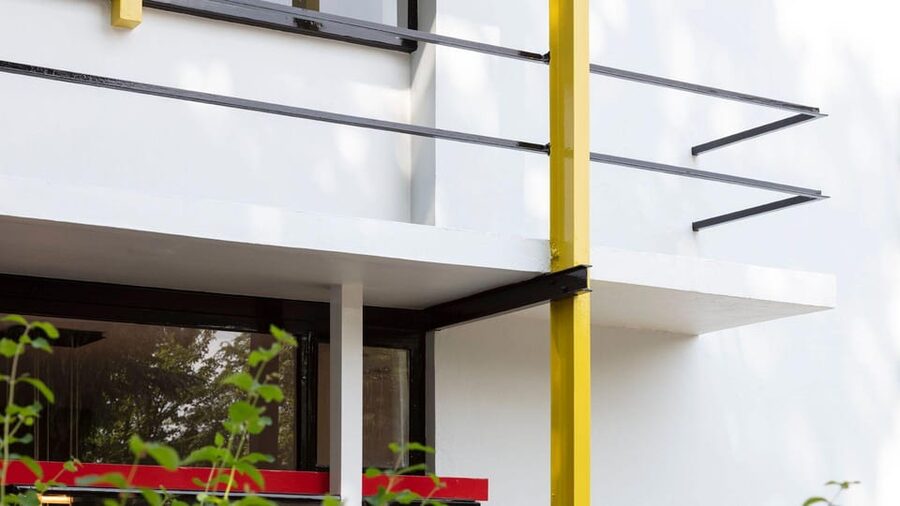
The first part of the visit helps you notice the house’s carefully controlled spaces. Lines, surfaces, openings, and colors work together. The design does not rely on grand decoration. Instead, it asks you to pay attention to proportion, movement, and the relationship between separate parts.
This is where the house can surprise you. Traditional homes tend to tell you what each room is for. A dining room is a dining room. A bedroom is a bedroom. Rietveld and Schröder questioned that fixed arrangement and looked for ways to let one space serve different needs.
The audio also brings personal stories into the visit. Those details matter because the building was a real residence, not only a display of artistic ideas. You get a sense of how ambitious it was to live in a house that treated everyday routines as part of an architectural experiment.
Upstairs, the walls begin to move
The upstairs level is the highlight. Here, you can see demonstrations of the sliding walls and movable furniture that transform the living areas.
This is the moment when the house’s central idea becomes physical. The layout can change according to the needs of the inhabitants. Spaces can open up or become more private. Furniture is not merely placed in a room as decoration. It is part of the system.
The demonstrations are valuable because photographs cannot fully show how the house works. A still image may reveal the colors and lines, but it cannot explain the effect of shifting walls or rearranging furniture. Seeing those elements operate gives you a better sense of why the house became such an important work of modern architecture.
The design also rewards patience. You might first notice the strong geometric forms, then the way a wall divides an area, then the way a piece of furniture supports the room’s flexibility. The audio guide helps connect these observations so the visit does not become a hunt for famous design details.
Still, keep your expectations realistic. This is not a hands-on workshop, and the overall visit remains short. You are seeing demonstrations within a protected historic home, not freely rearranging the rooms yourself.
A different kind of day out entirely:
- Utrecht: Dom Tower Entry Ticket and Guided Tour
★ 4.6 · 513 reviews - Utrecht: De Haar Castle, Park Entry Ticket
★ 4.6 · 153 reviews - Utrecht 2-Hour Walking Tour | Discover The City With A Local
★ 5.0 · 138 reviews - Utrecht Food Tour with local guide
★ 5.0 · 112 reviews
De Stijl without the museum lecture
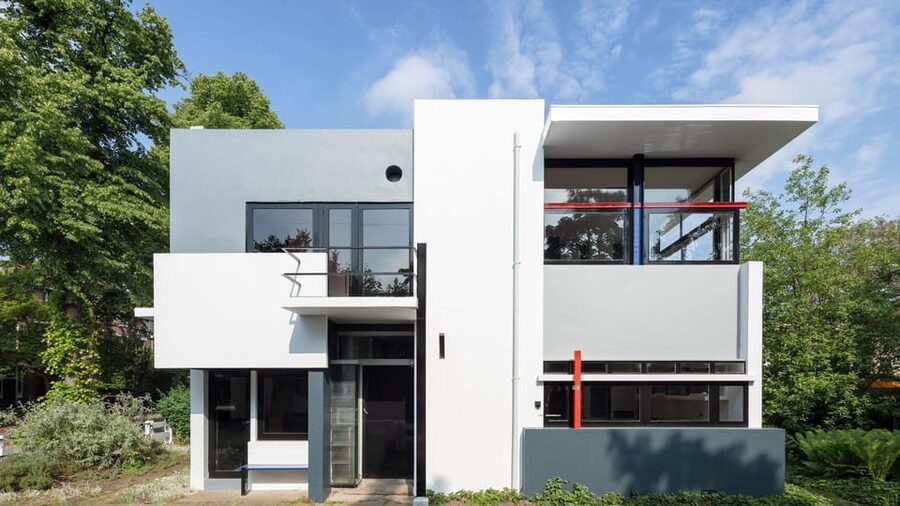
The Rietveld Schröder House is often described as an icon of De Stijl. That phrase can sound abstract, but the building gives you a direct way to understand it.
The design emphasizes straight lines, planes, carefully placed color, and a sense that the building is made from connected parts rather than one heavy block. The house feels composed almost like a three-dimensional drawing. At the same time, it was created for living, so the visual ideas had to work with real routines.
That practical side is what makes the visit worthwhile. You do not need to memorize a list of artists or architectural theories. Look for how the house uses boundaries, movement, and furniture to change the experience of each room.
I especially like that the audio tour explains the human story alongside the visual one. Rietveld’s work is important, but Truus Schröder’s role keeps the house from becoming a monument only to an architect. Her needs and vision helped shape the building’s unusual approach to domestic life.
The result is a visit that works on two levels. You can appreciate the house as a major work of modern design, or you can simply consider whether you would enjoy living in rooms that change throughout the day. The second question makes the experience more personal and often more memorable.
How much time should you allow?
The stated duration is 40 minutes, with most visits taking about 30 to 40 minutes. This makes the house easy to add to a day of sightseeing in Utrecht, especially if you want a focused cultural stop rather than a full afternoon activity.
The short duration is both a strength and a limitation. I like that you can fit it into a busy schedule without giving up half a day. It also keeps the visit concentrated on the building’s main ideas.
On the other hand, $22 is not a low admission price for a 30 to 40-minute experience. The value depends on what you want from the visit. For someone interested in architecture, modern design, UNESCO sites, or Dutch cultural history, the fee is reasonable because you are entering an important original building, not viewing a reconstruction or a general exhibition.
If your interest is casual, the cost may feel harder to justify. You should not book this expecting a long list of galleries, extensive displays, food, or a broad city tour. The ticket covers entry and the audio tour. Food, drinks, and pickup or drop-off are not included.
The best way to judge the price is to think of this as a concentrated architectural experience. You pay for access to a rare and influential house, then spend a short period understanding how it works.
The audio guide and your choice of equipment
The self-guided format gives you some freedom, but the media player remains an important part of the visit. Use it as you move through the rooms, where it explains the design, the historical setting, and the experience of living in the house.
The built-in speaker means you do not need to pack special equipment. This is convenient if you want to keep your hands free and listen without fuss. Still, a headset can make the narration easier to hear and less distracting, particularly if other people are moving through the same rooms.
If you use your own device, scan the QR code at the ticket desk and bring headphones. Your headset must have a mini-jack if you want to connect directly to the supplied media player.
The eight language options are a real benefit. English is available, along with Dutch, German, French, Italian, Spanish, Japanese, and Chinese. You can choose the language that lets you follow the architectural explanations without working too hard to translate in your head.
Access and practical limits
The house is not suitable for people with mobility impairments or wheelchair users. Babies under one year old are also listed as not suitable for this activity. Consider those limits before booking, since the historic design and the nature of the building do not provide an easy option for everyone.
The meeting point is straightforward: check in at the ticket office to the left of the house. Pickup and drop-off are not included, so you make your own way there.
Starting times vary, and you need to check availability for the time you want. The reservation terms allow cancellation up to 24 hours in advance for a full refund, and a reserve-now, pay-later option is available if you want to keep your plans flexible.
These policies are useful in a city where weather, train schedules, and other bookings can change your day. Still, the key planning issue is not transport. It is making sure the house fits your route and that the access limits work for everyone in your party.
A small shop with architectural souvenirs
After the visit, the museum shop offers unique products and souvenirs. This is a modest part of the experience, but it gives you a chance to take home something connected to the house and its design ideas.
Do not expect the shop to turn the visit into a major shopping stop. Its value is in the specificity of the products. A souvenir tied to Rietveld, Schröder, or De Stijl has more meaning than a generic Utrecht keepsake if the building made an impression on you.
The shop also gives you a final reminder that the house is both a home and a cultural landmark. You see it first as a place designed for daily life, then as an influential work preserved for the public.
Who will enjoy the Rietveld Schröder House?
I would recommend this experience most strongly to:
- Architecture and design enthusiasts
- People interested in De Stijl and modern art
- UNESCO World Heritage site collectors
- Visitors who prefer focused cultural stops
- Anyone curious about how a home can change to suit daily life
- Independent visitors who prefer an audio guide to a live group tour
Families with very young children may find the restrictions inconvenient, especially since babies under one year old are not considered suitable. People who need step-free access should also choose another Utrecht activity.
The experience suits you best if you enjoy looking closely. The house is not about grand scale or a long sequence of attractions. Its rewards come from noticing how the pieces work together and listening to the explanation of why Rietveld and Schröder made those choices.
Should you book this Utrecht UNESCO experience?
Book it if you want to see an original, influential modern home and understand how its flexible design works. The moving walls, adaptable furniture, and personal story behind the building give the 40-minute visit real substance.
Think twice if you want a large museum, a long guided program, food, or an activity with broad accessibility. The $22 price is fair for architecture fans and UNESCO enthusiasts, but less compelling for anyone only mildly interested in design.
For the right audience, this is a smart Utrecht stop: short, focused, unusual, and full of ideas. The 4.8 rating from 119 reviews supports its strong appeal, and the highest praise is easy to understand. The experience is interesting, well organized, and genuinely different from a standard house museum.
FAQ
How long does the Rietveld Schröder House visit take?
The visit takes about 30 to 40 minutes. The stated duration is 40 minutes.
What is included in the ticket?
The ticket includes entrance to the Rietveld Schröder House and an audio tour.
How much does the experience cost?
The listed price is $22 per person.
What languages are available for the audio guide?
The audio guide is available in Dutch, English, German, French, Spanish, Italian, Japanese, and Chinese.
Do I need to bring headphones?
No. The media player has a built-in speaker. You can connect your own headset if it has a mini-jack, or use your own device by scanning the QR code at the ticket desk and bringing your headphones.
Where do I check in?
Check in at the ticket office to the left of the Rietveld Schröder House.
Is the house accessible for wheelchair users?
No. The activity is not suitable for wheelchair users or people with mobility impairments.
Can I cancel my booking?
Yes. You can cancel up to 24 hours in advance for a full refund.
Can I reserve now and pay later?
Yes. A reserve-now, pay-later option is available, allowing you to book your spot without paying immediately.
Just added in Utrecht
- Our Utrecht’s Private & Personalized tour★ 5.0 · 3 reviews
- Utrecht – Food Tour: Try out 6 dutch bites★ 4.5 · 6 reviews
- Explore Gems of Utrecht Walking Tour for Couples★ 5.0 · 2 reviews
- Historical Utrecht: Private Walking Tour with a Local Guide★ 4.6 · 3 reviews
- Amsterdam: Vecht River Day Trip with Cruise and High Tea★ 5.0 · 2 reviews
- From Amsterdam: Castle De Haar Guided Tour★ 4.7 · 41 reviews
- Our Utrecht City Tour (Limited group size & optional Lunch)★ 4.9 · 70 reviews
- Utrecht: Guided Highlights Walking Tour★ 4.7 · 80 reviews
Utrecht Tours, compared.

Utrecht 2-Hour Walking Tour | Discover The City With A Local
Read our review →
Browse the lists this tour appears in