
Review · CITY TOURS
Amsterdam City Center Guided Walking Tour Semi-Private 12ppl Max
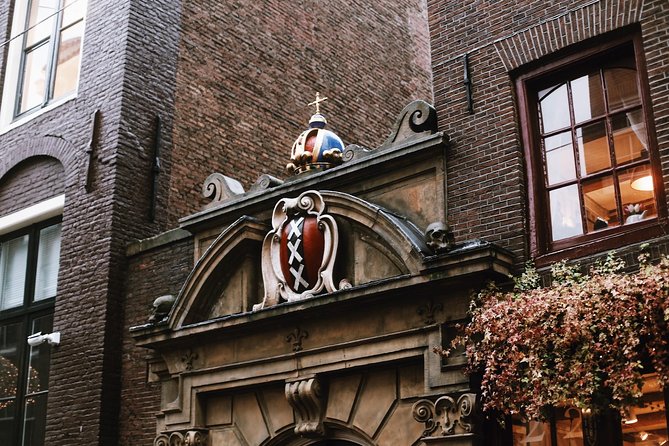
Amsterdam reveals itself best at walking pace. This 2.5-hour tour links old harbor streets, quiet courtyards, grand canals, and famous landmarks in one well-packed outing. I like the small-group format, with a maximum of 12 people, and I like that the route ends in the Jordaan at Het Papeneiland, a 1642 brown café known for apple pie. The main drawback is pace: with roughly 20 stops, most places are viewed from outside and briefly.
The route gives you a useful first look at central Amsterdam, especially if you are visiting for a short time. Guides such as Josje B. and Hanneke have been praised for making the city’s origins, art, and neighborhoods easy to understand. Still, you should be ready for cobblestones, bridges, rain, and a fair amount of walking.
In This Review
- Key points to know before booking
- Why this small-group walk works well
- Starting beside the Basilica of Saint Nicholas
- Following Zeedijk from sea dike to Chinatown
- Narrow houses and the Dutch East India Company
- Churches, Rembrandt, and the Stopera
- Begijnhof and the center of public Amsterdam
- The Golden Bend and the Anne Frank House
- Rembrandtplein and the Jordaan finish
- Practical details that affect your day
- Should you book the Amsterdam walking tour?
- FAQ
- Where does the tour start?
- Where does the tour end?
- How long does the walking tour last?
- What is the maximum group size?
- Are entrance tickets included?
- Can I cancel for a full refund?
Key points to know before booking
- The route crosses Amsterdam’s oldest core, from the Basilica of Saint Nicholas and the medieval harbor edge to Dam Square, the canals, and the Jordaan.
- A small group makes questions easier, with a stated maximum of 12 people and a tour description that sometimes refers to groups of eight or fewer.
- You see far more than you enter, since many historic sites are outside stops and entrance fees are generally not included.
- Local context is a major strength, especially stories about Amsterdam’s watery beginnings, religious change, trade, architecture, and famous artists.
- The finish at Het Papeneiland is practical and atmospheric, placing you near one of the city’s prettiest canal corners and a classic café.
- This is a walking tour for reasonably fit visitors, not for anyone who has trouble walking or uses a wheelchair.
Why this small-group walk works well
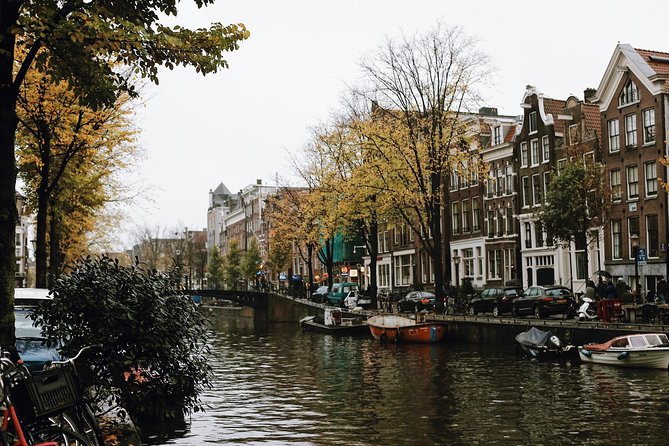
At $59.28 per person, this is not the cheapest way to stroll through Amsterdam. You are paying for a guide, a planned route, and the chance to ask questions without shouting across a large crowd.
That price can make sense if you are new to the city and want useful orientation in one morning or afternoon. The route covers enough ground to show how different parts of central Amsterdam connect. You also receive tips for the rest of your stay, which can help you decide which areas deserve a longer visit.
The format is more important than it may first seem. A group of 12 is still large enough to have energy, but small enough for a guide to answer questions. The supplied details also describe groups of eight or fewer in some places, so the actual group may be smaller. I would plan for the full maximum of 12, just to keep expectations clear.
The two-and-a-half-hour length is a good compromise. It is long enough to cover the city’s central story, but short enough to leave time for a museum, lunch, or an independent canal walk. The tradeoff is that the tour does not give you long visits inside the buildings. Think of it as a lively introduction, not a substitute for the Anne Frank House, Rembrandt House Museum, or the churches themselves.
More Walking Tours in Amsterdam
- Anne Frank’s Story – Guided Walking Tour through Amsterdam
★ 5.0 · 11,619 reviews - Amsterdam: Life of Anne Frank and World War II Walking Tour
★ 4.8 · 10,467 reviews - Absolutely Amsterdam – the Essential Introductory Walking Tour
★ 5.0 · 3,629 reviews
Starting beside the Basilica of Saint Nicholas
Meet your guide outside the Basilica of Saint Nicholas at Prins Hendrikkade 73. This is a useful starting point because it places you near Amsterdam Centraal Station and the old harbor district.
The basilica is a strong opening sight. Built in the late 19th century, it reflects the return of open Roman Catholic worship after centuries when Catholic practice faced restrictions in the Netherlands. Its architecture combines several styles, giving the guide a natural way to explain how Amsterdam’s religious life changed over time.
You spend about 10 minutes here, and admission is free. The stop sets up one of the tour’s recurring themes: Amsterdam is not just canals and picturesque houses. It is also a city shaped by religious conflict, trade, water control, and changing political power.
From here, the route heads toward the Schreierstoren, also called the Weeping Tower. This medieval tower once formed part of the city’s defenses. Its name comes from the women said to have said farewell to loved ones departing by ship.
The tower is a quick stop, about 10 minutes, and entrance is not included. Even from the street, it helps you picture the old city as a fortified port rather than the polished canal center you see today.
Following Zeedijk from sea dike to Chinatown
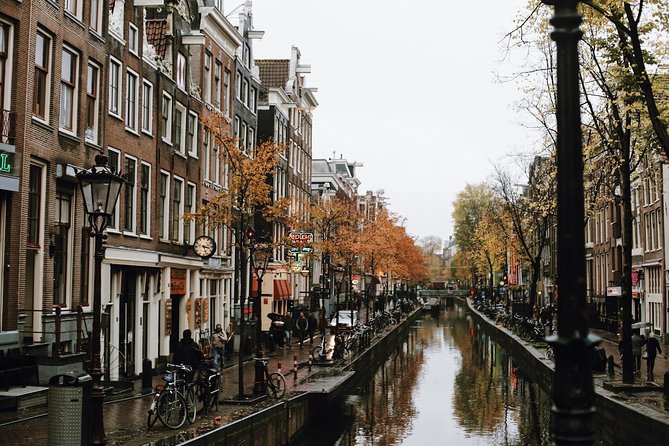
Zeedijk is one of Amsterdam’s oldest streets. Its original role was practical: it helped protect the city from water coming in from the IJ. Today, it leads you through one of the city center’s most distinctive areas, with Chinatown nearby and a mix of old buildings, food spots, and nightlife.
At the Kolksluis, look for the lock bridge. This is one of the more photogenic points on the route, and the guide gives you time to stop for pictures rather than forcing you to keep moving.
The next stop is Nieuwmarkt, a square that grew in importance because it sat just inside an old city gate. Its market role made it a place for fresh produce, trade, and social life. You have only about five minutes here, so do not expect a full market visit. The value is the explanation of why the square sits where it does.
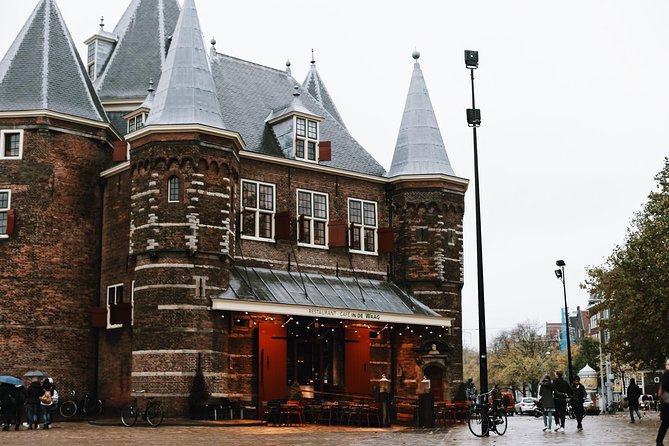
The Waag occupies the center of this part of the story. The 15th-century building began as a city gate and later served as a guildhall, museum, and fire station. It is one of Amsterdam’s oldest surviving nonreligious buildings.
These early stops are especially useful because they explain the city’s shape. Amsterdam was built around water, gates, locks, trade routes, and narrow parcels of land. Once that pattern makes sense, the rest of the walk becomes easier to read.
Narrow houses and the Dutch East India Company
The Trippenhuis and Kleine Trippenhuis offer a quick lesson in Amsterdam’s famous narrow architecture. The Trippenhuis is unusually wide, stretching about 22 meters. Directly across from it, the Klein Trippenhuis is one of the narrowest houses in the city.
The contrast is the point. Amsterdam homes often became tall and slim because land taxes were tied to frontage. That practical pressure produced the gabled canal houses that now look so carefully designed.
The route also passes the Oost-Indisch Huis, the former headquarters of the Dutch East India Company. You step into its courtyard, which gives you a glimpse of the institution that helped create one of the world’s first multinational corporations.
This is one place where a short guided explanation adds real value. The building is not only an attractive old courtyard. It represents Amsterdam’s global trade network and the money that helped shape the city during the Dutch Golden Age.
You also see the Kleine Trippenhuis as a separate stop. The repeated attention to narrow homes may sound redundant on paper, but it reinforces an important idea: Amsterdam’s architecture often grew from taxes, trade, and limited land rather than from a single grand design.
A different kind of day out entirely:
- Amsterdam: Van Gogh Museum Ticket
★ 4.7 · 52,054 reviews - Amsterdam Classic Saloon Boat Cruise with Drinks and Cheese
★ 5.0 · 31,825 reviews - Amsterdam Luxury Canal Cruise + Unlimited Drinks & Bites option
★ 5.0 · 30,518 reviews - Amsterdam: Heineken Experience Ticket
★ 4.6 · 30,055 reviews
Churches, Rembrandt, and the Stopera
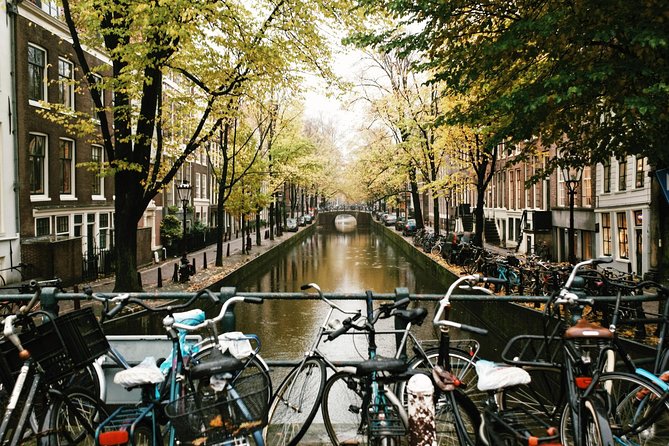
The Zuiderkerk is Amsterdam’s first purpose-built Protestant church. Designed by Hendrick de Keyser, it has an elegant tower that remains one of the central city’s familiar markers.
The stop lasts about five minutes, and admission is not included. You should treat it as an exterior view and a chance to hear how Protestant worship changed the city after the Reformation.
Next comes the Rembrandt House Museum, where Rembrandt lived and worked from 1639 to 1656. The museum holds his etchings and paintings by people from his circle and time.
The tour passes the building rather than including museum entry. If Rembrandt matters to you, note the location and return later for a proper visit. The guided stop gives you the address and context, but not the full museum experience.
The National Opera and Ballet, part of the Stopera complex, shifts the mood from old Amsterdam to modern civic life. The building houses both city hall and the Dutch National Opera and Ballet. Its construction took at least 60 years to reach completion, making it a useful example of how long major urban projects can take.
This stretch gives the walk a good rhythm. You move from a Protestant church to an artist’s former home, then to a modern public building. Amsterdam’s appeal comes partly from these sharp changes within a short distance.
Begijnhof and the center of public Amsterdam
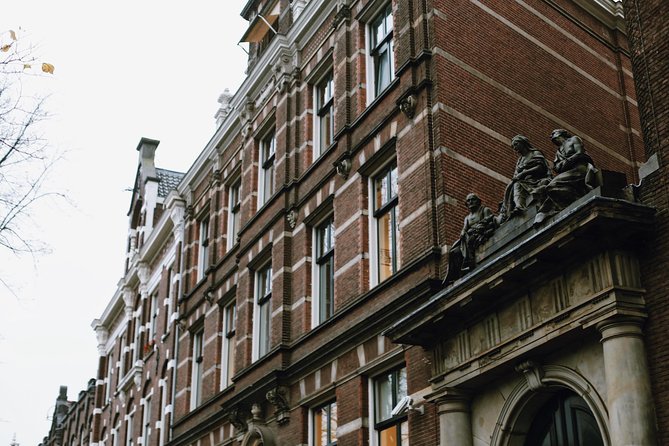
Huis aan de Drie Grachten is a rare 17th-century canal house at the meeting point of three canals. Its façades face in three directions, making it an unusual sight even in a city full of distinctive canal homes.
Begijnhof is quieter and more enclosed. This hofje, or almshouse courtyard, once provided homes for Beguines, unmarried women who lived together under vows of chastity. Two churches remain within the courtyard.
The stop is brief, about five minutes. Please think of it as a respectful look rather than a leisurely courtyard visit. Begijnhof is a residential and religious place, so a guide’s reminder about quiet behavior is useful here.
Dam Square follows, with the Royal Palace, the New Church, and the National Monument. This is one of the city’s main gathering places, and its frequent events can affect the route.
The square can feel crowded and less intimate than Begijnhof, but it is central to Amsterdam’s public life. You get a quick orientation to the city’s political, royal, religious, and commemorative buildings in one place.
The Golden Bend and the Anne Frank House
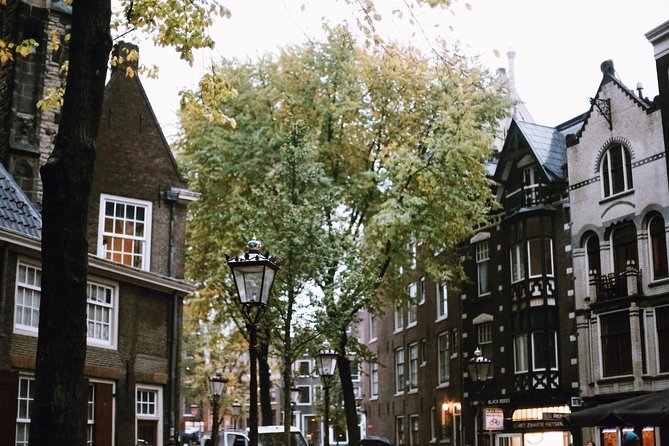
Along the Herengracht, the guide points out the Golden Bend, the canal’s most lavish section. The mansions here reflect the wealth of Amsterdam’s merchant elite during the Dutch Golden Age.
This is a good stretch for photographs. It also gives you a clear contrast with the narrow houses seen earlier. The city’s architecture tells you who had money, who paid taxes, and who had to make do with a smaller frontage.
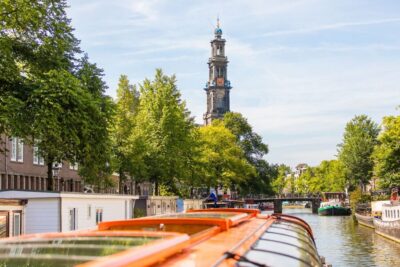
The route then pauses outside the Anne Frank House. The building is where Anne Frank hid during World War II, and the neighboring Westerkerk has Amsterdam’s tallest church tower.
The tour does not include entry. You need a separate ticket to visit the Anne Frank House, and this walking stop should not be confused with an indoor visit. Still, seeing the location with a guide can help place it within the canal district and the wartime story of the city.
After that, look up at the façades along Bloemgracht. Gable stones carved with trade symbols and allegorical images decorate some of the houses. These details are easy to miss when you are walking alone, so this is exactly the kind of small observation a guide can add.
Rembrandtplein and the Jordaan finish
One route detail deserves a little caution. The supplied description labels one stop as Coöperatieve Vereniging Karthuizerhof, then describes a walk through Rembrandt Square, or Rembrandtplein, with a bronze representation of The Night Watch. The name and description do not match neatly.
The practical advice is simple: expect the route or stop labels to be adjusted by the guide. The tour can be affected by national celebrations, with an alternative route used to preserve the main sights. No refund or discount is offered for those changes.
Rembrandtplein is one of the city’s busiest squares. The bronze version of The Night Watch was installed for the artist’s 400th birthday in 2006. It gives you a playful public nod to Rembrandt after the earlier stop outside his house.
Noorderkerk brings you into the Jordaan area. This 17th-century Protestant church was built for the district and has an unusual cross-shaped floor plan. Its design reflects new ideas about how Protestant worship spaces should work.
The final stop is Het Papeneiland, a brown café dating to 1642 at Prinsengracht 2. It sits at a pretty canal corner and is said to serve the city’s best apple pie. The tour ends here, rather than returning you to the starting point, so plan your next move before you arrive.
Ending in the Jordaan is a real advantage. You can stay for a drink or a slice of pie, then continue exploring the canals, cafés, and streets nearby. If you need to return to Amsterdam Centraal, use a taxi or Uber, as hotel pickup and drop-off are not included.
Practical details that affect your day
Wear comfortable shoes. The route includes bridges, cobblestone lanes, and steady walking, and a moderate level of fitness is required. The tour runs rain or shine, so bring an umbrella in wet weather and a hat during summer.
Large bags and suitcases are not allowed. That rule matters if you are trying to fit the tour between hotel checkout and a train departure. Store your luggage first.
The tour is offered in English and uses a mobile ticket. You receive confirmation when booking, and you must provide a mobile phone number with the country code.
Children must be accompanied by an adult. The tour is not recommended for people with walking disabilities or anyone using a wheelchair.
Most stops are free to view from outside, but several are marked as not including admission. Do not book this expecting a string of museum entries. The guide may also be unable to take you inside some attractions because of security measures.
Free cancellation is available up to 24 hours before the local start time. Changes made inside that window are not accepted, and the amount paid is not refunded for late cancellation. The tour needs at least two people to run. If that minimum is not met, you are offered another date or a full refund.
Should you book the Amsterdam walking tour?
I would book this tour if you want a broad first look at central Amsterdam, prefer a small group, and enjoy learning how ordinary streets connect to larger stories about water, religion, trade, architecture, and art.
The strongest reason to choose it is the guide-led context. Josje B. has been praised for giving an in-depth explanation of Amsterdam’s watery beginnings, art, and neighborhoods, while Hanneke brings the perspective of a lifelong local and presents it in an engaging way. Those details suggest that the guide can make the difference between simply passing old buildings and understanding why they matter.
I would skip it if you want long museum visits, a relaxed pace, or a fully accessible route. Twenty stops in 150 minutes means frequent short explanations and quick photographs. At $59.28, the value is strongest for first-time visitors with limited time, not for someone who already knows the center well.
Book it early if your schedule is fixed, since it is commonly reserved well ahead of the date. For a compact introduction that ends in one of Amsterdam’s most atmospheric districts, this is a well-focused choice.
FAQ
Where does the tour start?
The tour starts at the Basilica of Saint Nicholas, at Prins Hendrikkade 73, 1012 AE Amsterdam.
Where does the tour end?
It ends at Het Papeneiland, Prinsengracht 2, 1015 DV Amsterdam.
How long does the walking tour last?
The tour lasts approximately two and a half hours.
What is the maximum group size?
The maximum is 12 people per tour. The tour description also refers to groups of eight or fewer, so the group may be smaller than the stated maximum.
Are entrance tickets included?
The tour includes the guided walk, but admission is not included for several stops. Many sights are viewed from outside, and some attractions may not be entered because of security measures.
Can I cancel for a full refund?
Yes. You can cancel at least 24 hours before the local start time for a full refund. Cancellations or changes made less than 24 hours before the start are not refunded or accepted.
Just added in Amsterdam
- Private Tour Zaanse Schans Windmills and Volendam in Jaguar★ 5.0 · 10 reviews
- Half-Day Private Guided Sightseeing Tour of Zaanse Schans★ 5.0 · 14 reviews
- Zaanse Schans and Giethoorn Unique Day Trip with Boat Cruise★ 4.5 · 17 reviews
- Windmills-Volendam-Giethoorn Private Tour in Jaguar★ 5.0 · 2 reviews
- Best of Netherlands: Zaanse Schans Mills, The Hague & Rotterdam★ 4.5 · 10 reviews
- Zaanse Schans Private Tour Windmills★ 5.0 · 18 reviews
- Zaanse Schans Windmills Edam Volendam and Marken from Amsterdam★ 5.0 · 1 review
- Zaanse Schans Edam Volendam Private Day Tour from Amsterdam★ 5.0 · 3 reviews
City Tours, compared.
75 Minute City Canal Cruise with Audio Guide
Read our review →

City Canal Cruise and Heineken Experience Ticket
Read our review →
Browse the lists this tour appears in