
Review · CITY TOURS
Amsterdam: City Highlights Walking Tour
Amsterdam reveals itself one story at a time. This two-hour walk connects Dam Square, the Canal Belt, the Red Light District, and Jordaan, giving you a useful first look at how a fishing village became a global city. I like the clear route and the mix of major sights with less obvious subjects, such as Dutch drug laws, bike culture, family life, and the Homomonument.
I also like the guide-led storytelling. Lucas, one guide named in the feedback, earned special praise for his energy, curious anecdotes, and quiz-style questions. The main consideration is that this is an English-only walking tour for people aged 16 and older, and it is not suited to people with mobility impairments. Two hours on Amsterdam’s streets also calls for good shoes and clothing that can handle the weather.
In This Review
- Key points to know before you book
- Why this two-hour walk is useful on your first day
- Meeting the guide at the National Monument
- Dam Square and Beurs van Berlage: trade made visible
- The Canal Belt and Amsterdam’s carefully shaped center
- The Red Light District and Dutch ideas about freedom
- Jordaan, diversity, and the everyday city
- Ending at the Homomonument
- What $29 buys you
- Who should book this Amsterdam walk?
- Practical advice for the two-hour route
- Should you book it?
- FAQ
- Where does the Amsterdam City Highlights Walking Tour begin?
- How do I identify the guide?
- Where does the tour finish?
- How long does the walking tour last?
- What language is the tour conducted in?
- What places are included on the route?
- Does the tour discuss the Red Light District?
- Is the tour suitable for children?
- Is the tour suitable for people with mobility impairments?
- What should I bring?
- Can I cancel the booking?
- Do I have to pay when I book?
Key points to know before you book
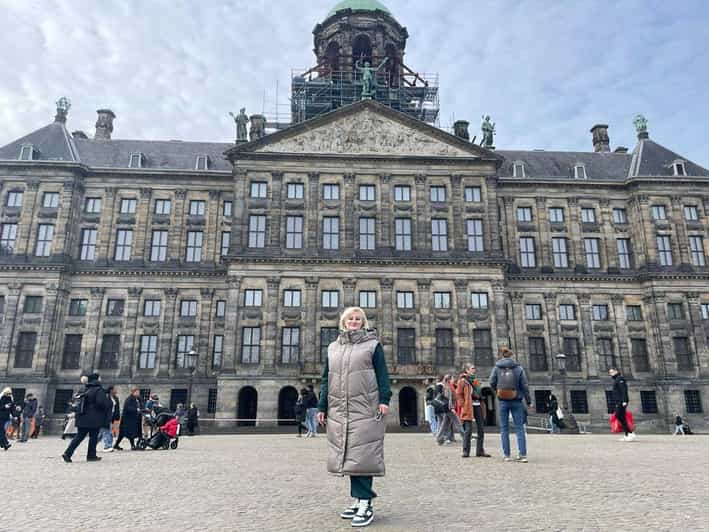
- Dam Square gives you the city’s starting point: The walk begins at the National Monument, near the place tied to Amsterdam’s early growth.
- The Canal Belt explains Amsterdam’s success: You learn how trade, planning, and the Dutch East India Company shaped the city’s famous waterways.
- The Red Light District is treated as part of the city’s social story: The tour discusses Dutch drug laws and Amsterdam’s approach to personal freedom.
- The route moves beyond postcard views: Bike culture, family life, diversity, and the Homomonument add daily-life context to the sightseeing.
- Lucas uses questions to keep the walk active: A quiz format can make dates, facts, and odd details easier to remember.
- The finish at the Homomonument has purpose: The final stop connects Amsterdam’s modern identity with its long interest in personal and social freedom.
Why this two-hour walk is useful on your first day
Amsterdam can feel easy to understand at first. You see canals, bicycles, narrow houses, and crowded squares, then realize the city has several different stories running at once. This tour is designed to sort those stories into a clear sequence.
You begin with Amsterdam’s origins, move through its trading power, and then look at the city people live in today. That progression matters. Instead of treating the canals, Red Light District, and Jordaan as separate photo stops, the guide links them to commerce, law, religion, migration, housing, and changing ideas about freedom.
I would place this walk near the beginning of an Amsterdam visit. It can help you get your bearings before you spend time exploring museums, neighborhoods, or the canal streets on your own. At $29 per person, the value rests less on the number of sights and more on the guide’s ability to give those sights meaning.
The supplied feedback describes Lucas as especially effective. He reportedly used personal warmth, strong city knowledge, and quiz questions to draw the group into the discussion. That detail is important because walking tours can become dull when the guide simply recites dates. A question-and-answer rhythm gives you a reason to pay attention and helps the city feel like a conversation rather than a lecture.
The tour lasts two hours, long enough to cover a useful section of central Amsterdam without taking over your day. You should still expect a steady walk through public streets, not a relaxed café outing. Wear comfortable shoes, and bring weather-appropriate clothing.
More Walking Tours in Amsterdam
- Anne Frank’s Story – Guided Walking Tour through Amsterdam
★ 5.0 · 11,619 reviews - Amsterdam: Life of Anne Frank and World War II Walking Tour
★ 4.8 · 10,467 reviews - Absolutely Amsterdam – the Essential Introductory Walking Tour
★ 5.0 · 3,629 reviews
Meeting the guide at the National Monument
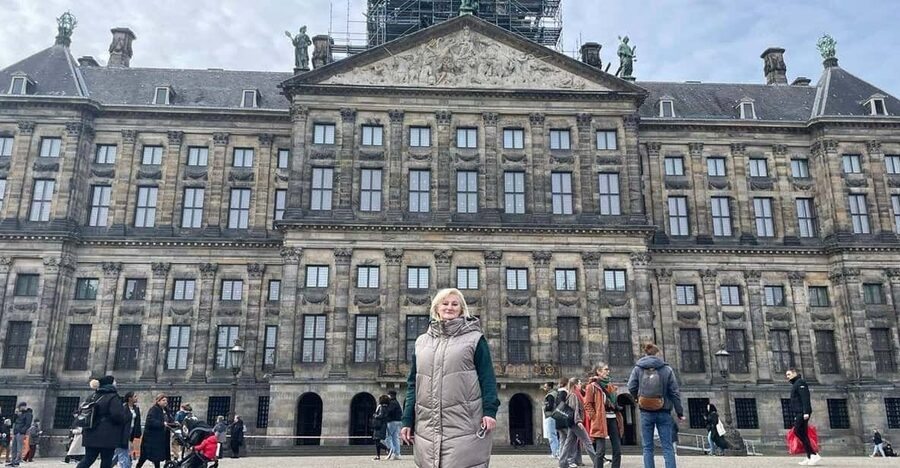
The meeting point is in front of the National Monument on Dam Square. Look for a guide carrying a black tote bag with the clearly visible Red logo, Who Is Amsterdam. That identifying detail should make the start easier in a busy central square.
Dam Square is a sensible place to begin. It is one of the most recognizable points in the city, and the walk treats it as more than a convenient meeting spot. The square is presented as the birthplace of Amsterdam, giving you a foundation for the city’s early development.
The opening section lasts about 10 minutes. That is not long enough for an exhaustive account, but it should establish the basic story: Amsterdam began as a small fishing village and grew into one of the world’s wealthiest cities. I appreciate this approach because it gives you a simple question to carry through the rest of the walk: how did a modest settlement become an international center?
The National Monument also makes the start practical for anyone arriving by foot from other central sights. Since the tour does not include transportation, you need to reach the square on your own. The route then continues on foot through central Amsterdam.
Dam Square and Beurs van Berlage: trade made visible
From Dam Square, the tour continues toward Beurs van Berlage. This portion includes guided sightseeing and walking, with about 10 minutes associated with the stop.
The subject here is Amsterdam’s rise as a trading power. You hear about the Dutch East India Company and the creation of the Canal Belt, two subjects that help explain why Amsterdam’s waterways are more than attractive scenery. The canals were tied to business, transport, property, and the city’s wider position in global trade.
This is one of the strongest parts for a first-time visitor because it connects architecture to money and organization. Amsterdam’s central streets can look charming without explaining themselves. A guide can show you that the city’s growth was planned around practical needs, including trade and movement.
The tour also covers the history of the world’s first stock exchange. This gives the Beurs van Berlage section an economic angle that many casual walks skip. You are not simply looking at old buildings. You are considering how financial systems helped Amsterdam gain influence.
The limitation is time. Ten minutes at a major location will give you an introduction, not a full lesson in Dutch commerce. If economic history is your main interest, you may want a more specialized museum visit later. For most people, though, this is enough background to make the rest of the city easier to read.
The Canal Belt and Amsterdam’s carefully shaped center
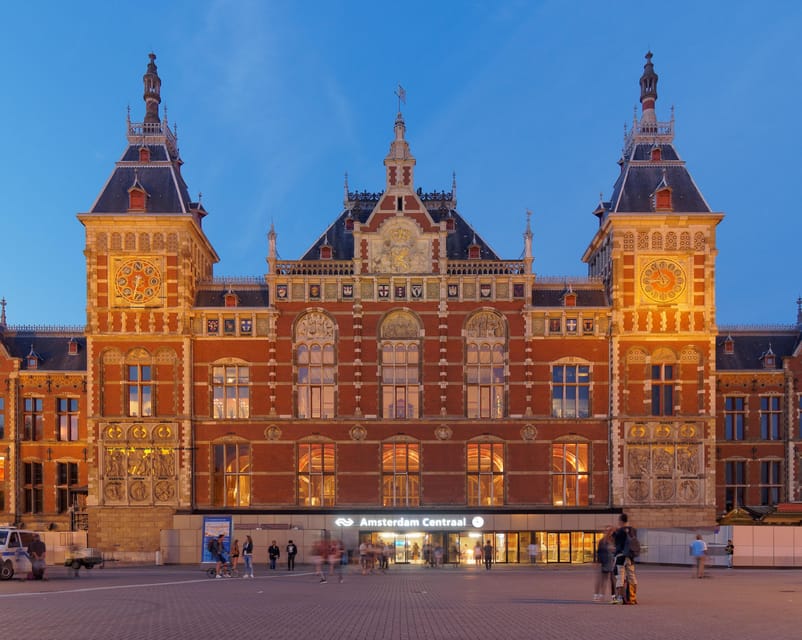
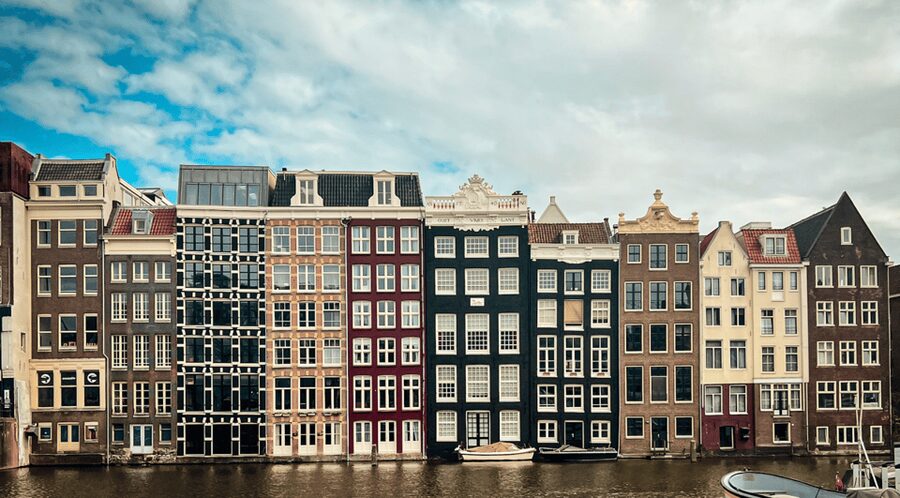
The Canal Belt is one of Amsterdam’s most important visual features, and the tour treats it as a product of history rather than a pretty backdrop. The area is part of the UNESCO heritage site, and you learn about its creation and its connection to the Dutch East India Company.
That connection gives the canals a sharper meaning. You can admire the water, bridges, and buildings, but the guide also points toward the work required to create a city organized around waterways. The story is about planning, trade, and ambition.
I like this stop because it gives you a way to look at Amsterdam after the tour ends. When you walk along the canals later, you can think about why they were made and what they helped the city do. Good guiding should change how you see familiar sights, and this part has that potential.
The Canal Belt is also a useful place to hear about modern life. The tour discusses Dutch bike culture and the habits of city residents, so the focus shifts from grand commercial plans to ordinary movement through Amsterdam. You learn about the way bicycles shape daily routines and how the city’s residents use their streets.
Do not expect a cycling activity or a ride. This is a walking tour, and bike culture is explained as part of Amsterdam’s lifestyle. Since the route uses active city streets, you should pay attention to your footing and surroundings.
A different kind of day out entirely:
- Amsterdam: Van Gogh Museum Ticket
★ 4.7 · 52,054 reviews - Amsterdam Classic Saloon Boat Cruise with Drinks and Cheese
★ 5.0 · 31,825 reviews - Amsterdam Luxury Canal Cruise + Unlimited Drinks & Bites option
★ 5.0 · 30,518 reviews - Amsterdam: Heineken Experience Ticket
★ 4.6 · 30,055 reviews
The Red Light District and Dutch ideas about freedom
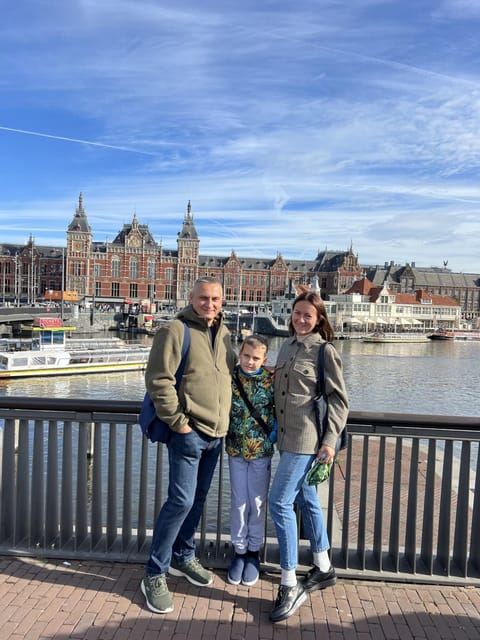
The Red Light District is one of Amsterdam’s best-known areas, and the tour includes it as a serious part of the city’s social and legal story. You hear about Dutch drug laws and how Amsterdam defines freedom.
That subject can easily be reduced to jokes or clichés. A better tour helps you understand that the city’s liberal reputation is tied to rules, choices, and public debate. The stated purpose here is to explain the laws and the thinking behind them, not simply to point out a famous nightlife area.
The stop lasts about 10 minutes, so you will receive a concise introduction. That brevity can be useful. The Red Light District attracts attention on its own, and a short guided explanation may give you enough context without making this one neighborhood dominate the whole walk.
I would recommend keeping an open mind and listening carefully. Amsterdam’s approach to drugs and personal behavior may differ from the laws you know at home. The tour’s value comes from showing how the subject fits into the wider question of what it means to live in a city that presents itself as liberal.
The area can also be uncomfortable for some people. The tour is not recommended for children under 16, and the age rule is especially relevant here. If you want a quiet architectural walk with little discussion of adult subjects, this may not be the right choice.
Jordaan, diversity, and the everyday city
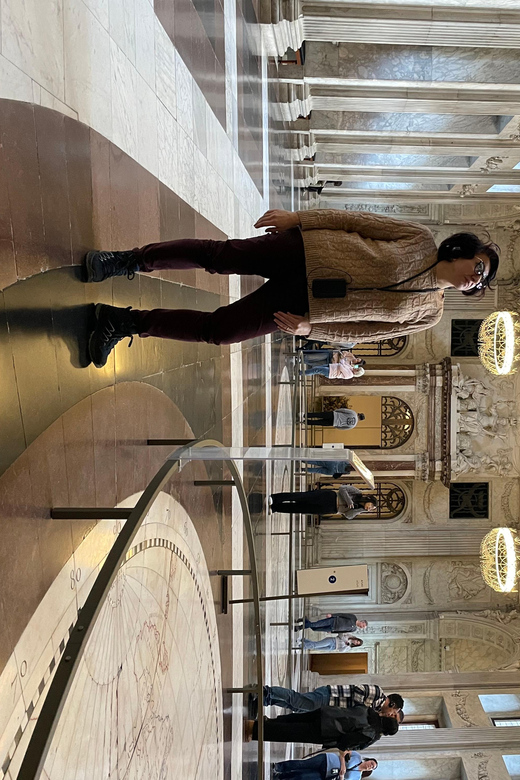
The route continues to the iconic Jordaan neighborhood. The supplied details do not give a separate stop length for Jordaan, but it is included among the places visited before the walk finishes at the Homomonument.
Jordaan adds a different mood from Dam Square and the Red Light District. The tour uses this part of the route to discuss residents, family life, and the way 180 nationalities live together in Amsterdam. That makes the neighborhood important not just for its appearance, but for the questions it raises about community and belonging.
I value this shift toward daily life. A city is more than its famous monuments and unusual laws. You want to hear how people live, how families fit into the urban setting, and how Amsterdam handles such a wide mix of backgrounds.
The tour’s discussion of diversity should also help you place Amsterdam within the present day, rather than leaving you with a museum-like image of old merchants and canal houses. The stated focus is on how the city’s residents unite in diversity and what it truly means to live in Amsterdam.
Because the guide is leading a moving group, the discussion will naturally be an introduction rather than a detailed study of each community. Still, it gives you a useful human side of the city and may encourage you to return to Jordaan with more time.
Ending at the Homomonument
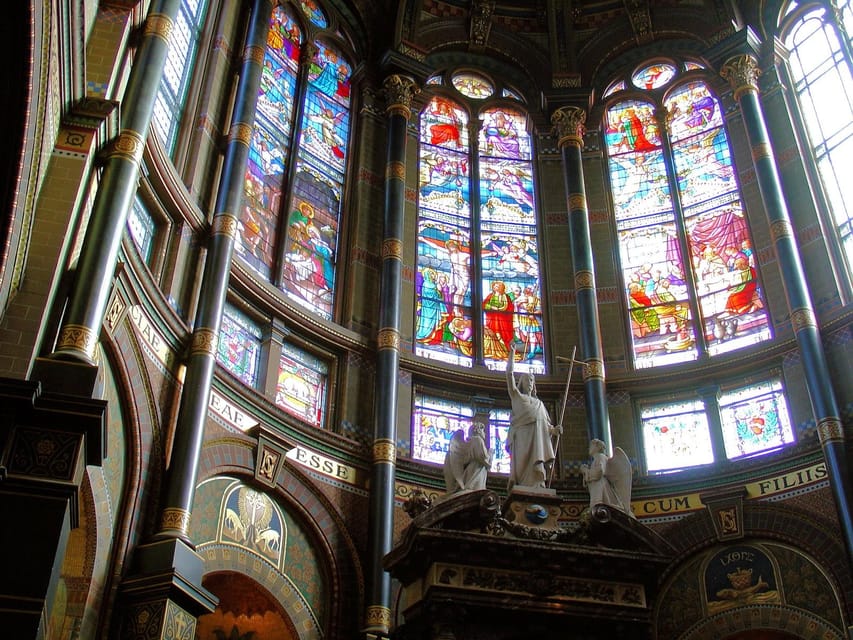
The walk finishes at the Homomonument. This is a meaningful ending because it brings the tour’s theme of freedom into a modern public setting.
By this point, you have heard about Amsterdam’s growth, commercial success, canal planning, bike culture, drug laws, family life, and diversity. The Homomonument gives those subjects a clear social and civic connection. It reflects the city’s discussion of identity, rights, and public recognition.
A final stop like this is more useful than ending at a random corner. It gives the walk a conclusion with a point of view: Amsterdam’s idea of freedom is not only about nightlife or relaxed drug policy. It also concerns how people are represented and accepted in public life.
The tour does not provide a separate entrance or museum visit at the monument. You should think of it as the final outdoor stop and the end of the guided route.
What $29 buys you
At $29, you are paying for a two-hour English-language walk with a live guide. There are no stated admissions, food, drinks, or transportation included, so the price is mainly for the guide’s time, route, and interpretation.
That can be good value if you want context quickly. Amsterdam’s central sights are easy to photograph on your own, but it takes more effort to connect the fishing village, global trade, canal planning, modern law, and city life into one story. A strong guide does that work for you.
The value depends heavily on the guide. The feedback about Lucas is encouraging because it highlights exactly the qualities that make a walking tour worthwhile: clear storytelling, unusual facts, enthusiasm, and interaction. His quiz questions were also praised for keeping the group involved during the two-hour route.
The rating information is very positive, but the number of ratings is small. I would treat that as a promising sign, not a guarantee that every guide or group experience will feel identical. The safest reason to book is the route and subject mix, with the guide’s personal style as an important bonus.
Free cancellation up to 24 hours before the tour and the option to reserve now and pay later reduce the risk if your schedule is still changing. You should check the available starting times because the tour runs at set times rather than whenever you arrive.
Who should book this Amsterdam walk?
I think this tour fits first-time visitors who want an informed introduction without spending half a day on one subject. It also suits adults and older teenagers who are comfortable discussing the Red Light District, drug laws, sexuality, identity, and social policy in a straightforward way.
You are likely to get the most from it if you enjoy asking questions and hearing stories, rather than simply ticking off landmarks. The quiz format described by one participant makes the experience especially appealing to people who like an active guide.
This is less suitable if you have difficulty walking or need an accessible route. The tour is specifically not suitable for people with mobility impairments, and the provider does not give a route length or detailed accessibility information.
You should also skip it if you need a tour in another language. The guide speaks English, and no other language is listed.
Practical advice for the two-hour route
Meet in front of the National Monument on Dam Square and look for the black tote bag with the Red Who Is Amsterdam logo. Arrive ready to walk, since the route links several central locations rather than staying in one square.
Wear comfortable shoes. Amsterdam’s streets can be hard work when you are walking for two hours, and the tour does not include a vehicle or seated transport.
Dress for the weather. The entire experience is described as a walking tour, so you should not count on indoor shelter during the route. Bring only what you need, since a light bag is easier to manage in crowded central streets.
If you book this for your first day, leave room afterward to explore on your own. The tour ends at the Homomonument, and you may want to continue through nearby streets or return to a location that raised a question during the walk.
Should you book it?
Book this tour if you want Amsterdam explained through one connected story. The route covers the city’s origin at Dam Square, its trading power near Beurs van Berlage, the Canal Belt, the Red Light District, Jordaan, and the Homomonument. It also reaches beyond sights to discuss bikes, family life, diversity, Dutch drug laws, and the meaning of freedom.
At $29, it is a sensible choice for a two-hour orientation, especially if you value a guide who uses stories and questions instead of a dry list of dates. The praise for Lucas gives the experience a strong personal recommendation, though the small number of ratings means you should keep expectations measured.
Skip it if you need an accessible route, a non-English guide, or a family tour for children under 16. For everyone else, this is a compact and thoughtful way to start making sense of Amsterdam.
FAQ
Where does the Amsterdam City Highlights Walking Tour begin?
It begins in front of the National Monument on Dam Square.
How do I identify the guide?
Look for a guide holding a black tote bag with a clearly visible Red logo reading Who Is Amsterdam.
Where does the tour finish?
The tour finishes at the Homomonument.
How long does the walking tour last?
The tour lasts two hours.
What language is the tour conducted in?
The live tour guide speaks English.
What places are included on the route?
The route includes Dam Square, Beurs van Berlage, the Amsterdam Red Light District, the Canal Belt, Jordaan, and the Homomonument.
Does the tour discuss the Red Light District?
Yes. The tour includes the Red Light District and discusses Dutch drug laws and Amsterdam’s approach to freedom.
Is the tour suitable for children?
No. It is not suitable for children under 16.
Is the tour suitable for people with mobility impairments?
No. The activity is listed as unsuitable for people with mobility impairments.
What should I bring?
Bring comfortable shoes and clothing suited to the weather.
Can I cancel the booking?
Yes. You can cancel up to 24 hours in advance for a full refund.
Do I have to pay when I book?
No. You can reserve now and pay later, which keeps your plans flexible.
Just added in Amsterdam
- Private Tour Zaanse Schans Windmills and Volendam in Jaguar★ 5.0 · 10 reviews
- Windmills-Volendam-Giethoorn Private Tour in Jaguar★ 5.0 · 2 reviews
- Half-Day Private Guided Sightseeing Tour of Zaanse Schans★ 5.0 · 14 reviews
- Zaanse Schans and Giethoorn Unique Day Trip with Boat Cruise★ 4.5 · 17 reviews
- Best of Netherlands: Zaanse Schans Mills, The Hague & Rotterdam★ 4.5 · 10 reviews
- Zaanse Schans Private Tour Windmills★ 5.0 · 18 reviews
- Zaanse Schans Windmills Edam Volendam and Marken from Amsterdam★ 5.0 · 1 review
- Zaanse Schans Edam Volendam Private Day Tour from Amsterdam★ 5.0 · 3 reviews
City Tours, compared.
75 Minute City Canal Cruise with Audio Guide
Read our review →

City Canal Cruise and Heineken Experience Ticket
Read our review →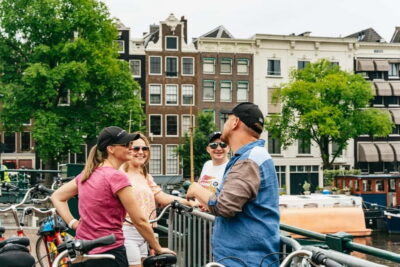
Browse the lists this tour appears in