
Review · CITY TOURS
Amsterdam Old City Private Walking Tour
Amsterdam rewards curious walkers. This private two-hour tour connects the medieval center, canals, Chinatown, Jewish District, and Red Light District while explaining how a swamp became a world power. I like the flexible route, which can be adapted to your interests, and I like the chance to see less obvious corners alongside major landmarks. The main drawback is time: two hours passes quickly if you want both detailed history and a broad sweep of the old city.
I also like that the tour is designed for a small private group of up to 10 people, rather than a large crowd following a flag. An especially strong feature is the local perspective. One guide described in the feedback was an old Amsterdam resident who shared stories from the 1970s as well as earlier history, including places that rarely appear in guidebooks. You should be ready to walk continuously, and large bags or luggage are not allowed.
In This Review
- Key points at a glance
- Starting at Amsterdam Central Station
- Amsterdam built on mud and water
- The medieval center and old city wall
- The Old Church and Oude Manshuispoort
- Walking through the Red Light District
- The old Jewish District
- Chinatown and Nieuwmarkt
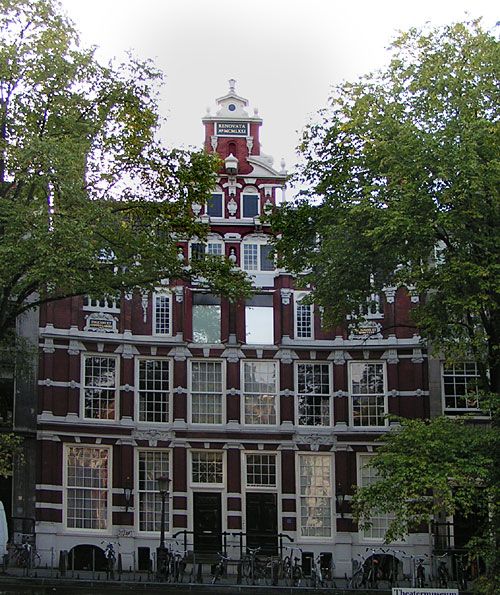
- Merchant houses and the Herengracht
- Why the private format matters
- Is $265 good value for two hours?
- Timing, languages, and practical details
- Who should book this Amsterdam walk?
- Should you book the Amsterdam Old City Private Walking Tour?
- FAQ
- Where does the tour meet?
- How long does the walking tour last?
- Is the tour private?
- What languages are available?
- Is the tour wheelchair accessible?
- Are food and drinks included?
- Can I bring luggage or a large bag?
- Can I cancel the booking?
Key points at a glance
- A compact route with wide historical reach: In two hours, you can move from the medieval center to the canals, Chinatown, the former Jewish District, the Red Light District, and the old harbor area.
- Flexible private guiding: The walk is adapted to your interests, so you can ask for more architecture, social history, Jewish Amsterdam, or the city’s modern development.
- Local stories beyond the postcard sights: The strongest feedback praises personal knowledge of Amsterdam, including details about changes in the 1970s and less familiar streets.
- A useful introduction to Amsterdam’s rise: You learn how a settlement built on reclaimed swamp grew into one of Europe’s largest cities by 1650.
- Good value for a group: The listed price is $265 for up to 10 people, which works out to $26.50 per person if you fill the group.
- Easy central meeting point: You meet in front of the main entrance of Amsterdam Central Station, with English, Dutch, or German guiding available.
Starting at Amsterdam Central Station
The meeting point is in front of the main entrance of Amsterdam Central Station. That makes practical sense for a first look at the city, since the station sits directly beside the historic center and the old harbor area.
I would allow a little extra time to find your guide. Central Station is a busy place, and the meeting instructions do not specify a particular sign, platform, or guide name. Travel light, since luggage and large bags are not permitted on the tour.
The route is on foot from the start. You do not need a special interest in academic history to enjoy it. An interest in architecture and history is enough, and the private format gives you room to ask questions instead of simply listening to a fixed script.
More Walking Tours in Amsterdam
- Anne Frank’s Story – Guided Walking Tour through Amsterdam
★ 5.0 · 11,619 reviews - Amsterdam: Life of Anne Frank and World War II Walking Tour
★ 4.8 · 10,467 reviews - Absolutely Amsterdam – the Essential Introductory Walking Tour
★ 5.0 · 3,629 reviews
Amsterdam built on mud and water
One of the most useful parts of the walk is the explanation of Amsterdam’s physical setting. The city was built on reclaimed swamp, with land buried in mud and the harbor once difficult to reach. That fact helps explain the city’s canals, narrow plots, leaning merchant houses, and constant struggle with water.
Amsterdam’s connection with the North Sea was not fully achieved until the 19th century. Yet the city had already become a major European center long before then. By 1650, about 220,000 people lived here, making Amsterdam the third-largest city in Europe at the time.
That story gives the canal streets more meaning. You are not just looking at attractive brick houses beside dark water. You are seeing the result of engineering, trade, finance, and urban planning in a place that was not naturally suited to become a major capital.
I value this sort of explanation because it ties the city’s appearance to its past. A walking tour can easily become a parade of names and dates. Here, the basic question is more useful: how did Amsterdam work?
The medieval center and old city wall
The walk moves through Amsterdam’s medieval center, where you can see parts of the old city wall and get a sense of the settlement before the great canal expansion. This is an important contrast with the wide, elegant canals often used in photographs.
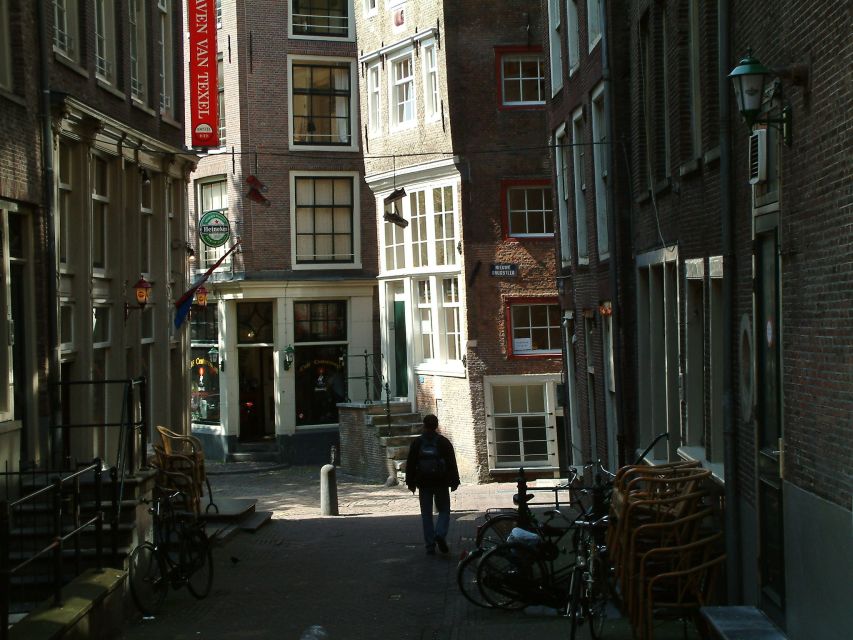
The oldest part of Amsterdam developed around trade and the water. Streets here can feel tighter and less orderly than the planned canal belt. That difference helps you read the city in layers, from its early commercial core to its later 17th-century expansion.
You may pass old pawn shops and buildings that reveal how ordinary business operated alongside major international trade. These details matter because Amsterdam’s rise was not created only by grand merchants and company directors. The city also depended on shops, credit, storage, shipping, and thousands of people working close together.
A guide can make this section especially useful by pointing out what is original, what was altered, and how the old center changed over time. The feedback is strongest on this point: the walk is not limited to the most photographed streets, and the explanations provide background instead of just labels.
The Old Church and Oude Manshuispoort
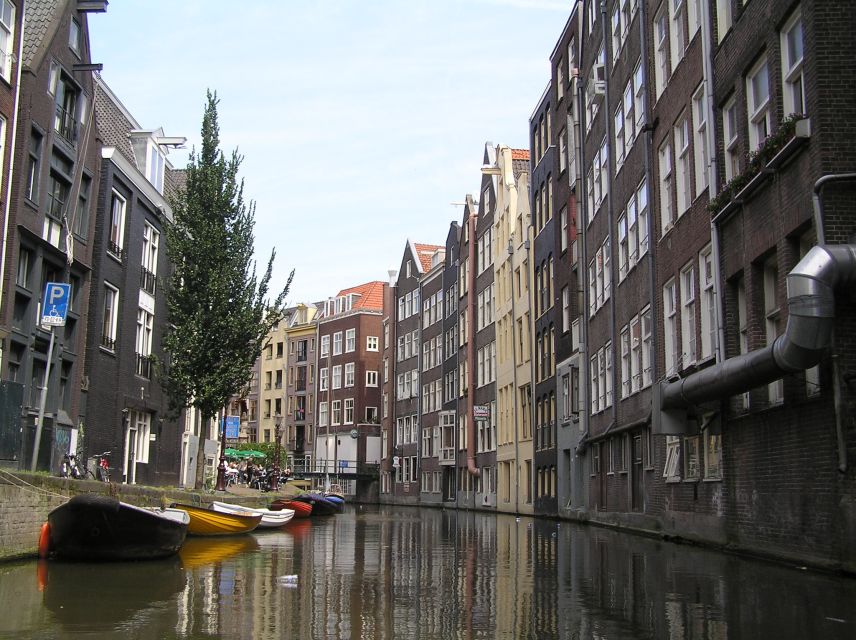
The Old Church, or Oude Kerk, is one of the key historic stops in the center. Its presence in the middle of the modern Red Light District creates one of Amsterdam’s most striking contrasts. Religious history, commerce, tourism, and adult entertainment all occupy the same small part of the city.
The tour also includes lesser-known religious and architectural details, including hidden churches and the Oude Manshuispoort. These places are valuable because they show how Amsterdam’s religious life continued even when public worship was restricted or controlled.
I would pay attention to the way your guide explains the relationship between public buildings and private worship. The city’s old center is full of clues that are easy to miss if you walk alone, especially passages, courtyards, entrances, and modest façades.
The drawback is that the tour lasts only two hours. If the guide spends time on the Old Church, medieval streets, and religious history, there may be less time for the canal belt or Jewish District. A private tour helps because you can say which subjects matter most to you.
A different kind of day out entirely:
- Amsterdam: Van Gogh Museum Ticket
★ 4.7 · 52,054 reviews - Amsterdam Classic Saloon Boat Cruise with Drinks and Cheese
★ 5.0 · 31,825 reviews - Amsterdam Luxury Canal Cruise + Unlimited Drinks & Bites option
★ 5.0 · 30,518 reviews - Amsterdam: Heineken Experience Ticket
★ 4.6 · 30,055 reviews
Walking through the Red Light District
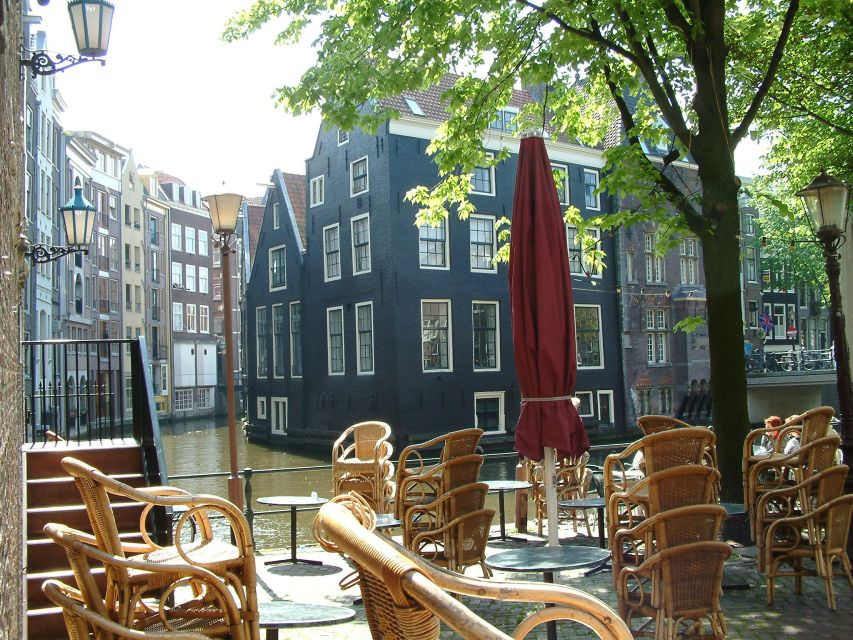
The Red Light District is included as part of the historical route, not as a stand-alone spectacle. That distinction matters. The area is one of Amsterdam’s most discussed sights, but a good guide should place it within the development of the old center, its waterways, businesses, and changing social rules.
The Old Church helps give this section historical depth. You can see how a religious landmark and a highly commercial district ended up side by side. The route may also help you understand the district as part of the city rather than treating it as an isolated curiosity.
I would recommend a respectful attitude here. Keep your group together, listen to the guide, and avoid treating residents or workers as part of the attraction. Since this is a walking tour through active city streets, the experience is better when you observe quietly and let the guide explain the setting.
If you are traveling with children or prefer to avoid this subject, tell the guide at the start. The route is adapted to your wishes, so this is one area where a private booking offers more control than a standard group walk.
The old Jewish District
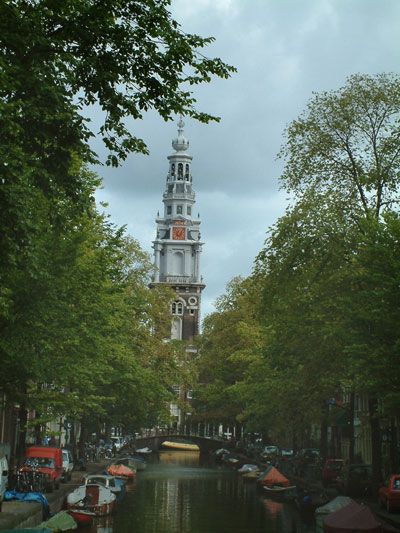
The former Jewish District adds an important layer to Amsterdam’s story. The tour connects this part of the city with the broader development of Amsterdam, rather than presenting it as a quick name on a map.
You can expect the guide to discuss the district in relation to the city’s trade, population, religion, and urban growth. The supplied information does not promise entry to a specific museum or synagogue, so you should think of this as an outdoor historical walk rather than a museum visit.
This section may be particularly useful if you want Amsterdam explained through communities and neighborhoods, not just through famous architecture. The route also includes Chinatown, which creates a chance to compare different periods of migration and commercial life within the old center.
Because the tour is private, you can ask for more attention to this district if it matters to your family or interests. You can also request a broader architectural focus if you would rather spend more time looking at façades, streets, and canals.
Chinatown and Nieuwmarkt
Chinatown and Nieuwmarkt bring the walk back to food, trade, and everyday city life. The area is close to the medieval center, yet it shows how Amsterdam continued to change as new communities and businesses became part of the old city.
Nieuwmarkt is also useful for understanding the relationship between public squares, former defenses, commerce, and urban change. The tour information specifically includes this area, but it does not promise a food tasting or restaurant stop. Food and drinks are not included, so plan to eat separately.
I like this part of the route because it gives the walk a more current feel after the medieval and 17th-century sections. You are not being shown a city frozen in the past. You are seeing an old center that continues to serve modern communities.
The route may also pass the Oostindisch Huis, the former Amsterdam headquarters of the East India Company. This building provides a direct link to the 17th century, when Amsterdam was a center of global trade, science, and culture. It is one of the clearest places to connect local streets with international power.
Merchant houses and the Herengracht
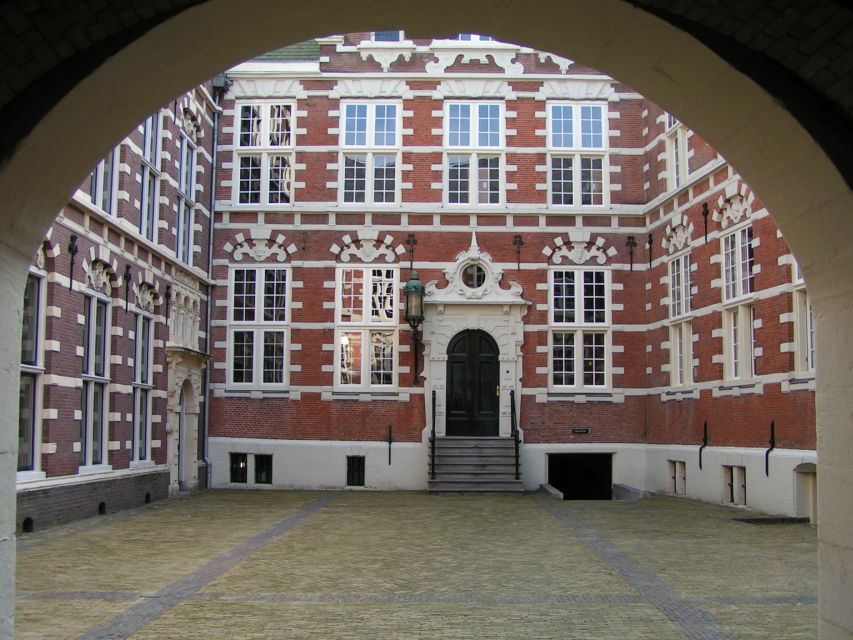
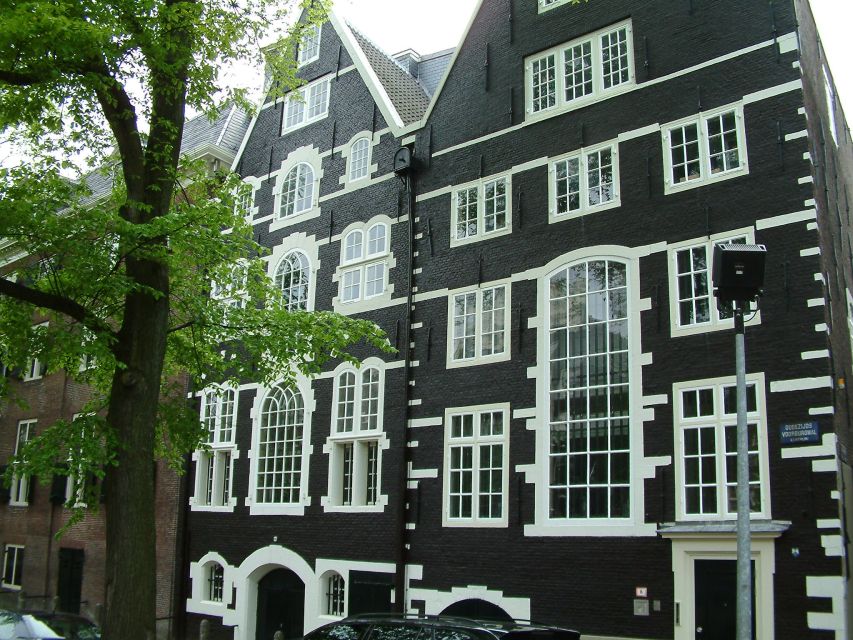
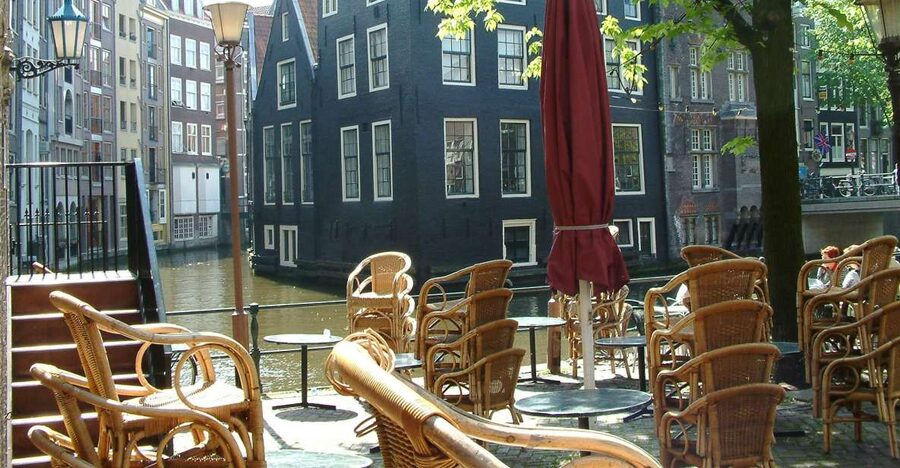
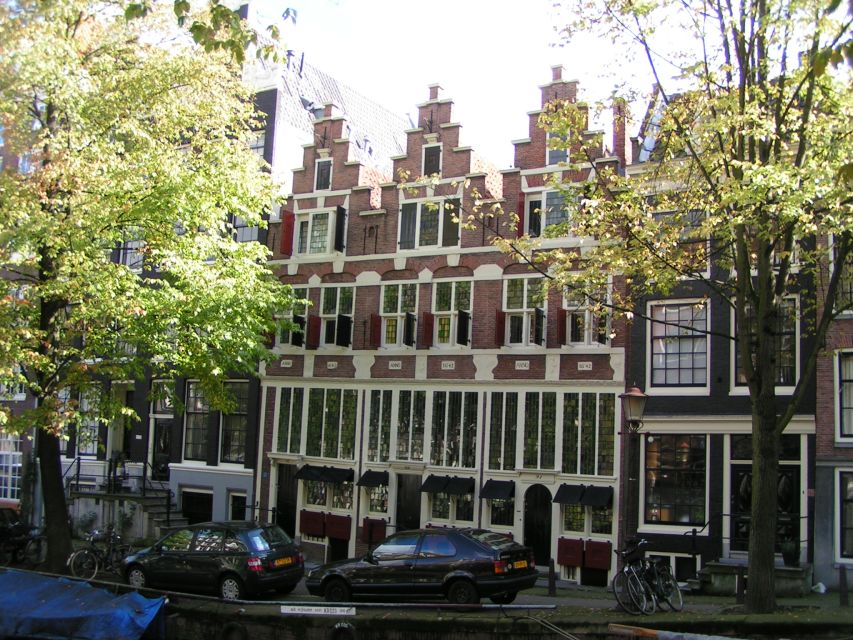
The canal section is likely to be the visual highlight. Along the Herengracht, one of the first three major canals of Amsterdam, you can see the handsome merchant houses that helped define the city’s image.
These houses are more than pretty façades. Their narrow shapes, tall fronts, and position along the canal reflect land values, trade, taxation, and the practical limits of building on reclaimed ground. Your guide can explain how the houses fit into Amsterdam’s economic rise and why the canal belt became such an important address.
The tour also includes the Jordaan district, with its old pawn shops and merchant houses. The Jordaan offers a different mood from the grander canal streets. It is useful for seeing how business and domestic life existed close together, and how smaller streets can tell a more personal story than formal avenues.
I would ask your guide to compare the Herengracht and Jordaan rather than treating them as separate photo stops. That comparison can help you understand social differences within the old city, from wealthy canal homes to working streets and small commercial premises.
Why the private format matters
The private setup is the central reason to choose this tour. Your group can include up to 10 people, and the walk is adapted to your wishes. That means you can ask for more architecture, more social history, more attention to Amsterdam’s Jewish past, or more discussion of the city’s recent changes.
A private guide also has an easier time responding to your pace. The tour is wheelchair accessible, but the exact route and walking conditions are not described in detail. If you use a wheelchair, it is sensible to confirm the planned route and any access needs before setting out.
The strongest feedback praises the individual character of the guiding. One German-speaking participant described a guide as a genuine old Amsterdam resident who could explain changes he had personally lived through in the 1970s. That sort of firsthand city memory can add something a standard historical lecture cannot.
The same feedback praised stops that were not necessarily in guidebooks. I would see this as a major advantage for repeat visitors or anyone who dislikes a fixed checklist. You may still see the classic sights, but the guide can connect them with streets and details you might otherwise pass without noticing.
Is $265 good value for two hours?
The price is $265 per private group of up to 10 people. At the maximum group size, that comes to $26.50 per person, which is reasonable for a private guide in a central European capital. For two people, however, the effective cost is $132.50 each, so the value depends heavily on group size.
I think the price makes the most sense for families, friends, or a group of several adults who want one guide to themselves. It also works well when you have limited time and want to shape the walk around specific interests.
The tour includes the guide, the two-hour walk, and VAT. Food and drinks are not included, and there is no stated admission to an indoor attraction. You are paying for interpretation, route planning, and private attention rather than entry tickets.
If you are traveling alone or as a couple and only want a general introduction, a less expensive shared walk may offer better value. If you have a group of six to 10, the calculation becomes much more attractive.
Timing, languages, and practical details
The duration is two hours, with starting times available according to the schedule at booking. I would choose an early slot if you want to use the walk to plan the rest of your day, since the route covers several districts and gives you useful orientation.
The guide can lead in English, Dutch, or German. The feedback includes strong German-language praise for both historical detail and personal stories, so German-speaking groups may find this especially appealing.
The activity is wheelchair accessible. Large bags and luggage are not allowed, so leave suitcases at your accommodation or another suitable storage point before arriving at Central Station.
You can cancel up to 24 hours in advance for a full refund, and the reserve-now, pay-later option keeps your plans flexible. These terms are helpful if your schedule in Amsterdam is still moving around, but they do not change the main issue: you need to arrive ready for a walking route.
Who should book this Amsterdam walk?
I would choose this tour if you want an introduction shaped around your own interests instead of a fixed sightseeing script. It suits first-time visitors who want the major historic areas explained, as well as repeat visitors who would like a more local angle.
It is a good fit for:
- Families or friends who can share the group price
- Architecture and history enthusiasts
- German, Dutch, or English-speaking groups
- Visitors who want the Red Light District explained in context
- People interested in Jewish Amsterdam, Chinatown, and urban change
- Anyone who prefers a private pace and the chance to ask questions
I would hesitate if you want a long museum visit, a food tour, or a relaxed outing with little walking. The experience is outdoors, lasts only two hours, and does not include food, drinks, or stated admission to attractions.
Should you book the Amsterdam Old City Private Walking Tour?
Book it if you can fill much of the 10-person capacity and want a guide who can connect Amsterdam’s canals, medieval center, merchant houses, religious buildings, and changing neighborhoods. The best reason to choose it is not simply the list of stops. It is the chance to ask questions and hear local stories, including the kind of recent city detail that can make old streets feel current.
Think twice if you are a solo visitor or couple watching every euro, since the private price is much harder to justify for a very small group. Also remember that two hours requires choices. Ask your guide at the beginning which subjects matter most, then let the route go beyond the standard postcard view.
FAQ
Where does the tour meet?
The meeting point is in front of the main entrance of Amsterdam Central Station.
How long does the walking tour last?
The tour lasts two hours.
Is the tour private?
Yes. It is a private group experience for up to 10 people.
What languages are available?
The guide can lead the tour in English, Dutch, or German.
Is the tour wheelchair accessible?
Yes, the activity is listed as wheelchair accessible.
Are food and drinks included?
No. Food and drinks are not included in the tour price.
Can I bring luggage or a large bag?
No. Luggage and large bags are not allowed.
Can I cancel the booking?
Yes. You can cancel up to 24 hours in advance for a full refund. You can also reserve now and pay later.
Just added in Amsterdam
- Private Tour Zaanse Schans Windmills and Volendam in Jaguar★ 5.0 · 10 reviews
- Zaanse Schans and Giethoorn Unique Day Trip with Boat Cruise★ 4.5 · 17 reviews
- Windmills-Volendam-Giethoorn Private Tour in Jaguar★ 5.0 · 2 reviews
- Half-Day Private Guided Sightseeing Tour of Zaanse Schans★ 5.0 · 14 reviews
- Best of Netherlands: Zaanse Schans Mills, The Hague & Rotterdam★ 4.5 · 10 reviews
- Zaanse Schans Private Tour Windmills★ 5.0 · 18 reviews
- Zaanse Schans Windmills Edam Volendam and Marken from Amsterdam★ 5.0 · 1 review
- Zaanse Schans Edam Volendam Private Day Tour from Amsterdam★ 5.0 · 3 reviews
City Tours, compared.
75 Minute City Canal Cruise with Audio Guide
Read our review →

City Canal Cruise and Heineken Experience Ticket
Read our review →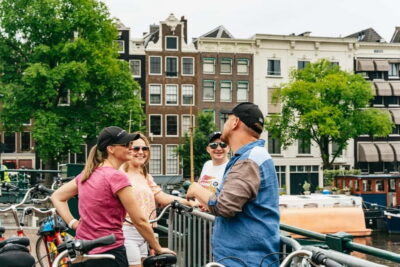
Browse the lists this tour appears in