
Review · CITY TOURS
Amsterdam private city walking experience with a local
Amsterdam makes a fine first impression on foot. This private walk links old city landmarks with local stories, from a fishing village at Beursplein to the canals, guild halls, Chinatown, and Centraal Station. I especially like the personal format and the way the route mixes famous sights with smaller details, including wooden cottages, dancing houses, and the bicycle bridge. I also like that guide Manouk uses maps, pictures, local treats, and flexible commentary to shape the walk around your interests.
The main consideration is time. Two hours is enough to get your bearings, but not enough for long visits inside attractions. The walk can take 2 to 2.5 hours, and the route covers a fair stretch of central Amsterdam, so comfortable shoes and weather protection matter. The price is $180.62 per private group of up to 12, which is excellent for a full group but less of a bargain for one or two people.
In This Review
- Key points at a glance
- Starting at Beursplein, where Amsterdam began
- Dam Square and the city’s public story
- Begijnhof, wooden houses, and Amsterdam’s religious past
- Canal architecture and the house on three canals
- Nieuwmarkt and the old Waag
- Zeedijk and Amsterdam’s changing Chinatown
- Centraal Station, a grand finish by the water
- What the private format adds
- Price, group size, and practical value
- Who will get the most from this walk
- Should you book this Amsterdam walking experience?
- FAQ
- How long does the Amsterdam private walking experience last?
- How many people can join the private tour?
- Where does the tour start?
- Where does the activity end?
- Is the tour offered in English?
- Are admission tickets included?
- Can service animals join the tour?
- What is the cancellation policy?
Key points at a glance
- Seven central Amsterdam stops: Follow a compact route through Beursplein, Dam Square, Begijnhof, canal houses, Nieuwmarkt, Zeedijk, and Centraal Station.
- A private group of up to 12: Ask questions freely and keep the conversation focused on your interests.
- A guide who adapts the story: Manouk can place extra attention on history, architecture, neighborhoods, food, or current local concerns.
- Good context for first-time visitors: The route explains how Amsterdam grew from a fishing settlement into a major commercial center.
- Useful local touches: Maps, pictures, edible treats, and suggestions for food add more than a standard monument-by-monument walk.
- A strong value for families or groups: At the full capacity, the per-person cost is modest, while solo guests pay the highest effective rate.
Starting at Beursplein, where Amsterdam began
The walk starts at Beursplein, a central square near the heart of old Amsterdam. This is a useful place to begin because the story here is not just about one building or monument. It is about how a small fishing settlement became a city with international influence.
You learn how Amsterdam acquired its name and how water shaped its early growth. That background helps you understand the canals and streets you see later. Instead of treating the city as a collection of pretty views, the guide gives you a reason for its unusual shape and commercial importance.
This opening stop takes about 15 minutes and costs nothing beyond the tour itself. That matters because the experience focuses on orientation and explanation, not admission tickets. If you arrive in Amsterdam without much background, this is the kind of introduction that can make the rest of your stay easier to follow.
The meeting point is easy to reach by public transportation, and confirmation is provided when you book. Since Beursplein can be busy, look for the guide carefully and allow a few minutes to arrive. The supplied details do not specify a precise landmark within the square beyond the address, so checking the meeting instructions before setting out is sensible.
More Walking Tours in Amsterdam
- Anne Frank’s Story – Guided Walking Tour through Amsterdam
★ 5.0 · 11,619 reviews - Amsterdam: Life of Anne Frank and World War II Walking Tour
★ 4.8 · 10,467 reviews - Absolutely Amsterdam – the Essential Introductory Walking Tour
★ 5.0 · 3,629 reviews
Dam Square and the city’s public story
From Beursplein, the route continues to Dam Square, another 15-minute stop. Dam Square helps explain Amsterdam as a civic center, not simply a canal town.
The Royal Palace on the Dam provides the visual focus. You hear about its place in the city and its connection to Amsterdam’s public life. The guide also covers the square during the Second World War, adding a serious layer to a place that can otherwise feel like a busy photo stop.
I like this part of the route because it connects architecture with memory. A palace may catch your eye first, but the square has also been a setting for major public events and difficult chapters in the city’s past. That wider frame makes the stop more worthwhile than a quick look at the facade.
Do not expect time for a full palace visit during this walk. The attraction here is the outside setting and the explanation. If entering the Royal Palace is important to you, treat that as a separate plan.
Begijnhof, wooden houses, and Amsterdam’s religious past
Begijnhof offers a sharp change of mood. After the open public spaces of Beursplein and Dam Square, you enter a quieter courtyard with a strong religious connection.
The guide explains the women who lived there and what the courtyard reveals about Amsterdam’s approach to religious life. The point is not to reduce the story to a simple claim of tolerance. Instead, you get a sense of how faith, community, and city life could exist side by side in Amsterdam.
The stop lasts about 15 minutes. You also see one of the city’s oldest houses, one of two surviving wooden cottages. That small detail is easy to miss if you visit alone, especially when your attention is pulled toward the better-known canal houses.
Begijnhof is also a good example of why a private walk can help. The courtyard may look peaceful and self-explanatory, but its meaning depends on knowing what you are seeing. A guide can point out the features that turn a pleasant pause into a useful lesson about the city.
Keep your voice low and follow any posted rules. This is a place with a residential and religious character, not just another public square. The experience information does not promise entry to any specific building, so plan on seeing the courtyard and exterior features.
Canal architecture and the house on three canals
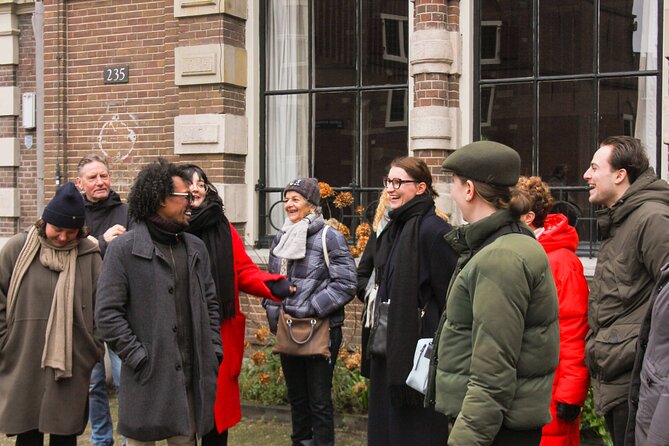
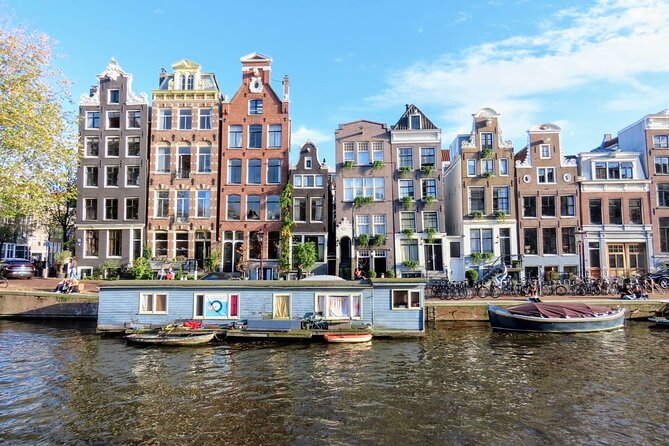
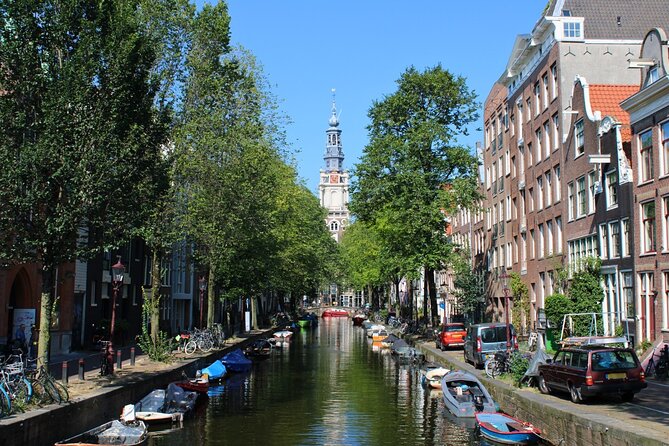
The next stop focuses on a house positioned on three canals. Amsterdam’s canal houses reward slow looking, and this stop gives you a reason to study how buildings meet the water.
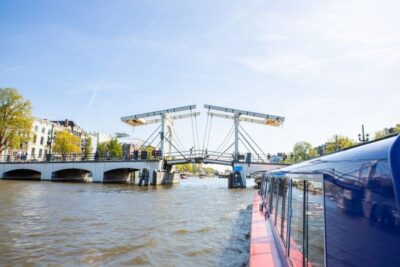
You learn about the so-called bicycle bridge, a local detail that adds humor and practical character to the route. It is the sort of feature you might pass without noticing, then remember every time you see Amsterdam’s crowded network of bikes and bridges.
This section is not presented as an interior visit. The value comes from the streetscape, the relationship between house, canal, and bridge, and the guide’s explanation of how the city works at ground level.
The walk between stops is part of the experience. You are not being driven from one landmark to the next. The guide talks along the way, so the route itself becomes a moving classroom. That also means the total outing may reach 2.5 hours, even though the advertised duration is approximately two hours.
A different kind of day out entirely:
- Amsterdam: Van Gogh Museum Ticket
★ 4.7 · 52,054 reviews - Amsterdam Classic Saloon Boat Cruise with Drinks and Cheese
★ 5.0 · 31,825 reviews - Amsterdam Luxury Canal Cruise + Unlimited Drinks & Bites option
★ 5.0 · 30,518 reviews - Amsterdam: Heineken Experience Ticket
★ 4.6 · 30,055 reviews
Nieuwmarkt and the old Waag
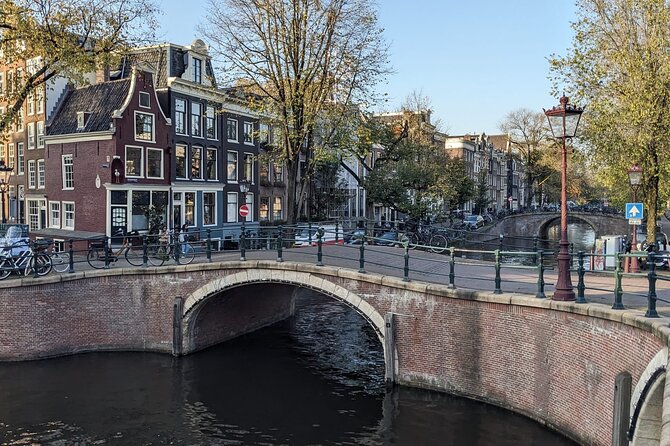
Nieuwmarkt receives the longest scheduled stop, about 30 minutes. That extra time is well used because this square brings together architecture, trade, and neighborhood life.
The Waag is the main historical focus. It began as one of Amsterdam’s old city gates and later became a guild hall. The guide explains why guilds mattered, giving you a clearer picture of how tradespeople organized work and protected their interests.
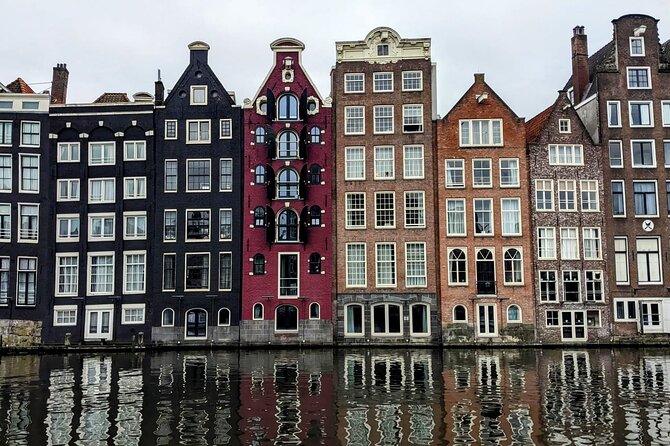
You also see Amsterdam’s dancing houses, the narrow buildings that appear to lean or tilt. They make an entertaining photo subject, but the guide helps you see them as part of the city’s older built environment rather than as a strange collection of crooked facades.
Nieuwmarkt is a useful midpoint because the conversation shifts from national history to the systems that shaped daily city life. You get architecture, commerce, and local customs in one stop. The longer pause should also give you more room to ask questions.
If your interests lean toward architecture, this is one of the places where you may want to slow the guide down. Manouk has been praised for adapting the route and explanation to interests such as history and architecture. She also uses pictures and maps, which can help when a building’s original function is difficult to understand from the street.
Zeedijk and Amsterdam’s changing Chinatown
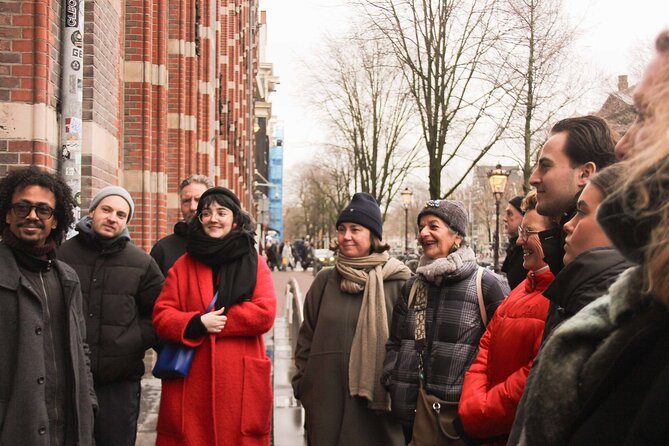
Zeedijk brings the walk into a part of Amsterdam with a more recent and complicated story. The area is associated with Chinatown, and the guide explains its decline from a dangerous section of the city during the 1970s to a favorite spot for many Amsterdammers today.
This is one of the most useful stops for understanding that Amsterdam is not frozen in its past. Neighborhoods change. Streets gain new businesses, new residents, and new reputations. A good guide can explain those shifts without turning them into a simple before-and-after tale.
The scheduled stop lasts about 15 minutes, but the route also gives you time to observe the street as you move through it. You might find this section especially helpful if you want to understand present-day Amsterdam rather than only hear about merchants, palaces, and old gates.
The guide can also discuss current neighborhood issues and future plans. That makes the stop feel connected to ordinary city life. You are not only looking backward at what Amsterdam was. You are also hearing how parts of the city continue to change.
Centraal Station, a grand finish by the water
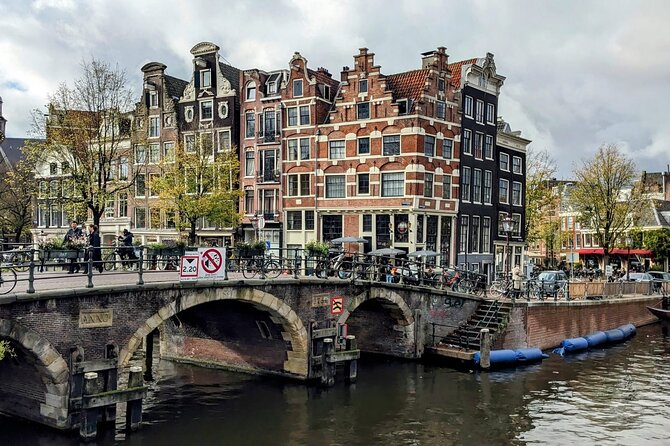
The final listed stop is Amsterdam Centraal Station, scheduled for about 15 minutes. Its architecture makes a fitting conclusion to a walk about connection, movement, and commerce.
The station’s location has mattered for centuries because Amsterdam has long depended on transportation links. Today, the building remains one of the city’s most recognizable arrival points, but its significance goes beyond train travel. It represents connection and prosperity, and it gives the route a clear link between Amsterdam’s past growth and its present role.
This is a good place to end if you need to continue by train or want to orient yourself for the rest of your visit. However, there is one practical point to confirm. The information says the activity ends back at the meeting point in Beursplein, while Centraal Station is listed as the final stop. That may mean the guide walks the group back, or it may reflect a standard end-point note. Ask for clarification before booking if your schedule depends on finishing at a particular location.
What the private format adds
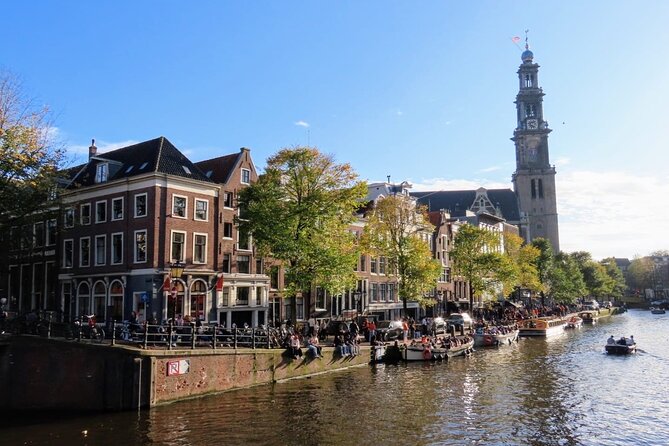
The experience is private, so only your group participates. That changes the feel of a walking tour in several useful ways.
You can ask about a particular building without waiting for a large group to catch up. If you care most about architecture, the guide can give that subject more attention. If you are visiting alone, the personal setup can also make the walk feel comfortable rather than awkward.
Manouk’s style appears warm as well as organized. She has been praised for making solo guests feel at ease, answering questions, and presenting history in a clear order. She also brings maps and pictures, which are practical tools when explaining how streets and landmarks looked or functioned in the past.
Small gestures matter here. Local edible treats have been part of the experience, and the guide can offer food suggestions for later. Those extras do not transform the tour into a food walk, but they make it feel more personal and give you ideas for the rest of your day.
The private format also lets you control the pace to a degree. It does not mean you can visit every interior or linger at every stop. The route has seven scheduled locations and a limited time. Still, you have more room to speak up than you would on a large group outing.
Price, group size, and practical value
The total price is $180.62 per group of up to 12 people. For a full group, that works out to roughly $15 per person. That is strong value for a private introduction to central Amsterdam.
For two people, the cost is about $90 each, and for a solo guest it is the full $180.62. The tour makes the most financial sense for a family, group of friends, or several couples traveling together. A solo guest may still value the personal attention, but should compare the cost with a regular small-group walk.
There are no separate admission charges listed for the seven stops. That keeps the cost simple, though you should not expect palace or museum entry as part of the walk. The main product is the guide’s time, local perspective, route planning, and ability to answer questions.
The tour is offered in English and uses a mobile ticket. It is near public transportation, and most people can participate. Service animals are allowed. Since the walk lasts two to 2.5 hours, wear shoes suited to city streets and check the weather before leaving.
Free cancellation is available if you cancel at least 24 hours before the start time. Changes or cancellations made within 24 hours are not accepted for a refund, and the cut-off follows Amsterdam’s local time.
Who will get the most from this walk
I would choose this experience for a first visit to Amsterdam when I wanted a clear introduction without the formality of a bus tour. The route covers enough ground to connect several parts of the center, while the guide supplies the background that makes the city easier to read afterward.
It suits people who enjoy questions and conversation. You can ask about architecture, religious life, wartime history, neighborhood change, guilds, food, and current local concerns. It also fits a family or private group that wants a flexible tone.
History and architecture fans should find plenty to work with, especially at Dam Square, Begijnhof, the canal house, Nieuwmarkt, and Centraal Station. Solo visitors may also appreciate the friendly, personal approach.
I would be less likely to choose it if I wanted long stops, museum interiors, or a leisurely canal-side stroll. The route is broad rather than slow. It gives you a useful map of central Amsterdam, then leaves you to return to the places that catch your interest.
Should you book this Amsterdam walking experience?
Book it if you want a private, human introduction to Amsterdam and can share the cost with a group. The combination of major landmarks, lesser-noticed details, neighborhood change, and an adaptable guide gives you more than a standard checklist walk.
Manouk’s warm approach, visual aids, local treats, and food suggestions add real value. The full-group price is especially attractive, and the route should help you plan the rest of your time in the city.
Skip it if your priority is entering attractions or spending a long time at each sight. Also clarify the Centraal Station and Beursplein ending before you commit. For most first-time visitors, though, this is a practical way to get oriented quickly and see Amsterdam through a local guide’s eyes.
FAQ
How long does the Amsterdam private walking experience last?
The advertised duration is approximately two hours, while the practical walking time is described as two to 2.5 hours.
How many people can join the private tour?
The price covers one private group of up to 12 people.
Where does the tour start?
The meeting point is Beursplein, 1012 JW Amsterdam, Netherlands.
Where does the activity end?
The activity information says it ends back at the meeting point. Centraal Station is also listed as the final sightseeing stop, so confirm the exact return arrangement with the provider.
Is the tour offered in English?
Yes. English is the listed tour language.
Are admission tickets included?
Each listed stop has no admission ticket charge. The experience does not state that entry to the Royal Palace or other buildings is included.
Can service animals join the tour?
Yes. Service animals are allowed.
What is the cancellation policy?
You can cancel at least 24 hours before the start time for a full refund. Cancellations or changes made less than 24 hours before the start time are not accepted for a refund.
Just added in Amsterdam
- Private Tour Zaanse Schans Windmills and Volendam in Jaguar★ 5.0 · 10 reviews
- Zaanse Schans and Giethoorn Unique Day Trip with Boat Cruise★ 4.5 · 17 reviews
- Windmills-Volendam-Giethoorn Private Tour in Jaguar★ 5.0 · 2 reviews
- Half-Day Private Guided Sightseeing Tour of Zaanse Schans★ 5.0 · 14 reviews
- Best of Netherlands: Zaanse Schans Mills, The Hague & Rotterdam★ 4.5 · 10 reviews
- Zaanse Schans Private Tour Windmills★ 5.0 · 18 reviews
- Zaanse Schans Windmills Edam Volendam and Marken from Amsterdam★ 5.0 · 1 review
- Bike tour in Amsterdam with an Italian guide★ 5.0 · 15 reviews
City Tours, compared.
75 Minute City Canal Cruise with Audio Guide
Read our review →

City Canal Cruise and Heineken Experience Ticket
Read our review →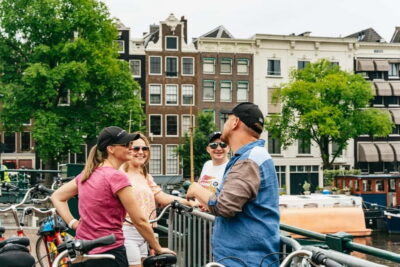
Browse the lists this tour appears in