
Review · CITY TOURS
Amsterdam: Queer City Walking Tour With Local Guide
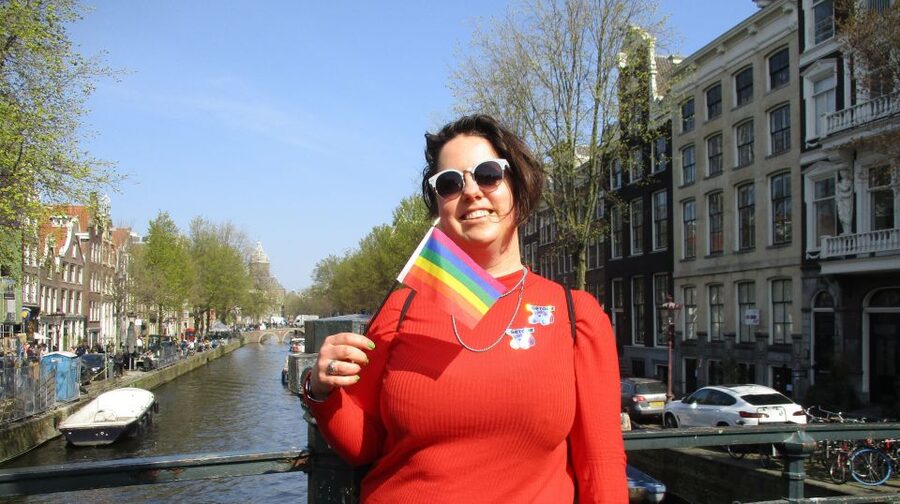
Amsterdam’s queer past is hiding in plain sight. This two-hour walk with local guide Sanne links LGBTQI+ stories to familiar places in the oldest part of Amsterdam, from Dam Square and the Homomonument to the Red Light District and Café ’t Mandje. I like the personal storytelling, especially Sanne’s reflections on love, being gay, and single life in Amsterdam. I also like the way the tour joins history with present-day pride and protest, rather than treating queer life as a side note.
The main consideration is pace. You cover 11 stops in two hours, so some places receive a brief explanation or a pass-by rather than a long visit. The route is also outdoors from start to finish, and it runs rain or shine. Bring proper shoes and rain gear, not just optimism.
In This Review
- Key points to know before booking
- Starting beneath the unicorns at Dam Square
- The Homomonument and the politics of remembrance
- Belle, the Condomerie, and the practical side of queer life
- Fifteen minutes in Amsterdam’s Red Light District
- Zeedijk Street and the city’s everyday queer connections
- Kokopelli and the stories behind familiar storefronts
- Gender identity, public symbols, and the Dancing Houses
- Ending at Café ’t Mandje, Amsterdam’s oldest queer bar
- What Sanne’s style adds to the walk
- Is $59 a fair price for two hours?
- Who should book the Queer City Walking Tour?
- Should you book it?
- FAQ
- Where does the Queer City Walking Tour begin?
- Where does the tour finish?
- How long does the tour last?
- What languages does Sanne speak?
- Is the tour wheelchair accessible?
- Does the tour operate in bad weather?
- Can I cancel the booking for a full refund?
Key points to know before booking
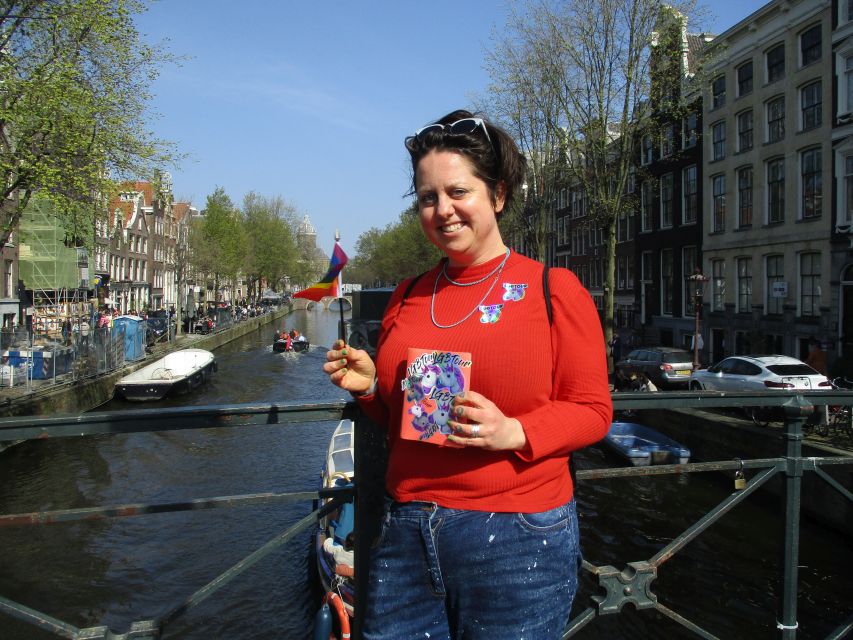
- Sanne leads with personal stories: Her own experiences give the walk a warm, human tone, which several people especially praised.
- The route stays in central Amsterdam: You move from the National Monument through the Homomonument, Red Light District, Zeedijk, and the area around Café ’t Mandje.
- The Homomonument receives the longest stop: Plan on about 20 minutes for its story, including controversy around how it came to be.
- You see queer Amsterdam through many lenses: Pride, protest, nightlife, gender identity, safer sex, bars, shops, and public symbols all appear.
- The price is $59 for two hours: That is fair if you want guided context and conversation, but less attractive if you prefer a fast, general sightseeing walk.
- It is open to everyone: The experience welcomes LGBTQI+ people and allies, and the guide speaks English and Dutch.
Starting beneath the unicorns at Dam Square
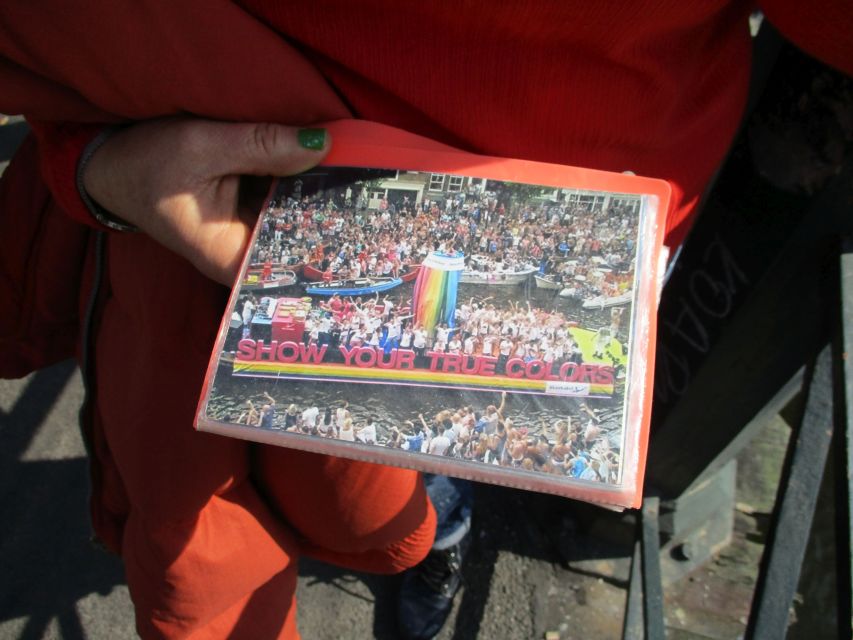
Meet Sanne at the National Monument on Dam Square. She carries a tiny rainbow flag, which should make the meeting point easy to spot in one of Amsterdam’s busiest central spaces.
The starting place matters because the tour does not isolate queer history in one district. Instead, it begins with a major civic square and asks you to read the city differently. The material includes a curious look at the Royal Palace and its unicorns, with Sanne connecting this grand, queenish setting to the tour’s queer perspective.
You should arrive ready to walk, listen, and occasionally stop in crowded public areas. The route is in the oldest part of Amsterdam, so expect city streets rather than a quiet park stroll. Comfortable clothes, sun protection, and rain gear are sensible. The tour goes ahead in all weather.
The experience is described as a small-group walk, but no fixed group size is given. That means you can expect a social setting without knowing precisely how intimate the group will be. The format suits you if you like sharing a few thoughts with people from different countries, though it may feel less private than a one-to-one guide.
More Walking Tours in Amsterdam
- Anne Frank’s Story – Guided Walking Tour through Amsterdam
★ 5.0 · 11,619 reviews - Amsterdam: Life of Anne Frank and World War II Walking Tour
★ 4.8 · 10,467 reviews - Absolutely Amsterdam – the Essential Introductory Walking Tour
★ 5.0 · 3,629 reviews
The Homomonument and the politics of remembrance
The Homomonument is the first major guided stop, with about 20 minutes devoted to it. This is the central historical pause on the route, and Sanne discusses not only what the monument represents but also the controversial stories surrounding its creation.
That approach is one of the tour’s strengths. Public memorials often look simple once they are finished. The harder questions are usually out of sight: who wanted the monument, what did they want it to say, and how did people argue over its meaning? You get a sense that queer remembrance in Amsterdam was shaped by disagreement as well as pride.
This is also where the walk moves beyond sightseeing. Sanne’s aim is not simply to point at a monument and supply a date. She uses the place to discuss the people and events that shaped Amsterdam from an LGBTQI+ point of view.
Give this stop your full attention. It is likely to be the most reflective part of the afternoon or evening, and the personal style of the tour works best when you allow time for the stories to land.
Belle, the Condomerie, and the practical side of queer life
The next stops add more specific stories. At Belle, you spend about 10 minutes with Sanne. The tour also includes the Condomerie, described as the first condom shop in the world, where you hear how the business grew out of a need linked to the AIDS crisis.
This section gives the walk useful balance. Queer history is not only about famous people, protests, and nightlife. It is also about health, safety, public education, and the places that met urgent needs. The Condomerie stop brings that practical side into view.
The short timing means you should not expect a long shop visit or a detailed medical history. Think of it as a focused story attached to a real location. That format works well if you want several different subjects in one walk, but it may leave you wishing for more detail on any one theme.
At Belle, the guide’s exact focus is not spelled out in the available information, so you should expect a guided story rather than a formal museum-style presentation. Sanne’s approach is personal and conversational, which gives the route its character.
Fifteen minutes in Amsterdam’s Red Light District
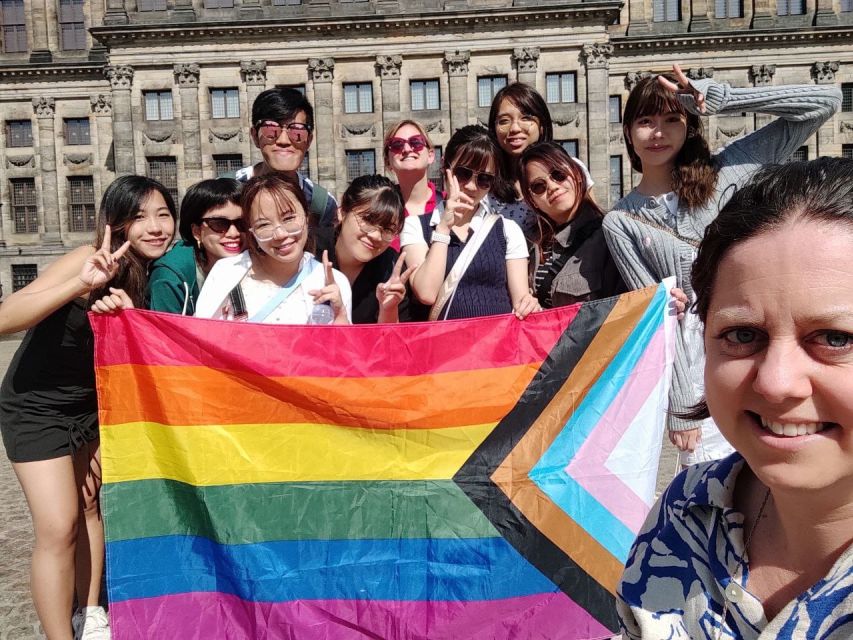
The route then reaches the Amsterdam Red Light District for about 15 minutes. This is the oldest part of the city and, on this walk, the historic heart of old gay town.
The value here comes from the contrast. You are looking at one of Amsterdam’s best-known areas, but Sanne shifts attention toward queer life, nightlife, and the people who used these streets. You may recognize the setting, yet hear stories that a standard city tour would skip.
Do not expect every stop to be a solemn memorial. The Red Light District section is likely to be more public and visually busy than the Homomonument. It is also a place where you should stay aware of your surroundings and keep the group in sight.
The tour then passes Eagle Amsterdam for around five minutes. Since this is a pass-by, not a long interior visit, treat it as a quick piece of the wider story of queer nightlife. This keeps the route moving, though anyone hoping to spend time inside venues should adjust expectations.
A different kind of day out entirely:
- Amsterdam: Van Gogh Museum Ticket
★ 4.7 · 52,054 reviews - Amsterdam Classic Saloon Boat Cruise with Drinks and Cheese
★ 5.0 · 31,825 reviews - Amsterdam Luxury Canal Cruise + Unlimited Drinks & Bites option
★ 5.0 · 30,518 reviews - Amsterdam: Heineken Experience Ticket
★ 4.6 · 30,055 reviews
Zeedijk Street and the city’s everyday queer connections
You walk along Zeedijk Street for about 15 minutes. This is a useful stretch because it gives the tour breathing room between more concentrated stops.
Sanne’s theme is the way unexpected places and people connect to Amsterdam’s queer life. The walk is not limited to rainbow signs or officially recognized sites. You look at streets, buildings, and businesses as part of a larger social story.
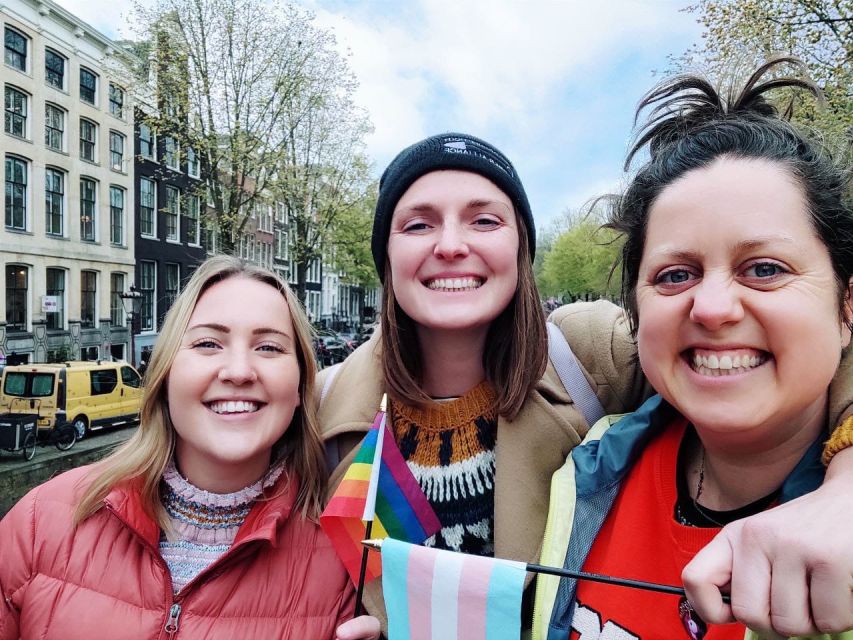
Pride is another important thread. Amsterdam’s biggest LGBTQI+ celebration takes place on the city’s canals, and the tour connects pride with protest rather than presenting it as a simple party. That distinction matters. You get a view of Pride as both celebration and public expression.
The route also passes Pride Clothing for about five minutes. Again, this is a brief exterior stop. It adds a present-day retail and community note, but it is not a shopping session. If you want time to browse, plan to return on your own after the walk.
Kokopelli and the stories behind familiar storefronts
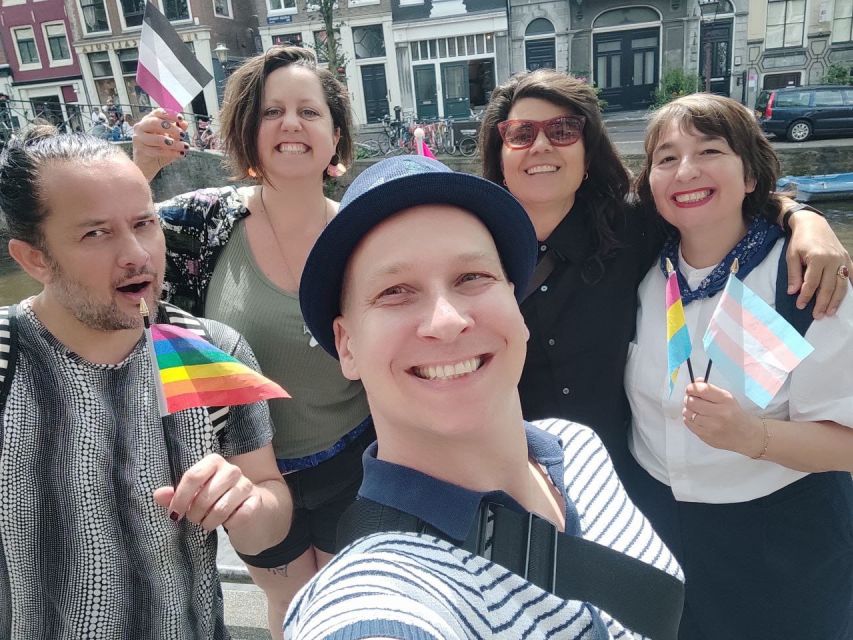
Kokopelli receives about 10 minutes of guided attention. As with the Condomerie and Belle, the place gives Sanne a physical anchor for a story.
This stop helps explain the tour’s basic method. Rather than gathering in a lecture room, you move through Amsterdam and connect queer life to ordinary urban settings. The result is more memorable for you if you enjoy learning through place, especially when a shop or street gains a new meaning during the walk.
The route has a good mix of subjects, but it is not designed as a complete survey of LGBTQI+ history. Two hours can only provide selected stories. Sanne presents a selection of major stops and themes, so you should see this as an introduction and a way to find places you may want to explore later.
One practical bonus is the personal favorites list shared with participants. It includes tips for LGBTQI+ events, venues, and favorite places in Amsterdam. Since the walking route ends in a central nightlife area, those suggestions can help you continue the evening with more direction than you would have from a standard sightseeing map.
Gender identity, public symbols, and the Dancing Houses
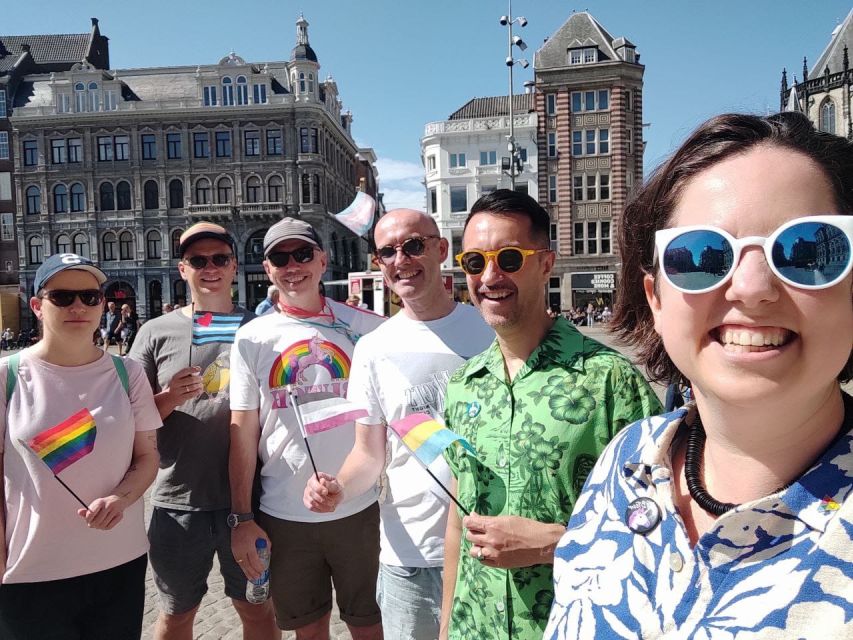
The tour includes a story about a woman who was the first to change her gender on her passport. The information describes this as a key way to explore the T in LGBTQI+.
This is a strong addition because it widens the tour beyond gay and lesbian history. You hear about gender identity through a specific person and a concrete civic issue: the right to have official documents reflect your life. The story also fits the tour’s wider interest in people who challenged expected roles.
A 10-minute photo stop follows at the Dancing Houses. This gives you a chance to take pictures and look back at the city’s unusual architecture while keeping the queer theme in view.
The photo stop is lighter than the Homomonument, and that change of mood is welcome. Still, remember that this is a walking tour, not a photography outing. You get time for a few pictures, not a long session with a tripod or an extended architecture talk.
Ending at Café ’t Mandje, Amsterdam’s oldest queer bar
The final stop is Café ’t Mandje, described as the oldest queer bar. Finishing here gives the route a clear endpoint and ties the historical walk to Amsterdam’s social life.
A bar is a fitting place to end because so much queer history has been built through gathering, conversation, friendship, flirtation, and protest. Sanne’s stories about falling in love and being gay and single in Amsterdam make the finish feel personal rather than purely institutional.
The tour does not state that a drink or private bar entry is included, so do not assume refreshments are part of the $59 price. You finish in front of the café, which lets you decide what to do next.
This is also the best point to ask Sanne for suggestions from the favorites list. The experience is designed to connect people from around the world and invite you to share your own stories, so the last stop may naturally turn into conversation with the group.
What Sanne’s style adds to the walk
The strongest praise for this experience centers on Sanne herself. The comments describe her as caring, warm, and full of useful knowledge, while also highlighting her personal connection to the subject.
That combination makes a difference. A guide who only recites facts can explain where a monument is. Sanne aims to explain why these places matter to queer people and to her own life. Her stories about love, identity, and being single in Amsterdam give the tour emotional weight without making it only about her.
You should book this if you enjoy a guide who speaks openly and invites connection. It may be less suitable if you want a silent audio-style tour, a purely academic lecture, or a strict chronological history.
The tour is available in English and Dutch. The open invitation to LGBTQI+ people and allies is clear, so you do not need to identify as queer to take part. The rainbow is presented as something everyone can approach with respect.
Is $59 a fair price for two hours?
At $59 per person, this is not the cheapest way to see central Amsterdam. You are paying for a guided interpretation of queer history, a personal connection with Sanne, and a route that gathers several specific places into one coherent walk.
The price makes the most sense if you value context. Without a guide, you can pass the National Monument, Red Light District, Zeedijk, and Café ’t Mandje without knowing how they connect to LGBTQI+ life. Sanne supplies that connection and adds stories you would be unlikely to find on a standard city walk.
The value is weaker if your main goal is broad sightseeing. The tour does not promise long visits inside attractions, extensive museum time, or a full tour of Amsterdam’s queer nightlife. Several locations receive only five or 10 minutes, and some are pass-bys.
For a first visit to Amsterdam, this works best as a focused introduction. For someone already familiar with the city, the appeal is the new angle and the chance to hear personal stories in places you may have seen before.
Who should book the Queer City Walking Tour?
I would point this tour toward:
- LGBTQI+ visitors who want local context rather than a general city overview
- Allies who want to understand Amsterdam’s queer past with care
- Solo visitors who enjoy meeting people and sharing stories
- Couples and friends looking for a thoughtful two-hour activity
- Repeat visitors who have already seen the standard central sights
- Anyone interested in pride, protest, gender identity, queer nightlife, or public memory
You should think twice if walking through crowded central streets is difficult for you, although the activity is listed as wheelchair accessible. Also consider the weather. There is no indoor shelter built into the experience, and the walk takes place rain or shine.
The tour is only two hours, which makes it easy to fit into a larger Amsterdam plan. Comfortable shoes are essential, and a sun hat, sunscreen, and rain protection are sensible additions.
Should you book it?
Book this tour if you want Amsterdam explained through personal queer stories, public memory, and the city’s old nightlife districts. Sanne’s warm style is the main reason to choose it, and the route gives you a useful introduction to places that a general city walk may treat as background.
Skip it if you want a long museum visit, a detailed architectural tour, or guaranteed time inside bars and shops. For the right audience, $59 buys more than a walk through central streets. It gives you a way to see familiar Amsterdam locations with a different set of questions, and that is the real value.
FAQ
Where does the Queer City Walking Tour begin?
The tour begins at the National Monument on Dam Square in Amsterdam. Sanne can be identified by her tiny rainbow flag.
Where does the tour finish?
The walk finishes in front of Café ’t Mandje, described as Amsterdam’s oldest queer bar.
How long does the tour last?
The tour lasts two hours.
What languages does Sanne speak?
The live tour is available in English and Dutch.
Is the tour wheelchair accessible?
Yes, the activity is listed as wheelchair accessible.
Does the tour operate in bad weather?
Yes. The tour runs rain or shine, so bring rain gear and wear comfortable clothes and shoes.
Can I cancel the booking for a full refund?
Yes. You can cancel up to 24 hours in advance for a full refund. You can also reserve now and pay later.
Just added in Amsterdam
- Private Tour Zaanse Schans Windmills and Volendam in Jaguar★ 5.0 · 10 reviews
- Half-Day Private Guided Sightseeing Tour of Zaanse Schans★ 5.0 · 14 reviews
- Zaanse Schans and Giethoorn Unique Day Trip with Boat Cruise★ 4.5 · 17 reviews
- Windmills-Volendam-Giethoorn Private Tour in Jaguar★ 5.0 · 2 reviews
- Best of Netherlands: Zaanse Schans Mills, The Hague & Rotterdam★ 4.5 · 10 reviews
- Zaanse Schans Private Tour Windmills★ 5.0 · 18 reviews
- Zaanse Schans Windmills Edam Volendam and Marken from Amsterdam★ 5.0 · 1 review
- Zaanse Schans Edam Volendam Private Day Tour from Amsterdam★ 5.0 · 3 reviews
City Tours, compared.
75 Minute City Canal Cruise with Audio Guide
Read our review →

City Canal Cruise and Heineken Experience Ticket
Read our review →
Browse the lists this tour appears in