
Review · RIJKSMUSEUM TICKETS
Amsterdam: Rijksmuseum Private Guided Tour
Art makes more sense with a good guide. This two-hour private tour gives you skip-the-line entry to Amsterdam’s Rijksmuseum, then leads you through centuries of Dutch painting with a certified guide who can explain the people, places, and stories behind the works. I especially like the private format, which lets you ask questions as you go, and the chance to see major paintings such as Rembrandt’s The Night Watch and Vermeer’s The Milkmaid without wasting time in the main queue.
The main consideration is the price: $271 per person is a serious spend for two hours. You are paying for a private guide and direct entry, not just admission. That makes the tour a better fit for first-time visitors, art lovers, and anyone who wants a clear path through a huge museum rather than trying to manage 8,000 objects alone.
In This Review
- Key points to know before booking
- Meeting your guide beside the Rijksmuseum
- Why skip-the-line entry helps at a major museum
- The glass entrance and the first look at Dutch art
- Rembrandt and the emotional force of The Night Watch
- Vermeer, domestic life, and quiet detail
- Frans Hals, Jan Steen, and the life around the masterpieces
- The Windmill at Wijk bij Duurstede and Dutch scenery
- Van Gogh’s Self Portrait and the museum’s wider collection
- Is $271 per person a fair price?
- Who will get the most from this tour?
- Booking flexibility and timing
- Should you book the private Rijksmuseum tour?
- FAQ
- How long does the Rijksmuseum private tour last?
- Where do I meet the guide?
- What does the tour include?
- Which languages are available?
- Is the tour wheelchair accessible?
- Can I cancel the tour and receive a refund?
Key points to know before booking
- Meet at the Cobra Cafe: Your guide meets you in front of the cafe on the back side of the Rijksmuseum, not at the museum’s most obvious front entrance.
- See the essential masterpieces: The route includes The Night Watch, The Jewish Bride, The Milkmaid, The Love Letter, The Windmill at Wijk bij Duurstede, and Van Gogh’s Self Portrait.
- Private attention matters: You can ask about individual artists, techniques, symbols, and the lives behind the paintings.
- Two hours keeps the visit focused: You will not see every gallery, but you should get a guided introduction to the museum’s major works.
- Guides speak four languages: Tours are offered in English, German, Spanish, and Dutch.
- Good access and flexible booking: The experience is wheelchair accessible, and you can cancel up to 24 hours before the tour for a full refund.
Meeting your guide beside the Rijksmuseum
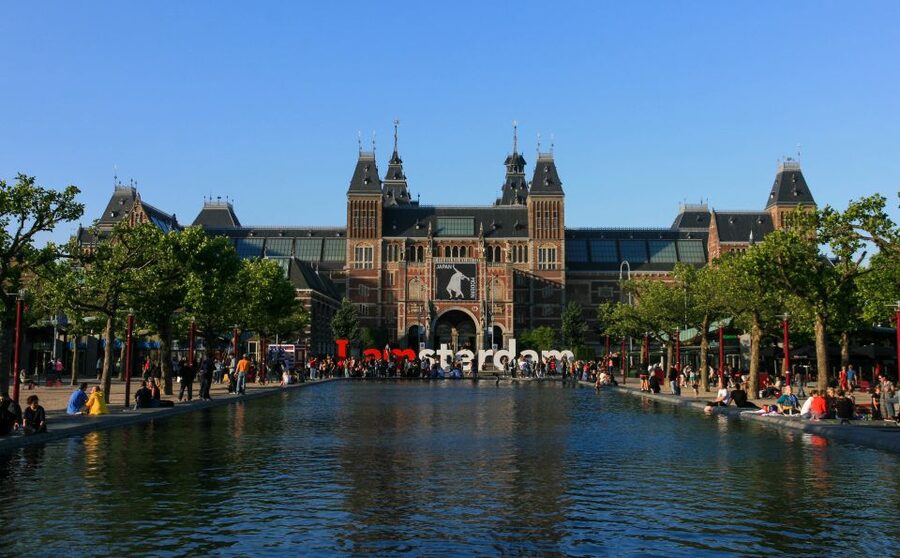
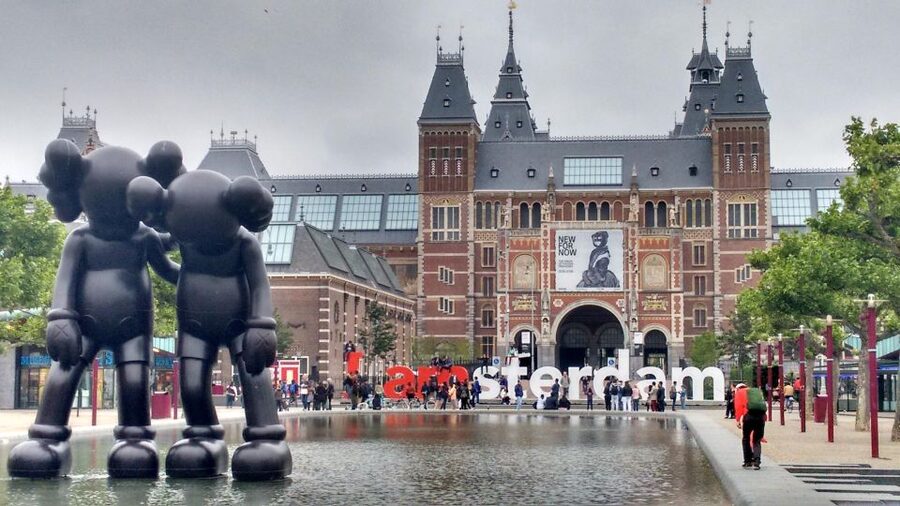
The tour begins in front of the Cobra Cafe at the back side of the Rijksmuseum. This detail matters because the museum has more than one approach, and you do not want to arrive at the grand front entrance and then hurry around the building searching for the meeting point.
Give yourself enough time to reach the cafe. The meeting point is specific, and the tour has a fixed two-hour schedule. If you are coming by tram, walking from another museum, or crossing Amsterdam’s busy Museumplein, an early arrival will make the start calmer.
From there, your guide takes you toward the museum’s glass-ceiling entrance hall. The architecture gives the opening of the tour a sense of occasion, but the real benefit is practical: your guide handles the entry process and gets you into the collection through a separate entrance.
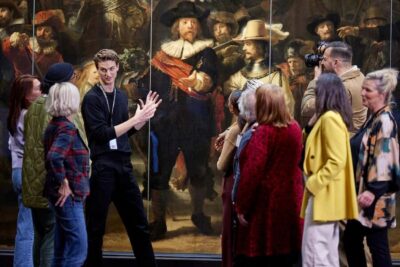
The private group format is useful right away. You are not trying to hear a guide over a large crowd, and you can mention your interests before the tour gets moving. If you care most about Rembrandt, Dutch domestic scenes, religious art, or Van Gogh, say so early. A tailored tour has more value when your guide knows what you want to understand.
More Rijksmuseum tickets:
- Amsterdam: Rijksmuseum Entry Ticket
★ 4.7 · 25,535 reviews - Amsterdam: City Canal Cruise and Rijksmuseum
★ 4.5 · 2,129 reviews - Rijksmuseum Amsterdam Small-Group Tour with Private Upgrade
★ 4.5 · 1,547 reviews
Why skip-the-line entry helps at a major museum
The Rijksmuseum presents about 8,000 objects across 80 galleries. That is far too much for a sensible two-hour visit, and even a full day can leave you tired and unsure of what you have actually seen.
The separate entrance is one of the strongest practical features of this experience. You spend your limited museum time looking at paintings rather than waiting outside. The exact waiting time at the public entrance can change, so I would not treat skip-the-line entry as a guarantee of instant access. Still, for a busy Amsterdam day, avoiding the main queue can protect a valuable block of sightseeing time.
Once inside, your guide gives the museum some shape. Instead of wandering from room to room and reading every label, you move through selected works from the 12th to the 20th century. The route places Dutch art in a broad timeline, then gives special attention to the 17th century, often called the Golden Age.
That historical framing is important. Paintings by Rembrandt, Vermeer, Frans Hals, and Jan Steen are not simply famous pictures to tick off. They reflect changing ideas about wealth, family life, religion, trade, civic identity, and everyday experience. A guide can point out what to look for before you stand in front of each work, which makes the viewing more active and rewarding.
The glass entrance and the first look at Dutch art
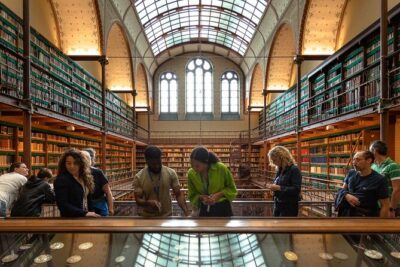
The opening walk through the glass-ceiling entrance hall sets up the museum’s scale. You are entering a national collection, not a small gallery with a handful of rooms. The tour then moves into paintings spanning several centuries.
This broad start is helpful for anyone who does not already know Dutch art. You get a sense of how subjects and styles change over time before reaching the celebrated 17th-century works. It also keeps the Rijksmuseum from becoming only a parade of famous names.
The guide’s role here is not just to identify the artist. You can ask why a painting mattered in its own period, how the artist worked, or what details deserve attention. The supplied tour information names Peter and Brandon as guides praised for clear, entertaining explanations, strong command of the art, and humor. Your guide may be different, but those comments suggest the kind of experience to hope for: informed without being dull.
That personal exchange is a real advantage over using a printed museum guide. You can stop when something catches your eye, ask a follow-up question, or request a simpler explanation of a technique or story. A private tour works best when you participate rather than simply follow silently.
Rembrandt and the emotional force of The Night Watch
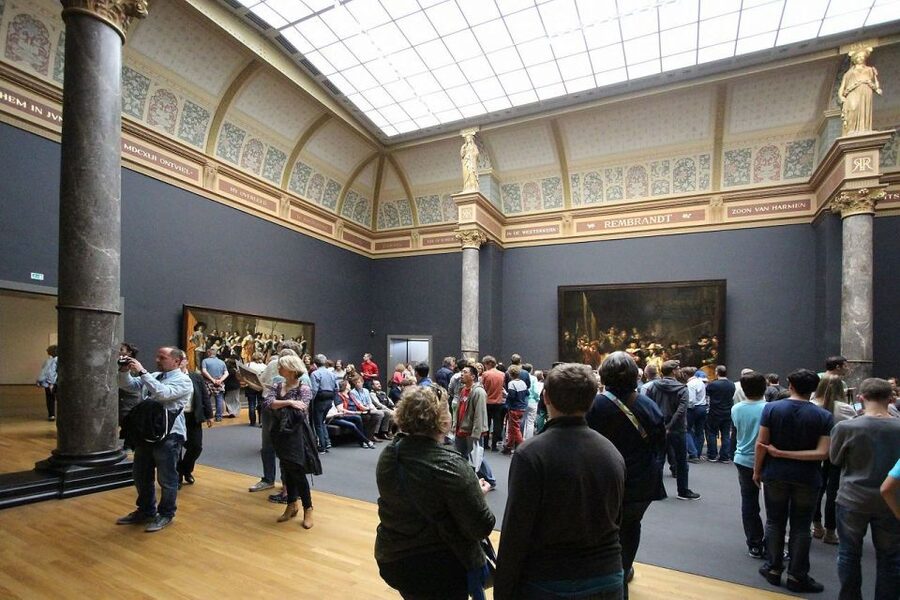
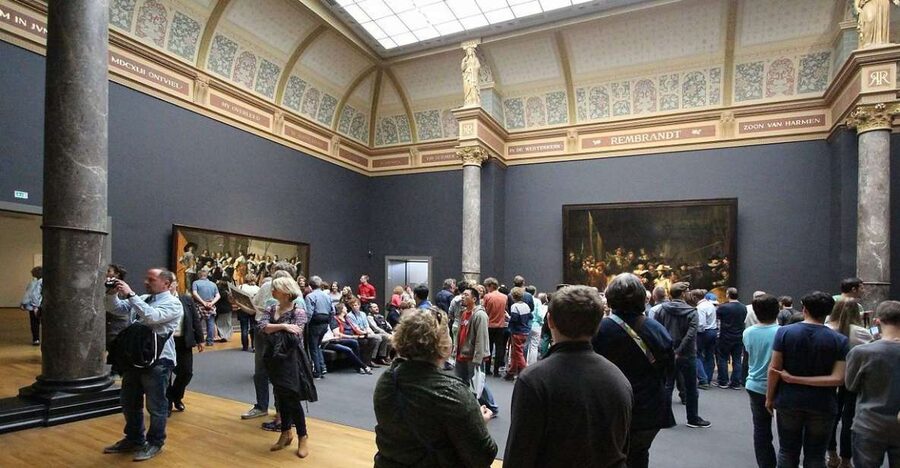
Rembrandt’s The Night Watch is likely to be the dramatic center of the visit. It is one of the museum’s defining works, and its size and movement make it easy to understand why it draws so much attention.
A good explanation can help you look beyond the famous title and the crowd around the painting. Notice the group arrangement, the strong light, and the sense that the figures are moving into action rather than posing in a flat row. The painting becomes easier to read when someone explains how Rembrandt guides your eye through the scene.
You will also see The Jewish Bride, another Rembrandt work with a very different mood. Instead of public action, it offers quiet intimacy. The contrast between the two paintings is useful: it shows how wide Rembrandt’s range could be and gives your guide a chance to discuss portraiture, emotion, and the handling of light.
Do not expect a private viewing of either painting. These are major museum highlights, so other people will be present. The value of the tour is having a guide beside you who helps you see more during the time you have.
A few more options to weigh up in Amsterdam
- Amsterdam: Van Gogh Museum Ticket
★ 4.7 · 52,054 reviews - Amsterdam Classic Saloon Boat Cruise with Drinks and Cheese
★ 5.0 · 31,825 reviews - Amsterdam Luxury Canal Cruise + Unlimited Drinks & Bites option
★ 5.0 · 30,518 reviews - Amsterdam: Heineken Experience Ticket
★ 4.6 · 30,055 reviews
Vermeer, domestic life, and quiet detail
Vermeer’s The Milkmaid is one of the best-known paintings in the Rijksmuseum, and it rewards close attention. The subject is simple: a woman pouring milk. Yet the careful light, compact composition, and concentration of the figure make the scene feel much more thoughtful than its ordinary subject might suggest.
Your guide can help you consider how Vermeer turns daily work into a carefully observed moment. You might find yourself looking at the wall, the table, the bread, and the fall of light instead of only at the central figure. This is where a personal guide earns its keep. You are encouraged to slow down and ask why the scene feels so calm and complete.
The museum also includes Vermeer’s The Love Letter. Seeing it alongside The Milkmaid gives you a useful comparison between two intimate interior scenes. Both works invite close looking, but they create different kinds of mystery and social meaning.
These paintings are especially appealing if you enjoy small human stories more than grand historical scenes. They also make a good counterpoint to The Night Watch. Rembrandt gives you public drama; Vermeer gives you a private room and a moment that seems to continue beyond the frame.
Frans Hals, Jan Steen, and the life around the masterpieces
The tour includes the work of Frans Hals, one of the key Dutch painters associated with the 17th century. His paintings are a chance to consider expression, personality, and the lively quality of portraiture.
You will also see Jan Steen’s The Merry Family. The title points toward humor and domestic disorder, but the painting can carry a warning as well as a smile. A guide can help you understand how Dutch genre scenes often used ordinary family settings to suggest behavior, manners, and social lessons.
This is one reason I prefer a guided visit to a simple list of must-see works. The guide connects paintings that may seem unrelated at first. A portrait, a family scene, and a civic group painting can all reveal something about the society that produced them.
You might not spend long with every artist included in the museum’s collection. That is the tradeoff of a two-hour visit. The route gives you a strong sample rather than a complete survey, and the private format lets you ask your guide to linger on the works that matter most to you.
The Windmill at Wijk bij Duurstede and Dutch scenery
The Windmill at Wijk bij Duurstede offers a different side of Dutch painting. It brings attention to the country’s familiar windmills, skies, waterways, and low horizons.
This kind of work is useful because Dutch art is not only about wealthy sitters or scenes inside homes. The country itself becomes a subject. A guide can explain how painters treated weather, distance, light, and the relationship between water and settlement.
The painting also gives the tour a visual break from portraits and indoor scenes. After several rooms of people and domestic details, a broad view can reset your attention. Look at how the sky occupies the composition and how the windmill anchors the scene.
If you already know Dutch art, you may appreciate this stop for its place in the wider tradition of landscape painting. If you are new to the subject, it helps you see why apparently ordinary scenery became important to Dutch artists.
Van Gogh’s Self Portrait and the museum’s wider collection
The tour moves beyond the 17th century to Van Gogh’s Self Portrait. This is a useful reminder that the Rijksmuseum is not limited to Rembrandt and Vermeer.
Van Gogh’s work brings a different kind of energy and self-examination. The brushwork, color, and directness feel far removed from the controlled interiors of Vermeer, yet both artists ask you to look closely at light, surface, and human presence.
The museum collection reaches from the 12th through the 20th century, so the tour’s selected route can show how Dutch art changes across time. You will not receive an exhaustive account of every period in two hours, but you should come away with a clearer sense of the major names and artistic shifts.
For many people, Van Gogh is the painting they most want to see after the Dutch masters. Including his Self Portrait keeps the tour from presenting Dutch art as a single Golden Age chapter. It also adds variety near the end of the visit, when your attention may need a fresh subject.
Is $271 per person a fair price?
At $271 per person, this is not a budget museum visit. The standard admission cost is only one part of what you are buying. The fee covers a private guide, separate entry, and a planned route through one of Amsterdam’s largest museums.
The value depends on your travel style. If you enjoy wandering slowly, reading labels, and choosing your own rooms, you may prefer visiting independently. If you have only a short time in Amsterdam, are unsure how to approach Dutch art, or want to ask many questions, the private guide can make the museum much more useful.
The strongest value comes when you share the experience with a small private group and actively use the guide’s time. Ask about the works you do not understand. Request more context about an artist. Tell the guide if you would rather see fewer paintings in greater detail.
A two-hour tour also avoids the fatigue that can come with trying to cover every gallery. You can leave with a clear set of highlights rather than a blur of names and rooms. For a major museum, that focus has practical value.
Food and drinks are not included, so plan those separately. The museum visit itself is the central activity, and the tour does not pretend to be a full-day cultural program.
Who will get the most from this tour?
I would recommend this experience to a first-time Rijksmuseum visitor who wants help choosing what matters. It is also a good match for couples, families, and private groups with different levels of interest in art, since the guide can adjust explanations and answer individual questions.
It suits you especially well if:
- You want to see the major masterpieces in a limited time
- You prefer asking questions to reading every museum label
- You want historical context for Dutch art
- You dislike losing time in entrance lines
- You are visiting with someone who does not usually enjoy museums
- You want a tour in English, German, Spanish, or Dutch
It may not suit you if you want several hours of independent browsing. You will see selected highlights, not all 80 galleries. Art students or dedicated museum fans may want a longer visit afterward to explore additional rooms at their own pace.
The tour is wheelchair accessible. Pets, smoking, luggage, and large bags are not allowed, and flash photography is prohibited. These rules are easy to manage, but pack lightly and leave large items elsewhere.
Booking flexibility and timing
The tour lasts two hours, with starting times depending on availability. You can reserve now and pay later, which helps if your Amsterdam schedule is still taking shape. You can also cancel up to 24 hours in advance for a full refund.
Those terms are useful for a museum visit because weather, train delays, and changing city plans can affect your day. Still, I would book a time that leaves room around the tour rather than squeezing it between two fixed appointments. The museum deserves enough breathing space before or after the guided route.
Arrive early at the Cobra Cafe meeting point. Bring questions, wear comfortable shoes, and avoid carrying a large bag. The more prepared you are, the more time you can spend looking at the art.
Should you book the private Rijksmuseum tour?
Book it if you want a focused introduction to Dutch art, direct entry, and the freedom to ask a personal guide about the paintings. The route includes an excellent mix of Rembrandt, Vermeer, Frans Hals, Jan Steen, Van Gogh, and Dutch scenery, with enough variety to make two hours feel purposeful.
Skip it if $271 per person feels too high or if you prefer independent museum time. The Rijksmuseum can reward self-guided exploration, especially if you already know which galleries interest you.
For most first-time visitors with limited time, I see the private tour as a convenience and learning choice rather than a basic admission ticket. The best reason to book is not simply seeing The Night Watch. It is having someone help you understand why the painting, and the many works around it, deserve your attention.
FAQ
How long does the Rijksmuseum private tour last?
The guided tour lasts two hours.
Where do I meet the guide?
You meet the guide in front of the Cobra Cafe at the back side of the Rijksmuseum.
What does the tour include?
The tour includes skip-the-line entrance to the Rijksmuseum and a private guide.
Which languages are available?
The live guide is available in English, German, Spanish, and Dutch.
Is the tour wheelchair accessible?
Yes, the activity is wheelchair accessible.
Can I cancel the tour and receive a refund?
Yes. You can cancel up to 24 hours in advance for a full refund. You can also reserve now and pay later.
Just added in Amsterdam
- Private Tour Zaanse Schans Windmills and Volendam in Jaguar★ 5.0 · 10 reviews
- Half-Day Private Guided Sightseeing Tour of Zaanse Schans★ 5.0 · 14 reviews
- Zaanse Schans and Giethoorn Unique Day Trip with Boat Cruise★ 4.5 · 17 reviews
- Windmills-Volendam-Giethoorn Private Tour in Jaguar★ 5.0 · 2 reviews
- Best of Netherlands: Zaanse Schans Mills, The Hague & Rotterdam★ 4.5 · 10 reviews
- Zaanse Schans Private Tour Windmills★ 5.0 · 18 reviews
- Zaanse Schans Windmills Edam Volendam and Marken from Amsterdam★ 5.0 · 1 review
- Zaanse Schans Edam Volendam Private Day Tour from Amsterdam★ 5.0 · 3 reviews
Rijksmuseum Tickets, compared.
Rijksmuseum Amsterdam Small-Group Tour with Private Upgrade
Read our review →
Rijksmuseum Entry Ticket and Canal Cruise Combo
Read our review →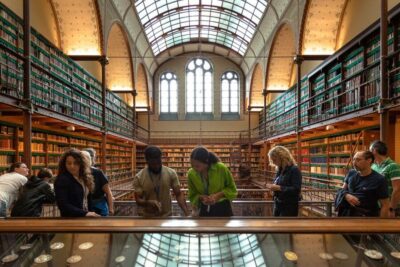
Rijksmuseum Amsterdam Exclusive Guided Tour w/ Reserved Entry
Read our review →
Van Gogh & Rijksmuseum w/ Reserved Entry Semi-Private 8ppl Max
Read our review →
Van Gogh & Rijksmuseum w/ Reserved Entry Exclusive Guided Tour
Read our review →Browse the lists this tour appears in