
Review · RIJKSMUSEUM TICKETS
Amsterdam: Rijksmuseum Private Tour
Art makes more sense when someone points out what you are missing. This two-hour private Rijksmuseum tour turns famous Dutch paintings into readable stories, explaining how Rembrandt, Vermeer, Frans Hals, and their peers worked, what their images meant, and why ordinary life became such a popular subject. I especially like the focus on painting techniques and the way the guide adjusts the visit to your interests. The main catch is that your museum ticket is not included, and crowded galleries can make the final part feel rushed.
You meet your guide inside the Rijksmuseum, not outside on the street. Look for the round information counter, then walk about 10 meters to the small sign marked meeting point. That detail matters because one visitor found the location unclear, while another had a smooth experience after guide Rolf communicated the arrangements clearly. Rolf Schreuder receives especially warm praise for his enthusiasm, humor, and ability to keep children and older family members involved.
In This Review
- Key points to know before booking
- What the $235 private price really buys
- Finding the guide inside the Rijksmuseum
- Starting with the Rijksmuseum building and its story
- From Medieval traditions to Dutch innovation
- Meeting Rembrandt in the Honorary Gallery
- Vermeer and the power of a quiet room
- Frans Hals, portraits, and the human touch
- How the two-hour pace works
- Advice about tickets and the Amsterdam Card
- Who will get the most from this tour
- Should you book the Rijksmuseum private tour?
- FAQ
- How long does the guided Rijksmuseum tour last?
- What does the tour cost?
- Is the Rijksmuseum entrance ticket included?
- Where do I meet the guide?
- Which languages are available?
- Is this a private tour?
- Is the tour wheelchair accessible?
- Can I cancel for a full refund?
- Can I reserve now and pay later?
Key points to know before booking
- The Night Watch is the headline painting: You visit the Honorary Gallery to see Rembrandt’s major group portrait and learn how its composition differs from a standard posed picture.
- The guide teaches you how to look: Expect discussion of brushwork, technique, symbols, composition, and details that are easy to miss alone.
- The visit puts Dutch painting in context: You learn how Flemish and Dutch artists moved away from older Medieval conventions toward scenes of daily life.
- It is private for up to two people: The listed price is $235 per group, so the value is strongest for a couple or two-person party wanting focused attention.
- Families can benefit: Rolf and substitute guide Isabel have kept children and teenagers engaged through questions, comparisons, humor, and current-day examples.
- Plan for the ticket and crowds: Admission is extra, and busy periods can affect the pace, especially near the end of the two-hour visit.
What the $235 private price really buys
The advertised price is $235 for a group of up to two people. That is not a cheap museum add-on, but it pays for private instruction rather than simply entry to the Rijksmuseum. You are buying a guide’s attention, a planned route through major works, and explanations shaped around your questions.
For two people, the cost can make sense if you want art to be a central part of your Amsterdam visit. A private guide can stop when you are curious, move past subjects that do not interest you, and explain a painting at the right level. You are not tied to a large group’s pace or a one-size-fits-all script.
The value drops if you mainly want to wander alone or spend several hours examining every room. The tour lasts about two hours, and the museum ticket is separate. I would treat this as a focused introduction, not a complete Rijksmuseum visit. You can return afterward, if your admission arrangements allow, but the tour itself is designed to cover highlights and ideas rather than every gallery.
The booking information also says you can reserve now and pay later. Free cancellation is available up to 24 hours before the activity for a full refund. Those terms are useful when your Amsterdam schedule is still shifting.
More Rijksmuseum tickets:
- Amsterdam: Rijksmuseum Entry Ticket
★ 4.7 · 25,535 reviews - Amsterdam: City Canal Cruise and Rijksmuseum
★ 4.5 · 2,129 reviews - Rijksmuseum Amsterdam Small-Group Tour with Private Upgrade
★ 4.5 · 1,547 reviews
Finding the guide inside the Rijksmuseum
You must first make your way into the museum because the guide meets you inside. The meeting point is near the round information counter. From there, walk roughly 10 meters to the small sign labeled meeting point.
This is simple once you know it, but it is worth saving the instructions on your phone before entering. One past participant wanted clearer directions in advance. I would arrive with enough time to handle the entrance process and find the sign without making your guide wait.
The guide languages are Dutch, English, and German. The experience is private, and the activity information lists it as wheelchair accessible. One past guide, Rolf, arranged a wheelchair for an older family member, which shows the sort of practical help that can make a museum visit easier.
Starting with the Rijksmuseum building and its story
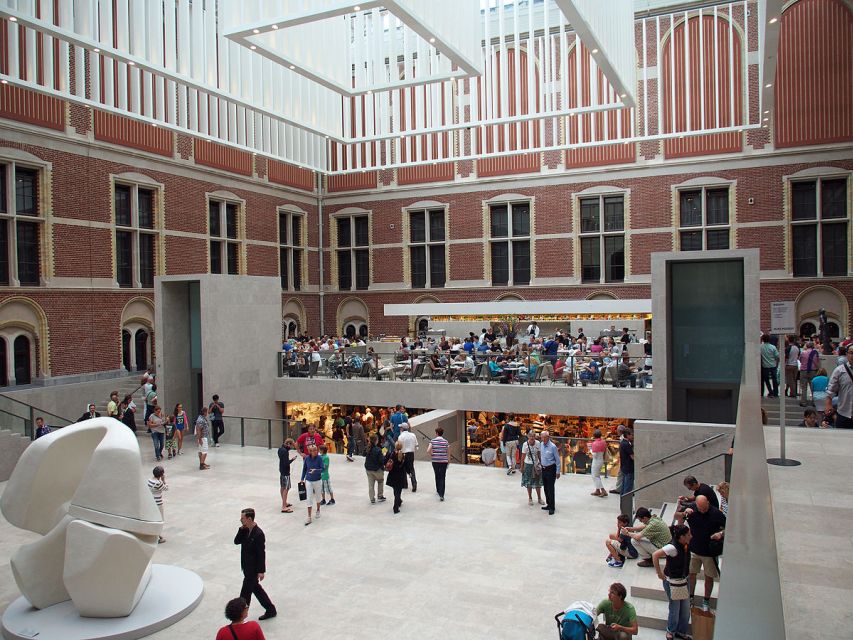
The tour may begin with the building itself and the museum’s background before moving to the paintings. That is a sensible opening. The Rijksmuseum is not just a container for art, and understanding its role helps you see why the collection is arranged as a story of Dutch culture.
One family described Rolf starting with the architecture and museum history before turning to the artists. That order gives you a useful frame before the visual information begins. You are less likely to see each painting as an isolated masterpiece and more likely to connect it with the society that produced it.
A private guide can also judge how much background you need. If you already know the broad outline of Dutch painting, the visit can move toward technique and interpretation. If you are starting from scratch, the guide can explain the shift from Medieval religious art to the more varied work of Flemish and Dutch painters.
From Medieval traditions to Dutch innovation
A key theme is the change from Medieval art to the more innovative Flemish and Dutch styles. Older European painting often centered on religious subjects, rulers, saints, and formal historical scenes. Dutch artists still painted those subjects, but they also gave serious attention to markets, homes, civic groups, portraits, landscapes, and ordinary people.
That change reflects a new audience for art. The activity explanation presents a 17th-century painting as something like a book or cartoon for the average citizen. It could teach a lesson, make a moral point, record a person’s status, or offer a sharp observation about behavior.
I like this part because it gives you a way to read the paintings rather than simply admire their color. A still life may say something about wealth or mortality. A domestic scene may contain a quiet warning about conduct. A group portrait may show social rank through posture, clothing, and placement.
The guide also explains how the Dutch ruled the waves after following the Spanish and Portuguese. That wider setting helps explain the period’s confidence, trade, wealth, and demand for pictures. Art became much closer to daily experience, and people wanted works on their walls that reflected their own lives.
A few more options to weigh up in Amsterdam
- Amsterdam: Van Gogh Museum Ticket
★ 4.7 · 52,054 reviews - Amsterdam Classic Saloon Boat Cruise with Drinks and Cheese
★ 5.0 · 31,825 reviews - Amsterdam Luxury Canal Cruise + Unlimited Drinks & Bites option
★ 5.0 · 30,518 reviews - Amsterdam: Heineken Experience Ticket
★ 4.6 · 30,055 reviews
Meeting Rembrandt in the Honorary Gallery
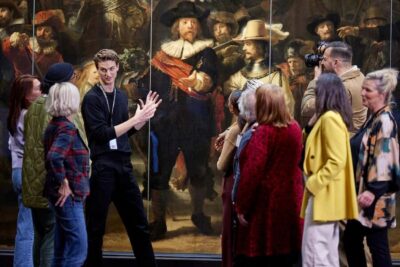
The visit includes the Honorary Gallery, where you see Rembrandt’s The Night Watch. This is the tour’s big appointment, but the value lies in how the guide helps you see more than the famous title.
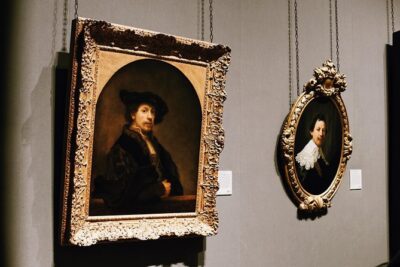
A group portrait could have been a stiff lineup of civic officers. Rembrandt made his company appear to move, giving the scene energy and a sense of unfolding action. Your guide can draw attention to composition, light, gesture, clothing, and the way figures compete for your eye.
The painting is also a useful case study in how a commissioned work could become something more ambitious. Rather than treating the canvas as a pretty object, the tour places it within the culture of civic pride and public life. You learn why the painting feels active and theatrical compared with more formal portraits.
Large, famous works can be difficult to appreciate in a crowded room. You might find yourself standing behind other people or trying to listen while the gallery hums around you. A private guide can help by giving you a clear point to stand, directing your attention to specific sections, and keeping the explanation focused.
Do not expect unlimited time with the painting. The two-hour schedule includes several artists and themes, and one recent participant felt rushed toward the end when the guide had another tour afterward. If The Night Watch is your main reason for booking, tell the guide at the start so you can protect enough time for it.
Vermeer and the power of a quiet room
Vermeer offers a useful contrast to Rembrandt. Instead of a crowded civic scene full of movement, his paintings often ask you to notice light, stillness, balance, and small domestic details. The guide explains how the artist created his effects and what certain details may suggest.
The attraction here is not only the famous name. You learn to compare the way Vermeer controls attention with the way Rembrandt directs the eye through drama and contrast. A good guide can make you look at the edge of a window, a patch of light, or the position of a figure instead of stopping at the general impression.
This is one reason a private tour can help people who feel uncertain in museums. You do not need to arrive with a vocabulary of art terms. The guide can ask what you notice first, then build from your answer.
Frans Hals, portraits, and the human touch
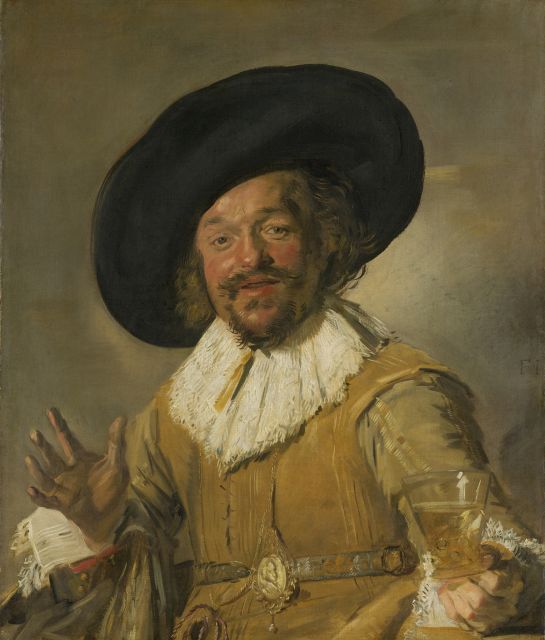
Frans Hals brings another kind of energy. His portraits are important for the way they convey personality and liveliness, and they give the guide a chance to discuss visible brushwork and the problem of making a painted figure feel present.
Rolf’s approach, based on the experiences described by families and couples, is interactive. He asks what you notice, how you compare one painting with another, and what you like or dislike about an artist’s style. Those questions are more useful than a long speech because they make you test your own reaction.
That method worked for adults, teenagers, children, and an 80-year-old family member. A family with children aged 11 and 12 found the visit engaging, while another family said even teenage boys stayed interested. The guide’s energy matters here. Art can lose a young audience if every explanation sounds like a school lecture. Questions and funny side notes keep the room approachable.
How the two-hour pace works
Two hours sounds generous until you consider the size and fame of the museum. You will not study every important work, and you should not expect a slow, detailed reading of dozens of paintings. The tour is best understood as a highlights route with a clear theme: Dutch painting, its technique, and its connection to 17th-century life.
The guide may move between artists to create comparisons. Rembrandt’s drama, Vermeer’s controlled quiet, and Hals’s lively portraits make more sense when placed side by side. You also get a clearer picture of how Dutch artists served a broad public that wanted portraits and scenes from everyday life, not only religious or royal subjects.
Crowds are the main factor that can affect the pace. The experience includes advice on how to skip the line, or at least make waiting more bearable, but admission itself is not included. Once inside, the museum can still be busy. Build a little flexibility into your day, especially during popular periods.
You may be tempted to schedule another major activity immediately afterward. I would leave some breathing room. One person found the last portion hurried, and a private tour is more enjoyable when you are not watching the clock.
Advice about tickets and the Amsterdam Card
Your entrance ticket is not included in the tour price. The information also recommends an Amsterdam Card, which provides access to unlimited museums and public transport, including train service from the airport to Amsterdam city center and trams around town.
The card may be useful if you plan to visit several museums and use public transport during your stay. Its value depends on your wider itinerary, so compare it with the museums and rides you expect to use. For this tour alone, do not assume the guide fee includes museum admission.
The booking information says the activity is valid for one day, with starting times based on availability. Check the available time before you commit your day around it. The guided portion remains two hours.
Who will get the most from this tour
I would recommend this experience most strongly to:
- Couples who want a focused art visit rather than a self-guided circuit
- First-time Rijksmuseum visitors who want help with the major Dutch artists
- Families who need a guide able to adjust explanations for children and adults
- People interested in technique, symbols, and social history
- Visitors who want a private schedule and the chance to ask questions freely
It is less suitable if you want to spend half a day in every gallery, already know the collection well, or prefer complete silence and independent looking. The guide’s questions and explanations are central to the experience, so book it because you want conversation and context.
Rolf is the guide most often identified in the experiences provided, and his strongest qualities are enthusiasm, humor, and flexibility. He was not available for every booking, however. Isabel served as a substitute for one family and received equally strong praise for her friendly manner, clear explanations, and use of modern comparisons. The exact guide can therefore vary.
Should you book the Rijksmuseum private tour?
Book it if you want the Rijksmuseum to feel understandable rather than overwhelming. The private format, strong guide-led teaching, and clear focus on Rembrandt, Vermeer, Hals, and the Dutch Golden Age give you a useful foundation in two hours.
I would book it for two people who value personal attention and do not mind paying separately for admission. I would also choose it for a family, since the guide’s question-based approach has worked well across several age groups.
Before booking, confirm the meeting instructions, check the available start time, arrange your museum ticket, and tell the guide which works matter most to you. If you can accept the possibility of crowds and a brisk final section, this is a smart way to make your first Rijksmuseum visit count.
FAQ
How long does the guided Rijksmuseum tour last?
The guided tour lasts two hours. The activity is listed as valid for one day, with starting times based on availability.
What does the tour cost?
The listed price is $235 for a private group of up to two people.
Is the Rijksmuseum entrance ticket included?
No. The entrance ticket is not included in the tour price.
Where do I meet the guide?
You meet the guide inside the museum after entering. Find the round information counter, then look about 10 meters to the right for the small sign marked meeting point.
Which languages are available?
The live guide is available in Dutch, English, and German.
Is this a private tour?
Yes. It is offered as a private group experience for up to two people at the listed price.
Is the tour wheelchair accessible?
Yes. The activity is listed as wheelchair accessible. One guide also arranged a wheelchair for an older family member during a visit.
Can I cancel for a full refund?
Yes. You can cancel up to 24 hours in advance for a full refund.
Can I reserve now and pay later?
Yes. The booking option allows you to reserve your place and pay nothing today.
Just added in Amsterdam
- Private Tour Zaanse Schans Windmills and Volendam in Jaguar★ 5.0 · 10 reviews
- Zaanse Schans and Giethoorn Unique Day Trip with Boat Cruise★ 4.5 · 17 reviews
- Windmills-Volendam-Giethoorn Private Tour in Jaguar★ 5.0 · 2 reviews
- Half-Day Private Guided Sightseeing Tour of Zaanse Schans★ 5.0 · 14 reviews
- Best of Netherlands: Zaanse Schans Mills, The Hague & Rotterdam★ 4.5 · 10 reviews
- Zaanse Schans Private Tour Windmills★ 5.0 · 18 reviews
- Zaanse Schans Windmills Edam Volendam and Marken from Amsterdam★ 5.0 · 1 review
- Zaanse Schans Edam Volendam Private Day Tour from Amsterdam★ 5.0 · 3 reviews
Rijksmuseum Tickets, compared.
Rijksmuseum Amsterdam Small-Group Tour with Private Upgrade
Read our review →
Rijksmuseum Entry Ticket and Canal Cruise Combo
Read our review →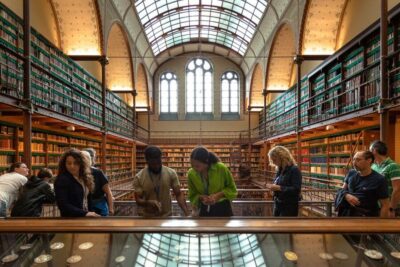
Rijksmuseum Amsterdam Exclusive Guided Tour w/ Reserved Entry
Read our review →
Van Gogh & Rijksmuseum w/ Reserved Entry Semi-Private 8ppl Max
Read our review →
Van Gogh & Rijksmuseum w/ Reserved Entry Exclusive Guided Tour
Read our review →Browse the lists this tour appears in