

Review · VAN GOGH MUSEUM TICKETS
Amsterdam: Van Gogh Museum Guided Tour & Entry Ticket (Max 6 ppl)
Van Gogh makes more sense with context. This small-group visit gives you a focused look at Vincent’s life and paintings, led in English by a Dutch art historian. I like the maximum six-person group, which should make it easier to ask questions, and I like that your museum ticket is included and you can remain inside after the guided portion ends.
The tour is especially useful if you have limited time in Amsterdam. Your guide moves you toward major works such as The Potato Eaters, Sunflowers, The Yellow House, and Almond Blossom, while explaining how Van Gogh’s style changed. The main drawback is the price, $168.09 per person, and the fast focus on highlights may disappoint you if you want to study every gallery at your own pace.
In This Review
- Key points to know before booking
- Meeting at Paulus Potterstraat and entering the museum
- Why a six-person group changes the visit
- Following Van Gogh from Brabant to Paris
- Theo, family, and the human story behind the paintings
- Gauguin, Arles, and the yellow house
- What the major paintings add to the tour
- Guide style: the strongest part of the experience
- Is $168.09 a fair price?
- Timing, booking, and practical details
- Who should book this Van Gogh tour?
- Should you book it?
- FAQ
- How long does the Van Gogh Museum guided tour last?
- Is museum admission included?
- How many people can join the tour?
- What language is the tour offered in?
- Where does the tour start and end?
- Can I cancel for a full refund?
Key points to know before booking

- A six-person limit keeps the tour personal: You should be able to hear the guide clearly and ask questions without speaking over a large crowd.
- The story follows Van Gogh’s changing art: The tour links his dark Brabant years, Paris experiments, and troubled period in Arles to specific paintings.
- The museum ticket is included: You meet near the museum, enter with the group, and can stay inside after the tour.
- Guides bring strong art knowledge and warmth: Titia, Lucien, Anke, Cécile, Lucy, Liz, Mercedes, and Genevieve have all been praised for clear explanations and engaging delivery.
- The scheduled visit lasts about 90 minutes: Plan extra time afterward if you want to browse the collection without a guide.
- Book early for your preferred time: Museum time slots are released only three months ahead, so an early booking cannot guarantee a particular hour.
Meeting at Paulus Potterstraat and entering the museum
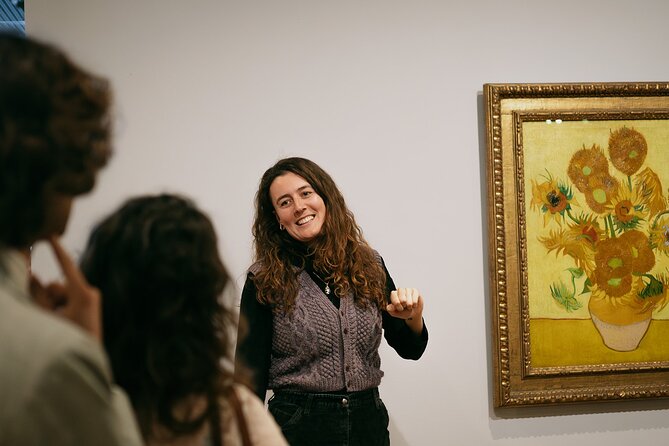
The tour begins at Paulus Potterstraat 7, 1071 CX Amsterdam, close to the Van Gogh Museum area. It ends at the museum itself, Museumplein 6. This is useful because you do not need to arrange a second meeting point after the guided walk.
You receive a mobile ticket, and confirmation arrives when you book. The experience is offered in English, so you should feel comfortable following a detailed talk about art, family, illness, and artistic technique in that language.
The meeting point matters in practical terms. Arrive with enough time to locate the guide and gather your group, especially if you are unfamiliar with Amsterdam’s Museumplein district. The supplied information does not give a precise arrival requirement, so I would not cut it close to the booked start time.
Once inside, the museum becomes the setting for a chronological story rather than just a parade of famous canvases. That approach is the tour’s real value. Van Gogh’s paintings are powerful on their own, but the changes in color, brushwork, and subject become easier to follow when you understand what was happening in his life.
More Museum Tours in Amsterdam
- Amsterdam: Van Gogh Museum Ticket
★ 4.7 · 52,054 reviews - Moco Museum Amsterdam Entrance Tickets with Banksy & More
★ 4.4 · 10,088 reviews - Amsterdam: The Upside Down Museum Entrance Ticket
★ 4.4 · 9,506 reviews
Why a six-person group changes the visit
A small group can make a major difference in a popular museum. With no more than six people, you are more likely to stand close enough to hear the guide, look at the same detail in a painting, and ask a question before the group moves on.
This format also suits people who dislike large guided groups with flags, headsets, or long pauses while everyone catches up. The tone should feel closer to a private lesson than a general museum lecture, though it is not a fully private tour.
The group size does not mean you will have every room to yourself. The Van Gogh Museum remains a public museum, and the tour takes place among other people. A small group helps with communication and movement, but it cannot remove crowds from the galleries.
One point to consider is the guide’s balance between talking and looking. One recorded assessment found that the guide spoke too long in one place and skipped the second floor. That is a useful warning. If you prefer plenty of quiet time with each canvas, tell your guide early. If you want a clear path through the main works, the focused format may suit you well.
Following Van Gogh from Brabant to Paris
The tour begins with Van Gogh’s unusual path into art. He did not take up painting as a young prodigy. He began seriously at 27, which makes his short career even more remarkable.
The early period in Brabant is presented as his dark phase. The Potato Eaters is central here, with its rough figures, earthy colors, and serious mood. A guide can help you see this painting as more than a famous early work. It shows Van Gogh trying to convey the hard lives of working people, even before his later colors and swirling brushwork appeared.
This part is valuable if you know Van Gogh mainly through Sunflowers or The Starry Night, which is not listed among the featured works for this tour. You see that his art did not arrive fully formed. He tested ideas, struggled with technique, and changed direction.
The story then moves to Paris, where his palette and methods became more experimental. The supplied details do not promise every major painting or every gallery, so you should think of this as a guided selection rather than a complete catalog of his work.
I like this structure because it helps you read the paintings as stages in a working life. You are not simply told that Van Gogh changed. You are shown how his subjects, colors, and handling of paint developed across different periods.
Theo, family, and the human story behind the paintings
Theo, Vincent’s brother, receives important attention. His support was central to Vincent’s life, and the relationship gives the tour an emotional thread that runs through the museum.
The guide also discusses Van Gogh’s family and personal relationships, including the effect of his father and his love life. This context can make the paintings feel less isolated. You begin to see how personal strain, hope, rejection, ambition, and the need for support shaped his working life.
A particularly useful part of the presentation is the reminder that success did not arrive during Vincent’s lifetime. Vincent died at 37, and Theo died only a few months later. The question of who helped make Vincent famous leads to the woman who carried his work and reputation forward after both brothers were gone.
The supplied information does not identify her by name, so the emphasis here is on the wider point: Van Gogh’s fame was not created by the artist alone. His family relationships and the work of those around him matter to the story.
This human focus is one reason guides such as Titia, Anke, and Cécile have received such warm praise. Their strength is not only naming dates and movements. They help connect the person to the paintings without reducing Van Gogh to a simple tragic figure.
More Van Gogh Museum tickets:
- Amsterdam: Van Gogh Museum Ticket and City Canal Cruise
★ 4.6 · 3,899 reviews - Amsterdam: Van Gogh Museum Ticket & Canal Cruise
★ 4.5 · 3,304 reviews - Van Gogh Museum Amsterdam Exclusive Tour w/ Reserved Entry
★ 5.0 · 1,760 reviews - Van Gogh Museum Tour Reserved Entry Semi Private
★ 5.0 · 1,437 reviews
Gauguin, Arles, and the yellow house
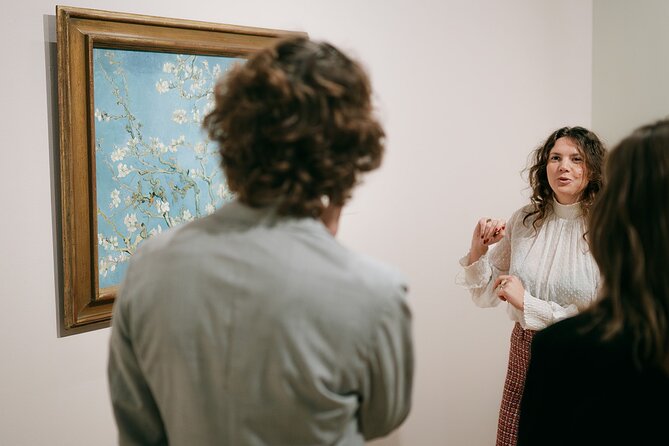
The section on Arles brings the most dramatic change in the tour. Van Gogh’s time with Gauguin in the yellow house was productive, intense, and turbulent. It also helps explain why the yellow house became such a lasting image in his work.
Here, the guide links artistic ambition with difficult personal circumstances. That connection matters because Van Gogh’s mental health is not treated as a separate footnote. The tour explains how his mental difficulties, temper, and creative genius can all be seen alongside one another in the paintings.
This subject requires care. A good guide should avoid turning illness into a romantic explanation for every brushstroke. The strongest accounts of this experience appear to do something more useful: they place the paintings within a complicated life while still giving proper attention to composition, color, period, and technique.
You can expect The Yellow House and Sunflowers to receive special attention. These works are familiar from reproductions, but seeing the originals in the museum gives the guide a chance to point out details that a book or screen cannot fully convey.
The visit may also become emotional. One account describes the final paintings and the guide’s narration as moving enough to bring tears. That will not be every person’s response, but it shows how the personal storytelling can shape the way you experience the final galleries.
What the major paintings add to the tour
A guided museum visit works best when the paintings remain the main event. This tour focuses on several key works and uses them to explain Van Gogh’s periods.
The Potato Eaters gives you the early, dark Brabant mood. It is a useful starting point for understanding his concern with ordinary people and his early approach to color.
Sunflowers offers a sharp contrast. The bright yellow tones and strong surface energy show the artist moving into a more confident and recognizable style. Your guide may also connect the painting to his plans and hopes for the yellow house, though the exact amount of time spent on each work can vary.
The Yellow House brings place and personal history together. It is not just an image of a building. It points to Van Gogh’s hope for an artistic community and the conflict that followed.
Almond Blossom adds another side of Van Gogh. Its lighter subject and decorative quality can help you avoid seeing his entire career through the lens of suffering. The work shows his ability to respond to beauty, renewal, and affection.
The quality of the tour depends partly on how much time the guide gives each work. Some people prefer a brisk route through the essential paintings. Others want more time on the second floor or lesser-known pieces. If you fall into the second group, ask whether there will be time to explore those areas after the formal tour.
Guide style: the strongest part of the experience
The guides are the central reason to book this rather than enter alone. Names praised for their delivery include Titia, Lucien, Anke, Cécile, Lucy, Liz, Mercedes, and Genevieve.
Different strengths appear in the descriptions of their work. Lucien is praised for connecting different periods of Van Gogh’s life to particular techniques and paintings. Liz is described as energetic and able to move a small group through a crowded museum while keeping attention on the key works. Mercedes is praised for historical context, humor, and a pleasant manner.
Cécile receives repeated praise for her storytelling, enthusiasm, and ability to answer questions. Lucy is described as thorough and easy to listen to. Titia is praised for bringing Van Gogh’s life and art to life, while Anke is remembered for a warm, personal presentation.
You cannot choose a particular guide from the information provided, so treat these names as examples of the style you might encounter, not a guarantee. The consistent pattern is clear: the best part of the experience is the combination of art knowledge, storytelling, and personal attention.
A guide also helps if you are visiting with a child or teenager who might otherwise lose interest. One account describes a son staying engaged and discussing the experience afterward. That is a good sign for families who want more than a quick walk past famous paintings.
Is $168.09 a fair price?
At $168.09 per person, this is an expensive museum visit. The price makes sense only if you place real value on expert guidance, a very small group, and the convenience of having the museum admission included.
I would not book it simply to gain entry. You can stay in the museum after the guided tour, but the ticket alone is not the main reason to pay this rate. The stronger case is that you want someone to organize the visit, select the major works, explain the connections, and answer questions as you go.
The value improves if you have only one chance to see the museum or only a short stay in Amsterdam. A 90-minute route can give you a clear framework quickly, leaving you free to return to paintings that caught your eye.
The value is weaker if you are already comfortable reading art on your own, want to spend hours in every gallery, or dislike being guided toward highlights. In that case, the tour may feel too selective for the cost.
The rating is 4.9 from 478 submitted ratings, and 99 percent of customers recommend the experience. Those figures suggest a very dependable level of satisfaction, especially around the guides and small group format, but they do not remove the main price concern.
Timing, booking, and practical details
The experience lasts about one hour and 30 minutes. Because you can stay inside the museum after the tour, I would reserve extra time if Van Gogh is a major reason for your visit.
The chosen time slot needs some care. Museum slots are released only three months ahead. If you book three months in advance, your preferred time is treated as a request, but it cannot be guaranteed until the museum releases its availability.
The tour is offered in English and uses a mobile ticket. It is near public transportation, and most people can take part. Service animals are allowed.
Free cancellation is available up to 24 hours before the scheduled start time for a full refund. Changes or cancellations inside that 24-hour window are not accepted, and the cut-off follows Amsterdam local time.
Who should book this Van Gogh tour?
I would choose this tour if you want a guided introduction rather than a self-directed museum visit. It suits first-time visitors, couples who want a shared cultural experience, families with older children, and anyone who wants the life story explained alongside the art.
It is also a good choice if you are short on time. The guide’s route through major works helps you get your bearings quickly, then you can continue alone once the formal portion ends.
I would hesitate if you want silence, slow looking, or complete control over the route. The small group helps, but the tour still has a planned focus. One person found the talking heavy and wished for more art, so that preference is worth taking seriously.
Should you book it?
Book this experience if personal guidance matters more than low cost. The six-person limit, included entry, strong English-language storytelling, and access to the museum after the tour create a useful package for a first visit.
Skip it if you already know Van Gogh well or plan to spend several hours studying every gallery without interruption. For most people who want the museum to make sense rather than simply admire a few famous canvases, this is a well-focused and highly praised option. Just keep your expectations clear: it is a selective, story-led visit, not an exhaustive tour of every room.
FAQ
How long does the Van Gogh Museum guided tour last?
The guided experience lasts approximately one hour and 30 minutes. You may stay in the museum for as long as you want after the tour ends.
Is museum admission included?
Yes. The admission ticket to the Van Gogh Museum is included in the tour price.
How many people can join the tour?
The tour has a maximum of six travelers, making it a small-group experience.
What language is the tour offered in?
The tour is offered in English and is led by a Dutch art historian.
Where does the tour start and end?
The tour starts at Paulus Potterstraat 7, 1071 CX Amsterdam. It ends at the Van Gogh Museum at Museumplein 6, 1071 DJ Amsterdam.
Can I cancel for a full refund?
Yes. You can cancel at least 24 hours before the experience begins for a full refund. Cancellations or changes made less than 24 hours before the start time are not accepted.
Just added in Amsterdam
- Private Tour Zaanse Schans Windmills and Volendam in Jaguar★ 5.0 · 10 reviews
- Zaanse Schans and Giethoorn Unique Day Trip with Boat Cruise★ 4.5 · 17 reviews
- Windmills-Volendam-Giethoorn Private Tour in Jaguar★ 5.0 · 2 reviews
- Half-Day Private Guided Sightseeing Tour of Zaanse Schans★ 5.0 · 14 reviews
- Best of Netherlands: Zaanse Schans Mills, The Hague & Rotterdam★ 4.5 · 10 reviews
- Zaanse Schans Private Tour Windmills★ 5.0 · 18 reviews
- Zaanse Schans Windmills Edam Volendam and Marken from Amsterdam★ 5.0 · 1 review
- Zaanse Schans Edam Volendam Private Day Tour from Amsterdam★ 5.0 · 3 reviews
Van Gogh Museum Tickets, compared.

Van Gogh Museum Amsterdam Exclusive Tour w/ Reserved Entry
Read our review →
Van Gogh Museum Tour Reserved Entry Semi Private
Read our review →
Combo Ticket: Van Gogh Museum Ticket and 1-Hour Canal Cruise
Read our review →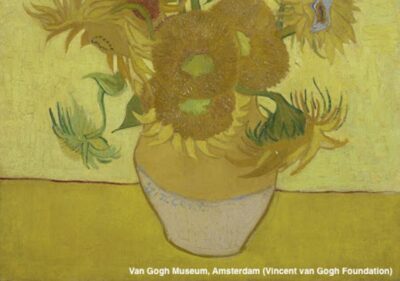
Browse the lists this tour appears in