
Review · MUSEUMS
Moco Museum Amsterdam Entrance Tickets with Banksy & More
Art can be wonderfully strange here. Moco Museum packs Banksy, Warhol, Haring, Basquiat, Kusama, Hirst, and newer names into a compact Amsterdam visit, with digital rooms and playful installations that keep the pace moving. I like the strong mix of famous modern art and the easy, self-guided layout, especially when you want culture without spending half a day in a huge museum.
The main tradeoff is size. You can see the museum in about an hour, though a slower visit may take 90 minutes, and some visitors feel the $18 ticket is high for such a short stop. It can also become crowded, which makes the photo-friendly rooms less relaxed.
In This Review
- What makes this museum worth your hour
- Arriving at Museumplein
- The building sets the tone
- Banksy, Warhol, Haring, and Basquiat
- Digital rooms and interactive installations
- The garden and the pause between galleries
- How long should you allow?
- Using the audio guide well
- Crowds, photos, and the best time to go
- What you cannot bring
- Who will enjoy Moco Museum most?
- Should you book Moco Museum Amsterdam?
- FAQ
- How much does admission to Moco Museum Amsterdam cost?
- How long does a visit to Moco Museum take?
- Where is Moco Museum located?
- How can I reach Moco Museum by public transport?
- Is an audio guide included?
- Is Moco Museum open every day?
- Is Moco Museum suitable for wheelchair users?
What makes this museum worth your hour

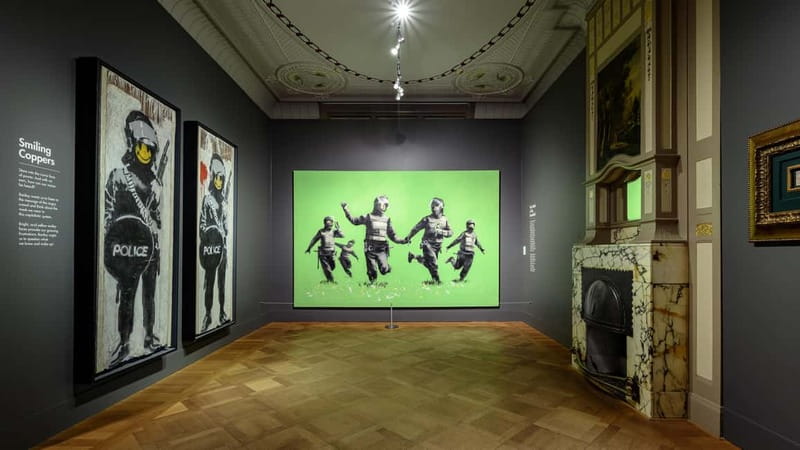
- Banksy gets top billing: The museum’s Banksy display is one of the main reasons to come, with socially minded work that is easy to approach even if you are new to contemporary art.
- A compact collection: More than 100 works by over 35 artists are arranged across several floors, so you can stay focused rather than fade out halfway through.
- Digital rooms change the mood: Light, sound, and interactive installations offer a break from conventional paintings and sculptures.
- Museumplein location: Moco sits in Amsterdam’s main museum district, close to other major cultural stops and easy to reach by public transport.
- A free audio guide is included: Bring headphones and use the six-language guide to get more context without joining a group.
- Good rainy-day planning: The one-hour format fits neatly into a busy Amsterdam schedule, especially on a cold or wet afternoon.
Arriving at Museumplein

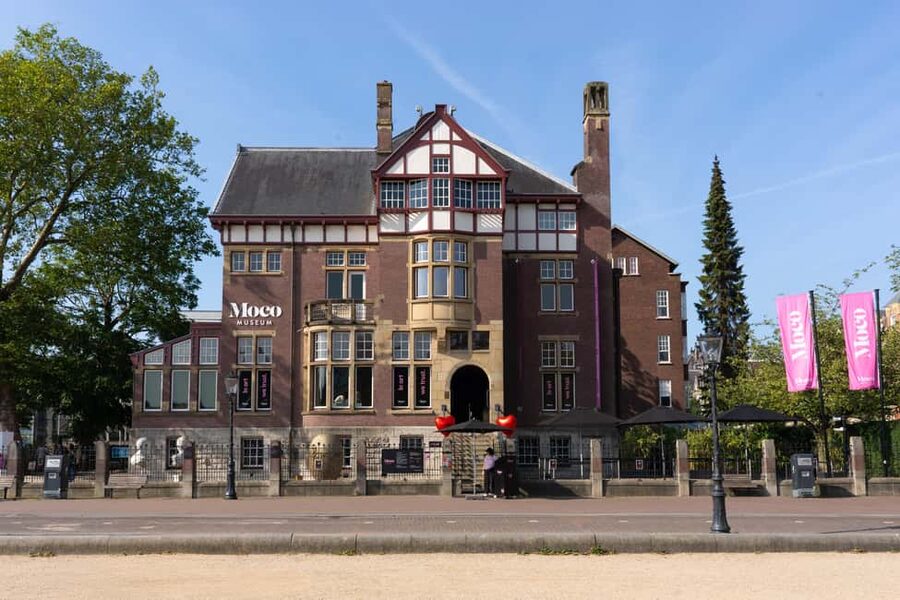
Moco Museum is in the heart of Amsterdam’s Museum District, on Museumplein. That location matters because you can pair it with other cultural stops, or simply use it as a manageable art break between walks through the city.
You can reach the museum on GVB tram numbers 2, 5, or 12. Bus 88 also stops at Museumplein. Check the exact route from your hotel before setting out, but the transport information is refreshingly simple: aim for Museumplein, then follow signs for the museum.
The museum is open every day of the year. In July and August, it runs from 9:00 AM to 8:00 PM Sunday through Thursday, and until 9:00 PM on Friday and Saturday. For the rest of the year, hours are 9:00 AM to 7:00 PM Monday through Thursday, and 9:00 AM to 8:00 PM from Friday through Sunday.
Those evening hours are useful. I would choose an early morning or later evening slot if you care about taking photos or studying the works without people pressing close behind you. Arriving early is particularly smart for the digital rooms, where visitors often pause for pictures.
More Museum Tours in Amsterdam
- Amsterdam: Van Gogh Museum Ticket
★ 4.7 · 52,054 reviews - Amsterdam: The Upside Down Museum Entrance Ticket
★ 4.4 · 9,506 reviews - Amsterdam: Red Light Secrets Museum Entry Ticket
★ 4.2 · 5,722 reviews
The building sets the tone
Part of Moco’s appeal is the building itself. The museum is housed in an attractive older property, and the contrast between its traditional setting and bold contemporary work gives the visit some character before you even reach the main galleries.
The route moves through three or four floors, with a garden area included in the experience. Stairs and movement between levels are part of the visit, so this is not a suitable activity for wheelchair users. If you have knee problems or find stairs tiring, keep the compact duration in mind, but do not assume the building will be effortless.
The arrangement is one of the museum’s strengths. Rooms are often given to one artist or a small pair of artists, making it easier to understand a visual style without a long wall of unrelated pieces. You can stop, listen to the audio guide, look again, and then move on before the experience becomes heavy.
The museum is not designed like a giant national collection where you need a map and a strategic lunch break. It is closer to a focused modern-art sampler, with enough variety to keep the visit lively.
Banksy, Warhol, Haring, and Basquiat
The big names are the hook, and Moco delivers a useful concentration of them. Seeing Banksy, Andy Warhol, Keith Haring, Jean-Michel Basquiat, Yayoi Kusama, and Damien Hirst in one short visit gives you a quick view of several very different approaches to modern and contemporary art.
Banksy is the obvious crowd puller. The display is a strong part of the museum, and it works because the art carries clear social and political ideas without requiring a long lecture before you can respond to it. If you are mainly coming for Banksy, allow time here rather than racing through to the digital rooms.
Warhol offers a different kind of visual language, built around celebrity, repetition, and mass culture. Haring’s direct lines and energetic figures are instantly readable, while Basquiat brings a rougher, more urgent feeling. One useful feature of Moco is that you can compare these artists within a single visit rather than treating each as an isolated name from an art-history textbook.
The collection also includes contemporary figures such as KAWS, Takashi Murakami, Daniel Arsham, and others. These works broaden the visit beyond the headline artists and bring in pop culture, design, street art, and sculpture.
I would not expect a full survey of any single artist. Moco gives you selected works and a strong first taste, not the depth of a specialist exhibition. That is ideal if you want an approachable introduction. It may feel thin if you arrive expecting a large Banksy retrospective or a complete account of Basquiat’s career.
Digital rooms and interactive installations

The digital art is where Moco changes gear. Paintings and sculptures give way to light, sound, projections, and rooms built for a more physical response. The best installations are not just colorful backdrops. They ask you to slow down, look around, and notice how the room changes your mood.
The light installations receive particularly strong praise, and the diamond room is a highlight for many people. It has the sort of magical visual effect that works for adults, teenagers, and children alike, though crowded conditions can make the moment feel more like a queue for a photograph.
An interactive room includes instrument panels that you can change with your group. The controls are limited, so you should take your turn promptly rather than spending too long on one setting. This is a small point, but it helps you get more from the room when several people are waiting.
The digital sections may be the museum’s most memorable part if traditional art is not your main interest. At the same time, they can feel less substantial if you prefer paintings with detailed wall text and long historical explanations. Moco is aiming for an emotional and sensory response, not a quiet academic study session.
One unusual feature has been a Robbie Williams art experience. Because exhibitions can change, I would check the current program before you visit if that particular display is important to you.
A different kind of day out entirely:
- Amsterdam Classic Saloon Boat Cruise with Drinks and Cheese
★ 5.0 · 31,825 reviews - Amsterdam Luxury Canal Cruise + Unlimited Drinks & Bites option
★ 5.0 · 30,518 reviews - Amsterdam: Heineken Experience Ticket
★ 4.6 · 30,055 reviews - Amsterdam: Rijksmuseum Entry Ticket
★ 4.7 · 25,535 reviews
The garden and the pause between galleries

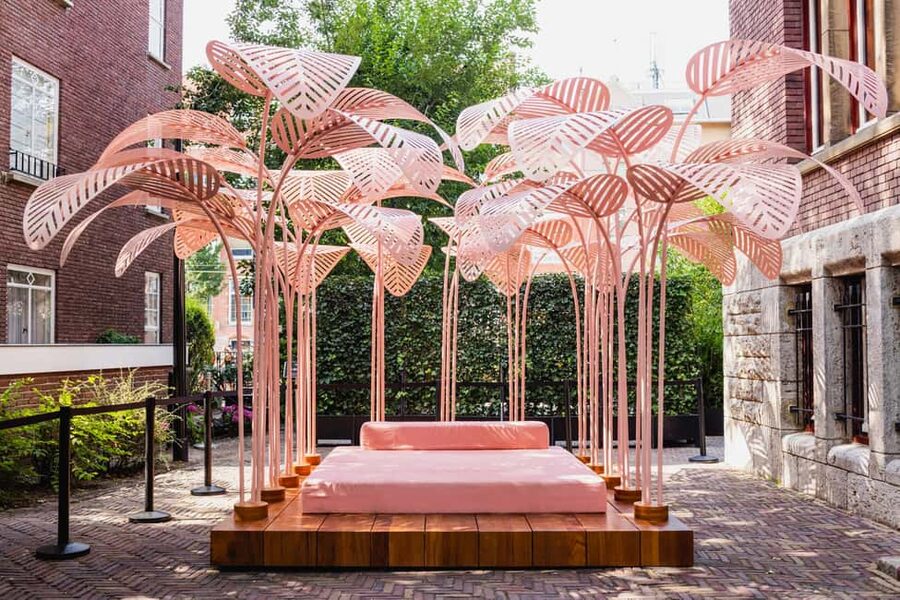
The garden offers a change of pace after the darker rooms and projections. Sculptures here can be playful, interactive, and linked to stories that give you something to think about while you walk around.
I like this pause in the route. It lets you reset your eyes and consider the work without another screen or wall of color competing for attention. The garden also adds outdoor views and gives the museum a little breathing room.
The catch is practical: getting through several floors and out to the garden may be awkward if your knees are troublesome. The outdoor section is part of the charm, but it does not remove the need to move around the building.
How long should you allow?

The official duration is one hour. That is a fair planning figure if you walk steadily and take in the main rooms. Many people spend 60 to 90 minutes, depending on how long they pause for the audio guide, photographs, and digital installations.
I would allow at least 75 minutes if Moco is a specific reason for your visit. Give yourself 90 minutes if you want to read more, revisit Banksy, or wait for a clear moment in the popular rooms.
This is good news for a short Amsterdam itinerary. You can fit Moco between other activities without losing an entire morning. It also works well after a long day of walking, since the collection is small enough to remain manageable.
The short visit is also the main value question. At $18 per person, the price is reasonable if you want a polished modern-art experience with major names, digital rooms, and an audio guide. It is less convincing if you measure value by gallery size alone. You will not spend four hours here.
Buying ahead can also save money compared with paying at the entrance, based on the experience of recent ticket holders. The booking option allows free cancellation up to 24 hours before the visit, and you can reserve now and pay later, which helps if your Amsterdam schedule is still shifting.
Using the audio guide well
Every ticket includes a free audio guide in six languages. Bring headphones, since they are specifically listed among the things you need.
The guide adds value because modern art can be quick to dismiss when you do not know the idea behind it. A few lines about an artist’s subject, technique, or social message can change how you look at a piece. You can still move at your own speed, pause the guide, or skip sections.
This is not a guided group tour, so you will not have someone leading you from room to room. That suits me. You can spend five minutes with a piece that catches your attention and give another one only a passing glance.
One organized visit received special praise for a guide named Hamza, but the standard ticket is fundamentally self-guided. If you want a live guide, confirm that service separately rather than assuming it is included.
Crowds, photos, and the best time to go

Moco is highly photographable. The light rooms, unusual installations, and colorful art invite people to stop, pose, and record the experience. That is part of the fun, but it can slow the route.
If you want clearer views, arrive early. This is especially useful in July and August, when the museum stays open later and daytime visits can be busy. An evening visit may also work well, with the later closing times on Friday and Saturday during summer.
On busy days, you may feel rushed in the most popular areas. The museum is compact, so a few extra groups can change the feel quickly. I would not plan a tight connection immediately after your entry time. Give yourself room to wait for a digital room or step aside while another group takes photos.
The pre-entry area has been described as having a nightclub-like mood, including a headphone-based record selector while you wait. That gives you a sense of Moco’s tone: contemporary, playful, and less formal than a traditional fine-art museum.
What you cannot bring

Pets, hats, oversized luggage, large bags, food, drinks, alcohol, and drugs are not allowed. Pack light and leave big items somewhere else before arriving.
That rule matters more here than it might at a large museum. The building and galleries are compact, and large bags would make the narrow route less comfortable for everyone. Headphones are the one item you should remember to bring for the audio guide.
Moco is not suitable for wheelchair users. If accessibility is central to your plans, this is a reason to choose another museum rather than trying to make the visit work at the last minute.
Who will enjoy Moco Museum most?
I would recommend Moco to you if you want a short, visually varied museum visit with famous names and a modern mood. It is particularly good for first-time art explorers, families with older children, couples looking for a rainy-day activity, and anyone who likes street art, pop art, digital installations, or work with a social message.
You do not need a background in art. The collection is direct, colorful, and varied enough to give you an entry point. You might also find it moving: the social themes and personal stories behind some pieces can carry real emotional force.
I would hesitate if you want a large, quiet museum with exhaustive information. The space is small, the popular rooms can be busy, and the digital installations may feel more like an experience than a traditional gallery. If you are comparing Moco with Amsterdam’s biggest museums, judge it by focus and energy rather than floor space.
Should you book Moco Museum Amsterdam?
Book it if Banksy, Warhol, Haring, Basquiat, or digital art is on your Amsterdam list. The $18 price buys a focused 60 to 90-minute visit, access to all exhibitions, and a six-language audio guide, with a central Museumplein location that makes planning easy.
Go early if photos matter, bring headphones, and expect stairs. I would also buy ahead rather than at the door if the online ticket is cheaper for your date.
Skip it if you need wheelchair access or want a full-day art institution. For most people seeking a lively, manageable introduction to contemporary art, Moco earns its place in an Amsterdam itinerary.
FAQ
How much does admission to Moco Museum Amsterdam cost?
The listed price is $18 per person. Buying a ticket ahead may cost less than paying at the museum entrance.
How long does a visit to Moco Museum take?
The stated duration is one hour. You may want 60 to 90 minutes if you use the audio guide, take photos, and spend time in the digital installations.
Where is Moco Museum located?
Moco Museum is on Museumplein in Amsterdam’s Museum District, North Holland.
How can I reach Moco Museum by public transport?
You can take GVB tram numbers 2, 5, or 12, or bus 88, and get off at the Museumplein stop.
Is an audio guide included?
Yes. Every ticket includes a free audio guide in six languages. You should bring headphones.
Is Moco Museum open every day?
Yes. The museum is open every day of the year. In July and August, it closes at 8:00 PM Sunday through Thursday and at 9:00 PM Friday and Saturday. During the rest of the year, it closes at 7:00 PM Monday through Thursday and 8:00 PM Friday through Sunday.
Is Moco Museum suitable for wheelchair users?
No. The experience is listed as not suitable for wheelchair users.
Just added in Amsterdam
- Private Tour Zaanse Schans Windmills and Volendam in Jaguar★ 5.0 · 10 reviews
- Zaanse Schans and Giethoorn Unique Day Trip with Boat Cruise★ 4.5 · 17 reviews
- Windmills-Volendam-Giethoorn Private Tour in Jaguar★ 5.0 · 2 reviews
- Half-Day Private Guided Sightseeing Tour of Zaanse Schans★ 5.0 · 14 reviews
- Best of Netherlands: Zaanse Schans Mills, The Hague & Rotterdam★ 4.5 · 10 reviews
- Zaanse Schans Private Tour Windmills★ 5.0 · 18 reviews
- Zaanse Schans Windmills Edam Volendam and Marken from Amsterdam★ 5.0 · 1 review
- Half Day Keukenhof Tulip Paradise Trip from Amsterdam★ 5.0 · 1 review
Museums, compared.




Amsterdam’s Weirdest Museum: Believe It or Not!
Read our review →

Browse the lists this tour appears in