Review · TICKETS
Body Worlds Amsterdam Admission Ticket
Your body is stranger than you think. Body Worlds Amsterdam gives you a close look at real human specimens donated to science, with displays arranged to explain how the body works rather than simply shock you. I especially like the clear anatomy information and the permanent Happiness Project, which connects physical health with mental well-being. The main drawback is size: some visitors finish in under an hour, while others spend two hours reading every panel.
I also like that the exhibition works for a wide age range, from curious children to older adults and people with medical training. You can visit independently, at your reserved entry time, and move at your own pace. Still, you should prepare children beforehand, and anyone who feels squeamish around human remains may find parts of the experience difficult.
In This Review
- Key points at a glance
- What Body Worlds Amsterdam actually shows
- Starting on the sixth floor
- The main Body Worlds exhibition
- The Happiness Project adds a human angle
- How long should you stay?
- Is the $27.21 ticket good value?
- Visiting with children over six
- Who will enjoy it most?
- Practical details before you go
- Why the real specimens matter
- My final recommendation
- FAQ
- How long does a visit to Body Worlds Amsterdam take?
- What is included with the admission ticket?
- Are the specimens real human bodies?
- Is Body Worlds Amsterdam suitable for children?
- Do children under six need a ticket?
- Is a guide included?
- Can I cancel my booking for a refund?
Key points at a glance
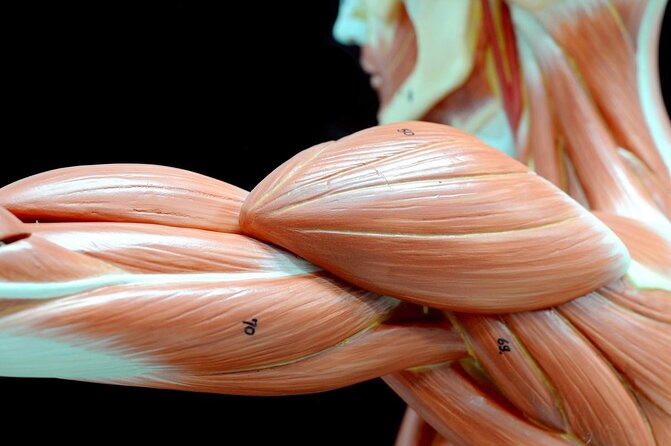
- Real donated human specimens: Plastinated bodies and body sections show anatomy in a way no ordinary textbook can match.
- The Happiness Project is included: The permanent exhibition looks at how happiness, stress, and lifestyle affect the body.
- Plan for 1.5 to 2 hours: A quick visit may take just over an hour, but careful reading can extend your stay.
- Good for curious families: Children over six are recommended, though younger children may enter if prepared in advance.
- Independent and flexible: There is no guide or transport included, so you explore on your own after checking in.
- Strong overall value: At about $27.21 per person, the ticket makes sense if you enjoy science, anatomy, or unusual museums.
What Body Worlds Amsterdam actually shows
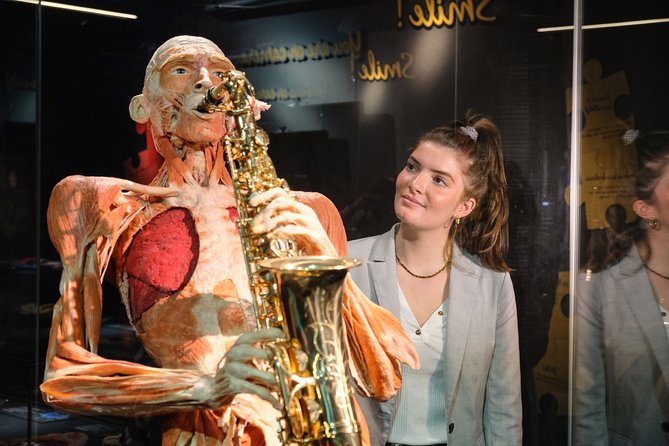
Body Worlds is not a wax museum and not a standard medical display. The specimens are real human bodies donated to science, preserved through a process known as plastination. This allows the body to be shown in detailed positions, with muscles, organs, bones, and other structures exposed for study.
That distinction matters. You are not looking at diagrams or plastic models designed to look realistic. You are seeing actual human anatomy arranged for public education. The effect can be powerful, even for someone who has studied biology or medicine.
The displays are designed to explain the body as a working system. You might look at a full-body form, then move closer to examine a particular organ or body section. Information panels accompany the exhibits in English and Dutch, which makes the material easier to follow if you read either language.
The presentation is educational rather than theatrical. There is plenty to read, but the specimens do much of the teaching simply by showing scale and structure. A textbook can tell you where an organ sits. Here, you can better understand how tightly the parts fit together and how much work the body performs without your conscious attention.
A few more options to weigh up in Amsterdam
- Amsterdam: Van Gogh Museum Ticket
★ 4.7 · 52,054 reviews - Amsterdam Classic Saloon Boat Cruise with Drinks and Cheese
★ 5.0 · 31,825 reviews - Amsterdam Luxury Canal Cruise + Unlimited Drinks & Bites option
★ 5.0 · 30,518 reviews
Starting on the sixth floor
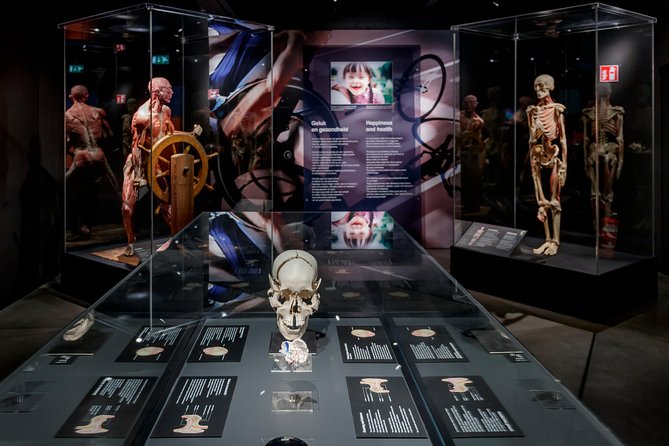
One practical detail can save you a little confusion. The exhibition begins on level six, with lifts beside the entrance area. The entry process is straightforward, but the first instruction may feel brief, so look for the lift and head upward after checking in.
You must arrive at your reserved time. The ticket is mobile, which means you can keep it on your phone rather than collect a paper ticket in advance. There is no guide leading you through the building, so you are free to set your own pace from the moment you enter.
The visit is usually described as taking about 1.5 to 2 hours. That is a fair target if you stop to read the explanations and consider the displays. If you mainly want to see the full-body forms, you could be finished in just over an hour. One particularly fast visit took less than 30 minutes, so do not assume the experience will fill an entire afternoon.
I suggest allowing two hours, but keeping your schedule flexible. That gives you time to read without forcing yourself to linger if the exhibition does not hold your attention.
The main Body Worlds exhibition
The main exhibition is the reason to book this ticket. Full-body specimens are arranged in ways that reveal the relationship between movement, muscles, bones, and internal organs. Cross-sections provide a different view, showing what is hidden beneath the skin and how the body is organized.
The most useful displays are often the ones that answer a simple question: how does this part of me work? You can focus on a body part that interests you, compare structures, and use the explanations to connect what you see with everyday movement and health.
Some displays are especially effective because they make anatomy feel personal. A body is no longer an abstract illustration. You can see the complexity of joints, the placement of organs, and the fine detail that makes ordinary actions possible.
The exhibit also gives you a reason to slow down. At first, you may move from one dramatic specimen to the next. After a few minutes, the smaller explanatory details begin to matter more. If you are studying biology, medicine, or health sciences, the displays can serve as a memorable supplement to classwork. One student preparing for advanced biology found the experience useful as a kind of visual revision session.
You do not need medical training to enjoy it. The information is presented for a general audience, and the arrangement helps you understand the body step by step. Still, the experience rewards a curious and analytical mind more than someone looking for a fast, purely visual attraction.
The Happiness Project adds a human angle
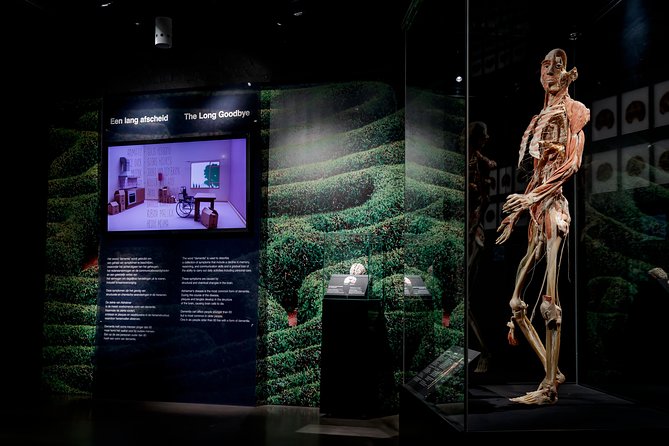
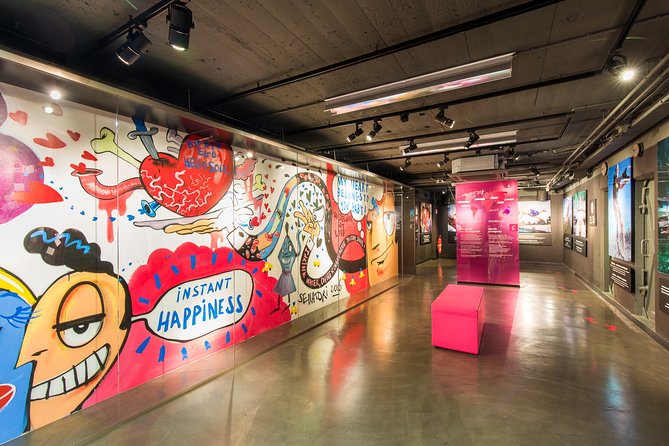
The permanent Happiness Project keeps the museum from being only an anatomy lesson. It explores how happiness affects the human body and links physical health with the way we live, think, and feel.
This section adds a psychological angle to the biological displays. Instead of asking only how the body is built, it asks how human experience affects that body. That makes the visit more reflective than a simple tour of organs and muscles.
I found this focus especially useful because it gives the exhibition a clear central idea. The body is not just a machine made of separate parts. Health also relates to behavior, emotion, and daily choices. The displays encourage you to think about how your mental state and lifestyle can influence your physical condition.
The Happiness Project is included with the regular admission ticket, so you do not need to choose between two separate attractions. If the anatomical displays feel clinical, this section can make the visit feel more connected to ordinary life.
It is also a strong reason to return if you have already seen a Body Worlds exhibition elsewhere. The collection in Amsterdam may be smaller than some other locations, but the happiness theme gives it a distinct focus.
A different kind of day out entirely:
- Amsterdam: Heineken Experience Ticket
★ 4.6 · 30,055 reviews - Amsterdam: Rijksmuseum Entry Ticket
★ 4.7 · 25,535 reviews - Amsterdam: Classic Boat Cruise with Optional Cheese & Wine
★ 4.6 · 22,925 reviews - Amsterdam: Evening Cruise with Optional Wine and Snacks
★ 4.4 · 19,696 reviews
How long should you stay?

The advertised visit time is about 1.5 to 2 hours, and that is realistic for a careful visit. I would divide your time roughly like this:
- Allow around an hour for the main anatomical displays if you read selectively.
- Add time for the Happiness Project and any sections that catch your interest.
- Reserve extra minutes if you are visiting with children or with someone who likes to read every panel.
Some people move through the museum quickly because the number of displays feels limited. Others spend two hours examining the specimens and reading the information. Both experiences are valid, but they show why the attraction can feel excellent value to one person and too small to another.
Your expectations matter. If you want a huge museum with several floors of constantly changing material, you may find Body Worlds Amsterdam modest. If you want a focused, unusual visit that fits neatly between other Amsterdam plans, its size becomes an advantage.
A visit of about an hour works well on a busy sightseeing day. You can also give it two hours if the subject interests you. I would not plan an entire half-day around it.
Is the $27.21 ticket good value?
At approximately $27.21 per person, this is not a bargain attraction in the same way as a free city walk or a quick gallery visit. The value depends on how seriously you take the subject.
You get admission to both the Body Worlds exhibition and The Happiness Project. There is no guide, food, drink, or transport included, so the price pays for the exhibition itself. That is important when comparing it with a guided museum visit or a longer tour.
For anyone interested in anatomy, medicine, health, or psychology, the ticket is reasonably priced for a 1.5 to 2-hour experience. The real specimens and detailed presentation give you something you cannot replicate with a few online photographs.
For a casual visitor, the value is less certain. If you have only a short time in Amsterdam and are choosing between this and a major museum, consider how much the subject appeals to you. The exhibition is unusual and educational, but it is also compact. If you have already seen several Body Worlds locations, you may find this one smaller than expected.
The ticket is especially good value for families with older children, students, and adults who want an indoor activity that feels different from the usual art and history museums. Children up to and including age five enter free, which can reduce the total cost for a family.
Visiting with children over six
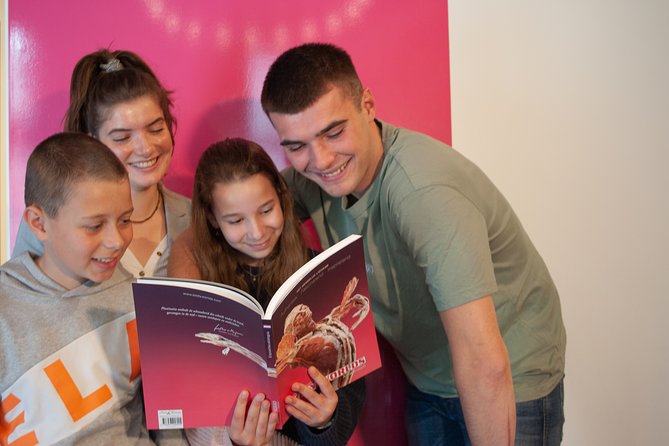
The recommended age is over six, but younger children are also welcome. The important point is preparation. Tell your child in advance that the exhibition contains real human bodies donated to science, not models or costumes.
That conversation can prevent a difficult surprise at the entrance. Some children will be fascinated by the organs and full-body forms. Others may focus more on the fact that the specimens were once living people. Give your child a clear explanation and let them decide how closely they want to look.
The displays can support school learning, especially for children interested in biology. A 10-year-old enjoyed the visual experience even without reading much of the text. That is a useful reminder that younger children may gain more from seeing the forms than from studying every panel.
Older children and teenagers are likely to get more from the explanations. The Happiness Project can also open a useful conversation about health, stress, and lifestyle.
This is not a carefree family attraction like a toy museum. Use your judgment. If your child is sensitive to medical imagery, prepare them carefully or choose another activity.
Who will enjoy it most?

I would recommend Body Worlds Amsterdam to you if you fit one or more of these descriptions:
- You enjoy anatomy, biology, medicine, or psychology.
- You want an indoor activity that takes about two hours.
- You prefer educational attractions with real subject matter.
- You are studying the human body and want a visual aid.
- You are curious about how health affects both body and mind.
- You want something unusual rather than another canal view or art collection.
Medical professionals and students may appreciate the displays most, but you do not need a science background. The exhibition is accessible to anyone willing to look closely and read a little.
It may not suit you if you are strongly squeamish, want a large museum, or prefer an attraction with a guide explaining every display. The staff do not provide a guided tour as part of this ticket. You explore independently, which is liberating for some people and less helpful for others.
Practical details before you go
The mobile ticket makes entry simple, but check in at your reserved time. The last entrance is one hour before closing, so do not arrive near the end of the day without checking the schedule carefully.
Body Worlds is near public transport, though transport to and from the attraction is not included in the ticket. Food and drinks are also not included, so plan those separately.
The activity has a maximum group size of 15 people. That limit relates to the booked activity, but it does not guarantee that every gallery area will feel empty. Some parts can become crowded, and one visitor found the reception staff less helpful than expected. A body scan feature was also reported as not working during one visit, so treat any interactive element as a bonus rather than the main reason to go.
The information is available in English and Dutch. If you need a fully guided explanation, you should know that no guide is included.
Free cancellation is available if you cancel at least 24 hours before the start time. Cancellations made within 24 hours are not refunded, and changes inside that period are not accepted. The cut-off uses local Amsterdam time.
Why the real specimens matter
The strongest part of Body Worlds is not simply that the specimens are real. It is the way real anatomy changes your sense of scale.
You can read that the human body is complex, but seeing the compact arrangement of organs and tissues makes the point immediate. The displays also show how much structure is hidden from daily view. That can make the experience unsettling, but it can also create a new respect for your own health.
A particularly memorable type of display involves medical interventions. One exhibit showed a person with a shoulder, hip, and knee replacement. That kind of example connects anatomy with ordinary medical life. It shows not only how the body is built, but how it can be repaired and adapted.
The exhibition also depends on the generosity of donors. Their decision allows the public to learn from genuine human anatomy. If you approach the museum with respect, the displays feel less like spectacle and more like a serious lesson about life, health, and mortality.
My final recommendation
Book Body Worlds Amsterdam if you are curious about the human body and want a focused museum visit with real educational value. I would especially recommend it to families with prepared children over six, biology students, health professionals, and anyone who likes unusual attractions.
Think twice if you are squeamish or expect a large museum that fills half a day. The exhibition can feel limited if you rush through it, but it becomes much more rewarding when you read the explanations and give the Happiness Project proper time.
At $27.21, the ticket is fair for a distinctive 1.5 to 2-hour visit. I would schedule it when you want a break from Amsterdam’s outdoor sights, allow two hours, and arrive ready for a frank look at what makes your body work.
FAQ
How long does a visit to Body Worlds Amsterdam take?
A visit usually takes about 1.5 to 2 hours. Some people finish in just over an hour, while a quick visit can take less than 30 minutes if you do not stop to read much.
What is included with the admission ticket?
The ticket includes entrance to Body Worlds Amsterdam and the permanent Happiness Project exhibition.
Are the specimens real human bodies?
Yes. The exhibition displays real human specimens donated to science and preserved through plastination.
Is Body Worlds Amsterdam suitable for children?
Children over six are recommended, but younger children are also welcome. You should prepare children in advance so they understand that they will see real human specimens.
Do children under six need a ticket?
Children up to and including five years old enter free of charge.
Is a guide included?
No. The admission ticket does not include a guide. You explore the exhibition independently.
Can I cancel my booking for a refund?
Yes. You can receive a full refund if you cancel at least 24 hours before the experience start time. Cancellations or changes made less than 24 hours in advance are not accepted or refunded.
Just added in Amsterdam
- Private Tour Zaanse Schans Windmills and Volendam in Jaguar★ 5.0 · 10 reviews
- Zaanse Schans and Giethoorn Unique Day Trip with Boat Cruise★ 4.5 · 17 reviews
- Windmills-Volendam-Giethoorn Private Tour in Jaguar★ 5.0 · 2 reviews
- Half-Day Private Guided Sightseeing Tour of Zaanse Schans★ 5.0 · 14 reviews
- Best of Netherlands: Zaanse Schans Mills, The Hague & Rotterdam★ 4.5 · 10 reviews
- Zaanse Schans Private Tour Windmills★ 5.0 · 18 reviews
- Zaanse Schans Windmills Edam Volendam and Marken from Amsterdam★ 5.0 · 1 review
- Half Day Keukenhof Tulip Paradise Trip from Amsterdam★ 5.0 · 1 review
Tickets, compared.





Keukenhof Ticket and Roundtrip Shuttle Transfer
Read our review →
Moco Museum Amsterdam Entrance Tickets with Banksy & More
Read our review →