
Review · CYCLING TOURS
Discover Rotterdam: Classic Highlights Bike Tour with a Local
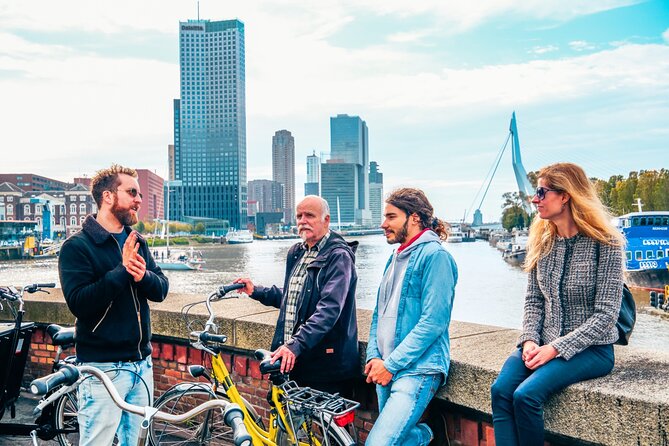
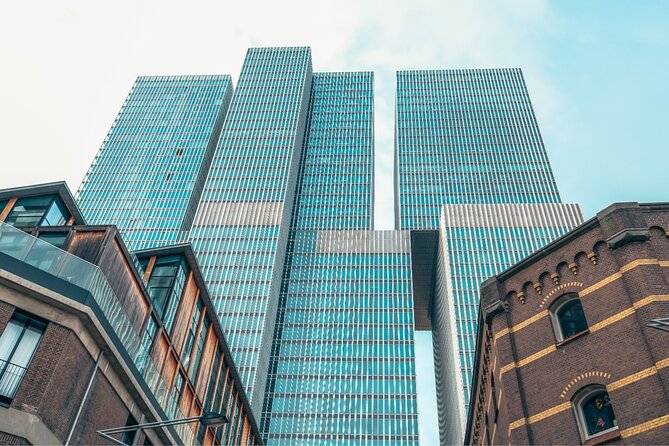
Rotterdam reveals itself best on two wheels. This three-hour bike tour links the city’s bold modern buildings with older corners that are easy to miss from a car or coach, while an English-speaking local guide adds context at each stop. I like the broad sweep of the route, from Hotel New York and the Erasmus Bridge to the Cube Houses, Markthal, and De Hef. I also like the relaxed format, with time for questions and a café break on Oude Binnenweg. The main drawback is that the tour favors a highlights loop, so it does not include Delfshaven, the old district that escaped much of the wartime bombing.
At $72.01 per person, this is not Rotterdam’s cheapest introduction, but the price includes the bike, a local guide, and a useful first look at many parts of the city. The small maximum of 15 people helps, and past departures have sometimes gone ahead with only two people. You should still arrive ready for a moderate physical effort, and keep the weather in mind because poor conditions can lead to a new date or refund.
In This Review
- Key points at a glance
- Why a bike is the right way to see Rotterdam
- Starting at Hotel New York and Rotterdam’s south bank
- Crossing the Erasmus Bridge toward wartime Rotterdam
- Veerhaven and the old Rotterdam that survived
- Museum Park and the Art Depot Boijmans Van Beuningen
- A real pause on Oude Binnenweg
- City Hall and St. Lawrence Church
- Cube Houses and the Markthal
- De Hef and the Kings Harbour Bridge
- The guide, bikes, and group size
- Is $72.01 a fair price?
- Who should book this ride?
- FAQ
- How long does the Rotterdam bike tour last?
- Where does the tour start and finish?
- What is included in the price?
- Is food or brunch included?
- How large is the group?
- What happens if the weather is poor?
- Should you book it?
Key points at a glance
- Ten major stops in about three hours: The route covers waterfront views, museums, old streets, postwar architecture, and famous modern landmarks.
- A local-led ride with Elmer: Elmer is praised for clear English, humor, personal attention, and careful attention to cycling safety.
- Comfortable seven-speed bikes: The bikes have been described as well maintained, easy to shift, and comfortable for a city ride.
- A useful break on Oude Binnenweg: You get roughly 15 to 20 minutes for coffee, conversation, a restroom stop, or a short wander.
- A quick way to get your bearings: The circular route is especially useful on your first day in Rotterdam.
- One notable omission: Delfshaven is not part of the standard route, so add it separately if old Rotterdam matters most to you.
Why a bike is the right way to see Rotterdam
Rotterdam is built for movement. Its broad streets, separated cycling routes, bridges, and open waterfront spaces make a bicycle a practical sightseeing tool, not just a sporty extra. You can cover far more ground than on foot and still pause often enough to hear a story or take a photograph.
The route also shows the city’s sharp contrasts. Rotterdam lost much of its historic center in the Second World War, then rebuilt with daring modern architecture. On one ride, you move from the former headquarters of a major shipping line to a futuristic market hall, a preserved nineteenth-century harbor district, and bright yellow Cube Houses.
That range is the tour’s central strength. You are not looking at the same kind of street for three hours. The guide keeps shifting the view between water, architecture, war, art, commerce, and daily city life.
You should have a moderate level of fitness. The ride lasts about three hours, and you will be cycling between stops rather than simply being led from one doorway to the next. The pace is meant to be relaxed, but you still need to handle a bicycle in an urban setting.
More Bike Tours in Rotterdam
- Rotterdam: 2.5-Hour Highlights Bike Tour
★ 4.7 · 399 reviews - Rotterdam: City Highlights Guided Bike Tour
★ 4.8 · 112 reviews - Rotterdam Bike Tour – all the Highlights
★ 5.0 · 105 reviews
Starting at Hotel New York and Rotterdam’s south bank
The meeting point is Linker Veerdam 1, near Hotel New York. This is a useful starting place because the building gives you an immediate introduction to Rotterdam’s connection with the sea.
Hotel New York occupies the former headquarters of the Holland America Line. Ships once carried emigrants and other passengers from this part of Rotterdam toward North America. The building’s present use gives the old shipping story a practical modern afterlife, and the guide explains both its past and its current role.
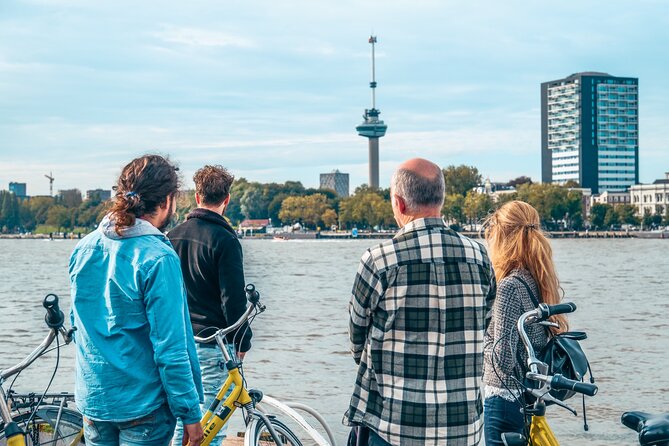
From here, you also get a view toward the Fenix Museum of Migration, including its distinctive new tornado design. The stop is short, about 15 minutes, but it sets up one of the tour’s recurring themes: Rotterdam keeps its links to movement, trade, and migration while constantly changing its skyline.
This first stop also helps you settle into the bike and the group. One especially useful detail from an earlier ride is that guide Elmer took time to fit the bicycle and make sure a helmet was available. That kind of personal check matters more than a flashy introduction. You want to feel secure before entering the busier parts of the route.
Crossing the Erasmus Bridge toward wartime Rotterdam
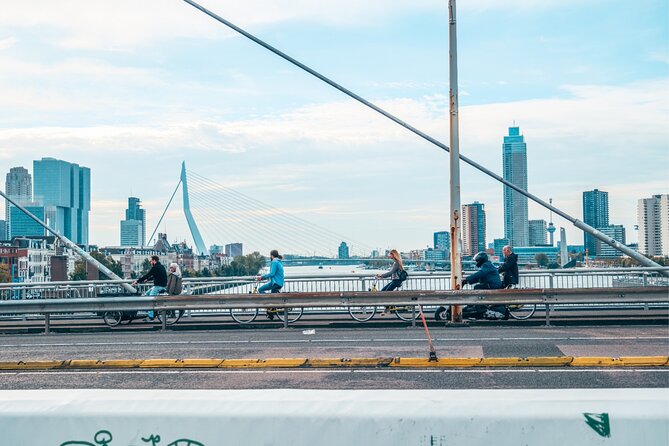
The Erasmus Bridge is the tour’s first major architectural moment. You cycle across it toward the Maritime District, with the river and city opening around you. The bridge is often photographed from the riverbanks, but crossing it gives you a better sense of its size and role in the city.
The stop also includes the Rotterdam War Memorial of the Second World War. Here, the guide connects the bridge area to the destruction of the old center and the city’s rebuilding afterward. That explanation is important because modern Rotterdam can seem almost intentionally free of old buildings. The empty spaces and bold towers are not random. They are part of a city shaped by loss and a determined decision to build anew.
The stop is listed at about 15 minutes, so expect a compact explanation rather than a full wartime walking lecture. If twentieth-century history is your main interest, you may want extra time elsewhere in the city. For a general city tour, though, the context helps you read everything that follows.
Veerhaven and the old Rotterdam that survived
Veerhaven offers a welcome change of mood. Located in the Shipping Quarter, this area gives you a glimpse of Rotterdam before the war. The fountain used to stand in the city center, and its present setting helps connect the surviving neighborhood with the center that was lost.
This is one of the most valuable stops for understanding Rotterdam. The city is famous for its daring new buildings, but the older streets around Veerhaven show what the prewar city looked and felt like. You get a more complete picture when the guide places the preserved buildings beside the postwar architecture.
The stop lasts around 15 minutes. That is enough for an explanation and photographs, though not a long architectural walk. Keep your expectations practical: this is a brief window into old Rotterdam, not a full tour of the Shipping Quarter.
A different kind of day out entirely:
- Rotterdam: Harbor Sightseeing Cruise
★ 4.3 · 7,599 reviews - Rotterdam: 1-Hour Sightseeing Splash Tour
★ 4.5 · 3,299 reviews - Rotterdam: Rotterdam Zoo Blijdorp Entry Ticket
★ 4.6 · 2,754 reviews - Rotterdam: Euromast Lookout Tower Ticket
★ 4.4 · 2,549 reviews
Museum Park and the Art Depot Boijmans Van Beuningen
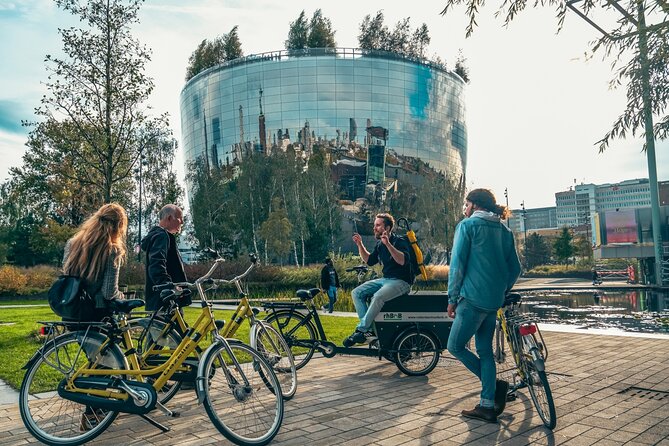
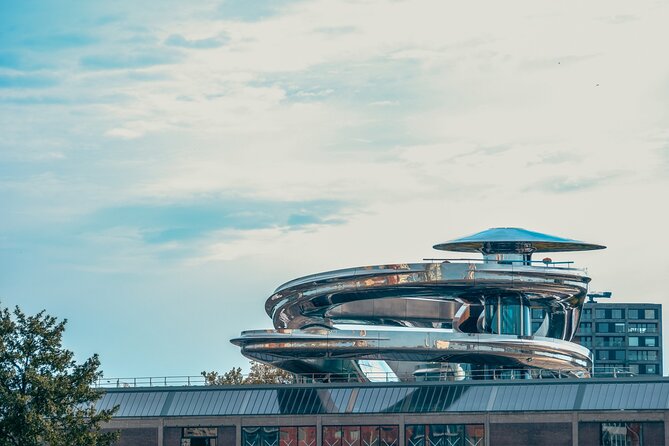
The route then moves toward Museum Park and the area around The New Institute. The focal point is the Art Depot Boijmans Van Beuningen, a mirrored building with a striking rounded form.
The depot is the first publicly accessible art storage building of its kind, and the guide uses it to explain how a museum collection can be stored, managed, and shown in a different way. Even if you do not enter, the building is worth seeing because it has become one of Rotterdam’s newer architectural symbols.
This stop works well for visitors who want more than a parade of famous viewpoints. You are given a short look at how the city treats art, design, and public space. It also places several major museums close together, making it easy to plan a return visit.
The tour does not include museum admission. That is sensible for a three-hour cycling route, but you should not expect time for a full museum visit during the ride. Treat this as an orientation stop, then return later if a collection catches your interest.
A real pause on Oude Binnenweg
The break on Oude Binnenweg is one of the tour’s smartest features. You get about 15 to 20 minutes on one of Rotterdam’s oldest shopping streets. The guide may keep the group together at a café, or you may have a little freedom to wander, depending on group size and what people need.
Use this pause well. You can buy a drink, warm up, cool down, use the restroom, ask for restaurant suggestions, or simply talk with the guide and other people in the group. Beverages are not included, so bring a little money or a payment method for the café.
A particularly appealing detail is the café described in one ride, which employs former prison inmates. That gives the stop a local social angle instead of making it just a generic coffee break. Still, the exact café arrangement can vary, so do not treat that detail as guaranteed.
The timing is flexible, but it remains a short stop. You will not have time for a serious shopping session or a full meal. Brunch is not included either. If you need substantial food, plan around the tour rather than counting on this pause.
City Hall and St. Lawrence Church
The route continues to Rotterdam City Hall, one of the more historic civic buildings in a city better known for new construction. The stop is made in front of the building before the bikes are eventually returned, and the guide uses it to add another older layer to the city story.
You then stop near the square in front of the Grote of Sint-Laurenskerk, or St. Lawrence Church. This is one of the key surviving landmarks in central Rotterdam. Its presence helps show how much of the surrounding city changed while this major church remained an important reference point.
The two stops work well together. City Hall represents civic Rotterdam, while St. Lawrence Church brings you close to the prewar center and its surviving symbols. Both are quick stops, so you will mainly listen, take photographs, and get your bearings rather than go inside.
Cube Houses and the Markthal
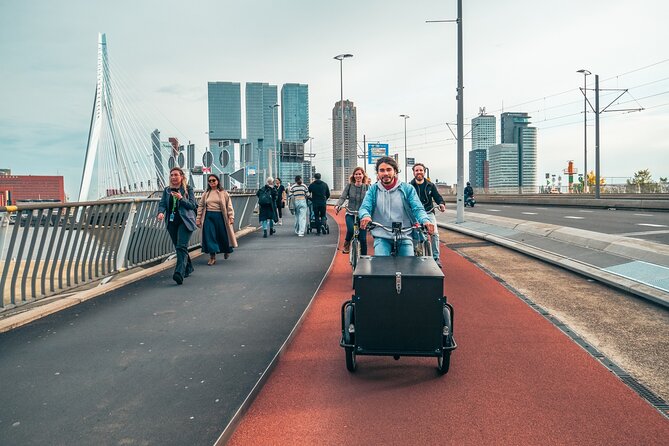
The yellow Cube Houses are among Rotterdam’s most recognizable sights. The guide stops in front of them to explain their design and history and to give you time for photographs. Their tilted forms can look playful, but they also raise a serious question about how people use space in a dense city.
The nearby Markthal gives you another sharp turn in style. Opened in 2014, it combines an indoor market with housing and a huge colorful ceiling artwork. The guide refers to the interior artwork as Rotterdam’s modern Sistine Chapel, an amusing comparison that makes more sense once you see the scale and color of the ceiling.
You should be aware of the difference between seeing the Markthal and exploring it. The bike tour stops by the market, but the schedule does not promise a long visit inside or time to sample food. If you want to browse stalls, eat, or study the ceiling artwork, plan a separate visit after the ride.
This is where a cycling and walking combination could work well. The bike gives you a fast overview, while a later visit lets you move slowly through the market and stop at the places that catch your eye.
De Hef and the Kings Harbour Bridge
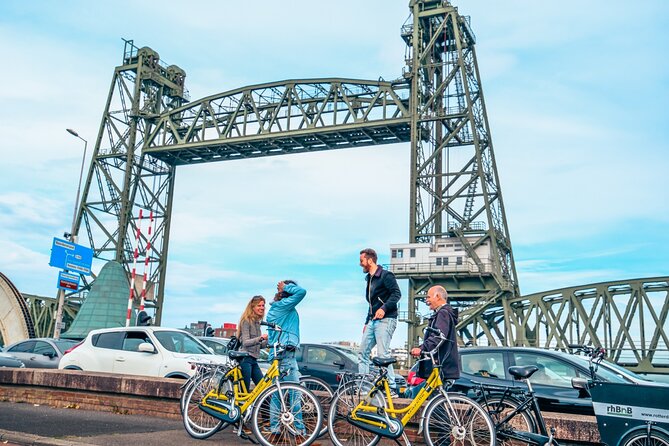
The final major stop is De Hef, also called the Kings Harbour Bridge. The ride heads toward the bridge, where the guide explains its place in Rotterdam’s transport and industrial story.
De Hef is a strong closing image because it returns you to the city’s relationship with engineering, rail, water, and movement. After seeing Hotel New York, the Erasmus Bridge, and the Markthal, you finish with another structure that shows how Rotterdam turns practical infrastructure into part of its identity.
The stop is short, around 15 minutes. You will get the story and a chance for photographs, not an extended technical tour. Afterward, the group cycles back to Linker Veerdam 1, where the activity ends.
The guide, bikes, and group size
Guide Elmer receives the strongest praise in the information provided. His approach combines clear explanations, humor, positive energy, and close attention to safety. One particularly good sign is the repeated description of a relaxed pace without pressure to watch the clock.
Elmer also seems willing to adjust the experience. After one ride, he explained what the group had not reached and created another tour option. That does not mean every departure becomes a private custom tour, but it suggests you can ask questions and speak up about your interests.
Yoreh also appears in the guiding team, including alongside Elmer while training. The company offers the tour in English, and the guides used on the described rides spoke fluent English.
The bicycles are seven-speed models. They have been described as well maintained, easy to shift, and comfortable, including a seat that one rider’s wife found particularly pleasant. The tour includes bicycle use, but the supplied details do not promise a specific bike model or guarantee a helmet for every booking, so ask at the start if equipment is important to you.
The group maximum is 15 people. That is small enough for questions to be practical, though the ride may feel more personal with a smaller departure. The tour has also operated with only two people, which is a nice possibility but not something to assume.
Is $72.01 a fair price?
At $72.01, you are paying for more than bicycle rental. The value comes from combining equipment, route planning, local interpretation, and the chance to cover a wide area without spending half the day navigating.
If you rented a bike and tried to connect all ten stops yourself, you would save the guide fee but lose the historical links between them. You would also need to plan a safe route, find each stop, and decide how long to spend at each one. For a first day in Rotterdam, the tour can save effort and give you a useful map in your head.
The price is less compelling if you already know Rotterdam well or prefer to spend long periods inside museums and markets. You are paying for range and orientation, not deep visits at each attraction.
Group discounts are available, which may improve the value for families or friends booking together. The experience is also booked, on average, 43 days ahead, so advance planning is sensible if your dates are fixed.
Who should book this ride?
I would choose this tour for a first visit, especially if you want to understand how Rotterdam fits together. It suits active visitors who like architecture, city stories, waterfront views, and a bit of independence between guided stops.
It is also a good choice for anyone who wants an introduction before deciding what deserves more time. After the ride, you can return to the Markthal, Museum Park, St. Lawrence Church, or the old streets around Veerhaven with a clearer sense of place.
You may want another plan if you dislike cycling, have less than moderate fitness, or want a slow museum-focused day. The tour also is not ideal if Delfshaven is at the top of your list. Add that district separately, since it is not included in this loop.
Good weather matters. If conditions are poor, the operator may cancel and offer another date or a full refund. Free cancellation is available up to 24 hours before the start time, but changes or cancellations inside that window are not accepted for a refund.
FAQ
How long does the Rotterdam bike tour last?
The tour lasts approximately three hours, including cycling between stops, explanations, photographs, and a short break.
Where does the tour start and finish?
It starts at Linker Veerdam 1, 3072 NZ Rotterdam, Netherlands, near Hotel New York, and returns to the same meeting point at the end.
What is included in the price?
The price includes use of a bicycle and an in-person English-speaking guide.
Is food or brunch included?
No. Brunch is not included, and beverages purchased during the Oude Binnenweg break are paid for separately.
How large is the group?
The tour has a maximum of 15 people. It may sometimes operate with fewer participants, including a very small group.
What happens if the weather is poor?
The experience requires good weather. If the operator cancels because of poor conditions, you will be offered another date or a full refund.
Should you book it?
Book this ride if you want a friendly, active introduction to Rotterdam and prefer a guide who mixes city facts with practical local advice. The route gives you a lot in three hours, and Elmer’s careful bike fitting, safety focus, humor, and willingness to answer questions add real value.
Skip it if your priority is Delfshaven, long museum visits, or a slow food crawl through the Markthal. For most first-time visitors, though, the ride is a smart way to get oriented quickly, see Rotterdam’s major contrasts, and decide where to spend the rest of your stay.
Just added in Rotterdam
- e-Scavenger hunt Breda: Explore the city at your own pace★ 4.5 · 27 reviews
- Rotterdam: City Walk Audio Guide in 7 Languages on your Phone★ 3.5 · 6 reviews
- e-Scavenger hunt Rotterdam: Explore the city at your own pace★ 4.5 · 13 reviews
- Rotterdam Must Do Tour: Highlights, History, WW2 and Architecture★ 5.0 · 20 reviews
- Explore the Instaworthy Spots of Rotterdam with a Local★ 5.0 · 1 review
- The Goldheist – Trilling Private City Escape Game Rotterdam★ 5.0 · 1 review
- Skip the Line: SS Rotterdam Steam Ship Entrance Ticket★ 4.5 · 18 reviews
- Discover Breda with a self-guided Outside Escape city game tour!★ 5.0 · 16 reviews
Cycling Tours, compared.
Countryside Bike Tour from Amsterdam: Cheese, Clogs & a Windmill
Read our review →
Windmill, Cheese, and Countryside E-Bike Tour
Read our review →
Browse the lists this tour appears in