
Review · HISTORICAL TOURS
Rotterdam Must Do Tour: Highlights, History, WW2 and Architecture
Rotterdam tells its story through buildings. This two-hour walk links the city’s famous modern architecture with the bombing of 1940 and the remarkable rebuilding that followed. You see the Cube Houses, Markthal, Lijnbaan, Central Station, and the old harbor, while a local guide explains how Rotterdam became one of Europe’s most striking modern cities.
I especially like the way the tour connects wartime destruction with postwar design, rather than treating the buildings as isolated photo stops. I also like the small maximum of 15 people, which should make it easier to hear the guide and ask questions. The main drawback is pace: two hours covers a lot of ground, and one short review found the tour rushed after a delayed ship arrival. You should expect an overview, not a slow architectural study.
In This Review
- Key points before you book
- Why Rotterdam makes a good walking tour city
- Meeting at Rotterdam Centraal Station
- Groot Handelsgebouw and the first postwar chapter
- West-Kruiskade and the Lijnbaan
- The Luchtsingel: a wooden bridge with a clear purpose
- Nieuwe Delftse Poort and the memory of a lost gate
- Grote of Sint-Laurenskerk, the medieval survivor
- Markthal: Rotterdam’s great interior spectacle
- Oude Haven and the Cube Houses
- How the guides shape the experience
- Is $29.41 good value for two hours?
- Timing, pace, and who should book
- Should you book the Rotterdam Must Do Tour?
- FAQ
- How long does the Rotterdam Must Do Tour last?
- Where does the tour begin?
- Where does the tour end?
- Is the tour offered in English?
- What is included in the price?
- How large is the group?
Key points before you book
- The tour links Rotterdam’s WWII bombing to its modern architecture, making the city’s bold buildings easier to understand.
- The route includes the Cube Houses, Markthal, Lijnbaan, Luchtsingel, and Rotterdam Centraal, with several stops in the central city.
- The maximum group size is 15 people, a useful middle ground between a private tour and a large group outing.
- The walk costs $29.41 per person and lasts about two hours, with food and drinks not included.
- Guides named in the feedback include Susan, Edwin, Michel, Ed, John, Tony, and Stephan, with repeated praise for their stories and personal approach.
- The route begins and ends at Stationsplein 10, beside Rotterdam Centraal Station.
Why Rotterdam makes a good walking tour city
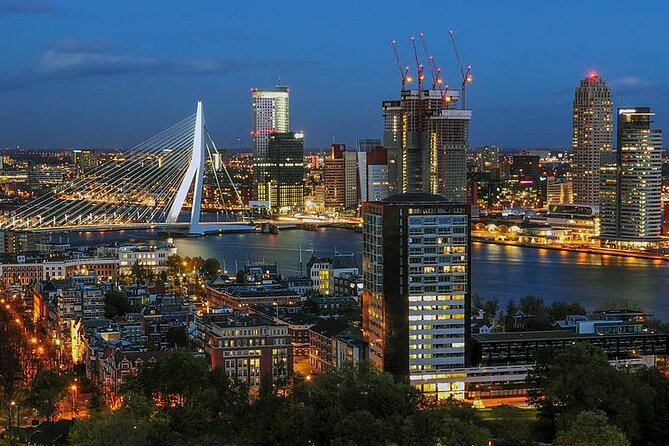
Rotterdam is not the Netherlands of postcard canals and old brick lanes. Much of the historic center was destroyed during the Second World War, leaving the city with a difficult choice: rebuild the old streets or create something new.
Rotterdam chose new. The result is a city of sharp angles, unusual housing, broad streets, pedestrian shopping areas, wooden bridges, huge public artworks, and experimental towers. That mix can feel confusing at first. A walking guide helps you read the city as a series of decisions made after catastrophe.
The tour also gives you a useful first look at Rotterdam’s harbor identity. The city grew around trade, shipping, industry, and the Maas River. Even when the route is among shops and modern buildings, the port is part of the city’s character.
I would book this near the beginning of a Rotterdam visit. You can then return to the Markthal, Cube Houses, or Lijnbaan on your own, spending more time at the places that catch your eye.
More History Tours in Rotterdam:
- Rotterdam: Kinderdijk UNESCO World Heritage Entry Ticket
★ 4.6 · 1,477 reviews - Rotterdam: Harbor Cruise on a Historic Ship
★ 4.2 · 812 reviews - MUST DO: Rotterdam highlights & history with a local guide
★ 4.5 · 57 reviews
Meeting at Rotterdam Centraal Station
The tour starts at Stationsplein 10, at Rotterdam Centraal Station. This is a practical meeting point because the station is easy to reach by public transport and is itself one of the city’s major architectural statements.
The first part of the walk is listed as an introduction to Rotterdam’s architecture. Your guide is expected to explain what you are seeing before leading you into the center. That matters here. Rotterdam’s buildings are not simply old or new. They reflect several periods of rebuilding, planning, and experimentation.
Allow a little extra time to find the guide at the station. The meeting point is given as Stationsplein 10, 3013 AJ Rotterdam, and the activity ends back at the meeting point. The schedule offers different tour times, which is helpful if you are fitting the walk around a train, cruise, or other plans.
The group limit of 15 is one of the strongest practical features. It is small enough for a more personal walk, though the exact feel will depend on how many people actually book your departure.
Groot Handelsgebouw and the first postwar chapter
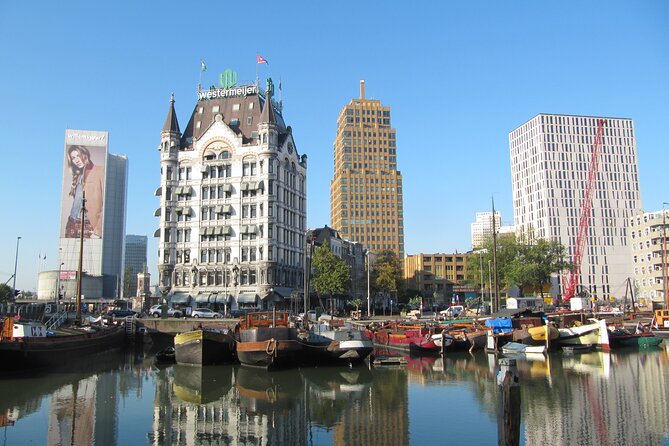
One of the first major stops is Groot Handelsgebouw, completed in 1953. It was among the important buildings raised after Rotterdam’s wartime destruction.
This is a useful early stop because it shifts the focus from tragedy to rebuilding. The building represents the practical, commercial Rotterdam that emerged after the bombing. Your guide can place it within the city’s larger story: Rotterdam was not rebuilt as a museum of its past, but as a working port and business center.
The visit is brief, listed at around 10 minutes. That is enough for an explanation and a look at the building, but not enough for a detailed architectural inspection. I would pay attention to how this building differs from the later, more playful structures on the route.
West-Kruiskade and the Lijnbaan
The walk continues through the shopping district around Kruiskade and West-Kruiskade. These streets give you a change of mood. Instead of focusing only on famous buildings, the route shows how central Rotterdam works as an everyday city.
The Lijnbaan is especially important. It opened in 1953 as the main pedestrian shopping street in the new district, after the former shopping area had been destroyed. Its creation reflects postwar planning and the idea that shopping streets should give people room to walk without traffic.
You may find this part less visually dramatic than the Cube Houses or Markthal. Its value is historical and urban rather than purely scenic. The guide helps explain how the city rebuilt its commercial center and how modern pedestrian planning became part of that process.
The stop is also useful for practical orientation. If you want shops, cafés, or a quick break after the tour, this area gives you options. Food and drinks are not included in the tour, so plan to buy them separately.
A few more options to weigh up in Rotterdam
- Rotterdam: Harbor Sightseeing Cruise
★ 4.3 · 7,599 reviews - Rotterdam: 1-Hour Sightseeing Splash Tour
★ 4.5 · 3,299 reviews - Rotterdam: Rotterdam Zoo Blijdorp Entry Ticket
★ 4.6 · 2,754 reviews - Rotterdam: Euromast Lookout Tower Ticket
★ 4.4 · 2,549 reviews
The Luchtsingel: a wooden bridge with a clear purpose
The Luchtsingel is one of the route’s more distinctive sights. This wooden pedestrian bridge stretches for 390 meters and connects Rotterdam North with the city center.
The bridge was created to bring life back to an area that had suffered from vacancy and neglect. That makes it more than a photogenic walkway. It shows how Rotterdam continues to use design to reconnect parts of the city and encourage new activity.
At roughly 10 minutes, this stop will be a quick introduction rather than a full walk across every section of the bridge. The route includes it as part of the wider city story, showing how redevelopment continues long after the original postwar rebuilding.
I like this stop because it adds a more recent chapter to the tour. The route is not only about the 1940 bombing and the 1950s reconstruction. It also points to newer efforts to repair neglected areas through public design.
Nieuwe Delftse Poort and the memory of a lost gate
The Nieuwe Delftse Poort recalls one of Rotterdam’s former city gates. The original Delftsche Poort was rebuilt in 1764, and a later steel reconstruction designed by artist Cor Kraat was placed close to the original site on Pompenburg.
This stop gives the tour a link to Rotterdam’s older past, which can otherwise be easy to miss. The city is famous for its modern buildings, but it also had medieval walls, gates, and a traditional urban center before the war.
The reconstructed gate is not the original structure. That distinction is worth keeping in mind. It is a modern interpretation of a lost landmark, which fits Rotterdam’s habit of dealing with history through reconstruction and new design rather than simple preservation.
The stop lasts about 10 minutes. Expect a concise explanation and a chance to consider how the city remembers what no longer survives.
Grote of Sint-Laurenskerk, the medieval survivor
The Grote of Sint-Laurenskerk, usually called the Sint-Laurenskerk, is the only remaining part of Rotterdam’s medieval city. It is a Protestant church and one of the most important historical stops on the walk.
After several modern buildings, the church gives you a strong sense of what Rotterdam looked like before the bombing. Its survival makes it especially meaningful. The surrounding city changed almost completely, but this building remains a direct link to the older town.
You can go inside the church for free. The tour stop is listed at about 10 minutes, so you may not have much time for a long interior visit during the guided walk. If the church is open when the tour passes, I would take the opportunity to step inside, then return later if you want a quieter look.
This is one place where the two-hour schedule can feel tight. The church deserves attention, but the route still has several major stops ahead.
Markthal: Rotterdam’s great interior spectacle
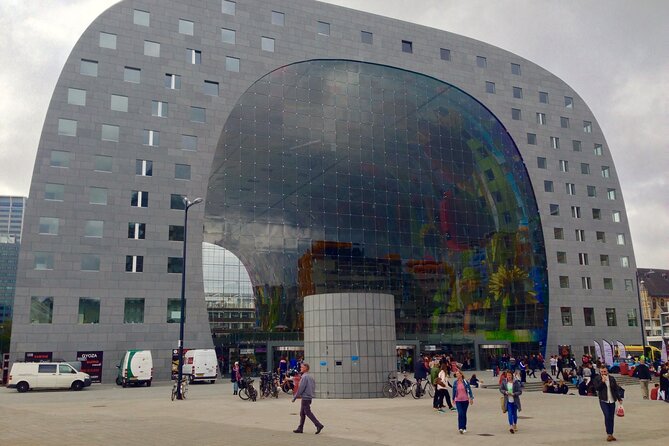
The Markthal is one of the tour’s major highlights. Designed by MVRDV, the building has a large horseshoe shape and a gray natural-stone exterior. Inside, the ceiling carries an enormous artwork of enlarged fruits, vegetables, seeds, fish, flowers, and insects.
This is the kind of building that makes more sense when you hear a little context. From outside, the arch is already memorable. Inside, the scale and colorful artwork turn an ordinary market setting into one of Rotterdam’s most recognizable public spaces.
The stop is listed at about 30 minutes, longer than most of the other visits. That gives you time to look around, notice the artwork, and take in the food stalls and restaurants. Food is not included, but you may have the chance to buy something during or after the tour, depending on the guide’s timing.
One criticism in the feedback was that the Markthal and its artistic details did not receive enough explanation. That is a fair concern. If your main reason for booking is architecture, ask your guide about the building’s design and the artwork rather than simply walking through it. The building is impressive on its own, but good interpretation makes it much more rewarding.
Oude Haven and the Cube Houses
The final major area is Oude Haven, or Old Harbour, a historic waterfront district on the north side of the Maas. It is now one of central Rotterdam’s most popular areas, with cafés, boats, and a direct connection to the city’s past as a port.
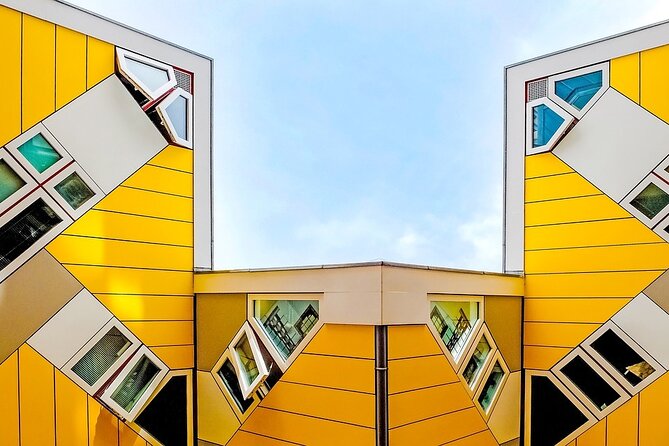
The Cube Houses are here. Their unusual tilted forms are among Rotterdam’s most familiar images. They are not just abstract sculptures. They are homes, designed to challenge the normal idea of what a house should be.
The tour gives you an outside look at the Cube Houses and the surrounding harbor area. The itinerary allows about 20 minutes here, which is enough to understand the design and take photos. If you want to visit a model Cube House or spend time examining the interiors, you will need to return independently, as that is not included.
Oude Haven is a good final stop because it brings several themes together: old port activity, modern housing, public space, and the city’s taste for architecture that starts a conversation. It is also a comfortable place to continue exploring after the guided walk, though the formal activity ends back at Stationsplein 10.
How the guides shape the experience
The guide matters a great deal on a tour like this. The route contains strong sights, but the buildings become much more useful when someone explains the decisions behind them.
Susan receives especially warm praise for making the city feel personal and for giving practical advice about places to buy gifts. One person with a delayed ship arrival had to shorten the tour and move quickly, but Susan and Tony worked hard to make the altered visit successful. That suggests a helpful level of flexibility, though you should not count on an abbreviated schedule being as relaxed as the normal tour.
Edwin is praised for explaining Rotterdam’s reconstruction after WWII, as well as its sculptures and unusual buildings. Michel is described as informative and easy to get along with. Ed, John, and Stephan are also singled out for their stories, enthusiasm, and ability to make the city approachable.
The feedback is not uniformly glowing. One three-star account found the guide offered too little information at several stops, especially around the Markthal. That is important. Guide quality can vary, and a small group does not automatically guarantee a detailed architectural lecture.
My advice is simple: ask questions. If a building interests you, say so. This route is best when it becomes a conversation rather than a procession from one photo stop to the next.
Is $29.41 good value for two hours?
At $29.41 per person, this is a reasonable price for a two-hour guided introduction, especially if your guide gives the WWII and architectural context promised by the route.
You are paying for local guidance, not admission tickets or a meal. Most stops are viewed from public areas, and the church can be entered free of charge. The value comes from saving time, learning how the city fits together, and getting a useful first orientation.
The price makes the most sense for a first visit, a short stay, or a cruise stop when you want to cover key areas efficiently. It is less compelling if you already know central Rotterdam well or prefer to spend 30 minutes studying one building at your own pace.
The small group limit improves the value. A maximum of 15 people should make the walk more comfortable than a large coach-style city tour, while keeping the cost below that of a private guide.
Timing, pace, and who should book
The advertised duration is approximately two hours. The listed stop times add up to more than that if treated as separate visits, so understand the schedule as a compact route with overlapping walking and explanation time, not as a guaranteed full session at every location.
You should wear comfortable shoes. This is a walking tour through central streets, shopping areas, public spaces, and the Old Harbour. The meeting point is close to public transportation, and most people can participate. Service animals are allowed.
I would recommend the tour for:
- First-time visitors who want the main central sights in one outing
- People curious about WWII and Rotterdam’s postwar rebuilding
- Architecture fans who want context for the Cube Houses and Markthal
- Cruise passengers with limited time
- Solo visitors who prefer a guide and a small group
I would be more cautious if you want an unhurried museum-style experience, a long stop inside the Sint-Laurenskerk, or a detailed technical study of every building. The pace is designed for coverage.
You receive confirmation when booking, and free cancellation is available up to 24 hours before the start time. If the minimum number is not reached and the activity is canceled, you are offered another date or experience, or a full refund.
Should you book the Rotterdam Must Do Tour?
Book it if you want Rotterdam to make sense quickly. The best part is the connection between destruction, reconstruction, and bold modern design. You will see the city’s major central landmarks, but you will also learn why they look the way they do.
The strongest guides appear to be those who bring their own affection for Rotterdam to the walk. Susan’s personal touch, Edwin’s explanations of the postwar city, and Michel’s clear presentation are exactly what this route needs.
Go in with realistic expectations. Two hours cannot give every stop equal attention, and the Markthal or Sint-Laurenskerk may deserve a return visit. Still, at $29.41, with a maximum group of 15 and a route that includes the Cube Houses, Luchtsingel, Old Harbour, and key WWII sites, this is a useful and fairly priced introduction to one of the Netherlands’ most original cities.
FAQ
How long does the Rotterdam Must Do Tour last?
The tour lasts approximately two hours.
Where does the tour begin?
The meeting point is Stationsplein 10, 3013 AJ Rotterdam, Netherlands, at Rotterdam Centraal Station.
Where does the tour end?
The activity ends back at the meeting point.
Is the tour offered in English?
Yes. The tour is offered in English.
What is included in the price?
A local guide is included. Food and drinks are not included.
How large is the group?
The tour has a maximum of 15 participants.
Just added in Rotterdam
- e-Scavenger hunt Breda: Explore the city at your own pace★ 4.5 · 27 reviews
- Rotterdam: City Walk Audio Guide in 7 Languages on your Phone★ 3.5 · 6 reviews
- e-Scavenger hunt Rotterdam: Explore the city at your own pace★ 4.5 · 13 reviews
- Explore the Instaworthy Spots of Rotterdam with a Local★ 5.0 · 1 review
- Discover Rotterdam: Classic Highlights Bike Tour with a Local★ 5.0 · 22 reviews
- The Goldheist – Trilling Private City Escape Game Rotterdam★ 5.0 · 1 review
- Skip the Line: SS Rotterdam Steam Ship Entrance Ticket★ 4.5 · 18 reviews
- Discover Breda with a self-guided Outside Escape city game tour!★ 5.0 · 16 reviews
Historical Tours, compared.
Amsterdam Food and Cultural Tour with Tastings
Read our review →
Kinderdijk UNESCO World Heritage Entry Ticket
Read our review →
Hop-on Hop-off Old-Fashioned Heritage Tram Tour
Read our review →


Amsterdam High-End Dutch Food & History Tour – Up to 8 guests
Read our review →
Cruise through the Historic City Center with Guide
Read our review →
Browse the lists this tour appears in