

Review · HISTORICAL TOURS
Amsterdam: Haunted History and Ghost Walking Tour
Amsterdam has more ghosts than bicycles. This two-hour walk pairs dark legends with real city history, taking you from Dam Square to old prisons, quiet courtyards, violent alleyways, and the grim world of early science. I especially like the stops at the Begijnhof and Blood Street, places that are easy to miss when you explore central Amsterdam on your own. The main thing to know is that this is often more history tour than full-on scare show.
You pay about $30 per person for a live English-speaking guide and storyteller. That is fair value if you want context, stories, and a guided route through the old center, rather than actors jumping out of doorways. Guides such as Sunil, Duncan, Jan, Julia, Lola, and Martina have been praised for humor, strong storytelling, and a clear passion for Amsterdam.
In This Review
- Key points to know before you book
- Starting behind the monument at Dam Square
- Nieuwe Kerk and the ghosts beneath royal ceremony
- The Spinhuis and the sorrow of a former women’s prison
- Begijnhof, a peaceful courtyard with a tragic story
- Blood Street and Amsterdam’s violent past
- The Waag and the so-called Purgatory of science
- What the guides do best
- Is $30 a fair price?
- Choosing the best time and preparing for the walk
- Who will enjoy this ghost walk?
- Should you book Amsterdam’s Haunted History and Ghost Walking Tour?
- FAQ
- Where does the Amsterdam Haunted History and Ghost Walking Tour meet?
- How long does the tour last?
- What language is the tour offered in?
- How much does the tour cost?
- What places does the tour visit?
- Is the tour only about ghosts?
- Are food and drinks included?
- Is the tour wheelchair accessible?
- Can I cancel the tour for a refund?
Key points to know before you book
- Two hours through central Amsterdam: The route begins at Dam Square and links several historic sites on foot.
- Ghost stories with real historical detail: Expect tales of prisoners, nuns, violence, medicine, architecture, and city life.
- The Begijnhof is a quiet surprise: Its peaceful courtyard carries one of the tour’s most memorable sad stories.
- Blood Street gives the walk its darkest edge: This narrow route is tied to centuries of murder and violence.
- Guide quality is a major strength: Sunil, Duncan, Jan, and other guides are praised for warmth, humor, and strong local knowledge.
- Best for curious first-time visitors: The tour suits you if you want spooky stories but also want to understand how Amsterdam developed.
Starting behind the monument at Dam Square
The meeting point is in front of Hotel Krasnopolsky, behind the monument at Dam Square. This is a practical place to begin because it sits in the middle of Amsterdam’s historic core, though the square can be crowded and noisy. Give yourself enough time to locate the guide rather than arriving at the last second.
The guide waits at the meeting point and leads the group on foot. The tour is offered in English, and the pace is designed for a two-hour city walk. One useful detail from the tour experience is that the group may sometimes be small. Some people have found themselves in a group of only two, which turns the walk into something close to a private outing.
That can make a big difference. A small group gives you more time to ask questions about Amsterdam, its buildings, local customs, and the stories behind the stops. Larger groups may feel less personal, but the central route and live guide still make the tour easy to follow.
More History Tours in Amsterdam
- Amsterdam Food and Cultural Tour with Tastings
★ 5.0 · 2,442 reviews - Amsterdam High-End Dutch Food & History Tour – Up to 8 guests
★ 5.0 · 482 reviews - Amsterdam: Historic City Sightseeing Canal Cruise
★ 4.5 · 444 reviews
Nieuwe Kerk and the ghosts beneath royal ceremony
The first major stop is Nieuwe Kerk, the large church beside Dam Square. Its public image is grand and ceremonial, linked with royal events and important national occasions. The tour shifts your attention from the impressive exterior to the crypts and vaults below, where notable figures have been laid to rest.
This is a good opening stop because it sets up the tour’s main idea: Amsterdam’s grandest places often have a less comfortable past. Royal ceremonies and solemn architecture sit above burial spaces, old memories, and stories of restless spirits. You get atmosphere without needing theatrical effects.
I like this part for its historical setting. Even if you are not convinced by ghost stories, the church gives the guide a strong way to explain how Amsterdam remembered its powerful citizens and marked death in public life. The supernatural material works best when attached to a real building with centuries of use.
You should not expect a long interior visit or a private look into restricted vaults. The supplied details describe the church as a stop for stories about crypts and burials, not as an admission-based church tour. The value comes from the guide’s explanation and the setting around you.
The Spinhuis and the sorrow of a former women’s prison

The route then turns toward the Spinhuis, a former women’s prison associated with sorrow and confinement. The name points to the work once connected with the institution, and the tour focuses on the experiences of inmates and the painful atmosphere linked with the building.
This is where the walk moves from churchyard mystery to social history. A ghost story about an inmate is not just a tale of a wandering spirit. It also raises questions about punishment, poverty, women’s lives, and the treatment of prisoners in earlier Amsterdam.
I find this one of the more useful parts of the route because it gives the haunting a human face. You are not simply hearing about a spooky building. You are hearing about people who lived under harsh conditions, and the sadness of that past gives the story its weight.
The Spinhuis stop may appeal less if you want a fast stream of frightening incidents. The material is tied to historical suffering, so the mood is somber rather than playful. Guides with a strong interest in Amsterdam’s past, including Sunil and Duncan, have been praised for adding context beyond the ghost tale itself.
Begijnhof, a peaceful courtyard with a tragic story
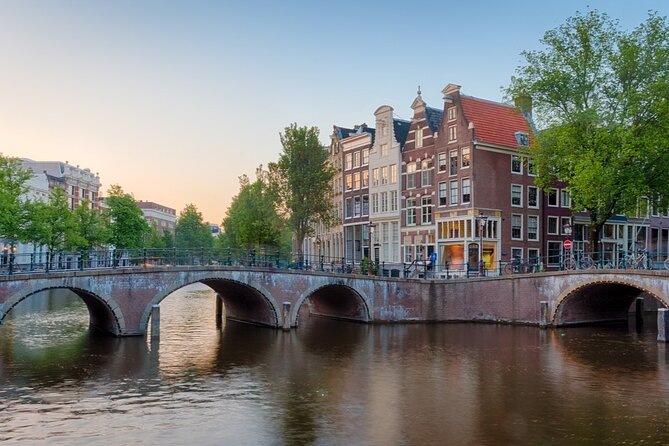
The Begijnhof changes the mood completely. This quiet courtyard feels removed from the traffic and noise of the central streets, which makes the story told here especially effective. The tale concerns a nun condemned to wander in silence after breaking her vows.
I like the contrast. You enter a calm, almost sheltered place, then hear about a woman tied to a haunting and an eternal punishment. The story works because the setting is so restrained. There is no need for a dark alley or dramatic lighting when a quiet courtyard can create its own tension.
Listen carefully here. The guide may ask you to picture faint footsteps and a figure moving through the courtyard in silence. The tour description presents this as a story of a nun’s ghost, while the overall experience is guided by storytelling rather than a promise of paranormal proof.
This is also one of the places you may not properly notice on a self-guided walk. Several people have valued the way the route points out corners and historic places they had passed without understanding. The Begijnhof is a good example of what a local guide adds: not just directions, but a reason to pause.
Please remember that this is a real historic courtyard, not a stage set. Keep your voice low and follow the guide’s instructions. The peaceful character of the place is part of what makes the stop work.
More Walking Tours in Amsterdam
- Anne Frank’s Story – Guided Walking Tour through Amsterdam
★ 5.0 · 11,619 reviews - Amsterdam: Life of Anne Frank and World War II Walking Tour
★ 4.8 · 10,467 reviews - Absolutely Amsterdam – the Essential Introductory Walking Tour
★ 5.0 · 3,629 reviews - Amsterdam: Anne Frank Guided Small Group Walking Tour
★ 4.8 · 2,722 reviews
Blood Street and Amsterdam’s violent past
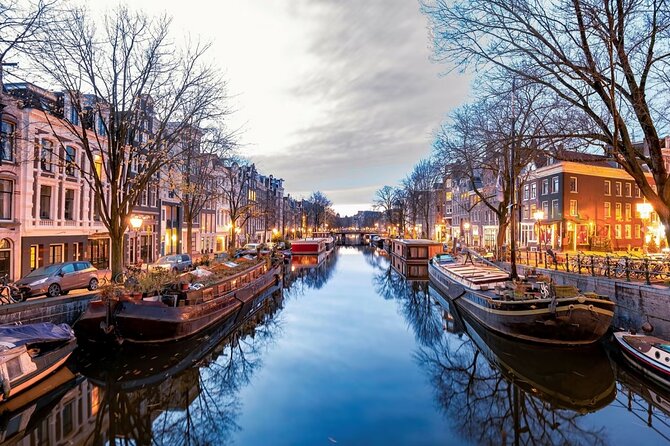
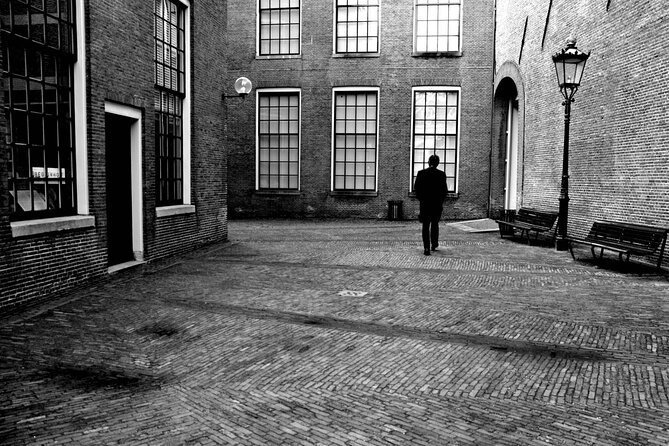
Blood Street brings the strongest title-page atmosphere. The cobblestones are linked with centuries of violence, and the guide tells stories of murder, conflict, and mayhem associated with this dark corner of the old city.
This stop gives the tour a more direct sense of danger. The earlier stories concern burial, prison, and religious punishment. Blood Street brings you into a public urban space where violence unfolded amid the daily life of Amsterdam.
I appreciate the way this kind of stop makes street names feel less decorative. You begin to see the old center as a place shaped by crime, punishment, trade, faith, and crowded living conditions. The street is not simply a backdrop for a ghost story. It becomes evidence of how the city once worked.
Still, your experience will depend on the guide’s style. Some guides build tension with dramatic delivery, while others focus on facts and questions. If you want maximum fright, choose a later starting time when available. One person who took a 5 p.m. walk enjoyed the earlier light and easier mood, but suggested the 8 p.m. option for extra scare factor.
The Waag and the so-called Purgatory of science
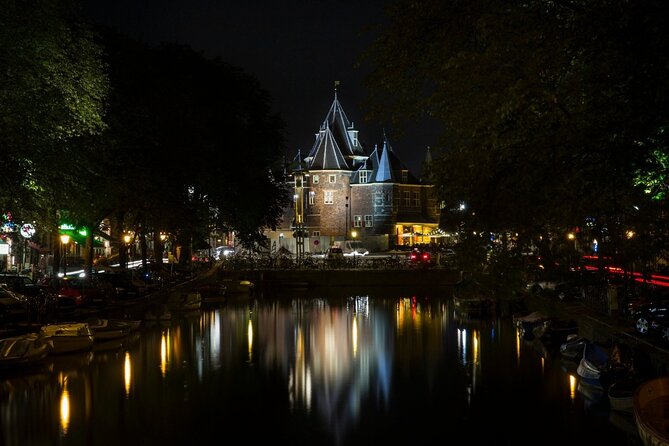
The final major stop is the Waag, presented here as the Purgatory of the Waag. This section connects ghosts with the Age of Enlightenment and the disturbing practice of dissecting human bodies for scientific study.
The Waag is an ideal closing location because it brings together science, death, and curiosity. Early medical study could be both important and deeply unsettling. The stories ask you to consider the people whose bodies became part of that process, as well as the scientists who believed they were advancing knowledge.
This is not a medical lecture, but it does give the tour a different kind of darkness. The earlier stops focus on religious belief, imprisonment, and violence. The Waag adds the uneasy question of how far people should go in the name of discovery.
The phrase Purgatory of the Waag gives the stop a supernatural frame, but the historical material is what makes it memorable. If you enjoy old medicine, anatomy, or the stranger side of scientific history, this may be your favorite part.
What the guides do best
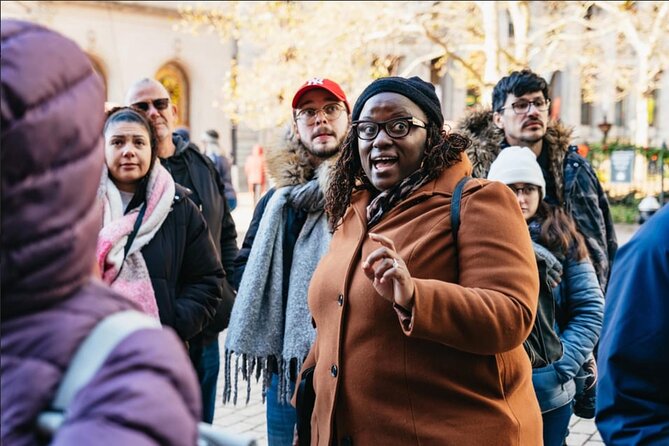
The strongest feature of this experience is the guide. Sunil has been praised for his humor, energy, city knowledge, and ability to answer questions. Duncan is described as passionate about Amsterdam and willing to add information about culture, architecture, Dutch innovation, and the city’s development. Jan has used contemporary photographs, paintings, and newspaper articles on an iPad to support the stories.
Other guides named in the feedback include Julia, Lola, and Martina. The exact guide will depend on the date and departure time, so you should not book on the assumption that one specific person will lead your walk.
The common thread is a conversational style. You are likely to get more than the basic script. Guides have offered advice about places to eat, sights to see, and things to do later in the trip. That is useful when the tour takes place early in your stay, since you can use those suggestions for the rest of your time in Amsterdam.
Some guides are openly skeptical about ghosts. That can be a plus if you want a balanced presentation, but it may disappoint you if you expect the guide to insist that every legend is true. The tour works best when you treat the supernatural tales as part of Amsterdam’s cultural memory, then enjoy the history behind them.
Is $30 a fair price?
At roughly $30 per person, the tour offers two hours with a live guide, a planned route, and storytelling at several central sites. You are paying for interpretation rather than entry to museums or monuments. Food and drinks are not included.
I consider the price fair if you would otherwise walk through these streets without knowing what happened there. The guide turns ordinary-looking corners into places with names, stories, and historical meaning. That added context is the main product.
The value is strongest for first-time visitors and for people who enjoy walking tours. It is also good for repeat visitors who have already seen Amsterdam’s major museums and canals and want a different angle. If you are interested only in dramatic scares, the price may feel less convincing because the walk often gives equal weight to general city history.
The tour includes no transportation, so you should be comfortable walking for two hours. The activity is listed as wheelchair accessible, but the route includes old central streets and cobblestones, so you may want to confirm the exact route if surface conditions are important to you.
Choosing the best time and preparing for the walk
The tour lasts two hours, and starting times vary. A late afternoon departure can be a sensible choice if you want to see the streets clearly and keep the mood lighter. An evening departure gives you more darkness and may suit you better if atmosphere matters most.
Amsterdam weather can change quickly. One walk continued through cold rain, with the guide keeping up the energy, but you should still bring waterproof clothing and shoes suited to city walking. The tour does not include food or drinks, so have water with you and eat beforehand if you tend to get hungry on foot.
Arrive at the Hotel Krasnopolsky meeting point with a little extra time. The guide waits behind the monument at Dam Square, and the square has plenty of movement around it. You will want to spot the group without rushing.
Free cancellation is available up to 24 hours before the tour for a full refund. You can also reserve now and pay later, which helps if your Amsterdam plans are still shifting.
Who will enjoy this ghost walk?
I would recommend it to you if you like:
- City history told through unusual places
- Ghost stories with a factual base
- Short walking tours in central Amsterdam
- Small-group conversations and questions
- Stories about crime, punishment, religion, and early science
- A guide who can add practical advice for the rest of your visit
It is particularly useful during your first days in Amsterdam. You get your bearings around Dam Square and nearby streets, then leave with a better sense of what to look for as you explore on your own.
Families with older children may enjoy the stories, though the subjects include murder, imprisonment, death, and dissection. The tour is not presented as a children’s attraction, so use your judgment based on your group.
You may want to skip it if you dislike walking, want extensive time inside historic buildings, or expect constant scares and paranormal demonstrations. The route is strongest as a history walk with a spooky layer.
Should you book Amsterdam’s Haunted History and Ghost Walking Tour?
Book it if you want Amsterdam’s old center explained through its darker corners. The best moments come from the contrast between grand Nieuwe Kerk, the quiet Begijnhof, the grim Spinhuis, Blood Street, and the Waag’s unsettling scientific past.
I would choose an earlier time for clearer sightseeing and an evening slot for a stronger mood. If you can, take the tour near the start of your stay, since the guides often share useful suggestions for other places to see and eat.
This is not a haunted-house production, and that is its strength. You get a thoughtful, entertaining walk where the ghosts open the door to stories about how Amsterdam was built, governed, punished, and remembered. At $30, that is a solid deal for two hours of guided history with a good chance of seeing corners you would otherwise pass by.
FAQ
Where does the Amsterdam Haunted History and Ghost Walking Tour meet?
The meeting point is in front of Hotel Krasnopolsky, behind the monument at Dam Square. Your guide will be waiting there.
How long does the tour last?
The walking tour lasts two hours.
What language is the tour offered in?
The live tour guide speaks English, and English is the listed tour language.
How much does the tour cost?
The listed price is $30 per person.
What places does the tour visit?
The route begins at Dam Square and includes Nieuwe Kerk, the Spinhuis, Begijnhof, Blood Street, and the Waag.
Is the tour only about ghosts?
No. It includes ghost stories but also covers Amsterdam’s history, architecture, culture, Dutch innovation, punishment, religion, violence, and early science.
Are food and drinks included?
No. Food and drinks are not included in the tour price.
Is the tour wheelchair accessible?
Yes. The activity is listed as wheelchair accessible.
Can I cancel the tour for a refund?
Yes. You can cancel up to 24 hours in advance for a full refund. You can also reserve now and pay later.
Just added in Amsterdam
- Private Tour Zaanse Schans Windmills and Volendam in Jaguar★ 5.0 · 10 reviews
- Windmills-Volendam-Giethoorn Private Tour in Jaguar★ 5.0 · 2 reviews
- Half-Day Private Guided Sightseeing Tour of Zaanse Schans★ 5.0 · 14 reviews
- Zaanse Schans and Giethoorn Unique Day Trip with Boat Cruise★ 4.5 · 17 reviews
- Best of Netherlands: Zaanse Schans Mills, The Hague & Rotterdam★ 4.5 · 10 reviews
- Zaanse Schans Private Tour Windmills★ 5.0 · 18 reviews
- Zaanse Schans Windmills Edam Volendam and Marken from Amsterdam★ 5.0 · 1 review
- Zaanse Schans Edam Volendam Private Day Tour from Amsterdam★ 5.0 · 3 reviews
Historical Tours, compared.
Amsterdam Food and Cultural Tour with Tastings
Read our review →
Kinderdijk UNESCO World Heritage Entry Ticket
Read our review →
Hop-on Hop-off Old-Fashioned Heritage Tram Tour
Read our review →

Amsterdam High-End Dutch Food & History Tour – Up to 8 guests
Read our review →
Cruise through the Historic City Center with Guide
Read our review →

Historical Highlights Walking Tour with Tasting
Read our review →Browse the lists this tour appears in