
Review · ROTTERDAM TOURS
Discover Rotterdam’s most Photogenic Spots with a Local
Rotterdam rewards a camera and comfortable shoes. This 90-minute walk gives you personal attention in a group of no more than eight, while covering major sights from Rotterdam Centraal to Hotel New York. I like the quick city overview and the guide’s ability to adjust the pace and route to your interests.
I also like the practical local advice. Bart confirmed one booking in advance, adapted the tour in real time, and recommended Warung Mini Rotterdam for Surinamese food afterward. The main drawback is the price: at $105.45 per person, this is a costly short walk, especially since transport, museum visits, monuments, and personal expenses are not included.
In This Review
- Key points to know before you book
- Why this short Rotterdam walk works
- Starting at Delftse Poort and Rotterdam Centraal
- The Market Hall, Rotterdam’s big visual hit
- The Cube Houses and Rotterdam’s playful side
- The Destroyed City and Rotterdam’s darker memory
- Local customs and daily life between the landmarks
- Nieuwe Luxor Theater and the walk toward the river
- Ending at Hotel New York
- What $105.45 per person really buys you
- Who should book this experience
- Should you book the Rotterdam photo walk?
- FAQ
- How long does the Rotterdam photo walk last?
- Where does the tour begin?
- Where does the tour end?
- How many people can join the group?
- Is the tour offered in English?
- Are transportation, museum, and monument tickets included?
Key points to know before you book
- Start at Rotterdam Centraal: Meet at Delftse Poort, Weena 505, then walk toward the city center.
- See the Market Hall and Cube Houses: These are the tour’s strongest photo stops and two of Rotterdam’s most recognizable modern sights.
- Keep the schedule light: The walk lasts about 1 hour and 30 minutes, making it easy to fit around a train arrival, cruise visit, or afternoon plans.
- Expect a flexible route: The local guide can adjust the pace and stops to suit the group, with weather also affecting the exact path.
- Finish near the Maas: The walk ends at Hotel New York, giving you a useful place to continue exploring on your own.
- Plan for a walking tour, not a museum tour: You see the exteriors and hear the stories, but admission fees and transport tickets are extra.
Why this short Rotterdam walk works
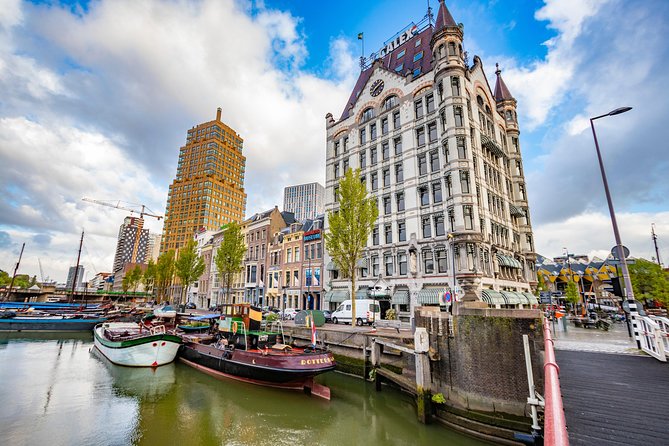
Rotterdam is not the kind of Dutch city that reveals itself through a single postcard view. Much of its character comes from bold buildings, broad streets, public art, and the way old port connections meet new architecture. A local-led walk helps you read those pieces instead of simply photographing them and moving on.
The route is especially useful if you are visiting for the first time and want orientation without giving up half a day. In 90 minutes, you move from the main railway station through the center and toward the riverfront. That gives you a basic map in your head, plus a few ideas for what to see next.
I would not book this if you want long stops inside museums or detailed architectural lectures at every corner. The value comes from conversation, local context, and efficient sightseeing. You are paying for a small group and a personal guide, not for admission to attractions.
The group limit of eight matters. A guide can answer questions, change the pace, and suggest food or sightseeing ideas without trying to manage a large crowd. The experience is also offered in English, and confirmation arrives when you book.
A few more options to weigh up in Rotterdam
- Rotterdam: Harbor Sightseeing Cruise
★ 4.3 · 7,599 reviews - Rotterdam: 1-Hour Sightseeing Splash Tour
★ 4.5 · 3,299 reviews - Rotterdam: Rotterdam Zoo Blijdorp Entry Ticket
★ 4.6 · 2,754 reviews
Starting at Delftse Poort and Rotterdam Centraal
The meeting point is Delftse Poort at Weena 505, 3013 AL Rotterdam. This puts you by Rotterdam’s main train station, a sensible starting place if you are arriving by rail or staying near the center.
Beginning here gives the walk a practical advantage. You do not have to spend time crossing the city to reach the first stop. If you are using Rotterdam as a day stop, you can step off the train and begin learning your way around almost at once.
I would arrive with your phone charged. This is a photo-focused walk, and the city’s large buildings and open streets can make for good wide-angle shots. Comfortable shoes are also a wise choice, even though the duration is short. The route is on foot, and the exact distance can change with the group’s pace and weather.
The guide is an independent local rather than a large company representative leading a standard script. That distinction can shape the tone of the walk. Bart, one of the guides associated with this experience, was praised for confirming the meeting time and place and for changing the tour in real time around one person’s interests. Wouter also led a version praised for its focus on Rotterdam as it is today and how it continues to change.
That personal approach is the best reason to ask questions early. Tell the guide if you want more architecture, food suggestions, local customs, or help planning the rest of your day. You will get more from the experience if you treat it as a conversation rather than a fixed march between photo stops.
The Market Hall, Rotterdam’s big visual hit
The Market Hall is described as the most photogenic stop on the route, and it is easy to understand why it receives special attention. Its huge curved form and colorful interior artwork make it a natural place to pause and take pictures.
The important point is that the guide does more than point out the building. You can ask how it fits into Rotterdam’s rebuilt center, how locals use the market, and what details are easy to miss when you are focused on getting the perfect image. The tour is designed to give you that extra layer of explanation.
Because this is a short walk, do not expect a long food-shopping session inside the hall. The stop is mainly about seeing and understanding one of the city’s signature buildings. If you want to eat there, browse stalls at length, or return for a separate meal, save that for later.
I like this stop for first-time visitors because it quickly shows Rotterdam’s modern personality. It also gives you a clear reason to continue walking instead of treating the city center as a collection of unrelated buildings.
The Cube Houses and Rotterdam’s playful side
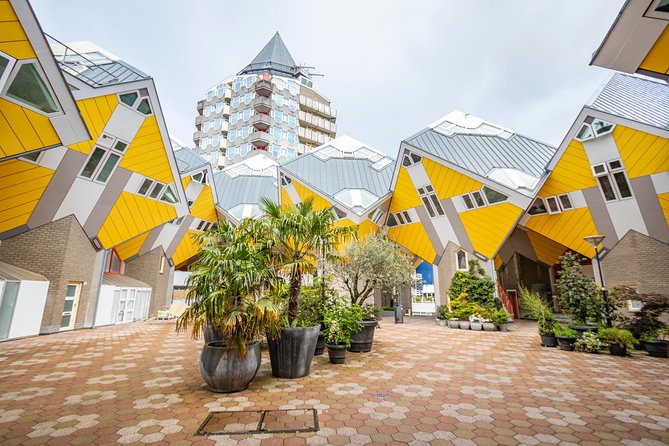
The Cube Houses are another essential stop. Their unusual tilted forms make them instantly recognizable, and they show how Rotterdam uses architecture to question the ordinary shape of a home.
Your guide can explain why the houses matter to the city and point out how they connect with the surrounding urban design. That context is useful because the buildings can look like a quick photo opportunity if you do not know what problem or idea they were meant to address.
The tour does not include entry tickets to museums or monuments, so you should not assume that an interior visit is part of the price. You will see the Cube Houses as part of the walking route, then decide if you want to return or pay separately for any attraction open to the public.
This is a good example of the tour’s limits and strengths. You get a concentrated introduction to a famous place, but not a long architectural study. For a visitor with only a few hours, that tradeoff may be worthwhile. For someone who already knows Rotterdam well, it may feel too brief.
A different kind of day out entirely:
- Rotterdam: Euromast Lookout Tower Ticket
★ 4.4 · 2,549 reviews - Rotterdam: Pancake Cruise
★ 4.4 · 1,986 reviews - Rotterdam: Kinderdijk UNESCO World Heritage Entry Ticket
★ 4.6 · 1,477 reviews - Rotterdam: Harbor Cruise with Live Guide
★ 4.0 · 1,270 reviews
The Destroyed City and Rotterdam’s darker memory
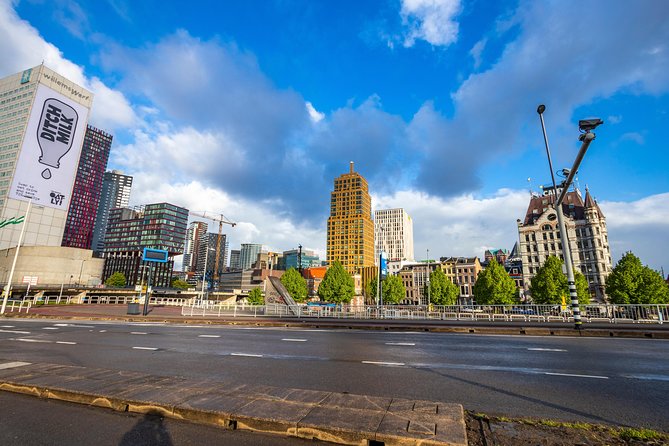
The stop called the Destroyed City brings a different mood to the walk. Unlike the bright Market Hall or the playful Cube Houses, this piece of art gives the center a chance to address loss and memory.
The guide explains the meaning of the work and places it within the story of Rotterdam. That is important because public art can be easy to pass without understanding. Here, the sculpture is not just another object to photograph. It represents a painful part of the city’s past and gives the route emotional weight.
I appreciate the contrast. A tour made only of photogenic buildings can become shallow. This stop reminds you that Rotterdam’s modern appearance is connected to destruction and rebuilding. It also helps explain why so much of the city feels newer and more experimental than many Dutch destinations.
You should expect interpretation rather than a long formal ceremony. The guide’s explanation is part of the walking conversation, and you can ask follow-up questions if this part of Rotterdam’s story interests you.
Local customs and daily life between the landmarks
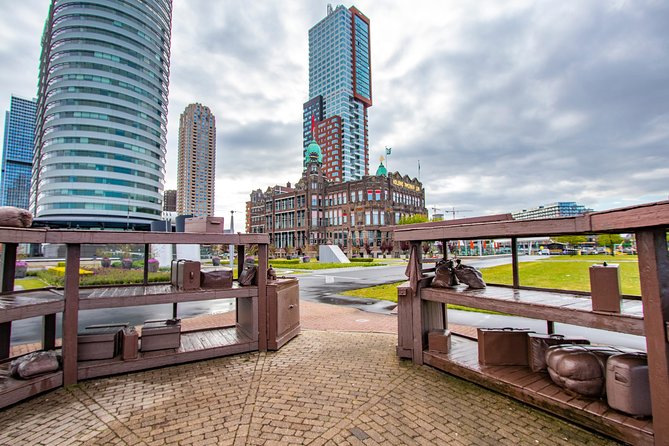
The most useful part of a local walk often happens between the headline stops. As you move through the city, the guide shares information about Rotterdam, local customs, and present-day life.
That matters because you are not only learning where to take pictures. You are getting clues about how to behave, what to notice, and where to continue after the walk. The route is also adapted to the group’s interests and walking speed, so the conversation can shape the experience.
One guide, Bart, gave a particularly practical recommendation after the walk: Warung Mini Rotterdam, also known as Afhaal Mini 53, for Surinamese food. That is exactly the kind of tip I value from a local. It connects sightseeing with eating and gives you a possible next stop that you might not have chosen from a generic tourist list.
The recommendation is not included in the tour price, of course, and no meal is provided. Still, it shows the difference between a local conversation and a basic sightseeing route. If food matters to you, say so. The guide may be able to point you toward a place suited to your plans.
Nieuwe Luxor Theater and the walk toward the river
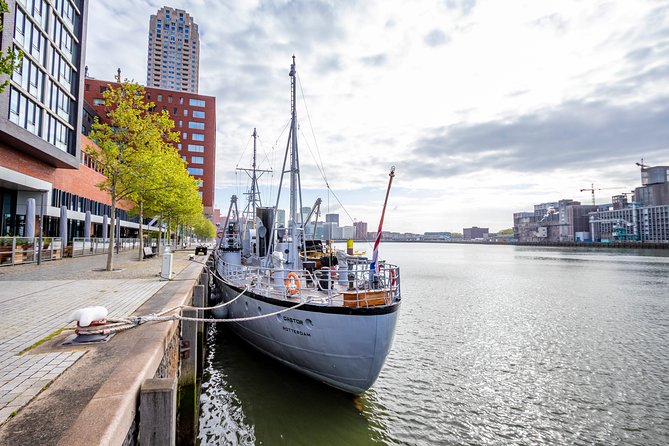
The tour continues to the Nieuwe Luxor Theater, a modern building that took six years to construct. The guide uses the theater to discuss its architecture and why it matters in Rotterdam.
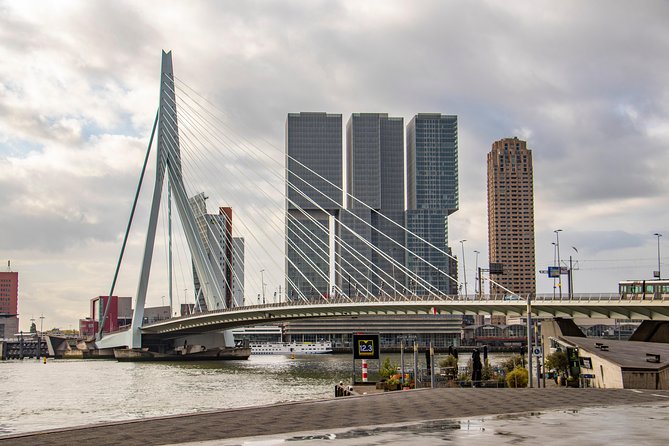
This stop gives the route a strong change of setting. You begin near the station, see central landmarks, and then continue toward the southern side of the city and the water. The theater helps connect Rotterdam’s design culture with its larger riverfront setting.
Because the walk ends at Hotel New York, the Nieuwe Luxor Theater is close to the final part of the experience. The route therefore works as a gradual move through the city rather than a series of disconnected photo calls.
Again, the tour does not include a performance or entrance ticket. You are seeing the building from the walking route and hearing about it from the guide. If you want to attend a show, that requires separate planning and payment.
Ending at Hotel New York
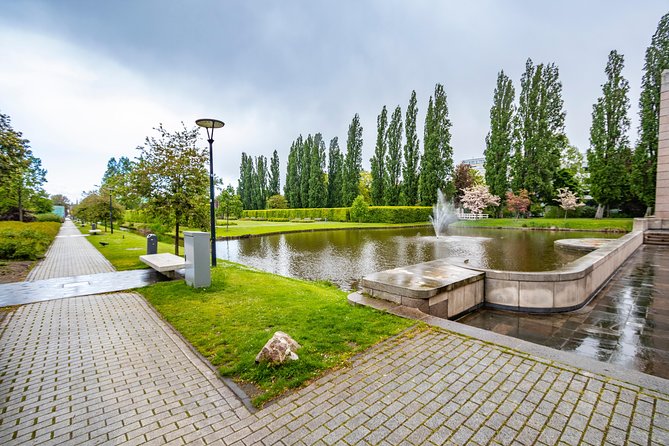
The final point is Hotel New York at Koninginnenhoofd 1, 3072 AD Rotterdam. The building gives you a clear endpoint and leaves you in a useful area for further exploring.
The walk’s final location is a practical advantage. You are not dropped back at the starting station with the city still ahead of you. Instead, you finish near a notable waterfront building and can continue independently. The exact next step depends on your schedule, but the tour leaves room for your own Rotterdam plans.
This is also a good moment to ask for final recommendations. If you need lunch, dinner, another neighborhood, or help deciding what to do next, use the last few minutes well. The personalized recommendations are one of the included features, and the best value may come from advice that saves you time later.
The route does not promise a complete tour of Rotterdam. It gives you a beginning, a handful of major sights, and a sensible finish. Think of it as a first chapter, not the whole book.
What $105.45 per person really buys you
At $105.45 per person, the cost is high for a 90-minute walking tour. If you measure value only by duration, it will be difficult to justify, particularly because personal expenses, public transportation, museums, and monument tickets are not included.
The price makes more sense if you value a small group and a tailored conversation. With a maximum of eight people, you are not paying to be one face in a large crowd. You are paying for a local who can respond to your questions, adjust the pace, and provide suggestions for the rest of your stay.
Group discounts may improve the cost for people booking together. I would also consider the tour more useful at the beginning of a Rotterdam visit than at the end. Early advice about food, neighborhoods, and city customs can shape the rest of your time.
The experience is booked, on average, about 20 days ahead. That is not a guarantee that every date fills early, but it is a useful planning clue. If your schedule is fixed, booking ahead is sensible.
Free cancellation is available until 24 hours before the start time. Canceling inside that window means no refund, and changes made within 24 hours are not accepted. Keep the local cut-off time in mind when arranging a train, flight, or cruise schedule.
Who should book this experience
I would recommend this walk to a first-time visitor who wants a fast introduction to Rotterdam’s modern center. It suits you especially well if you like taking photos but also want someone to explain what you are seeing.
It is also a good match for solo visitors or couples who prefer a small setting. Bart’s ability to reshape a tour for one person shows how useful the format can be when you ask for a personal pace or particular interests.
The short duration works well for a busy itinerary. You can place it after arriving by train, before another reservation, or during a short stay in the city. It may also suit someone visiting from a ship, provided the timing and travel to the meeting point work for you.
I would hesitate to book it if you have impaired mobility. The experience is not recommended for people with mobility limitations, and the walking route may not be comfortable for everyone. Service animals are allowed, and most people can participate, but the activity remains a walking tour.
Should you book the Rotterdam photo walk?
Book it if you want a friendly, flexible introduction to Rotterdam and are willing to pay a premium for personal guidance. The Market Hall, Cube Houses, Destroyed City, Nieuwe Luxor Theater, and Hotel New York give you a useful cross-section of the city in a compact period.
Skip it if you mainly want the lowest-cost way to see these buildings, or if you need long interior visits and formal museum explanations. For the right visitor, the strongest payoff is not the number of stops. It is the local perspective, the chance to ask questions, and the practical advice that can improve the rest of your Rotterdam visit.
FAQ
How long does the Rotterdam photo walk last?
The experience lasts approximately 1 hour and 30 minutes.
Where does the tour begin?
It begins at Delftse Poort, Weena 505, 3013 AL Rotterdam, Netherlands, near Rotterdam’s main train station.
Where does the tour end?
The walk ends at Hotel New York, Koninginnenhoofd 1, 3072 AD Rotterdam, Netherlands.
How many people can join the group?
The group has a maximum of eight travelers.
Is the tour offered in English?
Yes. The experience is offered in English.
Are transportation, museum, and monument tickets included?
No. Entry tickets for transportation, museums, and monuments are excluded. Personal expenses are also not included.
Just added in Rotterdam
- MUST DO: Rotterdam highlights & history with a local guide★ 4.5 · 57 reviews
- Private Pedicab/Rickshaw Tour of Rotterdam With a Local Guide★ 4.5 · 47 reviews
- Private Rotterdam Walking Tour – guided by Architects★ 5.0 · 2 reviews
- Private Minivan Transfer from Rotterdam★ 5.0 · 6 reviews
- Private Food Tasting Experience in Breda★ 5.0 · 2 reviews
- Private Customizable Day Trip From Rotterdam★ 4.5 · 31 reviews
- Maritime Museum Rotterdam★ 3.5 · 73 reviews
- Kinderdijk Area Cycling Tour★ 5.0 · 17 reviews
Rotterdam Tours, compared.


Kinderdijk UNESCO World Heritage Entry Ticket
Read our review →
Browse the lists this tour appears in