
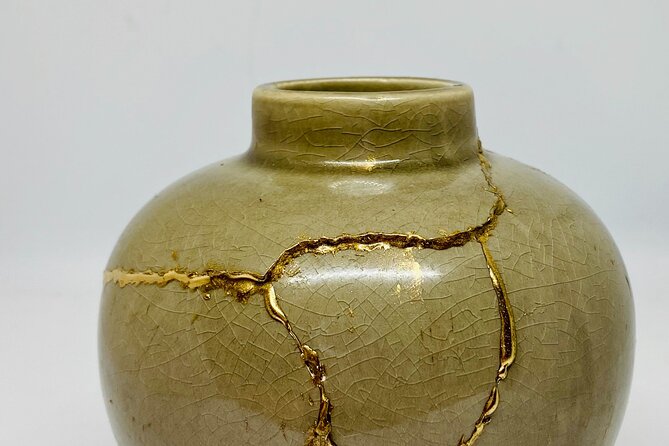
Review · WORKSHOPS
Kintsugi Workshop “The art of Imperfection”
A broken plate can become a small work of art. This two-hour Amsterdam kintsugi workshop turns cracked pottery into something personal, using golden leaf glue and the Japanese idea of wabi-sabi. I like the quiet, thoughtful pace, and I like that the group is limited to six people. The main drawback is the fixed Wednesday afternoon schedule, which may not fit a short or tightly planned visit.
You meet at Paleisstraat 107, close to public transportation, and finish where you began. Annelies, the welcoming host named in the feedback, helps guide the process with patience and care. The price is about $90.11 per person, fair for a small hands-on class with materials included, though coffee and tea cost extra.
In This Review
- Key points about the Amsterdam kintsugi class
- Why kintsugi makes a good Amsterdam activity
- Arriving at Paleisstraat 107
- A calm introduction before the plate breaks
- Breaking and rebuilding your plate
- Golden lines and the beauty of visible scars
- The value of a six-person group
- What the $90.11 price includes
- What this workshop teaches beyond the craft
- Who will enjoy the two-hour session most
- Booking timing, schedule, and cancellation
- Should you book the Amsterdam kintsugi workshop?
- FAQ
- Where does the kintsugi workshop take place?
- How long does the workshop last?
- What day and time is the workshop offered?
- How much does the workshop cost?
- Are materials included?
- Are coffee and tea included?
- Is the workshop offered in English?
- How many people can join the class?
- Can children attend the workshop?
- Can I cancel for a full refund?
Key points about the Amsterdam kintsugi class
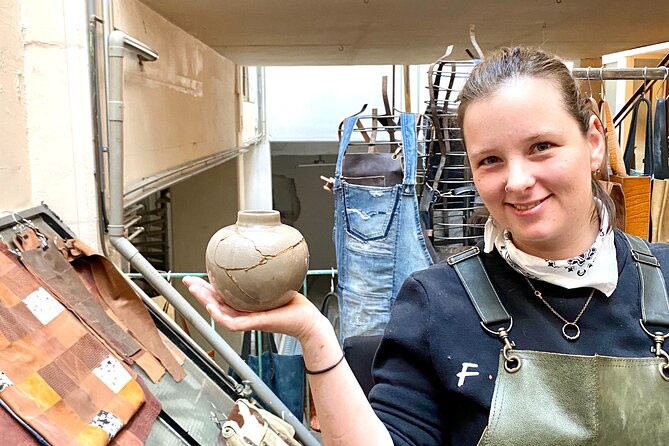
- A symbolic break begins the workshop: You break a plate as a fresh start, then work carefully with the pieces.
- Only six people can join: The small class size gives the activity a calm, personal feel.
- Golden repairs become the finished design: Cracks are not hidden. They become the main visual feature.
- The class lasts about two hours: That is enough time for an unhurried creative session without taking a full day.
- Annelies creates a warm welcome: Her friendly approach and the chance to focus carefully are central to the experience.
- You receive all needed materials: You do not need to bring tools or supplies, though bringing your own broken item does not appear to be part of the standard setup.
Why kintsugi makes a good Amsterdam activity
Amsterdam offers plenty of museums, canals, and busy streets. This class gives you a different kind of sightseeing break: two hours at a table, working with your hands and paying attention to one small object.
Kintsugi is a Japanese repair art that developed in the 15th century. Instead of hiding damage, it highlights cracks with golden material. The result is not a restored object that pretends nothing happened. It is a new object whose history remains visible.
That idea gives the class more weight than a simple craft session. You start with a plain plate, break it, and then rebuild it. The action is symbolic, but the work is also practical. You must sort pieces, fit edges together, and use patience when the first arrangement does not work.
I like this blend of meaning and manual work. You are not just hearing about wabi-sabi, the Japanese appreciation of imperfection and change. You are handling the pieces yourself and seeing the idea take shape.
The class also suits a rainy afternoon in Amsterdam. You do not need special artistic ability, and you do not need to spend hours preparing. All materials are provided, and the session is offered in English.
A few more options to weigh up in Amsterdam
- Amsterdam: Van Gogh Museum Ticket
★ 4.7 · 52,054 reviews - Amsterdam Classic Saloon Boat Cruise with Drinks and Cheese
★ 5.0 · 31,825 reviews - Amsterdam Luxury Canal Cruise + Unlimited Drinks & Bites option
★ 5.0 · 30,518 reviews
Arriving at Paleisstraat 107
The meeting point is Paleisstraat 107, 1012 ZL Amsterdam. The activity begins and ends at this same address, so you do not have to figure out a second location after the class.
The workshop is near public transportation. That matters in Amsterdam, where a short distance can still take time if you are walking against rain, carrying shopping bags, or trying to keep a sightseeing schedule. Check your route before leaving, and allow enough time to arrive calmly. The class depends on concentration, so rushing in at the last moment would work against the mood.
The published session runs on Wednesdays from 2:00 PM to 4:00 PM during the stated operating periods. The schedule is useful for travelers who can plan around it, but less convenient if your Amsterdam visit is built around weekend activities or a packed museum itinerary.
The mobile ticket makes arrival simple. Confirmation is provided when you book, and you should keep it available on your phone.
A calm introduction before the plate breaks
The workshop begins with a serene introduction to kintsugi. This opening matters because the activity is not presented as a race to make a finished object. The tone prepares you to slow down and pay attention.
You learn the basic idea behind the craft: cracks can be part of an object’s beauty rather than a flaw to conceal. The class connects that approach to natural materials, design, craftsmanship, and wabi-sabi.
The introduction also gives the symbolic act of breaking a plate a clear purpose. You are not simply damaging something for fun. The break represents a fresh start, and the later repair gives you a chance to create a different form from the original.
That framing may appeal to you if you enjoy reflective activities. It may feel too serious if you want a fast, playful craft class with lots of chatting. The available information points to a focused and thoughtful setting, not a loud social event.
Breaking and rebuilding your plate
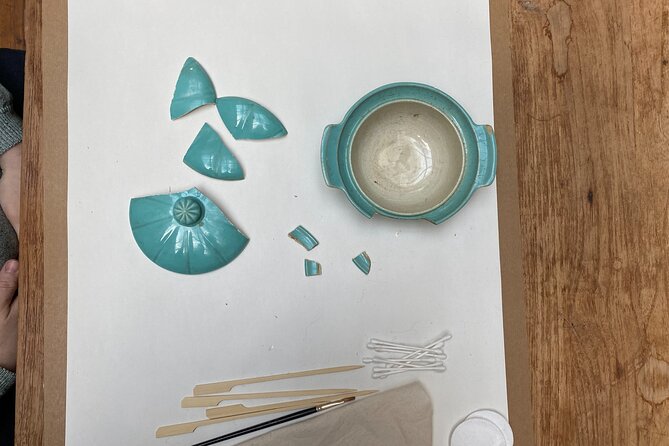
The next step is the most unusual one: you break a plate for the activity. The supplied pieces are then patiently reassembled.
This process is likely to be more demanding than it first sounds. Pottery fragments must be placed in the correct order, and small differences in shape can affect the whole arrangement. The class description emphasizes patience and fine motor skills, so expect careful handwork rather than a quick glue-and-go project.
You may find the process satisfying because the finished design grows from a problem. Each crack becomes part of the pattern. Instead of trying to make the plate look untouched, you work toward a result that shows what happened.
The class information does not say that you can bring a personal item from home. One piece of feedback suggests that bringing your own pottery might have been enjoyable, but the workshop provides items for the activity. I would not arrive with a treasured cup or family heirloom unless the host confirms it in advance.
That is a useful limit. Working with a supplied plate lets you concentrate on the method without worrying about ruining something important.
A different kind of day out entirely:
- Amsterdam: Heineken Experience Ticket
★ 4.6 · 30,055 reviews - Amsterdam: Rijksmuseum Entry Ticket
★ 4.7 · 25,535 reviews - Amsterdam: Classic Boat Cruise with Optional Cheese & Wine
★ 4.6 · 22,925 reviews - Amsterdam: Evening Cruise with Optional Wine and Snacks
★ 4.4 · 19,696 reviews
Golden lines and the beauty of visible scars
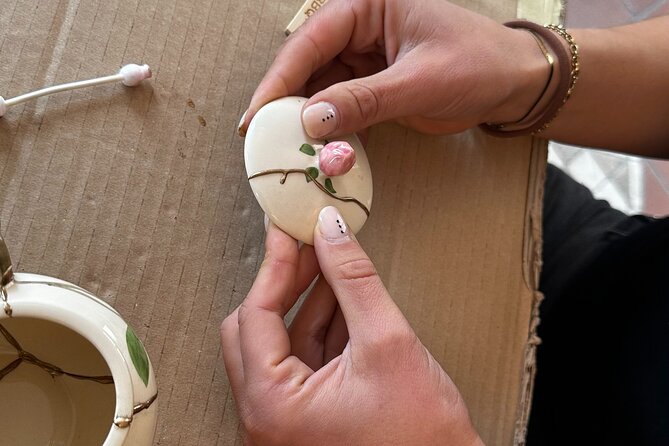
The final stage gives kintsugi its familiar look. The repaired cracks are finished with golden leaf glue, creating lines that draw attention to the breaks.
The gold is not only decoration. It changes the way you read the object. A crack normally suggests damage, but here it becomes the most distinctive part of the plate. The repaired item is different from the original, and that difference is the point.
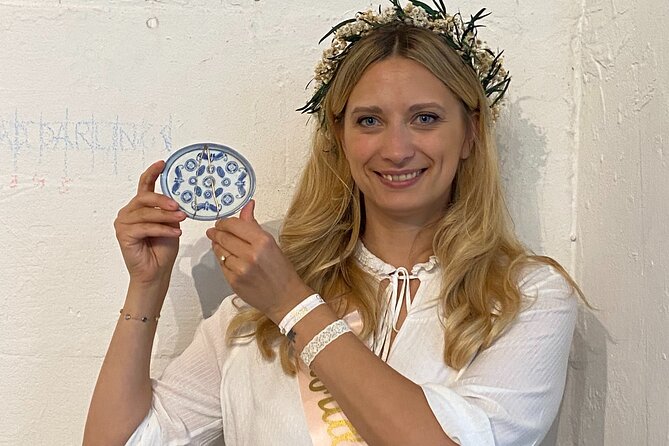
This makes the result personal even though the basic activity is shared by the group. Every plate begins with a break, but the arrangement of fragments and the pattern of repaired lines will make each finished piece different.
You should keep your expectations realistic. This is a two-hour workshop, not an advanced professional pottery course. The information provided does not promise a museum-quality finished object or a large piece of ceramics. What you receive is the chance to learn the basic spirit and process of kintsugi through a small, guided project.
I see the finished plate as a meaningful keepsake rather than a major souvenir. It can remind you of Amsterdam, the workshop, and the idea that repair does not have to erase a difficult past.
The value of a six-person group
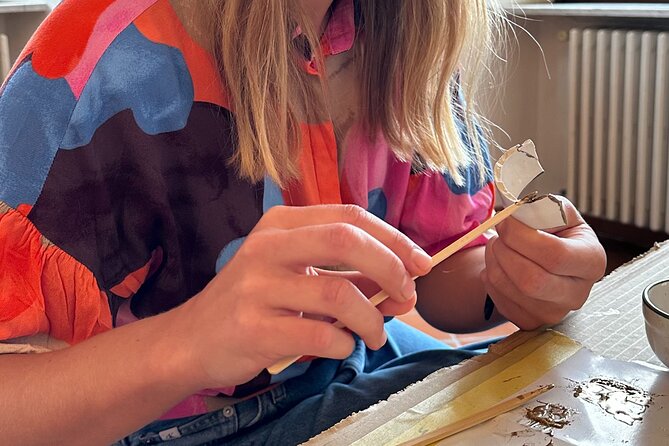
The maximum group size is six people. That is one of the strongest features of the class.
A small group gives the session room to breathe. You have more space to work and a better chance to receive help when pieces do not fit. The format also suits people who prefer not to perform in front of a large class.
The group limit supports the workshop’s central message. Kintsugi requires attention, and attention is easier when the room is not crowded. You can focus on your own plate while still sharing the experience with a few other people.
The available feedback praises Annelies as nice and welcoming, and describes the session as fun. That combination is important. A calm instructor can make a delicate process less intimidating, especially if you are worried that you are not artistic.
At the same time, a small class does not guarantee that every minute will be private instruction. You are still part of a group activity. If you want a fully private lesson, confirm the arrangements before booking.
What the $90.11 price includes
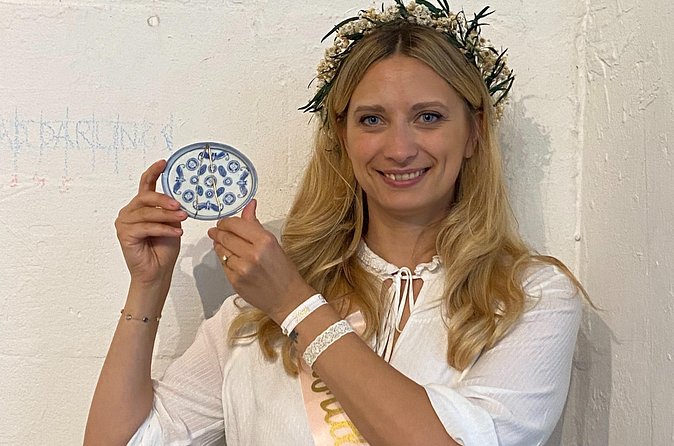
At about $90.11 per person, this is not the cheapest craft activity in Amsterdam. The price makes more sense when you consider what is included: a two-hour guided session, a small group capped at six, and all materials needed for the project.
You are paying for more than a plate. You are paying for instruction, a prepared setting, the materials, and time away from the city’s usual rush. The workshop also offers an activity you can remember and repeat at home.
The value is strongest if you enjoy making things. If you only want a finished souvenir, buying a piece of repaired pottery may be simpler and cheaper. If you want to understand the process and create something yourself, the fee is more reasonable.
Coffee and tea are not included. That is a minor point, but useful to know because the class has a calm, reflective tone that might make you expect refreshments. Plan to buy a drink separately if you want one before or after the session.
What this workshop teaches beyond the craft
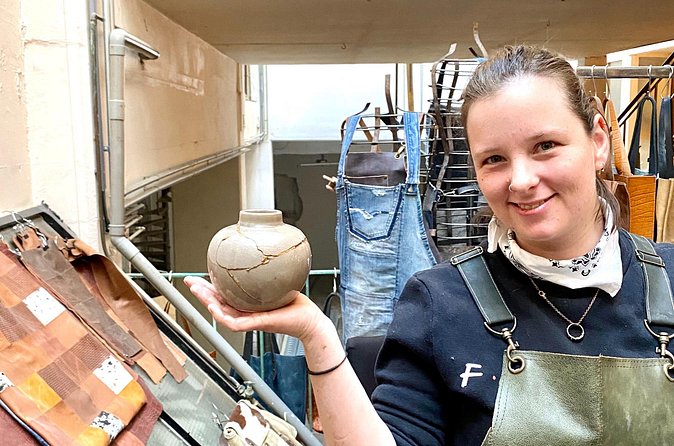
The class description connects kintsugi with focus, motor skills, new beginnings, healing, and resilience. Those ideas are not just decorative language. The physical task supports them in a direct way.
You must pay attention to small shapes and edges. You must accept that the original plate will not return exactly as it was. You must work with the pieces available instead of wishing they were unbroken.
That can make the workshop a useful pause during a busy holiday. You are doing one thing at a time, with a clear result in front of you. I like activities that let you experience a cultural idea through action rather than a short explanation in a museum label.
Still, you should choose this class for the making, not as a substitute for counseling or a formal wellness program. Its message may feel meaningful, but the scheduled activity remains a hands-on art workshop.
Who will enjoy the two-hour session most
I would recommend this experience to you if you enjoy:
- Small-group classes
- Japanese art and design
- Practical creative work
- Mindful activities with a clear theme
- Personal souvenirs that you make yourself
- Quiet breaks from museums and city walking
It may also suit couples, friends, and solo visitors. The six-person limit can make it easier to meet a few people without the forced energy of a large group.
Children under 10 are not accepted. Older children may be able to take part, but they will need enough patience and hand control for careful reassembly. The stated physical requirement is moderate fitness, so you should consider that if sitting and handwork for two hours may be difficult.
The class is offered in English. Service animals are allowed. These details make it accessible to many visitors, but the schedule remains the key restriction.
Booking timing, schedule, and cancellation
The experience is booked about 90 days ahead on average. That suggests you should not leave it until the day before, especially because there is only one published session each Wednesday from 2:00 PM to 4:00 PM.
You can cancel for a full refund if you do so at least 24 hours before the start time. Cancellations or changes made less than 24 hours before the activity are not accepted for a refund. The cut-off follows Amsterdam local time.
A minimum number of participants is required. If the class is canceled because that minimum is not reached, you will be offered another date or experience, or receive a full refund.
The activity has a rating of 4.8 from 16 ratings, with 94 percent recommending it. Those numbers suggest strong satisfaction, though the sample is small. The most useful praise is specific: Annelies is welcoming, the activity is fun, and the careful work produces a pleasing final result.
Should you book the Amsterdam kintsugi workshop?
Book it if you want a gentle, unusual activity that gives you something to do with your hands. The small group, English instruction, included materials, and thoughtful theme make the $90.11 price easier to justify.
I would skip it if your schedule does not allow a Wednesday afternoon, if you want a large social class, or if you expect to repair your own family pottery. The standard activity uses supplied items, and there is no confirmation that personal objects can be brought.
For the right visitor, this is a fine way to spend two hours in Amsterdam. You leave with more than a repaired plate. You leave with a visible reminder that a flaw can become part of the design.
FAQ
Where does the kintsugi workshop take place?
The workshop starts at Paleisstraat 107, 1012 ZL Amsterdam, Netherlands, and ends at the same meeting point.
How long does the workshop last?
The experience lasts approximately two hours.
What day and time is the workshop offered?
The published hours are Wednesdays from 2:00 PM to 4:00 PM during the listed operating periods.
How much does the workshop cost?
The listed price is approximately $90.11 per person.
Are materials included?
Yes. All materials needed for the workshop are provided.
Are coffee and tea included?
No. Coffee and tea are not included in the price.
Is the workshop offered in English?
Yes. The workshop is offered in English.
How many people can join the class?
The workshop has a maximum of six participants.
Can children attend the workshop?
Children under the age of 10 cannot attend. The activity also states that participants should have a moderate level of physical fitness.
Can I cancel for a full refund?
Yes. You can receive a full refund if you cancel at least 24 hours before the scheduled start time.
Just added in Amsterdam
- Private Tour Zaanse Schans Windmills and Volendam in Jaguar★ 5.0 · 10 reviews
- Zaanse Schans and Giethoorn Unique Day Trip with Boat Cruise★ 4.5 · 17 reviews
- Windmills-Volendam-Giethoorn Private Tour in Jaguar★ 5.0 · 2 reviews
- Half-Day Private Guided Sightseeing Tour of Zaanse Schans★ 5.0 · 14 reviews
- Best of Netherlands: Zaanse Schans Mills, The Hague & Rotterdam★ 4.5 · 10 reviews
- Zaanse Schans Private Tour Windmills★ 5.0 · 18 reviews
- Zaanse Schans Windmills Edam Volendam and Marken from Amsterdam★ 5.0 · 1 review
- Zaanse Schans Edam Volendam Private Day Tour from Amsterdam★ 5.0 · 3 reviews
Workshops, compared.

Traditional Dutch Syrup Waffle Making Workshop
Read our review →Amsterdam Traditional Dutch Syrup Waffle Making Workshop
Read our review →

3-Course Meal in Historic 1st Class Waiting Rooms
Read our review →

Amsterdam Light Festival Winter Walk with Stroopwafel Workshop
Read our review →
Distilling Class @ Spirited Union Rum Co. (Amsterdam)
Read our review →
Cocktail workshop @ Spirited Union Rum Co. (Amsterdam)
Read our review →Browse the lists this tour appears in