
Review · CITY TOURS
Liberal Amsterdam –Walk the Human Side of the City (small groups)
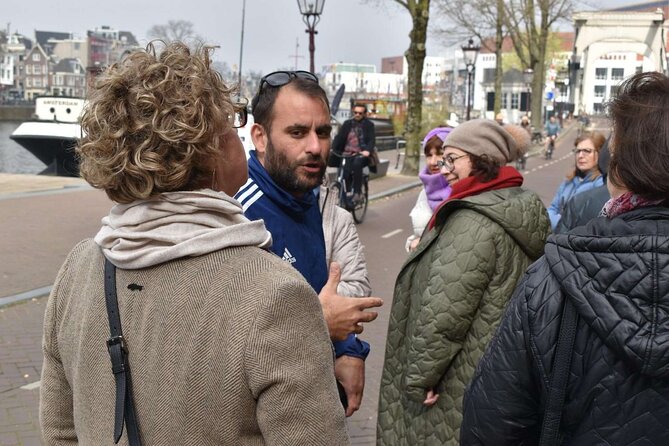
Amsterdam has more to say than its postcard views. This two-hour walk connects social causes, local life, and city history, moving from an AIDS awareness installation near Centraal Station to canals, leaning houses, and Nieuwmarkt. I like that it treats Amsterdam as a living city rather than a collection of pretty facades.
I also like the small maximum of 15 people and the handwritten Amsterdam postcard included in the price. A possible drawback is the short running time. With eight stops and plenty of walking, some explanations will be brief, and coffee or tea is not included. The tour also depends on good weather.
In This Review
- Key points at a glance
- Why this walk feels different from a standard Amsterdam tour
- Centraal Station and an opening with a purpose
- Damrak and the city gateway
- Tony’s Chocolonely and the cost of a sweet idea
- Dam Square, from market ground to royal setting
- Canal Ring and Amsterdam’s bicycle rules
- The Amstel, leaning houses, and life afloat
- Zuiderkerkstoren and useful food advice
- Nieuwmarkt and a city of changing communities
- Is $41.13 a fair price?
- Who should book this walk?
- Final verdict: a human-scale introduction to Amsterdam
- FAQ
- How long does the Amsterdam walking tour last?
- Where does the tour meet?
- Where does the tour end?
- How many people can join the tour?
- Is coffee or tea included?
- What happens if the weather is poor?
Key points at a glance
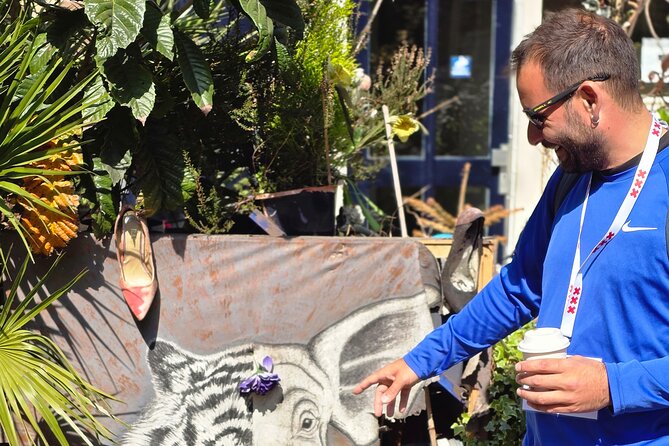
- Starts near Centraal Station: Meet at Kattengat 4-6, about 500 meters from the station, with the walk beginning around the AIDS awareness installation.
- Social topics are part of the route: Expect discussion of AIDS education, environmental action, diversity, inclusion, and fair trade.
- Tony’s Chocolonely adds a hands-on option: If the shop is not busy, you may go inside and make your own chocolate.
- A practical canal walk: The guide explains bicycles, water management, leaning houses, and life on houseboats.
- Ends at Nieuwmarkt: The final stop links De Waag, the Jewish Quarter, Chinatown, and modern Amsterdam.
- Good value for curious walkers: At $41.13 per person, the price includes a local guide and a special postcard, but not refreshments or admissions.
Why this walk feels different from a standard Amsterdam tour
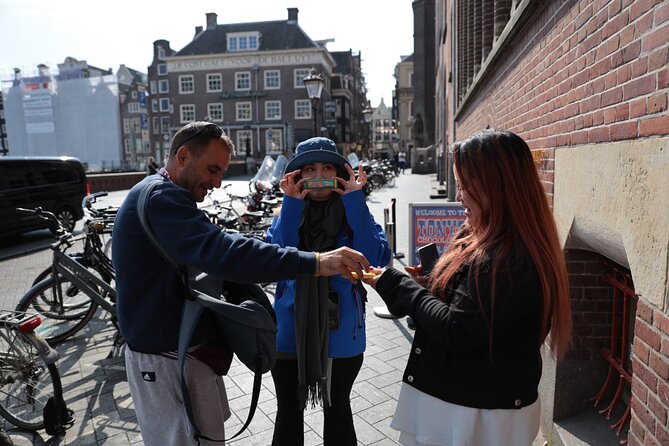
Many city walks concentrate on canals, grand buildings, and famous names. This one uses those sights as a doorway into wider questions about how people live together. You hear about public health, environmental action, fair trade, cycling, housing, and changing communities along with the usual dates and architectural facts.
I like that balance. Amsterdam’s beauty is easy to photograph, but its social choices are more interesting once you understand them. The opening discussion of AIDS awareness gives the tour a serious starting point, while the chocolate shop and bicycle talk keep the mood lighter.
The group size matters here. Fifteen people is small enough for questions without requiring the guide to raise their voice at every corner. One posted account describes the guide as friendly, well informed, and willing to answer questions. That fits the design of this walk, which works best when you ask about the things you notice.
The meeting information deserves a careful look. You are told to meet at Kattengat 4-6, 1012 SZ Amsterdam, roughly 500 meters from Amsterdam Centraal Station. The opening section takes place at the AIDS awareness installation by the station. Allow a few extra minutes to get from the station to the stated meeting address and check the exact instructions supplied with your booking.
More Walking Tours in Amsterdam
- Anne Frank’s Story – Guided Walking Tour through Amsterdam
★ 5.0 · 11,619 reviews - Amsterdam: Life of Anne Frank and World War II Walking Tour
★ 4.8 · 10,467 reviews - Absolutely Amsterdam – the Essential Introductory Walking Tour
★ 5.0 · 3,629 reviews
Centraal Station and an opening with a purpose
The walk begins near Amsterdam Centraal, where the guide gives a safety briefing and explains how the tour will run. You also get an early view toward North Amsterdam, which helps place the city across the water and gives you a sense of Amsterdam beyond the old center.
The AIDS awareness installation provides a thoughtful first stop. It is part of an ongoing campaign centered on awareness, education, and prevention. Rather than rushing straight toward the Royal Palace or the canals, the tour starts with a public message about health and community.
The guide also introduces social campaigns connected with environmental sustainability, diversity, and inclusion. This is useful context for the rest of the walk. You are not simply looking at old buildings. You are considering how a city presents its values in public spaces.
The stop lasts about 10 minutes and has no admission fee. That sounds modest, but an opening like this can change how you see the rest of Amsterdam. Look for the contrast between historic surroundings and modern public campaigns.
Damrak and the city gateway
From the station, the walk moves toward Damrak, the broad route leading into the center. Here the guide explains Amsterdam Centraal and its architect, Pierre Cuypers, whose work helped give the station its grand appearance.
The important point is not only the building’s design. The station connected Amsterdam with the rest of Europe and helped drive the city’s growth. You begin to see the station as a piece of urban planning, not just the place where you arrived by train.
The Damrak stop is short, about five minutes. That means you should expect one useful fact and a quick explanation rather than a long architectural lecture. I consider this a strength for a two-hour walk, as long as you are comfortable with an overview instead of detailed study.
Keep your eyes on the changing street scene as you walk. The route shifts quickly from the transport hub to the older center, and that change helps explain why Amsterdam can feel both compact and layered.
Tony’s Chocolonely and the cost of a sweet idea
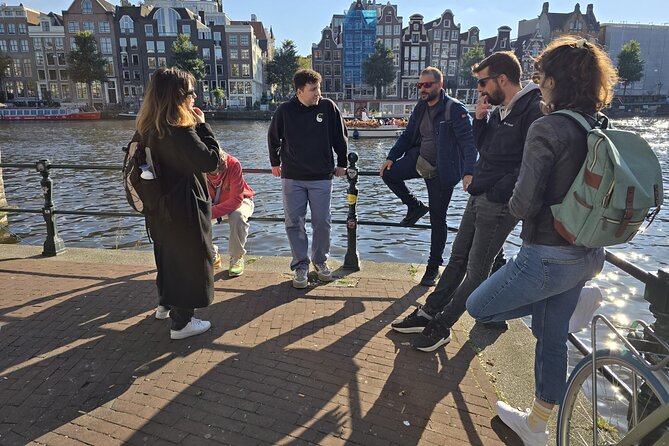
The Tony’s Chocolonely Superstore brings a modern business story into the walk. The guide explains the company’s goal of making chocolate with no slavery in its supply chain and its push for fairer trade practices.
This stop gives the tour a clear link between daily shopping and global responsibility. You are not just hearing about a chocolate bar. You are looking at how a Dutch brand tries to change an industry with serious labor problems.
If there is no queue, the group may enter the shop and make its own chocolate. That possibility is appealing, especially for families and anyone who prefers a little participation to a purely spoken tour. It is not guaranteed, though. The shop visit depends on the line, so treat it as a bonus rather than a promised activity.
The planned stop lasts about 15 minutes. That is enough time for the guide to explain the company’s mission and perhaps allow a short shop visit, but not enough for a long tasting session. Coffee and tea are not included, so plan to buy refreshments separately if you want them.
A different kind of day out entirely:
- Amsterdam: Van Gogh Museum Ticket
★ 4.7 · 52,054 reviews - Amsterdam Classic Saloon Boat Cruise with Drinks and Cheese
★ 5.0 · 31,825 reviews - Amsterdam Luxury Canal Cruise + Unlimited Drinks & Bites option
★ 5.0 · 30,518 reviews - Amsterdam: Heineken Experience Ticket
★ 4.6 · 30,055 reviews
Dam Square, from market ground to royal setting
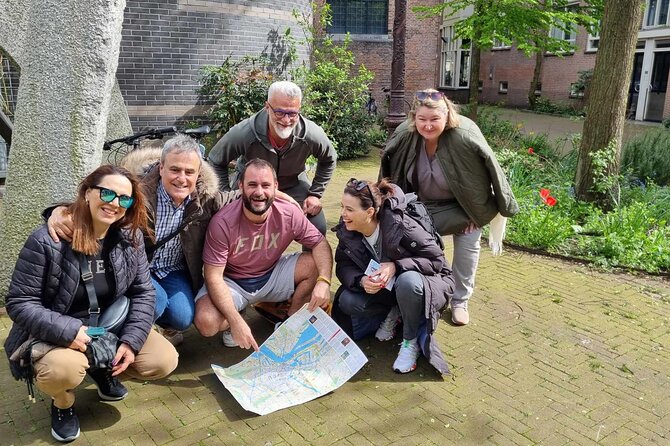
Dam Square is Amsterdam’s central stage. The guide covers the Royal Palace, the National Monument, and the square’s change from a medieval trading area into a modern meeting place for culture, ceremony, and public life.
The Royal Palace was once the city hall and is now a royal residence. That change says a lot about Amsterdam’s political development. The National Monument honors victims of World War II, adding a solemn note to a square that can otherwise feel noisy and busy.
This is a good place to pause and connect the city’s past with its present. You can hear about buildings, public memory, and the ways a square changes purpose over time.
The stop lasts around 10 minutes. Dam Square can be crowded, and the tour does not include entry to the Royal Palace. You will receive outside context, not an interior visit. If the palace is a priority, plan a separate visit and check its opening arrangements.
Canal Ring and Amsterdam’s bicycle rules
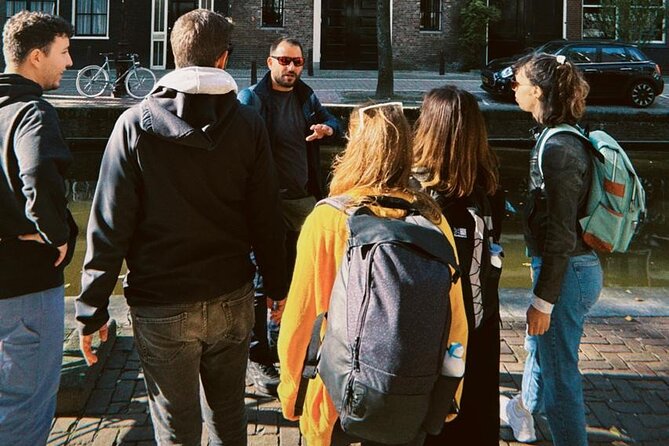
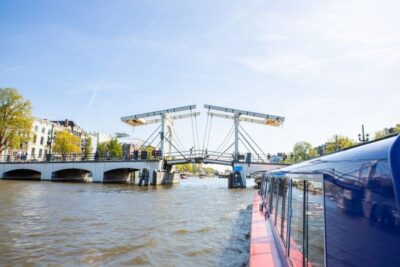
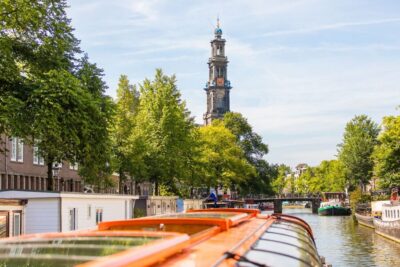
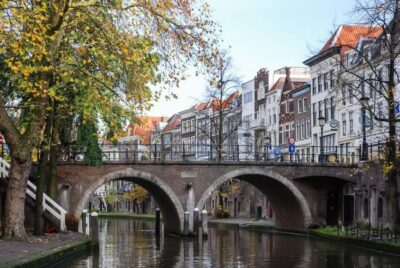
The walk then follows part of Amsterdam’s UNESCO-listed Canal Ring. The guide explains why the canals were built, how they supported trade and expansion, and how they helped manage water in a city shaped by low ground and waterways.
The canals are the scenic heart of the tour, but the bicycle discussion makes the stop more useful than a simple photo break. You learn how cycling became a main form of transport and what supports it, from dedicated infrastructure to city planning and bike-friendly policies.
You also get a chance to observe the unwritten rules of moving through central Amsterdam. Bikes can approach quietly and quickly, so keep to the side and listen for bells. The guide’s safety briefing at the start is worth taking seriously.
The canal section lasts about 20 minutes, the longest single stop on the route. There is time for the guide to talk, but also time to walk, look up at the narrow houses, and enjoy the water. The description promises a light, social mood here, with conversation and laughter as part of the experience.
The Amstel, leaning houses, and life afloat
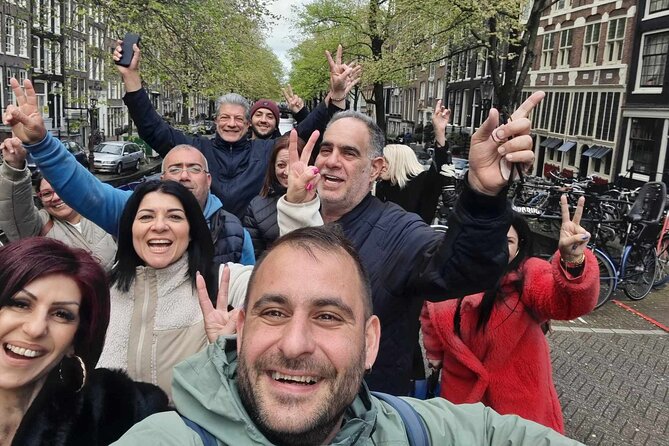
At the Amstel River, the guide explains how the river shaped the city and gave Amsterdam its name. The river also connects to the city’s ongoing work with water management, so this stop continues the practical theme introduced in the Canal Ring.
Amsterdam’s leaning houses are another highlight. The guide discusses the engineering behind their unusual angles and the reasons the buildings can appear to tilt. You also hear about houseboats and the adjustments involved in living on the water.
This is the sort of stop that rewards looking closely. A leaning facade is easy to photograph, but the engineering and housing questions make it more than a visual oddity. You begin to notice how Amsterdam adapts old buildings and limited space to modern life.
The Amstel stop takes about 10 minutes. Because the tour moves at a steady pace, you may not have time to inspect every house or ask a long series of technical questions. Still, the guide can give you a useful introduction and point out details you may miss on your own.
Zuiderkerkstoren and useful food advice
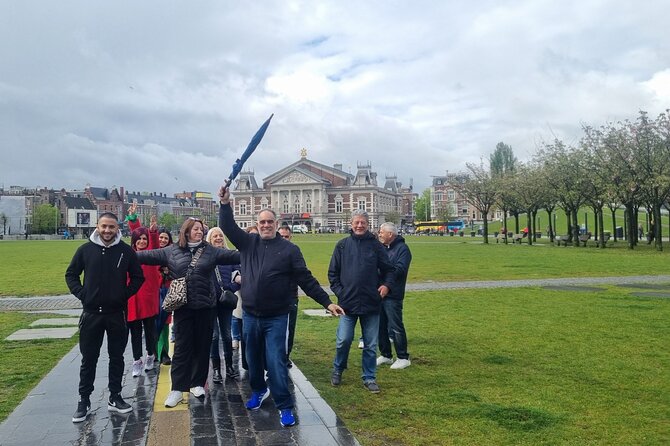
The Zuiderkerkstoren is a 17th-century Protestant church tower and one of the route’s recognizable old-city markers. The stop lasts about 10 minutes and is less about entering the church than about orientation and local suggestions.
Here the guide offers tips for nearby bars and restaurants. This is practical help at the right moment. By this point, you will have walked for about an hour and may be thinking about lunch, dinner, or a drink.
Restaurant advice is always personal, so use the suggestions as a starting point rather than a guarantee. Ask what suits your budget and what kind of food you want. The small group format gives you a better chance to have that conversation than a large coach tour would.
Nieuwmarkt and a city of changing communities
The walk ends at Nieuwmarkt, where you learn how the square developed as a marketplace. The medieval De Waag is the main historic anchor, but its story includes several different uses over time.
The guide also connects the area with the Jewish Quarter and Chinatown. This gives the final stop a social and cultural focus, showing how communities have shaped the center and how the neighborhood continues to change.
Nieuwmarkt is a useful ending because it leaves you in a part of central Amsterdam with places to eat and continue exploring. The endpoint is not back at the train station, so think about your onward plans before you start. You can return toward Centraal Station, remain in the center, or use the nearby public transport connections.
The planned stop lasts about 10 minutes, with the remaining tour time used for walking. The overall route covers enough ground to give you a broad introduction, but it is not a slow photography walk. Wear comfortable shoes and expect to stay on your feet for most of the two hours.
Is $41.13 a fair price?
At $41.13 per person, this is not the cheapest way to see Amsterdam’s center. You can walk along the canals for free and read basic facts about Dam Square on your own.
The value comes from the connections. A good guide links the station to the city’s growth, chocolate to fair trade, bicycles to urban design, canals to water control, and houseboats to housing choices. You are paying for interpretation, questions, a planned route, and a small group rather than for entry tickets.
The included postcard adds a personal touch. It comes with a handwritten message and an official stamp, which is more memorable than a standard digital souvenir. No paid sights are included, and coffee or tea costs extra, so budget accordingly.
I would consider the price reasonable for a first afternoon in Amsterdam, especially if you want social topics included in your sightseeing. It is less attractive if you already know the center well or prefer to explore entirely at your own pace.
Who should book this walk?
I would recommend it to first-time visitors who want an introduction that goes beyond architecture. It also suits solo visitors who like asking questions, couples who want a short orientation walk, and families interested in bicycles, chocolate, and public spaces.
The tour may appeal to you if you care about fair trade, inclusion, sustainability, public health, and the daily workings of a city. You do not need to be an expert. Curiosity is enough.
I would hesitate if you want long stops, museum entry, a food tour, or a relaxed pace. Eight stops in roughly two hours means the guide must keep moving. The weather policy also matters. If poor weather causes cancellation, you receive a different date or a full refund, but you should still avoid booking it as your only fixed activity on a rainy day.
Free cancellation is available up to 24 hours before the start time. Changes or cancellations inside that window are not refunded, and the experience requires good weather.
Final verdict: a human-scale introduction to Amsterdam
I like this walk because it asks you to look at Amsterdam as a place where people make choices, solve problems, and share limited space. The AIDS awareness installation, Tony’s Chocolonely, bicycle culture, houseboats, and mixed communities around Nieuwmarkt give the route a clear purpose.
Book it if you want a friendly, question-friendly guide and a compact overview of the center with modern social themes. Skip it if your priority is entering major attractions or spending long periods at each sight.
For many visitors, the best use of this tour is early in an Amsterdam stay. You finish at Nieuwmarkt with a better sense of the city and practical tips for food and further walking. At $41.13, that orientation is worth considering, as long as you arrive ready to walk and accept that some stops will be brief.
FAQ
How long does the Amsterdam walking tour last?
The tour lasts approximately two hours. The listed stops take only part of that time, with the remaining time used for walking between locations.
Where does the tour meet?
The stated meeting point is Kattengat 4-6, 1012 SZ Amsterdam, about 500 meters from Amsterdam Centraal Station. The opening part of the walk gathers near the AIDS awareness installation at the station.
Where does the tour end?
The tour ends at Nieuwmarkt in central Amsterdam.
How many people can join the tour?
The group has a maximum of 15 participants.
Is coffee or tea included?
No. Coffee and tea are not included in the tour price.
What happens if the weather is poor?
The experience requires good weather. If it is canceled because of poor conditions, you are offered another date or a full refund. You can also cancel up to 24 hours before the start time for a full refund.
Just added in Amsterdam
- Private Tour Zaanse Schans Windmills and Volendam in Jaguar★ 5.0 · 10 reviews
- Half-Day Private Guided Sightseeing Tour of Zaanse Schans★ 5.0 · 14 reviews
- Zaanse Schans and Giethoorn Unique Day Trip with Boat Cruise★ 4.5 · 17 reviews
- Windmills-Volendam-Giethoorn Private Tour in Jaguar★ 5.0 · 2 reviews
- Best of Netherlands: Zaanse Schans Mills, The Hague & Rotterdam★ 4.5 · 10 reviews
- Zaanse Schans Private Tour Windmills★ 5.0 · 18 reviews
- Zaanse Schans Windmills Edam Volendam and Marken from Amsterdam★ 5.0 · 1 review
- Zaanse Schans Edam Volendam Private Day Tour from Amsterdam★ 5.0 · 3 reviews
City Tours, compared.
75 Minute City Canal Cruise with Audio Guide
Read our review →

City Canal Cruise and Heineken Experience Ticket
Read our review →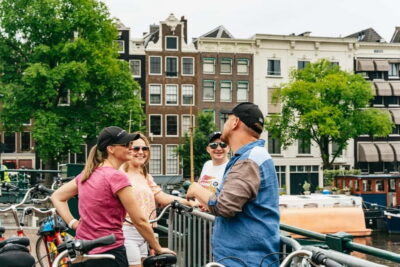
Browse the lists this tour appears in