
Review · MAASTRICHT TOURS
Maastricht Hidden Gems Tour Uncover the Unexpected
Maastricht reveals its secrets on foot. This private two-hour walk with Fons Bollen links Roman ruins, medieval churches, old walls, and quiet lanes while explaining how Maastricht grew around the Maas River. I like the personal format and the way the route moves beyond the obvious sights. I also like the focus on Mestreechter Geis, the warm, sociable local spirit that gives the city its own character. The main drawback is pace: thirteen stops in two hours leaves little room for long visits or museum interiors.
The $235 group price makes the most sense for a family or small party sharing the fee. At the maximum of 14 people, it is about $17 per person, though a couple pays considerably more. Fons speaks Dutch, German, and English, and the tour can be adjusted toward history, art, or food. One especially useful sign of his approach is his calm, open manner. Even with a demanding group, he kept explaining the city clearly and welcomed questions.
In This Review
- Key points to know before booking
- Why Maastricht’s past works so well on foot
- Sint Servaasbrug and the Roman crossing
- Op de Thermen and the early city
- Basilica of Our Lady and medieval Maastricht
- Bisschopsmolen and the city’s working side
- Helpoort and Maastricht’s defenses
- Jekerkwartier and the quieter streets
- The Jeker wall and Het Vagevuur
- Vrijthof and Maastricht’s public life
- Dominicanerkerkstraat and the return to the center
- What Fons Bollen adds to the experience
- Price, timing, and practical value
- Who should book this Maastricht walk?
- Should you book the Maastricht Hidden Gems Tour?
- FAQ
- Where does the tour start?
- How long does the tour last?
- What languages does Fons Bollen speak?
- Is this a private tour?
- Is the tour wheelchair accessible?
- What sights are included?
- Are food and drinks included?
- Are museum tickets included?
- Can the tour be canceled for a refund?
Key points to know before booking
- Roman Maastricht begins at the Maas crossing: Learn how Mosa Trajectum grew from a Roman crossing point around 50 AD.
- A private guide keeps the walk flexible: Fons can shape the conversation around history, art, or local food.
- Thirteen stops fit into two hours: Expect an efficient outdoor overview rather than extended visits inside attractions.
- The route covers several different districts: You move from the central market area to the Jekerkwartier, city walls, Vrijthof, and Dominicanerkerkstraat.
- The price favors groups: $235 covers up to 14 people, guide included, with city hotel pickup available.
- The tour has strong practical credentials: It is wheelchair accessible, offered in three languages, and rated 4.7 from 44 bookings.
Why Maastricht’s past works so well on foot
Maastricht is a city where the old layers sit close together. The Romans established a crossing over the Maas around 50 AD and called the settlement Mosa Trajectum. That crossing helped turn the place into a point of trade, movement, and defense.
Later, Maastricht developed under two powers: the Bishop of Liège and the Duke of Brabant. That unusual arrangement shaped the city’s government, buildings, and identity. Fons uses the streets to explain this rather than asking you to absorb a long lecture in one square.
I like this approach because the city becomes easier to read. A church is not just a church. A wall is not just a photo background. Each stop helps explain how Maastricht survived as a religious center, fortified town, and modern Dutch city.
The route begins in Maastricht-Centrum and returns there. That makes it practical for a first morning in town. You can use the walk to get oriented, then return later to the places that deserve more time.
A few more options to weigh up in Maastricht
- Highlight Running Tour
★ 5.0 · 118 reviews - e-Scavenger hunt Maastricht: Explore the city at your own pace
★ 4.5 · 110 reviews - Maastricht: Museum of Illusions Entry Ticket
★ 4.2 · 82 reviews
Sint Servaasbrug and the Roman crossing
The first major stop is Sint Servaasbrug, the old bridge over the Maas. It is an ideal place to discuss why this location mattered long before modern Maastricht appeared.
From here, you can picture the Roman crossing that gave the city its name. The tour connects the bridge to the earlier Mosa Trajectum settlement and explains why a reliable crossing mattered for trade and military travel.
This is a photo stop and guided walk, not an archaeological site visit with a long indoor presentation. That distinction matters. You get the broad story and a sense of place, but you should not expect to examine a large collection of Roman objects.
Fons also introduces the idea of Mestreechter Geis, the local spirit associated with warmth, friendliness, and a love of life. It is a useful theme for the rest of the walk. Maastricht is not presented only as old stone and military history. The people and their habits matter too.
Op de Thermen and the early city
Op de Thermen brings the Roman period closer to street level. The name points toward the ancient baths connected with Roman Maastricht, and this stop helps show that the settlement was more than a bridge.
This part of the walk is valuable if you like history that can be tied to specific ground under your feet. Fons explains the remains and their place in the growth of the town, rather than treating Roman Maastricht as a disconnected opening chapter.
You will be moving through the city as the explanation continues, so listen closely and ask questions when something catches your interest. The private-group format helps here. You do not need to wait for a large crowd to move on before asking about a detail.
Basilica of Our Lady and medieval Maastricht
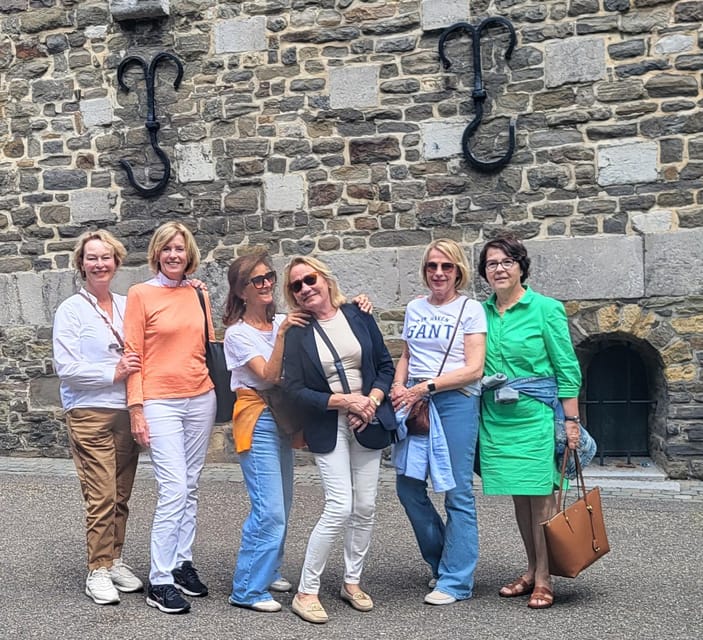
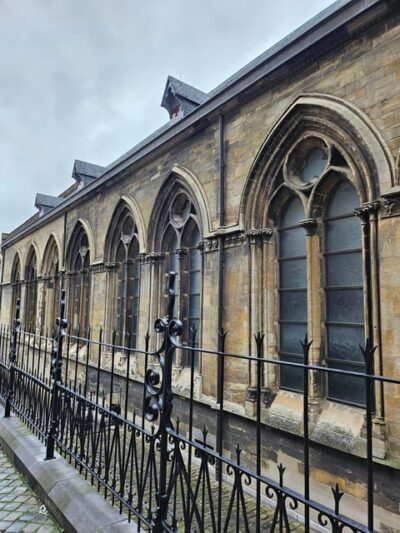
The Basilica of Our Lady brings the tour into the medieval period. Its heavy stone architecture and long religious role offer a sharp contrast to the open space around the Maas.
This is one of the route’s strongest stops for architecture. You can expect to look at the building from the outside and hear about its place in Maastricht’s religious life. The tour does not include museum tickets, so any interior access or paid exhibition should be treated as separate from the walking experience.
The basilica also helps explain the city’s link with the Bishop of Liège. Maastricht’s past was shaped by church power as much as by commerce and defense. Fons uses these buildings to show how those forces affected daily life and the city’s growth.
If church architecture interests you, tell Fons early. The tour can be tailored, and this is one place where a few extra minutes of explanation may add real value.
A different kind of day out entirely:
- Maastricht Privat Sightseeing City Walk
★ 5.0 · 76 reviews - Maastricht 2-Hour Walking Tour | Discover The City With A Local
★ 4.5 · 57 reviews - 2H Walking Tour Maastricht
★ 4.8 · 57 reviews - Valkenburg: Municipal Cave Guided Tour
★ 4.5 · 47 reviews
Bisschopsmolen and the city’s working side
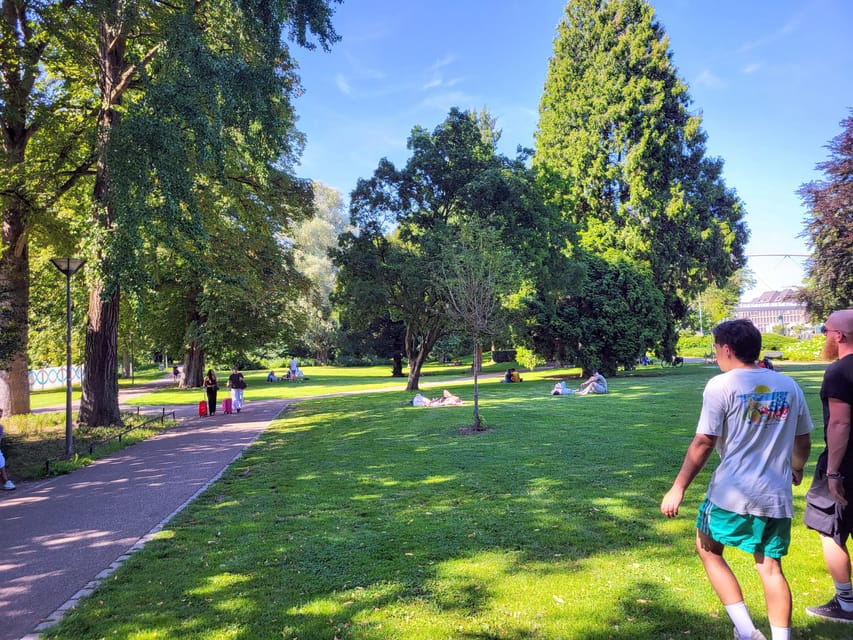
At Bisschopsmolen, the story shifts from grand institutions to everyday work. The name connects the site with the bishop, while the mill itself points to the practical systems that kept a medieval town supplied.
This is a helpful correction to the usual city tour pattern. You are not only looking at churches, bridges, and ceremonial squares. You are also seeing how water, food, and local production fitted into Maastricht’s story.
The stop is primarily a guided walk and photo opportunity. Food and drinks are not included, so do not count on a tasting or meal here. Still, the location gives Fons a natural opening to discuss local food if that is one of your interests.
Helpoort and Maastricht’s defenses
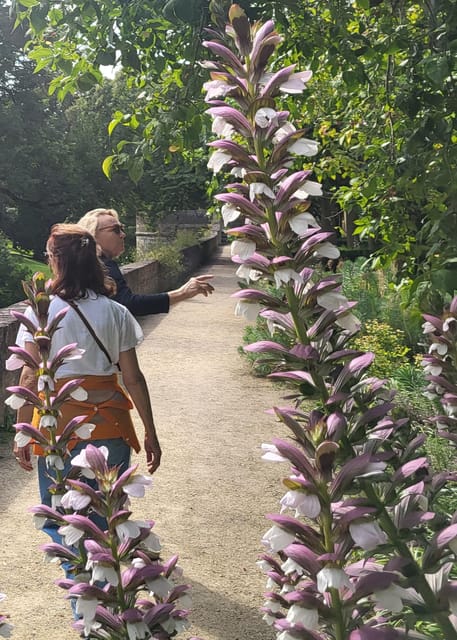
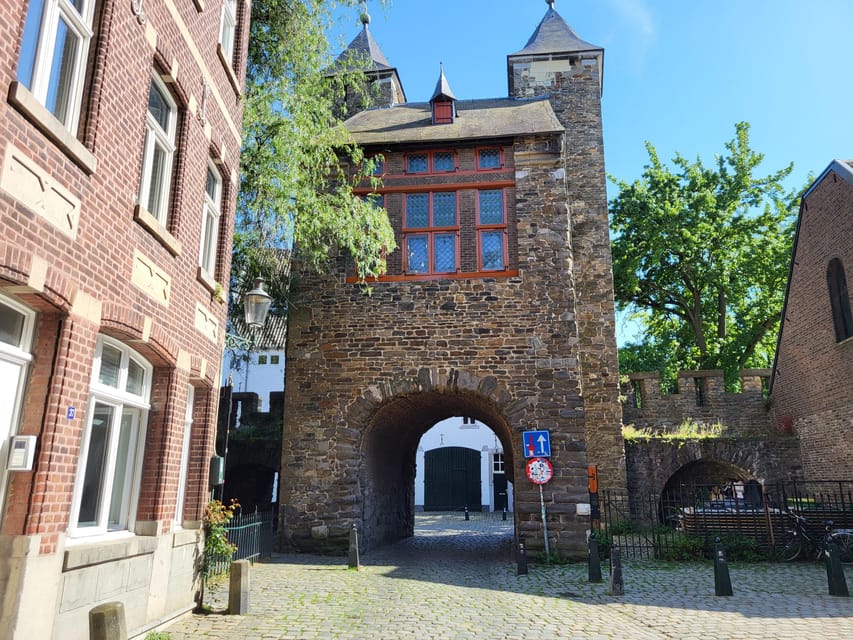
Helpoort is one of the clearest reminders that Maastricht was a fortified city. Passing through or viewing this old gate gives the military side of the city a physical presence.
Fons connects the gate with the city’s defensive history and its importance as a strategic location. The explanation also fits the earlier Roman story. The crossing over the Maas made Maastricht useful, but it also made the town worth protecting.
You should expect an outdoor look rather than a full fortress visit. The two-hour limit keeps the group moving, and museum tickets are not included. That is fine for a first orientation, but anyone who wants detailed military history may want to return independently.
Jekerkwartier and the quieter streets
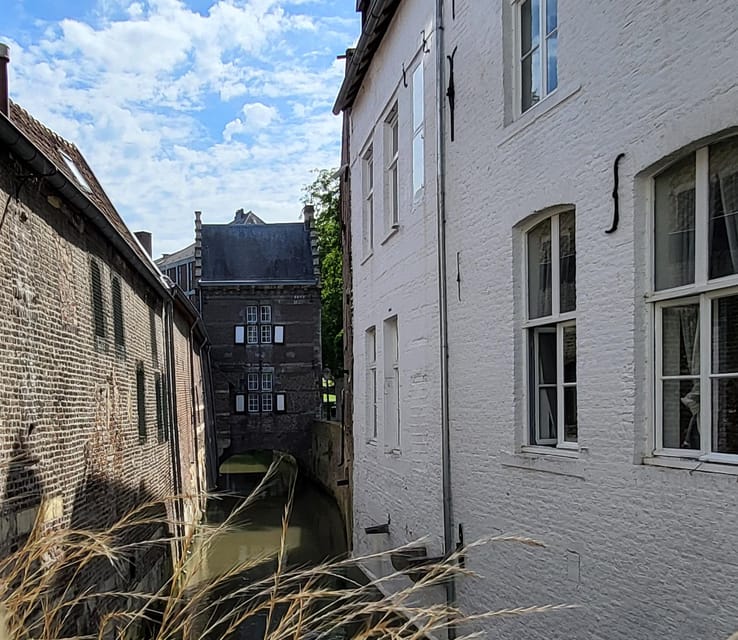
The Jekerkwartier changes the mood. Its old streets, historic houses, and water nearby offer the kind of scenery that is easy to miss if you stay only on the main route between major sights.
This is where the tour earns its title. The appeal is not one blockbuster monument. It is the combination of small details, narrow lanes, old façades, and the way the district connects the city’s past to ordinary urban life.
I would pay attention to the transitions here. Maastricht’s character often appears in the spaces between landmarks. You may find that a short lane or tucked-away house tells you more about the city’s scale than a major square does.
The route remains wheelchair accessible, which is important for a historic center with old streets. Exact surface conditions can vary, so anyone with particular mobility needs should discuss preferences with Fons when arranging the pickup and route.
The Jeker wall and Het Vagevuur
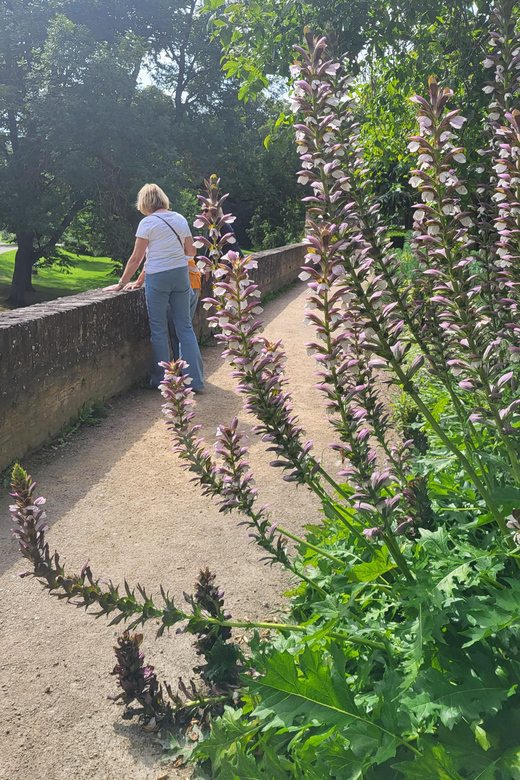
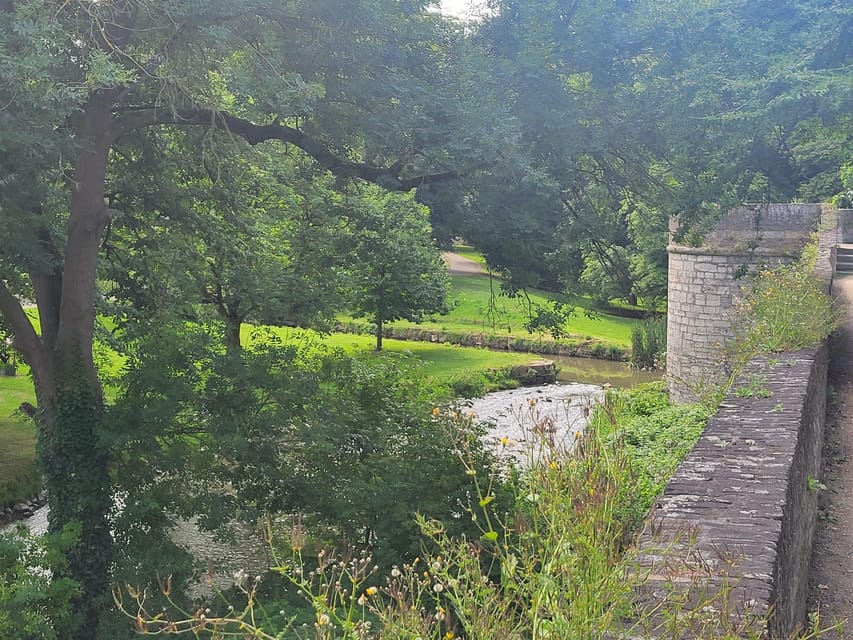
The city wall beside the Jeker River adds another layer to the walk. Here, water and stone work together as part of Maastricht’s old defenses and city layout.
This stop is especially good for understanding how the town was contained. Walls were not simply barriers. They shaped movement, trade, neighborhoods, and the relationship between the built center and the area beyond it.
Het Vagevuur continues the route through a less obvious corner of the old city. The name itself carries a touch of mystery, and the stop gives Fons room to share local stories tied to the street and its surroundings.
Do not expect a large attraction at every numbered point. Some stops are valuable because of the explanation, not because there is a ticket booth or a dramatic interior. That is part of the tour’s appeal, but it also means the experience depends heavily on Fons’s storytelling.
Vrijthof and Maastricht’s public life
Vrijthof is the largest public square on the route and one of Maastricht’s main gathering places. After the quieter Jekerkwartier, the open square gives you a broader sense of how the city uses public space.
Fons talks about the square’s history and its role in city life. Cafés, markets, celebrations, and festivals help explain the local spirit introduced at the beginning of the tour.
This is also a useful place to pause for photos. The square has a grander feel than the lanes, but its importance is not only visual. It shows the social side of Maastricht, where public life remains part of the city’s identity.
The timing is worth noting. A two-hour tour can explain Vrijthof, but it cannot give you a full look at every building around it. If the square becomes a favorite, mark it for a later visit.
Dominicanerkerkstraat and the return to the center
The final stop, Dominicanerkerkstraat, brings the tour back toward the central area. Its historic setting makes a fitting close to a walk built around old streets rather than a single major attraction.
By this point, the route has connected Roman foundations, church power, medieval trade, defensive walls, local neighborhoods, and present-day public life. That range is the tour’s real strength.
You return to Maastricht-Centrum, with a clearer idea of where you are and what deserves a second look. I like tours that leave you with useful orientation rather than simply a pile of dates. This one appears designed for that purpose.
What Fons Bollen adds to the experience
A private tour rises or falls on the guide. Fons Bollen’s strongest qualities are patience, enthusiasm, and openness to questions. His manner seems particularly suited to groups that do not all want the same level of historical detail.
He can guide in Dutch, German, or English. That makes the tour practical for mixed-language groups and removes the need to rely on an audio guide or a printed explanation.
The option to focus on history, art, or food is useful, but you should be clear about your priorities before the walk starts. With thirteen points in two hours, a group that wants every topic may get only a brief treatment of each.
The 4.7 rating from 44 bookings supports the impression that the personal guiding style is the main attraction. A particularly telling response described Fons as calm with a difficult group, thorough in his explanations, and easy to approach with questions. Another praised him for showing a side of Maastricht the group would not otherwise have experienced, along with his enthusiasm.
That is the kind of guide you want on a city walk. Not a performer racing through memorized facts, but someone willing to adjust the conversation.
Price, timing, and practical value
The price is $235 per private group of up to 14 people. For a full group, the cost works out to about $17 per person. For two people, it is about $117.50 each, so the value depends strongly on your party size.
The tour includes the guide, the walking route, and pickup from a hotel in Maastricht city. Food, drinks, and museum tickets cost extra. Since the experience is only two hours, you are paying mainly for private interpretation and a carefully connected route.
I think the price is fair for families, friends, and organized groups that want control over the pace and subject. It is harder to justify for a solo visitor or couple unless having a private guide matters more to you than keeping the budget low.
The tour is wheelchair accessible, and free cancellation is available up to 24 hours before the start for a full refund. You can also reserve now and pay later, which helps if your schedule is still taking shape.
Who should book this Maastricht walk?
I would recommend it to first-time visitors who want a clear introduction to Maastricht without spending half a day inside museums. It is also a good match for people who enjoy old neighborhoods, church architecture, Roman history, and stories tied to ordinary streets.
Families may appreciate the private format because questions and pauses are easier to manage. Groups with mixed interests can ask Fons to shift between history, art, and food.
It is less suitable if you want extensive indoor sightseeing, a food tour with tastings, or a slow photography walk. The route covers a lot in two hours, so the experience is best understood as an orientation with local color.
Should you book the Maastricht Hidden Gems Tour?
Book it if you want a compact, personal introduction to Maastricht and value a guide who listens. The combination of Roman foundations, medieval buildings, city walls, Jekerkwartier lanes, and Vrijthof gives you a strong first look at the city’s character.
For the best value, share the $235 price with a family or group of friends. Ask Fons at the start to emphasize your priority, especially if you care most about architecture, Roman remains, local food, or the city’s political past.
Skip it if your main goal is a long museum visit or a low-cost group tour. But if you want the city explained street by street, with room for questions and a local point of view, this is a sensible way to begin in Maastricht.
FAQ
Where does the tour start?
The tour starts in Maastricht-Centrum. Hotel pickup is included for hotels located in the city.
How long does the tour last?
The walking tour lasts approximately two hours.
What languages does Fons Bollen speak?
The tour is available in Dutch, German, and English.
Is this a private tour?
Yes. The experience is arranged for a private group of up to 14 people.
Is the tour wheelchair accessible?
Yes, the activity is listed as wheelchair accessible.
What sights are included?
The route includes Sint Servaasbrug, Op de Thermen, Basilica of Our Lady, Bisschopsmolen, Helpoort, Jekerkwartier, the city wall beside the Jeker River, Het Vagevuur, Vrijthof, and Dominicanerkerkstraat.
Are food and drinks included?
No. Food and drinks are not included in the tour price.
Are museum tickets included?
No. Museum tickets are not included.
Can the tour be canceled for a refund?
Yes. You can cancel up to 24 hours in advance for a full refund. You can also reserve now and pay later.
Just added in Maastricht
- Maastricht 2-Hour Walking Tour | Discover The City With A Local★ 4.5 · 57 reviews
- e-Scavenger hunt Valkenburg: Explore the city at your own pace★ 4.5 · 20 reviews
- Discover Maastricht with a self-guided Outside Escape city game★ 5.0 · 29 reviews
- Maastricht Heritage and Nature Tour★ 5.0 · 6 reviews
- Maastricht Highlights, Architecture & Heritage Tour★ 5.0 · 7 reviews
- Maastricht Private Walking Tour With A Professional Guide★ 4.0 · 6 reviews
- Maastricht Medieval Mystery: Interactive City Game & Tour★ 4.0 · 25 reviews
- Discover Maastricht with a Smile! Culture, History and People★ 5.0 · 16 reviews
Maastricht Tours, compared.

e-Scavenger hunt Maastricht: Explore the city at your own pace
Read our review →

Maastricht 2-Hour Walking Tour | Discover The City With A Local
Read our review →

Browse the lists this tour appears in