
Review · WORKSHOPS
Private Workshop for Wooden Shoe Making in Simonehoeve
Make a Dutch clog, then taste the countryside. This private workshop at Simonehoeve, in Katwoude near Amsterdam, gives you a hands-on look at two familiar Dutch traditions: wooden shoes and farmhouse cheese. I like the personal format, and I like that you leave with a handmade wooden shoe or a painted beer opener rather than only a few photos.
The workshop also makes good use of limited holiday time. In about two hours, you watch the craft, try the tools yourself, tour the cheese and clog facility, and sample Dutch cheese, biscuits, and fruit wine. The catch is that clog making takes real effort, and you may not finish the shoe within the allotted time.
In This Review
- Key points to know before you book
- A hands-on look at Dutch clog making
- Why the private format matters
- The 90-minute clog session
- Seeing the machine and the traditional tools
- The cheese farm tour and Dutch tastings
- What you take home
- Price, timing, and practical value
- Who will enjoy this workshop most
- Should you book the Simonehoeve clog workshop?
- FAQ
- Where does the workshop take place?
- Where does the activity end?
- How long does the workshop last?
- Is transportation included?
- Is this a private activity?
- What is the minimum age?
- Does each person make a wooden shoe?
- What happens if the clog work is too tiring?
- What food and drinks are included?
- Can I cancel for a full refund?
Key points to know before you book
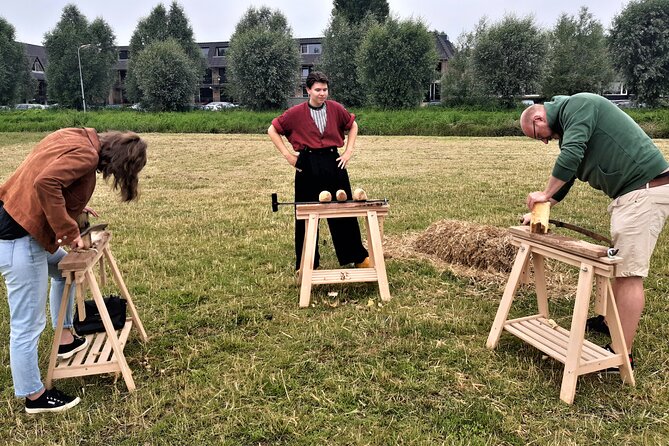
- You work from a real block of wood: Each person receives a wooden block and a chance to shape a clog, subject to the minimum group size of four people.
- The workshop is physically demanding: Traditional tools require effort, so painting a blank clog-shaped beer opener is offered as a less strenuous finish.
- The private format keeps your group together: Only your party takes part, with individual instruction from the clog maker guide.
- Cheese tasting is part of the visit: The farm tour includes several types of cheese, Dutch biscuits, and fruit wine.
- The activity lasts about two hours: Around 90 minutes is devoted to making and engraving clogs, with the remaining time used for demonstrations, the facility tour, and tastings.
- You must reach Katwoude yourself: Transport to Simonehoeve is not included, so plan the trip to Wagenweg 2 in advance.
A hands-on look at Dutch clog making
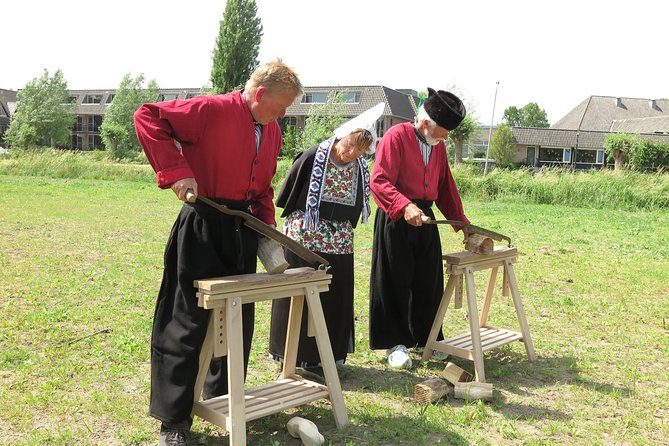
The workshop begins with a joint explanation and demonstration of how wooden shoes are made. You see both manual methods and machine work, which helps put the craft in context. The contrast matters: the machine shows how modern production saves time, while the hand tools reveal the physical skill behind a traditional pair of clogs.
Your guide explains the practical tricks used by clog makers. That is more useful than simply walking past finished shoes in a shop because you get a sense of how a rough block becomes footwear. The process is not presented as a quick souvenir activity. You are expected to handle equipment and take part.
From a block of wood, each person has the opportunity to make one shoe when the booking includes at least four people. The information provided does not promise a complete pair, and that distinction matters. You are making a single wooden shoe, not a full wearable set.
The work includes shaping and engraving. It calls for a moderate level of physical fitness, and the workshop specifically warns that it can be tiring. If you are comfortable with hands-on work, that effort is part of the appeal. If you expected a relaxed painting session, the first part may feel demanding.
One useful feature is the backup option. If the tools become too tiring, you can switch to painting a blank wooden beer opener. This gives you a small take-home item even if the clog remains unfinished. A past participant found that the shoe could not be completed in the time available and appreciated being able to change activities halfway through.
A few more options to weigh up in Amsterdam
- Amsterdam: Van Gogh Museum Ticket
★ 4.7 · 52,054 reviews - Amsterdam Classic Saloon Boat Cruise with Drinks and Cheese
★ 5.0 · 31,825 reviews - Amsterdam Luxury Canal Cruise + Unlimited Drinks & Bites option
★ 5.0 · 30,518 reviews
Why the private format matters
This is a private activity, so only your group participates. That makes the workshop a better fit for families with older teenagers, couples booking with friends, or a small group that wants direct attention rather than a large demonstration.
The private setup does not remove the physical demands, but it should make it easier to ask questions and get help with the equipment. You can also work at your own pace within the fixed schedule. Since the workshop includes sharp tools, the minimum age is 16.
There is no guide name supplied for this activity, so I would not expect a named personality-led tour. The real focus is the craft itself and the instruction from the clog maker. If you want a lively historical lecture, this may feel practical rather than theatrical. If you want to try the tools and understand the process, that is a strength.
The word private also does not mean a fully customized itinerary. The core program remains the same: demonstration, hands-on clog work, a farm tour, and food tastings. You are paying for personal participation and a group-only setting, not for a private vehicle or a custom route around the Netherlands.
The 90-minute clog session
About an hour and a half of the two-hour visit is devoted to making and engraving clogs. That is a sizeable portion of the activity, so you should book it because you want to work with wood, not just because you want a quick souvenir.
You begin with instruction before using the equipment. Listen closely at this point, especially when sharp tools are introduced. The age restriction is a clear sign that this is not a purely decorative craft class.
The work can be tiring because shaping wood by hand takes repeated effort. The exact pace will depend on your group, your comfort with the tools, and how much detail you attempt. I would treat the finished clog as a work in progress rather than assume you will produce a polished piece in 90 minutes.
That expectation will make the activity more enjoyable. You get the value from trying the traditional process, feeling the resistance of the wood, and seeing how much labor goes into the finished shoes sold in Dutch shops. The souvenir is useful, but it is not the only point.
The engraving stage gives you a chance to add character to the shoe. The supplied details do not specify the available designs, colors, or personalization choices, so ask the guide what can be done when you arrive. You should also ask how much time remains before committing to a detailed finish.
If you find the work too strenuous, the painted beer opener is a sensible alternative. It is a blank wooden piece that you can decorate, and it ensures that you still take home something made during the workshop. The option is especially helpful for anyone who likes craft activities but does not want to spend the full session using hand tools.
Seeing the machine and the traditional tools
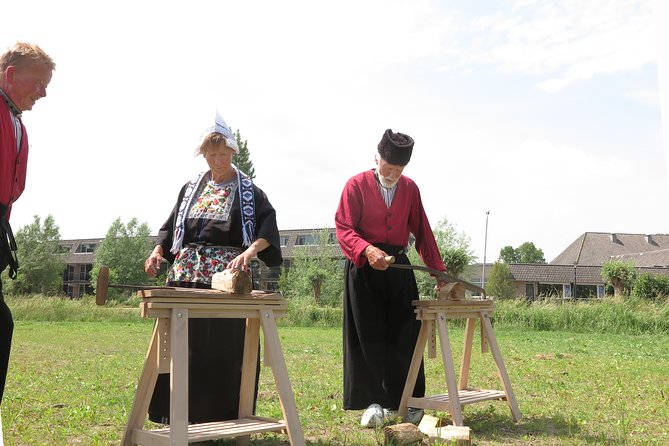
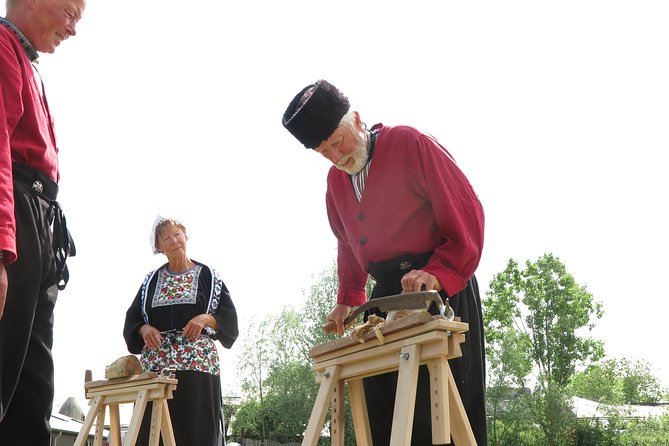
The demonstration covers both manual and machine production. That combination gives you a useful comparison without requiring a separate museum visit. You see the old method as a working skill and the machine as part of the practical way clogs can be made today.
The manual side is the more engaging part if you enjoy traditional crafts. The machine side helps explain why your own shoe takes time and effort. It also prevents a common misunderstanding: a finished clog may look simple, but the process behind it is not.
The workshop is educational without needing a long lecture. You learn by watching, then by trying. I like that format because it connects the explanation to your hands immediately.
Still, do not book this expecting a quiet craft table. The equipment and physical work are central. Wear something suitable for an active session, and plan your day so you are not rushing straight into a formal meal or another demanding activity afterward.
A different kind of day out entirely:
- Amsterdam: Heineken Experience Ticket
★ 4.6 · 30,055 reviews - Amsterdam: Rijksmuseum Entry Ticket
★ 4.7 · 25,535 reviews - Amsterdam: Classic Boat Cruise with Optional Cheese & Wine
★ 4.6 · 22,925 reviews - Amsterdam: Evening Cruise with Optional Wine and Snacks
★ 4.4 · 19,696 reviews
The cheese farm tour and Dutch tastings
At the end, you tour the cheese farm and clog-making facility. This changes the pace after the workshop and adds a second piece of Dutch food culture to the visit.
The tasting includes different types of cheese, Dutch biscuits, and fruit wine. It is a compact introduction rather than a full meal. You can taste the products associated with the farm, then decide if you want to buy more.
Food and drinks are also available for purchase in the restaurant. That is useful if your workshop falls near lunchtime, but the included tastings should not be treated as lunch. Check the restaurant options when you arrive if you need something more substantial.
The cheese stop is valuable because it connects the craft activity to the working farm setting. You are not only looking at wooden shoes as a national symbol. You are also seeing the food tradition that makes a visit outside Amsterdam worthwhile.
The provided details do not specify the exact cheese varieties, so you should expect a selection rather than a promised list. The same applies to the biscuits and fruit wine. If you have dietary restrictions, ask before tasting, since no specific ingredient or allergy information is provided.
What you take home
The included semi-finished handmade wooden shoe is the main souvenir. Semi-finished is the important phrase. Your shoe may not be completely polished or ready to wear by the end, particularly if you spend time learning the tools and engraving.
That unfinished quality is not necessarily a flaw. It shows that you took part in the process instead of buying a finished item from a shelf. But you should not book this activity if your main goal is to leave with a perfect pair of traditional clogs.
You also receive a blank wooden beer opener that can be painted. The workshop gives you the choice of finishing your own wooden shoe or painting the opener, so you have a practical alternative if the clog work proves too demanding.
I see the beer opener as a useful safety net, not a replacement for the clog session. If you are committed to completing the shoe, ask how much work is realistic in the available time. If you simply want a handmade object, the opener may be the easier and more satisfying result.
Price, timing, and practical value
The listed price is $84.58 per person. For that amount, you get roughly two hours of private instruction, equipment use, a semi-finished handmade shoe, a wooden beer opener, a facility tour, and tastings.
That is a fair value if your group wants an active cultural activity and would otherwise pay for separate sightseeing and food stops. The private structure adds value for a small group because you are not sharing the workshop with unrelated participants.
The price is less compelling if you only want to see how clogs are made. In that case, the hands-on work may feel like more time and effort than you need. The workshop earns its cost through participation, not through the length of the tour.
The activity is booked an average of 22 days ahead, so I would reserve it before your trip if the timing matters. Multiple start times are available, which helps you fit it around a day in Amsterdam or nearby towns. Confirmation is provided when you book, and a mobile ticket is accepted.
The meeting point is Simonehoeve, Wagenweg 2, 1145 PW Katwoude, Netherlands. The tour ends back at the same location. Transport is not included, although the site is near public transportation, so you need to plan the outward and return journey yourself.
Because the workshop is outside central Amsterdam, allow time for getting there. The two-hour duration refers to the activity itself, not your total door-to-door time. That distinction matters if you are arranging a museum booking or train connection later in the day.
Free cancellation is available until 24 hours before the start time. Canceling or changing the booking less than 24 hours in advance is not accepted for a refund, and the cut-off uses local time in the Netherlands.
Who will enjoy this workshop most
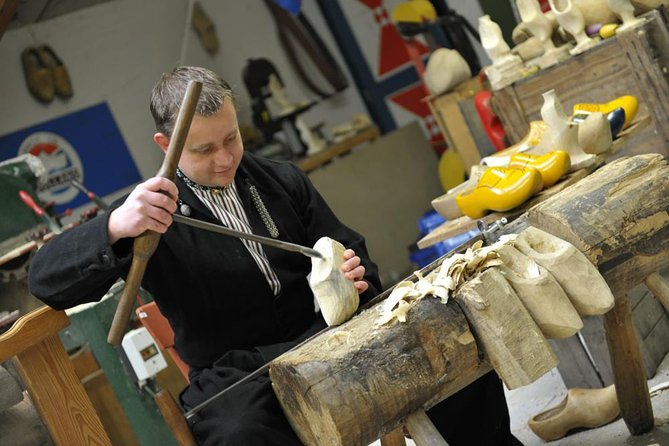
I would recommend this for adults and older teenagers who enjoy making things with their hands. The 16-and-over age rule makes it unsuitable for younger children, even if they are interested in Dutch clogs.
It also suits a group that wants a private activity with a clear beginning and end. You get cultural context, physical participation, a food tasting, and a souvenir without committing to a full-day tour.
It is a good choice for visitors who have already seen Amsterdam’s main sights and want a short trip into the surrounding area. Katwoude gives the activity a farm setting, and the combination of cheese and clogs feels more grounded than a shop visit alone.
I would be cautious if you have limited mobility, dislike repetitive hand work, or need a guaranteed finished product. The stated fitness level is moderate, the work can be tiring, and one participant was unable to finish the clog in the allotted time.
Should you book the Simonehoeve clog workshop?
Book it if you want to try a real Dutch craft, enjoy a private group setting, and are happy with a semi-finished souvenir. The cheese tasting and farm tour add variety, while the painted beer opener gives you a fallback if the woodwork wears you out.
Skip it if you only want a quick look at clog making or a guaranteed finished pair. The best reason to book is the process itself: watching the tools, handling the wood, learning the tricks, and understanding why a simple-looking shoe takes real labor.
For the right group, this is a useful two-hour outing from Amsterdam. Just budget extra time for transport, expect some sweat, and arrive ready to make something imperfect.
FAQ
Where does the workshop take place?
It takes place at Simonehoeve, Wagenweg 2, 1145 PW Katwoude, Netherlands.
Where does the activity end?
The activity ends back at the Simonehoeve meeting point.
How long does the workshop last?
The total duration is approximately two hours. About one and a half hours are spent making and engraving clogs.
Is transportation included?
No. Transport to the farm is not included.
Is this a private activity?
Yes. Only your group participates in the activity.
What is the minimum age?
The minimum age is 16 because the workshop involves handling sharp equipment.
Does each person make a wooden shoe?
Each person has the opportunity to make a wooden shoe from a block of wood when the group includes at least four people.
What happens if the clog work is too tiring?
You can choose to paint a blank wooden beer opener instead. You can also choose to continue working on your own wooden shoe.
What food and drinks are included?
The cheese farm tour includes tastings of different cheeses, Dutch biscuits, and fruit wine.
Can I cancel for a full refund?
Yes. You can cancel for a full refund up to 24 hours before the experience start time. Changes or cancellations made less than 24 hours in advance are not accepted for a refund.
Just added in Amsterdam
- Private Tour Zaanse Schans Windmills and Volendam in Jaguar★ 5.0 · 10 reviews
- Zaanse Schans and Giethoorn Unique Day Trip with Boat Cruise★ 4.5 · 17 reviews
- Windmills-Volendam-Giethoorn Private Tour in Jaguar★ 5.0 · 2 reviews
- Half-Day Private Guided Sightseeing Tour of Zaanse Schans★ 5.0 · 14 reviews
- Best of Netherlands: Zaanse Schans Mills, The Hague & Rotterdam★ 4.5 · 10 reviews
- Zaanse Schans Private Tour Windmills★ 5.0 · 18 reviews
- Zaanse Schans Windmills Edam Volendam and Marken from Amsterdam★ 5.0 · 1 review
- Zaanse Schans Edam Volendam Private Day Tour from Amsterdam★ 5.0 · 3 reviews
Workshops, compared.

Traditional Dutch Syrup Waffle Making Workshop
Read our review →Amsterdam Traditional Dutch Syrup Waffle Making Workshop
Read our review →

3-Course Meal in Historic 1st Class Waiting Rooms
Read our review →
Amsterdam Light Festival Winter Walk with Stroopwafel Workshop
Read our review →
Distilling Class @ Spirited Union Rum Co. (Amsterdam)
Read our review →
Cocktail workshop @ Spirited Union Rum Co. (Amsterdam)
Read our review →Browse the lists this tour appears in