
Review · SELF-GUIDED TOURS
Rotterdam: Steamship Rotterdam Audio Tour Entry Ticket
Step aboard a ship built for another age. The ss Rotterdam lets you walk through the former Holland-America Line flagship, from its grand passenger rooms to the bridge, chart room, radio room, and original captain’s cabin. I like the mix of polished 1950s style and working-ship machinery, and I like that you can explore at your own pace with an audio guide in four languages.
The ship’s terrace is another strong point. After two hours of cabins, decks, and passageways, you can sit down with a drink or bite while looking across the bow and Maashaven. The main drawback is finding your way at the start. Head straight to the gift shop for tickets and audio equipment, since the entrance route and first checkpoint are not always obvious.
- A real oceanliner, not a replica: The ss Rotterdam was the biggest oceanliner ever built in the Netherlands and sailed from 1959.
- Three ways to explore: Choose the Rotterdam Complete Tour, Seabreeze Deluxe Tour, or Steam and Chrome Tour.
- The bridge and captain’s cabin: You can see working areas normally hidden from ordinary cruise passengers.
- Strong human stories: Former crew members have sometimes guided visitors, including Mimi, who sailed aboard during the ship’s first decade.
- A ship with two lives: Parts of the vessel now serve as a hotel and conference center, while other areas remain much as they were when it sailed.
- Good value at $16: The ticket covers selected ship areas and an audio guide for one day, with enough to occupy roughly two hours and often longer.
In This Review
- Why the ss Rotterdam is worth your time
- Getting aboard at Katendrecht
- Choosing among the three tour routes
- Upper decks, bow, and the feeling of ocean travel
- The bridge, chart room, and radio room
- The original captain’s cabin
- Passenger rooms and 1950s style
- Below the waterline and the engine room
- What the audio guide does well, and where it falls short
- Food, coffee, and a useful pause
- Price, time, and overall value
- Who should book the ss Rotterdam
- FAQ
- Where is the ss Rotterdam located?
- How long does the audio tour take?
- What languages are available for the audio guide?
- What languages are available from the host or greeter?
- Which parts of the ship can I visit?
- What are the three tour options?
- Can I see the captain’s cabin?
- Is the engine room included?
- Is the tour suitable for wheelchair users?
- Can I cancel the booking?
Why the ss Rotterdam is worth your time
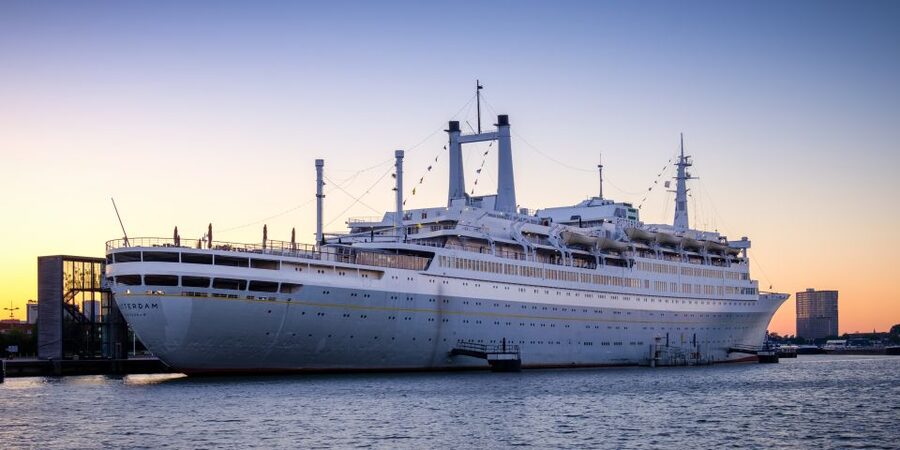
The ss Rotterdam is not simply a museum filled with objects behind glass. You walk through the actual ship, using stairways, decks, cabins, and service areas that were built for ocean travel. That physical setting gives the visit its force. You begin to picture emigrants carrying their luggage, passengers taking meals in formal rooms, and crew working below the waterline.
The ship was launched as the former flagship of the Holland-America Line and began sailing in 1959. That date matters because the vessel captures a particular moment. Air travel was already changing the way people crossed the Atlantic, but oceanliners still carried a sense of ceremony, comfort, and status.
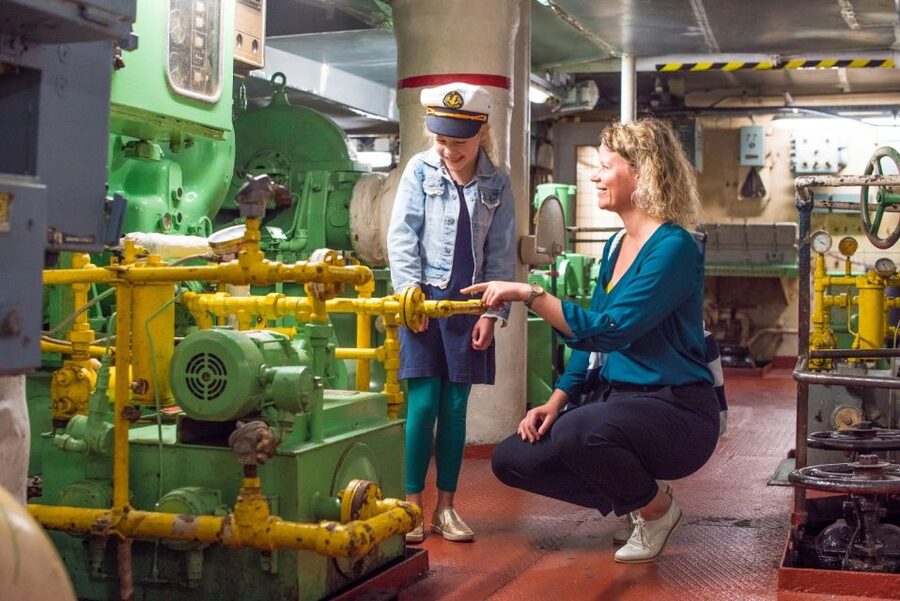
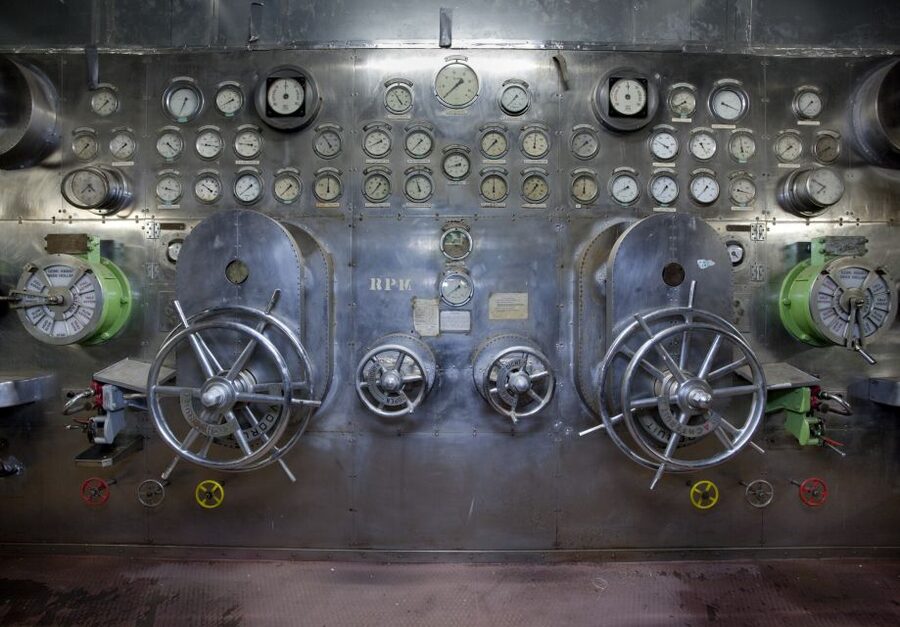
I especially like the contrast between the public rooms and the working parts of the ship. One minute you are looking at stylish passenger interiors with strong 1950s design. The next, you are studying heavy windlasses, navigation equipment, or the machinery that kept a very large vessel moving.
You should allow about two hours for the audio tour itself. If you take your time, stop for photographs, eat on board, or add an engine room visit when available, your stay can stretch to about three hours.
Getting aboard at Katendrecht
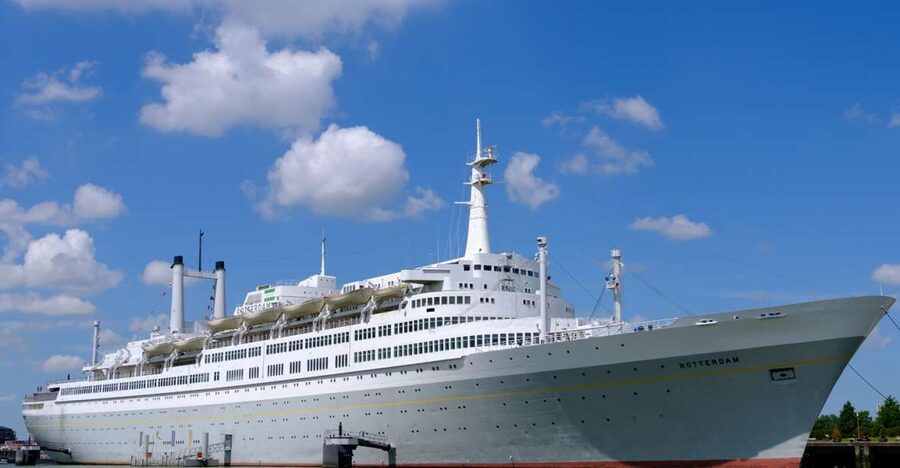
The ship is permanently moored at 3e Katendrechtse Hoofd 25 in Rotterdam’s Katendrecht district. The location by Maashaven gives the visit a useful sense of place. You are not looking at a ship model in a city gallery. You are visiting a full-sized liner at the water’s edge.
One pleasant way to arrive is by water taxi. That approach makes the ship feel even more like a working arrival point, although you can also reach it by ordinary city transport and on foot. The important thing is to plan a few extra minutes for the first step aboard.
At the ship, go to the gift shop first. This is where you can sort out your admission and collect the digital audio guide. Several people have found the beginning confusing because there are not always clear signs or staff waiting at the first entry point.
Once you have the guide, ask where the audio tour starts before wandering farther into the ship. The first route may take you below deck, and it is easy to lose time trying to work out which stairway or corridor comes next.
That minor organizational problem does not spoil the visit, but it can make the first 10 minutes needlessly frustrating. A simple rule helps: gift shop first, audio equipment second, starting point third.
More Self-Guided Tours in Rotterdam:
- Amsterdam: 75 Minute City Canal Cruise with Audio Guide
★ 4.4 · 17,501 reviews - Amsterdam: Royal Palace Entry Ticket and Audio Guide
★ 4.6 · 6,475 reviews - Amsterdam: Canal Cruise with Live Commentary & Audio Guide
★ 4.4 · 1,034 reviews
Choosing among the three tour routes
Your ticket gives you a choice of three routes: the Rotterdam Complete Tour, the Seabreeze Deluxe Tour, or the Steam and Chrome Tour. The exact areas you can enter depend on the option you select, so read the description carefully before paying.
The names suggest three different ways to understand the ship:
- Rotterdam Complete Tour: This is the broadest choice for seeing the passenger areas and major ship spaces. It suits a first visit when you want a general picture of life aboard.
- Seabreeze Deluxe Tour: This option places more attention on the ship’s passenger experience and upper areas. It should appeal to you if cabins, lounges, decks, and the old style of ocean travel interest you most.
- Steam and Chrome Tour: This is the natural pick if you care about ship operation, machinery, and technical spaces. It gives the visit a more practical, behind-the-scenes feel.
Because the tour descriptions can vary by option, check which deck levels and rooms are included before booking. The ticket is not automatically a pass to every part of the ship.
The audio guide keeps the route flexible. You can pause, look around, and move at your own rhythm instead of staying with a single group. That works well for families and independent sightseers, though it also means you need to pay attention to route markers and checkpoints.
Upper decks, bow, and the feeling of ocean travel
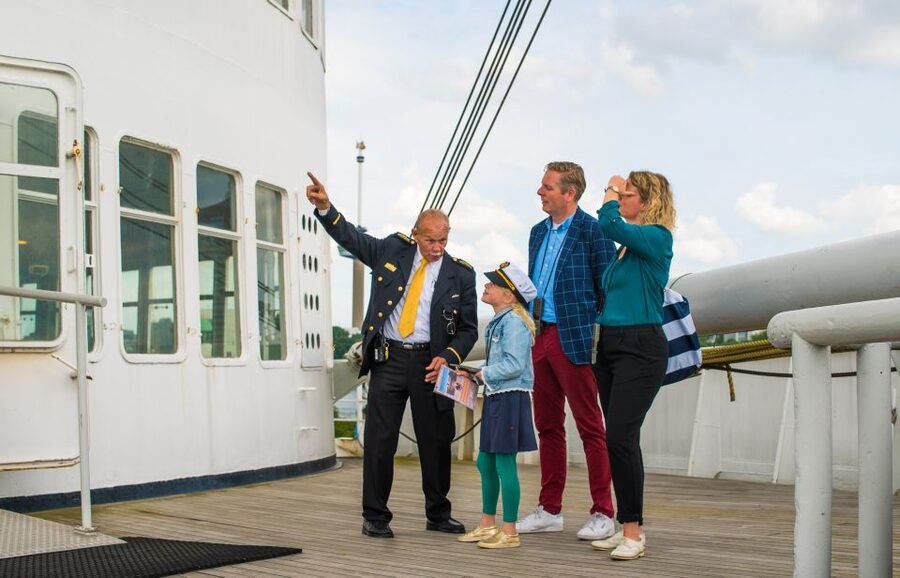
Start above the waterline if you want the most immediate sense of scale. The upper decks show how large the ship is, while the bow gives you a wide view over the water and harbor surroundings. Stand near the front and look back along the deck. The ship’s length becomes easier to grasp than it is from the dock.
The bow is also a good place to slow down. The tour can feel information-heavy at first, with rooms, names, and dates coming one after another. Sitting or standing outside for a while helps you reset.
Look for the heavy windlasses at the front. These large pieces of equipment remind you that the ss Rotterdam was a working liner, not just a glamorous passenger setting. The contrast between polished interiors and solid deck machinery is one of the best parts of the visit.
The upper deck route is not only about views. It helps explain how passengers experienced the ship. The open air, the long deck lines, and the view over the bow make the old ocean crossing easier to imagine.
The bridge, chart room, and radio room
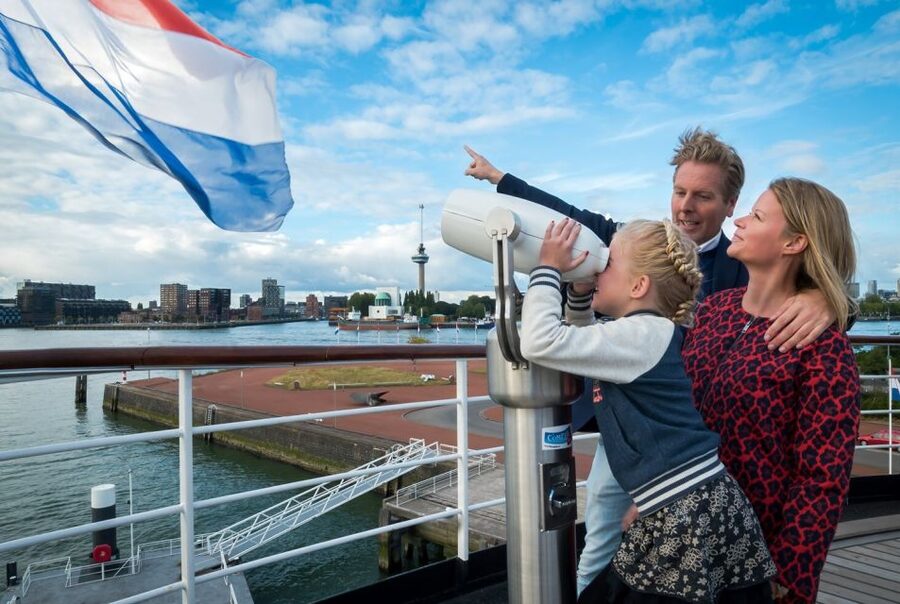
The bridge is among the most rewarding areas for anyone who wants to understand how the ship operated. You can climb up to this commanding part of the vessel and see the spaces connected with navigation and control.
The chart room adds another layer. This is where routes and positions were handled, giving you a clearer sense of the planning behind every ocean crossing. Even if you are not a ship enthusiast, it is easier to appreciate the challenge of guiding a vessel of this size after seeing the equipment and confined work areas.
The radio room shows another essential part of liner life. Before modern mobile communication, radio links connected ships with land and other vessels. The room is a useful reminder that long-distance travel once depended on specialized crew and equipment rather than instant digital contact.
I would set aside more time here than you might expect. Passenger rooms attract the eye, but the bridge, chart room, and radio room explain how the ship actually functioned. They turn a pretty old liner into a working system.
More audio tours in Rotterdam:
- Amsterdam Sightseeing Canal Cruise with Audio Guide
★ 3.5 · 828 reviews - Amsterdam Van Gogh Museum with Audio or Guided Tour
★ 4.0 · 266 reviews - Van Gogh Museum Skip the Queue with Audio Guide
★ 4.0 · 261 reviews - Amsterdam 1h Canal Cruise by Semi-Open Boat with Audio Guide
★ 3.5 · 197 reviews
The original captain’s cabin
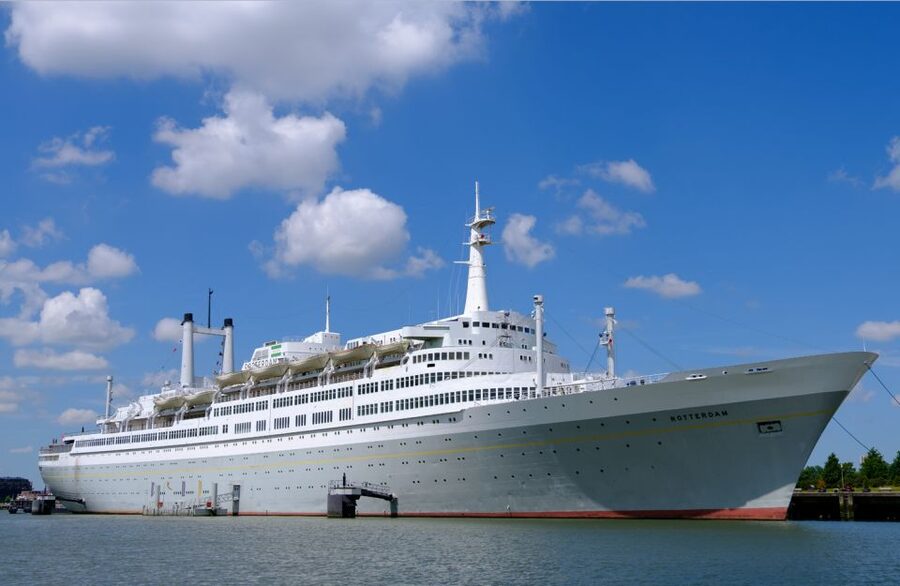
The captain’s cabin gives you a more personal stop. It is one thing to see a bridge full of controls and another to picture the person responsible for the ship living aboard for long stretches.
The cabin also helps show the hierarchy of a major liner. Passengers enjoyed public rooms and private cabins, while senior officers had their own work and living spaces. The audio narration can help connect these rooms with the people who used them.
Keep an eye out for shipboard details rather than rushing from one checkpoint to the next. The appeal here is not a single spectacular object. It is the way the cabin, bridge, chart room, and passenger interiors fit together to tell you how life was organized at sea.
Passenger rooms and 1950s style
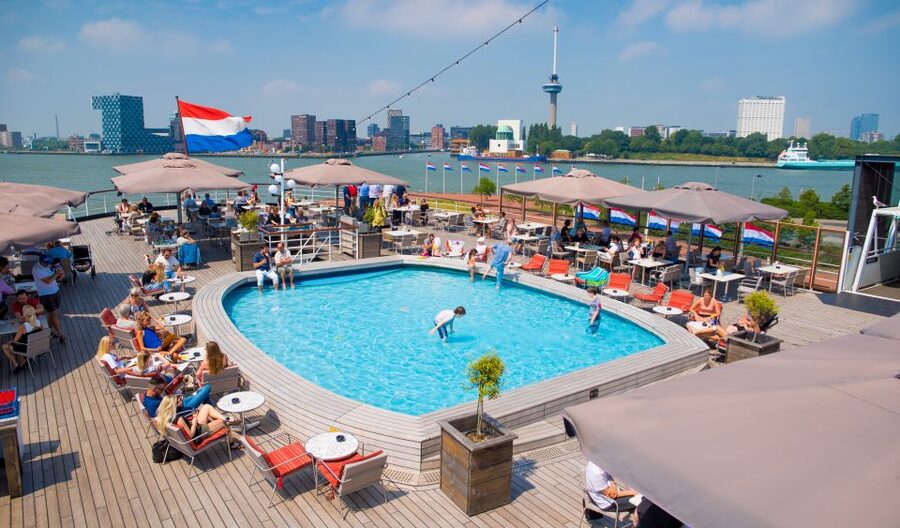
The passenger interiors are a highlight for anyone interested in design. Expect bold period decoration and a look that some people will find stylish, while others may find wonderfully kitsch. That is part of the charm.
The rooms show how ocean travel once sold comfort as an event. The ship was not simply a way to reach another country. It offered dining, lounging, polished surroundings, and a sense of occasion along the way.
Some areas have been restored or adapted for the ship’s current use as a hotel and conference center. Other sections remain unaltered from the sailing era. That combination is useful because you can see both the ship’s past and its present life.
I prefer this kind of preservation to a perfectly frozen display. A ship that is still used has more energy than one that has been sealed off. At the same time, do not expect every corridor to feel like a museum gallery. Modern functions and old interiors exist side by side.
Below the waterline and the engine room
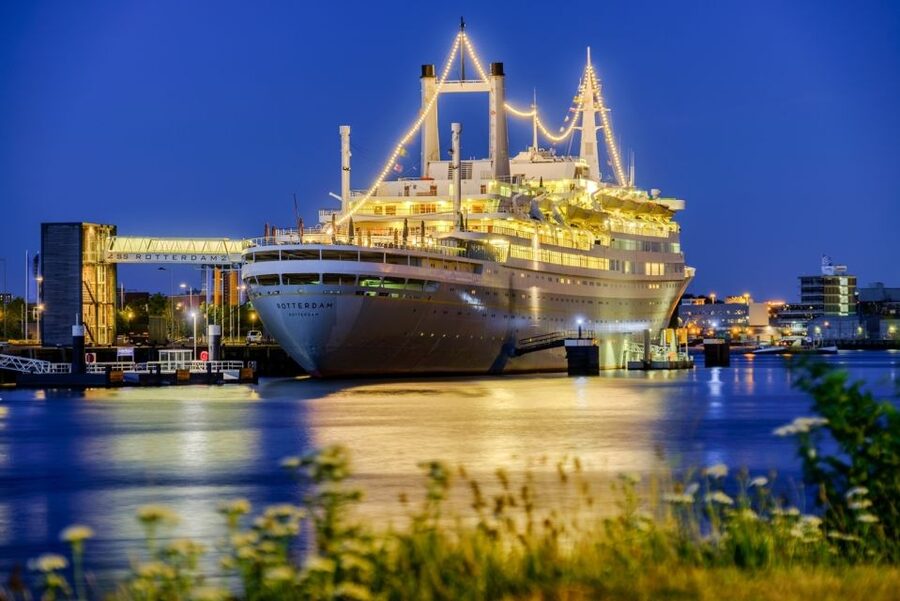
If machinery interests you, ask about an engine room tour. This is generally an additional one-hour experience rather than part of the standard self-guided audio route, and availability or pricing should be checked when you book.
The engine room adds the mechanical story missing from the passenger decks. You get closer to the systems that moved the liner, and the scale of the equipment gives you a better feel for the work required to operate such a ship.
This extra suits curious adults, older children, and anyone fascinated by marine engineering. One visitor who wanted to understand ship technology found the visit especially rewarding, from diesel engines and electric propulsion to other systems used on modern vessels. You do not need a technical background, but you will get more from it if you enjoy machinery.
The route may involve stairs, narrow passages, and working-ship conditions. That makes it less suitable for anyone who needs an easy, level visit. If the engine room is not your interest, the regular tour still gives you plenty to see.
What the audio guide does well, and where it falls short
The audio guide is available in Dutch, English, French, and German. It lets you explore without being tied to a scheduled group, and it gives useful context as you move through the ship.
The best experience comes when you combine the recording with the real spaces around you. Pause when a room catches your eye. Look through a doorway. Study the bridge controls before moving to the next checkpoint.
The system is not perfect. Some audio points have reportedly failed to play, and some information may appear only in Dutch. That can make the route feel uneven, especially if you expect every stop to work exactly the same way.
The ship’s own staff can make up for this. Several guides around the vessel have been praised for being friendly and helpful, and some have worked aboard the liner. Mimi, an 80-year-old former crew member who sailed during the first 10 years of the ship’s working life, has been an especially memorable guide. If you encounter a staff member offering extra context, take the opportunity. Personal stories can make the ship far more vivid than recorded narration alone.
Food, coffee, and a useful pause
Plan a break on board rather than treating the ship as a quick museum stop. The terrace is a good place for a drink or light meal, particularly after walking through the interior and upper decks.
The Lido has also been singled out as a worthwhile place for lunch, while coffee and cake make an easy rainy-day stop. These options matter because the visit can take longer than the advertised two-hour audio route.
A drink on the deck gives you time to look back at what you have seen. The ship’s hotel and conference functions also mean you are sharing a working venue, not just moving through a closed historic attraction.
Price, time, and overall value
At $16 per person, the standard ticket is good value if you have any interest in ships, design, maritime travel, or Rotterdam’s past. You receive access to several ship areas and an audio guide, with a full day of validity even though the actual audio route lasts about two hours.
The value improves if you take your time. Explore the rooms, pause on the bow, stop for food, and ask staff about the route. You are paying for access to a very large vessel, not a short viewing platform.
The price is less compelling if you dislike audio tours, have little patience for stairs and corridors, or want a tightly guided experience from beginning to end. In that case, the route can feel disjointed, especially before you find the correct starting point.
Reserve now and pay later is available, and cancellation is free up to 24 hours before the visit for a full refund. The ticket is valid for one day, but you should still check available starting times when booking.
The supplied information gives conflicting accessibility notes. It says the activity is wheelchair accessible, but it also lists wheelchair users under not suitable for the activity. Contact the provider before booking if you use a wheelchair or need step-free access.
Who should book the ss Rotterdam
I would recommend this to you if you like historic transport, oceanliners, 1950s interiors, or the practical side of engineering. It also works well for families with older children, since the ship offers changing scenery and a real sense of scale rather than a room full of signs.
It is a particularly good rainy-day choice in Rotterdam. You can spend much of the visit indoors, then take a short outdoor break on the bow or terrace.
You should consider the engine room add-on if machinery is your main interest. Skip it if you prefer passenger rooms, ship design, and the social side of ocean travel.
Book the ss Rotterdam if you want an authentic ship visit with room to wander and enough detail for a half-day outing. Skip it only if unclear directions, occasional audio problems, or uneven access to areas would seriously frustrate you. For most people interested in Rotterdam’s maritime story, the ship earns its place on the itinerary.
FAQ
Where is the ss Rotterdam located?
The ship is moored at 3e Katendrechtse Hoofd 25, 3072 AM Rotterdam, in the Katendrecht area of South Holland.
How long does the audio tour take?
The audio tour takes approximately two hours. With extra time for food, photographs, and additional areas, your visit may last longer.
What languages are available for the audio guide?
The audio guide is available in Dutch, English, French, and German.
What languages are available from the host or greeter?
Host or greeter support is available in Dutch, English, French, and German.
Which parts of the ship can I visit?
You can visit several parts of the ss Rotterdam, but access to different deck levels and rooms depends on the tour option you choose.
What are the three tour options?
The choices are the Rotterdam Complete Tour, the Seabreeze Deluxe Tour, and the Steam and Chrome Tour.
Can I see the captain’s cabin?
The original captain’s cabin is included among the ship areas available on the tour, depending on the option selected.
Is the engine room included?
The standard information lists access to selected ship areas and an audio guide. An engine room tour may be available as an extra one-hour guided experience, so check when booking.
Is the tour suitable for wheelchair users?
The information is inconsistent. It lists the activity as wheelchair accessible but also says it is not suitable for wheelchair users. Contact the provider before booking to confirm current access.
Can I cancel the booking?
You can cancel up to 24 hours in advance for a full refund. Reserve now and pay later is also available.
Just added in Rotterdam
- e-Scavenger hunt Dordrecht: Explore the city at your own pace★ 4.5 · 24 reviews
- Escape the City – Interactive city walk in Dordrecht★ 5.0 · 1 review
- Discover the best spots in Dordrecht with Outside Escape★ 4.5 · 11 reviews
- Historical Dordrecht: Private Tour with Local Guide★ 5.0 · 1 review
- The Netherlands: WW2 Private Day Trip★ 5.0 · 4 reviews
- Rotterdam: Guided Food Tour★ 4.4 · 16 reviews
- Rotterdam: Trompenburg Botanical Gardens Entry Ticket★ 4.1 · 77 reviews
- Rotterdam: UNESCO Van Nelle Factory Guided Tour★ 4.5 · 94 reviews
Self-Guided Tours, compared.
75 Minute City Canal Cruise with Audio Guide
Read our review →
Canal Cruise with Live Commentary & Audio Guide
Read our review →
Amsterdam Sightseeing Canal Cruise with Audio Guide
Read our review →
Amsterdam Van Gogh Museum with Audio or Guided Tour
Read our review →
Van Gogh Museum Skip the Queue with Audio Guide
Read our review →
Amsterdam 1h Canal Cruise by Semi-Open Boat with Audio Guide
Read our review →
Browse the lists this tour appears in