
Review · SELF-GUIDED TOURS
Amsterdam: Museum of the Canals Ticket with Audio Guide
Canals tell Amsterdam’s whole story. This Museum of the Canals ticket takes you through 400 years of city-building inside a beautiful 17th-century canal house on the Herengracht. I like the setting, with classical period rooms, and I like the clear focus on why the canals mattered then and still matter now. One caution: the multimedia presentation can feel dated, so the $22 price may seem high if you expect modern technology.
The visit is easy to fit into a day in central Amsterdam. You can explore the permanent exhibition, see any temporary exhibition on display, and use the included audio tour in one of nine languages. I find this a useful first stop before a canal cruise because it gives the waterways a practical story, not just a pretty view.
In This Review
- Key points to know before you go
- Why Amsterdam’s canals need explaining
- Entering the Herengracht canal house
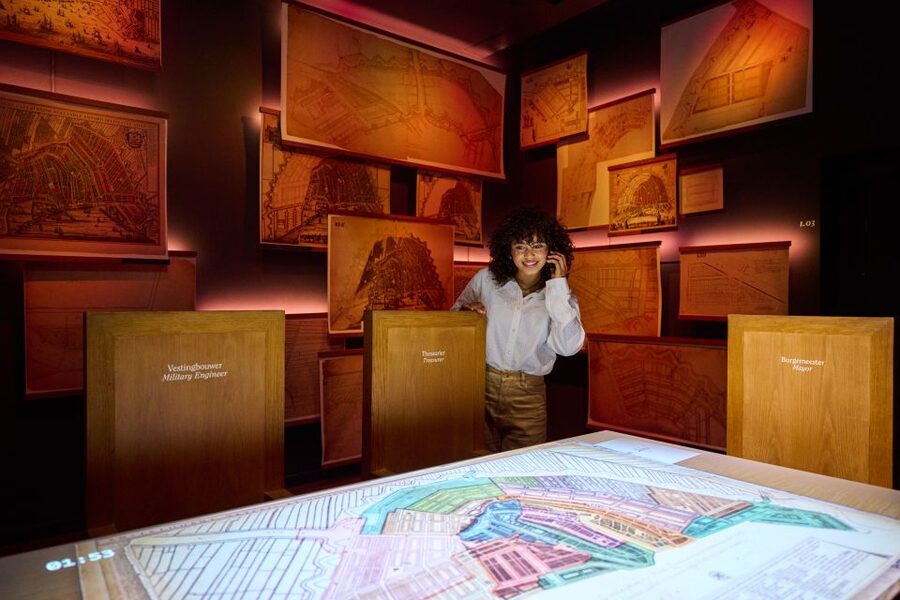
- Following 400 years through multimedia displays
- What the classical rooms add to the story
- The audio guide and language choices
- Temporary exhibitions and repeat value
- Is $22 a fair price?
- Who will get the most from this museum?
- Planning your visit
- Should you book the Museum of the Canals?
- FAQ
- Where is the Museum of the Canals located?
- What does the museum explain?
- How long is the ticket valid?
- Is an audio guide included?
- Which languages are available for the audio guide?
- Which languages are available from the host or greeter?
- Does admission include temporary exhibitions?
- Is the museum wheelchair accessible?
Key points to know before you go
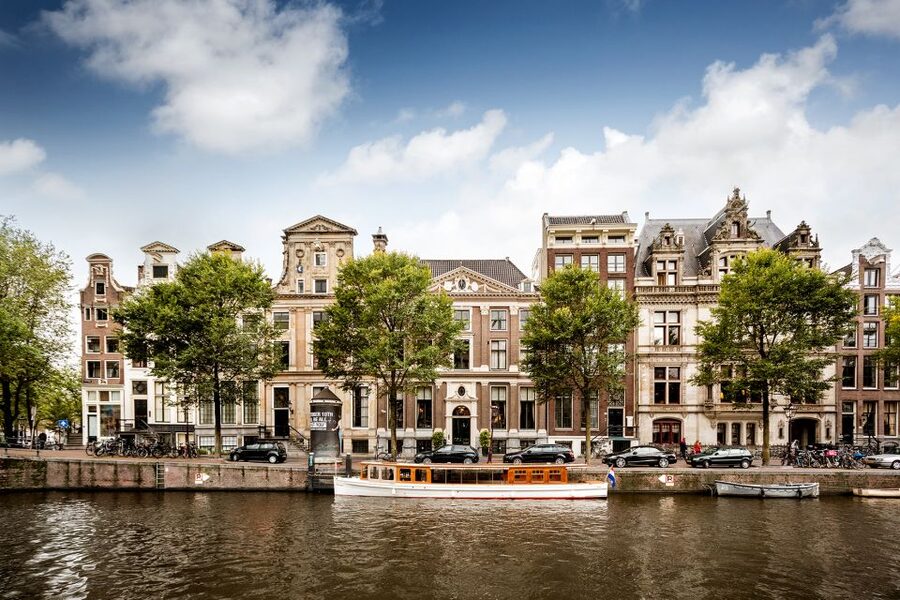
- A 17th-century Herengracht house: The museum itself is part of the appeal, with classical period rooms that connect the exhibition to Amsterdam’s canal-era past.
- A 400-year city story: The displays explain how canals shaped movement, trade, housing, and daily life in Amsterdam.
- Multimedia presentation included: The exhibition uses film and other media, though some of the animation may feel old-fashioned.
- Audio tour in nine languages: Choose Dutch, English, German, French, Spanish, Italian, Russian, Japanese, or Chinese.
- Permanent and temporary exhibitions: Your admission covers both areas on display at the time of your visit.
- A short, flexible museum stop: The ticket is valid for one day, and you can check available starting times before booking.
Why Amsterdam’s canals need explaining
Amsterdam’s canals are easy to admire and surprisingly easy to misunderstand. Their graceful curves, narrow houses, and bridges can look like a natural part of the city. They are not. The canals were planned and built as part of Amsterdam’s growth, and the museum helps you see them as working infrastructure rather than scenery alone.
That change in viewpoint is the main reason I like this experience. You are not simply looking at old maps or admiring furniture. You are learning why the canals were created, how they helped the city function, and why they still affect Amsterdam’s future.
The museum presents the canals as the center of movement for people and goods. That matters because Amsterdam’s identity grew around water. Once you understand that, a later walk along the Herengracht or a boat ride through the canal belt makes more sense.
The visit also works well for anyone who wants context before seeing more of the city. Amsterdam offers plenty of attractive streets and photogenic bridges, but the museum gives those views a reason. You begin to notice how the canals organize the city instead of treating them as a decorative backdrop.
More Museum Tours in Amsterdam
- Amsterdam: Van Gogh Museum Ticket
★ 4.7 · 52,054 reviews - Moco Museum Amsterdam Entrance Tickets with Banksy & More
★ 4.4 · 10,088 reviews - Amsterdam: The Upside Down Museum Entrance Ticket
★ 4.4 · 9,506 reviews
Entering the Herengracht canal house
The Museum of the Canals occupies a house on the Herengracht, one of Amsterdam’s best-known canal streets. The building dates from the 17th century, and its classical period rooms provide a stronger sense of place than a modern gallery would.
I like this kind of museum setting because the building carries part of the story. You are learning about canal-era Amsterdam while standing inside a house created during that same broad period of urban growth. The rooms help turn an abstract subject into something easier to picture.
Do not expect the entire visit to be a grand-house tour. The house is a setting for the canal exhibition, and the main subject remains the development and importance of Amsterdam’s waterways. Still, the period rooms add texture and make the admission feel less like a standard information center.
The Herengracht location is also practical. It puts the museum in the city center, where you can combine the visit with a walk along the canals. Since the ticket is valid for one day, you have some flexibility about when to go, although the available starting times should be checked before you reserve.
Following 400 years through multimedia displays
The central exhibition takes you back roughly 400 years and follows Amsterdam through the lens of its canals. This approach keeps the story focused. Instead of trying to cover every part of Dutch history, the museum asks one useful question: how did the waterways shape the city?
The multimedia presentation is designed to make that story accessible. You might find moving images, visual explanations, and other presentation elements that show how the canal system developed. The aim is to connect the city’s past with its present rather than treat the canals as a finished historical project.
I especially like the link between transportation and urban growth. The canals were not built simply to create attractive neighborhoods. They helped move people and goods, supported the city’s expansion, and gave Amsterdam a practical way to manage life around water.
The museum also looks toward the future. That is an important part of the experience because the canals still influence how people move through the city and how Amsterdam thinks about its urban environment. You leave with a better sense that the waterways are living parts of the city, not museum pieces.
There is one fair limitation. A French-language assessment of the experience described the animation as outdated for 2026 and felt the price-to-quality balance suffered because of it. That criticism is worth taking seriously. The subject is strong, but the presentation may not feel as polished or current as the price suggests.
What the classical rooms add to the story
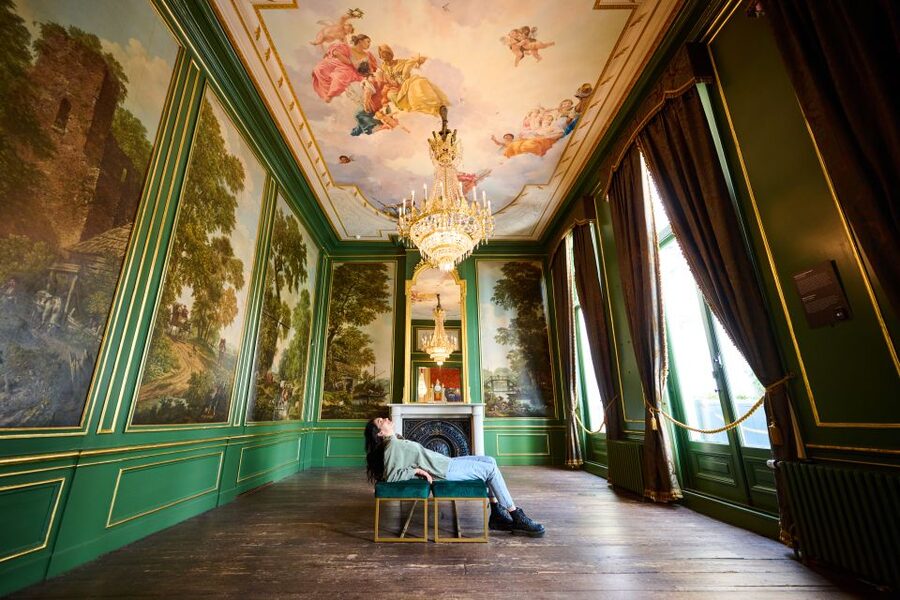
The period rooms are not just attractive background. They help show how the canal houses functioned during Amsterdam’s long period of growth. Their classical style gives you a physical connection to the people and domestic world associated with the canal belt.
I would pay attention to the contrast between the orderly rooms and the demanding work that made the canal system useful. The elegant house represents one side of Amsterdam’s canal story. The waterways themselves represent movement, trade, planning, and labor. The museum’s setting helps place those ideas in the same frame.
This is also where the experience differs from a canal cruise. A boat ride gives you changing views and a sense of scale. The Museum of the Canals gives you an indoor setting, historical explanation, and time to consider why the city looks the way it does.
If you already plan to take a cruise, this museum can add meaning to it. If you have limited time in Amsterdam, the value depends on your interests. You will get more from the visit if you enjoy urban history, architecture, or the practical story behind famous sights.
More Self-Guided Tours in Amsterdam
- Amsterdam: 75 Minute City Canal Cruise with Audio Guide
★ 4.4 · 17,501 reviews - Amsterdam: Royal Palace Entry Ticket and Audio Guide
★ 4.6 · 6,475 reviews - Amsterdam: Canal Cruise with Live Commentary & Audio Guide
★ 4.4 · 1,034 reviews - Amsterdam Sightseeing Canal Cruise with Audio Guide
★ 3.5 · 828 reviews
The audio guide and language choices
An audio tour is included with admission. It is available in Dutch, English, German, French, Spanish, Italian, Russian, Japanese, and Chinese, giving you a good range of choices.
I like having the audio guide because the canal story has many layers that are not always obvious from the rooms alone. You can move through the exhibition at your own pace and listen in the language that suits you best. This is more flexible than relying on a live group presentation.
The listed host or greeter languages are Dutch and English. That distinction is useful. You should be able to get basic help in those languages, while the audio content offers the wider selection noted above.
The audio guide also helps balance the older multimedia presentation. If the animation feels dated, the spoken explanation may still give the exhibits a clear thread. I would treat the audio tour as an essential part of the experience, not an optional extra.
Temporary exhibitions and repeat value
Your admission includes the permanent exhibition and any temporary exhibition on display. The permanent section provides the main canal story, while the temporary area can change the emphasis of your visit.
This is useful if you enjoy museums that connect a fixed subject with current displays. The canal system remains the central theme, but a temporary exhibition may offer a different angle on Amsterdam, its buildings, or its relationship with water.
Because the temporary content can change, I would check what is currently showing if that feature matters to your decision. The available information confirms that temporary exhibitions are included, but it does not specify their subjects or size.
That uncertainty is not a major problem, but it does affect how you judge the $22 price. The permanent exhibition is the reliable reason to go. The temporary exhibition is an added benefit, not something you should book around without checking first.
Is $22 a fair price?
At $22 per person, this is not Amsterdam’s cheapest museum stop. The value comes from the combination of a central location, a historic canal house, the permanent exhibition, temporary displays, and the multilingual audio tour.
I think the price makes reasonable sense if you want a focused introduction to Amsterdam’s canals and plan to take your time with the material. It is less convincing if you only want a quick look at a historic interior or expect cutting-edge technology.
The strongest value is educational. The museum gives you a framework for understanding sights you will encounter across Amsterdam. That can make a canal walk, a bridge crossing, or a boat ride more rewarding because you know what the waterways were built to do.
The weak point is presentation quality. One recent assessment rated the experience three out of five, mainly because the animation seemed old for the current year and the cost felt poorly matched to it. A separate assessment gave the museum five out of five and described it as beautiful and well worth the visit. Those two reactions point to the right conclusion: the subject and setting are widely appealing, but your value judgment may depend on how much you care about modern exhibition technology.
Who will get the most from this museum?
I would recommend the Museum of the Canals to you if you enjoy architecture, city planning, or Amsterdam’s past. It is also a good choice if you prefer a self-guided museum visit and want to learn before exploring the canal belt outdoors.
Families may appreciate the visual format, though the supplied information does not specify a children’s program or a family guide. The multimedia elements could help younger visitors follow the story, but the dated animation may not hold every child’s attention.
The experience suits independent visitors better than anyone looking for a live guide or a social group tour. You control the pace, select the audio language, and explore the exhibitions included with your ticket.
It is also a practical option on a day when weather makes outdoor sightseeing less pleasant. The museum provides an indoor way to understand the city’s waterways before you return to the streets.
Planning your visit
The ticket is valid for one day, and you should check availability for starting times before booking. The experience includes admission and the audio tour, but food and drinks are not included.
Cancellation is free up to 24 hours in advance for a full refund. You can also reserve now and pay later, which helps if your Amsterdam schedule is still shifting.
The museum is wheelchair accessible. That makes the visit a useful choice for anyone who needs an accessible indoor attraction, although the supplied details do not describe specific routes or facilities inside.
I would place it early in your Amsterdam plans if canals are a major part of your sightseeing. The museum’s information can sharpen your eye for the rest of the city. If your schedule is tight, check the temporary exhibition before deciding if the admission fee fits your priorities.
Should you book the Museum of the Canals?
Book it if you want the story behind Amsterdam’s famous waterways, not just another attractive canal view. The historic Herengracht house, classical rooms, focused exhibition, and wide audio-language choice give the visit real substance.
Skip it if you want a highly modern, technology-led museum or if $22 feels steep for a self-guided indoor stop. The outdated animation noted in one assessment is a genuine concern.
My call: this is a worthwhile museum for curious first-time visitors, architecture fans, and anyone planning a canal cruise. Go for the setting and the explanation of Amsterdam’s urban design. Keep your expectations modest about the multimedia polish, and the experience is more likely to feel like good value.
FAQ
Where is the Museum of the Canals located?
It is in central Amsterdam, in a 17th-century canal house on the Herengracht in North Holland, Netherlands.
What does the museum explain?
The museum explains the history and importance of Amsterdam’s canals, including their role in the movement of the city and its inhabitants in the past and present.
How long is the ticket valid?
The ticket is valid for one day. You should check availability for the starting times offered on your chosen date.
Is an audio guide included?
Yes. An audio tour is included with admission.
Which languages are available for the audio guide?
The audio guide is available in Dutch, English, German, French, Spanish, Italian, Russian, Japanese, and Chinese.
Which languages are available from the host or greeter?
The listed host or greeter languages are Dutch and English.
Does admission include temporary exhibitions?
Yes. Admission includes the permanent exhibition and temporary exhibitions that are on display at the museum.
Is the museum wheelchair accessible?
Yes. The Museum of the Canals is wheelchair accessible.
More Audio Tours in Amsterdam
- Amsterdam Van Gogh Museum with Audio or Guided Tour
★ 4.0 · 266 reviews - Van Gogh Museum Skip the Queue with Audio Guide
★ 4.0 · 261 reviews - Amsterdam 1h Canal Cruise by Semi-Open Boat with Audio Guide
★ 3.5 · 197 reviews - Combo Ticket: Rijksmuseum Amsterdam & 1h Cruise with Audio Guide
★ 3.0 · 83 reviews
Just added in Amsterdam
- Private Tour Zaanse Schans Windmills and Volendam in Jaguar★ 5.0 · 10 reviews
- Half-Day Private Guided Sightseeing Tour of Zaanse Schans★ 5.0 · 14 reviews
- Zaanse Schans and Giethoorn Unique Day Trip with Boat Cruise★ 4.5 · 17 reviews
- Windmills-Volendam-Giethoorn Private Tour in Jaguar★ 5.0 · 2 reviews
- Best of Netherlands: Zaanse Schans Mills, The Hague & Rotterdam★ 4.5 · 10 reviews
- Zaanse Schans Private Tour Windmills★ 5.0 · 18 reviews
- Zaanse Schans Windmills Edam Volendam and Marken from Amsterdam★ 5.0 · 1 review
- Zaanse Schans Edam Volendam Private Day Tour from Amsterdam★ 5.0 · 3 reviews
Self-Guided Tours, compared.
75 Minute City Canal Cruise with Audio Guide
Read our review →
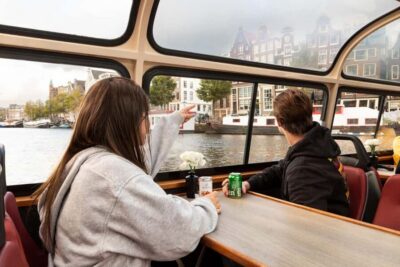
Canal Cruise with Live Commentary & Audio Guide
Read our review →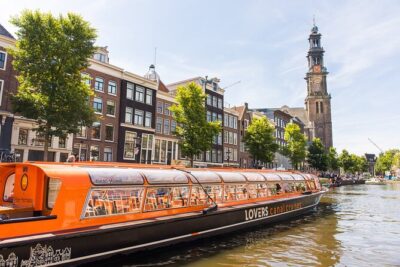
Amsterdam Sightseeing Canal Cruise with Audio Guide
Read our review →

Amsterdam Van Gogh Museum with Audio or Guided Tour
Read our review →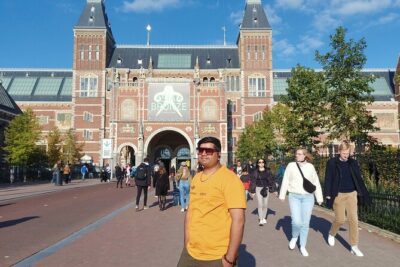
Van Gogh Museum Skip the Queue with Audio Guide
Read our review →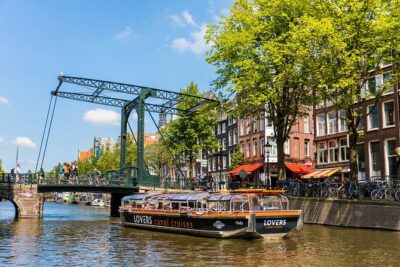
Amsterdam 1h Canal Cruise by Semi-Open Boat with Audio Guide
Read our review →Browse the lists this tour appears in