
Review · VAN GOGH MUSEUM TICKETS
Van Gogh Museum Amsterdam Small Group Guided Tour
Van Gogh rewards a second look. This two-hour tour gives you a clear path through the museum, from the early peasant studies to the final paintings made in Auvers. I like the small maximum of 14 people, and I like the wireless Whisper System, which lets you hear the guide without crowding around a raised voice.
The tour is especially useful if you want more than a quick photo of Sunflowers. Guides such as Martina, Claire, Kawika, Marlene, Roland, and Holly have been praised for linking Van Gogh’s life, materials, influences, and changing painting style. The main caution is that the experience depends heavily on the individual guide, and a few customers reported a disappointing guide or a guide who failed to appear.
In This Review
- Key points to know before booking
- What this Van Gogh tour does well
- Meeting at Museumplein and getting started
- Stop one: Van Gogh’s self-portraits
- Stop two: Millet, peasant life, and The Potato Eaters
- Stop three: Paris and the shift in color
- Stop four: Arles, yellow light, and the best-known paintings
- Stop five: Saint-Rémy and the force of nature
- Stop six: Auvers and the final paintings
- The guides make or break the experience
- Price, timing, and who gets good value
- Should you book the Van Gogh Museum guided tour?
- FAQ
- How long does the Van Gogh Museum guided tour last?
- What language is the tour offered in?
- How many people can join the tour?
- Is museum admission included?
- Can I remain in the museum after the tour?
- Does the tour include special exhibitions?
- Where does the tour begin?
- Where does the tour end?
- Can I cancel for a full refund?
Key points to know before booking
- Six carefully chosen museum stops: The route follows Van Gogh’s artistic development from early self-portraits to Tree Roots and Wheatfield with Crows.
- Small group, maximum 14 people: You have a better chance to ask questions and hear useful details than on a large group walk.
- Two hours with museum admission included: The guided portion is focused, and you may stay inside afterward until closing time.
- Wireless headphones help in crowded rooms: The Whisper System is particularly useful if you have difficulty hearing.
- Morning and afternoon departures: You can fit the visit around other Amsterdam plans.
- Adult-only experience: Every participant must be at least 18 years old.
What this Van Gogh tour does well
The Van Gogh Museum can be busy, and its collection covers a short but intense artistic career. Without some direction, you may move from one famous canvas to the next without seeing how the pieces connect. This tour gives you a storyline: early work in the Netherlands, the Paris years, Arles, Saint-Rémy, and Auvers.
I like that the route is not built only around the biggest hits. You see familiar works such as The Potato Eaters, Sunflowers, The Bedroom, Almond Blossoms, and Iris, but you also get paintings that explain Van Gogh’s development. That matters because his art did not appear fully formed. You can watch his handling of paint, color, light, and brushwork change from room to room.
The guides also appear to focus on visual evidence rather than simply retelling Van Gogh’s biography. Martina has used an iPad to show related facts and images. Other guides have explained paint types, artistic methods, Van Gogh’s influences, and the connection between his personal experiences and his work. That kind of explanation can make the brushstrokes feel intentional rather than merely energetic.
The 14-person limit is another practical advantage. In a huge group, you may spend your time trying to locate the guide. Here, the scale should give you a better chance to ask about a particular painting or return briefly to something you missed.
Still, this is not a private tour. Fourteen people can fill a museum room, especially when everyone gathers around a major painting. One customer also felt that too much time went to the self-portraits. If you already know Van Gogh’s early work well, you may prefer to move more quickly through that first section.
More Museum Tours in Amsterdam
- Amsterdam: Van Gogh Museum Ticket
★ 4.7 · 52,054 reviews - Moco Museum Amsterdam Entrance Tickets with Banksy & More
★ 4.4 · 10,088 reviews - Amsterdam: The Upside Down Museum Entrance Ticket
★ 4.4 · 9,506 reviews
Meeting at Museumplein and getting started
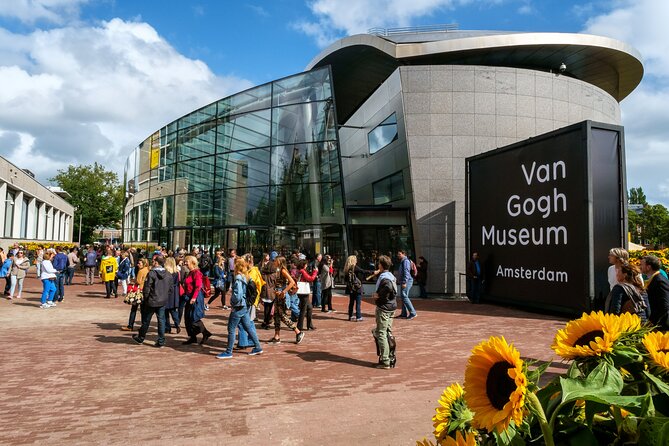
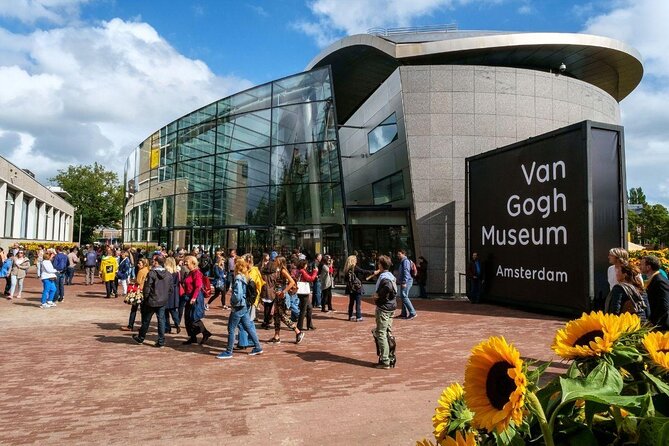
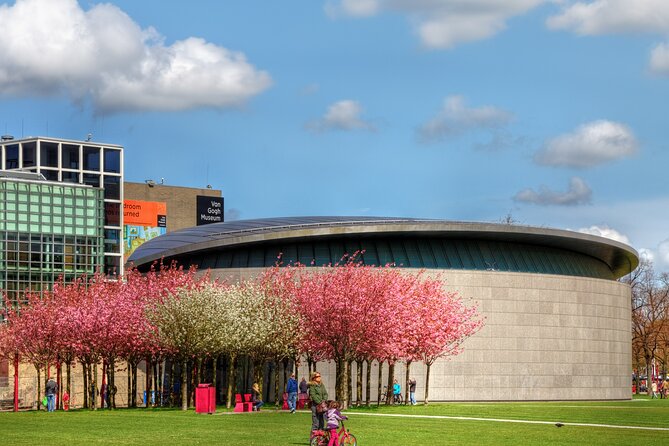
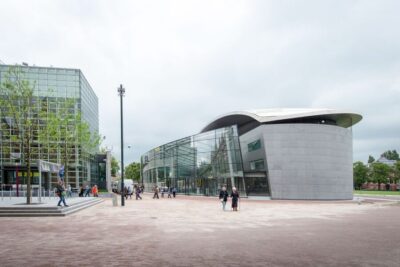
The tour begins at Cobra Café, Hobbemastraat 18, 1071 ZB Amsterdam. It is near public transportation and close to the museum district, so check your route carefully before setting out. Your museum entry is handled as part of the tour, and the experience finishes inside the Van Gogh Museum at Museumplein 6.
That ending point is useful. You do not have to leave when the two-hour guided portion ends. You can continue through the permanent collection at your own pace until closing time, which gives the tour better value than a strictly timed museum visit.
The start and finish are different locations, but both are in the same museum area. Allow enough time to find Cobra Café and meet the group. A missed start can be costly because museum entry is tied to the tour, and one customer reported that the guide did not appear and did not respond to messages.
The tour is offered in English. The supplied details also refer to a live guide in your chosen language, but English is the stated language for this experience, so confirm the language shown at booking if that matters to you.
Stop one: Van Gogh’s self-portraits
The first section focuses on Van Gogh’s self-portraits and lasts about 20 minutes. This is a sensible opening because the paintings show more than his face. They reveal how he tested different styles, colors, and brush patterns on a subject always available to him.
A guide can help you compare the works instead of treating each portrait as an isolated piece. Look closely at the background, hat, jacket, and direction of the brushwork. The self-portraits give you a quick lesson in the artist’s changing approach before the tour moves into his earlier Dutch period.
This is also the section most likely to feel slow if you are eager to reach Sunflowers or The Bedroom. One customer specifically thought less time should have been spent here. If self-portraits are not your main interest, use the guide’s explanation to understand the artistic changes, then save your questions for the later rooms.
Stop two: Millet, peasant life, and The Potato Eaters
The next 20-minute section takes place in the first-floor foyer. It introduces artists such as Jean-François Millet and Jules Breton, along with paintings connected to rural labor and peasant life.
You see Woman Lifting Potatoes, the portrait wall titled Head of a Peasant Woman, and The Potato Eaters. These works matter because they show Van Gogh before the bright colors most people associate with him. The palette is darker, and the figures look worn by work. The subject is ordinary life, but Van Gogh treats it with seriousness.
This part is valuable if you want to understand the roots of his art. The guide can point out how his interest in workers and farming shaped the figures, poses, and mood. It also helps explain why the later paintings are such a striking change. The orange and blue of Arles make more sense after you have spent time with the earthy tones of the Dutch period.
The limitation is simple: this tour covers a great deal in two hours. You will receive an introduction to these works, not an extended art lecture on Millet, Breton, or Dutch painting. If one painting catches you, make a note of it and return after the guided portion.
More Van Gogh Museum tickets:
- Amsterdam: Van Gogh Museum Ticket and City Canal Cruise
★ 4.6 · 3,899 reviews - Amsterdam: Van Gogh Museum Ticket & Canal Cruise
★ 4.5 · 3,304 reviews - Van Gogh Museum Amsterdam Exclusive Tour w/ Reserved Entry
★ 5.0 · 1,760 reviews - Van Gogh Museum Tour Reserved Entry Semi Private
★ 5.0 · 1,437 reviews
Stop three: Paris and the shift in color
Van Gogh moved to Paris between 1886 and 1888, and the tour spends about 20 minutes on this important transition. The selected works include Self Portrait with Felt Hat, Still Life with Absinthe, In the Café: Agostina Segatori in Le Tambourin, and Garden with Courting Couples.
This is where the story becomes more visibly modern. Paris exposed Van Gogh to new artists, new ways of handling paint, and lighter color. The still life and café scene can help you see him experimenting with brighter tones and broken brushwork.
I find this one of the most useful sections for first-time viewers because it prevents a common mistake: assuming Van Gogh always painted in the same recognizable style. The Paris works show an artist testing ideas. You can compare the more controlled early paintings with the livelier marks that would soon become central to his work.
The café painting also brings an urban subject into the tour. Van Gogh was not only interested in fields and farm workers. He was responding to city life, commercial art, other painters, and the changing art world around him.
Stop four: Arles, yellow light, and the best-known paintings
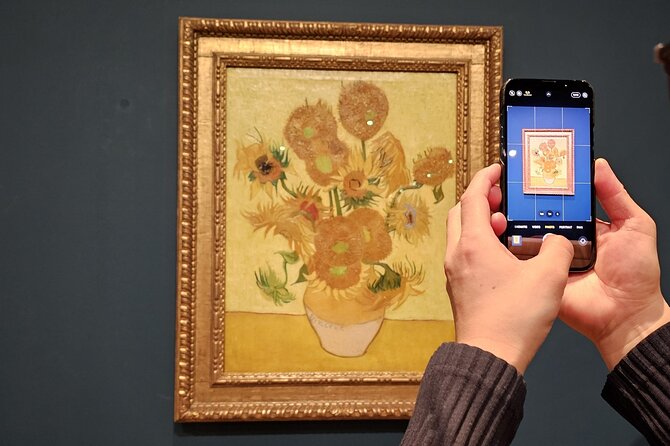
The Arles section lasts about 20 minutes and includes several of the museum’s most familiar works. Van Gogh moved to Arles in 1888, and this period is represented by Sunflowers, Almond Blossoms, The Bedroom, Japanese print copies, and The Yellow House.
This is likely the emotional center of the tour. You get the paintings many people came to see, but the guide can place them within a larger sequence. Sunflowers is not just a bright decorative image. It relates to Van Gogh’s interest in color, repeated subjects, and his plans for the Yellow House.
The Bedroom is especially rewarding when you know a little about its setting and purpose. A guide can direct your attention to the unusual perspective, strong blocks of color, and simplified forms. The painting looks simple at first, but its odd angles and intense colors make it surprisingly complex.
The Japanese paintings, copies made from prints, are another useful inclusion. They show that Van Gogh was studying Japanese art and adapting ideas from it. This connection helps explain his interest in flat areas, bold outlines, unusual cropping, and decorative pattern.
This room can also be crowded. The wireless headphones should make it easier to follow the guide, but you still need patience around the most famous works. One guide, Martina, was praised for encouraging the group to come closer to the paintings, though a larger cluster can affect the view of others. Be considerate, and take your best look when the guide finishes speaking.
Stop five: Saint-Rémy and the force of nature
The tour then moves to level three for about 20 minutes, covering Van Gogh’s time in Saint-Rémy-de-Provence. The works include Almond Blossoms, Wheatfield with a Reaper, Iris, and Pietà (After Delacroix).
This section brings together several different sides of Van Gogh. Iris shows his gift for turning a plant study into something full of movement. Wheatfield with a Reaper connects the human figure with the land and gives the act of harvesting a powerful, almost symbolic weight.
The two versions of Almond Blossoms listed along the route also give you a chance to think about repetition and variation. Van Gogh often returned to certain subjects, but he did not simply copy himself. A guide can help you look for differences in color, mood, and brushwork.
The Pietà, based on Delacroix, is a reminder that Van Gogh worked from other artists as well as from direct observation. That point is easy to miss when the famous paintings dominate the room. His art developed through looking, borrowing, testing, and changing.
A guide can also add context about Van Gogh’s state of mind during this period, but the quality of that explanation depends on the person leading your group. The strongest guides balance biography with close looking. The weaker approach reduces every painting to a simple story about illness. You will get more from the room when the guide explains both the personal setting and the actual artistic choices.
Stop six: Auvers and the final paintings
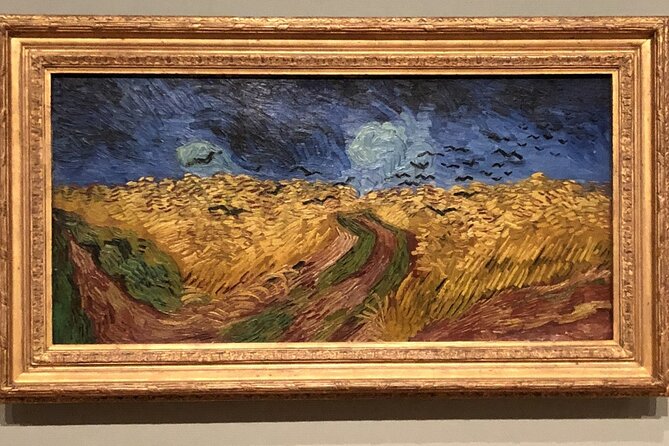
The last stop takes about 15 minutes in the Auvers room on level three. It includes Tree Roots and Wheatfield with Crows.
This is a short final section, but it carries considerable weight. These paintings belong to the last phase of Van Gogh’s life, and the guide may connect them to the forceful brushwork and unsettled feeling that many people notice immediately.
Tree Roots rewards close attention. The tangled forms and strong colors ask you to look at nature in a less orderly way. Wheatfield with Crows is also widely discussed, but a good guide should avoid turning it into a single fixed message. The painting can be powerful without forcing a dramatic conclusion onto every detail.
Since only 15 minutes are set aside here, you may want to return after the tour. The ending inside the museum makes that easy. Once the guide says goodbye, you can spend more time with these final works, revisit Sunflowers, or explore paintings that were not part of the route.
The guides make or break the experience
The strongest part of this tour is the human explanation. Several guides have made a clear impression through enthusiasm and careful pacing. Martina has been praised for her passion and use of visual material. Claire has been singled out for connecting Van Gogh’s life and art in a way that appealed even to someone less interested in painting. Kawika has been praised for explaining technique, paint, European art movements, and the artist’s development with humor.
Marlene has been described as patient and attentive, including returning to a painting that some people did not want to miss. Roland’s use of the audio headsets worked well for a person with hearing aids. Holly has been praised for giving enough background without slowing the group down.
Those details tell you what to hope for: a guide who helps you see, not one who simply recites dates. The tour works best when the guide points out a brushstroke, color choice, influence, or change in composition, then gives you a moment to examine it yourself.
There is a real caveat. One person found the guide poor and preferred an audio guide, while another reported that the guide never arrived. Those reports appear unusual beside the many positive experiences, but they are still worth taking seriously. Keep your confirmation handy, arrive at the correct meeting point, and contact the operator promptly if there is a problem.
Price, timing, and who gets good value
At $77.43 per person, this is not the cheapest way to enter the museum. You are paying for admission plus a two-hour live tour in a group capped at 14 people. The value depends on how much you want interpretation rather than simply access.
I think the price makes sense for a first visit, especially if Van Gogh’s life and artistic development are new to you. A good guide can save you from wandering through a crowded museum without a plan and can show you details you might otherwise pass. The ability to remain inside after the tour adds useful value.
It is less compelling if you already know the collection well, prefer a very slow visit, or want to spend twenty minutes with one painting. The fixed route and timed stops mean you cannot linger freely during the guided portion.
Morning and afternoon choices are helpful. You can select the time that fits your Amsterdam schedule, but the museum can be crowded at either part of the day. The tour lasts approximately two hours, with the listed stops taking about 115 minutes altogether, leaving a little flexibility for movement and questions.
The experience is for adults aged 18 and over. Most people can participate, and the meeting point is near public transportation. Food and drinks are not included, so plan those separately before or after the museum.
Free cancellation is available if you cancel at least 24 hours before the local start time. Inside that window, the payment is not refunded and changes are not accepted.
Should you book the Van Gogh Museum guided tour?
Book it if you want a focused introduction, prefer a live explanation, and value a clear story through the collection. It is particularly well suited to first-time visitors, art fans who want help comparing periods, and anyone who finds museum audio systems impersonal.
I would also choose it if hearing a guide clearly matters to you. The Whisper System has worked well for people using hearing aids, and the small group should make questions easier.
Skip it if you want complete freedom to set your own pace or if you already have a strong understanding of Van Gogh’s work. In that case, independent entry and an audio guide may be enough. For everyone else, the combination of major paintings, thoughtful context, and time to continue alone afterward makes this a strong Amsterdam museum choice, provided you arrive prepared and accept that the guide is the key variable.
FAQ
How long does the Van Gogh Museum guided tour last?
The guided experience lasts approximately two hours.
What language is the tour offered in?
The stated language for this experience is English.
How many people can join the tour?
The group has a maximum of 14 travelers.
Is museum admission included?
Yes. Admission to the permanent collection is included.
Can I remain in the museum after the tour?
Yes. The tour ends inside the Van Gogh Museum, and you can stay until closing time to see more of the museum independently.
Does the tour include special exhibitions?
No. Special exhibitions are not included in the guided tour, but they can be visited afterward at your own pace.
Where does the tour begin?
The meeting point is Cobra Café, Hobbemastraat 18, 1071 ZB Amsterdam, Netherlands.
Where does the tour end?
The tour ends inside the Van Gogh Museum at Museumplein 6, 1071 DJ Amsterdam, Netherlands.
Can I cancel for a full refund?
Yes, if you cancel at least 24 hours before the experience start time. Cancellations made less than 24 hours in advance are not refunded.
Just added in Amsterdam
- Private Tour Zaanse Schans Windmills and Volendam in Jaguar★ 5.0 · 10 reviews
- Zaanse Schans and Giethoorn Unique Day Trip with Boat Cruise★ 4.5 · 17 reviews
- Windmills-Volendam-Giethoorn Private Tour in Jaguar★ 5.0 · 2 reviews
- Half-Day Private Guided Sightseeing Tour of Zaanse Schans★ 5.0 · 14 reviews
- Best of Netherlands: Zaanse Schans Mills, The Hague & Rotterdam★ 4.5 · 10 reviews
- Zaanse Schans Private Tour Windmills★ 5.0 · 18 reviews
- Zaanse Schans Windmills Edam Volendam and Marken from Amsterdam★ 5.0 · 1 review
- Zaanse Schans Edam Volendam Private Day Tour from Amsterdam★ 5.0 · 3 reviews
Van Gogh Museum Tickets, compared.
Van Gogh Museum Amsterdam Exclusive Tour w/ Reserved Entry
Read our review →
Van Gogh Museum Tour Reserved Entry Semi Private
Read our review →
Combo Ticket: Van Gogh Museum Ticket and 1-Hour Canal Cruise
Read our review →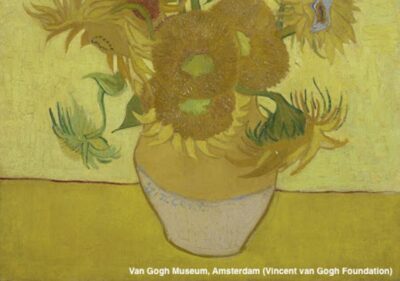
Browse the lists this tour appears in