
Review · MUSEUMS
Amsterdam: Diamond Museum Entrance Ticket
Diamonds have a three-billion-year story. At Amsterdam’s Diamant Museum, you follow these stones from deep beneath the earth to royal jewelry, polished gems, and a playful laser-room heist. I like the clear journey from raw diamond to finished jewel, and I like the displays of replicas based on 22 famous diamonds. The main drawback is that the museum is fairly compact, so you may finish sooner than expected.
The royal House of Oranje-Nassau collection gives the visit extra sparkle, while the short film adds useful context without asking you to read every panel. The adjacent Coster Diamonds visit is included, which makes the $14 ticket easier to justify. Still, the museum is not a guided tour, and visitors who want a large art museum or a long, detailed history lesson may find it modest in size.
The new Laser Room is the crowd-pleaser, especially for children. You try to reach a diamond without touching the beams, and an alarm sounds if you make a mistake. It is a small bit of theater, but it breaks up the displays nicely and gives families something active to do.
In This Review
- Key points to know before you go
- Starting at Paulus Potterstraat 8
- Following a diamond from the earth to the jewelry case
- The 22 famous diamond replicas
- Royal jewelry and the House of Oranje-Nassau
- The Laser Room diamond heist
- Coster Diamonds next door
- Is the $14 ticket good value?
- Who will enjoy this museum most?
- Tips for getting more from the visit
- Should you book the Amsterdam Diamant Museum?
- FAQ
- Where is the Diamant Museum located?
- What does the admission ticket include?
- How much does admission cost?
- How long is the ticket valid?
- What are the museum’s opening hours?
- Is a guide included?
- What is the Laser Room?
- Are pets and large bags allowed?
- Is the museum suitable for wheelchair users?
Key points to know before you go
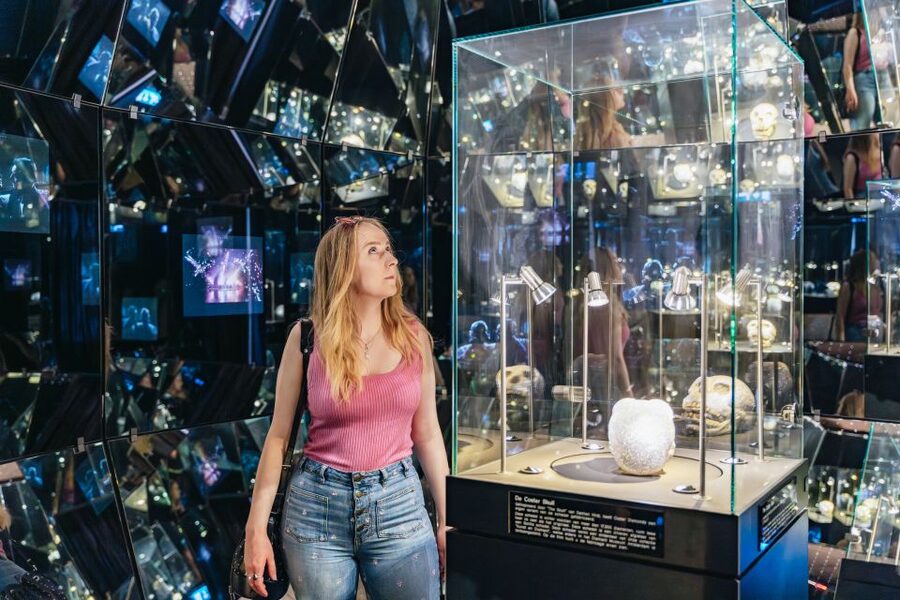
- The story begins 200 kilometers underground: Exhibits explain how diamonds form, are mined, traded, cut, and set into jewelry.
- Twenty-two famous diamonds have replicas on display: You can study the shape and story of celebrated stones without viewing the original jewels.
- The Laser Room adds a playful challenge: Try a mock diamond heist by moving between laser beams without setting off the alarm.
- Royal jewelry brings Amsterdam’s diamond trade to life: Pieces linked to the House of Oranje-Nassau show how diamonds became symbols of status and power.
- Coster Diamonds is included next door: Your ticket covers the Diamant Museum and the adjacent diamond company.
- The visit works best as a short cultural stop: The museum is open daily from 9:00 AM to 5:00 PM, and your ticket is valid for one day.
Starting at Paulus Potterstraat 8
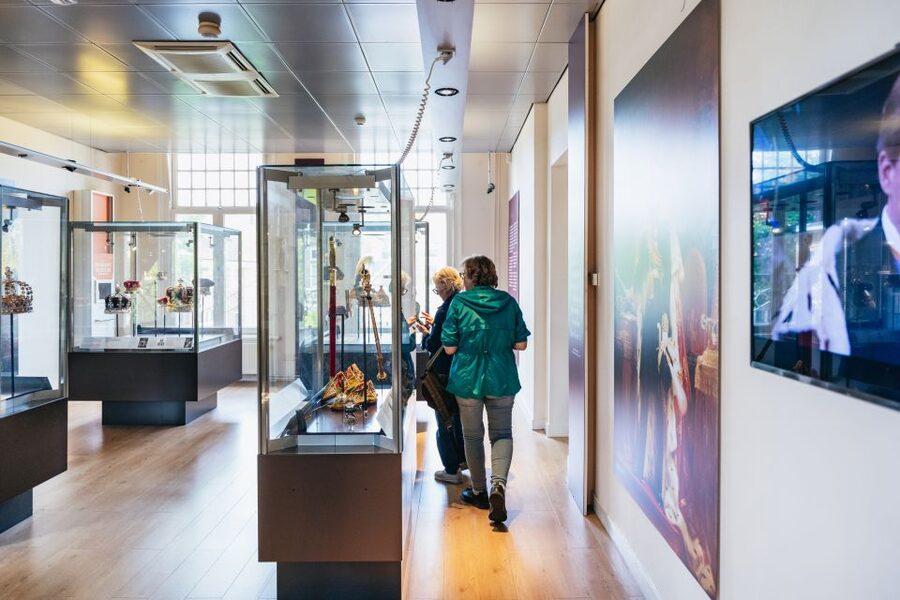
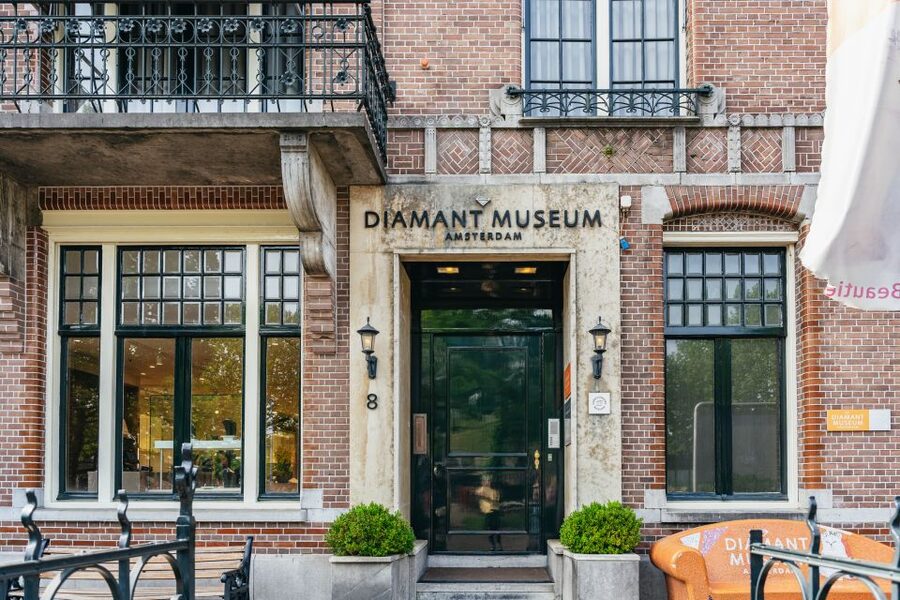
The Diamant Museum is at Paulus Potterstraat 8, 1071 CZ Amsterdam. This puts you in North Holland’s capital, at a museum devoted to one of the city’s best-known trades.
You start at the Diamant Museum, and the activity ends at the same meeting point. There is no guide included, so you set your own pace. That is useful if you want a quick visit between other Amsterdam sights, but less useful if you prefer someone to explain each object in person.
The museum is open from 9:00 AM to 5:00 PM every day, including weekends. Since the ticket is valid for one day rather than tied to a stated length, you have room to choose a convenient time during opening hours. Check availability for the available starting times when you book.
I would allow enough time to view the exhibits without rushing, then continue to Coster Diamonds next door. The exact amount of time you need depends on how closely you read the displays and how long you spend with the interactive Laser Room.
More Museum Tours in Amsterdam
- Amsterdam: Van Gogh Museum Ticket
★ 4.7 · 52,054 reviews - Moco Museum Amsterdam Entrance Tickets with Banksy & More
★ 4.4 · 10,088 reviews - Amsterdam: The Upside Down Museum Entrance Ticket
★ 4.4 · 9,506 reviews
Following a diamond from the earth to the jewelry case
The museum’s main strength is its simple, logical story. Your visit begins with the natural history of diamonds, taking you back three billion years and roughly 200 kilometers below the ground.
That huge time scale gives the rest of the museum a useful frame. A diamond is not simply a shiny stone in a glass case. It begins as a natural formation, then passes through mining, distribution, trade, and skilled processing before becoming something worn on a neck, wrist, or finger.
A short film follows this journey. It covers the diamond’s formation, mining, movement through the trade, and transformation by craftsmen. I like this part because it links the science to the human work. You see why a rough stone is only the beginning of the story.
The museum also explains diamond exploration and polishing. The point is not just to admire the final shine. You learn that the finished look depends on decisions made during processing, including how the stone is shaped and prepared for jewelry.
For a first introduction to diamonds, this arrangement works well. You can understand the basic process even if you know little about gemology. If you already have a serious interest in diamond grading or industrial mining, the material may feel introductory rather than technical.
The 22 famous diamond replicas
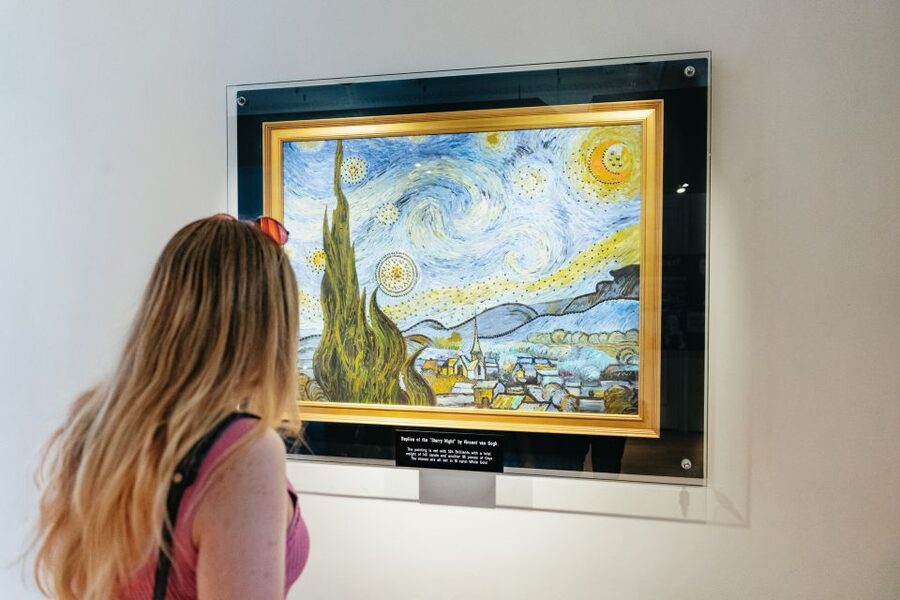
One of the museum’s most appealing features is its collection of replicas based on 22 famous diamonds. These are recreations, not the original stones, and that distinction matters.
The replicas let you see the forms and proportions of celebrated diamonds while the museum explains their stories. You get a sense of why certain stones became famous, whether because of their owners, their unusual appearance, or the events connected with them.
This is a good choice for a museum because the originals are rare, valuable, and usually scattered around the world. You can compare the replicas in one place and focus on the stories rather than simply trying to spot a famous name.
The displays are arranged to show the stones at their best, and the descriptions give the objects a clear purpose. This helps prevent the visit from becoming a row of glittering cases with no context.
I especially like this section for visitors who enjoy history through objects. The stone itself may be small, but its path through royalty, trade, and craftsmanship can be surprisingly large.
Royal jewelry and the House of Oranje-Nassau
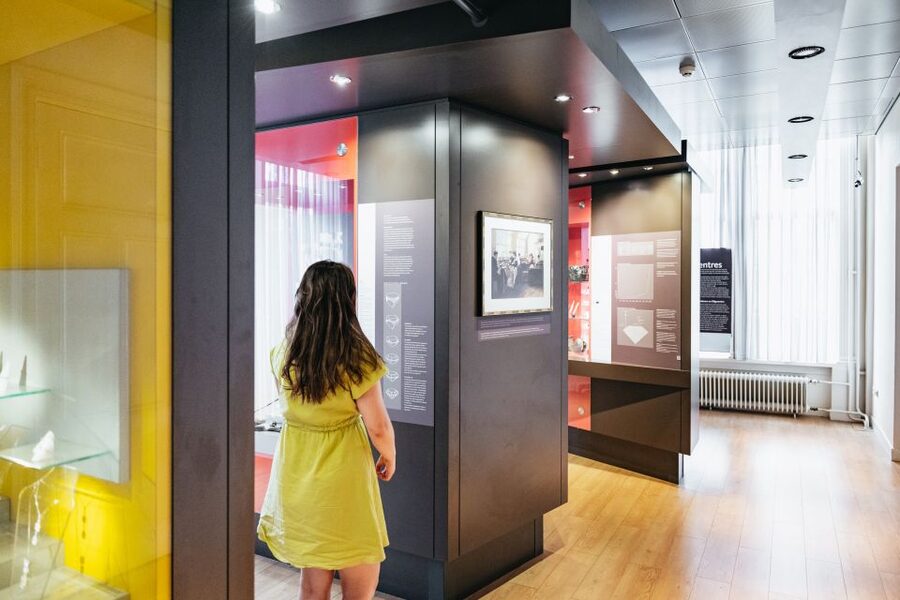
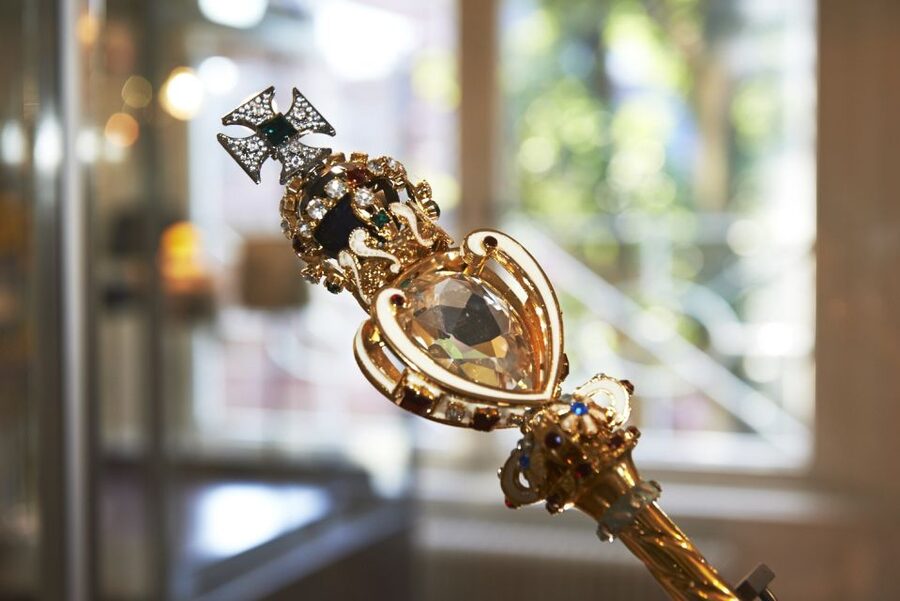
The royal collection gives the museum a strong Amsterdam and Netherlands connection. Jewelry and diamonds associated with the House of Oranje-Nassau show how precious stones were used by royalty.
These objects are not only about beauty. They also tell you about ceremony, rank, inheritance, and public image. A diamond set into jewelry can carry family meaning as well as financial value.
The collection includes splendid jewelry alongside other famous gems. Some pieces are important because of their history. Others attract attention because of their unusual beauty. This mix keeps the displays from feeling too narrow.
You should take your time with the written descriptions here. The setting often tells as much as the stone. A diamond in a royal jewel is not viewed in the same way as a loose rough stone, and the museum lets you see that change in meaning.
The royal section is also one reason this stop works for adults who may not care much about the technical side of cutting. You can approach the museum through fashion, monarchy, design, or social history instead of geology alone.
A different kind of day out entirely:
- Amsterdam Classic Saloon Boat Cruise with Drinks and Cheese
★ 5.0 · 31,825 reviews - Amsterdam Luxury Canal Cruise + Unlimited Drinks & Bites option
★ 5.0 · 30,518 reviews - Amsterdam: Heineken Experience Ticket
★ 4.6 · 30,055 reviews - Amsterdam: Rijksmuseum Entry Ticket
★ 4.7 · 25,535 reviews
The Laser Room diamond heist

The Laser Room is the museum’s most playful feature. You attempt a mock diamond heist, moving between laser beams to reach the prize.
If you touch a beam, an alarm goes off. That simple rule turns the exhibit into a physical challenge. You have to think about your movements and test your coordination, rather than only looking at objects behind glass.
Children are likely to enjoy this most, but adults can have fun with it too. It adds a little humor to a subject that can otherwise feel formal and precious. The laser challenge also gives families a break from reading and looking.
The room is not a full escape game or an extended attraction. Think of it as a brief interactive extra within a museum visit. It works best when you treat it as a lighthearted test, not the main reason to buy the ticket.
If you are visiting with children, I would make sure they know about the Laser Room before arriving. It gives them a clear target during the more traditional parts of the museum.
Coster Diamonds next door
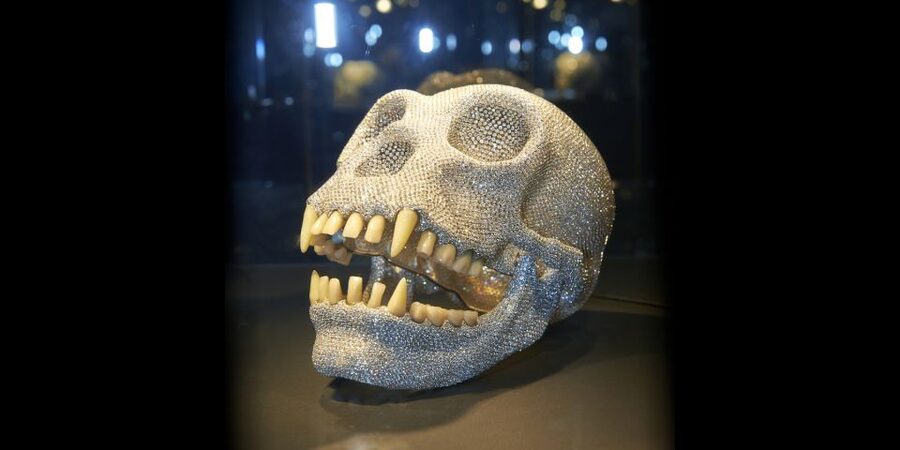
Your admission includes the Diamant Museum and adjacent Coster Diamonds. This makes the ticket more useful than a single small museum admission, since you can continue the diamond theme without traveling elsewhere.
The supplied details do not set out a separate guided presentation or a guaranteed shopping experience at Coster Diamonds, so I would treat the visit as an included companion stop rather than assume a particular demonstration. The main museum ticket itself does not include a guide.
The two locations work naturally together. First, you learn about diamonds, their history, and their processing. Then you can visit the neighboring diamond setting and connect the museum material with a working diamond business.
The combination is particularly handy if you are already in the area and want a focused indoor activity. It also makes the $14 price more reasonable. A stand-alone visit to a very small museum can feel expensive if you expect a half-day attraction, but two connected stops give you more to do.
Is the $14 ticket good value?
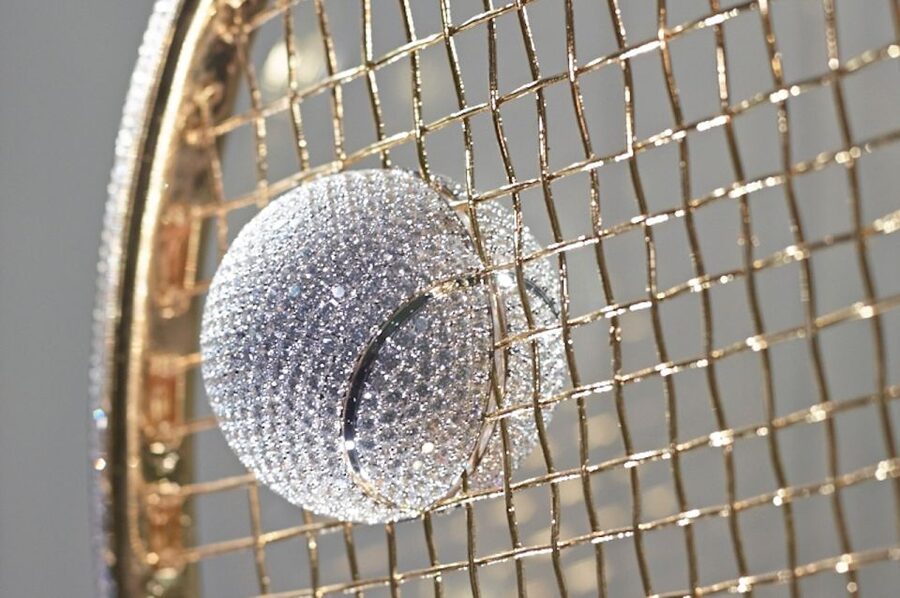
At $14 per person, this is reasonably priced for a specialized Amsterdam museum, especially because admission includes Coster Diamonds. The value depends on your expectations.
If you want a short cultural attraction with a clear subject, the price works well. You get natural history, diamond processing, famous-stone replicas, royal jewelry, a film, and the Laser Room. The visit can also fill a useful gap in your day without requiring a complicated plan.
If you expect a huge collection, many hours of galleries, or a fully guided tour, you may feel less satisfied. The museum’s strength is focus, not size. You are paying for a compact look at diamonds from several angles.
The price is also easier to accept for families because the Laser Room gives younger children an activity beyond looking at displays. Children may not care about trade routes or royal jewelry, but they can understand the idea of a heist and a laser alarm.
One practical point: buying ahead may not always be necessary. The museum is open daily from 9:00 AM to 5:00 PM, and one supplied comment suggests that a ticket could be purchased at the door. Still, availability can vary, so booking ahead gives you a reservation and the option to cancel up to 24 hours in advance for a full refund.
Who will enjoy this museum most?
I would recommend the Diamant Museum to several types of visitors:
- Families looking for a short indoor activity with an interactive feature.
- Jewelry fans who want to understand how raw diamonds become finished pieces.
- History enthusiasts interested in royal objects and famous stones.
- Visitors curious about Amsterdam’s long connection with the diamond trade.
- Anyone who wants a focused museum near other Amsterdam cultural sights.
It is less suitable if you need wheelchair access, since the activity is not suitable for wheelchair users. Pets, smoking, luggage, and large bags are not allowed, so plan accordingly.
The museum can also work for couples or solo visitors, but your enjoyment will depend on your interest in the subject. If you like design, royalty, natural history, or luxury goods, you have several ways into the collection. If diamonds do not interest you at all, the small size may make the visit feel limited.
Tips for getting more from the visit
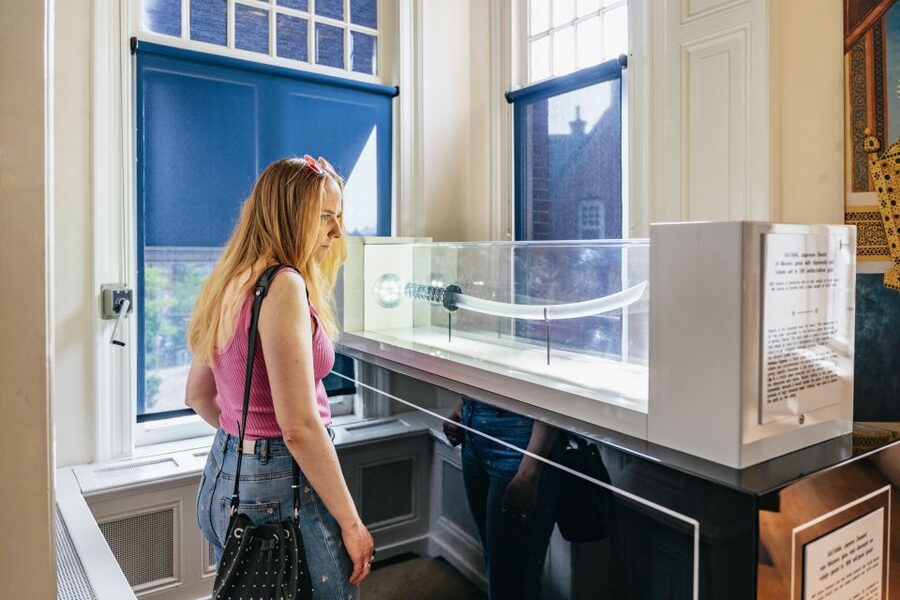
Read the opening section carefully. The 200-kilometer journey beneath the ground gives you the basic science behind everything that follows.
Watch the short film instead of treating it as background noise. It connects formation, mining, trade, and polishing in one sequence, which makes the individual displays easier to understand.
Pay attention to the descriptions beside the 22 replica diamonds. The point is not only to see their shapes. Their stories explain why particular diamonds became famous.
Save time for the royal jewelry. The House of Oranje-Nassau pieces offer a different experience from the raw-material displays and show how diamonds function as symbols of wealth and power.
If you are visiting with children, build in time for the Laser Room. It is the one part of the visit where moving carefully matters as much as looking closely.
Finally, remember that this is a self-guided visit. You can move quickly through familiar material or pause with the pieces that catch your eye. That freedom is useful, but you will need to supply your own questions because a guide is not included.
Should you book the Amsterdam Diamant Museum?
Book it if you want a compact, affordable museum with a clear story, royal jewelry, famous-diamond replicas, and a family-friendly laser challenge. The $14 price is fairer because Coster Diamonds is included, and the daily 9:00 AM to 5:00 PM schedule makes it easy to fit into an Amsterdam day.
Skip it if you are looking for a large museum, a long guided tour, or full wheelchair access. You should also avoid expecting an all-day attraction.
For most visitors, the best reason to go is the combination of subjects. You move from geology to mining, from trade to polishing, and from craftsmanship to royalty. Add the Laser Room, and you have a short visit that offers both information and fun.
FAQ
Where is the Diamant Museum located?
The Diamant Museum is at Paulus Potterstraat 8, 1071 CZ Amsterdam, in North Holland, Netherlands.
What does the admission ticket include?
The ticket includes entrance to the Diamant Museum and the adjacent Coster Diamonds.
How much does admission cost?
The listed price is $14 per person.
How long is the ticket valid?
The ticket is valid for one day. Check availability for the available starting times.
What are the museum’s opening hours?
The Diamant Museum is open daily from 9:00 AM to 5:00 PM, including weekends.
Is a guide included?
No. The admission does not include a guide, so you explore the museum independently.
What is the Laser Room?
The Laser Room is an interactive diamond-heist challenge. You try to move between laser beams and reach the diamond without touching a beam. An alarm sounds if you hit one.
Are pets and large bags allowed?
No. Pets, smoking, luggage, and large bags are not allowed.
Is the museum suitable for wheelchair users?
No. The activity is listed as not suitable for wheelchair users.
Just added in Amsterdam
- Private Tour Zaanse Schans Windmills and Volendam in Jaguar★ 5.0 · 10 reviews
- Zaanse Schans and Giethoorn Unique Day Trip with Boat Cruise★ 4.5 · 17 reviews
- Windmills-Volendam-Giethoorn Private Tour in Jaguar★ 5.0 · 2 reviews
- Half-Day Private Guided Sightseeing Tour of Zaanse Schans★ 5.0 · 14 reviews
- Best of Netherlands: Zaanse Schans Mills, The Hague & Rotterdam★ 4.5 · 10 reviews
- Zaanse Schans Private Tour Windmills★ 5.0 · 18 reviews
- Zaanse Schans Windmills Edam Volendam and Marken from Amsterdam★ 5.0 · 1 review
- Half Day Keukenhof Tulip Paradise Trip from Amsterdam★ 5.0 · 1 review
Museums, compared.

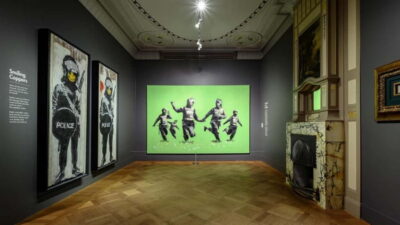
Moco Museum Amsterdam Entrance Tickets with Banksy & More
Read our review →


Amsterdam’s Weirdest Museum: Believe It or Not!
Read our review →
Browse the lists this tour appears in