
Review · MUSEUMS
Amsterdam: Houseboat Museum Entry Ticket
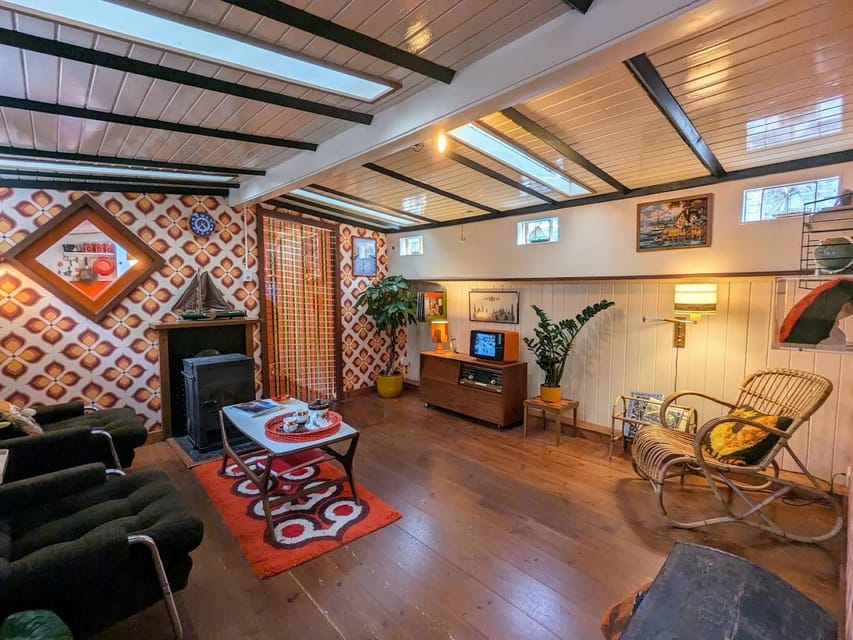
Small boat, big story. The Houseboat Museum gives you a close look at the Hendrika Maria, a 1914 cargo ship that carried goods before becoming a family home in 1967. I like the original 1970s interior, with its orange, yellow, and brown decor, and I like the way the museum connects everyday family life with the boat’s earlier working days.
I also appreciate the hands-on feel of the visit. You can see the old sailing equipment, picture a family of four living aboard, and learn how the vessel worked before it became a houseboat. The main drawback is size: this is a compact museum, and you may see everything in 15 to 20 minutes, or even faster if you skip the audio material.
In This Review
- Key points about the Hendrika Maria
- Stepping aboard a working cargo ship
- The 1970s interior and its bold colors
- What the family-of-four story adds
- The mast and leeboard tell the older story
- How long should you allow?
- Tight spaces and steep stairs
- The audio guide and available languages
- Is the $12 ticket good value?
- Who will enjoy this museum most?
- How to fit it into your Amsterdam day
- Should you book the Houseboat Museum?
- FAQ
- Where is the Houseboat Museum located?
- What boat does the museum use?
- When was the boat converted into a houseboat?
- How many people lived on the boat?
- How long does the visit take?
- Is the museum suitable for people with limited mobility?
- Can I take photographs inside?
- Which languages are available?
Key points about the Hendrika Maria
- A 1914 cargo ship: The boat began life as a working freight vessel, not a sightseeing attraction or purpose-built home.
- Converted into a houseboat in 1967: The residential interior preserves the look and feel of its early houseboat years.
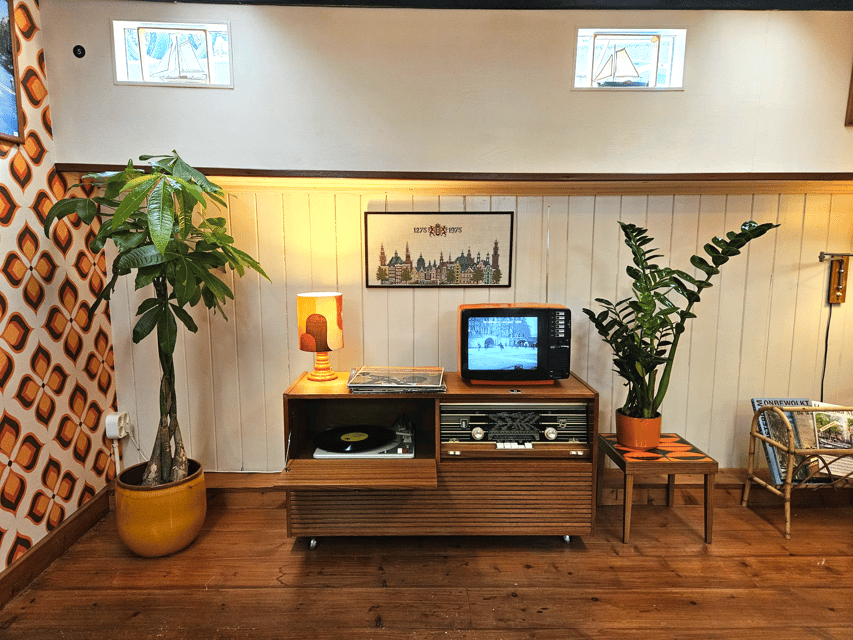
- Original 1970s design: Expect plenty of orange, yellow, brown, and compact rooms with a strong time-capsule feel.
- A family home for four: The displays show how ordinary domestic life worked in tight quarters.
- Historic sailing gear: An original mast and leeboard help explain how the boat once traveled to Scandinavian countries.
- A quick, focused visit: The full experience can take around 15 to 20 minutes, so it works best as a small stop between larger Amsterdam sights.
Stepping aboard a working cargo ship
The museum is housed inside the Hendrika Maria, a real former freight barge. That matters because you are not looking at a replica built to resemble a houseboat. You are walking through the actual vessel, with the narrow dimensions and practical layout that shaped life on board.
The ship dates from 1914. Before it became a home, it carried freight and traveled to Scandinavian countries for transport work. Its original sailing mast and leeboard remain in place, giving the boat a direct link to its working past.
I find those details more useful than a simple collection of old objects. The mast and leeboard help you understand that this was once a moving workplace. The boat had to function as a transport vessel before anyone thought of it as a permanent residence.
As you move through the museum, try to picture the change from cargo ship to home. The conversion took place in 1967, and the interior still reflects the period when the boat began serving as a regular house. That shift is the central story here.
You get a glimpse of how a family of four used the vessel. The museum does not present houseboat life as a glossy design trend. Instead, it shows the practical side: a home built within the limits of a working boat.
More Museum Tours in Amsterdam
- Amsterdam: Van Gogh Museum Ticket
★ 4.7 · 52,054 reviews - Moco Museum Amsterdam Entrance Tickets with Banksy & More
★ 4.4 · 10,088 reviews - Amsterdam: The Upside Down Museum Entrance Ticket
★ 4.4 · 9,506 reviews
The 1970s interior and its bold colors
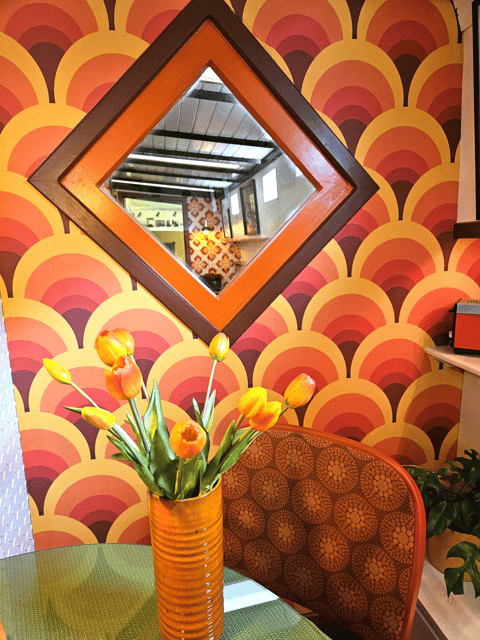
The strongest visual feature is the preserved interior. This is not subtle modern design. You should expect plenty of orange, yellow, and brown, with the sort of decor that immediately places you in the 1970s.
That dated look is part of the appeal. A newer renovation would make the boat cleaner and perhaps easier to understand, but it would also remove the period character. Here, the colors and furnishings help you sense what a houseboat home felt like when the Hendrika Maria was converted for domestic use.
I especially like this kind of museum because it deals with ordinary life rather than grand events. The interest comes from the rooms, the tight arrangement, and the question of how a family adapted a cargo vessel for daily living.
The interior covers about 80 square meters, according to one detailed description of the visit. That is enough space for a useful look at the boat, but not enough for a long, wandering museum visit. You will move through the rooms quickly.
The limited space also affects comfort. The museum warns that room may be tight, and that is worth taking seriously. If you dislike confined interiors, you may find the experience less relaxing than a standard museum with wide galleries.
What the family-of-four story adds
The most effective part of the museum is the human scale. You are not only learning that the Hendrika Maria changed from freight ship to houseboat. You are considering how four people actually lived aboard it.
That makes the boat easier to understand. A houseboat can sound romantic from a distance, but the museum brings up the practical reality of turning a vessel into a home. Every part of the available space had to serve a purpose.
The displays and audio material help explain the people who lived on the boat and how the vessel changed over time. The experience is interactive, with information designed to be explored rather than simply read from a single wall panel.
The museum also presents houseboat life across more than 100 years of the boat’s history. You can compare its earlier role as a freight vessel with its later use as a residence. That contrast gives the short visit a clear beginning, middle, and end.
I would not expect a full social history of Amsterdam’s houseboats here. The focus is narrower: one ship, its working past, its conversion, and the family life that followed. For a small museum, that focus works well.
The mast and leeboard tell the older story
The original sailing mast is one of the details you should not skip. It points to the period when the Hendrika Maria depended on sailing equipment as part of its transport life.
The leeboard is just as useful, especially if you are unfamiliar with older cargo boats. Its purpose was practical, helping the vessel sail effectively. Seeing it attached to the actual boat gives the explanation more weight than a picture in a general maritime museum.
These elements also stop the experience from becoming only a 1970s interior tour. The orange and brown rooms explain the houseboat period, while the mast and leeboard take you back to the ship’s earlier working years.
You may not need a strong interest in boats to enjoy this part. The point is not technical detail for its own sake. It is seeing how a vessel was designed for transport, then adapted for a completely different kind of life.
A different kind of day out entirely:
- Amsterdam Classic Saloon Boat Cruise with Drinks and Cheese
★ 5.0 · 31,825 reviews - Amsterdam Luxury Canal Cruise + Unlimited Drinks & Bites option
★ 5.0 · 30,518 reviews - Amsterdam: Heineken Experience Ticket
★ 4.6 · 30,055 reviews - Amsterdam: Rijksmuseum Entry Ticket
★ 4.7 · 25,535 reviews
How long should you allow?
The ticket is valid for a one-day visit period, but the time you spend inside is likely much shorter. One detailed account puts the visit at 15 to 20 minutes when following the audio guide around the boat. Another person found the museum so small that the main spaces could be seen in about five minutes.
That difference is important when you plan your day. I would treat the Houseboat Museum as a compact stop, not a half-day attraction. It fits well before or after another Amsterdam activity, especially if you are already in the area.
The audio guide can make the visit more worthwhile because it gives context to the rooms, the boat’s history, and the people who lived aboard. If you simply walk through without listening, the experience may feel too brief for the price.
You should also avoid rushing past the explanatory material. The ship itself is small, but the story covers its working period, its 1967 conversion, its 1970s appearance, and more than a century of changing use.
Tight spaces and steep stairs
The boat’s authentic layout brings practical limits. Space can be narrow, and the stairs are steep. The museum specifically warns that the stairs may not suit everyone.
This is not the place for a casual assumption that all museum rooms will be level and roomy. If you have difficulty with steep stairs or confined areas, check your comfort level before booking.
The limited space can also make the visit feel crowded if several people are moving through the same area. No group-size details are provided, so I would plan for the possibility that you may need to pause and let others pass.
Photography is allowed, which is useful if you want to remember the period interior or the boat’s fittings. Flash photography is not permitted inside, so keep your camera or phone on a no-flash setting.
The boat’s compact size is both its weakness and its charm. You do not get grand rooms, long corridors, or a large collection of exhibits. You get a close look at a real vessel where the physical limits are part of the story.
The audio guide and available languages
The museum offers information in several languages: English, French, Traditional Chinese, German, Spanish, Portuguese, Italian, and Dutch. That makes the visit easier to follow if English is not your preferred language.
The audio guide is particularly useful because the boat does not have room for extensive displays. Listening as you move through the rooms helps connect the objects and spaces to the people who used them.
I would recommend using the guide if you want more than a quick photo stop. The boat’s appearance is easy to grasp, but the historical changes are less obvious without explanation.
No individual guide name is provided, and this is not described as a scheduled walking tour with a live guide. Think of it as a self-guided museum visit supported by multilingual information.
Is the $12 ticket good value?
At $12 per person, the ticket is reasonable if you enjoy small museums, maritime history, or unusual homes. The price is harder to justify if you expect a long attraction with many rooms and exhibits.
The value depends heavily on how you visit. A five-minute walk-through can feel expensive. A slower visit with the audio guide, time to examine the sailing gear, and attention to the family’s living arrangements gives you more for the same ticket.
I see the ticket as payment for access to a genuine historic boat, not simply admission to a display about houseboats. You are entering the Hendrika Maria itself, including its original 1970s interior and surviving sailing equipment.
The strongest reason to pay is authenticity. The weakest reason is duration. If your Amsterdam schedule is already full, you may prefer a larger attraction. If you enjoy small, specific museums, the short visit can be a pleasant change from major sights.
Food, drinks, hotel pickup, and hotel drop-off are not included. Those omissions are not surprising for a self-contained museum, but you should plan this as an admission-only stop.
Who will enjoy this museum most?
I would recommend the Houseboat Museum to you if you like:
- Historic boats and working maritime equipment
- Everyday domestic history
- 1970s interiors and period design
- Compact museums with a clear subject
- Unusual Amsterdam experiences beyond the major art museums
- Short stops that fit easily into a full sightseeing day
Families may find the idea of a boat turned into a home especially easy to discuss together. The family-of-four story gives younger visitors a simple question to consider: how would you arrange a home inside a former cargo vessel?
The museum can also suit visitors who want an experience that feels specific to Amsterdam. Houseboats are closely associated with the city, and this visit shows a real example rather than presenting only a general idea.
I would be more cautious if you need a fully accessible route, dislike steep stairs, or want a substantial museum visit. The boat is small, and the experience is over quickly if you do not use the audio information.
How to fit it into your Amsterdam day
Because the visit is short, I would not build an entire afternoon around it. Instead, use it as a small cultural stop within a day of sightseeing.
Allow enough time to move through the boat without rushing. Start with the ship’s earlier role as a freight vessel, then pay attention to the 1967 conversion and the preserved 1970s rooms. Finish by considering how the same structure served both transport and family life.
The one-day duration gives you flexibility, but it does not turn the museum into a long activity. Check the available starting times when you plan, since the stated duration refers to the ticket’s visit period rather than a full day inside the boat.
You can cancel up to 24 hours in advance for a full refund, and the reserve-now, pay-later option can help if your plans are still changing. Those terms are useful, but the main decision should be based on your interest in the subject and your comfort with the setting.
Should you book the Houseboat Museum?
Book it if you want a short, unusual museum with a real boat, a preserved 1970s interior, and a clear story about working life changing into home life. The mast, leeboard, and family-of-four layout give the visit more substance than its small size first suggests.
Skip it if you expect a long tour, broad Amsterdam history, or spacious museum rooms. At $12, the ticket is fair for the authenticity, but less attractive if you only spend five minutes inside.
My advice is simple: use the audio guide, take your time with the period rooms, and treat the museum as a focused 15 to 20 minute stop. For the right visitor, that compact format is the point, not a flaw.
FAQ
Where is the Houseboat Museum located?
The Houseboat Museum is in Amsterdam, in North Holland, Netherlands.
What boat does the museum use?
The museum is inside the Hendrika Maria, a cargo ship built in 1914.
When was the boat converted into a houseboat?
The Hendrika Maria was converted into a residential houseboat in 1967.
How many people lived on the boat?
The museum shows how a family of four lived aboard the vessel when it was used as a home.
How long does the visit take?
The ticket duration is listed as one day, but the actual visit may be short. Allow about 15 to 20 minutes if you follow the audio guide, though a quicker visit is possible.
Is the museum suitable for people with limited mobility?
The boat has steep stairs and limited space, so it may not be suitable for everyone.
Can I take photographs inside?
Yes, photography is allowed. Flash photography is not permitted inside the museum.
Which languages are available?
Information is available in English, French, Traditional Chinese, German, Spanish, Portuguese, Italian, and Dutch.
Just added in Amsterdam
- Private Tour Zaanse Schans Windmills and Volendam in Jaguar★ 5.0 · 10 reviews
- Zaanse Schans and Giethoorn Unique Day Trip with Boat Cruise★ 4.5 · 17 reviews
- Windmills-Volendam-Giethoorn Private Tour in Jaguar★ 5.0 · 2 reviews
- Half-Day Private Guided Sightseeing Tour of Zaanse Schans★ 5.0 · 14 reviews
- Best of Netherlands: Zaanse Schans Mills, The Hague & Rotterdam★ 4.5 · 10 reviews
- Zaanse Schans Private Tour Windmills★ 5.0 · 18 reviews
- Zaanse Schans Windmills Edam Volendam and Marken from Amsterdam★ 5.0 · 1 review
- Zaanse Schans Edam Volendam Private Day Tour from Amsterdam★ 5.0 · 3 reviews
Museums, compared.

Moco Museum Amsterdam Entrance Tickets with Banksy & More
Read our review →


Amsterdam’s Weirdest Museum: Believe It or Not!
Read our review →

Browse the lists this tour appears in