
Review · WALKING TOURS
Amsterdam: Sex, Drugs, and Freedom Walking Tour
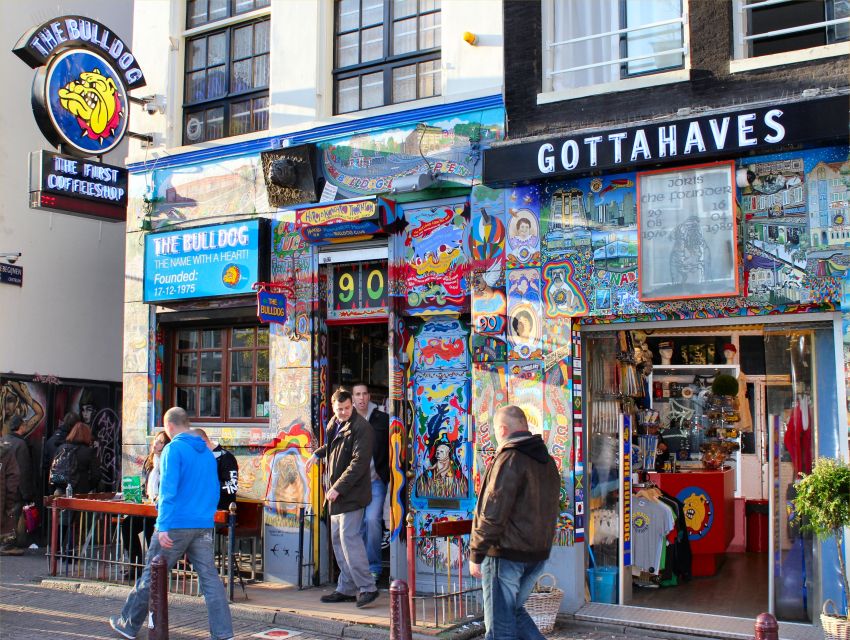
Amsterdam has more stories than postcards show. This two-hour walk looks past the city’s party image, explaining drug regulations, the history of coffeeshops, and the working reality of the Red-light District. I like the local-guide format, which keeps the experience personal rather than turning it into a dry lecture. I also like the way the tour connects sex and drugs with larger questions about equality, social policy, and personal freedom.
The main drawback is time. Two hours gives you a useful introduction, but not a full study of the Netherlands’ drug policy or sex industry. The route may also feel uncomfortable for anyone who prefers a quiet, traditional sightseeing tour. Still, the price of $31 is fair if you want context before exploring Amsterdam on your own.
In This Review
- Key points to know before you book
- What this two-hour walk is really about
- Starting with Amsterdam’s famous sights
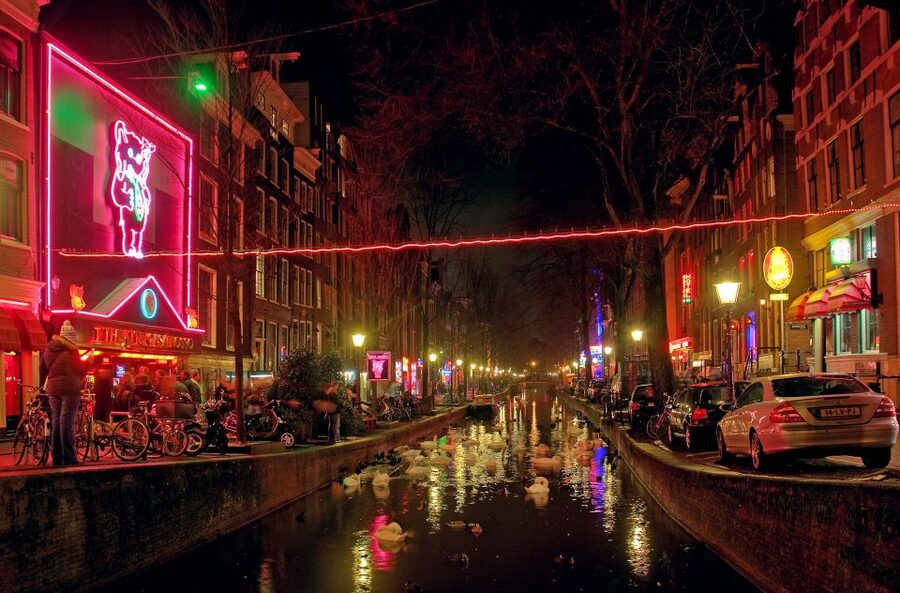
- Seeing the Red-light District beyond the windows
- Understanding Amsterdam’s unusual drug rules
- Freedom, equality, and Amsterdam’s social story
- The guides make or break the experience
- Timing, walking pace, and meeting details
- Is $31 a fair price?
- Who will enjoy this tour most?
- Should you book the Sex, Drugs, and Freedom Walking Tour?
- FAQ
- How long is the Amsterdam Sex, Drugs, and Freedom Walking Tour?
- How much does the tour cost?
- What languages are available?
- What does the tour include?
- Are food and drinks included?
- Where does the tour meet?
- Can I book a private group?
- What should I bring?
- Can I cancel for a full refund?
Key points to know before you book
- A candid look at Amsterdam’s Red-light District: Learn how prostitution became regulated in the Netherlands and how that decision shaped the area.
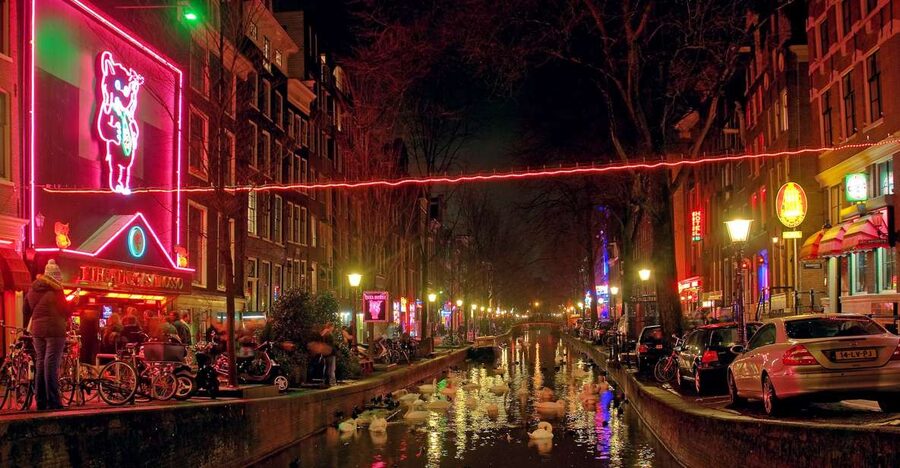
- Coffeeshop history without the party pressure: The guide explains Amsterdam’s unusual approach to soft drugs, including their use and manufacturing.
- More than sex and drugs: The walk also covers Dutch gay rights, social awareness, sexual liberty, and the city’s history of inclusion.
- Major sights mixed with local corners: Expect the Old Church, Condomerie, Dam Square, Royal Palace, and less familiar places known to local guides.
- Strong guide-led experience: Jesse, Martin, David, Stan, and other guides have been praised for humor, patience, personal stories, and clear explanations.
- Plan for uneven streets and steady walking: Comfortable shoes and water matter, and the tour is not suitable for people with mobility impairments.
What this two-hour walk is really about
The title is blunt, and the tour follows that lead. You will learn about sex work, drugs, freedom, and the policies that made Amsterdam famous. But the better part of the experience is the effort to explain why the city developed this way.
Your guide leads you through narrow streets and alleyways, stopping to explain how Amsterdam’s Red-light District developed over time. You can ask questions along the way, which matters here. The subjects are not simple, and a prepared guide can explain the difference between a popular stereotype and the more complicated local reality.
This is not a tour built around drinking or using drugs. Food and drinks are not included, and the description focuses on education. You should think of it as a walking history and culture lesson with an adult subject, not a pub crawl.
That distinction helps set the right expectation. If you want jokes, nightlife tips, and a quick look at red-lit windows, the tour may feel more serious than expected. If you want to understand the systems behind Amsterdam’s reputation, the format works well.
More Walking Tours in Amsterdam
- Anne Frank’s Story – Guided Walking Tour through Amsterdam
★ 5.0 · 11,619 reviews - Amsterdam: Life of Anne Frank and World War II Walking Tour
★ 4.8 · 10,467 reviews - Absolutely Amsterdam – the Essential Introductory Walking Tour
★ 5.0 · 3,629 reviews
Starting with Amsterdam’s famous sights
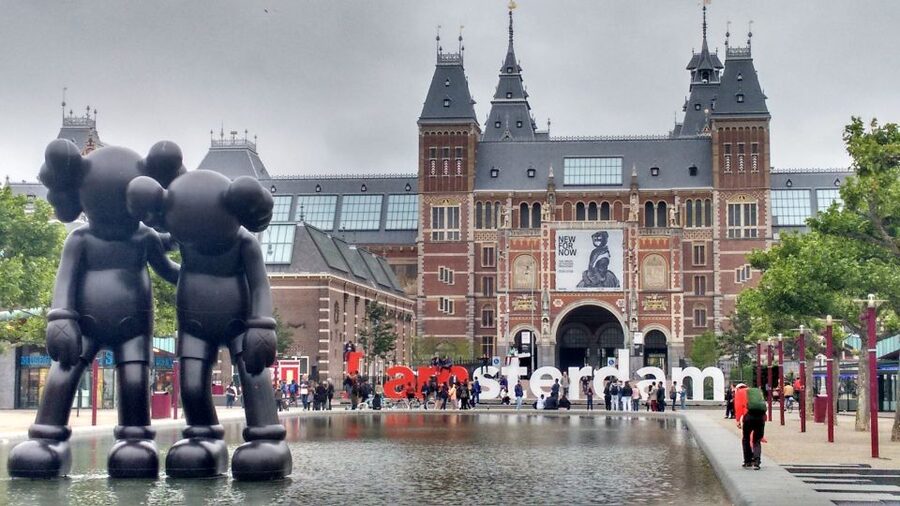
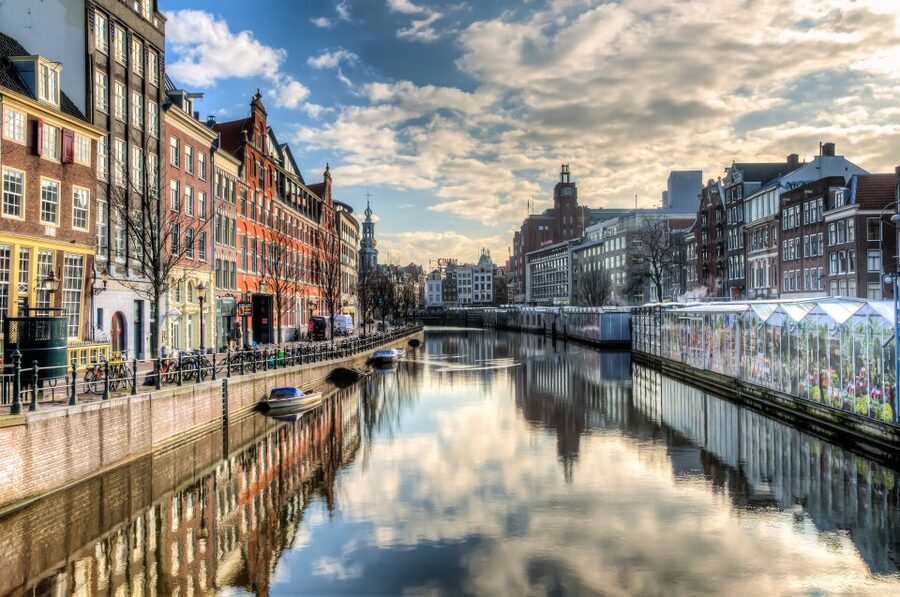
The route includes some of central Amsterdam’s best-known landmarks, including Dam Square and the Royal Palace. These places give the tour a useful starting point because they show that the Red-light District is not an isolated attraction at the edge of town. It sits close to the city’s major civic and historic spaces.
Dam Square is a natural place to discuss Amsterdam’s growth and its changing public identity. The Royal Palace adds another layer, linking the modern image of freedom with the city’s older political and royal setting. You will not get a full palace tour from this experience, but the sight helps place the discussion in the center of Amsterdam.
The route also includes the Old Church, one of the area’s most striking landmarks. Its presence beside the Red-light District makes an important point without much explanation: Amsterdam has long placed religion, commerce, private life, and public life close together.
I like this mixture of famous sights and social history. You get your bearings while learning why the area cannot be reduced to one subject. The drawback is that the tour does not appear to provide extended sightseeing time at each landmark. You are walking through a connected story, not stopping for long monument visits.
Seeing the Red-light District beyond the windows
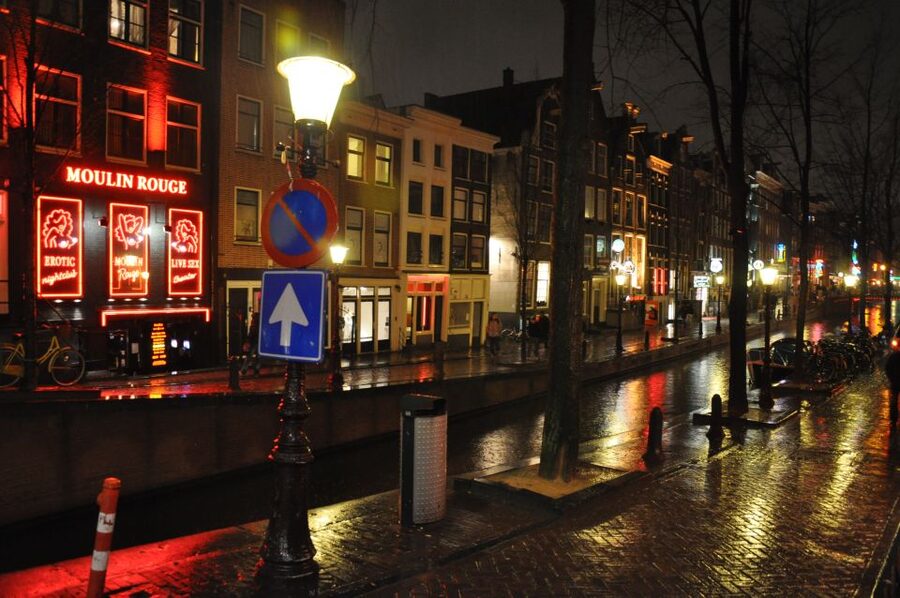
The Red-light District is often treated as a spectacle. This tour tries to move the focus toward the people, rules, and working conditions behind it. You will learn about the legalization of prostitution in the Netherlands and how regulation changed the district over the years.
The guide also discusses what it is like to work as a prostitute. That subject can be handled poorly, especially when a tour turns real people into entertainment. The supplied description suggests a more thoughtful approach, with attention to the complex issues surrounding prostitution. Still, you should book only if you are comfortable hearing direct discussion of sex work.
You will also pass the Condomerie, a memorable stop that fits the tour’s wider look at sexual health and public attitudes. It is the sort of place that makes Amsterdam’s approach feel concrete rather than abstract. The point is not simply that the city permits unusual businesses. The point is that sexual liberty, public awareness, and regulation have developed together.
One of the more unusual stories mentioned by a past participant involved sleeping in the monkey. The exact meaning belongs to the guide’s storytelling, but the detail suggests the tour includes local anecdotes rather than only standard textbook facts. These small stories can make the walk easier to remember, especially when the subject matter becomes dense.
You should also expect basic courtesy rules. The Red-light District is a working neighborhood, not a stage set. The tour’s educational purpose is best served by listening, asking respectful questions, and avoiding behavior that treats sex workers as objects.
Understanding Amsterdam’s unusual drug rules
The drug section covers the history and origins of coffeeshops, along with the use and manufacturing of soft drugs. This is one of the strongest reasons to choose the tour, since Amsterdam’s drug reputation is often based on half-understood ideas.
Your guide explains the reality behind the Netherlands’ permissive drug laws and the city’s peculiar regulations. That wording matters. You are not simply being told that everything is legal or that anything goes. Instead, the tour looks at how a system built around tolerance and regulation has shaped Amsterdam’s public image and daily life.
The discussion may be especially useful if you have wondered why coffeeshops became part of Amsterdam’s identity. You can learn about their origins and the role they play in the city’s approach to soft drugs. The tour also covers manufacturing, which gives the subject more depth than a quick explanation of where people buy cannabis.
One participant wanted more detail about drugs and the Dutch economy but understood that the guide had to keep moving within two hours. That is a fair limitation. This is an introduction, not a policy seminar. If economics, public health, or the legal structure of drug production is your main interest, you may want to treat the tour as a starting point for further reading.
I like that the guide can answer questions during the walk. Drug policy is full of gray areas, and a question-and-answer format lets you focus on what puzzles you most. Just keep in mind that the depth will depend partly on the guide, the pace, and the questions asked by your group.
A different kind of day out entirely:
- Amsterdam: Van Gogh Museum Ticket
★ 4.7 · 52,054 reviews - Amsterdam Classic Saloon Boat Cruise with Drinks and Cheese
★ 5.0 · 31,825 reviews - Amsterdam Luxury Canal Cruise + Unlimited Drinks & Bites option
★ 5.0 · 30,518 reviews - Amsterdam: Heineken Experience Ticket
★ 4.6 · 30,055 reviews
Freedom, equality, and Amsterdam’s social story
The tour widens its focus to include the Dutch fight for gay rights, social awareness, and sexual liberty. This section keeps the experience from becoming a narrow tour of sex shops and coffeeshops.
Amsterdam’s reputation for tolerance did not appear by magic. The walk looks at how the city grew into a place that presents itself as welcoming to different kinds of people. You will hear about equality and the social struggles behind that public identity.
That part is valuable because it gives the word freedom some needed weight. Freedom can mean personal choice, but it also depends on laws, public attitudes, safety, and the rights of people who have often been excluded. The tour links those ideas to Amsterdam’s streets rather than discussing them as distant political themes.
A guide’s tone matters here. Jesse was praised for clever humor and patience, while David shared parts of his own and his family’s connection to the city. Those details suggest why this type of tour can feel more engaging with the right person leading it. You are not only receiving dates and policies. You are hearing how a local guide understands the place.
At the same time, the experience is not designed as a full gay-rights tour or a complete account of Dutch social policy. The subject is one part of a broad two-hour route. You will get useful context, but the treatment is likely to stay introductory.
The guides make or break the experience
The strongest praise centers on the guides. Martin was described as friendly and well informed, Stan led a memorable explanation of sex workers, coffeeshops, and the Red-light District, and David helped one group get its bearings in the area. Jesse brought humor and patience to another group.
Those details tell you what to look for. A good guide here needs more than facts. The person must handle adult subjects without becoming crude, keep the group together in crowded streets, and answer questions without losing the route.
One group included people who were tipsy and kept falling behind. The guide stayed calm and encouraged them to remain with the group. That is a small but useful sign of practical tour leadership. Amsterdam’s central streets can be distracting, and a guide who keeps people together improves the experience for everyone.
The guide’s personality will shape your day. One person may prefer a witty style, while another may want a more serious discussion. The feedback points to guides who are engaging and personable, but you should remember that individual tours can vary by language, group, and assigned guide.
Spanish, Dutch, English, and German are available. That is helpful if you want to discuss sensitive subjects in a language you follow easily. A private group is also available, which may suit friends or families of adults who want more room for questions and a less public conversation.
Timing, walking pace, and meeting details
The experience lasts two hours. That is long enough to cover several connected themes without taking up a full afternoon, and it fits well on your first day in Amsterdam when you want to understand the central area.
Several people valued the pace. One person called the tour informative and well paced, while another considered it a good way to get oriented after arriving. I agree with that use. The route can help you understand where the major sights and Red-light District fit together before you return independently.
You need comfortable shoes, water, and comfortable clothing. The route uses winding streets and alleyways, so you should expect regular walking rather than a seated talk. The experience is not suitable for people with mobility impairments, and the meeting point can vary depending on the option you book. Check the exact starting place before leaving your hotel.
Because the tour moves through a busy part of the city, keep your attention on the guide and group. The earlier note about tipsy participants falling behind is a reminder that this is not a walk to join while heavily distracted. You will get more from it if you arrive alert and ready to listen.
Is $31 a fair price?
At $31 per person, the tour is reasonably priced for a two-hour expert-guided walk. You are paying for interpretation, local stories, and a structured route through subjects that can be confusing when explored alone.
The value is strongest if you are new to Amsterdam. A good introduction can help you understand the Red-light District without relying on rumors, and it can explain why coffeeshops and sexual liberty became linked with the city’s image. It also gives you a clearer base for deciding what you want to see later.
The price is less attractive if you want a long, specialist lecture about Dutch economics, drug production, or the full legal history of prostitution. The short duration limits how far the guide can go. One participant specifically wished for more detail on the drug economy, which is a reasonable expectation to adjust before booking.
Food and drinks are not included. That keeps the price focused on the walking experience, but you should budget separately if you want refreshments before or after the tour.
Free cancellation is available up to 24 hours before the start for a full refund, and you can reserve now and pay later. Those terms are useful if your Amsterdam plans are still shifting. Check availability for the starting time that fits your schedule.
Who will enjoy this tour most?
I would choose this tour for a first visit to Amsterdam, especially if you want to understand the city before exploring its nightlife. It suits curious adults who can listen without treating the Red-light District as a joke.
It is also a good match for you if you enjoy social history, public policy, and local stories. The combination of sex work, coffeeshops, gay rights, and city development gives the walk more substance than a simple sightseeing circuit.
You may want another experience if you are traveling with children, dislike adult subjects, or need a slow route with regular seating. The tour is not suitable for people with mobility impairments, and the pace may not suit anyone who finds central-city walking difficult.
The private-group option can be useful when your party has many questions or wants a more controlled setting. For most people, the standard format should be enough if the main goal is orientation and context.
Should you book the Sex, Drugs, and Freedom Walking Tour?
Book it if you want an honest introduction to the parts of Amsterdam that are often reduced to stereotypes. The best reasons are the local perspective, the clear look at coffeeshop regulations, and the discussion of prostitution, equality, and sexual liberty in one connected walk.
I would book it early in your stay. The tour can help you get your bearings around Dam Square, the Old Church, and the Red-light District, while giving you a better sense of how to behave in the area.
Skip it if you want a classic monument tour, a party outing, or a detailed academic course on Dutch drug economics. At $31, it offers good value as a lively two-hour introduction, not as the final word on Amsterdam’s complicated social policies.
FAQ
How long is the Amsterdam Sex, Drugs, and Freedom Walking Tour?
The tour lasts two hours.
How much does the tour cost?
The listed price is $31 per person.
What languages are available?
The live tour guide may lead the experience in Spanish, Dutch, English, or German.
What does the tour include?
It includes a two-hour expert-guided walking tour.
Are food and drinks included?
No. Food and drinks are not included.
Where does the tour meet?
The meeting point may vary depending on the option you book, so check your selected option for the exact location.
Can I book a private group?
Yes. A private-group option is available.
What should I bring?
Bring comfortable shoes, water, and comfortable clothing.
Can I cancel for a full refund?
Yes. You can cancel up to 24 hours in advance for a full refund. You can also reserve now and pay later.
Just added in Amsterdam
- Private Tour Zaanse Schans Windmills and Volendam in Jaguar★ 5.0 · 10 reviews
- Zaanse Schans and Giethoorn Unique Day Trip with Boat Cruise★ 4.5 · 17 reviews
- Windmills-Volendam-Giethoorn Private Tour in Jaguar★ 5.0 · 2 reviews
- Half-Day Private Guided Sightseeing Tour of Zaanse Schans★ 5.0 · 14 reviews
- Best of Netherlands: Zaanse Schans Mills, The Hague & Rotterdam★ 4.5 · 10 reviews
- Zaanse Schans Private Tour Windmills★ 5.0 · 18 reviews
- Zaanse Schans Windmills Edam Volendam and Marken from Amsterdam★ 5.0 · 1 review
- Half Day Keukenhof Tulip Paradise Trip from Amsterdam★ 5.0 · 1 review
Walking Tours, compared.

Anne Frank’s Story – Guided Walking Tour through Amsterdam
Read our review →
Life of Anne Frank and World War II Walking Tour
Read our review →
Absolutely Amsterdam – the Essential Introductory Walking Tour
Read our review →
Anne Frank Walking Tour – Guided in EN/DE/IT/ES
Read our review →

Anne Frank Walking Tour Amsterdam Including Jewish Cultural Quarter
Read our review →Browse the lists this tour appears in