
Review · WALKING TOURS
Amsterdam: Small-group Guided Walking Tour (French/English)
Amsterdam makes more sense on foot. I like the way this small-group tour links major sights with lesser-known corners, from Centraal Station and Dam Square to the Jordaan and the old canal belt. I also like the guide’s practical help, including food, café, pub, shopping, and sightseeing suggestions sent after the walk. The one consideration is pace: covering 21 stops in two to three hours means most places are viewing points rather than interior visits.
Chris, also called Christian by some participants, earns especially strong praise for his humor, patience, and ability to answer questions. He uses stories, historical visuals, and small details to explain how Amsterdam grew from a fishing settlement beside the Amstel into a major trading city. At $33 per person, this is a sensible first-day introduction, especially if you want to get your bearings quickly without paying for a long bus tour.
In This Review
- Key points at a glance
- Meeting Chris behind Centraal Station
- Amsterdam Centraal and the Dancing Houses
- Zeedijk, Saint Nicholas, and Amsterdam’s layered center
- The hidden church at Our Lord in the Attic
- Oude Kerk, Chinatown, and the old east side
- De Waag, the VOC, and Amsterdam’s trading past
- Dam Square and the Royal Palace
- The canals and the Torensluis Bridge
- Anne Frank House and Westerkerk
- Ending in the Jordaan
- What Chris adds to the walk
- Price, pace, and practical value
- Who should book this Amsterdam walk?
- Should you book it?
- FAQ
- How long does the Amsterdam walking tour last?
- Is the tour offered in English and French?
- Where does the tour meet?
- Does the tour include entry to the Anne Frank House or Royal Palace?
- Is the walking tour wheelchair accessible?
- Are food and drinks included?
- Can I cancel the tour or pay later?
Key points at a glance
- Start beside Amsterdam Centraal: Meet behind the station near Pancakes Amsterdam at the IJ and the white and blue ferries.
- See the old center in one continuous walk: The route takes in Dam Square, the Royal Palace, Oude Kerk, Chinatown, Zeedijk, and the canal belt.
- Hear more than dates and names: Expect stories about tulip mania, Dutch daily life, the VOC, Anne Frank, architecture, and Amsterdam’s changing culture.
- Finish in the Jordaan: The walk ends among canals, courtyards, and streets tied to one of Amsterdam’s most appealing neighborhoods.
- Choose English or French: The live guide leads in either language, with private and small-group formats available.
- Plan for weather and pavement: Comfortable shoes, water, an umbrella, and suitable clothing will make the walk much easier.
Meeting Chris behind Centraal Station
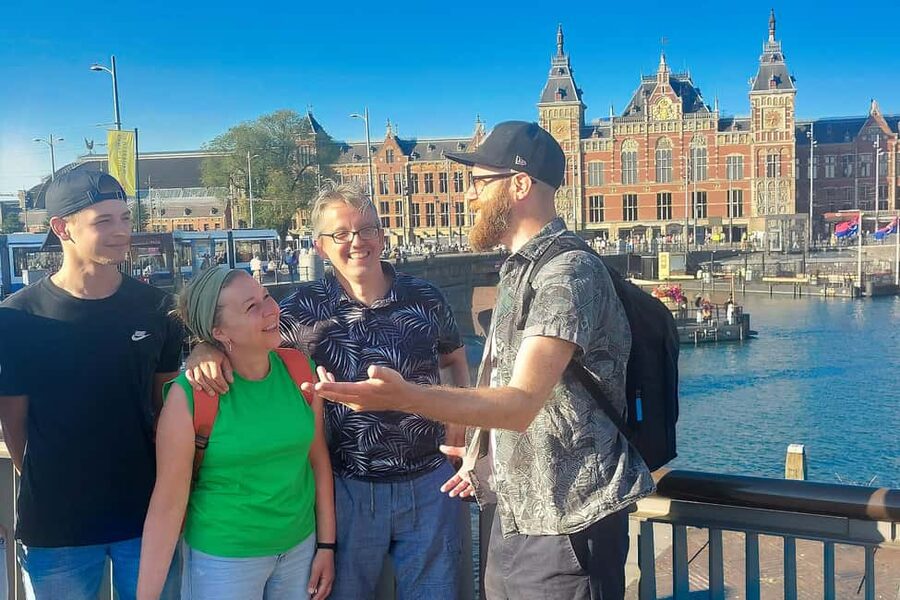
The starting point is easy to reach but requires a little care. Go behind Amsterdam Centraal, toward the water where the white and blue ferries leave for Amsterdam North. Look for Pancakes Amsterdam at the IJ and the large D ferry halte sign beside the bike lane.
That bike lane matters. Amsterdam cyclists move quickly and quietly, so keep your eyes open while finding the meeting point. The guide is described as wearing glasses, a beard, and a baseball hat, which should help you identify him in a busy area.
Starting here is smart. Centraal Station sits at the edge of the old city, so the walk immediately puts Amsterdam’s transport, water, architecture, and daily life in front of you. You do not waste the first part of the tour on a long transfer.
This tour is offered in English or French, and private or small-group arrangements are available. The exact group size is not provided, so do not assume a tiny private walk unless you book that format. Still, the emphasis is on conversation and questions rather than a large crowd following a flag.
More Walking Tours in Amsterdam
- Anne Frank’s Story – Guided Walking Tour through Amsterdam
★ 5.0 · 11,619 reviews - Amsterdam: Life of Anne Frank and World War II Walking Tour
★ 4.8 · 10,467 reviews - Absolutely Amsterdam – the Essential Introductory Walking Tour
★ 5.0 · 3,629 reviews
Amsterdam Centraal and the Dancing Houses
The first photo stop is Amsterdam Centraal, the city’s grand railway gateway. Your guide uses the station and its surroundings to explain how Amsterdam connects to the rest of the Netherlands and how the city grew around its waterways and trade.
From there, you see the Dancing Houses. These narrow, leaning canal-side buildings are among the quickest ways to understand Amsterdam’s unusual architecture. Their sloping facades are not simply a photographic trick. They reflect the city’s old building patterns, narrow plots, and shifting ground.
The stop is brief, listed at about five minutes, so expect an explanation and time for photographs, not a long architectural lecture. That pattern continues throughout the walk. You cover a lot of ground, but the tour favors a broad sense of place over detailed interior visits.
Zeedijk, Saint Nicholas, and Amsterdam’s layered center
The Basilica of Saint Nicholas offers a sharp contrast to the narrow secular buildings nearby. Its prominent Catholic presence helps explain that Amsterdam’s religious story is more complicated than the Protestant image often suggests.
On Zeedijk Street, the city’s layers become easier to see. This old street leads through an area shaped by trade, migration, nightlife, and changing city life. The walk then reaches the statue of Major Alida Bosshardt, a reminder of a well-known figure connected with social work in Amsterdam.
I appreciate this part of the route because it avoids presenting the center as a neat museum piece. You see grand buildings, working streets, religious landmarks, and reminders of social change within a short distance. Your guide can answer questions about Dutch daily life here, which gives the route a more human scale.
The hidden church at Our Lord in the Attic
The exterior stop at Ons’ Lieve Heer op Solder, or Our Lord in the Attic Museum, is one of the most intriguing points on the walk. The name hints at the story: a Catholic church was built inside a canal house attic during a period when Catholic worship could not take place openly in the same way.
The tour does not include entry, so you will not see the interior on this visit. Still, the building makes an excellent story stop. It shows how Amsterdam’s residents adapted to religious restrictions and how ordinary-looking houses could contain remarkable spaces.
If this museum interests you, note it for a separate visit. The walking tour gives you context and a photo stop, not admission or a full guided visit.
A different kind of day out entirely:
- Amsterdam: Van Gogh Museum Ticket
★ 4.7 · 52,054 reviews - Amsterdam Classic Saloon Boat Cruise with Drinks and Cheese
★ 5.0 · 31,825 reviews - Amsterdam Luxury Canal Cruise + Unlimited Drinks & Bites option
★ 5.0 · 30,518 reviews - Amsterdam: Heineken Experience Ticket
★ 4.6 · 30,055 reviews
Oude Kerk, Chinatown, and the old east side
The Oude Kerk is Amsterdam’s oldest surviving church and one of the city’s most striking contrasts. It sits beside the former red-light district, where medieval religious architecture and modern adult entertainment occupy the same compact area.
Your guide also points out Burgwallen Oude Zijde, the old side of the city, and Amsterdam Chinatown. These stops help show how the historic center changed over time. Trade drew people from many places, and the city’s present-day character reflects those connections.
The route is not only about polished canal views. It includes streets with sharper edges and more complicated stories. That is useful if you want to understand Amsterdam beyond the postcard image.
The five-minute format is again both strength and limitation. You get an efficient overview, but anyone wanting a detailed account of the church, Chinatown, or the red-light district will need to ask questions or return later.
De Waag, the VOC, and Amsterdam’s trading past
At De Waag, a substantial historic building now associated with a restaurant, the guide connects the city’s architecture with its commercial past. This is a good place to hear about Amsterdam as a trading center and about the Dutch East India Company, known as the VOC.
The VOC stop provides essential context for the city’s Golden Age. Amsterdam’s wealth did not come from canals and attractive houses alone. It grew through shipping, finance, trade, and overseas activity, with all the moral and human consequences that such power involved.
A good walking tour should not turn this subject into a victory parade. The provided tour description promises stories about Amsterdam’s development and Dutch heritage, while the exact treatment of colonial history is not specified. If that subject matters to you, ask your guide directly.
The Narrowest House in Europe adds a lighter architectural moment. It is an easy place to photograph and a reminder that Amsterdam’s valuable canal plots encouraged narrow, compact construction. Like the Dancing Houses, it makes the city’s buildings easier to read once you know what to look for.
Dam Square and the Royal Palace
Dam Square is the grand civic center of the route. Here you see the Royal Palace, a major landmark that reflects Amsterdam’s former wealth and political importance. The square itself is also a useful orientation point, linking the old center’s major streets and attractions.
The guide explains the buildings from outside, with time for photographs. Entry to the Royal Palace is not included, so plan another visit if you want to see its interior.
Magna Plaza follows, offering a change from civic buildings and old churches. Its architecture and current use show how historic structures can be given new commercial life. This part of the route is particularly helpful for first-time visitors because it connects several central sights you might otherwise visit separately.
Dam Square can be crowded and noisy, especially at busy times. Stay close enough to hear the guide, and expect some pauses to be shorter than you might prefer. The payoff is efficient orientation without spending a separate morning finding each landmark.
The canals and the Torensluis Bridge
At the Torensluis Bridge, the tour turns toward one of Amsterdam’s defining features, its canals. The 400-year-old canal belt is a UNESCO World Heritage site, and the guide explains how the waterways shaped trade, housing, movement, and city planning.
This is where the city’s architecture starts to read like a connected system. Canal houses were built on narrow lots, façades advertise wealth and status, and the water routes once served practical commercial purposes. Your guide can point out details that are easy to miss when you are simply taking photographs.
The Grachtengordel, or canal belt, is a strong section for pictures, but do not expect a canal cruise. Boats, drinks, and food are not included. The walk gives you street-level context, which is valuable because you see the bridges, house fronts, and public spaces at close range.
I especially like this format for visitors who are deciding how to spend the rest of their stay. By the time you reach the canals, you will have a clearer sense of which areas deserve a later visit by boat, on foot, or at a slower pace.
Anne Frank House and Westerkerk
The Anne Frank House is included as an exterior stop, with the guide sharing the story connected to Anne Frank and the wartime history of the area. Admission is not part of the walking tour, and the description does not promise entry, so you should arrange a separate ticket if you want to visit inside.
That distinction is important. The house is one of Amsterdam’s most sought-after attractions, and an outside explanation is useful orientation, but it cannot replace the museum experience.
Nearby Westerkerk adds architectural and historical context. The church is closely tied to the canal belt and the Jordaan, making it a natural bridge between the city’s religious past and its neighborhood life.
This portion may carry more emotional weight than the earlier stops. The guide’s storytelling style is repeatedly praised for bringing places to life, but you should still allow yourself quiet time afterward if the subject affects you.
Ending in the Jordaan
The tour finishes in the Jordaan, one of Amsterdam’s most appealing areas for slow wandering. Here the route moves away from the biggest squares and toward canals, side streets, courtyards, and the everyday character of the old city.
The description includes hidden courtyards and secret gardens, though exact access can depend on opening conditions, construction, and local rules. Treat these as possible discoveries rather than guaranteed private entries.
The Jordaan is also where the guide’s recommendations become especially useful. Chris is praised for sharing links to restaurants, cafés, pubs, souvenir shops, food, boat trips, and further sightseeing. One specific food suggestion that came up was bitterballen, a classic Dutch snack worth trying if you have not already.
This is a good ending because you are not simply dropped at a famous monument. You finish in an area where you can continue walking, eat, shop, or return later with a better sense of direction.
What Chris adds to the walk
The strongest feature is the guide’s presentation. Chris is repeatedly described as friendly, funny, patient, and easy to talk with. He answers questions rather than rushing through a memorized script, and he uses small details to make large historical changes easier to understand.
Several participants specifically valued his practical help after the tour. He provides electronic links covering Dutch food, restaurants, cafés, pubs, shops, and activities. In one case, he also walked with a participant and showed the route to an area they had not yet visited.
That extra help matters. A two-hour introduction can leave you with a list of landmarks but no idea how to use your remaining time. Here, the guide aims to turn the walk into a starting plan for the rest of your stay.
His use of visual material is another useful touch. Historic images and displays can help you picture buildings and streets as they appeared in earlier periods. The experience seems best suited to curious visitors who enjoy asking questions, not to people who want silent sightseeing.
Price, pace, and practical value
At $33 per person, the tour offers good value if you want a broad introduction to central Amsterdam. You receive two to three hours with a local English or French-speaking guide, a long list of landmark explanations, and personalized suggestions for the days ahead.
The value is not in admission tickets. Food, drinks, museum entry, and boat rides are not included. You are paying for orientation, interpretation, and saved time.
The route is ambitious. Twenty-one listed stops in two to three hours means the walk moves steadily, with many stops lasting around five minutes. Participants have praised the pace as comfortable, but your experience will depend on group size, questions, weather, and street conditions.
Wear comfortable shoes and bring water. An umbrella and weather-appropriate clothing are sensible in Amsterdam, where a pleasant morning can change quickly. The tour is wheelchair accessible, though the itinerary may be adjusted for construction, local conditions, or your interests when possible.
The flexible booking terms also help. You can reserve now and pay later, and cancellation is free up to 24 hours before the tour for a full refund. Starting times vary, so check availability before building the rest of your day around it.
Who should book this Amsterdam walk?
I would choose this tour for a first visit, a short stay, or the first full day in Amsterdam. It gives you a useful mental map of the old center, the canal belt, the Jordaan, and the areas around Centraal Station.
It also suits visitors who prefer stories and conversation to a headset or large coach. Families, couples, solo visitors, and small groups can all benefit from the flexible question-and-answer style, provided everyone is comfortable walking for two to three hours.
French-speaking visitors have a clear reason to consider it, since the tour is available in French as well as English. The private option may be worthwhile if your party wants to set the pace or focus more heavily on certain subjects, though the supplied price is listed for the standard per-person experience.
I would look elsewhere if you want extensive interior access, a museum tour, or a slow study of only two or three landmarks. This is a city overview, not a full visit to the Royal Palace, Anne Frank House, Oude Kerk, or Our Lord in the Attic.
Should you book it?
Book it if you want a friendly, story-led introduction to Amsterdam with practical advice you can use immediately. Chris’s strengths are clear: local knowledge, humor, patience, historical detail, and useful recommendations after the walk.
The best plan is to take it early in your stay, then use the guide’s suggestions to choose museums, food stops, boat trips, and neighborhoods for later. At $33, it is a fair price for saving time and making the center easier to understand.
Skip it only if you already know central Amsterdam well or want a tour built around interior admissions. For most first-time visitors, this is an efficient and personable way to begin.
FAQ
How long does the Amsterdam walking tour last?
The tour lasts between two and three hours, depending on the selected time and how the walk develops.
Is the tour offered in English and French?
Yes. A live guide leads the tour in either English or French.
Where does the tour meet?
Meet behind Amsterdam Centraal Station, near the water and the white and blue ferries to Amsterdam North. The meeting point is beside Pancakes Amsterdam at the IJ, near a large D ferry halte sign next to the bike lane.
Does the tour include entry to the Anne Frank House or Royal Palace?
No entry tickets are listed as included. These locations are covered as guided photo and explanation stops from outside.
Is the walking tour wheelchair accessible?
Yes, the activity is described as wheelchair accessible. The route may also be adjusted for construction, local conditions, or your interests when possible.
Are food and drinks included?
No. Food and drinks are not included, though the guide provides recommendations for dining, cafés, pubs, and Dutch foods.
Can I cancel the tour or pay later?
Yes. You can reserve now and pay later, and cancellation up to 24 hours in advance qualifies for a full refund.
Just added in Amsterdam
- Private Tour Zaanse Schans Windmills and Volendam in Jaguar★ 5.0 · 10 reviews
- Zaanse Schans and Giethoorn Unique Day Trip with Boat Cruise★ 4.5 · 17 reviews
- Windmills-Volendam-Giethoorn Private Tour in Jaguar★ 5.0 · 2 reviews
- Half-Day Private Guided Sightseeing Tour of Zaanse Schans★ 5.0 · 14 reviews
- Best of Netherlands: Zaanse Schans Mills, The Hague & Rotterdam★ 4.5 · 10 reviews
- Zaanse Schans Private Tour Windmills★ 5.0 · 18 reviews
- Zaanse Schans Windmills Edam Volendam and Marken from Amsterdam★ 5.0 · 1 review
- Zaanse Schans Edam Volendam Private Day Tour from Amsterdam★ 5.0 · 3 reviews
Walking Tours, compared.

Anne Frank’s Story – Guided Walking Tour through Amsterdam
Read our review →
Life of Anne Frank and World War II Walking Tour
Read our review →
Absolutely Amsterdam – the Essential Introductory Walking Tour
Read our review →
Anne Frank Walking Tour – Guided in EN/DE/IT/ES
Read our review →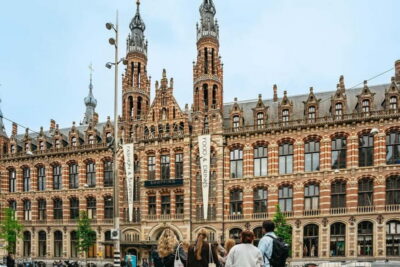
Anne Frank Walking Tour Amsterdam Including Jewish Cultural Quarter
Read our review →Browse the lists this tour appears in