
Review · MUSEUMS
Amsterdam: Stedelijk Museum Entry Ticket
Modern art rewards a little patience. This Stedelijk Museum ticket gives you access to one of the Netherlands’ leading museums for modern and contemporary art, right on Museumplein beside the Rijksmuseum and Van Gogh Museum. You can see permanent displays and most temporary exhibitions in a single visit.
I like the wide range, from Matisse, Picasso, Chagall, and Malevich to Dutch design by Rietveld and Mondriaan. I also like the included Dutch and English audio guide, which adds useful context when a work does not explain itself at first glance. The main drawback is that some contemporary pieces can feel obscure or even irritating, and the skip-the-line benefit may not save much time when the entrance is quiet.
In This Review
- Key points to know before you go
- What the Stedelijk Museum does best
- Arriving at Museumplein
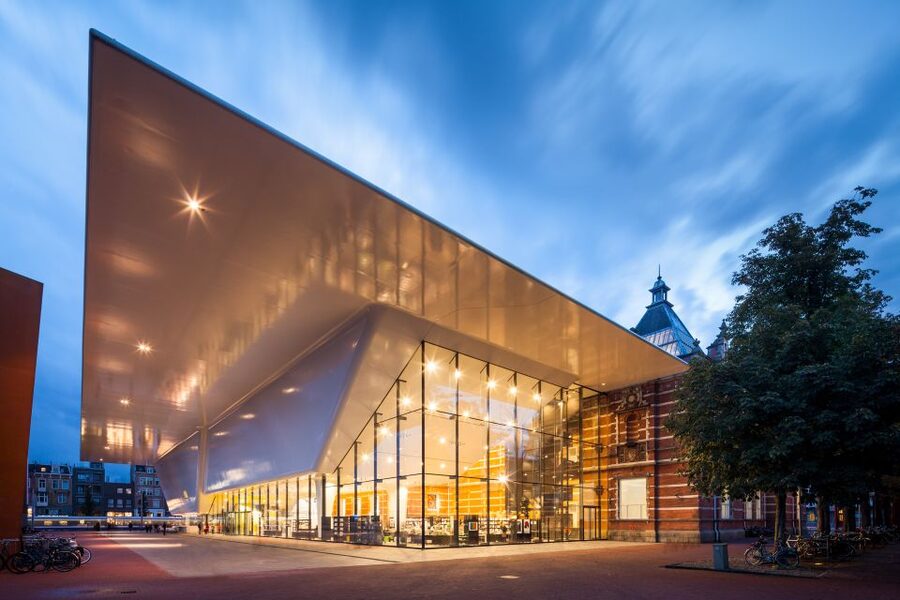
- The historic building and futuristic extension
- Following the permanent collection
- The famous names and the surprising gaps
- Temporary exhibitions and changing displays
- How long should you plan to stay?
- Using the audio guide well
- Price, convenience, and real value
- Who will enjoy the Stedelijk most?
- Should you book the Stedelijk Museum ticket?
- FAQ
- How much does the Stedelijk Museum entry ticket cost?
- How long is the ticket valid?
- Does the ticket include an audio guide?
- Do I need to print my ticket?
- Does the ticket include temporary exhibitions?
- Is the museum wheelchair accessible?
- Can I cancel the ticket?
Key points to know before you go
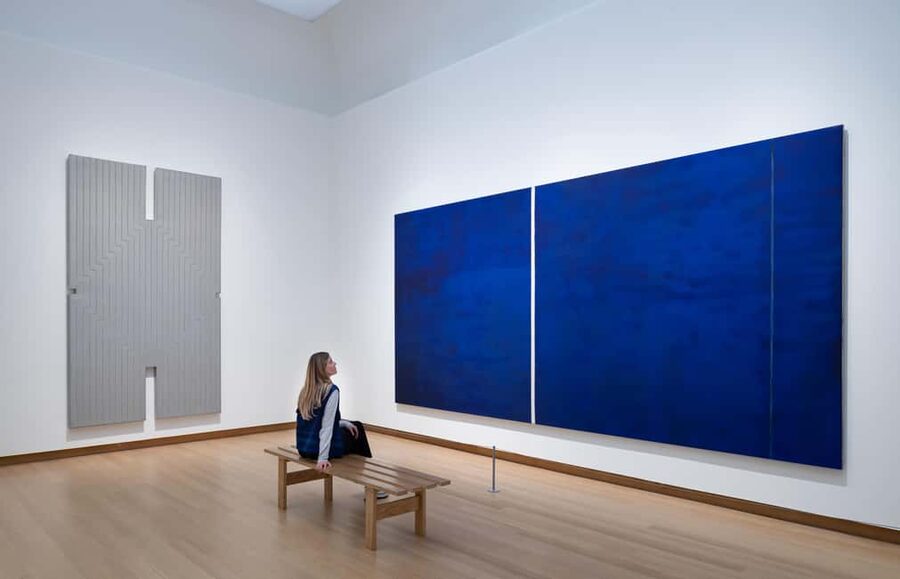
- A 90,000-object collection: The museum’s holdings cover painting, sculpture, photography, design, furniture, installations, and newer forms of art.
- Museumplein location: You can pair your visit with the Rijksmuseum and Van Gogh Museum without crossing the city.
- Old building, bold new wing: The original 1895 museum sits beside a futuristic extension that reopened after renovation in 2012.
- Big names and Dutch design: Look for works connected with Van Gogh, Mondriaan, Rietveld, Matisse, Warhol, Pollock, Kusama, and Marlene Dumas.
- Audio guide included: Dutch and English commentary is available, so bring your own headphones.
- Good for a long museum stop: A focused visit can be shorter, but many people spend around three to four hours here.
What the Stedelijk Museum does best
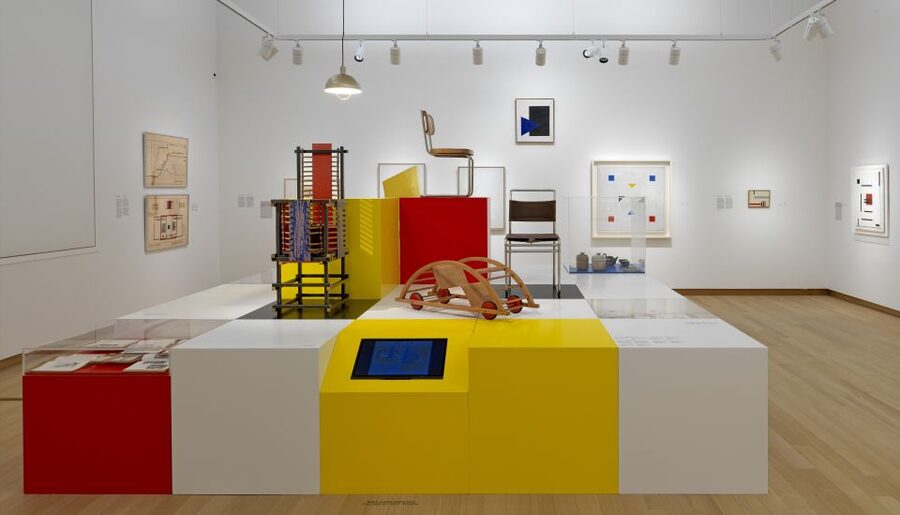
The Stedelijk is not a museum for one famous painting. It is a place where you can watch art change across the 20th and 21st centuries. The collection is arranged by theme and loose chronology, so you see connections between design, social change, politics, technology, and daily life.
That arrangement matters. Instead of treating art as a row of isolated masterpieces, the museum places different artists and movements in conversation. A painting by Piet Mondriaan may sit within a larger story about abstraction and design, while a piece by Gerrit Rietveld shows how those ideas moved into furniture and architecture.
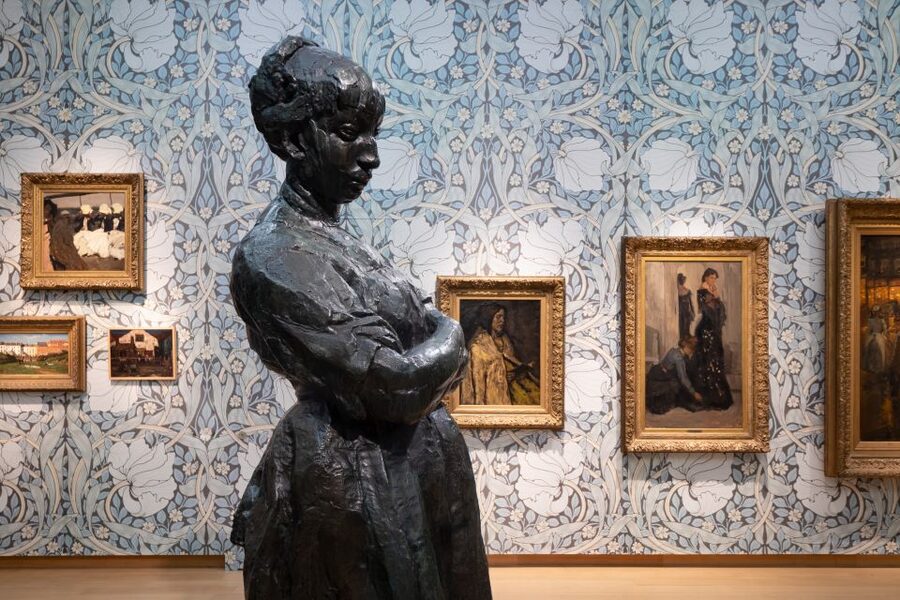
I especially like the way Dutch art receives proper attention. Amsterdamse School design, De Stijl ideas, and the work of Dutch artists such as Mondriaan and Rietveld are not side notes here. They help explain why Dutch modernism feels so distinct.
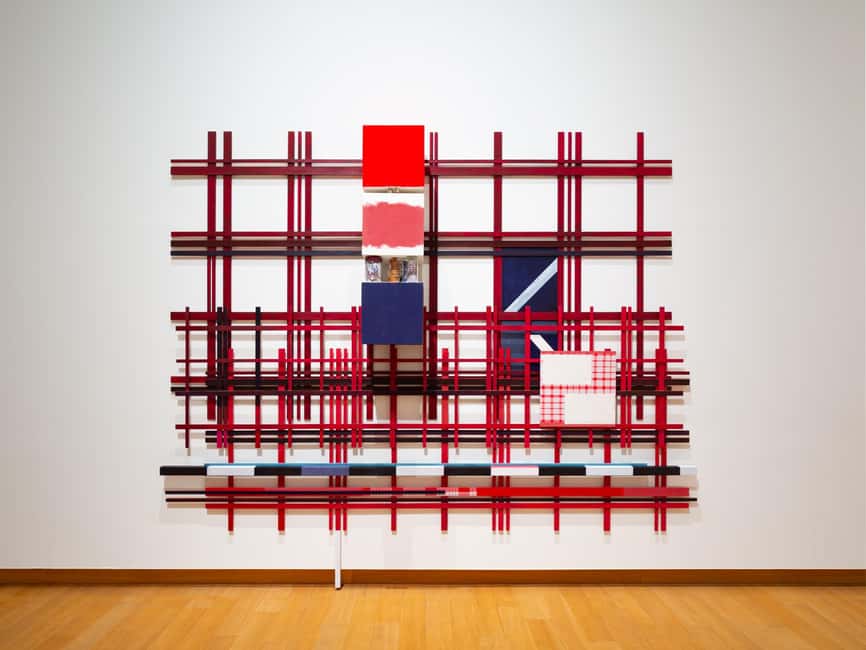
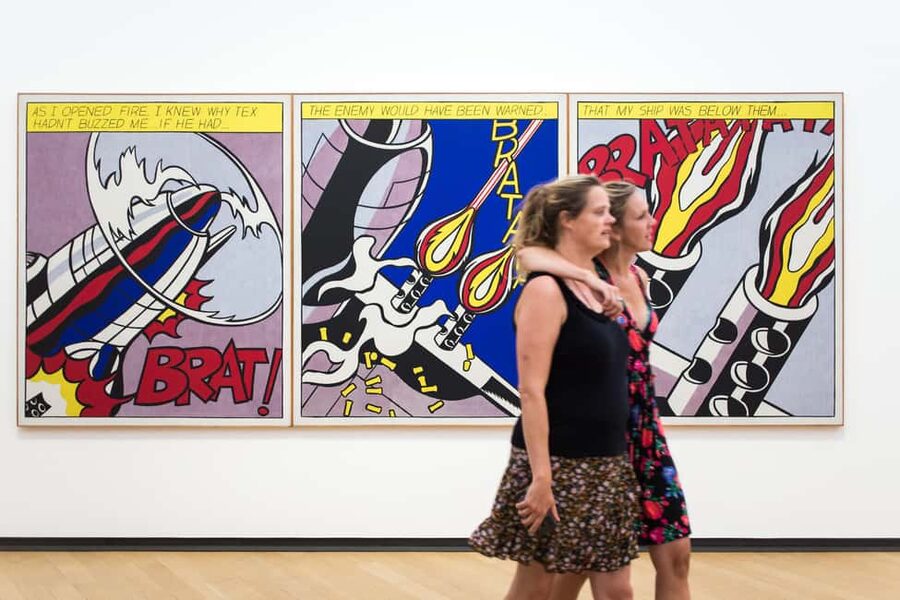
The collection also reaches well beyond the Netherlands. You may encounter Marc Chagall, Henri Matisse, Pablo Picasso, Kazimir Malevich, Jackson Pollock, Andy Warhol, Yayoi Kusama, and Marlene Dumas. There are also works associated with Vincent van Gogh and Charley Toorop, along with photography, design, video, installations, and other forms that do not fit neatly into a traditional gallery visit.
More Museum Tours in Amsterdam
- Amsterdam: Van Gogh Museum Ticket
★ 4.7 · 52,054 reviews - Moco Museum Amsterdam Entrance Tickets with Banksy & More
★ 4.4 · 10,088 reviews - Amsterdam: The Upside Down Museum Entrance Ticket
★ 4.4 · 9,506 reviews
Arriving at Museumplein
The museum is on Museum Square, Amsterdam’s main cultural gathering place. The setting makes planning easy because the Rijksmuseum and Van Gogh Museum are close by. You can visit the Stedelijk on its own, or build a full museum day around the square.
Your entry point is the museum entrance hall. The mobile ticket is designed for direct scanning, so you do not need to print a voucher. Keep the barcode clear on your phone and have it ready before you reach the entrance.
The ticket is advertised as priority admission, which can be useful during a crowded period. Still, you should keep your expectations sensible. Several visits have had little or no line, especially earlier in the day or later in the afternoon. If the museum is quiet, the ticket may not save much time, but it does make entry simple.
One practical tip: visit before noon if you want a calmer start. The galleries can become busier in the afternoon. That is not a guarantee, but it is a sensible choice if you want more space around the larger works.
The historic building and futuristic extension
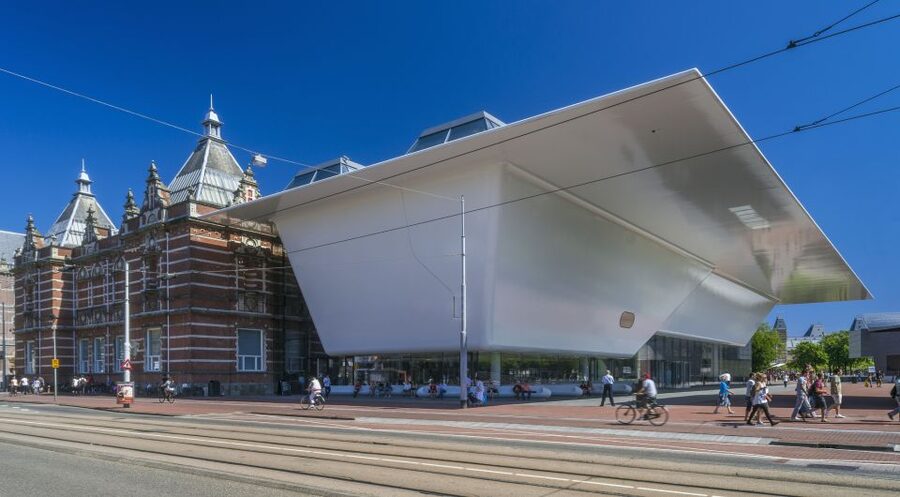
The Stedelijk first opened in 1895, and the older building gives the museum a traditional Amsterdam setting. Its newer wing, added during a major renovation and reopened in 2012, provides a sharp contrast. The modern section has an unmistakably futuristic appearance and has become one of the museum’s recognizable features.
This mix of old and new fits the collection. You are not simply walking through a historic house filled with old paintings. The building itself reflects the museum’s interest in changing materials, design, form, and public space.
The newer wing is also useful for temporary shows and larger installations. Contemporary art often needs more room than a conventional painting gallery allows, and the extension provides that flexibility. You might find rooms built around light, sound, moving parts, or large-scale structures rather than wall-hung pictures.
Some people love the building immediately. Others find the contrast a little jarring. I think that is part of the point: the Stedelijk asks you to notice how a museum can shape your experience before you even reach the art.
Following the permanent collection
The permanent collection is broad enough that you should not try to see every object. The museum holds about 90,000 artifacts, but that does not mean all 90,000 are on display. Exhibits change, and the exact selection depends on the current presentation.
Start by looking for the artists you already know, then allow time for unfamiliar work. A famous name can give you an anchor, while the less familiar pieces show how art movements spread and changed.
The collection includes:
- Modern and contemporary painting
- Sculpture and installations
- Photography and video
- Industrial and graphic design
- Furniture and applied arts
- Dutch movements such as De Stijl and Amsterdamse School
- International art from the 20th century to the present
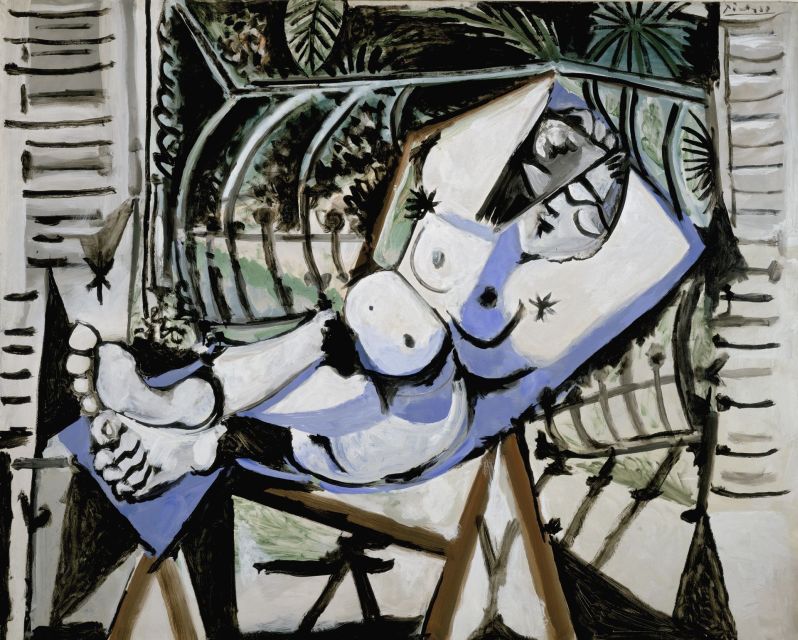
You may see the clean geometry of Mondriaan, the furniture and design language of Rietveld, and the expressive force of artists such as Matisse, Chagall, or Picasso. Other rooms may shift toward postwar abstraction, pop art, conceptual work, or contemporary installations.
The museum is at its best when you compare these changes rather than judging every object by the same standard. A quiet geometric design, a large abstract painting, and a room-sized installation are trying to do different things. The audio guide can help explain those aims in Dutch or English.
A different kind of day out entirely:
- Amsterdam Classic Saloon Boat Cruise with Drinks and Cheese
★ 5.0 · 31,825 reviews - Amsterdam Luxury Canal Cruise + Unlimited Drinks & Bites option
★ 5.0 · 30,518 reviews - Amsterdam: Heineken Experience Ticket
★ 4.6 · 30,055 reviews - Amsterdam: Rijksmuseum Entry Ticket
★ 4.7 · 25,535 reviews
The famous names and the surprising gaps
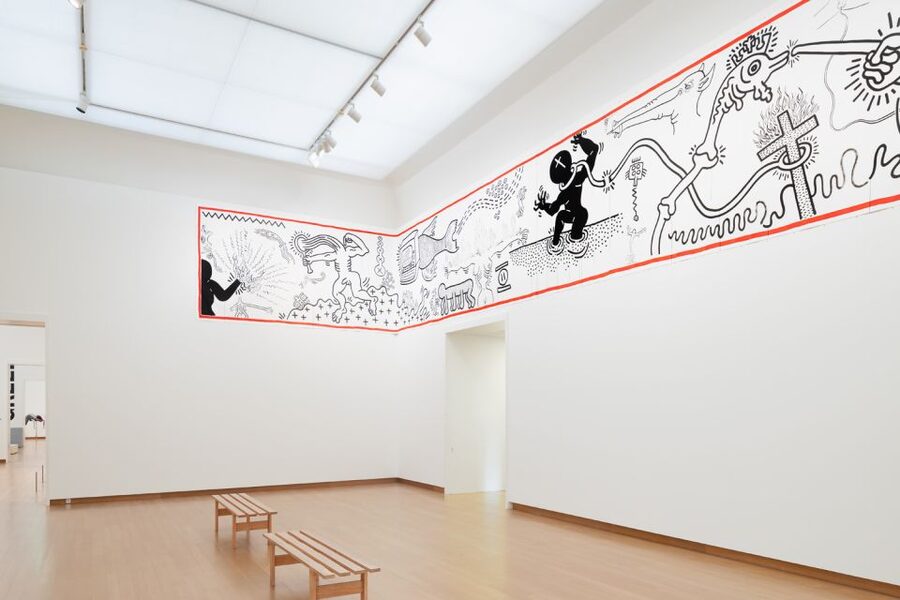
The recognizable artists are a major reason to buy this ticket. You can encounter works linked to Van Gogh, Chagall, Mondriaan, Kusama, Warhol, Matisse, Pollock, Picasso, Dumas, and Toorop. Seeing several of these artists in one place gives you a useful overview of modern art’s many directions.
At the same time, this is not a greatest-hits museum in the simple sense. You may find fewer immediately familiar works than you expect, especially if your main interest is traditional painting. The Stedelijk is more interested in the story of modern and contemporary art as a whole.
That can be rewarding, but it can also test your patience. Some visitors respond warmly to light constructions, mobile installations, and experimental rooms. Others prefer the older works and find certain later pieces unharmonious or difficult to understand.
I would not treat that reaction as a failure. A museum of modern art should give you something to question. Still, if you dislike conceptual art, video, or installations, set aside time for the earlier galleries and Dutch design sections. They may be your strongest part of the visit.
Temporary exhibitions and changing displays
Your ticket includes entry to temporary exhibitions, with one stated exception: the Anselm Kiefer exhibition running from March 7 through June 9, 2025. Exhibition access can change with the program, so check the current details before you book if a particular artist is your main reason for going.
Temporary exhibitions can change the tone of the whole visit. A show may focus on one artist, a social issue, a design movement, photography, performance, or experimental media. The permanent collection gives you the museum’s long view, while the temporary rooms show what the Stedelijk is discussing now.
This is also where advance checking matters most. A temporary exhibition may require a separate charge or may not be part of the standard admission, as happened with some special shows. Do not assume that every poster in the entrance hall is included simply because the general ticket includes most temporary exhibitions.
If you are visiting for a named exhibition, verify its status before paying. If you are visiting for the museum as a whole, the included temporary program adds good value and gives you a reason to return.
How long should you plan to stay?

The ticket is valid for one day, not just a short timed slot. That gives you flexibility. You can spend two hours seeing the major galleries, or stay three to four hours if you want to use the audio guide and take your time with the temporary rooms.
I would plan at least two hours for a first visit. That allows enough time for the main permanent displays without turning the experience into a race. If modern art is your main interest, three or four hours is reasonable.
A useful feature is the possibility of taking a break and returning later the same day, as one visitor was allowed to do. Confirm the current re-entry practice at the museum desk before leaving, since the final decision belongs to the venue.
Museum Square makes a split visit especially practical. You could spend the morning at the Stedelijk, eat lunch, then continue at another museum nearby. Or you could visit one museum in the morning and use the Stedelijk for a shorter afternoon session.
Using the audio guide well
The audio guide is included in Dutch and English. Bring headphones, since they are listed as something you should have with you.
I recommend using the guide selectively rather than listening to every entry. Choose a few works that catch your eye, plus one or two artists you know little about. This keeps the visit active and prevents the information from becoming a wall of facts.
The guide is particularly useful for conceptual art and design. A work that looks plain or unfinished may have a clear purpose once you understand its materials, date, or social setting. You still may not like it, but you will have a fairer chance to judge it.
The audio commentary is also helpful for younger visitors. An 11-year-old enjoyed the collection during one family visit, and the guide offered enough structure to make the art easier to approach. Families should still be ready for some rooms that are more challenging than entertaining.
Price, convenience, and real value
At $26 per person, this is not a bargain-basement museum ticket. The value depends on how much of the museum you use.
The price makes good sense if you plan to stay for several hours, use the audio guide, and see both the permanent displays and temporary exhibitions. The same-day flexibility can also help if you want to take a meal break rather than rush through the galleries.
The ticket is less compelling if you are passing by for a quick look and expect a long entrance queue. Several visits have had no line, so the priority feature may not always provide a practical saving. You are mainly paying for convenient mobile admission and broad access, not a guaranteed dramatic wait outside.
The museum café and restaurant provide an easy break in the same building. Food and drinks are not included, and prices can be higher than a neighborhood café. Still, having a place to pause is useful during a three or four-hour visit.
You can also reserve now and pay later, which helps if your schedule is still moving. Cancellation is available up to 24 hours before the visit for a full refund. Those terms make the ticket less risky when you are arranging several Amsterdam museums around changing plans.
Who will enjoy the Stedelijk most?
I would choose this museum for you if you enjoy modern art, design, photography, installations, or the history of visual ideas. It is also a good choice if you want a break from Amsterdam’s old-master collections and prefer work that feels closer to present-day life.
Design fans should give it serious attention. The Rietveld and Mondriaan material, along with Amsterdamse School examples, gives the museum a strong Dutch identity. You are not simply seeing international modernism imported into Amsterdam. You are seeing how Dutch artists and designers helped shape it.
Families can make it work, especially with the audio guide and a flexible plan. Let each person choose a few favorite works rather than insisting on every room. The collection offers enough variety for different ages and interests.
You might skip it if your Amsterdam schedule is very short and your main goal is Dutch painting from earlier centuries. In that case, the Rijksmuseum or Van Gogh Museum may fit your priorities better. If you are unsure about contemporary art, the Stedelijk is still worth considering, but plan to spend extra time with the historic collection and design galleries.
The museum is wheelchair accessible. Since it is close to two other major museums, it also suits an itinerary built around Museum Square rather than a separate cross-city trip.
Should you book the Stedelijk Museum ticket?
Book it if you want a substantial modern-art visit, especially if you enjoy both famous artists and less familiar experiments. The strongest reasons are the range of the collection, the Dutch design material, the included audio guide, and access to most temporary exhibitions.
I would book ahead when a major exhibition is your priority or when you want a simple mobile entry plan. If your date is flexible and you are visiting during a quiet period, you may find little queue and less need for priority admission.
Bring headphones, arrive before noon for a calmer start, and allow at least two hours. At $26, the ticket earns its keep when you treat the Stedelijk as a full museum visit, not a quick stop between the Rijksmuseum and Van Gogh Museum.
FAQ
How much does the Stedelijk Museum entry ticket cost?
The listed price is $26 per person.
How long is the ticket valid?
The ticket provides access for one day. Check availability for the starting times offered when you book.
Does the ticket include an audio guide?
Yes. An audio guide is included in Dutch and English. Bring your own headphones.
Do I need to print my ticket?
No. You can show the mobile voucher with its barcode clearly displayed for scanning.
Does the ticket include temporary exhibitions?
It includes access to all temporary exhibitions except the Anselm Kiefer exhibition scheduled from March 7 through June 9, 2025.
Is the museum wheelchair accessible?
Yes, the Stedelijk Museum is wheelchair accessible.
Can I cancel the ticket?
Yes. You can cancel up to 24 hours in advance for a full refund. You can also reserve now and pay later.
Just added in Amsterdam
- Private Tour Zaanse Schans Windmills and Volendam in Jaguar★ 5.0 · 10 reviews
- Zaanse Schans and Giethoorn Unique Day Trip with Boat Cruise★ 4.5 · 17 reviews
- Windmills-Volendam-Giethoorn Private Tour in Jaguar★ 5.0 · 2 reviews
- Half-Day Private Guided Sightseeing Tour of Zaanse Schans★ 5.0 · 14 reviews
- Best of Netherlands: Zaanse Schans Mills, The Hague & Rotterdam★ 4.5 · 10 reviews
- Zaanse Schans Private Tour Windmills★ 5.0 · 18 reviews
- Zaanse Schans Windmills Edam Volendam and Marken from Amsterdam★ 5.0 · 1 review
- Zaanse Schans Edam Volendam Private Day Tour from Amsterdam★ 5.0 · 3 reviews
Museums, compared.

Moco Museum Amsterdam Entrance Tickets with Banksy & More
Read our review →


Amsterdam’s Weirdest Museum: Believe It or Not!
Read our review →
Browse the lists this tour appears in