

Review · MUSEUMS
Amsterdam: The Kattenkabinet Cat Museum Entry Ticket
Cats rule this Amsterdam house. The Kattenkabinet turns a handsome Herengracht canal home into a playful art museum, with paintings, posters, sculptures, photographs, and real cats wandering through the rooms. I like the mix of serious art and gentle silliness, and I like the personal story behind the collection. The main drawback is size: many people finish in 20 minutes to an hour, though careful art lovers and families may stay longer.
I also appreciate the building itself, especially the old ceiling painting revealed during renovation in the 1980s. The resident cats are a wonderful bonus, but they follow their own schedule. You may meet Nala, Oscar, or another friendly feline, or you may see only one cat, or none at all. At about $15 per person, this is best treated as a short, unusual stop rather than a full afternoon museum.
In This Review
- Five things to know before you go
- Arriving at the Kattenkabinet on Herengracht
- The personal story behind Bob Meijer’s collection
- From Rembrandt to playful cat posters
- The resident cats are part of the charm
- A small museum that rewards a slow look
- The garden and the house add breathing room
- The gift shop is worth a proper look
- Who will enjoy this most
- How long should you allow?
- Practical value at $15
- Should you book the Kattenkabinet?
- FAQ
- Where is the Kattenkabinet located?
- How much does admission cost?
- How long does the visit take?
- Is the museum suitable for children?
- Are there real cats inside the museum?
- Can I pet the cats?
- What kind of art is displayed?
- Is there an outdoor area?
- Can I bring food or drinks?
Five things to know before you go
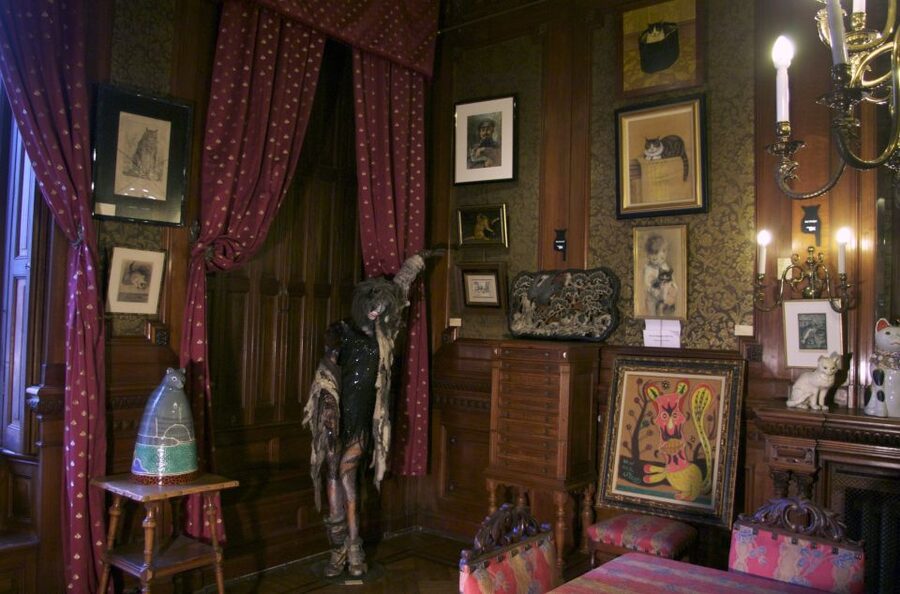
- The museum occupies a historic Herengracht canal house, with art rooms spread over two floors.
- Bob Meijer created the collection in honor of his cat, making the museum personal as well as artistic.
- The collection includes famous names, including Rembrandt, Picasso, and Toulouse-Lautrec.
- Real resident cats wander freely, but petting and sightings are never guaranteed.
- The visit can be brief, from roughly 20 minutes to about two hours depending on your pace and interest.
- A garden and thoughtful gift shop add value, though outdoor areas may close outside the warmer season.
Arriving at the Kattenkabinet on Herengracht
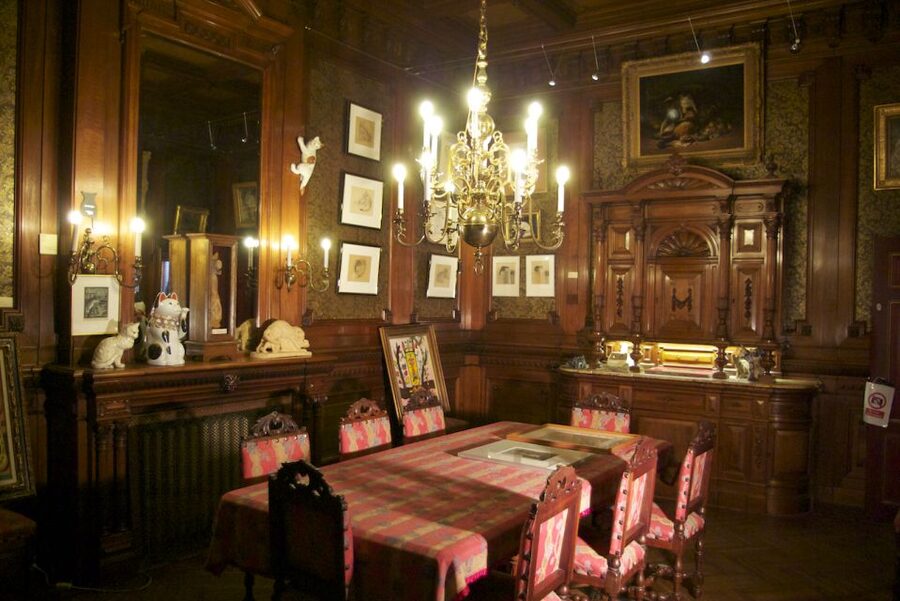
The Kattenkabinet is in central Amsterdam, on the Herengracht canal. That setting matters. You are not entering a large modern gallery with wide halls and polished exhibits. You are stepping into an old Amsterdam house where the rooms, stairs, ceilings, and garden are part of the experience.
The building gives the museum much of its character. One room contains a 17th-century ceiling painting from the school of De Lairesse. It shows the Amsterdam City Virgin, an unexpected grand subject in a museum devoted to household pets and feline art.
The contrast is part of the fun. A visitor can look at a work by Rembrandt, glance toward a decorative ceiling, and then notice a living cat strolling past. The museum feels more like a private collection opened to the public than a formal national institution.
You should expect stairs and a compact layout. The art is displayed through a small number of rooms on two floors. That makes the visit easy to follow, but it also explains why the museum does not take half a day.
More Museum Tours in Amsterdam
- Amsterdam: Van Gogh Museum Ticket
★ 4.7 · 52,054 reviews - Moco Museum Amsterdam Entrance Tickets with Banksy & More
★ 4.4 · 10,088 reviews - Amsterdam: The Upside Down Museum Entrance Ticket
★ 4.4 · 9,506 reviews
The personal story behind Bob Meijer’s collection
Begin by reading the story of Bob Meijer, the museum’s owner and founder. The Kattenkabinet grew from his love for a particular cat, whose memory inspired the collection and the museum itself.
This opening story gives the art a human purpose. You are not simply looking at pictures of cats gathered because the subject happens to be popular. You are seeing the result of a long personal attachment, shaped into a public collection.
A shrine or memorial area honors the cat connected with the museum’s origin. You can also find a place where people leave photographs, notes, and drawings of their own cats. Bringing a small photo from home could make this part especially meaningful, although it is not required.
I find this personal corner more affecting than the museum’s novelty value alone. It connects the grand art on the walls with the ordinary bond between people and their pets. A photograph left by a family can feel just as heartfelt as a famous painting nearby.
From Rembrandt to playful cat posters
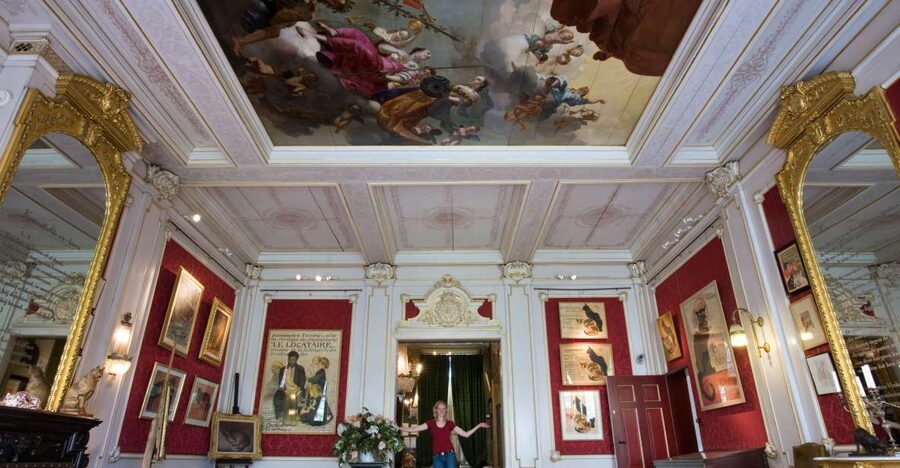
The collection covers more ground than the museum’s small size suggests. You will see paintings, drawings, lithographs, photographs, posters, sculptures, and other cat-related objects. The display moves between art history, popular culture, humor, and affectionate oddities.
Famous artists represented include Rembrandt, Pablo Picasso, and Henri de Toulouse-Lautrec. Works by Corneille and Jože Ciuha also appear. Their names give the collection real artistic weight, but the museum does not act as if every piece must be solemn.
That range is one of the best reasons to visit. A serious portrait may hang near a light-hearted image by an unknown artist. A framed artwork may be followed by a ceramic, a poster, or a sculptural object. The subject remains constant, but the styles and moods keep changing.
You do not need to be an art expert. Labels and the arrangement of the rooms help you understand the variety. If you enjoy comparing how different artists capture a cat’s personality, you will have plenty to notice. One artist may focus on posture and expression, while another turns the animal into a symbol, a joke, or a decorative shape.
The museum also makes a useful stop for people who like art but have already had their fill of Amsterdam’s biggest institutions. It feels less demanding than a major gallery and offers a clear theme from the moment you enter.
The resident cats are part of the charm
The live cats are not in cages or presented as formal exhibits. They live in the building and may wander through the rooms while you look at the art. Some visitors have met friendly cats such as Nala, a tortoiseshell, and Oscar, a tuxedo cat.
You might receive a furry welcome at the stairs. You might see a cat lounging comfortably while you examine a painting. You might even get a chance to pet one. This relaxed arrangement feels far more natural than a staged animal encounter.
Still, plan carefully around expectations. The cats have their own routines. Some visits produce several feline encounters, while others produce only one. A few people see none. The best approach is to enjoy the art first and consider a cat sighting a bonus.
The museum is not a café, and you should not treat the cats as guaranteed entertainment. Food and drinks are not allowed inside, and smoking is not allowed in the garden. Those rules help protect the collection and keep the house pleasant for the resident animals.
Parents should also remind children to approach gently and let a cat choose the interaction. The museum can keep children interested, especially those aged around nine and thirteen, but it is still an art collection in a historic home, not a play center.
A different kind of day out entirely:
- Amsterdam Classic Saloon Boat Cruise with Drinks and Cheese
★ 5.0 · 31,825 reviews - Amsterdam Luxury Canal Cruise + Unlimited Drinks & Bites option
★ 5.0 · 30,518 reviews - Amsterdam: Heineken Experience Ticket
★ 4.6 · 30,055 reviews - Amsterdam: Rijksmuseum Entry Ticket
★ 4.7 · 25,535 reviews
A small museum that rewards a slow look
The biggest practical issue is the museum’s size. Several rooms are packed with art, but the route is short. If you move quickly, you may be finished in 20 minutes. An hour is a more reasonable estimate for someone who stops to read labels and look closely.
Families who turn the visit into a search for favorite cats and favorite artworks may spend longer. One family kept two children engaged for about two hours, helped by the garden and the variety of objects. That is an unusually long visit, but it shows how much time you can create by slowing down.
The building contains perhaps three or four main rooms, with the exhibition arranged over two floors. You will not find endless galleries or a large café break. The museum works best as one part of a central Amsterdam walking day.
I would pair it with a canal walk, a nearby lunch, or another attraction in the city center. At $15, the ticket may feel expensive if you expect a large museum. It feels more reasonable if you value the historic house, unusual collection, garden, gift shop, and chance to meet resident cats.
The price is also easier to justify for devoted cat lovers. For a casual visitor with little interest in cats or small collections, the cost may not feel as strong.
The garden and the house add breathing room
The outdoor garden is a welcome extra. It gives you somewhere to pause after the compact interior rooms, and it helps the museum feel like a lived-in home rather than a series of display cases.
Several people particularly enjoy sitting in the garden. Seating is limited, so do not count on a long rest there. The outdoor area can also be closed during cooler parts of the year or outside the summer season.
The garden is most useful as a quiet finishing point. After looking at tightly arranged walls of cat art, a little open air changes the pace. If you visit in spring or winter, check your expectations, since the outside area may not be available.
The house itself deserves attention. Look up at the ceiling painting, notice the domestic scale of the rooms, and consider how different this setting feels from Amsterdam’s large public museums. The architecture is not merely a container for the art. It is one of the reasons the experience feels distinctive.
The gift shop is worth a proper look
The gift shop is small but well regarded. You may find posters, tote bags, postcards, and other cat-themed items. Some repeat visitors have returned for new displays and bought posters or a tote bag on later visits.
This is a useful stop if you want a souvenir that matches the museum without spending much. A poster can carry the memory of the visit better than a generic Amsterdam magnet, especially if you are buying for a dedicated cat lover.
The shop also helps round out a short visit. If you finish the rooms quickly, you can spend a few extra minutes looking at the items for sale rather than feeling rushed out of the experience.
Who will enjoy this most
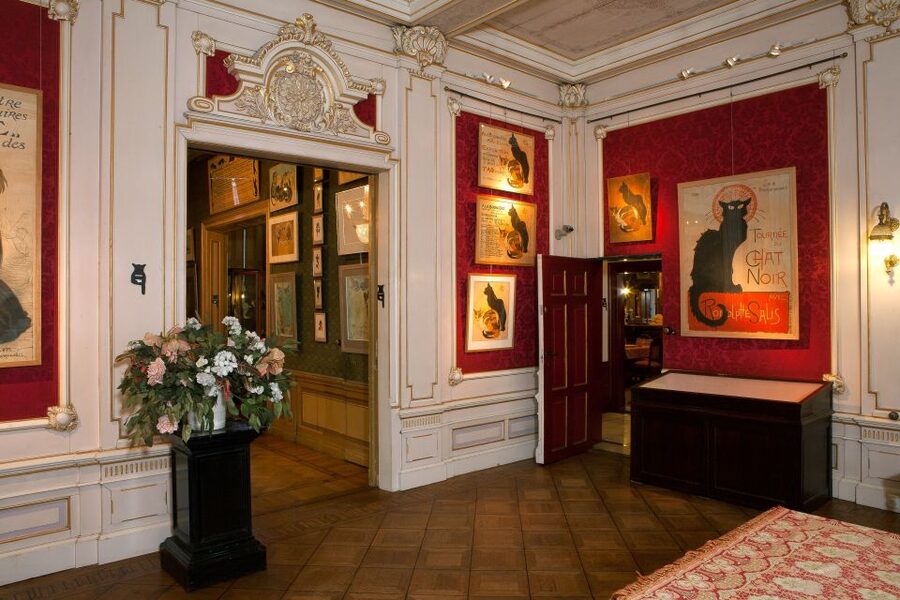
The obvious audience is cat lovers, but the museum has a wider appeal than that label suggests. You should consider it if you enjoy:
- Small private collections with a strong personal story
- Historic Amsterdam canal houses
- Art that mixes famous names with humorous and lesser-known pieces
- Quirky attractions that do not feel mass-produced
- Short family activities in the city center
- Photographing architecture, artwork, and friendly resident animals
Children can enjoy spotting cats, comparing the sculptures, and looking for the most unusual object. Older children may also appreciate the range of styles and the memorial area. Keep expectations realistic: the museum is compact, and quiet behavior is important.
It may not suit you if you want a large, heavily explained art museum, long sitting areas, or a guaranteed animal encounter. You should also skip it if you dislike cats, since the entire theme is unapologetically feline.
How long should you allow?
Allow about 45 minutes to an hour for a comfortable first visit. That gives you time to move through the rooms, read some information, look at the ceiling painting, check the garden if it is open, and browse the shop.
A fast visit can take only 20 minutes. A careful visit can last longer, particularly with children or if you enjoy studying the artwork. The stated ticket validity is one day, but this does not turn the museum into a full-day attraction. It simply gives you flexibility around your Amsterdam plans.
I would avoid squeezing it into a five-minute gap between major appointments. You need enough time to appreciate the house and wait patiently if a cat happens to be resting somewhere nearby.
Practical value at $15
The $15 ticket buys entry to the museum only. Food, drinks, and smoking in the garden are not part of the visit and are not allowed in those areas.
For value, think in terms of character rather than floor space. You are paying for a very specific experience: a historic canal house, a collection devoted entirely to cats, works connected with major artists, a personal memorial, a garden when open, and the possibility of meeting resident cats.
The value is strongest for someone who would actively seek out cat art. If you are simply filling time on a rainy day, the price may feel high after a 20-minute visit. If you are building a list of unusual Amsterdam stops, the museum offers something you are unlikely to confuse with another attraction.
Free cancellation is available up to 24 hours before the visit for a full refund, and you can reserve now while paying later. That flexibility is useful if your schedule depends on weather, museum opening plans, or a changing city itinerary.
Should you book the Kattenkabinet?
Book it if cats make you smile, if you like art with a sense of humor, or if you want to see an intimate canal-house collection rather than another huge museum. The combination of works by Rembrandt, Picasso, Toulouse-Lautrec, Corneille, and Jože Ciuha with ordinary cat art gives the visit more substance than its playful name suggests.
Go with modest expectations about size. The museum is short, and the garden may be closed depending on the season. Real cats may be present, but they are not scheduled performers.
At $15, I would recommend the Kattenkabinet to cat lovers, families, and curious art fans who enjoy unusual stops. I would pass if you need a long museum visit or guaranteed contact with animals. For the right person, this is a sweet, eccentric hour in one of Amsterdam’s most memorable canal houses.
FAQ
Where is the Kattenkabinet located?
The museum is located on the Herengracht canal in Amsterdam, in North Holland, Netherlands.
How much does admission cost?
The entry ticket costs $15 per person.
How long does the visit take?
The visit can be brief, with some people finishing in about 20 minutes to an hour. If you study the art carefully, visit the garden, browse the shop, or come with children, you may spend longer.
Is the museum suitable for children?
Yes. The cat theme, varied artwork, and resident cats can keep children interested. One family found it engaging for children aged nine and thirteen for about two hours.
Are there real cats inside the museum?
Yes. Resident cats may wander through the building. Their presence is not guaranteed, and the number you see can vary.
Can I pet the cats?
You may have the chance to pet some of the resident cats, depending on their mood and where they are. You should not expect every visit to include a cat encounter.
What kind of art is displayed?
The collection includes paintings, drawings, lithographs, photographs, posters, sculptures, and other cat-related objects. Artists represented include Rembrandt, Picasso, Toulouse-Lautrec, Corneille, and Jože Ciuha.
Is there an outdoor area?
Yes. The museum has a garden, but it may be closed during cooler seasons or outside the summer period. Seating in the garden is limited.
Can I bring food or drinks?
No. Food and drinks are not allowed in the museum, and smoking is not allowed in the garden.
Just added in Amsterdam
- Private Tour Zaanse Schans Windmills and Volendam in Jaguar★ 5.0 · 10 reviews
- Zaanse Schans and Giethoorn Unique Day Trip with Boat Cruise★ 4.5 · 17 reviews
- Windmills-Volendam-Giethoorn Private Tour in Jaguar★ 5.0 · 2 reviews
- Half-Day Private Guided Sightseeing Tour of Zaanse Schans★ 5.0 · 14 reviews
- Best of Netherlands: Zaanse Schans Mills, The Hague & Rotterdam★ 4.5 · 10 reviews
- Zaanse Schans Private Tour Windmills★ 5.0 · 18 reviews
- Zaanse Schans Windmills Edam Volendam and Marken from Amsterdam★ 5.0 · 1 review
- Zaanse Schans Edam Volendam Private Day Tour from Amsterdam★ 5.0 · 3 reviews
Museums, compared.


Moco Museum Amsterdam Entrance Tickets with Banksy & More
Read our review →


Amsterdam’s Weirdest Museum: Believe It or Not!
Read our review →


Browse the lists this tour appears in