
Review · MUSEUMS
Diamond Museum Amsterdam Admission Ticket
Diamonds have a long story before they sparkle. The Diamond Museum Amsterdam turns that story into a compact visit, taking you from stones formed about 200 kilometers below Earth’s surface to polished jewels, royal crowns, and wearable art. I like the central Museum Square location and the chance to watch goldsmiths and stone polishers at work. The main drawback is value: at $72, this is a short museum visit, and some displays are replicas or glass imitations rather than original diamonds.
The museum works best as a one to two-hour stop between the Rijksmuseum and Van Gogh Museum. I also like that it explains how diamonds are judged, cut, and valued instead of showing only glittering jewelry. You should keep expectations in check, though. The building can feel small and cramped, some audio equipment may be unreliable, and the experience is largely self-guided rather than a personal tour.
In This Review
- Key points before you book
- Finding the Diamond Museum at Museum Square
- Starting 200 kilometers below the surface
- From rough stone to polished jewelry
- Crowns, replicas, and glittering displays
- The diamond heist game and interactive features
- How much time should you allow?
- Is the $72 ticket good value?
- Who will enjoy this museum most?
- Practical tips for a smoother visit
- Should you book the Diamond Museum Amsterdam?
- FAQ
- Where is the Diamond Museum Amsterdam?
- How long does a visit take?
- What are the museum’s opening hours?
- What does the admission ticket include?
- Are food and drinks included?
- Can I watch diamonds being polished?
- Can I cancel for a full refund?
Key points before you book
- A compact Museum Square stop: The museum sits between the Rijksmuseum and Van Gogh Museum, making it easy to add to a day of art and culture.
- A journey from 200 kilometers underground: Displays explain how diamonds form over billions of years before human hands cut and set them.
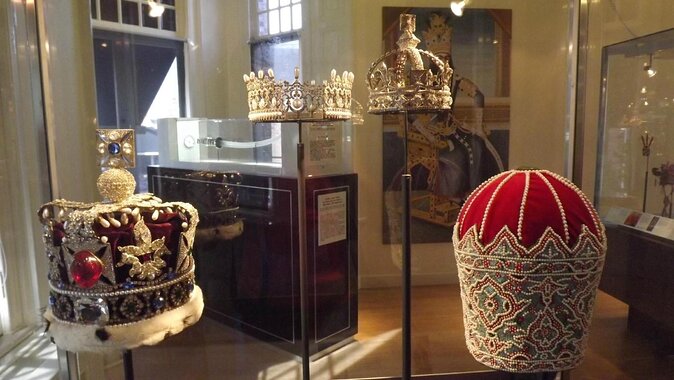
- Royal crowns and famous stones: You can see diamond artifacts, royal jewelry, crowns, and references to the Cullinan and Koh-I-Nor.
- Working diamond craft: Goldsmiths and stone polishers may be visible at work, with an additional diamond factory nearby mentioned as part of some visits.
- A playful diamond heist game: The upper area includes an interactive game with a Mission Impossible feel.
- A short visit with mixed presentation quality: The material can be informative, but some content may be incorrectly labeled and older listening devices may not work.
Finding the Diamond Museum at Museum Square
The Diamond Museum Amsterdam is in one of the easiest cultural areas of the city to reach. You will find it at Museum Square, between the Rijksmuseum and Van Gogh Museum. It is near public transportation, so you can make this a simple stop rather than a separate trip across Amsterdam.
That location is a real advantage. You can visit the museum before a major art collection, use it as a change of pace after paintings, or place it between other Museum Square stops. The museum does not need a full day. Allow about one to two hours, depending on how closely you read the displays and how long you spend with the interactive features.
The museum is open daily from 9 a.m. to 5 p.m., including weekends and holidays. That broad schedule gives you useful flexibility, especially if your Amsterdam plans are already packed.
Before you set out, make sure your admission code or ticket is easy to access. A few booking problems have involved missing QR codes and delays at the entrance while staff searched for reservations. I would save the ticket on your phone before leaving your hotel and check that the museum name and address match your plans.
More Museum Tours in Amsterdam
- Amsterdam: Van Gogh Museum Ticket
★ 4.7 · 52,054 reviews - Moco Museum Amsterdam Entrance Tickets with Banksy & More
★ 4.4 · 10,088 reviews - Amsterdam: The Upside Down Museum Entrance Ticket
★ 4.4 · 9,506 reviews
Starting 200 kilometers below the surface
The visit begins with the basic question: where do diamonds come from? The museum explains that these stones form roughly 200 kilometers below Earth’s surface through a process that takes billions of years.
That starting point gives the visit more shape than a simple jewelry display. You see the diamond as a natural object first, then follow the stages that turn it into a finished piece. The path includes formation, extraction, cutting, polishing, valuation, and setting.
I like this part because it helps you understand why two stones that look similar may have very different values. The displays introduce diamond types and the qualities that make them special and expensive. You get a practical introduction to the factors used to assess a diamond, rather than being asked to admire sparkle without context.
The subject also has a human side. One section deals with mining and the difficult conditions faced by people who work in the industry. That adds needed balance to the luxury setting. A diamond may end up on a crown or in an elegant necklace, but its story begins with geology, labor, and commercial decisions.
The museum presents this material through written displays, audiovisual content, and interactive areas. One short film helps set up the visit. After that, you move through the exhibits at your own pace.
From rough stone to polished jewelry
The next part follows the work done after a diamond reaches the market. You learn about cutting and polishing, the skills that shape a rough stone into something that catches and reflects light.
Amsterdam has a strong connection to diamond cutting. The museum is operated by Royal Coster Diamonds, and the displays refer to famous stones cut in Amsterdam by Coster polishers. These include the Cullinan, described as the largest diamond ever found, and the Koh-I-Nor, known as the Mountain of Light.
Those names add historical weight, but the museum’s real strength is showing the process. Diamond cutting is not simply a matter of making a stone smaller or prettier. A cutter must decide how to shape it, how to protect its value, and how to bring out its brilliance.
You may also see professional stone polishers and goldsmiths working on modern jewelry. This is one of the most praised parts of the experience. Watching skilled hands handle such valuable material makes the craft feel real in a way that a wall label cannot.
The exact level of activity may vary, so I would not book solely on the promise of a live demonstration. One appointment-based visit was expected to include personal instruction and a cutting demonstration, but instead offered a film and written explanations of the tools. The working area can still be interesting, but keep your expectations modest.
Some ticket holders also received access to a diamond factory two doors away. Treat that as a possible addition rather than a guaranteed separate tour unless it is clearly included with your booking. The supplied admission covers the museum entrance.
Crowns, replicas, and glittering displays
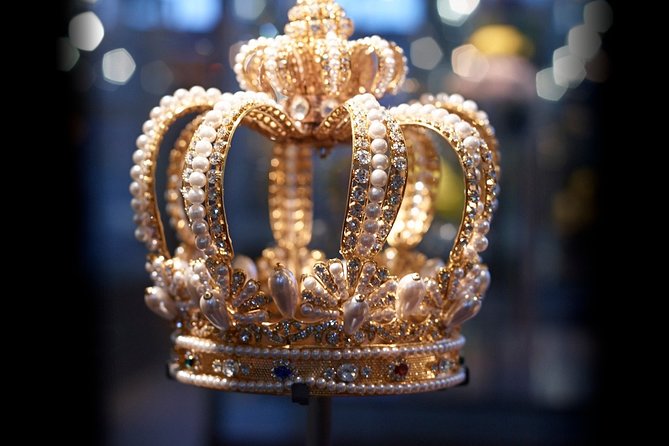
The jewelry displays provide the museum’s biggest visual payoff. You can see royal jewels, crowns, and diamond artifacts, including the smallest diamond ever cut. A diamond-covered version of van Gogh’s Starry Night adds a playful link to the nearby Van Gogh Museum.
The crowns are particularly memorable. Even if you are not a jewelry enthusiast, a royal crown gives you an immediate sense of how diamonds have been used to signal power, wealth, and rank. The pieces also make a useful contrast with the earlier displays about mining and craftsmanship.
There is an important qualification here. Not everything you see is an original, priceless diamond object. Some sections use reproductions and glass imitations. That may disappoint you if you expect every case to contain rare stones, but it also makes the museum easier to understand. Replicas can show famous designs and historical objects without the security and cost of displaying originals.
If your main goal is to see a large collection of genuine diamonds, the museum may feel limited. One low-rated experience described seeing very few actual diamonds. If you want a broad fine-jewelry collection, this is not the same as spending hours in a major art museum with room after room of original works.
The displays are best understood as a visual teaching tool. You are seeing examples of cuts, settings, royal styles, and diamond symbolism. The museum is less about the sheer number of stones and more about explaining how the industry turns a natural material into a luxury object.
A different kind of day out entirely:
- Amsterdam Classic Saloon Boat Cruise with Drinks and Cheese
★ 5.0 · 31,825 reviews - Amsterdam Luxury Canal Cruise + Unlimited Drinks & Bites option
★ 5.0 · 30,518 reviews - Amsterdam: Heineken Experience Ticket
★ 4.6 · 30,055 reviews - Amsterdam: Rijksmuseum Entry Ticket
★ 4.7 · 25,535 reviews
The diamond heist game and interactive features
The museum adds a playful element with a diamond heist game. The upper area has a Mission Impossible style, giving you a chance to do more than read labels and watch a film.
This feature is especially useful if you are visiting with a child or teenager. The museum’s geology and jewelry explanations may appeal more to adults, while the game gives younger visitors a clear activity to follow. It also breaks up the more traditional display sections.
The game should not be the only reason you buy the ticket. Its appeal depends on your interest in interactive challenges, and the visit remains fairly short. Still, it is a welcome touch and one of the more distinctive parts of the museum.
The audiovisual material is less consistent. A film introduces the museum, but some listening devices have reportedly been broken or in need of an update. I would plan to enjoy the written panels and objects even if an audio station is unavailable.
The museum has also been described as informative, with good photographs and some interactive rooms. That combination makes it easier to move at your own pace. You are not tied to a guide’s schedule, but you also should not expect a staff member to explain every case personally.
How much time should you allow?
The stated duration is about one to two hours. That is enough time for the museum’s size and format.
You can move quickly in roughly an hour if you focus on the main film, crowns, famous diamonds, and the polishing area. Give yourself closer to two hours if you read the explanations, try the interactive sections, and spend time with the diamond heist game.
The compact scale is both a strength and a weakness. I like it as a manageable break in a busy Amsterdam day. You do not need to commit half a day, and it is easy to combine with nearby museums.
On the other hand, the building may feel cramped. That can be uncomfortable for anyone with mobility concerns, and it may make busy periods less pleasant. The available information says most people can participate, but the physical space is not described as spacious or especially easy for those who are physically challenged.
There is no food or drink included. That is not a serious issue for such a short visit, since Museum Square and central Amsterdam offer plenty of places to eat, but plan your café stop separately.
Is the $72 ticket good value?
At $72, the ticket deserves careful thought. The price may make sense if you value the central location, the diamond-making explanation, access to the craft area, and the chance to see royal crowns and unusual artifacts in one short visit.
The ticket is less convincing if you judge value by the number of original diamonds or the length of the experience. The museum can take only an hour, and some exhibits are replicas. A basic museum admission at this price feels expensive compared with a longer cultural attraction.
Your decision should depend on your interests. If diamonds, jewelry, royal objects, or luxury craft are high on your list, the museum offers a focused introduction. If you are visiting Amsterdam for major art collections, you may prefer to spend your limited time at the Rijksmuseum or Van Gogh Museum next door.
I would also consider the ticket as part of a Museum Square plan rather than as a stand-alone destination. Its location reduces wasted time, and the visit gives you a different subject after several hours of paintings. That improves the value.
Free cancellation is available if you cancel at least 24 hours before the start time. Cancellations within 24 hours are not refunded, and changes during that period are not accepted. Keep that deadline in mind if your Amsterdam schedule is still uncertain.
Who will enjoy this museum most?
I would recommend it most strongly to people who are curious about how diamonds are made, valued, and turned into jewelry. The museum gives you more than a case of sparkling objects. It explains the chain from geology to finished design.
Families may also enjoy the mix of film, photographs, interactive rooms, crowns, and the heist game. The playful features can help keep the visit moving, although younger children may not care much about the technical explanations.
Jewelry buyers may find the information useful, but remember that admission does not include food, drinks, or a purchase. One person paired the visit with buying diamond earrings and felt happy with the investment. That is a personal shopping result, not a reason to assume every purchase will be good value. If you buy jewelry, take your time and ask clear questions about the stone and setting.
The museum may be less satisfying for you if you want a grand, quiet gallery filled entirely with original masterpieces. It is small, partly self-guided, and its displays include imitations. It is also not ideal if you need generous space or depend on every audio device working.
Language support may be another consideration. One visitor specifically found no French booklet and little staff help. Since the museum’s approach relies heavily on written material and self-guided viewing, confirm available language options if that matters to you.
Practical tips for a smoother visit
Visit early in the day if you prefer a calmer experience. Opening begins at 9 a.m., and the daily schedule includes weekends and holidays.
Save your QR code before you arrive. Since there have been entrance delays caused by missing codes and confusion over the correct location, check your confirmation carefully. The museum is at Museum Square, and a separate diamond facility nearby can cause confusion if directions are unclear.
Pair the museum with one nearby attraction, not several demanding ones. A morning at the Rijksmuseum followed by this compact visit can work well. You can also visit the Diamond Museum first, then continue to the Van Gogh Museum.
Allow time to watch the polishing or goldsmith work if it is taking place. This is the closest thing to a live craft demonstration, and it gives the visit a practical focus.
Do not rush past the mining section. The luxury displays are more meaningful when you have considered the labor and difficult conditions connected with diamond production.
Finally, approach the crowns and replicas with the right expectations. You are getting an introduction to diamond culture, craft, and display, not a vault tour filled only with priceless originals.
Should you book the Diamond Museum Amsterdam?
Book it if you want a short, central, family-friendly museum about diamonds, especially if you are interested in royal jewelry, cutting techniques, and the history of Amsterdam’s diamond trade. The crowns, famous-stone references, working polishers, and heist game give the visit several different moods.
Skip it if $72 feels high for one to two hours, or if you want a large collection of authentic diamonds and a personal guided demonstration. The museum has useful information and an excellent location, but its small rooms, replicas, dated audiovisual equipment, and occasional ticket confusion keep it from being an essential Amsterdam sight.
For the best value, fit it between the Rijksmuseum and Van Gogh Museum, confirm your entry code, and treat the Diamond Museum as a focused cultural stop rather than a full-day attraction.
FAQ
Where is the Diamond Museum Amsterdam?
It is located at Museum Square, between the Rijksmuseum and the Van Gogh Museum in Amsterdam, Netherlands.
How long does a visit take?
The visit takes approximately one to two hours, depending on how closely you study the displays and use the interactive features.
What are the museum’s opening hours?
The museum is open daily from 9 a.m. to 5 p.m., including weekends and holidays.
What does the admission ticket include?
The ticket includes entrance to the Diamond Museum Amsterdam.
Are food and drinks included?
No. Food and drinks are not included with the admission ticket.
Can I watch diamonds being polished?
You may be able to watch professional stone polishers and goldsmiths working. Some visits also included access to a diamond factory two doors away, but confirm that detail with your booking.
Can I cancel for a full refund?
Yes. You can cancel at least 24 hours before the experience start time for a full refund. Cancellations or changes made within 24 hours are not accepted and are not refunded.
Just added in Amsterdam
- Private Tour Zaanse Schans Windmills and Volendam in Jaguar★ 5.0 · 10 reviews
- Half-Day Private Guided Sightseeing Tour of Zaanse Schans★ 5.0 · 14 reviews
- Zaanse Schans and Giethoorn Unique Day Trip with Boat Cruise★ 4.5 · 17 reviews
- Windmills-Volendam-Giethoorn Private Tour in Jaguar★ 5.0 · 2 reviews
- Best of Netherlands: Zaanse Schans Mills, The Hague & Rotterdam★ 4.5 · 10 reviews
- Zaanse Schans Private Tour Windmills★ 5.0 · 18 reviews
- Zaanse Schans Windmills Edam Volendam and Marken from Amsterdam★ 5.0 · 1 review
- Zaanse Schans Edam Volendam Private Day Tour from Amsterdam★ 5.0 · 3 reviews
Museums, compared.

Moco Museum Amsterdam Entrance Tickets with Banksy & More
Read our review →


Amsterdam’s Weirdest Museum: Believe It or Not!
Read our review →
Browse the lists this tour appears in