

Review · MUSEUMS
Garderen: Sandsculpture Exhibition Entry Ticket
Amsterdam, carved grain by grain. This Garderen exhibition turns 750 years of city history into detailed sand scenes, from a small fishing village to a major trade center. I like the clear historical storyline, and I like that your ticket also covers the wider Beeldentuin and garden.
The main consideration is time. The sand sculpture portion takes about three hours, so this is not a quick roadside stop. The exhibition is best for families, art lovers, and anyone who wants an easy, visual introduction to Amsterdam’s past rather than a standard museum visit.
In This Review
- Key points to know before you go
- Amsterdam’s story, told one handful of sand at a time
- From fishing village to major trading city
- The Golden Age and Amsterdam’s famous canals
- Daily life makes the history easier to understand
- Wartime resilience and the city’s later chapters
- Interactive displays add useful context
- De Beeldentuin and garden add value to the ticket
- How long to stay, and how to use your time
- Is $15 good value?
- Accessibility and practical comfort
- Who will enjoy this most?
- Should you book the Garderen sand sculpture exhibition?
- FAQ
- Where is the sand sculpture exhibition located?
- How long does a visit usually take?
- What does the ticket include?
- Is the park wheelchair accessible?
- What languages are available?
- Can I cancel my booking?
- What should I bring?
Key points to know before you go

- Amsterdam’s story in sand: Follow the city from its early beginnings through the Golden Age, canal building, wartime hardship, and modern life.
- A three-hour visit: Plan enough time to study the fine details instead of rushing from scene to scene.
- One ticket covers more: Entry includes the sand sculptures, Beeldentuin, and garden.
- Good for mixed-age groups: Art, history, and large-scale scenes give children and adults different things to notice.
- Easy for many visitors: The full park is wheelchair friendly, and support is available in Dutch, English, and German.
- A small musical welcome: One group was greeted with music playing, a pleasant touch that can add warmth to the arrival.
Amsterdam’s story, told one handful of sand at a time

The appeal here is simple. You get a history lesson without rows of display cases or long blocks of text. The artists use sand to create scenes that show how Amsterdam changed over time, giving you a visual thread to follow as you walk through the exhibition.
That makes this a useful choice if you are visiting the Netherlands with children. A child may not care much about the growth of a trading city, but a sand-built street scene or famous landmark gives the story a shape. You can point out what is happening, then connect it to the short facts and interactive displays nearby.
I also like the sense of scale. Sand sculptures can look fragile, yet the exhibition presents them as full scenes with people, buildings, and historic moments. You will want to look closely, since the small details often carry as much interest as the larger forms.
More Museum Tours in Arnhem:
- Kröller-Müller Museum Entrance Ticket
★ 4.4 · 241 reviews - Oosterbeek: Airborne Museum Hartenstein Entry Ticket
★ 4.7 · 58 reviews - Arnhem: Dutch Open Air Museum Entry Ticket
★ 4.7 · 6 reviews
From fishing village to major trading city
The exhibition begins with Amsterdam’s early origins as a fishing village. That opening matters because it gives you a starting point for the city’s later growth. Amsterdam did not appear fully formed as a famous European capital. Its development came in stages, and the sculptures help make that change easy to see.
As you move forward, the story turns to Amsterdam as a trade center. The scenes show a city shaped by commerce, work, and connections beyond its own streets. You might find it helpful to pause here and compare the modest early setting with the larger urban world that follows.
This part should appeal to adults who want more historical context, but it remains accessible to younger visitors. The visual approach keeps the material moving. You do not need to arrive with detailed knowledge of Dutch history to understand the basic sequence.
The Golden Age and Amsterdam’s famous canals
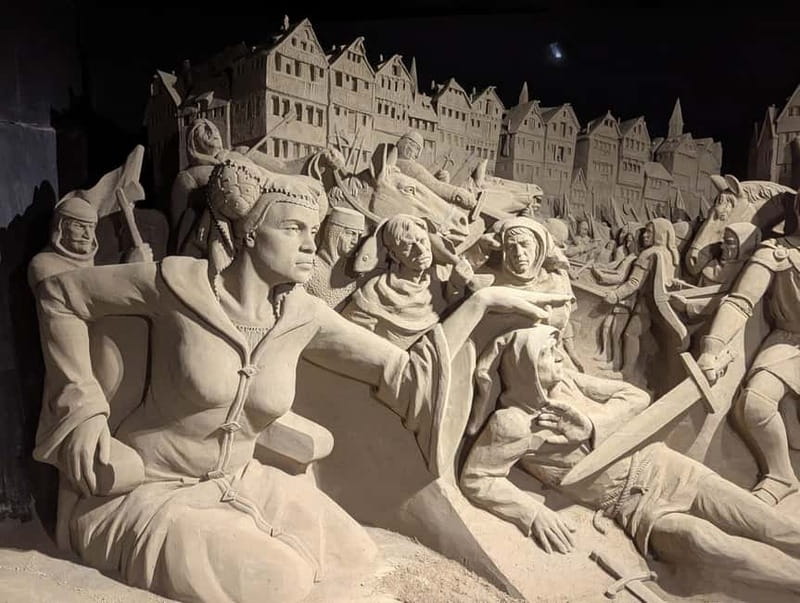
The Golden Age receives its own attention, as you would expect from an exhibition focused on Amsterdam. This period is presented through detailed scenes of the city’s prosperity, public life, and growing importance. The sculptures give you a chance to see the period as more than a date in a textbook.
The canal construction is another major highlight. Amsterdam’s canals are among the city’s most recognizable features today, and the exhibition shows how their creation became part of the city’s development. Seeing the canals represented in sand adds a useful layer to your understanding of the urban plan.
I would spend extra time with these scenes. Look at the buildings, the people, and the way the city is arranged. The exhibition is not just about spotting famous landmarks. It also shows daily life and the work behind Amsterdam’s growth.
Daily life makes the history easier to understand

The most effective historical displays often show ordinary people, not only grand events. Here, detailed scenes of daily life help connect Amsterdam’s larger story to human activity. You can see the city as a place where people lived, worked, traded, traveled, and adapted.
That detail is one reason I think the exhibition works well for families. You can turn the visit into a simple search game by asking children to notice people, buildings, tools, or small actions in each scene. The information remains educational, but it does not have to feel like homework.
For adults, the daily-life scenes provide useful balance. Famous landmarks are easy to recognize, but ordinary street scenes explain how a city actually functions. They also give you more to study after the first impression of the larger sculptures fades.
A few more options to weigh up in Arnhem
- Apeldoorn: Het Loo Palace Entry Ticket
★ 4.4 · 277 reviews - Rhenen: Ouwehands Zoo Entry Ticket
★ 4.6 · 126 reviews - Otterlo: De Hoge Veluwe National Park Entry Ticket
★ 4.5 · 97 reviews - Arnhem: Burgers’ Zoo Entry Ticket
★ 4.7 · 88 reviews
Wartime resilience and the city’s later chapters

Amsterdam’s past was not only prosperous. The exhibition also covers wartime experiences and the city’s resilience during difficult periods. This gives the presentation a more balanced tone and prevents it from becoming a parade of attractive buildings and successful eras.
The wartime section may carry more emotional weight than the earlier scenes. You should allow time to read the related facts and take in the subject at your own pace. Since the exhibition uses art to present history, it offers an approachable way to discuss difficult events with older children and teenagers.
The story then continues toward modern Amsterdam. That final movement helps you connect the historic city with the place you may know today. It also shows that Amsterdam is not frozen in its Golden Age image. Cities keep changing, and the exhibition makes that ongoing development part of the visit.
Interactive displays add useful context

Sand sculptures provide the visual centerpiece, but the interactive displays help explain what you are seeing. Use them to fill in the gaps between the large scenes. If you already know Amsterdam well, these displays can add small facts and reminders. If you are new to the city, they help establish the basic timeline.
I would not rush through the information panels or interactive elements. The average visit is about three hours, so the schedule gives you room to stop, read, and return to a sculpture you did not fully notice at first.
At the same time, the experience is not described as a guided tour with a fixed spoken presentation. You are free to explore at your own speed. Dutch, English, and German support is available, which makes the visit easier for a broad range of visitors.
De Beeldentuin and garden add value to the ticket
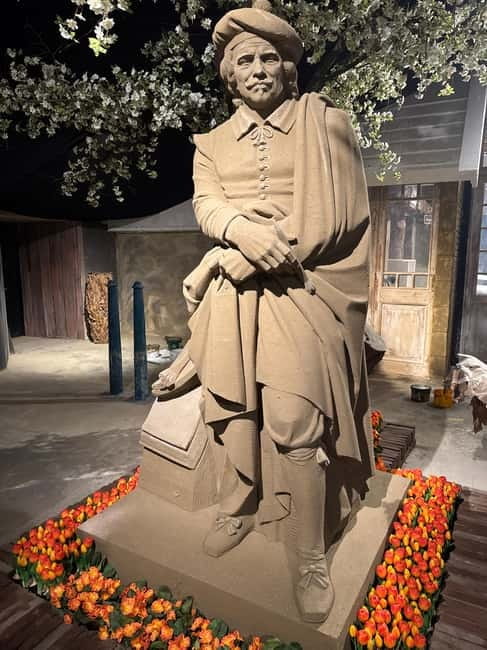
Your admission includes free entry to the Beeldentuin and garden, not only the sand sculpture exhibition. This is important when you judge the $15 price. You are paying for a larger outing rather than a single indoor display.
The extra garden space gives you a natural change of pace after the historical scenes. Three hours of close looking can be tiring, especially for younger children. Having the wider park included lets you slow down and enjoy the setting without buying a second ticket.
The supplied information does not list every garden feature, so I would not plan your day around specific sculptures or facilities beyond what is confirmed. Think of the garden as an included extension of the visit, useful for making the outing feel less confined and more flexible.
How long to stay, and how to use your time

The stated average duration for the sand sculptures is three hours. That is a substantial visit, and it tells you something about the exhibition’s scale and level of detail. If you only have thirty minutes, you will likely see the main idea but miss much of the history.
I suggest allowing the full three hours if you enjoy art or want to read the historical material. Families may prefer a shorter sculpture visit followed by time in the garden. Since the ticket is valid for one day, you have flexibility within the available opening schedule, but check the current availability for starting times before you go.
Bring a camera. Sand art is temporary by nature, and photographs help you remember the scenes after the exhibition ends. Take care with close-up shots, though, since the fine work is easiest to appreciate when you pause rather than simply collect quick pictures.
Is $15 good value?
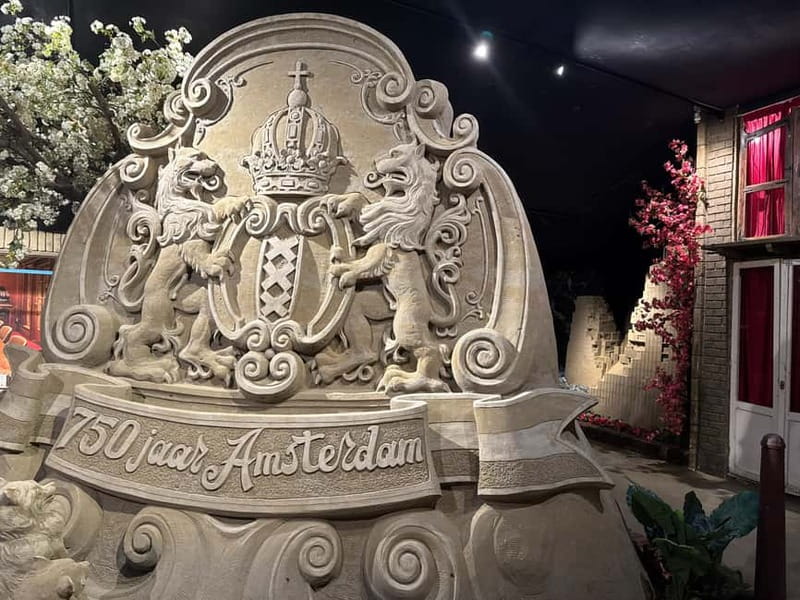
At $15 per person, the ticket is reasonably priced for an attraction that combines an estimated three-hour exhibition with access to the Beeldentuin and garden. The value is strongest if you plan to spend several hours at the site and make use of the included park.
The price may feel less attractive if you only want a brief look at sand sculptures. This is not a quick photo stop with a ten-minute circuit. The exhibition is designed for a slower visit, and the ticket makes more sense when you treat it as a half-day activity.
The flexibility also helps. You can reserve now and pay later, and cancellation is free up to 24 hours in advance for a full refund. Those terms are useful if your schedule around Gelderland is still changing, though you should always check the current booking conditions when reserving.
Accessibility and practical comfort
The full park is wheelchair friendly, including the garden area. That makes this a practical choice for visitors who need step-free access throughout the site. The information provided does not list specific restroom, seating, or transport details, so check those points directly if they are important for your plans.
The available languages are Dutch, English, and German. That covers the main information needs for many international visitors, and it means you can approach the historical material without needing to translate every detail yourself.
Alcohol and drugs are not allowed, and nudity is prohibited. These are straightforward park rules. The main thing to bring is a camera, along with enough time to enjoy the sculptures properly.
Who will enjoy this most?
I would recommend the exhibition to families looking for an activity with both entertainment and educational value. Children can focus on the figures and buildings, while adults can follow the historical changes and discuss what the scenes represent.
It also suits visitors who have already seen Amsterdam and want a different way to think about the city. The exhibition presents familiar landmarks alongside the events and daily routines that shaped them. You may come away with a better sense of how Amsterdam developed, not just a list of places to photograph.
Art lovers should enjoy the craftsmanship, particularly if they like work that rewards close attention. The exhibition is less suitable for someone who dislikes historical displays or expects a guided tour packed with live commentary. Its strength is visual storytelling and self-paced exploration.
One group was welcomed with music playing, which suggests that special group arrivals may sometimes have an extra bit of atmosphere. I would not count on music as a standard feature, but it is a pleasant detail to keep in mind if you are arranging a group visit.
Should you book the Garderen sand sculpture exhibition?
Book it if you want a relaxed, family-friendly outing that links art with Amsterdam’s past. The combination of a three-hour sand sculpture exhibition, interactive information, and included garden access gives the $15 ticket solid value.
Skip it if your schedule is extremely tight or if you only want a conventional museum with original historic objects. This is a crafted interpretation of history, not an archive. For the right visitor, that is precisely the charm: Amsterdam’s story becomes large, visual, and easy to share.
The high overall rating of 4.9 from 24 reviews supports the attraction’s appeal, while the single detailed comment about a musical group welcome adds one memorable note. I would plan it as a half-day stop in Garderen, bring a camera, and leave room for both the sculptures and the garden.
FAQ
Where is the sand sculpture exhibition located?
It is located at De Beeldentuin in Garderen, in Gelderland, Netherlands.
How long does a visit usually take?
The average visit to the sand sculpture exhibition lasts about three hours.
What does the ticket include?
The ticket includes entry to the sand sculpture exhibition, plus free entry to the Beeldentuin and garden.
Is the park wheelchair accessible?
Yes. The full park is wheelchair friendly.
What languages are available?
Support is available in Dutch, English, and German.
Can I cancel my booking?
Yes. You can cancel up to 24 hours in advance for a full refund.
What should I bring?
Bring a camera so you can photograph the sand sculptures and details that catch your eye.
Just added in Arnhem
- Exciting Murder Mystery – Interactive city walk in Arnhem★ 4.5 · 3 reviews
- Discover Arnhem with a self-guided Outside Escape city game tour!★ 5.0 · 8 reviews
- e-Scavenger hunt Arnhem: Explore the city at your own pace★ 4.0 · 19 reviews
- Arnhem Self Guided Sherlock Holmes Murder Mystery Game★ 4.5 · 5 reviews
- 6 Hour Battle of Arnhem Tour by Car with Private Guide★ 5.0 · 6 reviews
- 2,5 hour Battle of Arnhem Tour with Private Guide★ 5.0 · 16 reviews
- 1,5 hour private guided Mural Street Art tour in Arnhem★ 5.0 · 5 reviews
- 1,5 hour private guided Highlights of Arnhem City Walk★ 5.0 · 1 review
Museums, compared.

Moco Museum Amsterdam Entrance Tickets with Banksy & More
Read our review →


Amsterdam’s Weirdest Museum: Believe It or Not!
Read our review →

Browse the lists this tour appears in