
Review · WALKING TOURS
Walking Tour about Golden Age Architecture, private local guide
Amsterdam’s buildings tell better stories than postcards. This private 90-minute walk connects Golden Age houses, bridges, warehouses, and churches while a local guide explains the engineering and people behind them. I especially like the private format, which gives you room to ask questions, and the focus on details most casual walks pass by. The main drawback is simple: you will be on your feet almost the entire time.
I also like the route’s useful finish near Westerkerk and the Anne Frank House, where you can continue sightseeing without crossing the city again. Guide Anna is praised for clear English, patience with questions, photo stops, and practical recommendations. At $73.59 per person, the price makes the most sense for a small group that wants architecture rather than a quick checklist of landmarks.
In This Review
- Key points at a glance
- Why Amsterdam’s Golden Age buildings deserve a closer look
- Dam Square and the city’s rise to power
- The Royal Palace and the problem of building on clay
- Huis Bartolotti and the canal house as a status symbol
- Torensluis, crooked houses, and four façade styles
- De Dolphijn and the man behind The Night Watch
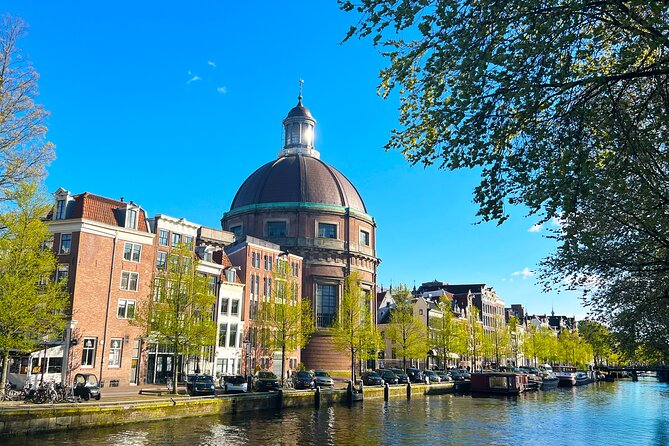
- Ronde Lutherse Kerk and the ambition of a dome
- Prinsengracht warehouses and the practical side of trade
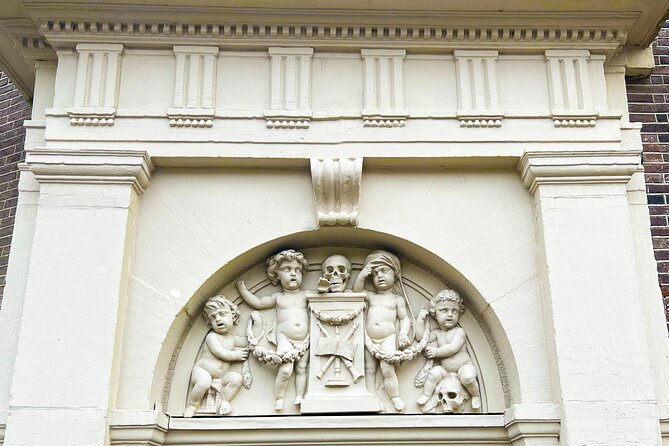
- Jordaan and the stories carved into gevelstenen
- Westerkerk, Anne Frank’s clock, and the finish near the canal
- What the private format is worth at $73.59
- Pace, meeting point, and who should book
- Should you book this Amsterdam architecture walk?
- FAQ
- Where does the tour start?
- Where does the tour end?
- How long is the experience?
- What language is the tour offered in?
- Is this a private tour?
- What is included in the price?
- Is bottled water included?
- Are admission tickets included?
- Is the tour suitable for people with mobility limits?
- Are service animals allowed?
- Can I cancel for a full refund?
Key points at a glance
- Nine stops in 90 minutes: The route covers Dam Square, canal houses, Torensluis, Prinsengracht, Jordaan, and Westerkerk.
- Private attention from a local guide: Your group has the guide to itself, making questions and photo pauses easier.
- Architecture with engineering behind it: You learn how grand buildings were supported on Amsterdam’s soft, marshy ground.
- Small details become the main event: Facade stones, crooked houses, hoisting beams, domes, and canal gables all get proper attention.
- A strong route for first-time orientation: The walk begins near the Royal Palace and ends by Westerkerk and the Anne Frank House.
- Plan for steady walking: It is not recommended for people who use a walker or have trouble standing for 1.5 hours.
Why Amsterdam’s Golden Age buildings deserve a closer look
Amsterdam can be easy to admire without really seeing it. You notice the canals, narrow houses, leaning façades, and bicycle traffic, then move on. This tour asks you to pause and ask why the city looks this way.
The central subject is Amsterdam’s 17th-century Golden Age, when trade made the city a major international center. Wealth shaped the grand houses along the canals, but it also shaped warehouses, bridges, churches, and modest homes in working districts. The result is not one neat architectural style. It is a record of merchants, craftsmen, engineers, religious communities, and city planners all working within tight urban limits.
I like that the tour does not treat architecture as a parade of pretty fronts. You hear about building materials, construction methods, the use of space, and the people who owned or occupied these buildings. That gives you a better way to read Amsterdam for the rest of your stay.
The route covers nine stops in roughly an hour and a half. Stop times range from five to 20 minutes, so the pace is brisk but not designed as a long interior visit. Admission is free at the listed stops, and the value comes from the guide’s explanations rather than entry tickets.
More Walking Tours in Amsterdam
- Anne Frank’s Story – Guided Walking Tour through Amsterdam
★ 5.0 · 11,619 reviews - Amsterdam: Life of Anne Frank and World War II Walking Tour
★ 4.8 · 10,467 reviews - Absolutely Amsterdam – the Essential Introductory Walking Tour
★ 5.0 · 3,629 reviews
Dam Square and the city’s rise to power
The walk begins with an introduction to Amsterdam’s past at Dam Square. This is the right place to set the scene because the square connects the city’s political, commercial, and royal identity.
You learn how Amsterdam grew during the 17th century and how trade helped fund the buildings you will see later. The opening lasts about five minutes, so it is not a long lecture. Instead, it gives you the basic frame for understanding why so many ambitious structures appeared in a city built on wet ground.
The meeting point is listed at the Royal Palace Amsterdam, at Nieuwezijds Voorburgwal 147. The first discussion focuses on Dam Square, so check the exact meeting instructions before setting out and allow enough time to find the palace area.
For a first visit, this opening is useful because it turns a familiar public square into a starting point for the whole city’s story. You are not just looking at an important square. You are learning why Amsterdam had the money and confidence to reshape itself.
The Royal Palace and the problem of building on clay
The Royal Palace Amsterdam gets about 10 minutes, making it one of the longer stops. Its original purpose matters: it began as Amsterdam’s town hall during the Golden Age, not as a royal residence.
That change tells you something about the city’s success. A municipal building could be designed with the scale and grandeur of a national monument because Amsterdam had become a powerful trading center. Later, the building became a royal residence, adding another layer to its public identity.
The guide explains the Dutch Neoclassical style, along with the materials and techniques used in the palace. The most useful part may be the construction problem beneath your feet. Amsterdam’s soft, marshy ground made heavy masonry difficult to support, so the palace required careful engineering.
This is the kind of subject that improves the whole walk. Once you understand that major buildings needed serious structural solutions, the city’s architecture looks less like decoration and more like practical invention. The tour does not include an admission ticket, so you should expect an exterior-focused discussion here rather than a palace visit.
Huis Bartolotti and the canal house as a status symbol
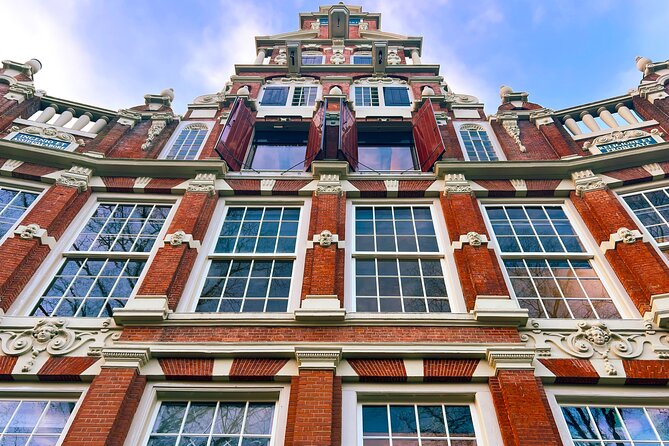
Huis Bartolotti is a short stop, but it gives you a close look at the decorative side of Golden Age wealth. The red-brick house has a graceful façade, large windows, and sculpted sandstone details.
Its appearance reflects the position of the original owner and his trading links with Italy. That connection helps explain why Amsterdam’s architecture could feel both local and outward-looking. The materials and ornament were part of a public display of success, but they also showed how trade carried ideas across Europe.
You may find this stop especially useful if you have been walking the canals and seeing rows of similar-looking houses. The guide helps separate the details: brick color, window proportions, sandstone carving, and the amount of decoration. Five minutes is enough for an introduction, though architecture fans may wish for more time to study the façade and take photographs.
A different kind of day out entirely:
- Amsterdam: Van Gogh Museum Ticket
★ 4.7 · 52,054 reviews - Amsterdam Classic Saloon Boat Cruise with Drinks and Cheese
★ 5.0 · 31,825 reviews - Amsterdam Luxury Canal Cruise + Unlimited Drinks & Bites option
★ 5.0 · 30,518 reviews - Amsterdam: Heineken Experience Ticket
★ 4.6 · 30,055 reviews
Torensluis, crooked houses, and four façade styles
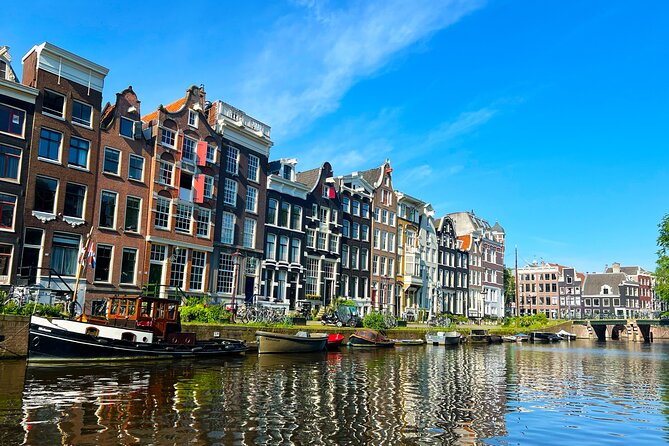
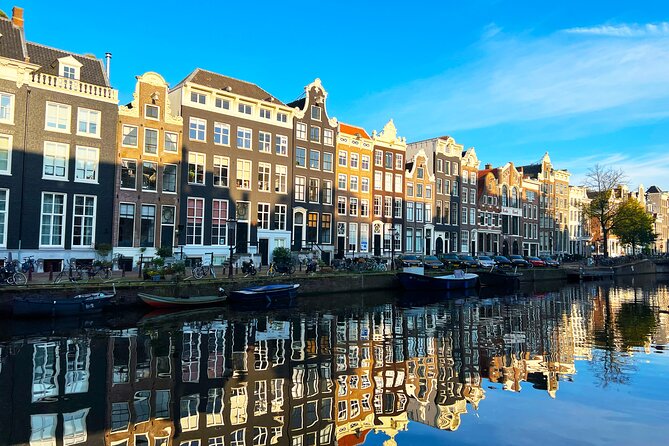
Torensluis is one of the best places on the route to compare Amsterdam’s house fronts. From this wide bridge, you can see four façade designs associated with the city’s mercantile class during the Golden Age.
The stop also explains how Baroque ideas were adapted in the Netherlands. Rather than copying grand southern European buildings, Dutch builders worked with narrow plots, local materials, and the practical needs of canal life. The result can be dramatic, but it remains tied to the street and the water.
Then look up and notice the crooked houses. Their angles are not simply a bit of old-city charm. Amsterdam’s soft ground has affected buildings over time, giving some façades a memorable lean. The guide presents these structures as examples of both local character and the challenges of building in this setting.
This is a good photography stop, but do not spend the whole time framing the famous angles. The useful lesson is in the comparison between façades. You begin to see that Amsterdam’s canal houses are not identical, even when they share the same narrow proportions.
De Dolphijn and the man behind The Night Watch
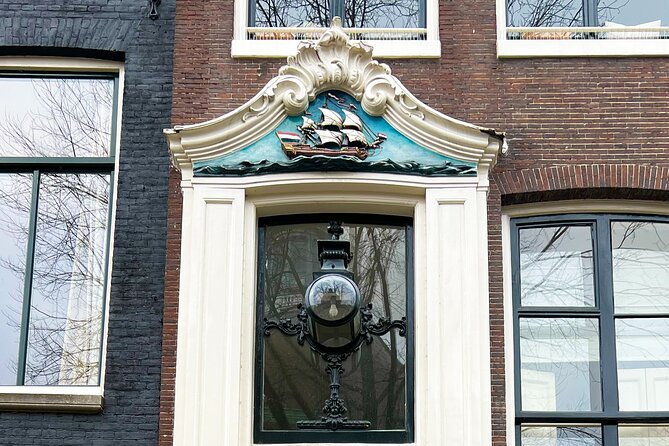
De Dolphijn adds a personal story to the architecture. The name refers to a dolphin, a symbol associated with wealth and Amsterdam’s maritime trade.
The house was originally owned by Frans Banning Cocq, the captain made famous by Rembrandt’s The Night Watch. That link gives the building more weight than its appearance alone. You are looking at a canal house connected to a recognizable figure from Amsterdam’s civic and artistic life.
The exterior’s elegance reflects the money and social position of its owner. At the same time, the story reminds you that these façades were homes, offices, and statements about the people who controlled trade and public life.
This five-minute stop works well as a bridge between architecture and biography. If you enjoy art history, the connection to Rembrandt will likely be a highlight. If you prefer construction details, it still helps show how a wealthy owner’s identity shaped the city’s built environment.
Ronde Lutherse Kerk and the ambition of a dome
The Ronde Lutherse Kerk introduces a different form from the narrow canal house. The tour points to the dome as a major architectural achievement of the Renaissance period.
This short stop is less about a long historical account and more about recognizing the technical and visual ambition of domed construction. In Amsterdam, a rounded roof and large-scale religious building offered a sharp contrast to the tightly packed houses lining the canals.
The stop lasts about five minutes, so expect a concise explanation. You may not spend time inside, and no admission is included. Still, the church helps break up the route with a clear example of how religious architecture could express confidence and skill in a city dominated by commercial buildings.
Prinsengracht warehouses and the practical side of trade
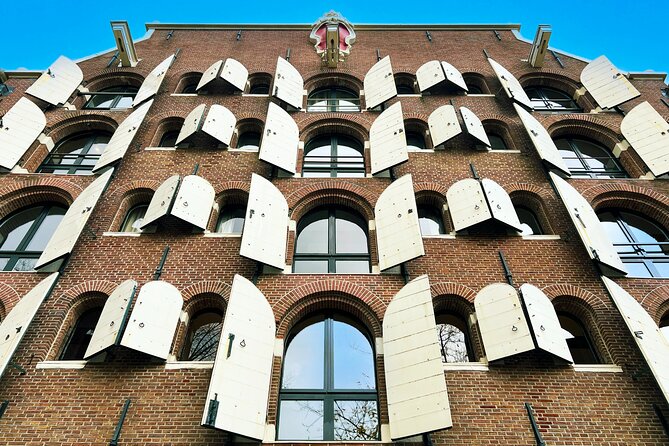
Along Prinsengracht, the focus shifts from grand homes to warehouses. These buildings show how trade shaped the city in very direct ways.
Look for steep gables, tall windows, and wooden hoisting beams near the roofs. Merchants used the beams to lift heavy goods from boats and move them into upper storage areas. The building’s narrow height was not an accident. It was a response to limited canal-front land and the need to store cargo efficiently.
The exteriors are often simpler than those of wealthy homes. That simplicity reflects purpose, while the scale still signals the power of the merchants who used them. You get a clearer picture of Golden Age Amsterdam when you see both sides of prosperity: the decorated residence and the working warehouse.
This stop lasts about five minutes, so keep your attention above street level. The hoisting beams are easy to miss if you are watching bicycles or canal traffic. I find this kind of explanation one of the tour’s best values because it changes ordinary streets into evidence of how the city worked.
Jordaan and the stories carved into gevelstenen
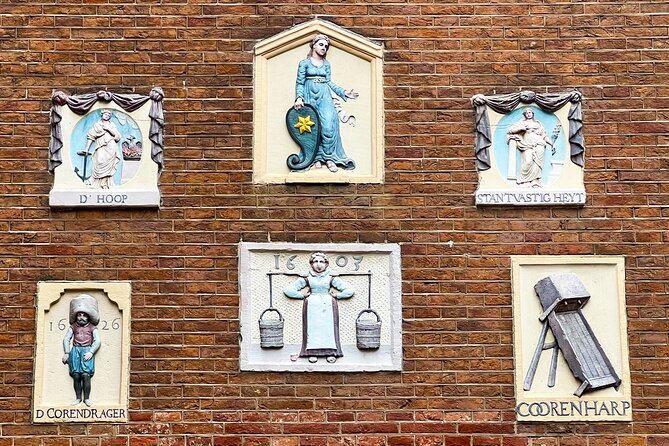
The Jordaan receives the longest stop, about 20 minutes. That extra time makes sense because the neighborhood offers a dense collection of small details.
In the 17th century, the Jordaan mixed homes, shops, and workshops. Craftsmen and laborers lived and worked among narrow canals and tightly packed buildings. It gives you a useful contrast with the grander canal houses associated with wealthy merchants.
The main focus here is the gevelstenen, or facade stones. These small plaques are built into building fronts and may show a trade, a symbol, a profession, or a fact about the people who lived there. Some are carved with considerable care, turning a practical marker into a small piece of public storytelling.
Anna is particularly good at pointing out details you could easily miss. Her clear English and willingness to answer many questions make this section well suited to curious visitors who want to stop and inspect the façades. You can also take photographs without feeling rushed, although the tour still has a fixed overall length.
I like the Jordaan section because it brings the history down to eye level. You are no longer studying only palaces and grand houses. You are looking at the signs that helped ordinary residents identify a building and its purpose.
Westerkerk, Anne Frank’s clock, and the finish near the canal
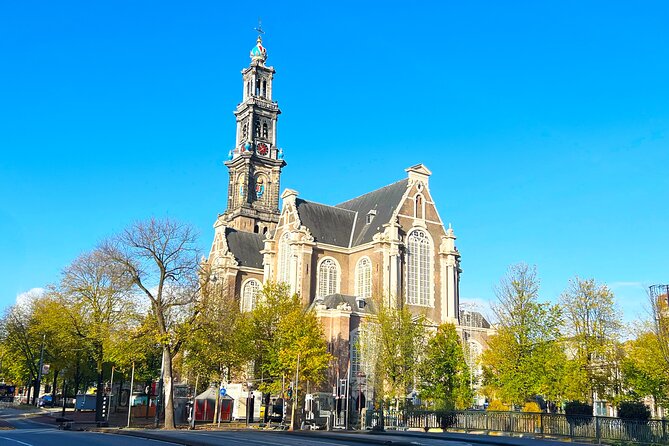
The tour ends at Westerkerk on Prinsengracht, near the Anne Frank House. This is a useful finish because you can continue with nearby sightseeing instead of returning to the starting point.
Westerkerk was built as a Calvinist church for Amsterdam’s growing population. Its simple, airy design reflects the character of Calvinist worship spaces, where restrained interiors mattered more than elaborate decoration.
The tower rises 85 meters, or about 280 feet, above the Jordaan. Its crown includes the imperial crown, a symbol linked with Amsterdam’s status. The clock’s chimes also carry a personal connection because Anne Frank described them in her diary.
The church is associated with Rembrandt as well, though the exact nature of that connection is part of the guide’s historical discussion. In any case, Westerkerk brings together religion, civic identity, music, art, and 20th-century memory in one final stop.
The final discussion lasts about five minutes. You should not expect a full church visit or tower climb as part of the tour. Instead, you get a concise explanation of why this landmark matters and a convenient end point beside one of Amsterdam’s most visited areas.
What the private format is worth at $73.59
At $73.59 per person, this is not the cheapest way to see Amsterdam’s center. It is also not paying for museum entry, food, drinks, or transport. Bottled water is not included, so bring your own.
The price is easier to justify if you are traveling as a small group and care about architecture. A private tour lets you ask about the buildings that catch your eye instead of following a fixed script for a large crowd. Anna has been praised for answering numerous questions, allowing photo pauses, and offering further sightseeing suggestions.
Group discounts are available, though the amount is not specified. Check the price for your group size before booking. The cost may feel high for a solo visitor, but it can offer better value when shared by several people who want a focused introduction.
The route also saves research time. You could find many of these buildings alone, but you would need to learn the design terms, ownership stories, construction challenges, and neighborhood context separately. If you want a quick orientation, a general city walk may be enough. If you want to understand what you are looking at, this tour makes a stronger case for its price.
Pace, meeting point, and who should book
The walk lasts about 1 hour and 30 minutes and is offered in English. It begins at the Royal Palace area and ends at Westerkerk, near the Anne Frank House. Both points are near public transportation, making the route practical for a day of central Amsterdam sightseeing.
You should wear comfortable shoes and be ready to walk and stand for the full period. The experience is not recommended for people who use a walker or have trouble walking and standing for 1.5 hours. Mobility aids are not available, though service animals are allowed.
The private setup suits couples, families, friends, and small groups with different interests. You can ask about social history, architecture, Rembrandt, building methods, or practical ideas for the rest of your day. Anna’s friendly approach is especially helpful if you prefer conversation over a formal lecture.
This is less suitable if you want interiors, museum admission, a relaxed café break, or a broad tour covering every major Amsterdam sight. It is a focused walk, and the 90-minute schedule keeps moving.
Should you book this Amsterdam architecture walk?
Book it if you want to look past the postcard view of Amsterdam. The best parts are the private attention, the stories behind the façades, the engineering on marshy ground, and the Jordaan’s carved facade stones.
I would choose it early in an Amsterdam stay, especially if you plan to spend more time along the canals afterward. The route gives you a useful visual vocabulary: hoisting beams, gables, Baroque details, domes, crooked houses, and gevelstenen.
Skip it if you dislike walking, need frequent seated breaks, or mainly want to enter famous buildings. For architecture fans and curious first-time visitors, the strong rating of 4.9 from 15 reviews and 100 percent recommendation record match the tour’s clear strengths: personal guidance, accessible explanations, and details you might otherwise walk past.
Free cancellation is available up to 24 hours before the start time. That gives you some flexibility, but changes or cancellations inside that window are not accepted for a refund.
FAQ
Where does the tour start?
The meeting point is Royal Palace Amsterdam, Nieuwezijds Voorburgwal 147, 1012 RJ Amsterdam, Netherlands.
Where does the tour end?
The walk ends at Westerkerk, Prinsengracht 279, 1016 DL Amsterdam, near the Anne Frank House.
How long is the experience?
The tour lasts approximately 1 hour and 30 minutes.
What language is the tour offered in?
The tour is offered in English.
Is this a private tour?
Yes. Only your group participates in the private activity.
What is included in the price?
A private guide is included.
Is bottled water included?
No. Bottled water is not included, so you should bring your own if needed.
Are admission tickets included?
The listed stops have free admission tickets. The tour focuses on exterior architecture and guided discussion.
Is the tour suitable for people with mobility limits?
It is not recommended for participants who use a walker or have trouble walking and standing for 1.5 hours. Mobility aids are not available.
Are service animals allowed?
Yes. Service animals are allowed.
Can I cancel for a full refund?
Yes, if you cancel at least 24 hours before the experience start time. Cancellations made less than 24 hours in advance are not refunded.
Just added in Amsterdam
- Private Tour Zaanse Schans Windmills and Volendam in Jaguar★ 5.0 · 10 reviews
- Zaanse Schans and Giethoorn Unique Day Trip with Boat Cruise★ 4.5 · 17 reviews
- Windmills-Volendam-Giethoorn Private Tour in Jaguar★ 5.0 · 2 reviews
- Half-Day Private Guided Sightseeing Tour of Zaanse Schans★ 5.0 · 14 reviews
- Best of Netherlands: Zaanse Schans Mills, The Hague & Rotterdam★ 4.5 · 10 reviews
- Zaanse Schans Private Tour Windmills★ 5.0 · 18 reviews
- Zaanse Schans Windmills Edam Volendam and Marken from Amsterdam★ 5.0 · 1 review
- Zaanse Schans Edam Volendam Private Day Tour from Amsterdam★ 5.0 · 3 reviews
Walking Tours, compared.

Anne Frank’s Story – Guided Walking Tour through Amsterdam
Read our review →
Life of Anne Frank and World War II Walking Tour
Read our review →
Absolutely Amsterdam – the Essential Introductory Walking Tour
Read our review →
Anne Frank Walking Tour – Guided in EN/DE/IT/ES
Read our review →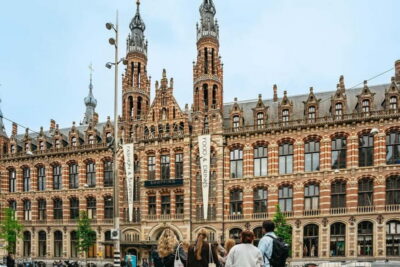
Anne Frank Walking Tour Amsterdam Including Jewish Cultural Quarter
Read our review →Browse the lists this tour appears in