
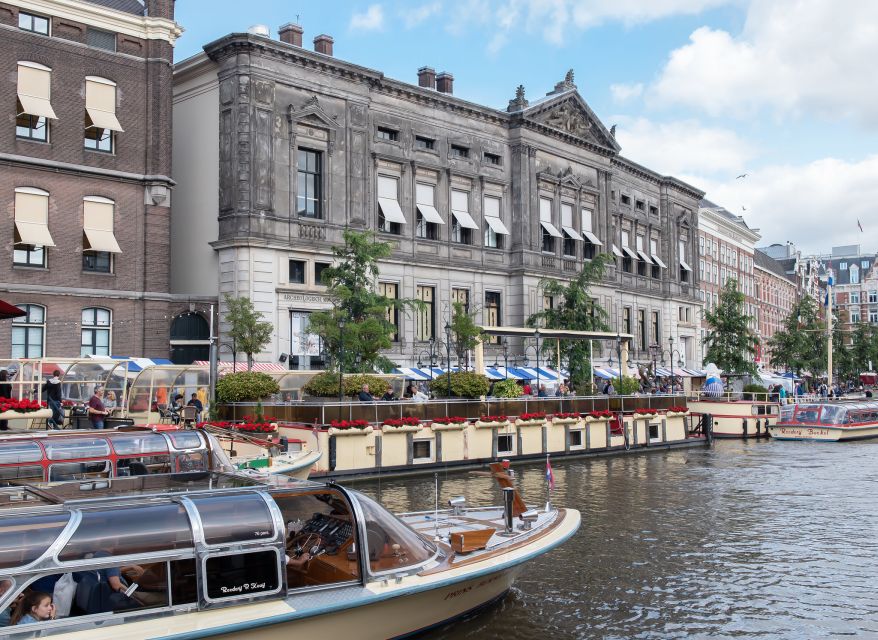
Review · HISTORICAL TOURS
Amsterdam: Allard Pierson Heritage Collections Entry Ticket
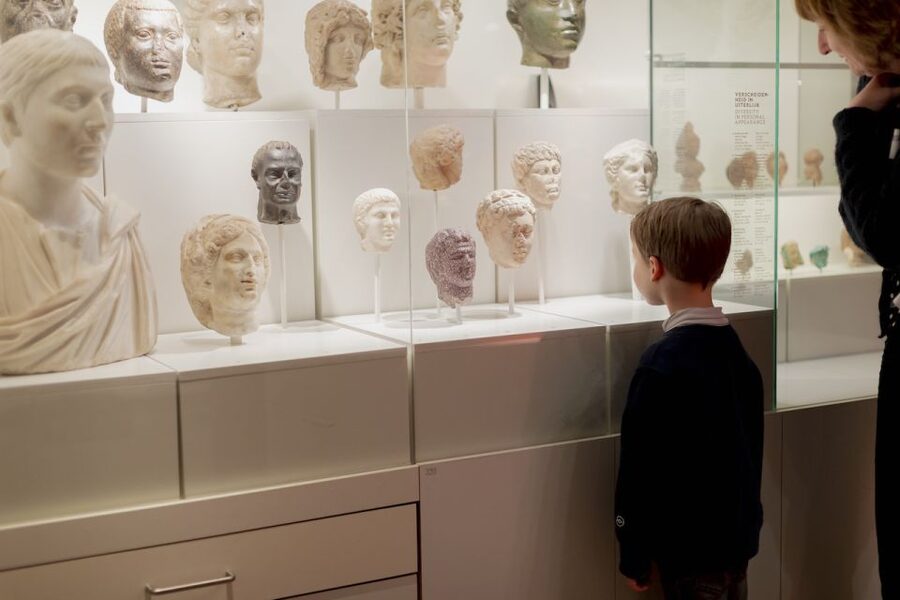
Ancient faces still look back. Amsterdam’s Allard Pierson brings together Egyptian objects, Greek pottery, Roman glass, medieval manuscripts, atlases, cookbooks, and much more under one roof. I like the way the museum links ancient curiosity with modern bookmaking, and I like the unusual range, from Assyrian merchants to Amsterdam theatre makers. The main drawback is that the museum may feel modest if you have already visited many specialist archaeology museums.
I especially appreciate the world-class map and atlas collection and the attic display of plaster casts from famous Greek and Roman statues. At $18, the ticket is fair if you plan to take your time with both the permanent and temporary exhibitions, but it is less convincing for a quick visit focused on only one small section.
In This Review
- Key points before you go
- Why the Allard Pierson feels different from a standard museum
- Start with the origins of writing
- Give the atlases and maps enough time
- Meet the ancient Egyptians and Sudanese collections
- Look up for the Greek and Roman plaster casts
- Face to Face and the people behind mummy portraits
- Books, manuscripts, cookbooks, and daily life
- How long should you spend inside?
- Is the $18 ticket good value?
- Who will enjoy this museum most?
- Practical details that affect your visit
- Should you book the Allard Pierson?
- FAQ
- How much does admission to the Allard Pierson cost?
- How long is the ticket valid?
- What does the admission ticket include?
- Is the Face to Face mummy portrait exhibition included?
- What languages are available?
- Is the museum wheelchair accessible?
- Can I cancel my booking?
- Do I have to pay when I reserve?
Key points before you go
- Ancient and modern stories share one museum: You move from the origins of writing to early industrial book production and Amsterdam’s own cultural past.
- The map and atlas collection is a major draw: The museum holds one of the largest collections of maps and atlases in the world.
- The plaster casts are displayed in an attic: This gives the classical sculpture collection a distinctive setting, and an audioguide is included.
- Egyptian and Sudanese collections add archaeological depth: Hieroglyphs, objects, and funerary material help place ancient lives in a wider setting.
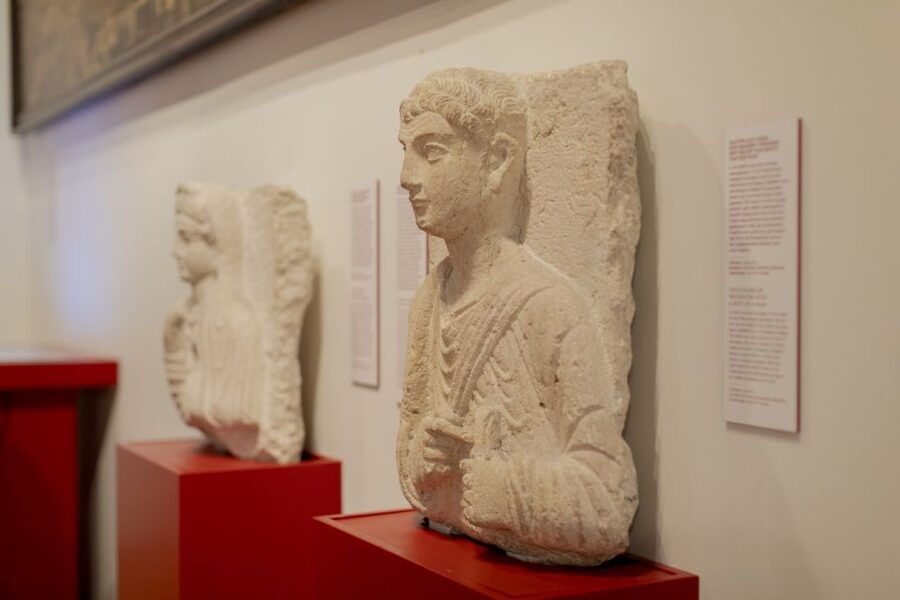
- Face to Face focuses on individual people: The temporary exhibition gathers about 38 Roman-period mummy portraits from collections around the world.
- The visit is flexible: Your ticket is valid for one day and includes the permanent and temporary exhibitions, museum shop, and cafe.
Why the Allard Pierson feels different from a standard museum
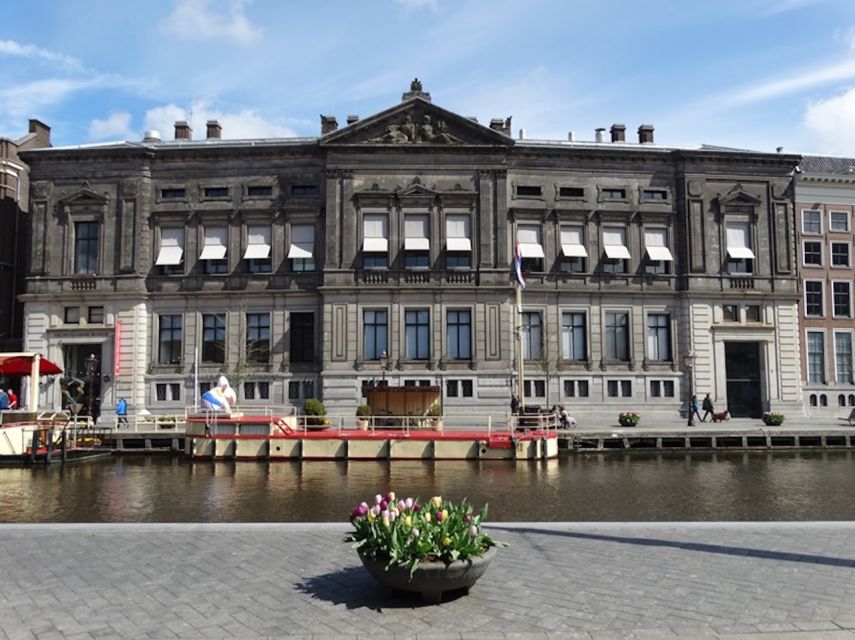
The Allard Pierson is not built around one famous monument or one narrow period. It is a museum about collecting, recording, making, and preserving human culture. That broad reach can be its greatest strength, though it also means you need to bring your own interests.
I like the central idea: the permanent presentation shows how the ancient world and the modern world affect one another. Writing begins with early systems of signs and symbols. Books change from hand-produced manuscripts to printed objects. Maps reveal how people understood places, trade, power, and distance.
This gives the museum a useful thread. You are not simply moving from one case of old objects to another. You can follow human curiosity through different materials and eras. An Egyptian hieroglyph, a medieval manuscript, a seventeenth-century atlas, and an industrially produced book all become part of the same story.
That approach suits you if you enjoy connections between subjects. It may suit you less if you want a tightly focused archaeological visit with room after room devoted to one ancient civilization.
More History Tours in Amsterdam
- Amsterdam Food and Cultural Tour with Tastings
★ 5.0 · 2,442 reviews - Amsterdam: Haunted History and Ghost Walking Tour
★ 4.5 · 488 reviews - Amsterdam High-End Dutch Food & History Tour – Up to 8 guests
★ 5.0 · 482 reviews
Start with the origins of writing
The permanent exhibition begins with one of humanity’s most important habits: recording information. Writing allowed people to preserve names, transactions, beliefs, laws, stories, and practical instructions beyond a single memory or conversation.
The museum uses this theme to connect ancient records with later books and printed material. You might find the display especially rewarding if you are interested in how physical objects carry ideas across time. The point is not only what a text says, but also how it was made, stored, copied, and used.
This is where the Allard Pierson gains real value. It treats books as historical objects, not just containers for words. You can consider the materials, the craftsmanship, and the changes brought by early industrial book production.
The book history of Amsterdam also gives the visit a local anchor. Amsterdam is often associated with canals, painting, and trade, but its role as a center of printing, publishing, and intellectual exchange matters just as much. The museum helps place the city in that wider story.
Give the atlases and maps enough time
The map and atlas collection is one of the strongest reasons to buy this ticket. It is described as one of the largest in the world, and the scale of the collection gives the museum a subject that feels both artistic and practical.
Maps are never only about geography. They show what people knew, what they believed, what they wanted to control, and what they left blank. An old atlas can be a scientific tool, a commercial product, a political statement, or a work of visual art.
I would not rush this part of the museum. Details on a map can reward slow looking, but a large collection can also become tiring if you try to absorb every object. Choose a few examples and ask what each one reveals about its maker and intended audience.
The atlas section is particularly useful for visitors who want something beyond the usual ancient statues and pottery. It also gives the museum a strong Amsterdam connection, since the city’s trading and publishing traditions helped make maps central to public life.
Meet the ancient Egyptians and Sudanese collections
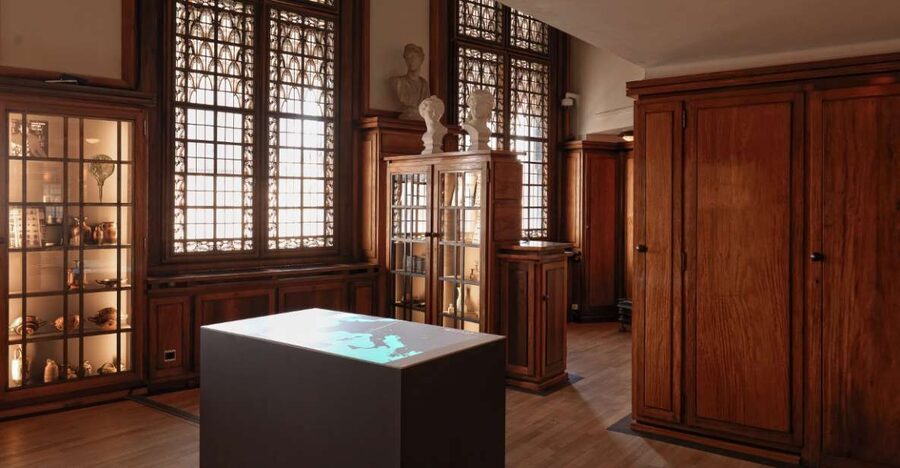
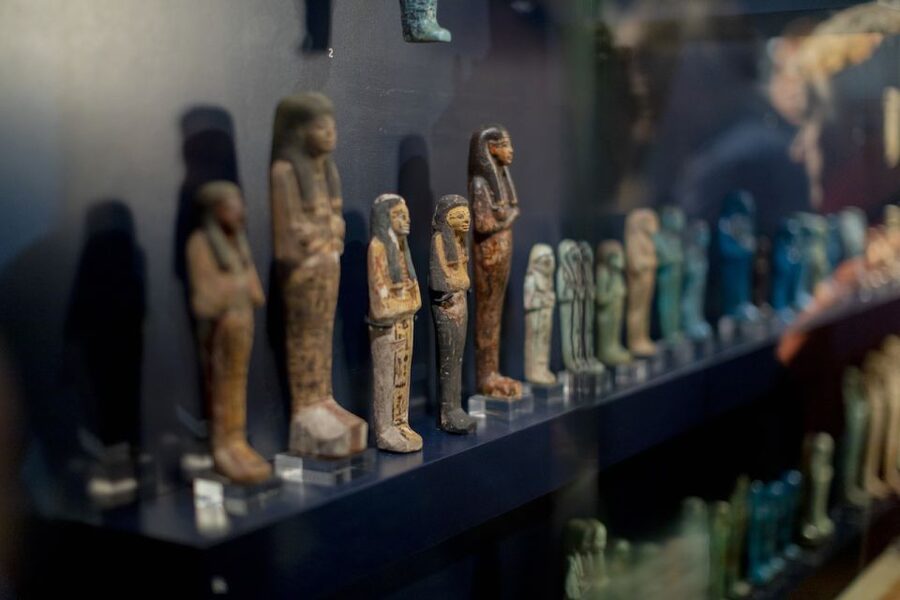
The Ancient Egyptian and Sudanese collections provide a more familiar archaeological experience, with objects connected to religion, daily life, writing, and death. Egyptian hieroglyphs are among the most immediately recognizable forms of ancient writing, yet the museum places them within a broader story of communication and belief.
I like the way this area can be read on two levels. You can look at individual objects for their visual appeal, or you can ask what they tell you about the people who made and used them. A piece of glass, pottery, or funerary material becomes a clue to technology, ritual, trade, or social life.
The Sudanese material widens the frame beyond the most familiar image of ancient Egypt. That matters because the Nile world was not a single culture with one center. The presence of Sudanese collections encourages you to look south as well as north.
The supplied information does not give a detailed room-by-room route, so I would allow yourself freedom here. Follow the labels that catch your interest, then move on before the range of objects begins to blur together.
A different kind of day out entirely:
- Amsterdam: Van Gogh Museum Ticket
★ 4.7 · 52,054 reviews - Amsterdam Classic Saloon Boat Cruise with Drinks and Cheese
★ 5.0 · 31,825 reviews - Amsterdam Luxury Canal Cruise + Unlimited Drinks & Bites option
★ 5.0 · 30,518 reviews - Amsterdam: Heineken Experience Ticket
★ 4.6 · 30,055 reviews
Look up for the Greek and Roman plaster casts
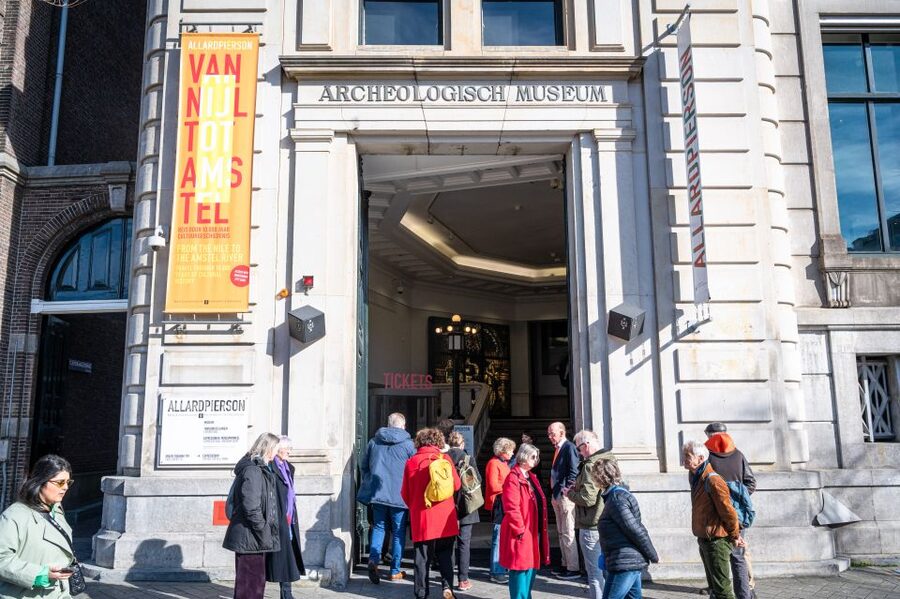
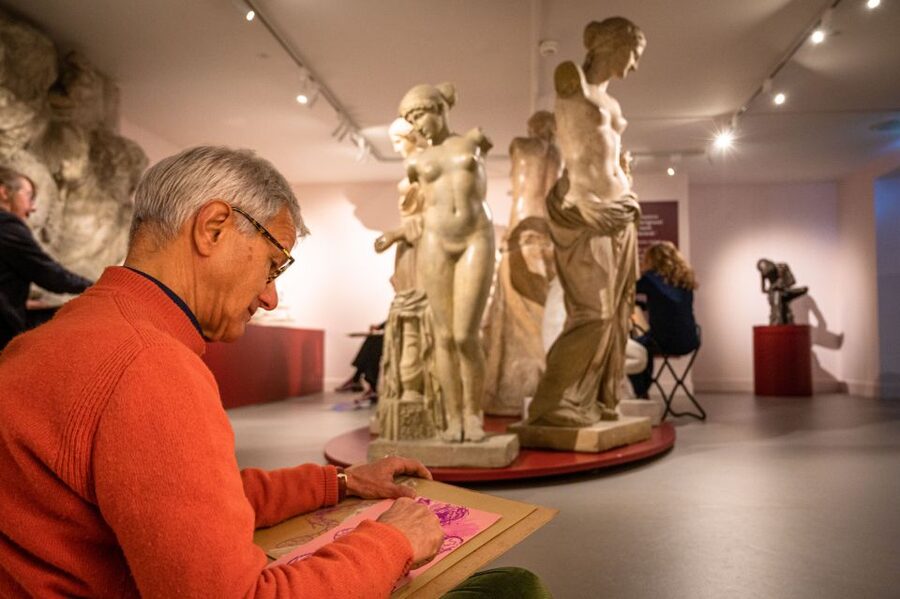
One of the museum’s more unusual stops is an attic holding a collection of plaster casts from the Greek and Roman era. These are reproductions of famous classical statues, rather than original sculptures, but that does not make the display pointless.
Plaster casts played an important role in the study and teaching of classical art. They allowed students and researchers to examine forms that could not easily be transported or viewed in person. In a museum devoted to the spread of knowledge, the casts fit the larger theme very well.
The attic setting gives this collection a different mood from a polished gallery. It feels more connected to study, comparison, and the long tradition of learning through copies. I would use the included audioguide here, since it can add context that is harder to get from a quick look at each cast.
This is also a practical place to manage expectations. If you want original Greek and Roman masterpieces, the plaster collection will not provide that. If you are interested in how classical art was taught, reproduced, and kept alive, it is a worthwhile part of the visit.
Face to Face and the people behind mummy portraits
The temporary exhibition Face to Face: The People Behind Mummy Portraits adds a more personal focus to the museum. It is scheduled from 6 October to 25 February, so check the dates carefully before you plan your visit.
The exhibition presents about 38 mummy portraits from collections around the world, including works from the Louvre and the J. Paul Getty Museum. These portraits were painted mainly on wooden panels during the Roman period in Egypt, from the first to the fourth century AD. They were placed over the faces of mummified people.
They are often called Fayum portraits, after the Egyptian region where many were excavated. Their power comes from the directness of the faces. You are not looking only at anonymous ancient figures. Each portrait represents a person who wanted to be remembered almost 2,000 years ago.
The exhibition also looks beyond the painted faces. It considers the artists, descendants, followers, collectors, archaeologists, and researchers connected with these objects. That wider focus matters because every portrait has a modern story as well as an ancient one.
I would make this exhibition a priority if it is running during your visit. It gives the Allard Pierson a human center and breaks up the more object-based sections of the permanent display. It may also be the strongest choice for you if you have limited time and want one clearly defined theme.
Books, manuscripts, cookbooks, and daily life
The museum’s book history displays move well beyond religious or scholarly texts. Medieval manuscripts show the labor and design behind hand-produced books. Seventeenth-century atlases and books reveal the growing power of print, commerce, and visual information.
Cookbooks add a pleasingly ordinary note. They remind you that heritage is not only made of royal objects, sacred texts, and famous artworks. Food, household habits, and practical instructions also show how people lived and what they valued.
This range keeps the museum from becoming too formal. You can move from grand historical subjects to familiar concerns, then back to the larger question of how information survives. I find that mix useful because it makes the collection feel connected to everyday life rather than sealed off in the past.
The tradeoff is focus. A visitor who wants a single strong narrative may find the shift from zoology to church history to bookmaking abrupt. The museum’s collections are broad by design, so you will get more from the visit if you accept some variety.
How long should you spend inside?
The ticket is valid for one day, with starting times based on availability. That gives you flexibility, especially if you want to combine the museum with other plans in Amsterdam.
I would not treat the Allard Pierson as a quick fifteen-minute stop. The number of subjects is too broad, and the temporary exhibition deserves time of its own. A thoughtful visit could take a few hours, but the exact length depends on how closely you read labels and how much time you spend with the maps, manuscripts, and mummy portraits.
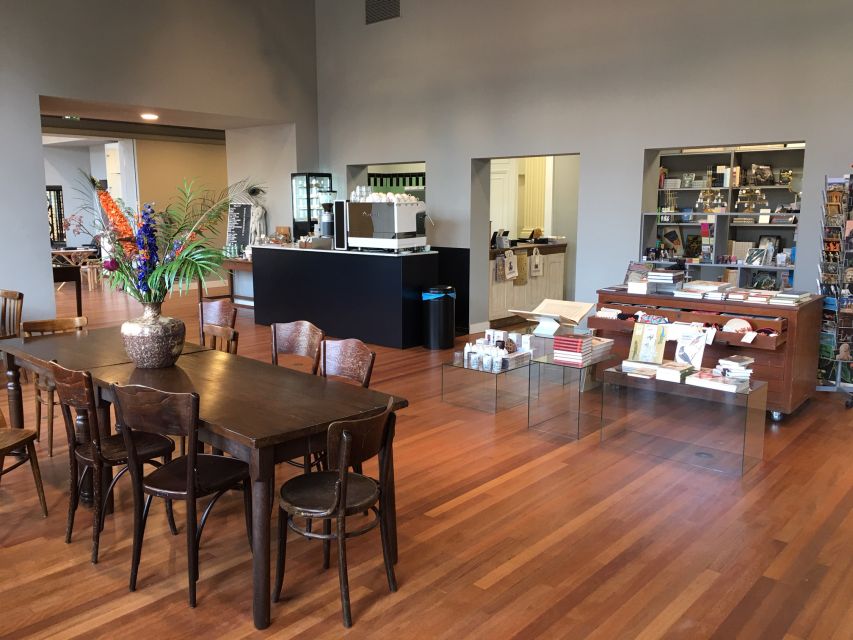
You can also use the cafe as a natural pause. The museum shop and cafe are included as accessible parts of the visit, though the ticket does not mean you receive food or merchandise. If your attention fades, take a break rather than rushing through the final galleries.
Because the experience is self-guided apart from the plaster collection audioguide, you control the pace. That is useful if one section grabs you. It also means you should not expect a host-led tour or a single guide to explain the entire collection.
Is the $18 ticket good value?

At $18 per person, the ticket sits in a reasonable range for a museum that includes both permanent and temporary exhibitions. The value is strongest if you plan to see the full spread of collections rather than only the Egyptian displays.
I would consider the ticket good value for three types of visitors:
- You want a broad museum visit that covers archaeology, books, maps, art history, and collecting.
- You plan to see Face to Face while it is on.
- You enjoy spending time with objects and reading the ideas behind them.
The value is weaker if you have only a short gap between major Amsterdam sights. The museum’s variety needs attention, and a hurried visit may leave you with a pile of disconnected impressions.
The overall score provided for the experience is 4.1 out of 5 from 13 reviews. One three-star assessment describes it as a museum you might choose if you have not previously visited a museum on the subject. I read that as a useful warning rather than a serious criticism. The Allard Pierson can be a solid introduction, but experienced museumgoers may want a sharper specialist focus.
Who will enjoy this museum most?
I would recommend the Allard Pierson to you if you like museums that connect objects with ideas. It suits people interested in ancient cultures, old books, cartography, classical art, and the history of collecting.
The temporary mummy portrait exhibition is a good choice for anyone drawn to faces and personal stories. Families with different interests may also find enough variety here for each person to choose a favorite section, though the supplied information does not give specific family activities.
It is also a practical option if accessibility matters. The museum is wheelchair accessible, and English is available for the experience. The listed host or greeter language is English, and the additional information also identifies English as the language provided.
You may want to choose another museum if your main goal is a large collection of original Greek sculpture, a fully guided archaeology tour, or a tightly organized account of ancient Egypt alone. The Allard Pierson offers range rather than one narrow specialty.
Practical details that affect your visit
You can cancel up to 24 hours in advance for a full refund, which gives you some protection if your Amsterdam schedule changes. The reserve now and pay later option also lets you hold the booking without paying immediately.
The ticket covers entry to the permanent and temporary exhibitions. It also gives you access to the museum shop and cafe, while the audioguide is specifically included for the plaster collections.
No transportation is included, and no detailed transport instructions are provided here, so you will need to plan your own way to the museum. Check the available starting times when booking, even though the ticket remains valid for one day.
Since the experience is wheelchair accessible, it can work for visitors who need step-free access. For the most current arrangements, I would still confirm any personal access requirements before setting out.
Should you book the Allard Pierson?
Book it if you want an intelligent, wide-ranging museum visit and have time to explore more than one subject. The maps and atlases, the attic plaster casts, and the mummy portraits give the museum several memorable anchors.
I would make Face to Face the deciding factor if your dates fall between 6 October and 25 February. If that exhibition is not available, the ticket still makes sense for readers who enjoy books, cartography, archaeology, and the long story of human curiosity.
Skip it if you want a short, blockbuster-style attraction or a museum devoted only to ancient Egypt. For everyone else, $18 buys a flexible day of thoughtful displays, with enough variety to keep the visit fresh and enough unusual material to make it more than a standard archaeology stop.
FAQ
How much does admission to the Allard Pierson cost?
Admission costs $18 per person.
How long is the ticket valid?
The ticket is valid for one day. Available starting times are shown when you check availability.
What does the admission ticket include?
It includes entry to the permanent and temporary exhibitions, access to the museum shop and cafe, and an audioguide for the plaster collections.
Is the Face to Face mummy portrait exhibition included?
Yes. The ticket includes temporary exhibitions, including Face to Face: The People Behind Mummy Portraits when it is running from 6 October to 25 February.
What languages are available?
English is listed as the available language, including for the host or greeter information.
Is the museum wheelchair accessible?
Yes. The Allard Pierson is wheelchair accessible.
Can I cancel my booking?
Yes. You can cancel up to 24 hours in advance for a full refund.
Do I have to pay when I reserve?
No. A reserve now and pay later option is available, allowing you to book without paying immediately.
Just added in Amsterdam
- Private Tour Zaanse Schans Windmills and Volendam in Jaguar★ 5.0 · 10 reviews
- Zaanse Schans and Giethoorn Unique Day Trip with Boat Cruise★ 4.5 · 17 reviews
- Windmills-Volendam-Giethoorn Private Tour in Jaguar★ 5.0 · 2 reviews
- Half-Day Private Guided Sightseeing Tour of Zaanse Schans★ 5.0 · 14 reviews
- Best of Netherlands: Zaanse Schans Mills, The Hague & Rotterdam★ 4.5 · 10 reviews
- Zaanse Schans Private Tour Windmills★ 5.0 · 18 reviews
- Zaanse Schans Windmills Edam Volendam and Marken from Amsterdam★ 5.0 · 1 review
- Zaanse Schans Edam Volendam Private Day Tour from Amsterdam★ 5.0 · 3 reviews
Historical Tours, compared.
Amsterdam Food and Cultural Tour with Tastings
Read our review →
Kinderdijk UNESCO World Heritage Entry Ticket
Read our review →
Hop-on Hop-off Old-Fashioned Heritage Tram Tour
Read our review →


Amsterdam High-End Dutch Food & History Tour – Up to 8 guests
Read our review →
Cruise through the Historic City Center with Guide
Read our review →
Browse the lists this tour appears in