
Review · HISTORICAL TOURS
Amsterdam: Historic Tram Ride on Heritage Line to Amstelveen
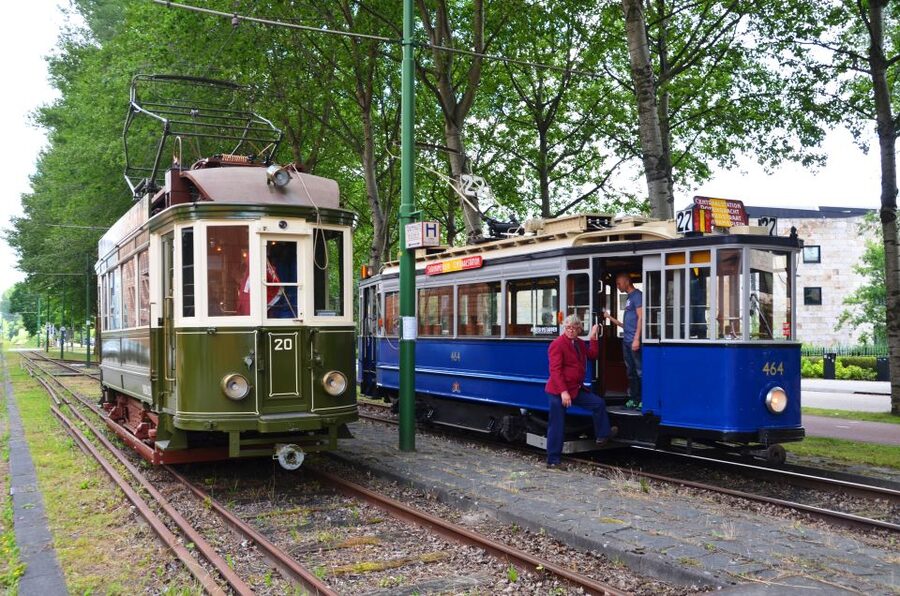
Take a slower ride through Amsterdam’s past. This one-hour round trip on historic Lijn 30 uses a restored tram and a more than 100-year-old track between Haarlemmermeerstation and Amstelveen. I like the conductor punching your paper ticket and the old whistle-and-bell routine, details that make this feel like a working museum rather than a simple sightseeing vehicle.
I also like the freedom to get off near the Olympic Stadion, Amsterdam Forest, lake Bosbaan, Heemtuinen, or Amstelveen’s Old Village. The main drawback is the route itself: parts of the line may feel ordinary, with less to see than the carefully preserved tram suggests.
In This Review
- Key points before you book
- Starting at Haarlemmermeerstation
- The old tram sounds make the trip
- From the museum to the Olympic Stadion
- Amsterdam Forest and lake Bosbaan
- Heemtuinen and Amstelveen’s Old Village
- What happens at the Amstelveen terminus
- Is the $9 ticket good value?
- Who will enjoy Lijn 30 most?
- Helpful planning advice
- Should you book this historic tram ride?
- FAQ
- Where does the historic tram ride begin?
- Where does the tram go?
- How long does the activity last?
- Is the ticket a return ticket?
- Can I get off at stops along the route?
- Do I need to change trams at the terminus?
- Is the tram wheelchair accessible?
- Can I bring food or drinks aboard?
Key points before you book
- The tram is the attraction: You ride a fully restored historic car, complete with a conductor, punched ticket, bell, and whistle.
- The trip begins at Haarlemmermeerstation: Exchange your ticket at the Tramshop, then follow staff to the waiting tram.
- The full ride takes about one hour: The ticket covers a return journey from Amsterdam to Amstelveen.
- You can use the route for short outings: Possible stops include the Olympic Stadion, Amsterdam Forest, lake Bosbaan, Heemtuinen, and the Old Village.
- The line has real period character: Red flags protect crossings, stops are called out, and the tram is prepared for its return at the terminal.
- The $9 price is fair for tram enthusiasts: It is less compelling if you want nonstop city sights or modern transport efficiency.
Starting at Haarlemmermeerstation
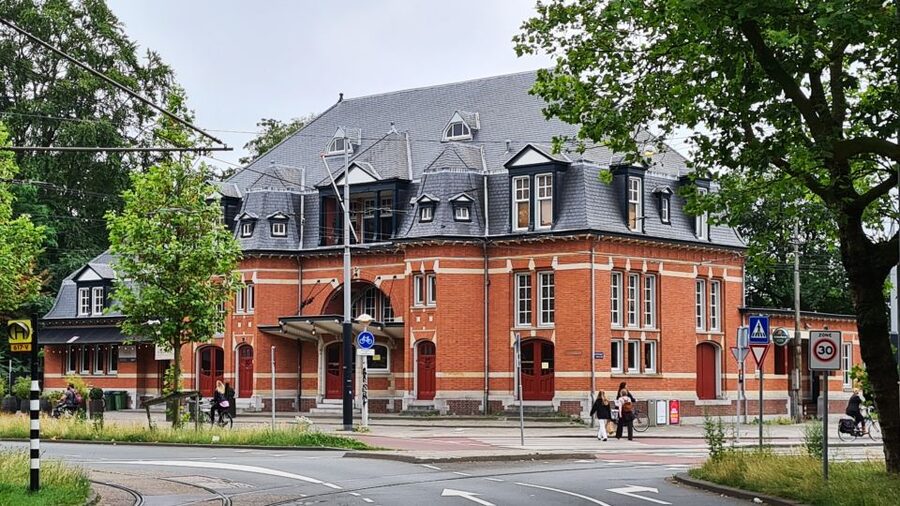
Your trip begins at Haarlemmermeerstation, home of the Electric Tram Museum Amsterdam. Do not head straight for a platform with your phone in hand. First exchange your ticket at the Tramshop, where you are guided to the tram.
That small step matters because this is not a standard Amsterdam public transport journey. You are joining a heritage operation, and the museum staff direct you into the right part of the experience. The setting also gives you a chance to look at the tram before boarding, including its restored fittings and old-fashioned design.
The ride uses Lijn 30, a historic tram service that follows a track more than 100 years old. The point is not speed. The point is to notice the sounds and routines that modern transport has mostly scrubbed away.
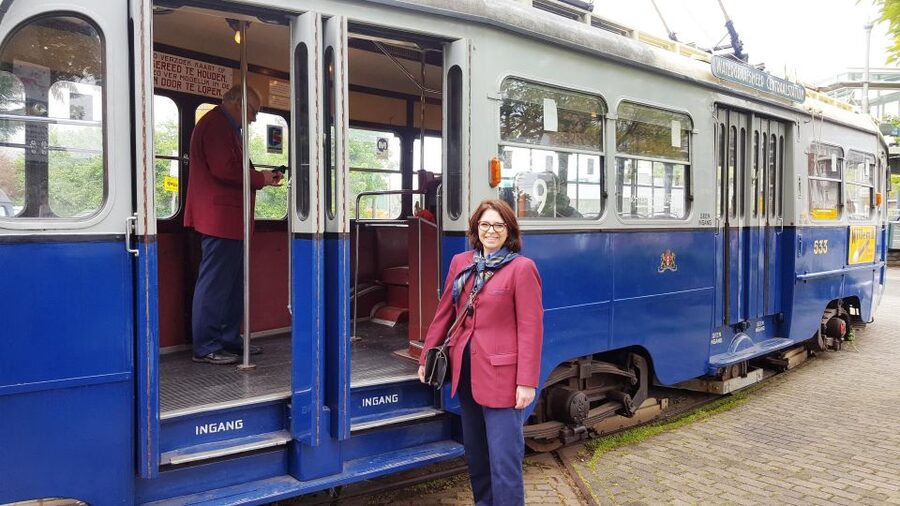
Once aboard, the conductor punches your ticket. That simple action is one of the best parts of the trip. It gives you a physical souvenir and sets the tone for the hour ahead. You are not just being carried from one suburb to another. You are taking part in a small piece of transport history.
More History Tours in Amsterdam
- Amsterdam Food and Cultural Tour with Tastings
★ 5.0 · 2,442 reviews - Amsterdam: Haunted History and Ghost Walking Tour
★ 4.5 · 488 reviews - Amsterdam High-End Dutch Food & History Tour – Up to 8 guests
★ 5.0 · 482 reviews
The old tram sounds make the trip
Listen for the conductor’s whistle, the ring of the bell, and the low hum of the tram as it moves. These sounds are not added effects for a museum display. They are part of the operating routine, and that makes them more convincing.
The conductor blows the whistle or rings the bell to signal that the tram is ready to leave. Stops are called out along the way, giving you time to decide if you want to remain aboard or get off. At crossings, you may see red flags used to secure the route, another practical detail that makes the ride feel connected to an earlier era.
I like these working details more than a long spoken explanation would be. You get a sense of how the tram operates by watching the conductor, listening to the signals, and seeing the driver respond. It is hands-on history, but in a quiet and low-key way.
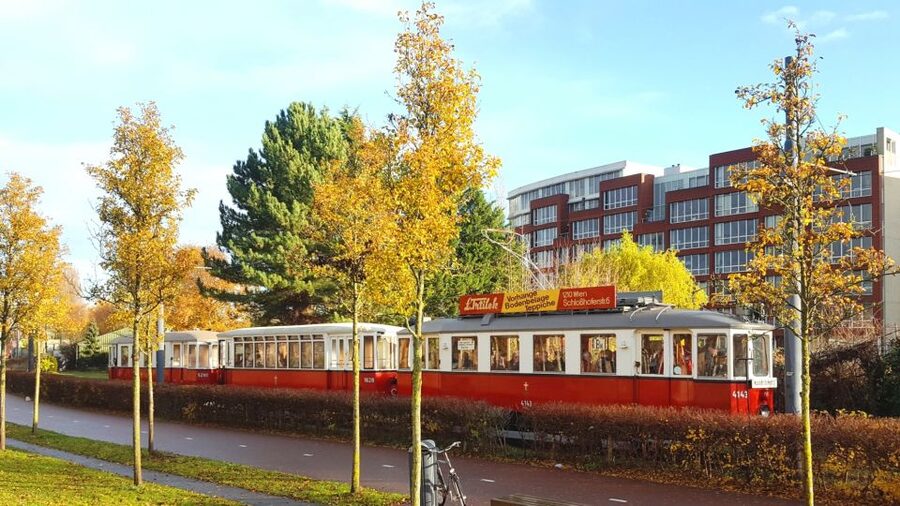
The fully restored car is also kept authentic rather than turned into a modern sightseeing bus. That means the tram itself deserves your attention. Look around before settling into your seat, and listen to the changes in sound as the car leaves the station and approaches the terminus.
From the museum to the Olympic Stadion
The route takes you out from Haarlemmermeerstation toward Amstelveen, with the Olympic Stadion among the possible stops. This gives you an option to pair the tram ride with a look at one of Amsterdam’s major sporting landmarks.
The attraction here is flexibility. You can remain on the tram for the full return trip, or use the service as a short transport link to a stop that interests you. The available information does not describe a guided visit at each location, so plan to explore those places independently rather than expecting a tour guide to lead you around.
The Olympic Stadion is a practical stop for visitors who want to add a separate sight to the tram outing. If your main interest is historic transport, you might simply stay aboard and enjoy the route. If you are building a half-day around Amsterdam’s southern side, getting off can make the $9 ticket more useful.
Keep an eye on the departure arrangements if you leave the tram. The ticket is described as a return ticket, but the ride is not presented as a fully flexible hop-on, hop-off service with unlimited departures. Check the timing before you step off so you know how to continue your outing or return to the meeting point.
Amsterdam Forest and lake Bosbaan
Amsterdam Forest and lake Bosbaan offer the most obvious reason to leave the tram for a walk. The route gives you access to outdoor areas instead of keeping you in the central streets and canals.
The forest is a good choice if you want a break from Amsterdam’s compact core. You might find this stop more rewarding on a pleasant day, when a short walk or time beside the lake adds variety to the museum ride. Bosbaan, the lake area, gives the route a more open setting and may appeal to you if you prefer scenery and fresh air to urban sightseeing.
Still, keep your expectations sensible. This is a historic tram ride, not a forest tour or a guided nature excursion. The ticket gets you to the area, but it does not include food, drinks, or a planned walk. You will need to decide how long to stay and how to manage the return portion of your trip.
The stop is also why timing matters. The complete ride lasts about one hour, but a visit to the forest or lake will require more time than the tram journey itself. Check the available starting times and plan your day around the tram schedule, especially if you want to get off.
A different kind of day out entirely:
- Amsterdam: Van Gogh Museum Ticket
★ 4.7 · 52,054 reviews - Amsterdam Classic Saloon Boat Cruise with Drinks and Cheese
★ 5.0 · 31,825 reviews - Amsterdam Luxury Canal Cruise + Unlimited Drinks & Bites option
★ 5.0 · 30,518 reviews - Amsterdam: Heineken Experience Ticket
★ 4.6 · 30,055 reviews
Heemtuinen and Amstelveen’s Old Village
Heemtuinen, described as a wildlife garden, provides another possible stop for visitors who want a quieter outdoor visit. The Old Village in Amstelveen offers a different mood, with redbrick buildings and a more traditional village setting.
These stops help broaden the appeal of the ride. You do not have to be fascinated by tram mechanics to find a reason to take Lijn 30. The route can serve as a gentle link to places with a different feel from central Amsterdam.
At the same time, the route is not packed with major sights. One critical assessment points out that the line itself is not especially interesting and that there may be limited scenery along parts of the way. I would take that seriously. The restored tram is better maintained and more memorable than every view outside its windows.
That is not a dealbreaker if you see the journey as a museum visit in motion. It is a problem if you expect a continuous parade of Amsterdam highlights. The best approach is to choose one possible stop in advance, then treat the tram ride as the main event.
What happens at the Amstelveen terminus
At the terminal station, the tram is prepared for the return journey. This is a useful moment to watch the operation rather than rushing away. You can see that the return is part of the actual running process, not just an automatic turnaround hidden from view.
You may need to leave the tram temporarily at the terminus, and in some cases you may have to change vehicles. That possibility is important if you have planned to remain seated for the entire round trip. Follow the instructions from the staff and allow a little patience for the changeover.
For me, this is one of the most appealing parts of a heritage service. Modern public transport is designed to hide its machinery and keep you moving. Here, the preparation for the return is part of what you came to see.
The journey then returns to Haarlemmermeerstation, where the activity ends at the original meeting point. The total stated duration is one hour, though stopping to explore places along the line will naturally make your outing longer.
Is the $9 ticket good value?
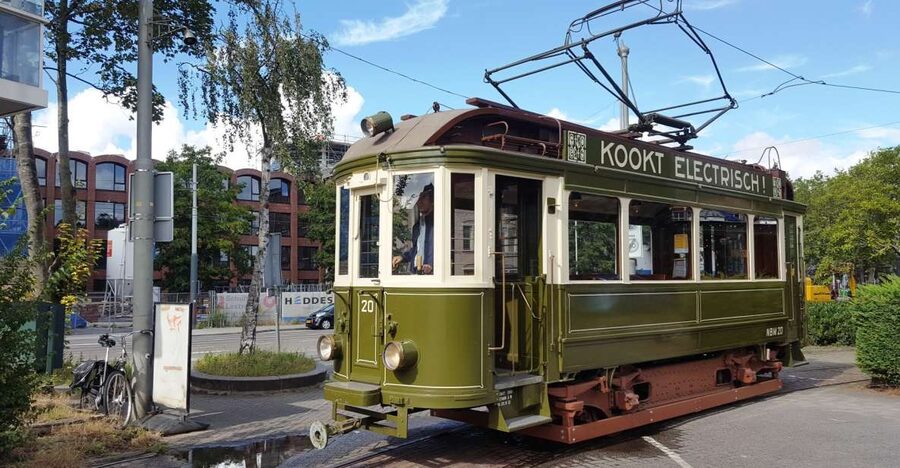
At $9 per person, this is a reasonably priced specialty ride. You are paying for a return journey, a restored tram, the conductor’s ticket-punching routine, and access to a historic line. For someone who enjoys transport museums, that is a solid deal.
The value is less clear if you judge the ticket only by the scenery. One of the available ratings gives the experience 4.4 out of 5 from 20 reviews, which fits the basic picture: the tram and its operation are the strong points, while the route may not impress everyone.
I would compare it with the price of a museum admission plus a short transport ride. Here, the vehicle itself is the exhibit, and the staff keep it moving along a real line. That makes the fare feel justified, especially for families, tram fans, photographers, and anyone who enjoys old machinery.
Food and drinks are not included, and you cannot bring food or drinks into the vehicle. Since the trip lasts only about an hour, this is easy enough to manage. Plan to eat before or after rather than treating the tram as a meal stop.
Who will enjoy Lijn 30 most?
I would recommend this ride to you if you like historic transport, old vehicles, and small details. The punched ticket, bells, whistle, red flags, called stops, and terminal preparation give you plenty to watch and hear.
It also suits families who want an activity that is different from another museum interior. Children may enjoy the conductor’s routine and the clear sense that the tram is operating by its own old rules. The ride can also work well for couples or solo visitors who prefer a calm hour away from crowded central attractions.
You may want to skip it if you need step-free access or have difficulty with mobility. Non-folding wheelchairs, electric wheelchairs, and non-folding strollers are not permitted, and the activity is not suitable for wheelchair users or people with mobility impairments. The ride is also not recommended for anyone prone to motion sickness.
The vehicle is not a place for smoking, alcohol, drugs, food, or drinks. Those rules are practical and strict, so plan accordingly.
Helpful planning advice
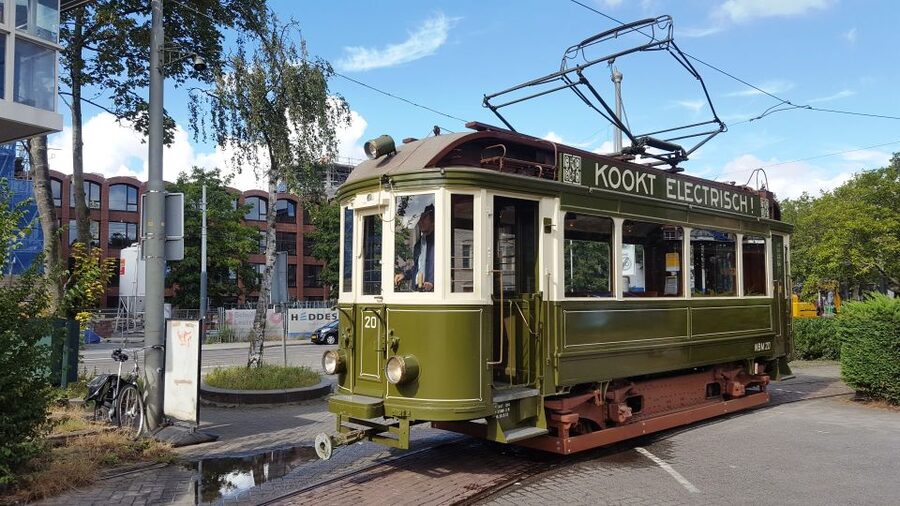
Start at the Tramshop in Haarlemmermeerstation, where you exchange your ticket and receive directions to the tram. The host or greeter can communicate in Dutch or English.
Check the starting time before booking because the ride runs at set departures rather than whenever you happen to arrive. If you want to stop at Amsterdam Forest, Bosbaan, Heemtuinen, the Olympic Stadion, or the Old Village, give yourself extra time beyond the one-hour round trip.
Think of the ride in two parts. The first is the historic operation, including the conductor, signals, and restored tram. The second is the chance to use the line for a short outing near Amstelveen. You will get the most from the ticket if you decide which of those matters more to you.
Free cancellation is available up to 24 hours before the activity, and you can reserve now and pay later. Those terms make it easier to fit the ride into a changeable Amsterdam schedule, but they do not remove the need to check the departure time.
Should you book this historic tram ride?
Book it if the vehicle and its working details are your main reason for going. The restored Lijn 30 tram, punched ticket, old sounds, red-flag crossings, and terminal turnaround create an appealing slice of Amsterdam’s transport past for $9.
Skip it if you want a scenic tour filled with famous city sights. The line can be ordinary, and the views may not justify the trip on their own. My best advice is to combine the ride with one planned stop, such as Amsterdam Forest, Bosbaan, Heemtuinen, the Olympic Stadion, or the Old Village. That way, the tram provides the character and your chosen stop provides the extra purpose.
FAQ
Where does the historic tram ride begin?
The ride begins at Haarlemmermeerstation in Amsterdam. You first exchange your ticket at the Tramshop and are then guided to the tram.
Where does the tram go?
The historic Lijn 30 tram travels from Haarlemmermeerstation to Amstelveen and returns to the starting point.
How long does the activity last?
The stated duration is one hour. Check the available departure times when booking.
Is the ticket a return ticket?
Yes. The ticket includes a return journey from Haarlemmermeerstation in Amsterdam to Amstelveen.
Can I get off at stops along the route?
You can choose to get off at possible stops including the Olympic Stadion, Amsterdam Forest, lake Bosbaan, Heemtuinen, and Amstelveen’s Old Village. Check the timing before leaving the tram.
Do I need to change trams at the terminus?
At the terminus, you may need to leave the vehicle temporarily or change to another vehicle for the return journey.
Is the tram wheelchair accessible?
The activity is not suitable for wheelchair users or people with mobility impairments. Non-folding wheelchairs and electric wheelchairs are not permitted.
Can I bring food or drinks aboard?
No. Food and drinks are not allowed in the vehicle. Smoking, alcohol, and drugs are also not permitted.
Just added in Amsterdam
- Private Tour Zaanse Schans Windmills and Volendam in Jaguar★ 5.0 · 10 reviews
- Zaanse Schans and Giethoorn Unique Day Trip with Boat Cruise★ 4.5 · 17 reviews
- Windmills-Volendam-Giethoorn Private Tour in Jaguar★ 5.0 · 2 reviews
- Half-Day Private Guided Sightseeing Tour of Zaanse Schans★ 5.0 · 14 reviews
- Best of Netherlands: Zaanse Schans Mills, The Hague & Rotterdam★ 4.5 · 10 reviews
- Zaanse Schans Private Tour Windmills★ 5.0 · 18 reviews
- Zaanse Schans Windmills Edam Volendam and Marken from Amsterdam★ 5.0 · 1 review
- Zaanse Schans Edam Volendam Private Day Tour from Amsterdam★ 5.0 · 3 reviews
Historical Tours, compared.

Amsterdam Food and Cultural Tour with Tastings
Read our review →
Kinderdijk UNESCO World Heritage Entry Ticket
Read our review →
Hop-on Hop-off Old-Fashioned Heritage Tram Tour
Read our review →


Amsterdam High-End Dutch Food & History Tour – Up to 8 guests
Read our review →
Cruise through the Historic City Center with Guide
Read our review →
Browse the lists this tour appears in