
Review · SELF-GUIDED TOURS
Castles, Canals and Good Folk: A Self-Guided Audio Tour of Utrecht
Utrecht rewards curious walkers. This self-guided audio tour gives you a relaxed route through northern Utrecht, mixing churches, markets, old streets, social history, and a medieval city castle without tying you to a guide’s timetable. I like the freedom to pause for coffee or cheese, and I like that the app works offline once downloaded. The main drawback is the opening navigation, which may feel vague if you are not comfortable checking a map.
At about one to one and a half hours, the walk is easy to fit into a day of sightseeing. You pay $8.99 per person for lifetime access in English, a fair price if you want orientation and context without joining a group. Just remember that your phone, headphones, food, drinks, and any museum admission are extra.
In This Review
- Key points to know before you walk
- Starting at Hoog Catharijne and finding your bearings
- Markets first: a tasty introduction to Utrecht
- A working-class museum and Utrecht’s social story
- Jacobikerk and a neighbourhood shaped by faith
- Oudaen, Utrecht’s medieval city castle
- Neude Square and the former post office
- Four centuries of fabric trading
- A boutique hotel with a medical past
- Through Utrecht’s old university quarter
- A powerful sculpture and a story of lasting meaning
- The wartime bunker and Utrecht’s harder memories
- Finishing near Janskerk and the Knights of Utrecht
- How the VoiceMap app affects the experience
- Is $8.99 a fair price?
- Who should choose this Utrecht walk?
- Should you book Castles, Canals and Good Folk?
- FAQ
- How long does the Utrecht audio tour take?
- Where does the tour start?
- Where does the tour end?
- Is the tour available offline?
- What language is offered?
- Are food, drinks, museum tickets, and headphones included?
Key points to know before you walk
- A northern Utrecht route with real variety: You move from a market and working-class museum to churches, a city castle, a former post office, a textile market, and the old university quarter.
- Offline audio keeps the walk simple: Download the VoiceMap app, audio, maps, and location data before setting out.
- Oudaen offers the best pause: This medieval city castle includes a craft brewery in its cellars, making it a natural place to stop.
- The opening may require map work: Early directions can be less exact than ideal, so keep the map visible until you find your bearings.
- The route ends near Janskerk: You finish close to cafés and not far from the starting point, which makes the walk easy to add to a day in Utrecht.
- You control the pace: Stop at markets, cafés, and sights as you wish, then resume the narration when ready.
Starting at Hoog Catharijne and finding your bearings
The tour begins outside the east entrance to Hoog Catharijne, at Hoog Catharijne P5, Interparking on Daalsesingel. This is a practical place to begin because it is near public transportation and easy to connect with a wider visit to Utrecht.
The first few directions deserve attention. One early instruction refers to heading toward a big tree, and that kind of wording can be less helpful than a street name or a clear landmark. I recommend opening the map before you start and checking that your location marker moves in the right direction.
Once you are on the route, the app becomes easier to use. It provides audio, a map, and geodata, so you can listen without constantly staring at your screen. The route is designed for a private group, meaning you are not waiting for other people or trying to keep up with a guide.
More Self-Guided Tours in Utrecht:
- Discover Utrecht with a self-guided Outside Escape city game tour
★ 4.5 · 51 reviews - Utrecht Scavenger Hunt and Highlights Self Guided Audio Tour
★ 4.0 · 10 reviews - Utrecht Historic City: a Self-Guided Augmented Reality Tour
★ 4.5 · 7 reviews
Markets first: a tasty introduction to Utrecht
The walk brings you to a Dutch city centre market, a fine place to begin understanding how people use Utrecht’s public spaces. The food possibilities include croquettes, pickled herring, fresh bread, and a remarkable range of cheeses.
This is one of the tour’s most practical touches. You are not simply being sent from monument to monument. You are shown a place where daily life, shopping, conversation, and local food come together. If the market is operating when you pass through, you can pause and sample something, though food is not included in the tour price.
Market conditions can vary, so think of this as an opportunity rather than a guaranteed food stop. If you are hungry, plan a little extra time. The listed duration is roughly 60 to 90 minutes, but your walk can take longer if you stop for a snack or browse the stalls.
A working-class museum and Utrecht’s social story
One stop is a small museum focused on life in Utrecht’s working-class neighbourhoods during the difficult years of the 1920s. The museum gives the route a useful change of scale. Instead of looking only at grand buildings and religious institutions, you get a closer look at ordinary residents and the conditions that shaped their lives.
Admission is not included, so you will need to decide if you want to go inside. Even if you only hear the outside commentary, the stop adds social context to the streets around you. I appreciate that balance because a city can be misunderstood when its story is reduced to wealthy merchants, impressive churches, and old civic buildings.
This is also a reason to allow more than the minimum hour. The audio portion may fit comfortably into the stated duration, but any museum visit adds time. Check the museum’s current opening arrangements separately if entering is important to you, since the tour information does not provide admission details.
Jacobikerk and a neighbourhood shaped by faith
Utrecht has played an important role in Dutch religious life, and the Jacobikerk begins the section of the walk devoted to faith and commitment. The church is an important Protestant building, but the real value here is how the audio places it within the surrounding neighbourhood.
You can expect a stop that links architecture with the people and institutions that used these streets. That approach makes the route more than a checklist of buildings. You are encouraged to notice how religious life helped shape Utrecht’s identity.
The tour does not include tickets or entry to attractions, so the experience may be entirely exterior unless you choose to enter somewhere along the way. Keep your expectations clear: this is an audio walk through the city, not a package of guided interior visits.
More audio tours in Utrecht:
- Uniquely Utrecht: An Audio Tour of its Charming City Centre
★ 5.0 · 4 reviews - Utrecht: Hoge Woerd Museum Entry Ticket with Audio Tour
★ 3.3 · 3 reviews - Amsterdam: 75 Minute City Canal Cruise with Audio Guide
★ 4.4 · 17,501 reviews - Amsterdam: Royal Palace Entry Ticket and Audio Guide
★ 4.6 · 6,475 reviews
Oudaen, Utrecht’s medieval city castle
Oudaen is the route’s clearest castle moment. Built around 1276, this city castle has occupied an important place in Utrecht for centuries, and it offers something many historic stops do not: a practical reason to linger.
The building includes a craft brewery in its cellars, making it an appealing refreshment stop. Food and drink are not included, but that is hardly a problem here. You can treat Oudaen as the point where the tour shifts from listening while walking to listening over a drink or meal.
I would plan this stop rather than rush past it. If you are trying to complete the route in one hour, you may only have time for the commentary and an exterior look. If you have 90 minutes or more, Oudaen gives you a natural chance to pause and make the walk feel less like an assignment.
Neude Square and the former post office
The route continues to Neude square, home to what is described as the most beautiful post office in the Netherlands. The superlative is a matter of taste, but the building clearly earns attention as an architectural highlight.
Neude is also a useful place to take stock of the walk. After the market, museum, church, and castle, you have already seen several different sides of Utrecht. The square gives the audio room to explain how civic buildings and public gathering places fit into the city’s story.
This is the sort of stop where I recommend looking up from the phone. Audio tours work best when the narration guides your attention rather than replacing it. Listen for the facts, then give yourself time to inspect the building and the space around it.
Four centuries of fabric trading
Another highlight is Utrecht’s fabric market, described as the largest and oldest in the Netherlands. It has been running for around 400 years, which gives the stop a strong connection to trade and everyday commerce.
The market adds texture to the route in the literal sense. Fabrics may not have the instant drama of a castle or church, but trade shaped the fortunes and routines of cities. This stop helps you see Utrecht as a working city, not only as a pretty collection of canals and old façades.
The exact experience will depend on timing and market activity. The tour information does not promise that a full market will be operating at every hour, so treat the narration and location as the main attraction. If you are visiting at a time when stalls are active, leave room to browse.
A boutique hotel with a medical past
The audio passes a boutique hotel that once served as an eye hospital. This is a brief stop, but it shows the kind of detail that makes an audio walk useful.
Buildings often change function while their physical form remains. A hotel may look polished and contemporary in use, yet its earlier purpose tells you something about the city’s medical and social development. The audio can point out that layer without requiring you to book a room or enter the building.
Because this is a passing stop, do not expect a long visit. It works best as part of the route’s steady rhythm, with each building adding a small piece to the larger picture.
Through Utrecht’s old university quarter
The walk then passes through Utrecht’s old University neighbourhood. This gives the route another shift in character, from markets and working-class streets to an area shaped by study, institutions, and academic life.
The supplied information does not specify individual university buildings or interior visits, so the emphasis is on the neighbourhood itself. You will hear about the area as you move through it, while the map helps you follow the route.
I like this kind of progression because you are not seeing Utrecht in isolation. The walk links different communities and purposes: commerce, worship, working-class life, medicine, education, and civic activity. At $8.99, that range gives the experience more value than a simple audio commentary on one famous sight.
A powerful sculpture and a story of lasting meaning
One stop focuses on a powerful sculpture of a remarkable young woman whose life continues to carry meaning after her death. The information does not identify the woman or provide the sculpture’s title, so you should not arrive expecting a named monument from the tour description alone.
What matters here is the change in mood. After buildings and markets, a sculpture invites a more personal response. The audio appears to connect one individual’s life with questions that remain meaningful today.
This is another stop where a pause is worthwhile. Sculpture can be easy to miss when you are following directions, so use the narration as a cue to look carefully before moving on.
The wartime bunker and Utrecht’s harder memories
The route also takes you toward a wartime bunker in Utrecht’s northern quarters. The available details do not specify whether the bunker is entered, so expect to encounter it as part of the outdoor route rather than as a guaranteed interior attraction.
Its inclusion helps keep the walk from becoming too polished. Utrecht’s story includes difficult periods as well as churches, markets, and attractive old buildings. A wartime site gives the route a more serious note and broadens your sense of what the city has experienced.
If you prefer tours that include social and military context alongside architecture, this will be a welcome part of the walk. If you want only postcard views, the bunker and working-class museum may feel less immediately appealing, but they are valuable precisely because they add substance.
Finishing near Janskerk and the Knights of Utrecht
The walk ends near Janskerk, at the Faculty of Law, Economics, Governance and Organisation area, with a story about the Order of the Knights of Utrecht. The finish is close to cafés and not far from the starting location, so you are not left at an inconvenient edge of the city.
Ending near Janskerk also brings the religious and civic threads together. By this point, you have moved through churches, markets, university streets, and older institutions. The final story gives the walk a clear stopping point rather than simply ending at the last map pin.
I would use the end of the tour as a chance to sit down nearby and review what you have seen. Since the tour is self-guided, there is no guide to suggest what to do next. The nearby cafés make that easy, and you can continue exploring Utrecht afterward.
How the VoiceMap app affects the experience
The VoiceMap app is available for Android and iOS. Download it before you leave, including the audio, map, and geodata, so you can use the tour offline.
That offline access matters in practical terms. You avoid depending on a mobile signal while walking, and you can keep your attention on the city instead of troubleshooting a download on the pavement. Bring headphones and a charged smartphone, since neither is included.
The audio starts with the route and plays as you move from place to place. One useful feature is the map, which can confirm where you are even when you do not need to look at it constantly. The clearest advice I can give is to use the map at the beginning, then rely more on the audio once the route feels familiar.
The walk is offered in English only. It is a private activity for your own group, but it is not a personal live guide. You receive the same recorded experience at your own pace, with the freedom to stop and restart.
Is $8.99 a fair price?
At $8.99 per person, this is inexpensive for a self-guided city walk that includes lifetime access. You are paying for the route design, recorded commentary, app, map, and offline geodata, not for entrance tickets or personal guiding.
I see good value here if you are new to Utrecht or have only a short time in the city. The route provides structure, and the range of stops helps you see more than the central postcard sights. It can also work well as a first orientation walk before you explore independently.
The value drops if you already know northern Utrecht well or want detailed answers to spontaneous questions. A live guide can respond to your interests, while this tour cannot. You also need to budget separately for refreshments at Oudaen, market food, and any museum or attraction admissions.
The average booking point is nine days ahead, but the tour operates every day around the clock during the stated availability period. That flexibility is useful for an unplanned visit, as long as you download the app and prepare your phone before walking.
Who should choose this Utrecht walk?
I would recommend it to independent visitors who like history in manageable portions. It suits solo walkers, couples, families with older children, and small private groups that do not want to join a scheduled tour.
It is especially useful if you know little about Utrecht. The route introduces the city through ordinary life as well as major buildings, and the map helps you get oriented. You can also pause at cafés and markets, which makes it less rigid than a standard guided walk.
You may want another option if you need wheelchair-specific route information, extensive interior access, or a guide who can answer questions in real time. The supplied details confirm that most people can participate and that the route is near public transportation, but they do not provide detailed accessibility information.
Should you book Castles, Canals and Good Folk?
Book this tour if you want a low-cost, flexible introduction to Utrecht with more substance than a simple sightseeing loop. The combination of the city market, working-class museum, Jacobikerk, Oudaen, Neude post office, fabric market, university quarter, wartime bunker, sculpture, and Janskerk gives you a broad look at the city.
Skip it if your priority is a live guide, guaranteed attraction entry, or precise turn-by-turn help from the first minute. For everyone else, download the app in advance, start with the map open, bring headphones, and allow closer to 90 minutes if you want time for Oudaen, food, or a museum visit.
FAQ
How long does the Utrecht audio tour take?
The tour takes approximately one hour to one hour and 30 minutes. Stops for food, drinks, museums, or other attractions can make your visit longer.
Where does the tour start?
It starts outside the east entrance to Hoog Catharijne, at Hoog Catharijne P5, Interparking, Daalsesingel, 3511 LC Utrecht, Netherlands.
Where does the tour end?
The tour ends near Janskerk, close to the Faculty of Law, Economics, Governance and Organisation. The area is near several cafés and not far from the starting point.
Is the tour available offline?
Yes. You can download the audio, maps, and geodata through the VoiceMap app for offline use.
What language is offered?
The tour is offered in English.
Are food, drinks, museum tickets, and headphones included?
No. You need to bring your own smartphone and headphones. Food, drinks, transportation, museum admission, and tickets for other attractions are not included.
Just added in Utrecht
- Vecht River: Private Tour sightseeing Cruise with diner★ 5.0 · 5 reviews
- Utrecht Walking Tour with a local comedian as guide★ 4.8 · 5 reviews
- Utrecht Quiz Tour★ 3.2 · 31 reviews
- Utrecht: Museum Speelklok Entry Ticket★ 4.5 · 48 reviews
- Utrecht: Vegan Food Bike Tour – 6 Tastings (excl. bike)★ 5.0 · 7 reviews
- Utrecht or Amsterdam Sidecar Tour. City, rural or TAILORMADE★ 5.0 · 2 reviews
- Utrecht: Lofen Palace with Entry Ticket & Guide (Dutch)★ 4.4 · 41 reviews
- Utrecht: Ludwig’s Original Pub Crawl with VIP Club Entry★ 3.3 · 42 reviews
Self-Guided Tours, compared.
75 Minute City Canal Cruise with Audio Guide
Read our review →
Canal Cruise with Live Commentary & Audio Guide
Read our review →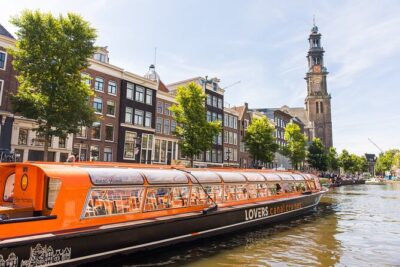
Amsterdam Sightseeing Canal Cruise with Audio Guide
Read our review →
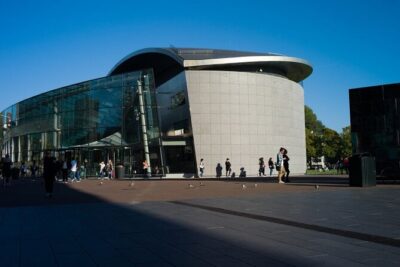
Amsterdam Van Gogh Museum with Audio or Guided Tour
Read our review →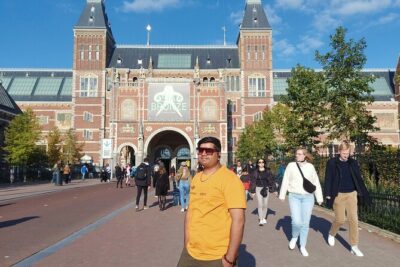
Van Gogh Museum Skip the Queue with Audio Guide
Read our review →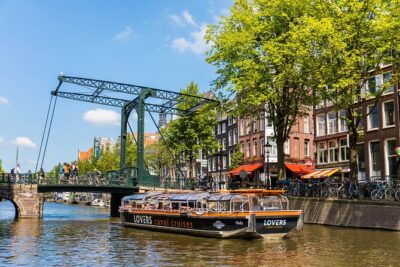
Amsterdam 1h Canal Cruise by Semi-Open Boat with Audio Guide
Read our review →Browse the lists this tour appears in