
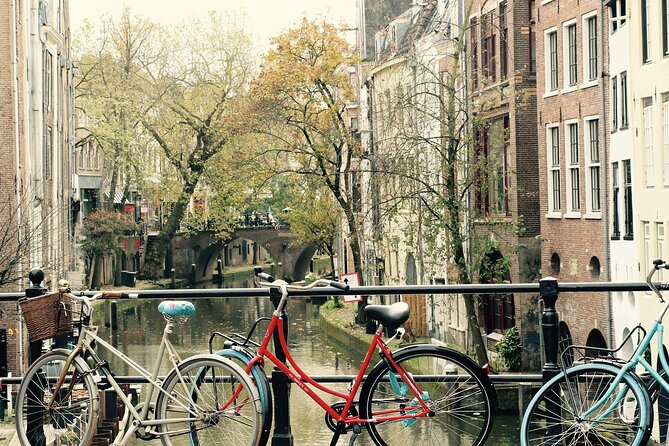
Review · HISTORICAL TOURS
Utrecht Historic City: a Self-Guided Augmented Reality Tour
Utrecht’s past appears on your phone. This two-hour self-guided walk brings old scenes, stories, and virtual figures into the streets around the Dom. I like the freedom to pause for coffee or a shop, and I like the mix of well-known sights with quieter corners such as Pandhof Sinte Marie and Geertebolwerk. The main drawback is that you supply the phone, headphones, battery, and internet connection needed to get started.
At $12 per person, this is a good-value way to get a first look at Utrecht without joining a fixed group. The route is private to your party, available in English, and works on foot or by bicycle. I would choose it for an independent afternoon, but I would not treat it as a replacement for a live guide if you want conversation, questions, or local recommendations along the way.
In This Review
- Key points at a glance
- How the Utrecht AR tour works
- Starting at Domplein and meeting Utrecht’s landmark
- De Werfkelder and the city below street level
- Seven small lanes and everyday Utrecht
- Geertebolwerk and a place of refuge
- Pandhof Sinte Marie and monastic life
- Zadelstraat and a city mystery
- Janskerk and two centuries of flower markets
- Neude, from marsh to city square
- Sint Willibrordkerk and a quieter church visit
- Paushuize and Pope Adrian’s story
- Returning to the Dom during renovation
- Price, timing, and practical value
- Who should choose this Utrecht walk
- Final verdict: book it for freedom and visual history
- FAQ
- Where does the Utrecht AR tour start?
- Where does the tour end?
- How long does the tour take?
- Is the tour guided by a person?
- What language is available?
- Is a mobile ticket provided?
- Do I need to bring my own phone and headphones?
- Is internet access included?
- Can I cancel for a full refund?
Key points at a glance

- Historical scenes appear at the places where they happened, using augmented and virtual reality rather than only spoken commentary.
- Eleven stops fit into about two hours, with the route beginning and ending at Domplein.
- The walk mixes famous and lesser-known Utrecht, from the Dom to medieval wharf cellars, small lanes, gardens, and churches.
- You control the pace, so you can stop for lunch, coffee, shopping, or a breather without holding up a group.
- Bring a charged phone and headphones, since the device, audio gear, internet connection, and any admission fees are not included.
- The $12 price suits small private groups, especially with group discounts available and no guide gratuity to consider.
How the Utrecht AR tour works
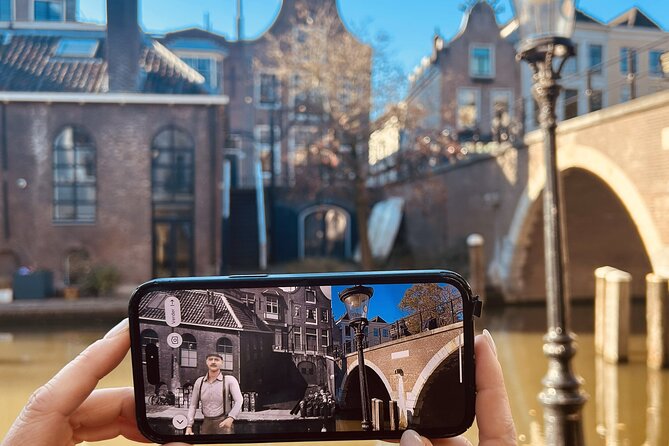
This is a city walk with a digital layer. You use a private app for audio and video storytelling, augmented reality, virtual reality features, and Google Maps navigation. The route is designed to be followed independently, so you are not tied to a guide’s pace or a departure time within the published operating hours.
The experience is listed at roughly two hours, with about ten minutes allocated to each of eleven stops. That timing is best treated as a guide rather than a rule. The route includes plenty of reasons to pause, look around, or stop for a drink, and the strongest part of the format is its flexibility.
The app’s historical material is intended to connect the present-day street with earlier periods. At one stop, you may use your phone to look around at old scenes in the place where events unfolded. At another, life-sized virtual nuns help show what monastic life may have looked like. These details give the walk a playful edge while keeping the focus on Utrecht’s past.
You should download the app with a reliable internet connection before setting out. The tour does not provide a mobile device or headphones, and phone battery use can be higher when you combine mapping, audio, video, and AR. Wireless earbuds are a sensible choice, and sharing one earbud between two people can work for couples or friends who want to stay aware of the street around them.
More Self-Guided Tours in Utrecht:
- Discover Utrecht with a self-guided Outside Escape city game tour
★ 4.5 · 51 reviews - Utrecht Scavenger Hunt and Highlights Self Guided Audio Tour
★ 4.0 · 10 reviews - Castles, Canals and Good Folk: A Self-Guided Audio Tour of Utrecht
★ 4.0 · 9 reviews
Starting at Domplein and meeting Utrecht’s landmark
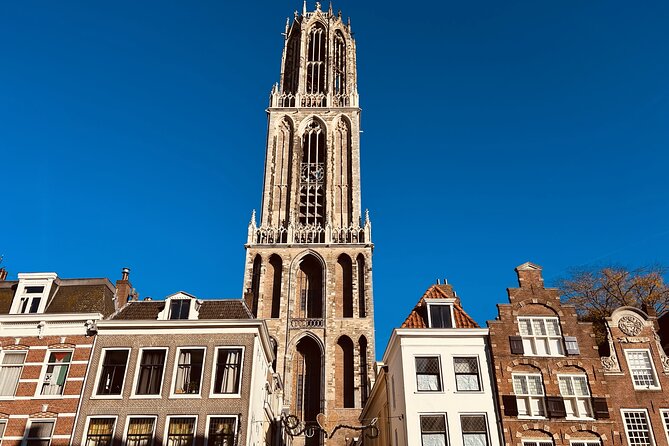
The tour starts at Domplein, the broad square beside Utrecht’s famous Dom. This is a useful starting point because the square gives you an immediate sense of the city’s scale and its long story. The first ten-minute segment looks at the Dom and the square’s past.
The same area returns at the end, with a separate stop focused on the Dom’s five-year renovation. That bookend structure works well. You first meet the landmark through its earlier story, then return to consider the lengthy work needed to protect and renew it.
Because the Domplein stop is free to enter, you can focus on the app and the surrounding buildings without arranging a separate ticket. Give yourself a moment before beginning to check your battery, audio, and map connection. A rushed start is the easiest way to spoil an otherwise relaxed self-guided walk.
De Werfkelder and the city below street level
From Domplein, the route continues to De Werfkelder, described as a medieval wonder beneath Utrecht’s streets. This stop adds a different physical setting to the walk. Instead of looking up at towers and façades, you consider the lower level of the city and the spaces built beneath the streets.
The stop is especially useful for showing that Utrecht is not only a collection of attractive canals and old buildings. Its past is also tucked into working spaces and lower passages. The AR material can help you picture how these places functioned in earlier times, something that can be difficult to grasp from modern street level alone.
Allow the full ten minutes here. The route is short enough that you may be tempted to hurry, but the point of the digital format is to look at the space while the app supplies context.
Seven small lanes and everyday Utrecht
De Zeven Steegjes van Utrecht shifts the focus from grand landmarks to local life. The name refers to seven narrow lanes with a folksy character, giving you a look at a more modest side of the city.
This is one of the route’s useful choices. A standard first-time city walk can concentrate on major monuments, while these lanes show how Utrecht’s story also belongs to ordinary neighborhoods. The audio and images help explain the character of the area rather than asking you to judge it only by appearance.
I would pay attention to the route map here. Small lanes can be less obvious to follow than a broad square, and the navigation support is most useful when the streets become less direct. The ten-minute estimate should leave time to look around without turning this into a long detour.
More History Tours in Utrecht:
- Historical Utrecht: Private Walking Tour with a Local Guide
★ 4.6 · 3 reviews - Historical Utrecht: Private Tour with Local Guide
★ 5.0 · 2 reviews - Amsterdam Food and Cultural Tour with Tastings
★ 5.0 · 2,442 reviews - Rotterdam: Kinderdijk UNESCO World Heritage Entry Ticket
★ 4.6 · 1,477 reviews
Geertebolwerk and a place of refuge
At Geertebolwerk, the tour explores Karel V as a place of refuge, past and present. This stop brings political and social history into the route, showing how a city location can take on different roles over time.
The subject also gives the walk some variety. You are no longer only hearing about construction, worship, or neighborhood life. You are considering protection, authority, and refuge. The AR approach can make that change easier to picture by placing historical material beside the modern setting.
This is another stop where a self-guided format helps. You can listen twice if a name or detail passes too quickly, then move on when you are ready. A live guide might add more explanation, but the app gives you control over the amount of information.
Pandhof Sinte Marie and monastic life
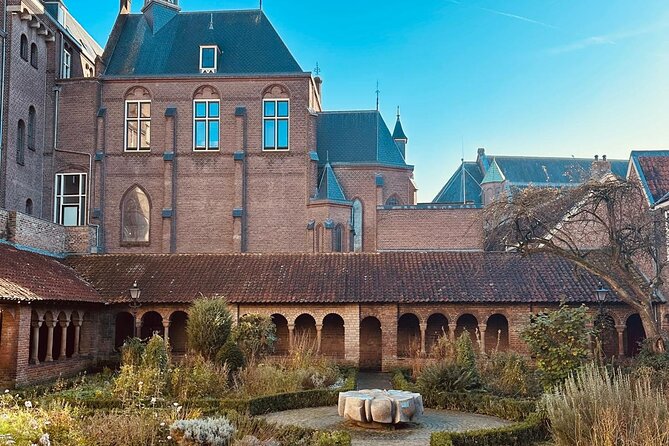
Pandhof Sinte Marie is one of the quieter and more unusual stops. The tour uses it to explain Sinte Marie and monastic life, and the digital material includes life-sized virtual nuns moving through the garden.
That feature is a good example of what AR can do well. A spoken description of monastic life may feel distant, especially in a peaceful garden. Seeing virtual figures in the actual setting gives the place a clearer human scale and makes the past easier to imagine.
The stop also rewards a slower pace. You may want to look at the garden before and after using the app, comparing the calm present with the historical scene on your screen. Since the route includes free admission at this point, you can focus on the setting rather than a ticket deadline.
Zadelstraat and a city mystery
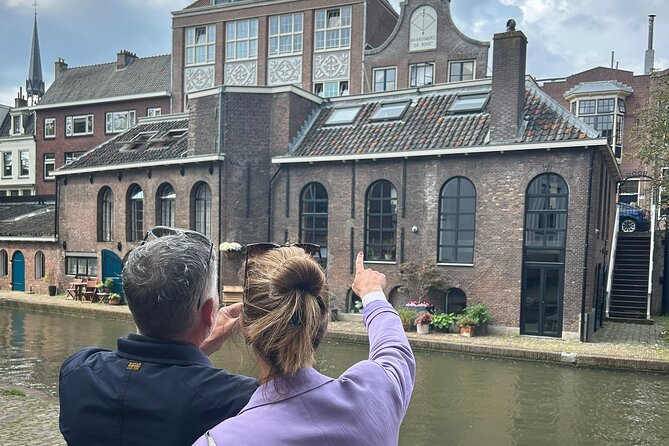
The Zadelstraat stop is built around a mystery. That change in tone keeps the walk from becoming a straight run through dates and names. A question or unresolved detail gives you a reason to pay attention to the street itself.
I like this kind of stop in a self-guided tour because it encourages you to look closely. Instead of simply reaching the next point on the map, you are asked to connect the digital story with the buildings and street around you.
The route is still compact, with ten minutes assigned to the stop. If you are walking in a group, let everyone hear the audio before moving on. One weakness of any phone-based tour is that it can be easy for one person to listen while others miss the detail.
Janskerk and two centuries of flower markets
At Janskerk, the story turns to two centuries of flower markets at Janskerkhof. This stop connects a religious setting with a long-running public tradition, giving you a stronger sense of how the square has served changing city life.
The subject is practical as well as historical. Markets help explain how a public place is used, not merely how it looks in a photograph. The audio and historical images can help you compare the current square with earlier activity.
This stop should appeal to anyone who likes social history more than lists of architectural dates. It also gives you a chance to pause in a familiar public space before the route moves on to Neude.
Neude, from marsh to city square
Neude traces the change from marsh to modern city square. It is a simple but effective way to show that urban Utrecht was shaped by water, ground conditions, and gradual development.
The stop broadens the story beyond individual buildings. You are looking at how a place itself changed and how a city grew around it. That makes the tour feel more connected, since the route is not just hopping between unrelated attractions.
Neude also works well as a break point. The tour can be completed in about two hours, but you are free to stop here for a drink or a meal if the timing suits you. The route does not include transportation or refreshments, so plan any pause as part of your own outing.
Sint Willibrordkerk and a quieter church visit
The stop at Sint Willibrordkerk introduces a church that may be easy to overlook when you are focused on the Dom. The tour presents it as a special place, with the audio and images doing the work of drawing your attention to its story.
This is a useful reminder that Utrecht’s religious past is not limited to its best-known tower. If you enjoy comparing churches, this stop adds another point of reference without requiring a separate guided visit.
Check the app’s instructions before assuming you can enter every site. Entrance fees are not included wherever they are necessary, and the supplied information does not promise interior access at each stop. The value here comes from the route and digital storytelling, not from a guaranteed admission package.
Paushuize and Pope Adrian’s story
At Paushuize, the tour follows the chronicle of Pope Adrian and the building connected with him. This stop offers a focused story tied to a particular person and place, which can make the past easier to remember than a broad overview.
The sequence also gives the route a strong human thread. You have already seen how streets, markets, churches, and squares changed. Here, the story narrows to one figure and one residence, giving the walk another texture.
As with the other stops, the app supplies the narration and visual material while you remain in control. You can move on after ten minutes, or take longer if the setting catches your interest. The private format means only your own group participates, so you do not need to match strangers.
Returning to the Dom during renovation
The final stop returns to Domplein, next to the Dom, and looks at five years of renovation. Ending here gives you a modern subject after the earlier stories of medieval streets, monastic life, and older public spaces.
Long repair work is easy to notice but harder to understand. The digital material can help explain the scale and duration of the renovation, turning what might look like an obstruction into part of the building’s current story.
Finishing where you began makes navigation simple. If the app works as intended, you have a clear endpoint and can continue your day from the same central square. The tour ends back at the meeting point rather than leaving you in a distant neighborhood.
Price, timing, and practical value
The price is $12 per person, with group discounts available. For a private, app-based city tour that includes audio, video, AR, virtual reality features, and map support, that is a reasonable price. You are paying for the content and the freedom to use it at your own pace, not for transport, a guide, or entry to paid attractions.
The value is strongest for two to four people who want structure without a scheduled group. A guided tour may offer more personal detail and an opportunity to ask questions, but it will usually be less flexible. Here, you can stop for lunch, browse a shop, or take a breather without losing the tour.
The experience is offered daily from 9:00 a.m. to 11:30 p.m. during the published operating period of October 22, 2024, through February 7, 2027. That broad window gives you plenty of choice, although daylight and phone visibility may affect how comfortable the AR elements are late at night.
It is booked, on average, seven days ahead. Confirmation arrives at booking, and free cancellation is available up to 24 hours before the start time. Cancellations or changes inside that window are not accepted for a refund.
Who should choose this Utrecht walk
I would recommend it to you if you like independent sightseeing, short historical stories, and technology that adds something to the actual place. It suits couples, friends, families, colleagues, and solo visitors, and the reviews indicate it works for both newcomers and people who already know Utrecht well.
It is also a good choice if you dislike being hurried. The route is easy to divide into sections, and you can stop between points. The ten-minute stop estimates make the outing manageable, while the flexible format lets you stretch it into a longer afternoon.
You may want a different experience if you prefer a human guide, detailed discussion, or a fully arranged package. You must bring your own phone and headphones, arrange your own internet connection for downloading the app, and monitor your battery. Service animals are allowed, public transportation is nearby, and most people can participate, but the tour does not provide transport or pickup.
Final verdict: book it for freedom and visual history
I would book this tour if I wanted an affordable, private introduction to Utrecht with room to set my own pace. The strongest features are the historical footage and virtual scenes placed at the locations they relate to, along with the route’s mix of famous sites and easy-to-miss corners.
Bring a fully charged phone, headphones, and enough time for a coffee stop. If those small preparations do not bother you, $12 buys a thoughtful way to see Utrecht through both its present streets and its earlier life. If you want a conversational expert beside you, choose a live tour instead.
FAQ
Where does the Utrecht AR tour start?
It starts at Domplein, 3512 JE Utrecht, Netherlands.
Where does the tour end?
The activity ends back at Domplein, the same meeting point where it begins.
How long does the tour take?
The tour takes approximately two hours.
Is the tour guided by a person?
No. It is a private, self-guided tour accessed through an app.
What language is available?
The experience is offered in English.
Is a mobile ticket provided?
Yes. The tour includes private access through the app and uses a mobile ticket.
Do I need to bring my own phone and headphones?
Yes. A mobile device and headphones are not included, so you need to bring your own.
Is internet access included?
No. You need an internet connection to download the app and tour.
Can I cancel for a full refund?
Yes, if you cancel at least 24 hours before the experience start time. Cancellations or changes made less than 24 hours in advance are not refunded or accepted.
Just added in Utrecht
- Vecht River: Private Tour sightseeing Cruise with diner★ 5.0 · 5 reviews
- Utrecht Walking Tour with a local comedian as guide★ 4.8 · 5 reviews
- Utrecht Quiz Tour★ 3.2 · 31 reviews
- Utrecht: Museum Speelklok Entry Ticket★ 4.5 · 48 reviews
- Utrecht: Vegan Food Bike Tour – 6 Tastings (excl. bike)★ 5.0 · 7 reviews
- Utrecht or Amsterdam Sidecar Tour. City, rural or TAILORMADE★ 5.0 · 2 reviews
- Utrecht: Lofen Palace with Entry Ticket & Guide (Dutch)★ 4.4 · 41 reviews
- Utrecht: Ludwig’s Original Pub Crawl with VIP Club Entry★ 3.3 · 42 reviews
Historical Tours, compared.
Amsterdam Food and Cultural Tour with Tastings
Read our review →
Kinderdijk UNESCO World Heritage Entry Ticket
Read our review →
Hop-on Hop-off Old-Fashioned Heritage Tram Tour
Read our review →


Amsterdam High-End Dutch Food & History Tour – Up to 8 guests
Read our review →
Cruise through the Historic City Center with Guide
Read our review →
Browse the lists this tour appears in