
Review · HISTORICAL TOURS
History & culture tour in Amsterdam with a local
Amsterdam reveals itself on foot. This two-hour history and culture walk connects the city’s old center, quiet courtyards, canals, Chinatown, and Central Station with clear stories from a local guide. I like the route because it explains how a fishing village became a major trading power, then links that past to the Amsterdam you see today.
I also like the small group limit of 15 people, the chance to enjoy a classic Dutch stroopwafel, and the option for the guide to adjust the conversation to your interests. The main consideration is pace: this is a walking tour lasting about two to two and a half hours, with no indoor admissions included, so it may feel brief if you want lengthy visits at each landmark.
In This Review
- Key points to know before you book
- Why this walking tour works well on your first day
- Beursplein: where a fishing village became a financial power
- Dam Square: power, memory, and the city’s public stage
- Begijnhof: a calm courtyard with a complicated religious story
- House on the Three Canals: small details and canal design
- Nieuwmarkt and the Waag: gates, guilds, and crooked houses
- Zeedijk: Chinatown and a changing Amsterdam
- Centraal Station: architecture and Amsterdam’s connection to the wider world
- What the $30.07 price gets you
- Timing, walking effort, and practical planning
- Who should book this Amsterdam walk?
- Should you book the history and culture tour?
- FAQ
- How long does the Amsterdam history and culture tour last?
- Where does the tour begin and end?
- What language is the tour offered in?
- How many people can join the walking tour?
- Is a stroopwafel included?
- Can I cancel for a full refund?
Key points to know before you book
- The route links seven central Amsterdam stops, from Beursplein and Dam Square to Begijnhof, Nieuwmarkt, Zeedijk, and Centraal Station.
- The tour explains Amsterdam’s growth, including its early fishing village roots, 17th-century economic rise, guild system, religious past, and wartime history.
- Begijnhof provides a quiet break from the busy streets and includes one of Amsterdam’s oldest wooden houses.
- The group is capped at 15 people, making it easier to hear the guide and ask questions than on a large coach-style walk.
- A stroopwafel is included, adding a small but welcome taste of Dutch food to the sightseeing.
- The tour costs $30.07 per person, a fair price if you want orientation and historical context rather than museum entry or a long specialist lecture.
Why this walking tour works well on your first day
I see this as a useful first-day introduction to Amsterdam. The route covers major sights without asking you to spend hours inside one museum, and it gives you a basic map of the old center. Afterward, you will have a better sense of which places deserve a slower second visit.
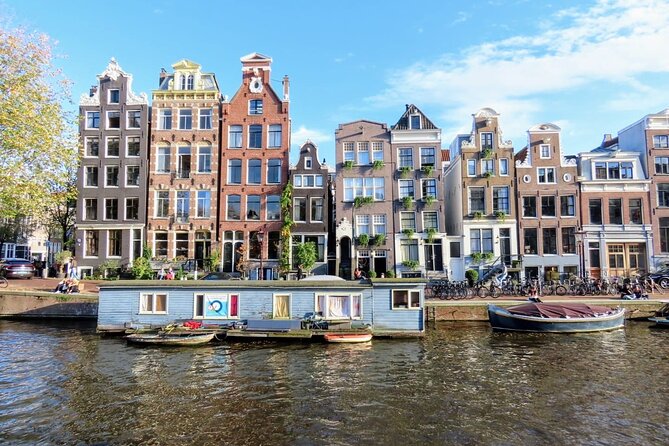
The route also moves through different sides of the city. You begin with Amsterdam’s commercial and civic roots, pass through a religious courtyard and canal scenery, then reach the old city gate area, Chinatown, and the railway station. That variety keeps the walk from becoming a string of similar canal views.
The guide’s role matters here. The written route has enough stops to fill roughly two hours, but the value comes from the links between them. A good explanation can turn a plain square, a crooked house, or an old gate into part of a larger story about trade, faith, war, migration, and transport.
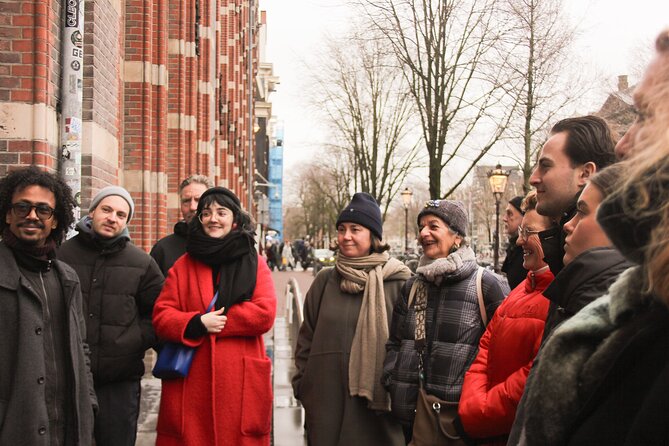
Several comments praise Manouk for being friendly, well-informed, and able to tailor the walk. One person who booked a private version appreciated the mix of historical facts, present-day life, and a thoughtful treat at the end. Another called it a strong choice for the first day and praised the interesting insights into Amsterdam’s past.
More History Tours in Amsterdam
- Amsterdam Food and Cultural Tour with Tastings
★ 5.0 · 2,442 reviews - Amsterdam: Haunted History and Ghost Walking Tour
★ 4.5 · 488 reviews - Amsterdam High-End Dutch Food & History Tour – Up to 8 guests
★ 5.0 · 482 reviews
Beursplein: where a fishing village became a financial power
The tour begins at Beursplein, a central square near the old commercial heart of Amsterdam. The opening story focuses on the city’s name and origins, then follows Amsterdam’s growth from a small fishing settlement to a major center of global trade in the 17th century.
This is a smart place to start because it gives the rest of the walk a purpose. As you move through the old center, you are not simply checking off buildings. You are seeing the physical setting that supported Amsterdam’s rise as a port and business center.
The stop lasts about 10 minutes and has no admission charge. You will be standing outdoors, so listen carefully at the start, when the guide sets up the main themes. If you are interested in economics, urban growth, or the Dutch Golden Age, this opening should be especially useful.
Dam Square: power, memory, and the city’s public stage
From Beursplein, the walk continues to Dam Square. The guide explains the square’s importance in the formation of Amsterdam and points out the Royal Palace on the Dam, one of the city center’s most imposing buildings.
The discussion also includes the square’s role during the Second World War. That gives the stop more weight than a quick photo opportunity. Dam Square is not only a place for ceremonies, crowds, and architecture. It is also a public space shaped by national power and painful memory.
You spend about 10 minutes here. The advantage is efficient context, especially if you are seeing the Royal Palace for the first time. The limitation is equally clear: the tour does not include palace admission, and 10 minutes is enough for an explanation and exterior viewing, not a detailed architectural study.
Begijnhof: a calm courtyard with a complicated religious story
Begijnhof changes the mood. After the open public spaces, you enter a quiet courtyard connected with Amsterdam’s religious history. The guide explains the women who lived there and what the site says about tolerance in the city.
The courtyard also contains one of Amsterdam’s oldest houses, one of two surviving wooden cottages. That detail makes the stop memorable. Amsterdam is famous for canal houses, but early wooden construction is much less obvious in the city center. Here, a single building helps you picture a much older stage of urban life.
The visit lasts around 15 minutes, the longest stop listed on the route. That extra time makes sense. Begijnhof is a place where you need to slow down, look around, and allow the setting to speak a little. You should still expect a guided visit rather than a long independent pause.
I especially like this stop for people who want more than trade and grand civic buildings. It brings in faith, women’s lives, architecture, and the question of how Amsterdam handled religious difference. It also offers a quiet interval before the walk returns to busier streets.
A different kind of day out entirely:
- Amsterdam: Van Gogh Museum Ticket
★ 4.7 · 52,054 reviews - Amsterdam Classic Saloon Boat Cruise with Drinks and Cheese
★ 5.0 · 31,825 reviews - Amsterdam Luxury Canal Cruise + Unlimited Drinks & Bites option
★ 5.0 · 30,518 reviews - Amsterdam: Heineken Experience Ticket
★ 4.6 · 30,055 reviews
House on the Three Canals: small details and canal design
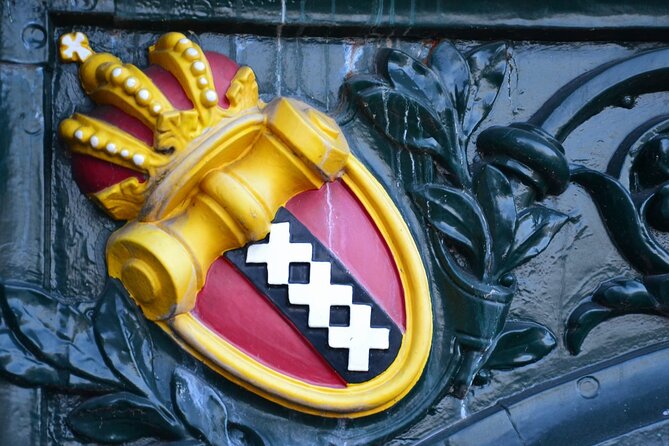
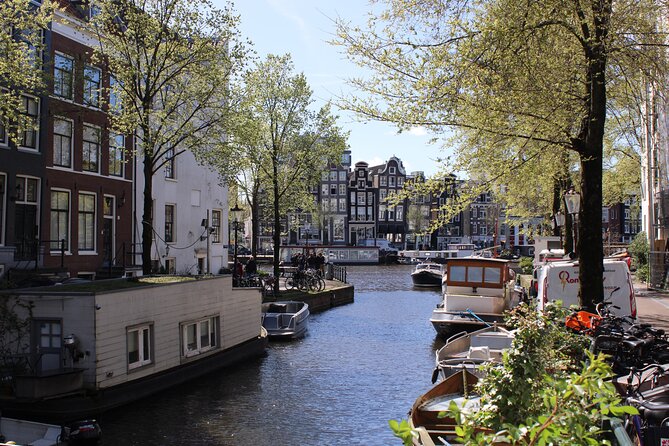
Next comes a house located at three canals, along with an explanation of the bicycle bridge. This is a shorter stop, about 10 minutes, but it reflects one of Amsterdam’s best sightseeing habits: look up, look across the water, and notice the details between major landmarks.
A house at the meeting point of three canals helps you understand how the city’s waterways shape its streets and buildings. The bicycle bridge adds a more modern, everyday note. It connects the historic canal setting with the practical transport culture you see throughout Amsterdam.
This part may appeal most if you enjoy architecture and city design. It is less about entering a famous attraction and more about learning to read the street. The stop also shows why a local guide can add value to a walk. Without an explanation, you might pass the house and bridge without knowing why they matter.
Nieuwmarkt and the Waag: gates, guilds, and crooked houses
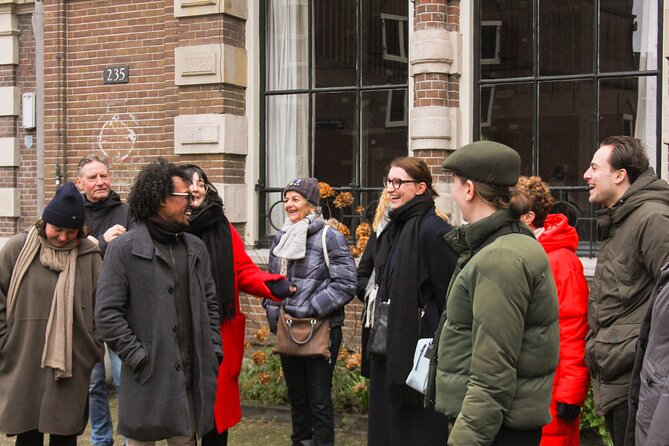
At Nieuwmarkt, the focus shifts to the Waag. This building began as one of the old city gates and later became a guild hall. The guide explains the importance of guilds in Amsterdam, giving you a look at how trades and professional groups helped organize city life.
The Waag is a useful example of how one structure can change purpose as a city grows. A gate connected to defense later served a civic and commercial role. That kind of reuse is part of Amsterdam’s appeal, and it makes the building easier to understand than if you only heard its name and date.
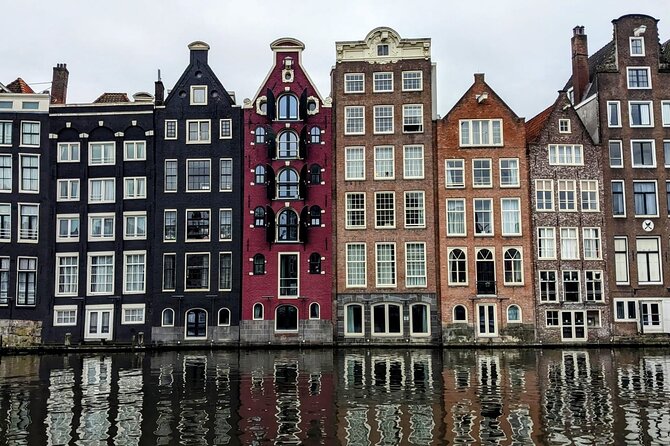
You also see the dancing houses, the narrow and leaning buildings that have become a familiar part of Amsterdam’s visual character. The tour does not present them as isolated curiosities. Instead, they fit into a wider explanation of old streets, canals, and the city’s long development.
The stop lasts about 10 minutes. That is enough to discuss the Waag and point out the houses, but not enough for a detailed examination of every building around the square. If you want photographs, use the walk between stops for them rather than expecting a long pause.
Zeedijk: Chinatown and a changing Amsterdam
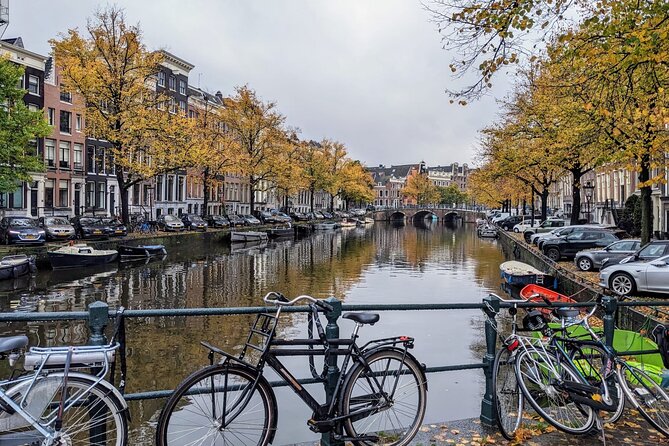
Zeedijk brings the tour into one of the city’s most layered streets. The guide introduces Amsterdam’s Chinatown and explains how the area was once considered the most dangerous part of the city during the 1970s. You then hear how the street declined and changed into a favorite area for many local residents.
This is one of the most useful stops for understanding Amsterdam as a living city. It moves beyond old buildings and famous dates to show how neighborhoods can shift in reputation and use. The story also adds migration and cultural change to the tour, broadening the picture of Amsterdam beyond its Dutch trading past.
The stop takes about 10 minutes. The subject is large, so expect an overview rather than a full account of Amsterdam’s Chinese community or urban policy. Still, it gives you a good reason to return to Zeedijk later and explore at your own pace.
The area also helps break up the route. After the quiet Begijnhof and the canal architecture, Zeedijk brings you back into a street with food, shops, and a more contemporary city feel. The included stroopwafel fits nicely into this part of the experience or the walk around it, giving you a simple taste of Dutch food without turning the tour into a food crawl.
Centraal Station: architecture and Amsterdam’s connection to the wider world
The final major stop is Amsterdam Centraal Station, one of the city’s most striking buildings. The guide explains its architecture and why this location has mattered for centuries as a transport hub.
This closing point works well because it brings the story back to connection and movement. Amsterdam’s canals helped carry goods and people, while the station later tied the city to a much wider rail network. The building also acts as a strong visual ending, with its grand exterior and prominent position near the water.
The discussion connects transport with prosperity and with Amsterdam’s role as a gateway. That gives the tour a satisfying shape, from a small settlement to a city linked to the rest of the country and beyond.
The walk ends back at Beursplein rather than at the station. This is important for planning. You can enjoy the station during the route, but you should not assume the tour finishes there. The final return also makes it easier to continue with other plans in the central area.
What the $30.07 price gets you
At $30.07 per person, the tour sits in the affordable range for a guided city walk. You are paying for about two hours of explanation, a route through seven central areas, a small-group setting, and a stroopwafel. There are no separate admission fees listed because the stops are viewed from public areas rather than entered as paid attractions.
The value is strongest if you want orientation and context. A guide can explain why Dam Square matters, why the Waag changed roles, and how Zeedijk’s reputation shifted. Those connections are hard to pick up from a quick walk with a map.
The value is weaker if you want extensive interior sightseeing. You will not have a long visit inside the Royal Palace or a museum, and the stop times are short. In that case, think of this as a city introduction, then plan separate visits to the places that catch your interest.
The maximum group size is 15. That is small enough to feel more personal than a large public walk, while still allowing you to meet other people. A private booking is also possible, based on the experience described by one customer, and Manouk was praised for shaping that version around personal interests.
Timing, walking effort, and practical planning
The stated duration is about two hours, while the practical estimate is two to two and a half hours. Build in the longer window, especially if the group pauses for questions or takes time moving between sights.
The meeting point is Beursplein, and the activity returns there. The location is near public transportation, which makes it a practical starting point from elsewhere in Amsterdam. Confirmation is provided at booking, and the tour is offered in English.
This is an outdoor walking experience, so choose it when you are ready to spend a substantial part of the morning or afternoon on your feet. Most people can participate, and service animals are allowed. The supplied information does not give a detailed accessibility assessment, so you should ask the provider directly if you need specific route or pavement details.
The tour is offered as a small group with a maximum of 15 people. That should help with hearing the guide, though the quality of the experience will still depend on the guide’s pace and your group’s questions. The published feedback gives Manouk particular praise for friendly delivery, useful facts, and customization.
Free cancellation is available if you cancel at least 24 hours before the start time. A cancellation later than that is not refunded, and changes inside that window are not accepted. The cut-off follows local Amsterdam time.
Who should book this Amsterdam walk?
I would recommend it to a first-time visitor who wants a clear introduction before exploring alone. It also fits history lovers who enjoy hearing how religion, trade, war, migration, and transport shaped one city.
The tour suits you especially well if you prefer:
- A short, guided introduction rather than a full-day program
- Central Amsterdam sights connected by a single route
- Small groups instead of large crowds
- Historical explanations with present-day context
- A little local food included along the way
- A guide who may adapt the conversation to your interests
I would think twice if you dislike walking, want lots of free time at each stop, or are mainly seeking museum interiors. The route offers a broad overview, not a specialist lecture or a deep visit to one landmark.
Should you book the history and culture tour?
Book it if you want Amsterdam to make more sense quickly. For $30.07, you get a well-planned central route, seven distinct stops, a small group, and the chance to ask questions in English. I particularly like the balance between major places such as Dam Square and Centraal Station and quieter or less obvious stops such as Begijnhof and the House on the Three Canals.
The strongest reason to choose this walk is the guide-led storytelling. Manouk received praise for tailoring the experience, explaining both Amsterdam’s past and its present character, and adding a thoughtful treat. Just keep your expectations realistic: this is a brisk outdoor overview, not a series of long attraction visits. Book it early in your stay, use it to get your bearings, and return later to the places that deserve more time.
FAQ
How long does the Amsterdam history and culture tour last?
The walk takes about two hours, with the practical duration given as two to two and a half hours. The route includes time walking between the main stops.
Where does the tour begin and end?
The tour starts at Beursplein, 1012 JW Amsterdam, Netherlands. It ends back at the same meeting point.
What language is the tour offered in?
The tour is offered in English.
How many people can join the walking tour?
The maximum group size is 15 people.
Is a stroopwafel included?
Yes. You can enjoy a classic Dutch stroopwafel during the experience.
Can I cancel for a full refund?
Yes, if you cancel at least 24 hours before the experience start time. Cancellations made less than 24 hours before the start time are not refunded, and changes within that period are not accepted.
Just added in Amsterdam
- Private Tour Zaanse Schans Windmills and Volendam in Jaguar★ 5.0 · 10 reviews
- Half-Day Private Guided Sightseeing Tour of Zaanse Schans★ 5.0 · 14 reviews
- Zaanse Schans and Giethoorn Unique Day Trip with Boat Cruise★ 4.5 · 17 reviews
- Windmills-Volendam-Giethoorn Private Tour in Jaguar★ 5.0 · 2 reviews
- Best of Netherlands: Zaanse Schans Mills, The Hague & Rotterdam★ 4.5 · 10 reviews
- Zaanse Schans Private Tour Windmills★ 5.0 · 18 reviews
- Zaanse Schans Windmills Edam Volendam and Marken from Amsterdam★ 5.0 · 1 review
- Zaanse Schans Edam Volendam Private Day Tour from Amsterdam★ 5.0 · 3 reviews
Historical Tours, compared.
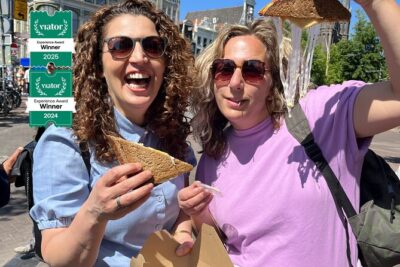
Amsterdam Food and Cultural Tour with Tastings
Read our review →
Kinderdijk UNESCO World Heritage Entry Ticket
Read our review →
Hop-on Hop-off Old-Fashioned Heritage Tram Tour
Read our review →


Amsterdam High-End Dutch Food & History Tour – Up to 8 guests
Read our review →
Cruise through the Historic City Center with Guide
Read our review →
Browse the lists this tour appears in