
Review · WALKING TOURS
Rotterdam: Highlights & Gems Walking Tour with Dutch Local
Rotterdam makes its story visible in stone. This three-hour walk links the city’s medieval roots, wartime destruction, modern architecture, and future plans in one well-paced route. I especially like the local perspective from Yoreh, a Rotterdam native who uses photos, maps, and personal stories to make the city easier to understand. I also like the mix of famous sights and quieter corners, rather than a parade of postcard stops. The main drawback is simple: you cover about 6 kilometers and roughly 15,000 steps, so this is not a gentle stroll.
You begin at Oude Binnenweg and finish around the Markthal area, with the route passing through several different faces of Rotterdam. The stroopwafel break, sitting stops, toilet break, and photo tips are useful touches, but you will still spend plenty of time standing and walking. I would book it early in your stay, since the guide’s advice on food, transport, and further sightseeing can help shape the rest of your visit.
In This Review
- Key points at a glance
- Why Rotterdam works so well on foot
- Starting at Oude Binnenweg and Santa Claus
- Santa Claus, Depot Boijmans, and the Museum Quarter
- Veerhaven and the route toward Erasmus Bridge
- Shipping Quarter and Maritime District
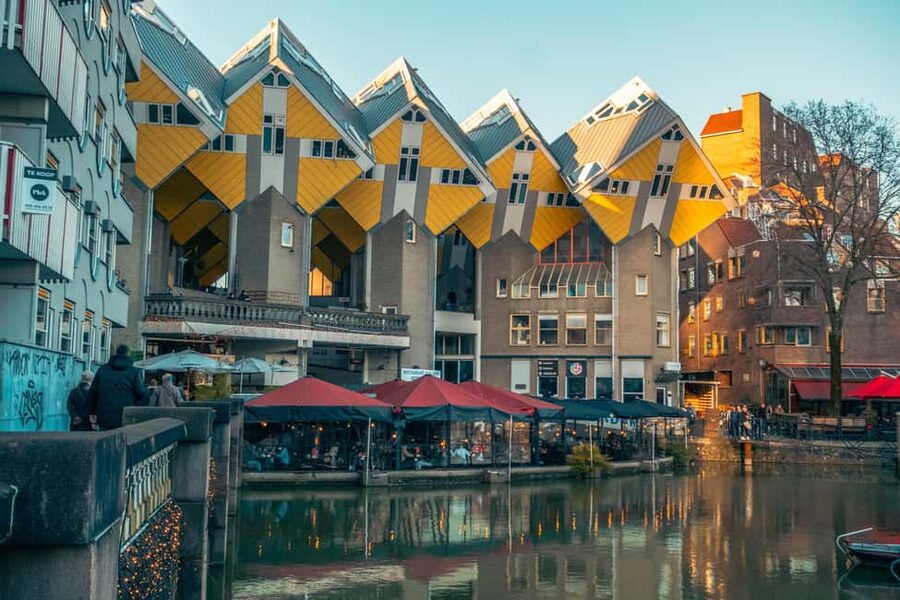
- Oude Haven and the Cube Houses
- Markthal, the tour’s flavorful finish
- What Yoreh adds to the experience
- Pace, comfort, and accessibility
- Price and overall value at $46
- Who should book this Rotterdam walk?
- Should you book it?
- FAQ
- How long does the Rotterdam walking tour last?
- How far do you walk?
- Where does the tour start?
- How do I recognize the guide?
- What languages are available?
- Is the tour wheelchair accessible?
- Are restroom breaks provided?
- What sights are included?
- Can I book a private group?
Key points at a glance
- Yoreh’s visual storytelling: Photos, maps, and charts help you picture Rotterdam before and after World War II.
- A city told through architecture: You see older buildings, striking postwar designs, and ideas for Rotterdam’s future.
- Major sights with lesser-known stops: The Cube Houses, Markthal, Erasmus Bridge, Maritime District, and quieter viewpoints all make the route.
- A useful first-day orientation: The walk helps you understand how Rotterdam’s neighborhoods connect and where to return later.
- A real walking workout: Expect around 6 kilometers, 15,000 steps, stairs, and longer periods on your feet.
- A tasty finish: The tour ends at or around Markthal, where you can choose from many food options.
Why Rotterdam works so well on foot
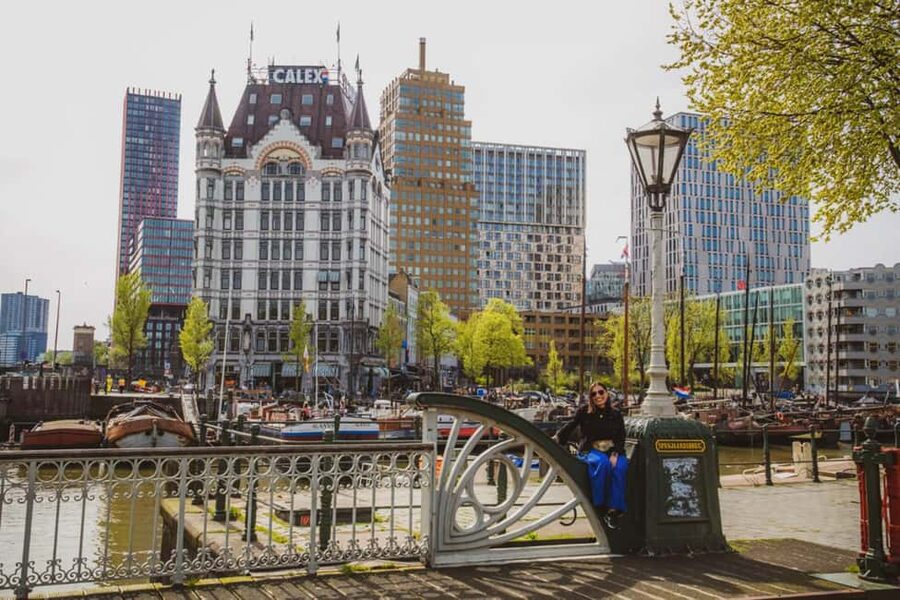
Rotterdam is unlike most Dutch cities. Its story is not built around one preserved old center. Instead, you see fragments of its medieval past beside bold new buildings, wide streets, working harbor districts, and experimental housing.
That makes a local guide especially useful. Without context, Rotterdam can look like a collection of unrelated architectural projects. Yoreh gives those buildings a timeline. He explains how the settlement began beside the Rotte River in the 13th century, grew through trade, became one of Europe’s great ports, and then had to rebuild after the destruction of World War II.
I like this approach because the tour is not just a list of attractions. You learn why the city looks the way it does. The old, current, and planned future styles all become part of one story.
The route also helps with orientation. Rotterdam covers a wide area, and its modern districts can feel spread out when you first arrive. By the end, you should have a clearer sense of the central neighborhoods, the river, the harbor districts, and the places worth revisiting.
More Walking Tours in Rotterdam
- Rotterdam: Architectural Highlights Guided Walking Tour
★ 4.8 · 215 reviews - Rotterdam Walk: Hilights, Gems, Architecture & WWII | 2 or 3hrs
★ 5.0 · 149 reviews - Rotterdam 2-Hour Walking Tour | Discover The City With A Local
★ 4.5 · 111 reviews
Starting at Oude Binnenweg and Santa Claus
The meeting point is at Oude Binnenweg 137, in front of the Swan gift shop and beside the large black Santa Claus statue. Look for the yellow Rottourdam umbrella, which is the easiest way to spot the guide.
Arrive at least five minutes early. The guide can wait only five minutes after the official start, so this is not the time to rely on a last-minute tram connection.
Oude Binnenweg gives the tour a pleasant beginning. It connects with the more modern central city, and starting here lets you see how Rotterdam shifts from older streets into its postwar and contemporary districts. Santa Claus, a large public sculpture, adds a little oddball character before the serious history begins.
That balance suits Rotterdam. The city is thoughtful about its past, but it does not take itself too seriously.
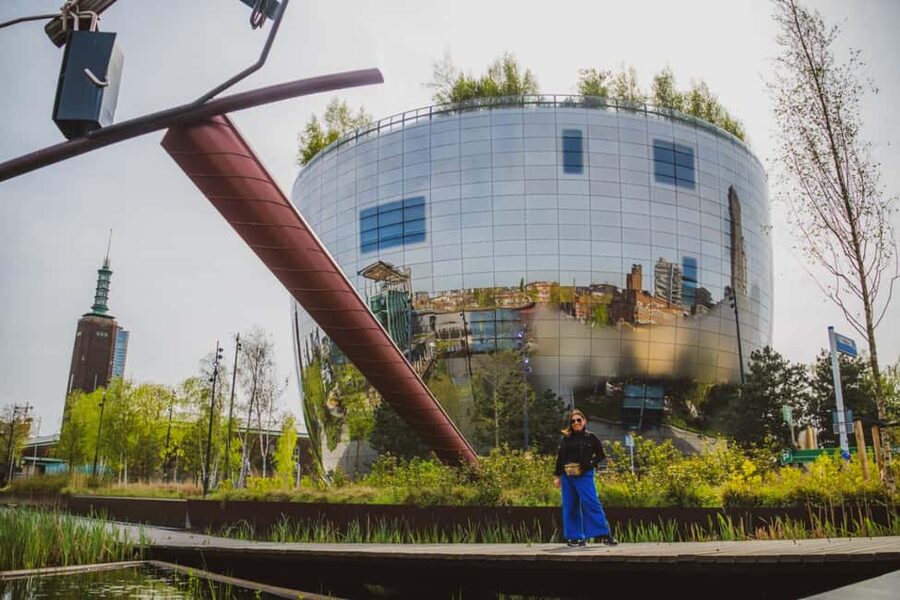
Santa Claus, Depot Boijmans, and the Museum Quarter
You pass the Santa Claus sculpture rather than stop for a formal visit. The same is true of Depot Boijmans Van Beuningen, the city’s distinctive art storage building, and parts of the Museum Quarter.
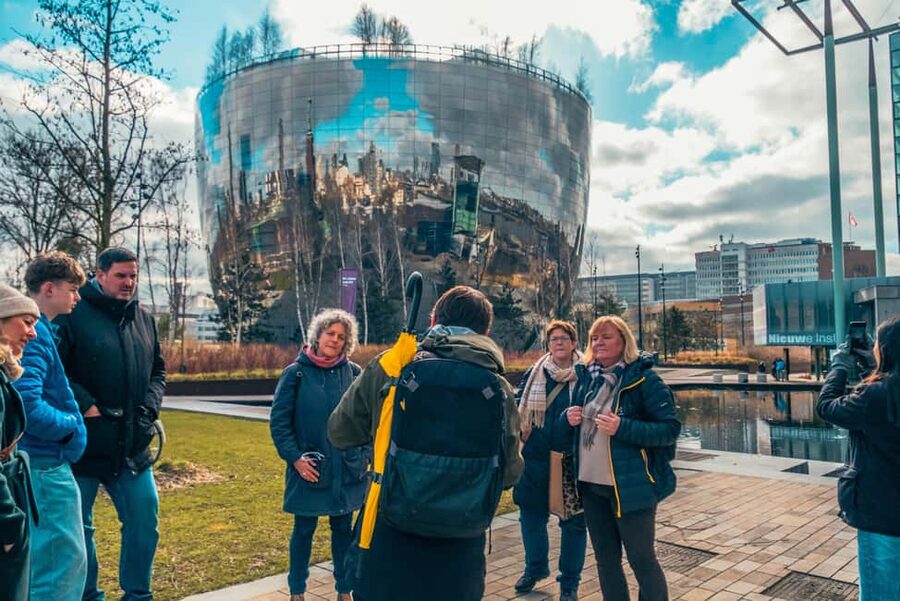
These stops are valuable because they show Rotterdam’s interest in public art and unusual design. Depot Boijmans is especially worth seeing from the outside. Its reflective, rounded form looks unlike a traditional museum, and it fits the city’s habit of turning practical buildings into visual statements.
The Museum Quarter adds another layer. Here, art and architecture help explain the city’s cultural ambitions after the war. The tour does not replace a museum visit, but it gives you ideas for where to spend more time later.
Yoreh’s supporting images are a strong feature at this point. Historical photographs and visual material let you compare the present city with earlier versions of the same area. That is far more useful than hearing dates without seeing the physical change.
Veerhaven and the route toward Erasmus Bridge
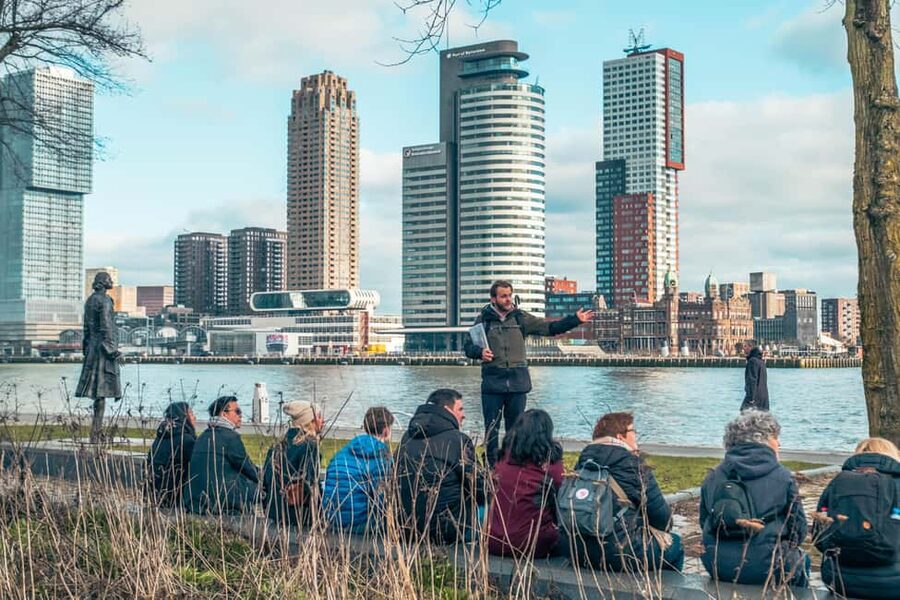
The walk continues through Veerhaven, a quieter harbor setting that offers a change of pace from the central streets. This is one of the route’s useful contrasts. Rotterdam is often presented through huge modern buildings, but Veerhaven shows a calmer and more traditional side of the city.
You then pass the Erasmus Bridge, one of Rotterdam’s best-known landmarks. Its sweeping white structure crosses the Nieuwe Maas and has become a symbol of the city’s ability to rebuild and look forward.
The bridge is a natural photo stop, and Yoreh offers advice on good angles. Since the tour keeps moving, you should not expect a long photography session at every location. Bring your camera, but keep it ready and be prepared to walk on when the group does.
This part also helps you understand Rotterdam’s position beside the water. The harbor is not merely a scenic backdrop. It shaped the city’s economy, growth, and identity. The route connects that working-port story with the architecture now surrounding the river.
A different kind of day out entirely:
- Rotterdam: Harbor Sightseeing Cruise
★ 4.3 · 7,599 reviews - Rotterdam: 1-Hour Sightseeing Splash Tour
★ 4.5 · 3,299 reviews - Rotterdam: Rotterdam Zoo Blijdorp Entry Ticket
★ 4.6 · 2,754 reviews - Rotterdam: Euromast Lookout Tower Ticket
★ 4.4 · 2,549 reviews
Shipping Quarter and Maritime District
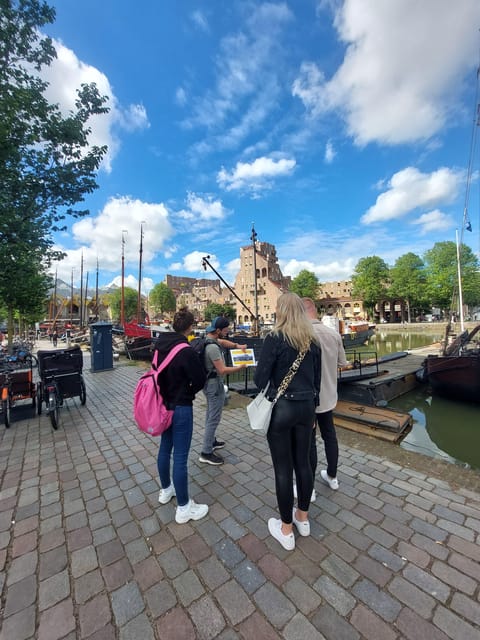
The Shipping Quarter and Maritime District bring Rotterdam’s seafaring past into sharper focus. These neighborhoods connect the city’s present appearance with its role as a major port.
I appreciate that the tour does not treat architecture as decoration alone. Buildings, streets, and harbor spaces are tied to trade, industry, movement, and the city’s need to keep adapting. The guide’s stories help make those connections clear.
The Maritime District is also a good place to see how Rotterdam mixes old and new. You may encounter restored or older elements close to modern apartment blocks and office buildings. The point is not to find one perfect historic street. The appeal is seeing the layers beside one another.
This is where the tour’s pace matters. You will cover substantial ground, and some explanations take place while standing. Sitting is available at selected locations, and a restroom break comes about halfway through, but you should wear supportive shoes and dress for changing weather.
Oude Haven and the Cube Houses
Oude Haven is one of the most interesting transitions on the route. It brings you back toward an older harbor setting, then leads into one of Rotterdam’s most famous modern housing experiments.
The Cube Houses are instantly recognizable. Their tilted forms challenge the usual idea of what a home should look like, and they are one of the clearest examples of Rotterdam’s willingness to try something strange in public view.
You pass the Cube Houses as part of the walking route. If you want to explore one from inside, you will need to arrange that separately, since the tour does not list an interior visit. Even from outside, the buildings are easy to study and photograph.
Yoreh’s explanation is important here. Without it, the cubes can seem like a clever photo backdrop. With context, they become part of the larger story about postwar rebuilding, inventive planning, and Rotterdam’s continuing interest in new forms of urban living.
This is also a handy point for photos, but watch your footing and stay with the group. The route includes stairs and steps, although they can be avoided if needed.
Markthal, the tour’s flavorful finish
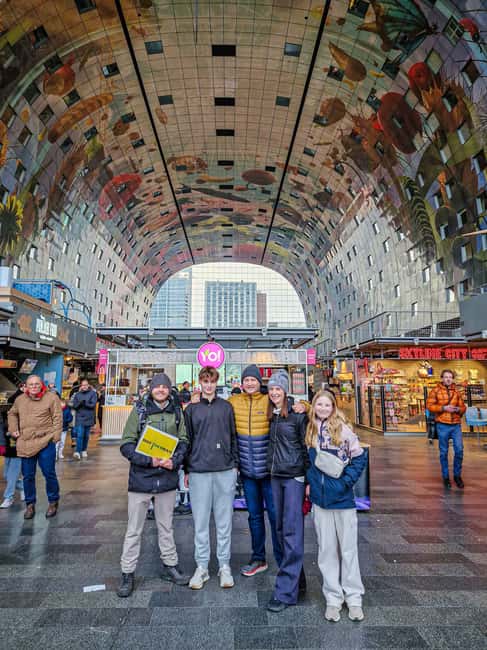
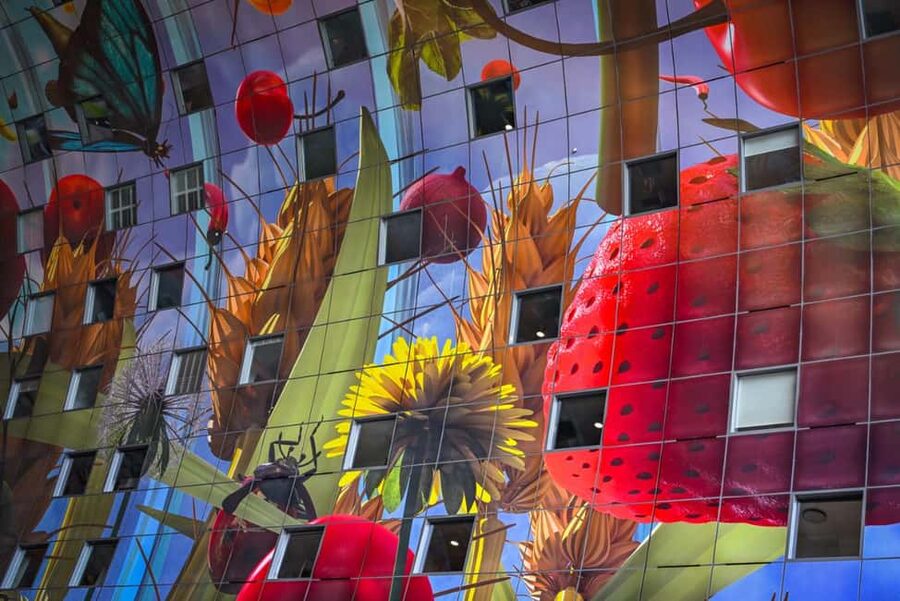
The Markthal is the tour’s main visit and its most convenient ending. The building combines a large indoor food market with apartments wrapped around a huge arched interior.
Its colorful ceiling artwork has earned comparisons to the Sistine Chapel, though Rotterdam’s version replaces religious scenes with oversized fruit, flowers, and market produce. The result is playful, bright, and very much in keeping with the city’s modern character.
Ending here makes practical sense. After three hours on foot, you can choose something to eat without needing another trip across town. The guide offers suggestions about where to eat inside the market, so you can stay for lunch, a snack, or a look around.
I would not treat Markthal as just a final photo opportunity. It brings together several themes from the walk: trade, food, architecture, public space, and the city’s habit of reinventing itself. You finish with a building that is both useful and theatrical.
The route information also gives Market Hall at Westnieuwland 501 as a drop-off location, while the activity details say the walk ends back at the meeting point. Since both details appear in the arrangements, confirm the exact endpoint with the guide on the day. In either case, you finish in a central area with easy access to the market and nearby sights.
What Yoreh adds to the experience
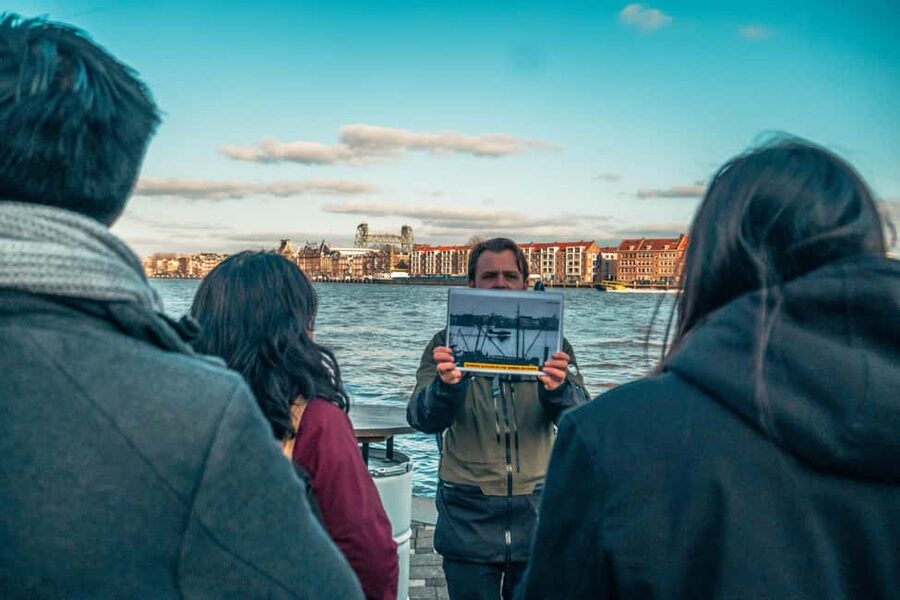
The strongest reason to choose this walk is Yoreh’s way of presenting Rotterdam. He brings a folder or pack of photos, maps, and charts, using them to show the city’s past, present, and possible future.
That visual material matters in Rotterdam. World War II and the rebuilding that followed changed the city so completely that the old photographs help you grasp what was lost and what was deliberately rebuilt. You are not left with a vague story about destruction. You can see how the streets and buildings changed.
Yoreh also shares personal memories from growing up in Rotterdam. Those details give the tour a more human feel and keep it from becoming a lecture. His humor and enthusiasm are frequently praised, but he is also described as honest about both the city’s strengths and its problems.
That honesty is useful. Rotterdam is not presented as a polished museum piece. It is a working, changing city with grand ideas, practical challenges, and plenty of architectural experiments. I prefer that kind of introduction because it prepares you to see the city as residents do.
The guide is also happy to answer questions and offer suggestions for the rest of your stay. You can ask about places to eat, photo locations, public transport, or other Dutch cities. Those practical tips may be as useful as the formal sightseeing.
Pace, comfort, and accessibility
The tour lasts up to three hours and covers about 6 kilometers. The estimate of 15,000 steps is worth taking seriously. You will walk at a steady pace, with short sitting opportunities when conditions allow, a restroom stop, and a stroopwafel halfway through.
The stroopwafel is a small detail, but a smart one. It gives you a typical Dutch snack and a quick energy boost before the second half.
This is not a good fit if you have back, hip, or foot problems, or if you are highly pregnant. You will stand for longer periods and may use stairs or steps. The route is wheelchair accessible, and stairs can be avoided. A wheelchair-accessible restroom is also available.
Weather and city events can change the route slightly. The walk may run a little shorter or longer in those cases. You can take photos, but the group needs to keep moving to finish on time.
The tour is offered in Dutch or English. A small group keeps the experience personal, and a private group is available if you want the route adjusted around your interests.
Price and overall value at $46
At $46 per person, the tour is priced above a casual free walking tour, but it offers more than a basic introduction. You get three hours with a local guide, a carefully connected route, visual history material, a stroopwafel, rest stops, photo advice, and food suggestions for Markthal.
The value depends on how you use it. If you want a quick checklist of landmarks, you may find the pace and storytelling more than you need. If you want to understand why Rotterdam looks so different from other Dutch cities, the price is easier to justify.
I see the best value for first-time visitors, cruise passengers with one day in the city, and anyone interested in architecture or urban change. Several people have used the walk early in their visit, then returned to places that caught their attention.
The small-group format also matters. You can ask questions, hear the guide clearly, and get advice suited to your plans. A private option makes more sense for families or groups with a particular interest in architecture, history, or food, though the standard small group should suit most visitors.
Who should book this Rotterdam walk?
I would choose this tour if you want a strong first look at Rotterdam rather than a single museum or boat trip. It gives you a useful map of the city and explains the connection between the harbor, the war, rebuilding, architecture, and daily life.
Families with older children can do well here. Young people may enjoy the Cube Houses, Santa Claus sculpture, and unusual modern buildings, while the stroopwafel helps keep morale up. One family found that children aged 12 and 16 stayed engaged because Yoreh mixed facts with humor.
It also suits cruise passengers. From the cruise terminal, tram 5 toward Rotterdam Centraal reaches Kruisplein, followed by about a five-minute walk to Oude Binnenweg 137. Tram 3 toward Central Station reaches Beurs, followed by about a ten-minute walk.
From Rotterdam Central Station, trams 4, 6, and 8 can take you toward the starting area, depending on the direction and stop needed. You can use a contactless debit or credit card on trains, buses, trams, and the metro.
Should you book it?
Book this tour if you enjoy walking, want a local voice, and care about the reasons behind Rotterdam’s unusual appearance. Yoreh’s personal stories, visual aids, humor, and practical advice make it more useful than a simple landmark tour.
Skip it if you need a slow route with frequent seating or prefer to explore independently at your own pace. For most first-time visitors who can manage 15,000 steps, this is a lively and thoughtful way to get your bearings, see the major sights, and find a few places worth returning to.
FAQ
How long does the Rotterdam walking tour last?
The tour lasts about three hours. City events or extreme weather may cause a small change to the route or timing.
How far do you walk?
You can expect to walk about 6 kilometers, or roughly 15,000 steps, at a steady pace.
Where does the tour start?
The meeting point is Oude Binnenweg 137, in front of the Swan gift shop beside the large black Santa Claus statue.
How do I recognize the guide?
Look for the yellow Rottourdam umbrella. The guide is Yoreh, a Dutch local from Rotterdam.
What languages are available?
The tour is offered in Dutch and English.
Is the tour wheelchair accessible?
Yes. The route is wheelchair accessible, stairs and steps can be avoided, and a wheelchair-accessible restroom is available.
Are restroom breaks provided?
Yes. There is a restroom break around halfway through the walk, with additional sitting opportunities at selected locations.
What sights are included?
The route passes Santa Claus, Depot Boijmans Van Beuningen, Veerhaven, Erasmus Bridge, the Maritime District, Oude Haven, and the Cube Houses. You visit Markthal.
Can I book a private group?
Yes. A private group option is available.
Just added in Rotterdam
- e-Scavenger hunt Dordrecht: Explore the city at your own pace★ 4.5 · 24 reviews
- Escape the City – Interactive city walk in Dordrecht★ 5.0 · 1 review
- Discover the best spots in Dordrecht with Outside Escape★ 4.5 · 11 reviews
- Historical Dordrecht: Private Tour with Local Guide★ 5.0 · 1 review
- The Netherlands: WW2 Private Day Trip★ 5.0 · 4 reviews
- Rotterdam: Guided Food Tour★ 4.4 · 16 reviews
- Rotterdam: Trompenburg Botanical Gardens Entry Ticket★ 4.1 · 77 reviews
- Rotterdam: UNESCO Van Nelle Factory Guided Tour★ 4.5 · 94 reviews
Walking Tours, compared.
Anne Frank’s Story – Guided Walking Tour through Amsterdam
Read our review →
Life of Anne Frank and World War II Walking Tour
Read our review →
Absolutely Amsterdam – the Essential Introductory Walking Tour
Read our review →
Anne Frank Walking Tour – Guided in EN/DE/IT/ES
Read our review →
Anne Frank Walking Tour Amsterdam Including Jewish Cultural Quarter
Read our review →Browse the lists this tour appears in