
Review · HISTORICAL TOURS
Small Group LGBTQ+ History Tour in Amsterdam
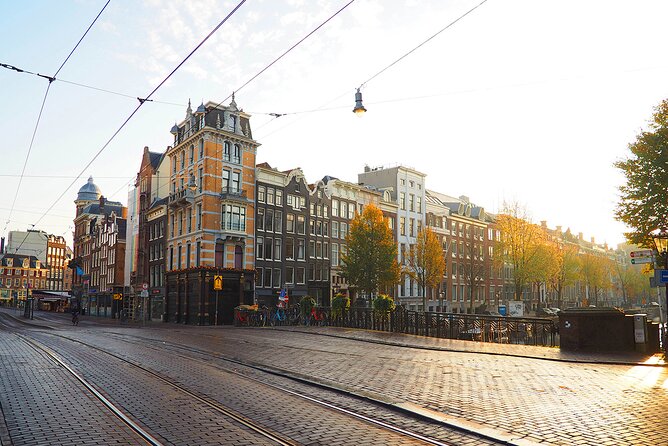
Amsterdam has more stories than its canals suggest. This two-hour LGBTQ+ history walk connects nightlife, politics, religion, resistance, and personal courage across the city center. I like the small group of no more than eight and the way the route reaches places many visitors pass without a second look. I also like that the stories span several centuries, rather than stopping with modern gay rights. The main drawback is simple: you are outside for the full tour, and poor weather can lead to cancellation.
The walk costs $47.34 per person, which is fair if you enjoy history told through real people and city streets rather than museum displays. Guides such as Guus and Elyzabeth have been praised for making the subject lively, personal, and easy to follow. You should arrive ready to walk, listen, and think. This is not a tour built around grand monuments or photo stops.
In This Review
- Key points to know before booking
- Why this two-hour walk is different
- Rembrandtplein opens with Amsterdam after dark
- Munt Tower and the cost of protecting friends
- Koningsplein reveals a name the Church tried to hide
- Keizersgracht brings the wildest stories
- The Gay Monument holds celebration and grief
- Herengracht remembers queer resistance
- Torensluis ends with a trans soldier’s message
- What the guide adds to the experience
- Is $47.34 a fair price?
- Weather, walking, and who should book
- Should you book this Amsterdam LGBTQ+ history tour?
- FAQ
- How long is the LGBTQ+ history tour?
- What language is the tour offered in?
- How many people can join the tour?
- Where does the tour begin?
- Where does the tour end?
- What is included in the tour?
- Is the tour suitable for service animals?
- Can I cancel for a refund?
Key points to know before booking
- Seven central Amsterdam stops connect nightlife, canals, religion, wartime resistance, and transgender history.
- Groups are limited to eight people, giving the guide room for questions and conversation.
- Guus and Elyzabeth bring a personal, lively style that helps overlooked figures come back into view.
- The route begins at Rembrandtplein and ends at Torensluis, near the Multatuli sculpture.
- The tour suits locals as well as first-time visitors, with stories that can change how you read familiar streets.
- Bad weather matters, since this is an outdoor experience and may be rescheduled or refunded.
Why this two-hour walk is different
Many Amsterdam tours give you the city’s broad outline: merchants, canals, painters, and grand houses. This one asks a more pointed question: where are the LGBTQIA+ stories in that familiar picture?
The answer appears in places that can look ordinary at first. A square associated with nightlife becomes a place to discuss royal affairs and marriage law. A canal house recalls people who resisted persecution. A bridge carries a story about a trans soldier in an eighteenth-century militia.
I like that approach because it gives history a physical address. You are not simply hearing names and dates. You are hearing what happened at specific corners, canals, and meeting places. The guide’s job is to connect those stories without turning the walk into a lecture.
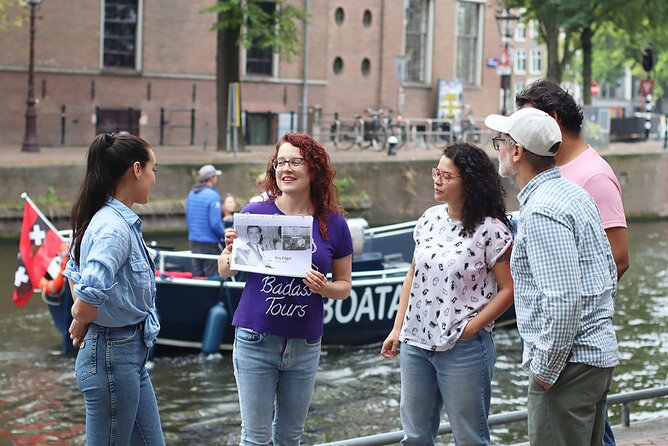
The maximum group size of eight is a real advantage. A large group can make a sensitive subject feel formal or distant. Here, you should have a better chance to ask questions and follow the guide’s thread. The tone appears friendly and energetic, with past participants praising the guides for being passionate, engaging, and fun.
The subject matter is also broader than a simple gay-rights timeline. It includes lesbian, gay, bisexual, transgender, and queer experiences, along with the people and institutions that shaped public attitudes. Some stories are inspiring. Others involve state violence, secrecy, or people being pushed out of the official record.
More History Tours in Amsterdam
- Amsterdam Food and Cultural Tour with Tastings
★ 5.0 · 2,442 reviews - Amsterdam: Haunted History and Ghost Walking Tour
★ 4.5 · 488 reviews - Amsterdam High-End Dutch Food & History Tour – Up to 8 guests
★ 5.0 · 482 reviews
Rembrandtplein opens with Amsterdam after dark
The first stop is Rembrandtplein, where about 20 minutes are spent giving you a quick overview of Amsterdam before moving into LGBTQ+ nightlife and public life.
This is a smart starting point. The square is associated with entertainment, so it gives the guide a natural way to discuss LGBTQ clubgoers and the social spaces where people could meet, flirt, perform, or find community. The stories then reach far beyond nightlife, including a married king who had affairs with men and Amsterdam’s connection to the world’s first legal gay marriage.
That range tells you what to expect from the rest of the walk. The guide is not presenting one neat story of progress. You will hear about private lives, public rules, royal behavior, and legal change, all in the same city.
The phrase flying overview is useful here. You should not expect a full history of Amsterdam in 20 minutes. Instead, this first stop gives you the setting and the main themes. If you prefer slow architectural commentary, this section may feel brisk. If you like a strong opening with several surprising turns, it should work well.
Munt Tower and the cost of protecting friends
At Munt Tower, or Munttoren, the tour spends about 15 minutes on a shopkeeper who tried to protect friends in the face of state violence.
This is one of the route’s more human-scale stories. Rather than focusing only on famous leaders, it looks at a person making a difficult choice in a dangerous setting. The location matters because the story becomes attached to a place where everyday commerce and public power met.
I appreciate stops like this because they show how LGBTQ+ history is not made only by public speeches or court decisions. It is also shaped by people who offered shelter, loyalty, or practical help when those actions carried risk.
You may want to listen closely here. The stop is short, and the subject appears to depend on the guide’s storytelling. There is no admission ticket or indoor visit included, so the value comes from the explanation rather than from entering the tower.
Koningsplein reveals a name the Church tried to hide

Koningsplein provides another 15-minute stop, this time involving a familiar name linked to LGBTQIA+ history and a story the Catholic Church tried to keep out of sight.
This part of the route should appeal to anyone interested in the tension between public institutions and private lives. Amsterdam is often presented as a place of tolerance, but this story adds needed complexity. Religious authority, reputation, and historical memory did not always point in the same direction.
The stop also shows why a street walk can add something that a general city tour misses. A name you might recognize from Amsterdam’s public world takes on a different meaning when placed in an LGBTQIA+ context.
The guide will need to explain the connection clearly, since the setting itself may not make the story obvious. That is part of the bargain here. You are paying for interpretation, research, and narrative, not for a major attraction with a ticketed entrance.
A different kind of day out entirely:
- Amsterdam: Van Gogh Museum Ticket
★ 4.7 · 52,054 reviews - Amsterdam Classic Saloon Boat Cruise with Drinks and Cheese
★ 5.0 · 31,825 reviews - Amsterdam Luxury Canal Cruise + Unlimited Drinks & Bites option
★ 5.0 · 30,518 reviews - Amsterdam: Heineken Experience Ticket
★ 4.6 · 30,055 reviews
Keizersgracht brings the wildest stories
At Keizersgracht, the walk lasts about 20 minutes and gathers several of its most unusual stories. You will hear about the Pope of the Gays, a seventeenth-century literary lesbian love triangle, and an overconfident doctor who may have accidentally provided lesbians with legal cover.
This sounds like the tour’s most colorful section, but the stories serve a serious purpose. They show how identity, literature, medicine, law, and social reputation could collide. They also challenge the idea that LGBTQ+ life in earlier centuries can be understood only through modern labels.
The literary love triangle should appeal to readers and history fans, while the doctor’s story points to the strange ways official language can affect real lives. The Pope of the Gays adds a more playful note, though the title alone should not lead you to expect a comedy tour. The subject remains grounded in the pressures faced by LGBTQIA+ people.
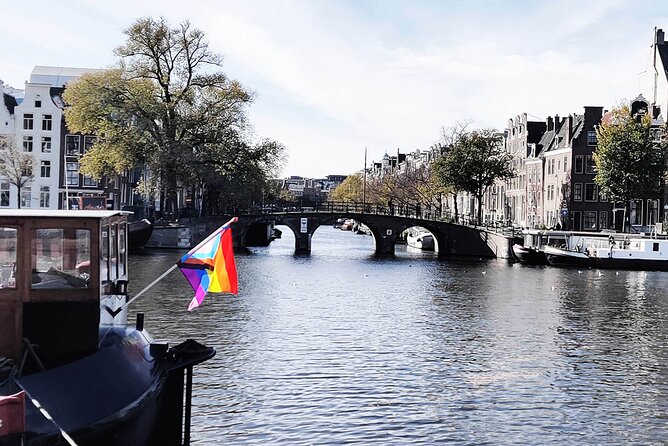
Keizersgracht is also a good reminder to watch the surroundings between stories. The canal setting is part of the experience, but the route is not designed as an architecture tour. You may see attractive canal houses while the guide focuses on the people and events linked to them.
The Gay Monument holds celebration and grief
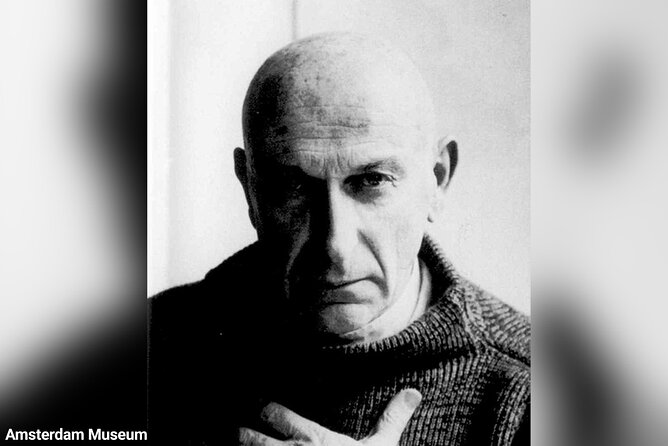
The Gay Monument receives about 15 minutes. Since its unveiling, it has served as a place for both celebration and mourning within Amsterdam’s LGBTQIA+ community.
This is the emotional center of the route. A monument can look simple when you pass it alone. With context, it becomes a place where public memory, loss, pride, and community meet.
The guide uses the stop to celebrate a formidable lesbian hero. That choice matters. LGBTQ+ history often gives the most attention to men, especially in stories about nightlife, law, and public figures. Highlighting a lesbian figure helps widen the picture and gives the tour a stronger balance.
You should expect a reflective pause here rather than just another quick anecdote. The monument connects the past to the present, and the tone may shift from the more surprising stories heard earlier.
Herengracht remembers queer resistance
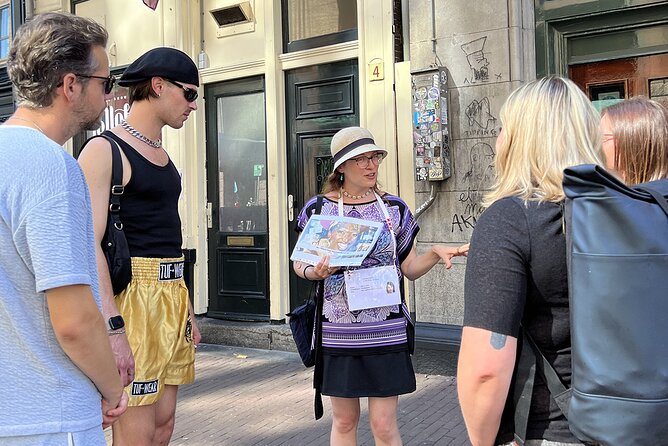
The 15-minute stop on Herengracht focuses on queer Resistance fighters who worked from an unremarkable canal house.
That setting creates a useful contrast. Amsterdam’s canal homes can appear respectable and quiet from the street, yet this one held people engaged in dangerous work. The story asks you to notice how resistance can operate behind ordinary doors.
I find this type of history especially valuable because it resists the habit of treating LGBTQ+ people only as victims of discrimination. The people connected with this house acted, organized, and took risks. Their story places LGBTQIA+ history within the wider history of courage during wartime.
The stop is not a visit inside the house, based on the tour details. You will hear the story from the street, so the guide’s account is essential. A small group should help here, since the subject may raise questions about who took part, what they risked, and why their contributions were left out of standard accounts.
Torensluis ends with a trans soldier’s message
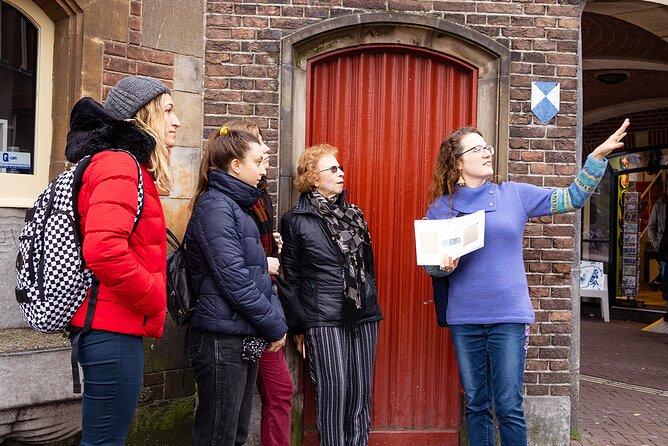
The final stop is Torensluis, where the tour spends about 20 minutes before ending by the Multatuli sculpture.
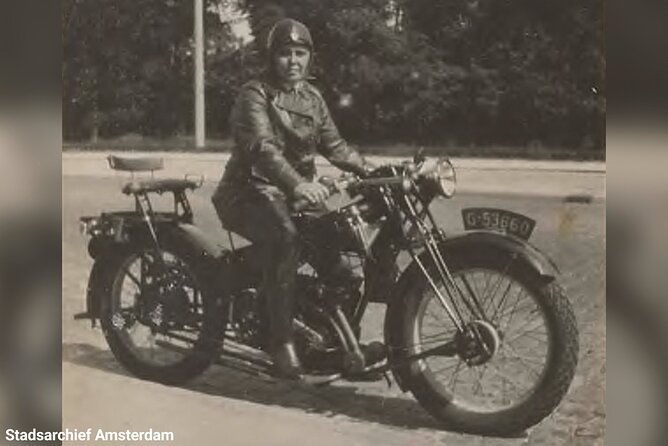
The closing story concerns a trans soldier who served in Amsterdam’s militia during the eighteenth century. The guide uses this account to leave you with a surprising message, rather than ending with a list of dates or legal milestones.
That is a good way to finish. The story pushes against the assumption that transgender lives are a new subject. It also leaves you thinking about how people understood themselves, how others recorded them, and which parts of their lives later historians chose to preserve.
Torensluis is a practical ending point in the city center. You are not returned to the starting location, so plan your next activity from the bridge rather than from Rembrandtplein. The tour ends near the Multatuli sculpture, giving you a clear landmark for meeting onward transportation or continuing on foot.
What the guide adds to the experience
A local guide and storyteller is the main inclusion. There is no museum entry, food, drink, or transport listed. That makes the guide’s preparation and delivery the heart of the tour.
The strongest praise has focused on the guides’ ability to bring overlooked people back into the story of Amsterdam. Guus has been described as entertaining even during cold, wet, and windy weather, while Elyzabeth has been praised for changing the way a longtime Amsterdam resident viewed the city.
That local response is worth noting. This is not only a first-time visitor’s introduction. Someone who has lived in Amsterdam for years can still find a new angle on familiar streets. I would choose this walk if you want to understand the city through people who rarely appear in standard history lessons.
The tone is likely conversational rather than academic. You will get stories, context, and a sense of the LGBTQIA+ community. If you want a formal scholarly lecture with extensive dates and documents, this may not be the right format. If you want history that stays connected to place and personality, it is a better fit.
Is $47.34 a fair price?
At $47.34 per person, the price is reasonable for a two-hour guided walk limited to eight people. You are paying about $24 per hour for a personal history experience, with a much smaller group than the large walking tours common in Amsterdam.
The value depends on your interests. If you mainly want canal photos or a quick list of major sights, you can spend less on a self-guided walk. If you care about LGBTQ+ history, overlooked figures, and a guide who can connect scattered stories into one route, the fee is easier to justify.
There is also value for repeat visitors. The route does not depend on seeing Amsterdam’s most famous attractions. That makes it useful after you have already visited the major museums and central landmarks, or for a local who wants to rethink familiar places.
The tour is offered in English and uses a mobile ticket. Confirmation normally arrives when you book, though bookings made within two days of the start time may require up to 48 hours for confirmation, subject to availability.
Weather, walking, and who should book
This is an outdoor city walk. The tour requires good weather, and if poor weather causes cancellation, you will be offered another date or a full refund. Even on a scheduled day, check the forecast and dress for conditions, since the experience lasts about two hours outside.
The route is near public transportation, and most people can participate. Service animals are allowed. No special physical requirement is listed, but you should be comfortable moving between seven central stops and remaining outdoors while the guide speaks.
I would recommend it most to:
- LGBTQ+ visitors who want historical context beyond nightlife
- History fans interested in social change, law, religion, and resistance
- Amsterdam residents looking for a new reading of familiar places
- Couples and small groups who prefer conversation over a large tour crowd
- Visitors who have already seen the main sights and want a more focused subject
The tour may be less suitable if you need indoor shelter, dislike sensitive historical subjects, or want a route centered on paintings, architecture, or major monuments.
You can cancel for a full refund up to 24 hours before the start time. Cancellations or changes made inside that window are not refunded or accepted, so keep the weather policy and timing in mind before booking.
Should you book this Amsterdam LGBTQ+ history tour?
Book it if you want Amsterdam to feel more human and less like a collection of postcard views. The best feature is the combination of a tiny group, a local storyteller, and stories that reach from royal affairs and lesbian literature to queer resistance and a trans soldier.
I would especially choose it early in an Amsterdam visit if you want the rest of your sightseeing to carry more context. I would also choose it late in a visit if you have already seen the major attractions and want something personal and unexpected.
The main caution is the outdoor format and the limited amount of published feedback. Still, the praise is consistent about the guides’ passion, clarity, and ability to make two hours pass quickly. At $47.34, this is a worthwhile choice for anyone who values people-centered history over a standard sightseeing checklist.
FAQ
How long is the LGBTQ+ history tour?
The tour lasts approximately two hours.
What language is the tour offered in?
The tour is offered in English.
How many people can join the tour?
The maximum group size is eight people.
Where does the tour begin?
The tour begins at Utrechtsestraat 4, 1017 VN Amsterdam, Netherlands.
Where does the tour end?
The tour ends at Torensluis, by the Multatuli sculpture, at 1012 VK Amsterdam, Netherlands.
What is included in the tour?
A local guide is included. The guide is described as a storyteller and history enthusiast who provides insight into the LGBTQIA+ community.
Is the tour suitable for service animals?
Yes. Service animals are allowed.
Can I cancel for a refund?
You can cancel up to 24 hours before the experience starts for a full refund. If poor weather causes the tour to be canceled, you will be offered another date or a full refund.
Just added in Amsterdam
- Private Tour Zaanse Schans Windmills and Volendam in Jaguar★ 5.0 · 10 reviews
- Windmills-Volendam-Giethoorn Private Tour in Jaguar★ 5.0 · 2 reviews
- Half-Day Private Guided Sightseeing Tour of Zaanse Schans★ 5.0 · 14 reviews
- Zaanse Schans and Giethoorn Unique Day Trip with Boat Cruise★ 4.5 · 17 reviews
- Best of Netherlands: Zaanse Schans Mills, The Hague & Rotterdam★ 4.5 · 10 reviews
- Zaanse Schans Private Tour Windmills★ 5.0 · 18 reviews
- Zaanse Schans Windmills Edam Volendam and Marken from Amsterdam★ 5.0 · 1 review
- Zaanse Schans Edam Volendam Private Day Tour from Amsterdam★ 5.0 · 3 reviews
Historical Tours, compared.
Amsterdam Food and Cultural Tour with Tastings
Read our review →
Kinderdijk UNESCO World Heritage Entry Ticket
Read our review →
Hop-on Hop-off Old-Fashioned Heritage Tram Tour
Read our review →


Amsterdam High-End Dutch Food & History Tour – Up to 8 guests
Read our review →
Cruise through the Historic City Center with Guide
Read our review →
Browse the lists this tour appears in