
Review · HISTORICAL TOURS
Small-Group Women’s History Tour in Amsterdam
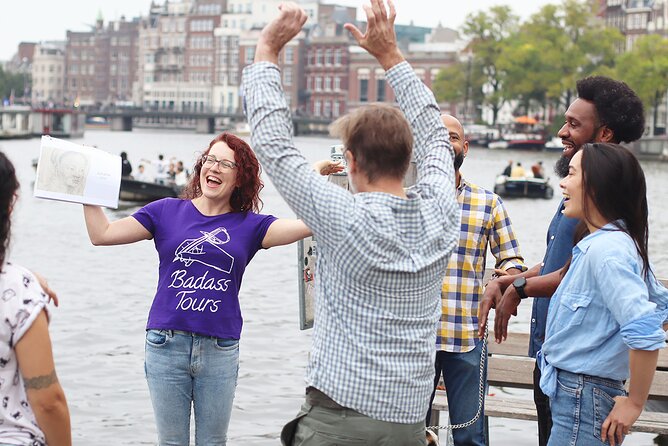
Amsterdam has more women’s stories than you expect. This two-hour walking tour brings those stories into the open, from queens and religious figures to rebels, artists, and women who pushed against social rules. I like the unusual focus on women as full historical actors, not side characters, and I like the small group size, capped at 12 people. The main consideration is that the tour requires good weather and includes steady walking through Amsterdam’s busy historic center.
I also like that the route covers familiar places such as Dam Square, Rokin, and Begijnhof from a different angle. Guide Elyzabeth, described as an Amsterdam history enthusiast and trained storyteller, has made the tour work for both solo visitors and couples, including one guest who joined with her husband Alessandro on their first day in the city. The tour is best for you if you enjoy stories and context more than grand interiors or formal museum displays.
In This Review
- Key points at a glance
- Why this women’s history walk is different
- Starting across the harbor from Centraal Station
- Beurs van Berlage and women who fought back
- Dam Square and a tasteful scandal
- Beurspoortje and a woman with serious nerve
- Nes and women shaping culture
- Queen Wilhelmina and women in public power
- Rokin, the Miracle of Amsterdam, and a women’s riot
- Begijnhof, a quiet ending in the center
- What the $47.47 price gets you
- Who should book this experience
- Timing, weather, and cancellation details
- Should you book the Amsterdam Women’s History Tour?
- FAQ
- Where does the tour start?
- Where does the tour end?
- How long does the tour last?
- How many people can join the group?
- Is admission to the stops included?
- Is the tour available with a mobile ticket?
- Is the tour suitable for most people?
- Does the tour operate in all weather?
- Can I cancel for a full refund?
Key points at a glance
- Women’s stories across many centuries: The tour moves beyond a single theme, covering queens, fighters, religious women, performers, activists, and social rebels.
- A small group of no more than 12: This gives the walk a more personal feel and makes it easier to follow the guide’s storytelling.
- A route through central Amsterdam: You’ll visit Centraal Station, Beurs van Berlage, Dam Square, Rokin, and Begijnhof.
- A trained storyteller leads the way: Elyzabeth brings an enthusiastic, personal interest in Amsterdam’s past to the walk.
- A strong first-day activity: The route provides city orientation while showing you a side of Amsterdam that standard sightseeing often misses.
- A weather-dependent outdoor tour: Plan a backup activity in case rain or poor conditions lead to cancellation.
Why this women’s history walk is different

Many Amsterdam walks concentrate on canals, trade, architecture, or the city’s more famous social history. This tour uses the streets as a stage for women who worked within, around, or against the structures of their time.
That gives the experience a clear purpose without making it feel like a lecture. You are not simply being handed a list of notable women. You are hearing how women pursued influence in politics, religion, culture, business, and public life when the rules were often written to limit them.
The tone also sounds deliberately broad. The tour does not reduce Amsterdam’s women to Dutch feminists or to women connected with the city’s sex industry. Instead, it brings together stories that can be surprising, funny, provocative, or inspiring.
A passionate guide matters here. Dates and names can be read in a book, but a storyteller can connect the person to the exact street or square where you are standing. That approach should appeal to you if you like history with a human face.
More History Tours in Amsterdam
- Amsterdam Food and Cultural Tour with Tastings
★ 5.0 · 2,442 reviews - Amsterdam: Haunted History and Ghost Walking Tour
★ 4.5 · 488 reviews - Amsterdam High-End Dutch Food & History Tour – Up to 8 guests
★ 5.0 · 482 reviews
Starting across the harbor from Centraal Station
The walk begins at Prins Hendrikkade 48, close to Amsterdam’s Centraal Station. The opening introduction takes place across the old harbor from the station, giving you an immediate sense of the city’s position around water and movement.
This is a useful place to begin a first day in Amsterdam. Centraal Station is one of the city’s main arrival points, so you can reach the meeting area by public transport and start learning about Amsterdam soon after arriving.
The first stop lasts about 10 minutes and has no admission charge. You are outside from the start, so dress for the weather and wear shoes suitable for city pavements.
The opening is not designed as a major sightseeing stop. Its value is orientation. You begin with the city itself, then move into the personal stories that shaped it.
Beurs van Berlage and women who fought back
From the station area, the group continues to the Beurs van Berlage. The building is now used as an event hall, while the site connects to Amsterdam’s old and new stock exchanges.
Here, the guide tells the stories of two female fighters. The setting gives those accounts extra force because a stock exchange represents money, power, and public decision-making, areas where women have often had to fight for recognition.
You’ll spend about 15 minutes here. The stop shows one of the tour’s main strengths: it uses a well-known building as a prompt, then shifts attention to people who may not be part of the usual architectural explanation.
I would pay close attention to the connection between place and story. The best parts of a city walk are not always the longest stops. A short story told beside the right building can change how you see that building for the rest of your visit.
Dam Square and a tasteful scandal

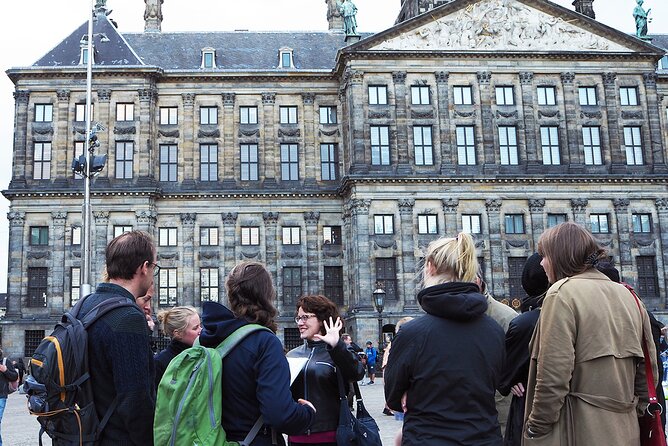
Dam Square brings the group into one of Amsterdam’s busiest public spaces. You’ll have about 10 minutes here while hearing one of the more salacious stories from the city’s past.
The description promises a story that is lively but tasteful. That wording matters. This is not presented as shock entertainment. Instead, the story seems intended to show how women navigated reputation, power, and public attention in a city where private behavior could become a public matter.
Dam Square can be noisy and crowded. You may need to stay close to the guide and listen carefully, especially if the square is full. The upside is that the tour does not treat the crowds as an obstacle. It places a personal story directly in the middle of Amsterdam’s public life.
A different kind of day out entirely:
- Amsterdam: Van Gogh Museum Ticket
★ 4.7 · 52,054 reviews - Amsterdam Classic Saloon Boat Cruise with Drinks and Cheese
★ 5.0 · 31,825 reviews - Amsterdam Luxury Canal Cruise + Unlimited Drinks & Bites option
★ 5.0 · 30,518 reviews - Amsterdam: Heineken Experience Ticket
★ 4.6 · 30,055 reviews
Beurspoortje and a woman with serious nerve
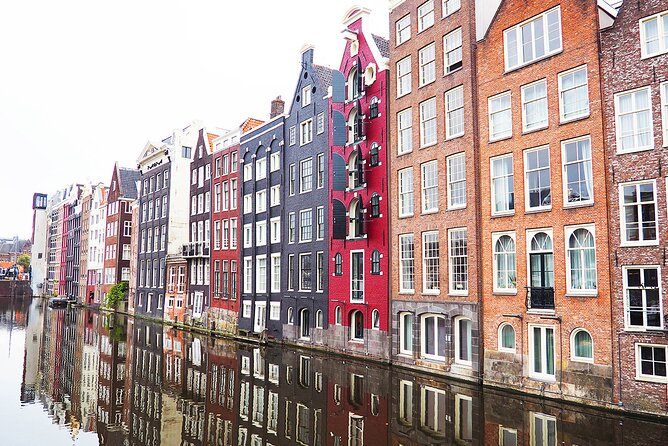
At Beurspoortje, the subject changes to one of the tour’s most unconventional figures. Her story includes motorcycles, Amsterdam’s first modern gay bar, and the ability to drink Nazi soldiers under the table.
That combination tells you a lot about the tone. The tour is not limited to queens, saints, or respectable public figures. It also makes room for women whose lives were bold, unruly, and difficult to fit into a tidy category.
This stop takes about 10 minutes. It may be one of the easiest stories to remember because the details are so vivid, but the deeper value is the way it expands your idea of who belongs in a history of Amsterdam.
As with Dam Square, you’ll be standing in a public area. Keep your attention on the guide rather than expecting a private room or a quiet setting. The experience depends on listening while the city carries on around you.
Nes and women shaping culture
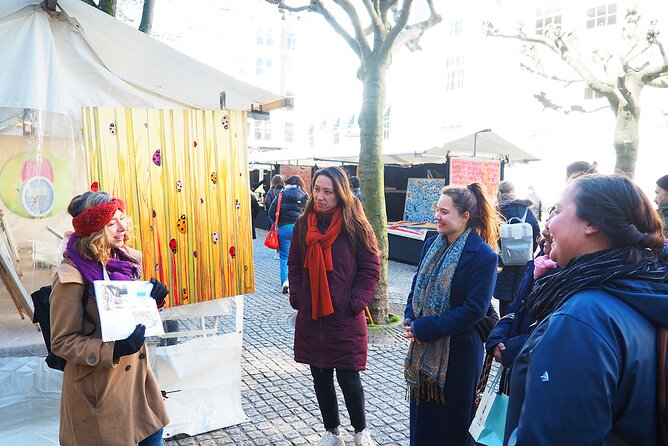
The route then reaches Nes, an area known for cutting-edge theater. The stop lasts about 20 minutes, making it one of the longer storytelling sessions on the walk.
Here you’ll hear about powerful women connected to culture and public life. One story concerns the first Black female millionaire in the Americas, with the important reminder that she was not from the United States.
That detail points to one of the tour’s more valuable habits: it widens the geographic frame. Amsterdam’s story has never been isolated from the wider world, and women connected to the city could have influence far beyond the Netherlands.
Nes is a fitting location for this section because theater is about voice, performance, identity, and public expression. You may come away thinking differently about the cultural spaces you pass later in the day.
The 20-minute stop also gives the guide room to develop a story rather than rush through names. If you prefer quick photo stops, this may feel slow. If you enjoy context, it should be one of the most rewarding parts of the route.
Queen Wilhelmina and women in public power
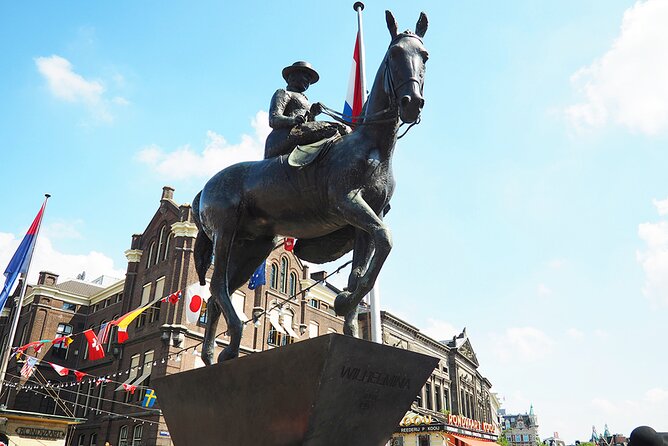
The walk continues to the equestrian statue of Queen Wilhelmina. Under her gaze, you’ll learn about the Netherlands’ first Queen Regnant.
A royal statue naturally draws attention to power and symbolism. The stop asks you to consider how a woman’s authority was presented in public and what it meant for the country to have a queen who ruled in her own right.
This section lasts about 10 minutes. It provides a change of pace after the stories of fighters, cultural figures, and rebels. You’ll be looking at a formal representation of authority, then hearing about the woman behind that authority.
The statue also makes the subject easy to locate. You are not searching for an obscure plaque or entering a museum collection. You simply gather around a public monument and let the guide supply the context.
Rokin, the Miracle of Amsterdam, and a women’s riot
At Rokin, the tour follows Amsterdam’s first main waterway. This stop lasts about 20 minutes and connects religious history with public unrest.
You’ll hear about the Miracle of Amsterdam and how it led to the Women’s Riot. The pairing suggests that belief and civic action were not separate parts of life. Spiritual events could affect public behavior, and women could act collectively when they believed their rights, duties, or community were under threat.
This is another place where the physical route adds meaning. Rokin is not just a street beside water. It helps explain how Amsterdam developed and how public spaces became places for gathering, conflict, and change.
The longer time here should allow the guide to explain the chain of events rather than offering only a dramatic headline. If you want a tour that treats women’s history as part of the city’s wider political and religious story, this stop is especially important.
Begijnhof, a quiet ending in the center
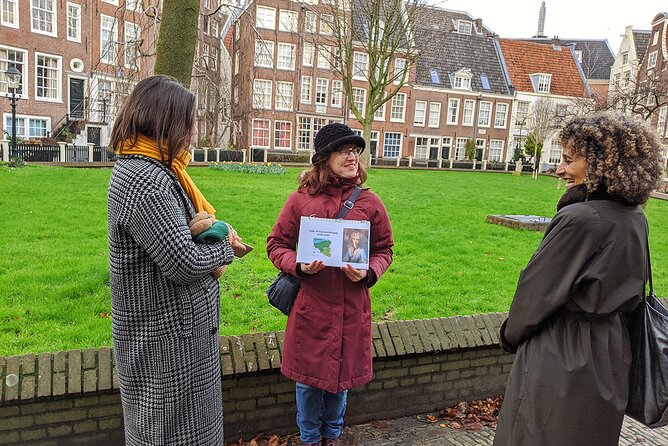
The final stop is Begijnhof, an enclosed women’s community in the middle of Amsterdam. If it is open, you’ll have the chance to see this calm setting after walking through busy central streets.
The tour ends outside Begijnhof at Spui. The stop lasts about 10 minutes, though access depends on whether the site is open at the time of the visit. That uncertainty is worth noting when you plan your expectations. You should not assume that the final section will always include entry.
Begijnhof gives the walk a fitting close. After stories about women confronting public institutions and social pressure, you finish in a place associated with a women’s religious community and a distinct way of life.
Even if access is limited, the setting provides a useful final image. Amsterdam’s women’s history was not lived only in royal spaces, stock exchanges, or public squares. It also unfolded in quieter communities with their own rules and traditions.
What the $47.47 price gets you
At $47.47 per person, this is not the cheapest way to spend two hours in Amsterdam. You are paying for a guided experience rather than admission to a major museum or a large attraction.
The value comes from the route and the guide’s interpretation. All listed stops are public locations with no admission fee, so the price is mainly for the storytelling, organization, and small-group format.
That can be worthwhile if you would otherwise walk past these places without understanding their connection to women’s lives. A good guide can also save you the work of researching many separate figures and then finding the right streets or monuments.
The group limit of 12 is important. A large city walk can make personal storytelling feel distant. With a smaller group, you have a better chance of hearing the guide clearly and asking a question when the story raises one.
I would consider booking this early in your Amsterdam stay, especially if you like using a guided walk to get your bearings. One guest joined with her husband Alessandro on the first day of her visit and found the experience interesting for both of them. That is useful evidence of the tour’s broad appeal: you do not need to travel alone or identify as a specialist in women’s history to enjoy it.
Who should book this experience
I recommend this walk for you if:
- You want Amsterdam history beyond canals, art, and famous architecture.
- You enjoy personal stories more than a list of dates.
- You like small groups and outdoor sightseeing.
- You want a first-day activity that combines orientation with local context.
- You are interested in how women shaped politics, religion, culture, and public life.
- You are comfortable walking and listening in busy city streets.
It may be less suitable if you need a fully indoor activity, dislike weather-dependent plans, or want extended time inside historic buildings. The tour is also not built around museum entry, so you should choose it for the guide’s stories rather than for access to exhibits.
The experience is listed as suitable for most people, and service animals are allowed. It is near public transportation, which makes the starting point practical, though you should still allow time to find Prins Hendrikkade 48 near the station.
Timing, weather, and cancellation details
The walk lasts about two hours. The scheduled stops add up to roughly 105 minutes, leaving the balance for walking between locations, transitions, and the opening and closing parts of the experience.
You receive a mobile ticket, which keeps the booking simple. Confirmation is normally sent at booking, but if you reserve within two days of the visit, confirmation can take up to 48 hours and depends on availability.
The cancellation terms are friendly if you plan ahead. You can cancel at least 24 hours before the start time for a full refund. Changes or cancellations inside that 24-hour window are not accepted for a refund.
Because this is an outdoor activity, poor weather can lead to cancellation. In that case, you are offered another date or a full refund. I would avoid placing this walk at the very end of a tightly scheduled trip, since bad weather could affect your plans.
Should you book the Amsterdam Women’s History Tour?
Book it if you want a thoughtful, story-led walk that changes how you see central Amsterdam. The route covers well-known places, but the focus on women gives each one a fresh purpose.
At $47.47, the price makes sense for a small group and a guide who can connect local streets with unusual personal stories. The strongest reasons to go are the range of subjects, the cap of 12 people, and the chance to start your visit with a useful city orientation.
Skip it if you want indoor attractions, detailed access to historic buildings, or a fast sightseeing circuit with little standing. For the right audience, though, this is an engaging way to meet Amsterdam’s queens, rebels, cultural figures, and spiritual leaders, one street corner at a time.
FAQ
Where does the tour start?
The tour starts at Prins Hendrikkade 48, 1012 AC Amsterdam, Netherlands, near Amsterdam’s Centraal Station.
Where does the tour end?
The tour ends at Spui, 1012 Amsterdam, outside the Begijnhof.
How long does the tour last?
The tour lasts approximately two hours.
How many people can join the group?
The experience has a maximum of 12 participants.
Is admission to the stops included?
The listed stops have no admission ticket charge. Begijnhof access depends on whether it is open during the final stop.
Is the tour available with a mobile ticket?
Yes. A mobile ticket is provided.
Is the tour suitable for most people?
The activity information says most people can participate. Service animals are also allowed.
Does the tour operate in all weather?
The tour requires good weather. If poor weather causes cancellation, you are offered another date or a full refund.
Can I cancel for a full refund?
Yes. You must cancel at least 24 hours before the experience start time to receive a full refund.
Just added in Amsterdam
- Private Tour Zaanse Schans Windmills and Volendam in Jaguar★ 5.0 · 10 reviews
- Zaanse Schans and Giethoorn Unique Day Trip with Boat Cruise★ 4.5 · 17 reviews
- Windmills-Volendam-Giethoorn Private Tour in Jaguar★ 5.0 · 2 reviews
- Half-Day Private Guided Sightseeing Tour of Zaanse Schans★ 5.0 · 14 reviews
- Best of Netherlands: Zaanse Schans Mills, The Hague & Rotterdam★ 4.5 · 10 reviews
- Zaanse Schans Private Tour Windmills★ 5.0 · 18 reviews
- Zaanse Schans Windmills Edam Volendam and Marken from Amsterdam★ 5.0 · 1 review
- Half Day Keukenhof Tulip Paradise Trip from Amsterdam★ 5.0 · 1 review
Historical Tours, compared.
Amsterdam Food and Cultural Tour with Tastings
Read our review →
Kinderdijk UNESCO World Heritage Entry Ticket
Read our review →
Hop-on Hop-off Old-Fashioned Heritage Tram Tour
Read our review →


Amsterdam High-End Dutch Food & History Tour – Up to 8 guests
Read our review →
Cruise through the Historic City Center with Guide
Read our review →
Browse the lists this tour appears in